
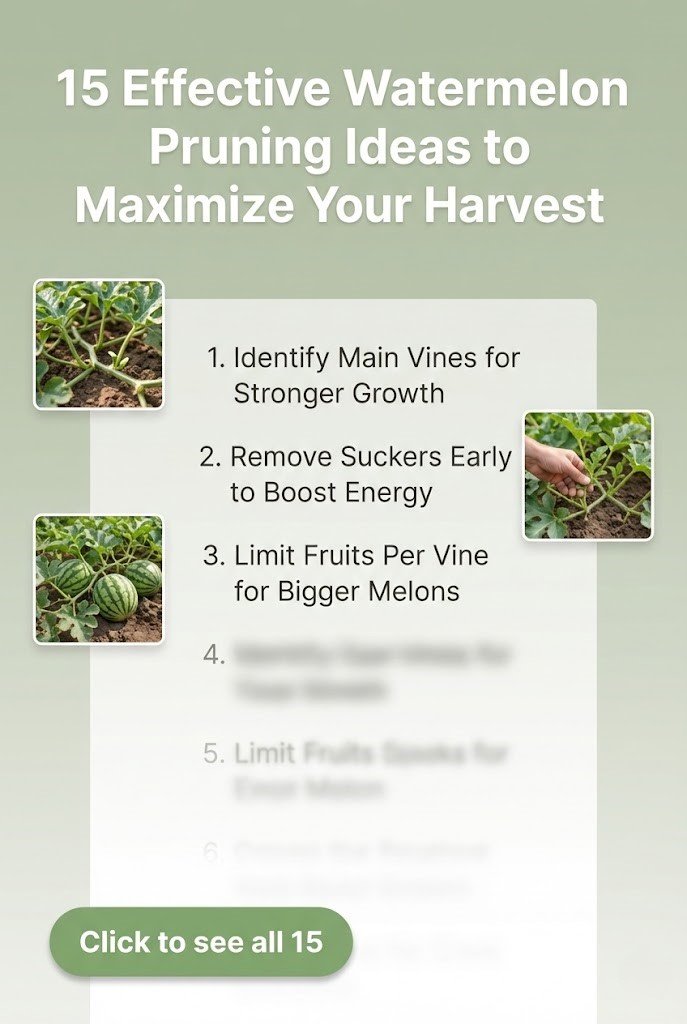
Watermelon pruning is a key technique you can use to enhance the growth and productivity of your vines. By selectively removing certain parts of the plant, you direct its energy toward producing larger, sweeter fruits rather than excessive foliage. This practice not only improves air circulation to reduce disease risks but also makes harvesting easier and more efficient in your garden.
Whether you’re a seasoned gardener or just starting out, understanding watermelon pruning helps you achieve bountiful yields. You’ll focus on identifying main vines, eliminating suckers, and managing fruit load, all while maintaining plant health. With these strategies, you can transform your patch into a thriving source of juicy watermelons, ready for summer enjoyment.
Pruning requires sharp tools and careful timing to avoid stressing the plant. Always prune on dry days to minimize infection risks, and observe your vines closely for the best results.
1) Identify and Prioritize Main Vines
You start watermelon pruning by pinpointing the primary vines that show the most vigor. These are typically the first to emerge from the base and carry the potential for the healthiest fruits. Why bother? Focusing on strong mains prevents energy waste on weaker branches, leading to bigger melons and fewer disease issues. How do you do it? In the early growth stage, when vines are about 2-3 feet long, select 2-3 robust ones per plant and gently remove the others at the base using clean shears.
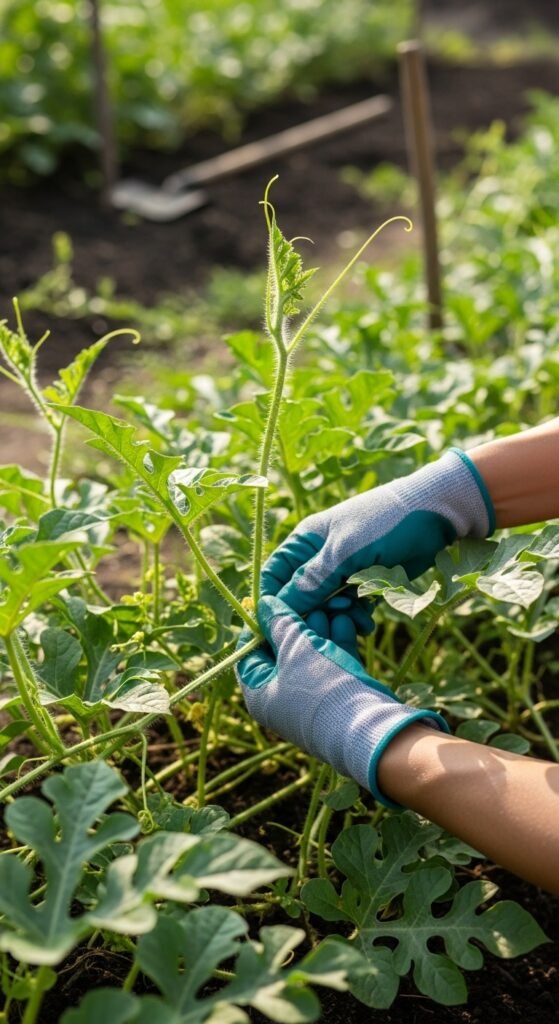
This approach mirrors techniques used in other vine crops. For instance, just as you might support cucumbers with structured growth, consider integrating a trellis for cucumbers to keep your watermelon vines organized and elevated, enhancing airflow and ease of access during pruning sessions.
2) Remove Suckers Early On
Suckers are those sneaky side shoots that sprout between the main stem and leaves, sapping nutrients from your developing fruits. You prune them to concentrate the plant’s resources on fruit production, resulting in larger, tastier watermelons. The why is simple: unchecked suckers lead to overcrowded vines, increasing humidity and pest problems.
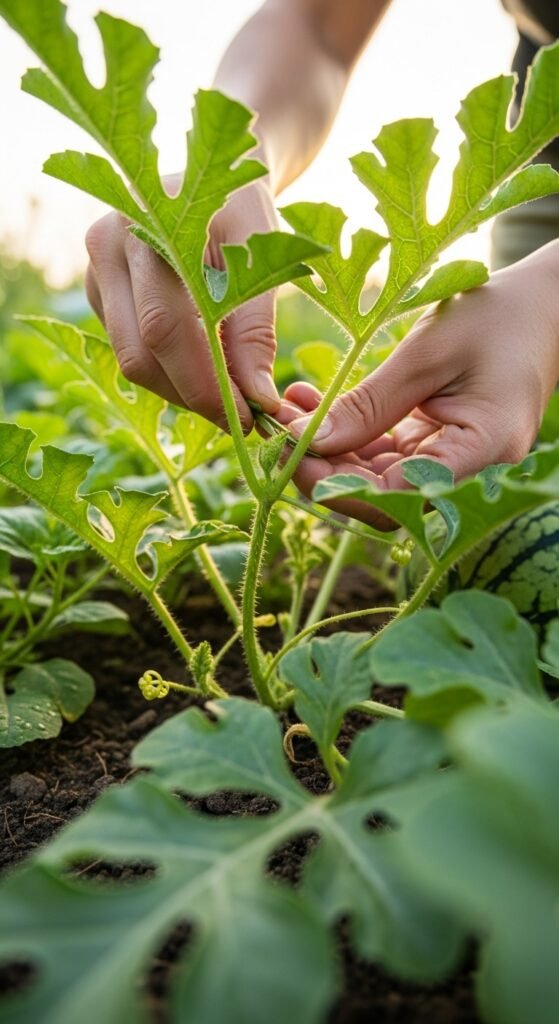
To execute this, inspect your plants weekly once they start vining. Use your fingers to pinch off small suckers or shears for larger ones, cutting close to the main vine without damaging it. This method is akin to basil pruning, where regular pinching promotes fuller growth and better yields. By staying vigilant, you’ll notice improved vine strength and fruit quality throughout the season.
3) Limit Fruits Per Vine
You can optimize your harvest by thinning fruits to 2-3 per vine once they reach golf ball size. This pruning idea ensures the plant channels all its energy into fewer melons, yielding larger, sweeter ones instead of many small, underwhelming fruits. Why is this crucial? Overloading stresses the vine, potentially causing cracks or poor flavor development.
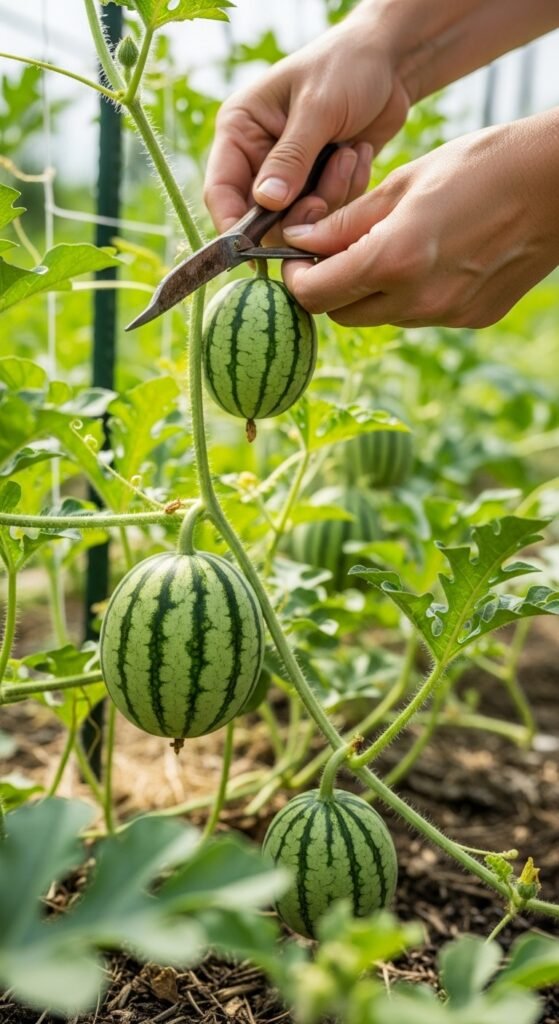
How to implement: Gently twist off excess young fruits, leaving the healthiest-looking ones spaced evenly. Monitor for signs of strain and adjust as needed. Similar to managing squash varieties, this technique reduces competition and enhances overall plant vigor, much like strategies for curing winter squash after harvest to preserve quality.
4) Prune After Fruit Set
Once your watermelons have set and begun to swell, you prune away any new growth beyond the fruit-bearing sections. This directs nutrients straight to the developing melons, boosting size and sweetness while preventing vine sprawl. The benefit? It minimizes shading and improves sunlight penetration, reducing rot risks.
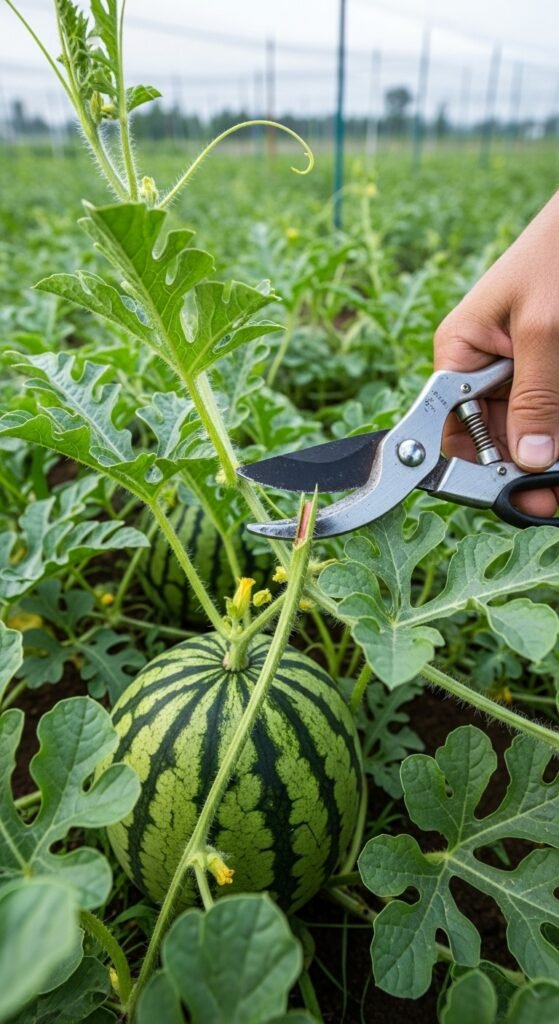
Approach this by cutting back tips about 6-8 leaves past the last fruit using sharp pruners. Do it in the morning when plants are turgid for clean cuts. This post-set pruning echoes methods for other fruiting vines, where timing is key to success, similar to how to harvest pumpkins at peak ripeness.
5) Use Sterilized Pruning Tools
You always sterilize your shears or knives before pruning to prevent spreading diseases like fungal infections across your watermelon patch. Why prioritize this? Clean tools safeguard plant health, ensuring your efforts lead to robust growth rather than setbacks from pathogens.
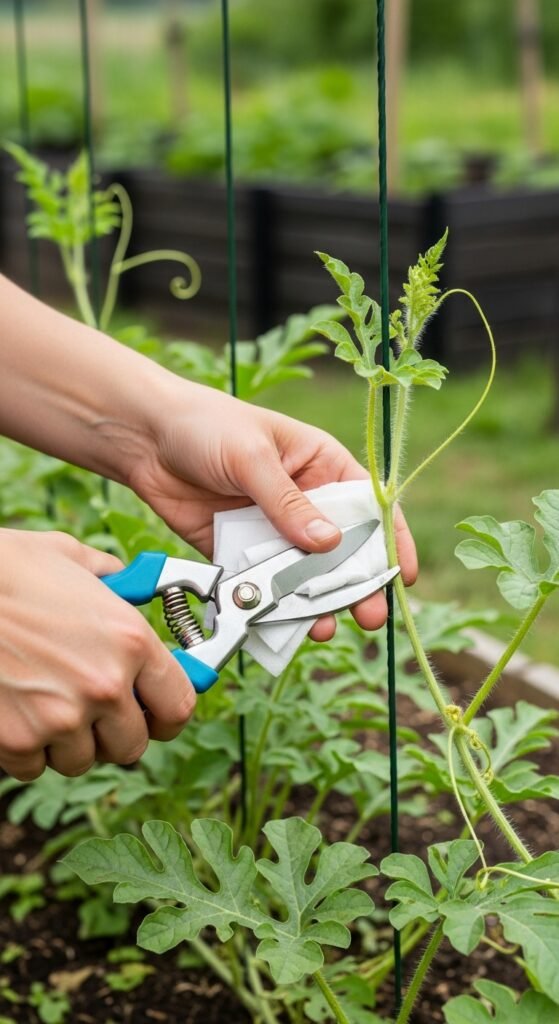
How: Wipe blades with rubbing alcohol or a bleach solution between cuts, especially if removing diseased parts. This simple step is fundamental in garden maintenance, much like protecting plants from cold snaps with frost protection for plants, helping you maintain a thriving, disease-free environment for maximum yields.
6) Prune in the Morning Hours
You schedule your watermelon pruning for early morning when dew has dried but before the heat intensifies. This timing allows wounds to heal quickly in the day’s warmth, reducing infection risks and stress on the plant. The advantage? Healthier vines with better resilience against pests and environmental pressures.
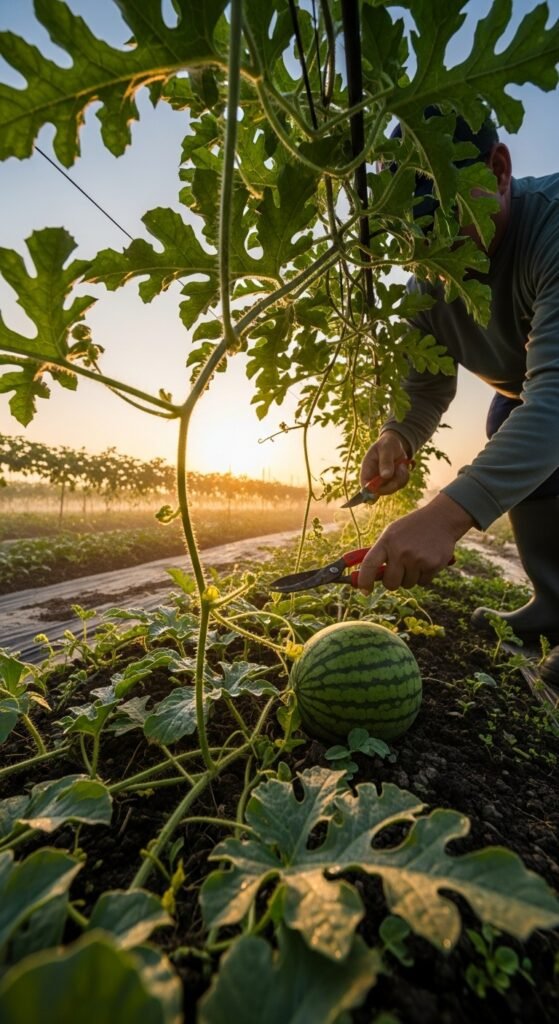
To do it right, gather your tools at dawn and work methodically, focusing on one plant at a time. This practice aligns with general garden care rhythms, similar to the optimal timing for tending roses as detailed in prune roses in spring, promoting vigorous regrowth and abundant harvests.
7) Train Vines on Supports
You incorporate training as part of pruning by guiding watermelon vines onto supports like trellises, combining structure with selective cuts. This elevates fruits, improves air flow, and makes pruning easier. Why? It prevents ground contact, reducing rot and pest issues for cleaner, larger melons.
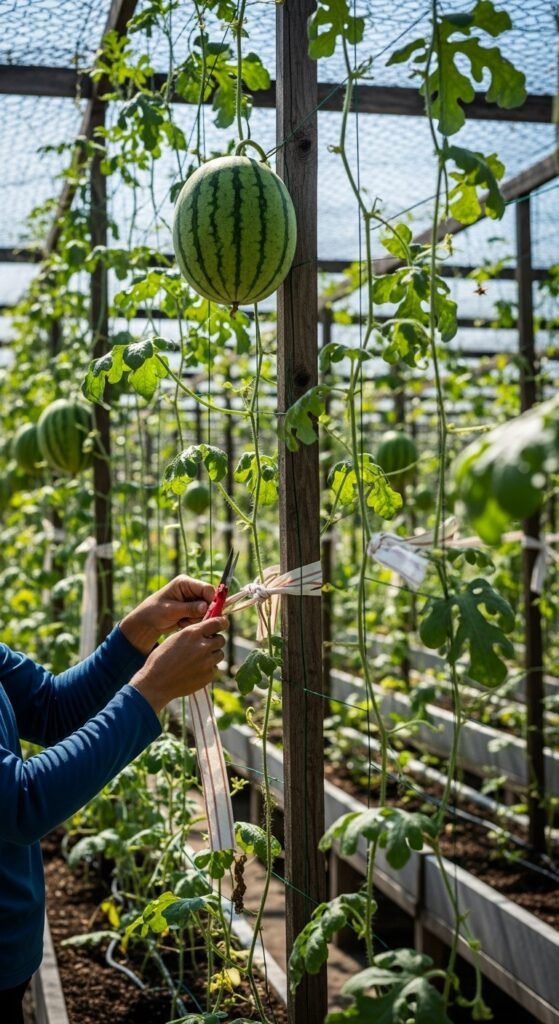
How: As vines grow, gently tie them to the support and prune side shoots that don’t align. Use soft ties to avoid damage. For inspiration on vertical setups, explore melon trellis designs that work wonders for similar heavy-fruiting vines, enhancing your garden’s efficiency and yield.
8) Remove Diseased or Damaged Parts
You promptly prune away any yellowed, spotted, or damaged foliage to halt disease spread and maintain plant vitality. This targeted removal keeps your watermelons healthy, focusing energy on fruit rather than repair. The key benefit is early intervention, preventing widespread issues that could decimate your crop.
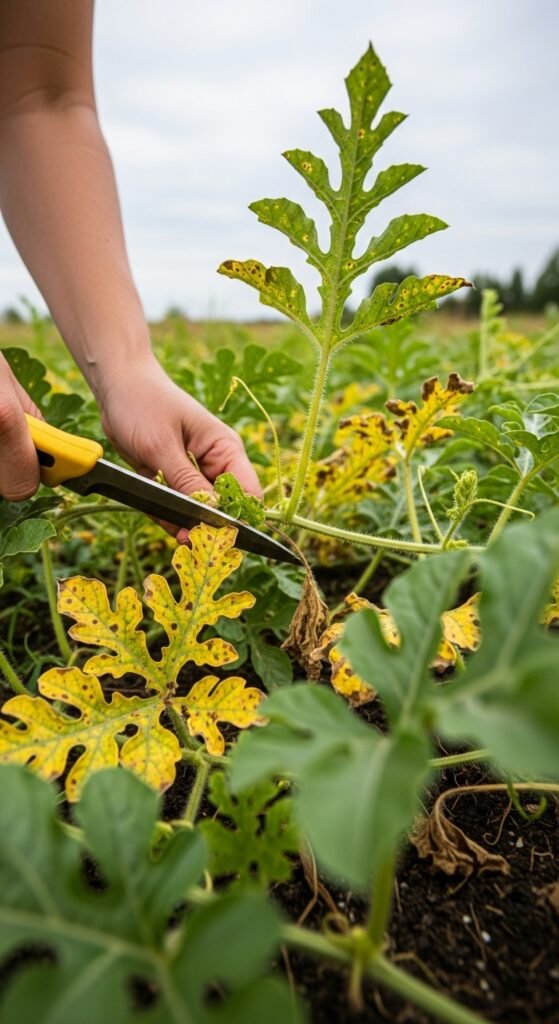
Inspect regularly and cut affected areas back to healthy tissue, disposing of debris far from the garden. This hygienic approach is essential, akin to controlling borers in vines as in squash vine borer control, ensuring your pruning efforts support a resilient, productive patch.
9) Pinch Vine Tips for Bushiness
You pinch the growing tips of secondary vines to encourage a bushier habit, leading to more fruit sites without excessive length. Why employ this? It controls sprawl, improves light exposure, and boosts pollination efficiency for better sets.
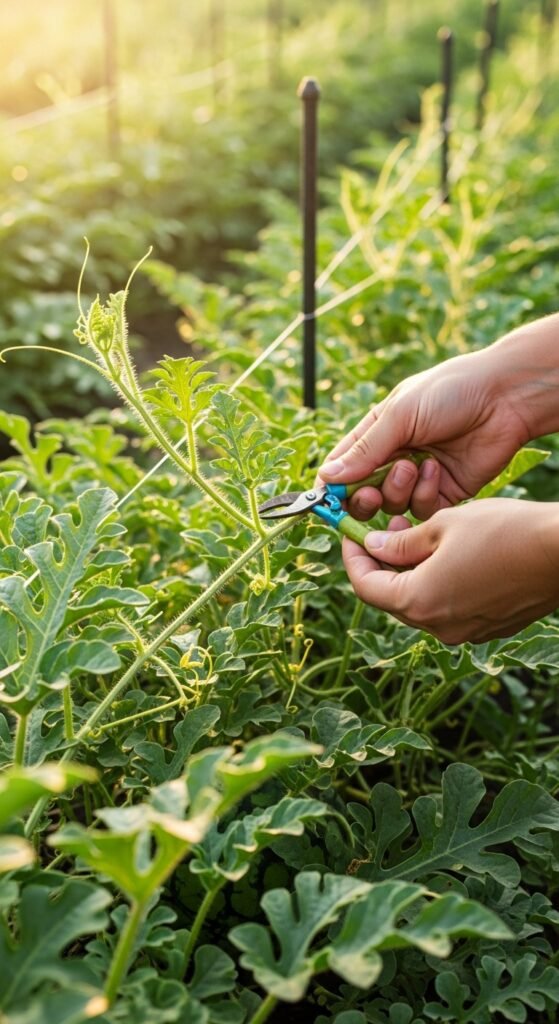
Simply use your thumb and forefinger to nip off the endmost growth when vines reach 4-5 feet. Repeat as needed. This technique draws from herb management, where similar pinching, like in lavender pruning, fosters denser foliage and enhanced performance in your watermelon cultivation.
10) Integrate Companion Plant Pruning
You prune watermelons in tandem with companion plants to create a balanced ecosystem that deters pests and enhances growth. Planting marigolds or nasturtiums nearby and pruning them lightly keeps the area tidy and beneficial. The why: Companions repel insects naturally, reducing chemical needs while pruning maintains harmony.
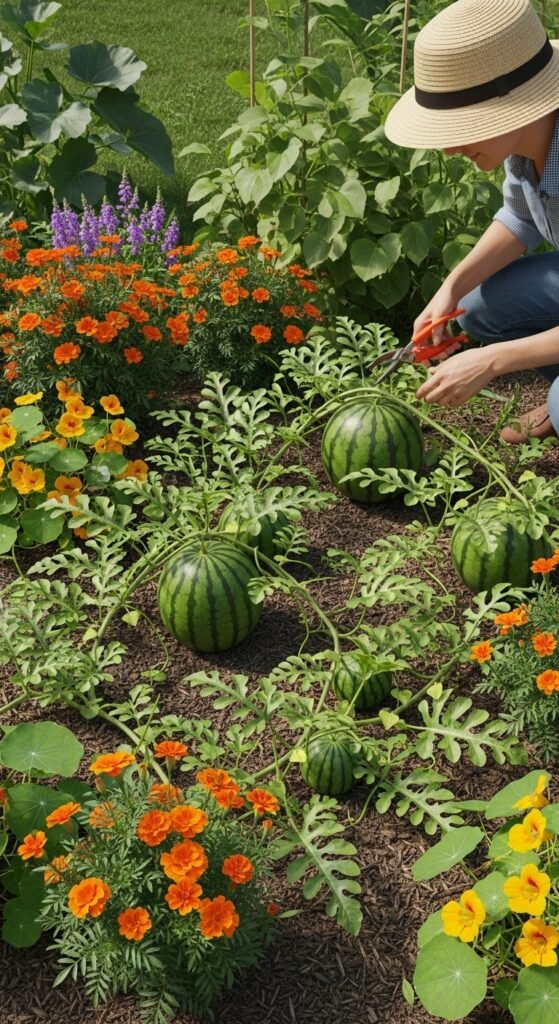
How: Trim companions to prevent overshadowing, ensuring all plants thrive. This holistic method amplifies your garden’s health, much like using mosquito-repelling plants to naturally safeguard your space during pruning and maintenance activities.
11) Prune for Air Circulation
You strategically thin inner foliage to boost airflow, crucial for preventing fungal diseases in humid conditions. This pruning opens up the canopy, allowing better drying after rains or watering. Benefits include healthier leaves and reduced mildew, leading to superior fruit quality.
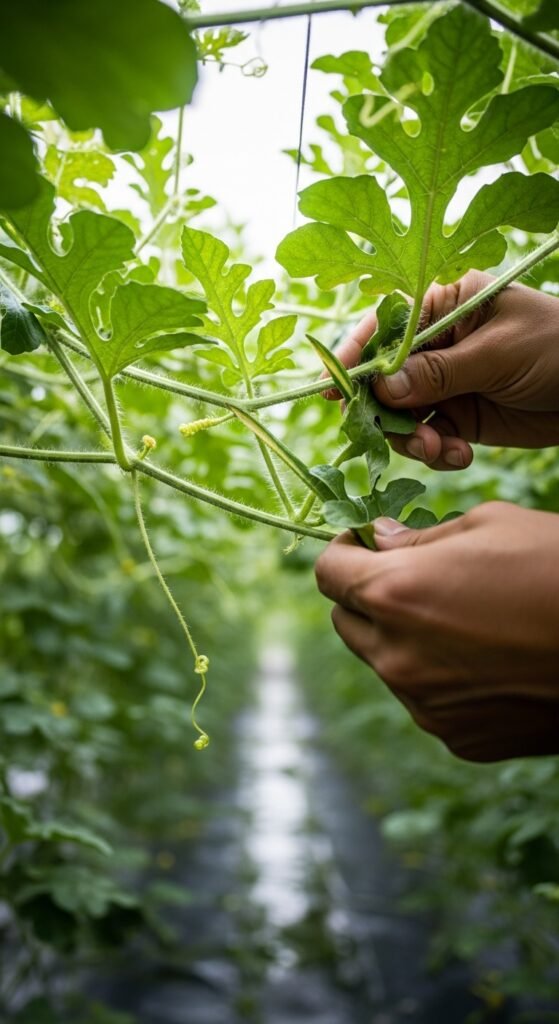
Remove select leaves from dense areas, aiming for even spacing. Do this gradually to avoid shock. Such ventilation strategies are vital, paralleling care for other blooms where pruning timing matters, as in when to prune hydrangeas for optimal health and flowering.
12) Post-Pollination Pruning Focus
After pollination, you shift pruning to eliminate non-fruiting branches, streamlining the plant’s focus on ripening. This refines energy allocation, hastening maturity and improving flavor profiles. Why? It streamlines resources, mimicking natural selection for top-tier produce.
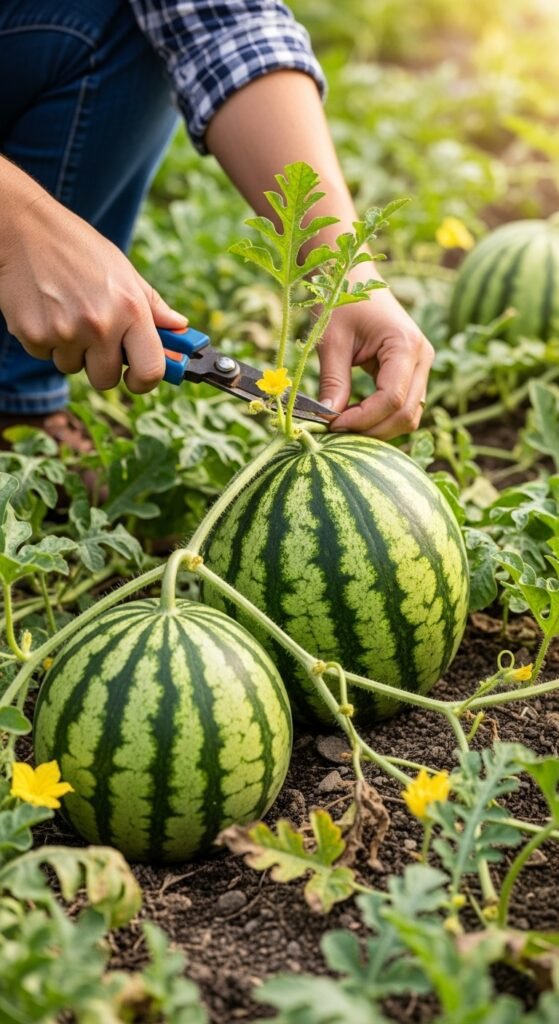
Cut back barren vines cleanly at their base. Monitor fruit development closely. This stage-specific tactic enhances outcomes, similar to preparing fruits for storage post-harvest, akin to pickled watermelon rind recipes that utilize every part efficiently.
13) Seasonal End Pruning Cleanup
Toward season’s end, you perform a final prune to remove spent vines and debris, preparing for next year’s cycle. This clears the area, reducing overwintering pests and diseases. The advantage? A cleaner start come spring, with improved soil health.
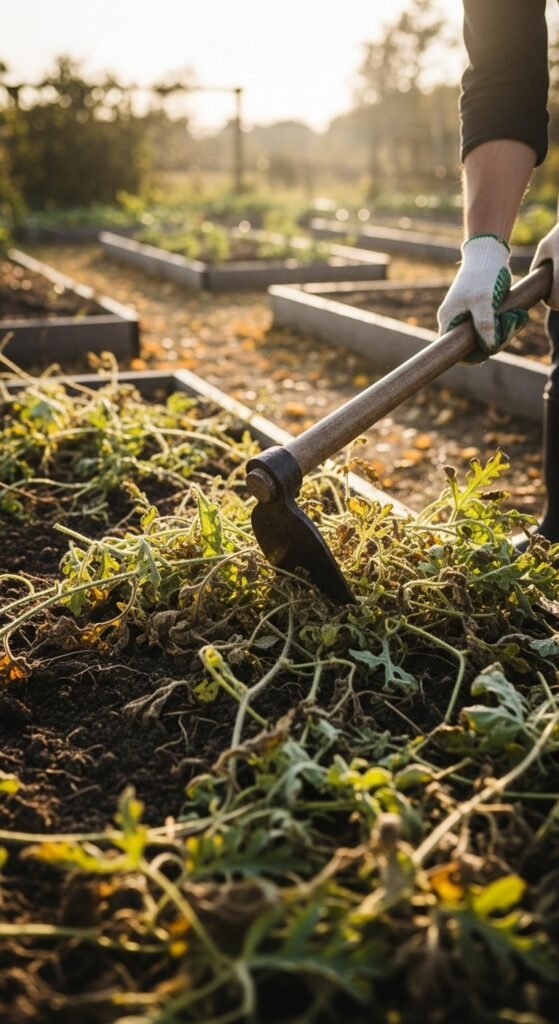
Chop and compost healthy remnants, discarding diseased ones. This wrap-up is proactive, echoing fall care routines for berries, such as fall raspberry care, ensuring your watermelon patch remains productive year after year.
14) Prune Based on Variety Needs
You tailor pruning to your watermelon variety, as bush types need less than vining ones. Understanding specifics optimizes growth patterns and yields. Why customize? Different genetics respond uniquely, maximizing potential without over-pruning.
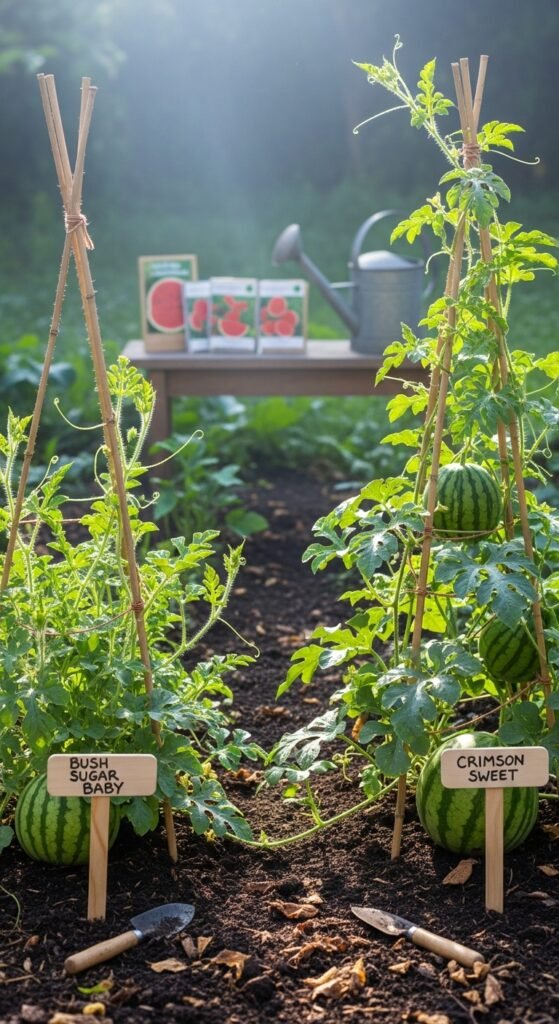
Research your seed packet and adjust cuts accordingly—lighter for compact varieties. This varietal approach refines techniques, much like adapting supports for various climbers in garden trellis ideas, fitting your unique garden setup perfectly.
15) Monitor and Adjust Pruning Intensity
You observe plant responses post-pruning and adjust intensity for future sessions, ensuring balance. This adaptive method prevents over-pruning, which can stunt growth, while promoting vitality. Benefits? Customized care leads to consistent, high-quality harvests season after season.
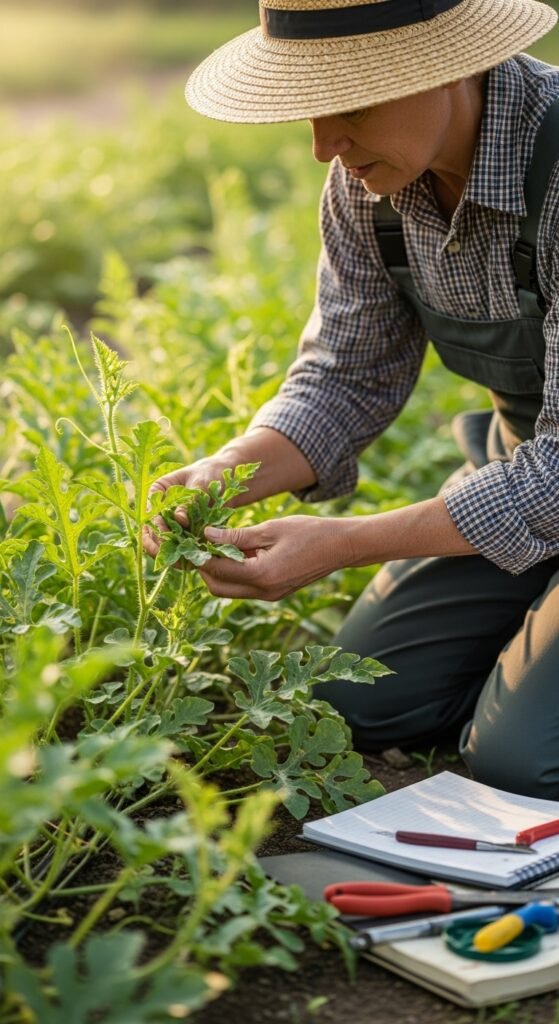
Note vigor, fruit set, and health, tweaking as needed. This ongoing refinement is key to mastery, similar to seasonal adjustments in fruit tree care, like prune apple tree guidelines that evolve with observation and experience.
Key Principles of Watermelon Pruning
Timing and Tools
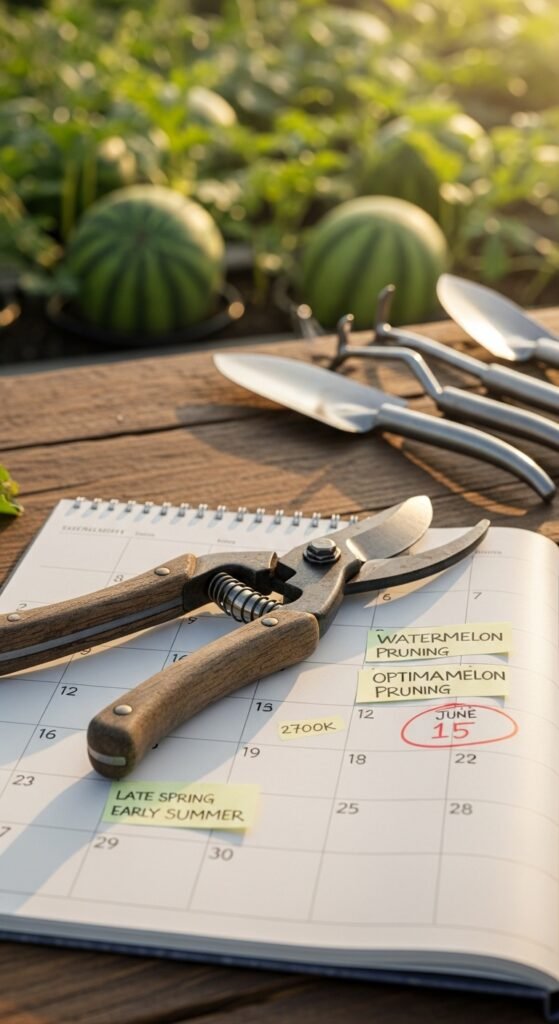
Always prune during active growth phases with sharp, clean tools to minimize stress and maximize healing.
Balance and Observation
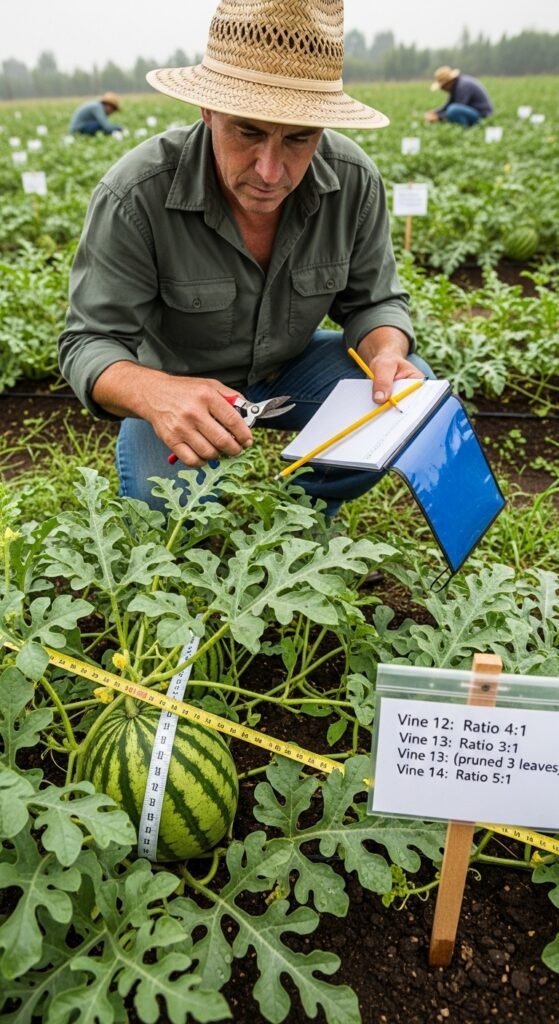
Maintain a balance between foliage and fruit; regular observation guides your cuts for optimal plant performance.
Health and Sustainability
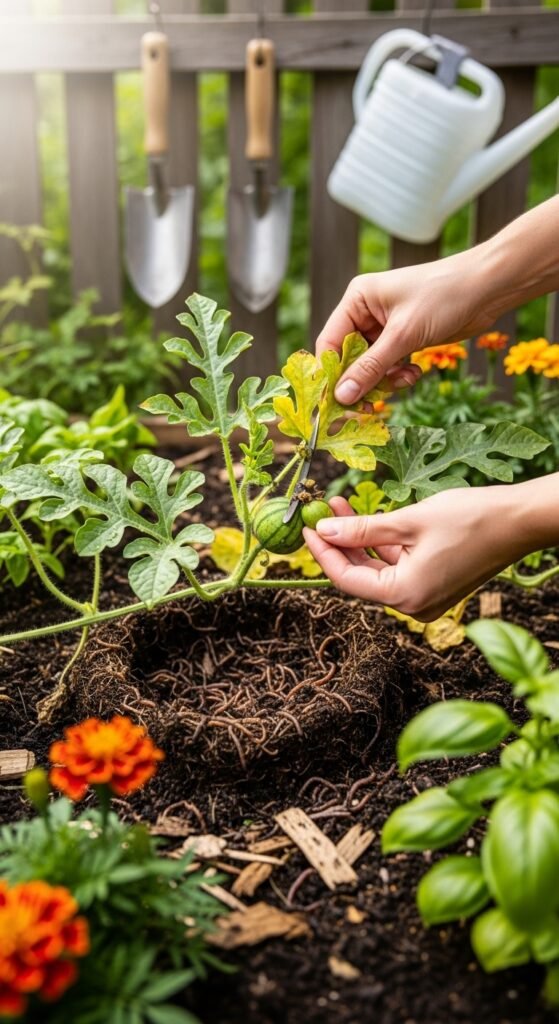
Prioritize removing unhealthy parts first, fostering sustainable practices that enhance long-term garden productivity.
Frequently Asked Questions
When is the best time to start pruning watermelon vines?
The ideal time is when vines reach 2-3 feet long, allowing you to identify strong mains and remove extras without shocking young plants.
How many fruits should I leave per watermelon vine?
Aim for 2-3 fruits per vine to ensure they grow large and flavorful, adjusting based on variety and plant health.
Can pruning help prevent diseases in watermelons?
Yes, by improving airflow and removing affected parts early, pruning significantly reduces fungal and bacterial issues.
What if I over-prune my watermelon plants?
Over-pruning can reduce yields, but plants often recover; focus on supportive care like watering and fertilizing to aid regrowth.
Do all watermelon varieties require pruning?
While beneficial for most, bush varieties need minimal pruning compared to sprawling vining types; always check specific guidelines.