Whether you are laying a simple garden path between your raised beds or redoing an entire driveway, buying gravel is different from buying soil or mulch. Most local quarries sell stone by the ton, not by the bag. If you order too little, you have to pay for a second delivery fee. If you order too much, you are stuck with a pile of rocks in your lawn.
🪨 Gravel & Path Calculator
*Calculated using standard gravel density (~1.4 tons/yard). Heavier stone like river rock may weigh more.
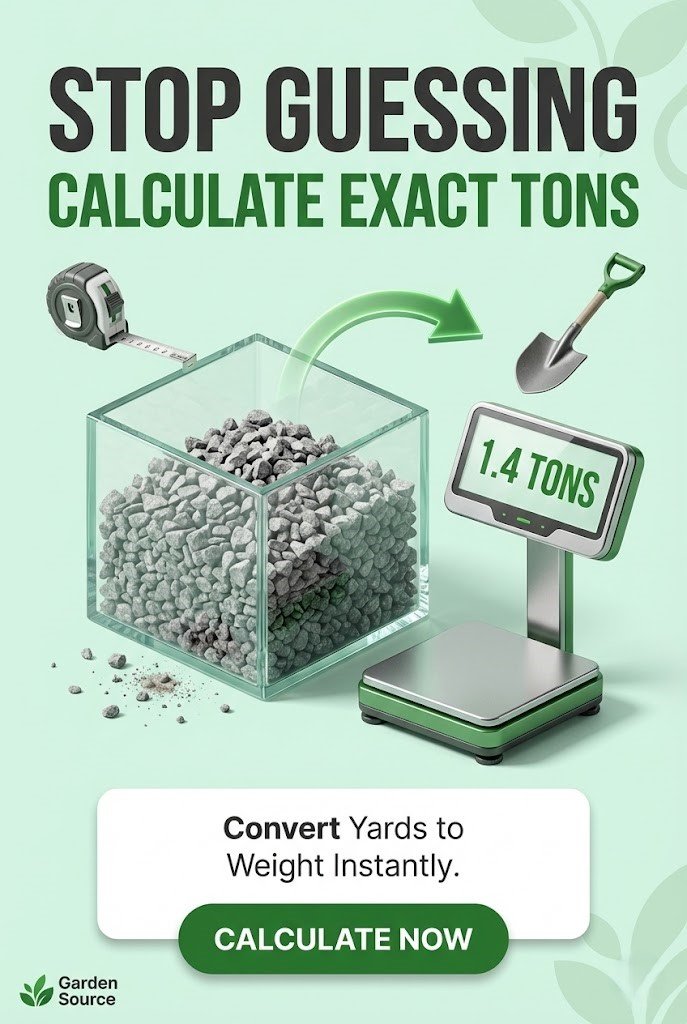
Check Landscape Rock Prices on Amazon »Stop guessing with expensive materials. Use our Free Gravel & Path Calculator to determine exactly how many tons and cubic yards you need for your hardscaping project.
How to Use This Tool
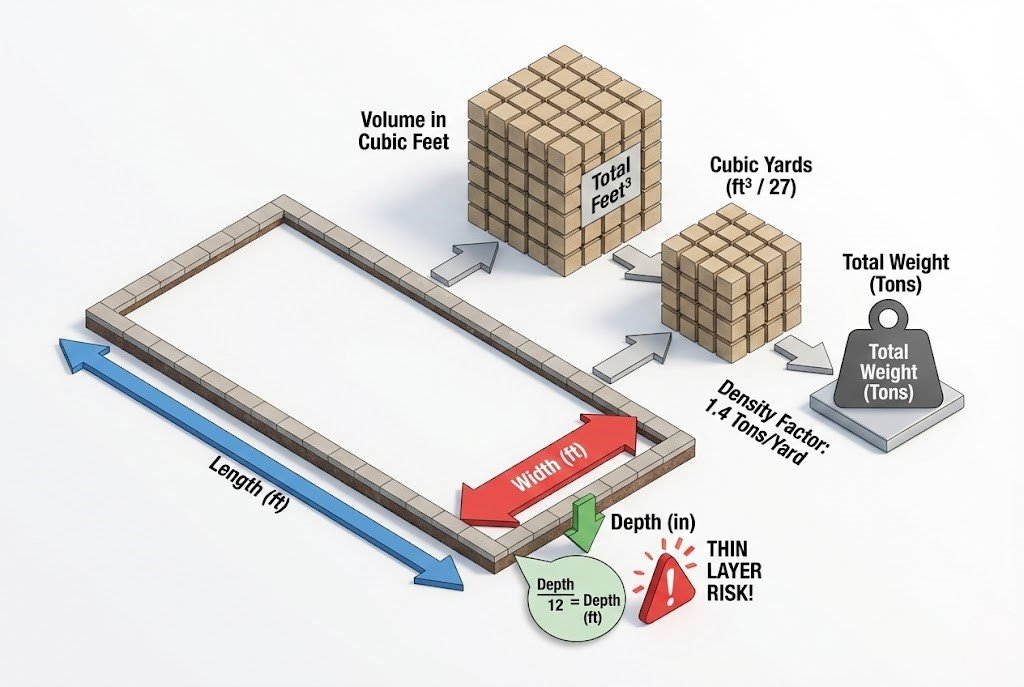
Hardscaping math can be tricky because you measure volume (cubic feet) but buy weight (tons). We handle the conversion for you:
- Measure Length & Width: Determine the area you want to cover in feet. If you are building a winding path, break it into smaller straight sections, calculate them individually, and add the totals together.
- Enter Depth: Input how deep you want the stone layer to be in inches. (See our recommendations below).
- Get Your Result: The tool will instantly show you the volume in Cubic Yards and the estimated weight in Tons, which is the number your local quarry will ask for.
Why We Built This (The “Secret Sauce”)
Many generic calculators simply give you cubic yards. However, if you call a landscape supply company and ask for “3 yards of gravel,” they will often ask, “How many tons is that?”
We integrated the Density Factor: Standard construction gravel (like #57 stone or pea gravel) weighs approximately 1.4 tons (2,800 lbs) per cubic yard. Our calculator automatically applies this density formula so you get a purchase-ready number.
Educational Guide: Choosing the Right Stone
Gravel is a fantastic, low-maintenance solution for garden paths, especially between raised beds where you want to suppress weeds without mowing grass.
1. Pea Gravel vs. Crushed Stone
Pea Gravel: Smooth, round stones. Great for barefoot walking areas and playgrounds, but it shifts underfoot. You must use edging to keep it in place.
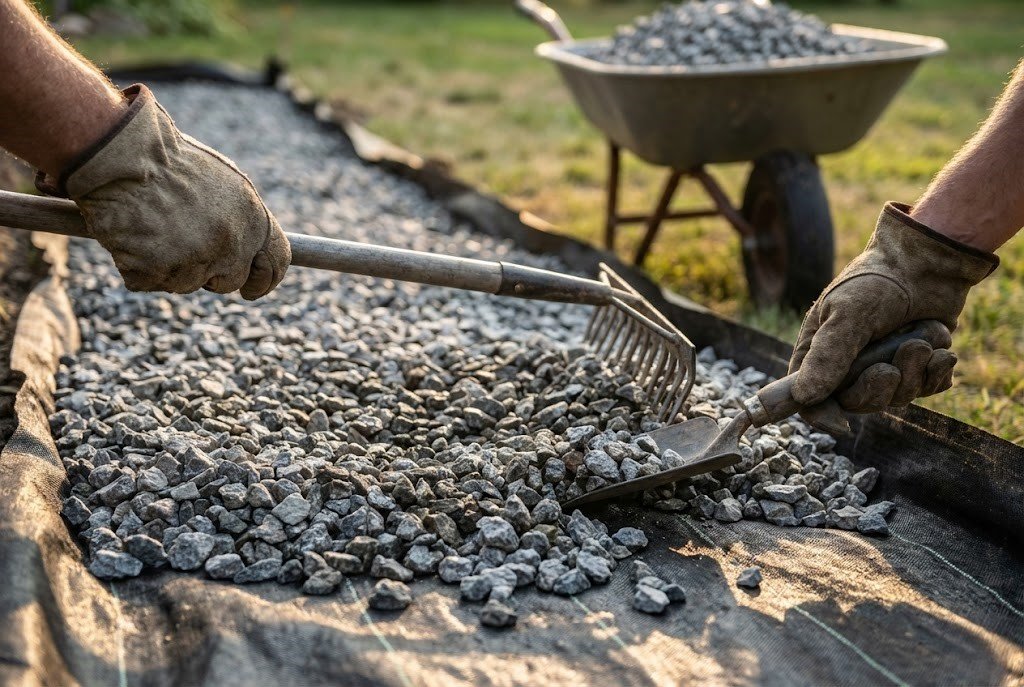
Crushed Stone (#57): Rough, angular edges. These stones lock together, making them superior for driveways and stable walking paths.
2. Proper Drainage Layers
If you are building a path near a garden, drainage is key. Gravel allows water to flow through, preventing puddles. This is similar to the drainage principles we use when filling tall raised beds—always put the coarsest material at the bottom.
3. Using Landscape Fabric
Never put gravel directly on bare dirt. Over time, the rocks will sink into the mud, and you will lose your path. Always lay down a heavy-duty landscape fabric first to separate the stone from the soil.
Frequently Asked Questions
How deep should a gravel path be?
For a standard walking path, we recommend a minimum depth of 3 inches. If the layer is thinner than 3 inches, you will likely see the landscape fabric showing through as you walk. For driveways, you need at least 4 to 6 inches of depth to support vehicle weight.
How much does a cubic yard of gravel weigh?
A cubic yard of standard gravel weighs approximately 2,800 lbs (1.4 tons). However, this can vary based on the type of stone. Lighter stones like lava rock weigh less, while dense river rock may weigh slightly more.
Can I put gravel over mulch?
No. Mulch decomposes over time, which will cause the gravel on top of it to sink and become uneven. You should remove old mulch and lay landscape fabric before installing gravel.