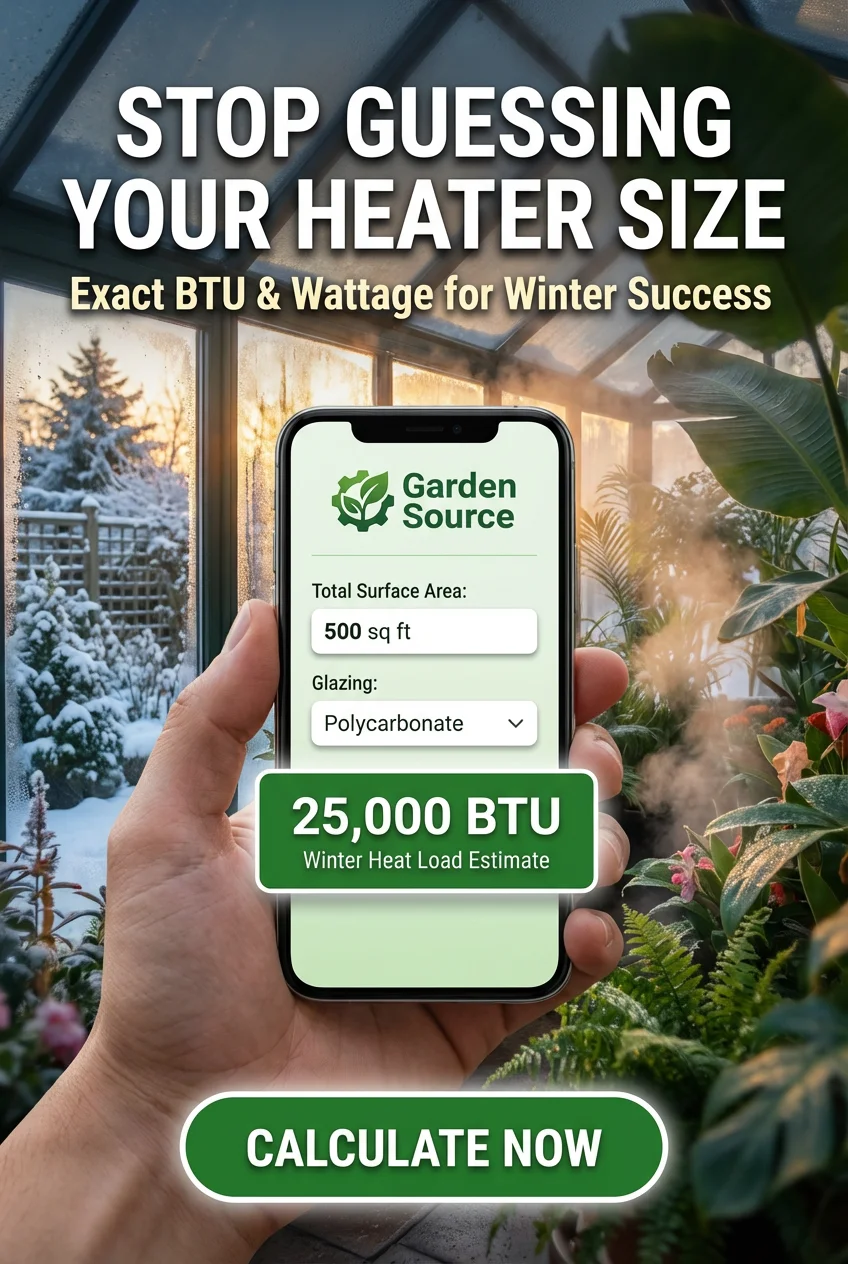
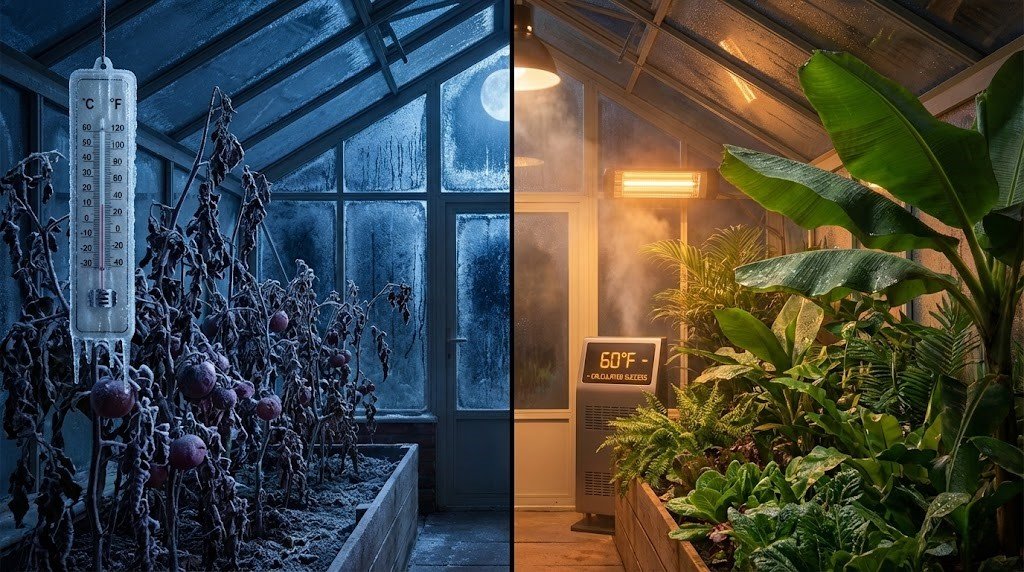
Protecting your delicate tropicals, seedlings, or winter greens requires more than just a cover; it requires a calculated heating strategy. If your heater is undersized, a single cold snap can wipe out months of hard work. Conversely, an oversized heater wastes energy and creates drastic temperature swings that stress plants.
Use our Greenhouse Heater Size Calculator to find the exact BTU (British Thermal Units) or Wattage required to keep your greenhouse at a safe, steady temperature throughout the coldest nights of the year.
Greenhouse Heater (BTU) Calc
How to Use the Greenhouse Heater Calculator
- Total Surface Area: This is the total area of all walls and the roof combined (not just the floor space!). For a standard 10×12 gable greenhouse, this is usually around 500-600 sq ft.
- Desired Inside Temp: The target temperature you want to maintain (usually 50°F-60°F for most plants).
- Lowest Outside Temp: The record low temperature for your specific region during the winter months.
- Glazing Material: Select the type of material your greenhouse is made of. This determines the R-value (insulation) and U-value (heat loss rate).
Why We Built This: Accuracy Beyond Square Footage
Most basic heaters are sold by the “room size,” but greenhouses are essentially “heatsinks” that lose energy much faster than insulated homes.
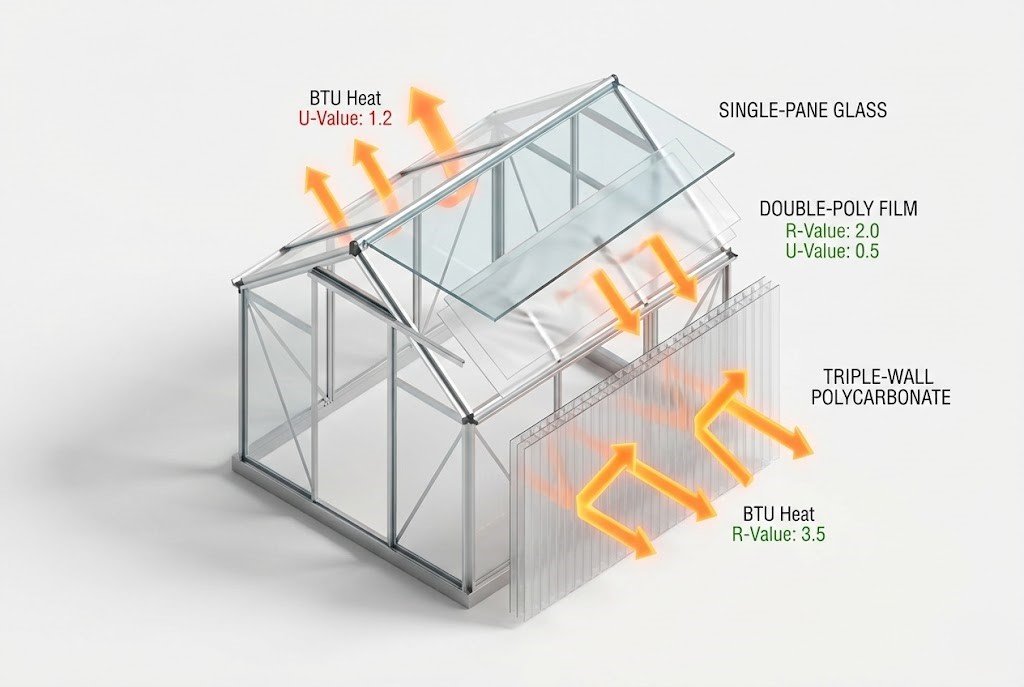
The “Secret Sauce” of our tool is the integration of U-Value Presets and a 10% Wind Buffer. We don’t just calculate based on floor space; we calculate based on how fast heat escapes through your specific glazing (glass vs. polycarbonate) and add a margin for windy nights when convective cooling is at its peak.
Educational Guide: Heating Efficiency Tips
Once you know your BTU requirement, choosing the right heater type is the next step.
Electric vs. Gas Heating
Electric heaters are convenient, require no venting, and are 100% efficient. However, they can be expensive to run if your greenhouse is large. Propane or Natural Gas heaters provide massive amounts of heat (high BTUs) for larger spaces but require proper ventilation to prevent the buildup of toxic gases like carbon monoxide and ethylene, which can kill both plants and people.
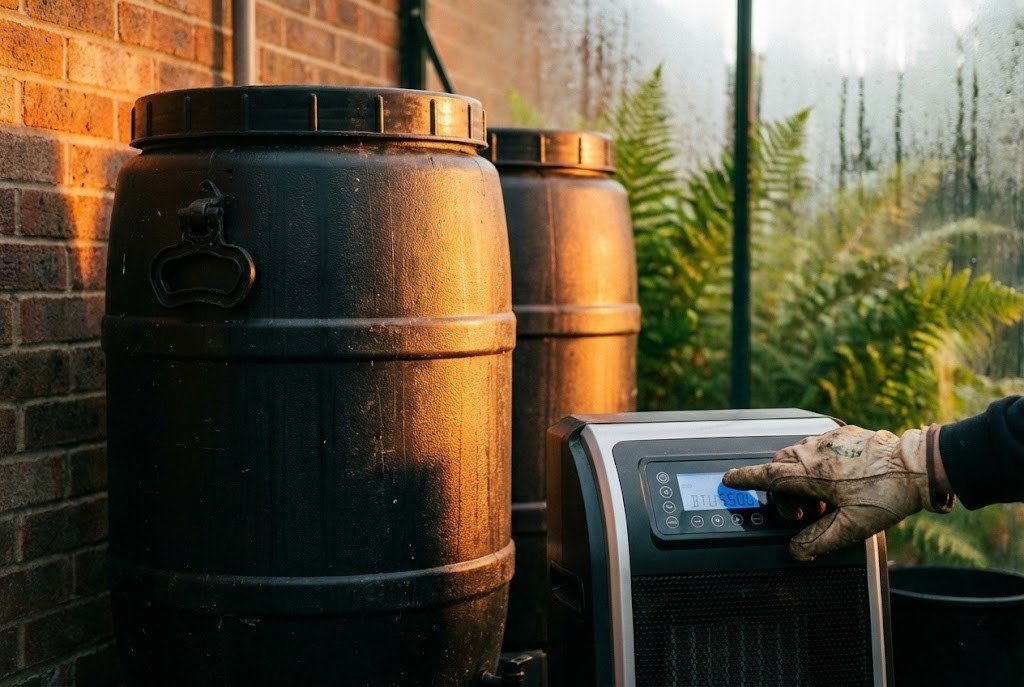
To reduce your BTU needs, consider thermal mass. Placing black barrels of water inside the greenhouse allows them to soak up solar heat during the day and release it at night, effectively “shaving off” the peaks of your heater’s workload.
Frequently Asked Questions
Q: What is a safe temperature for most greenhouses in winter?
A: For most hobbyists, maintaining a “Cool House” temperature of 45°F to 50°F is sufficient to keep plants alive. A “Warm House” for tropicals usually requires maintaining 60°F or higher.
Q: How do I calculate my greenhouse surface area?
A: Calculate the area of each wall (Length x Height) and the roof sections, then add them all together. Do not forget the two triangle sections at the gable ends!
Q: Does bubble wrap really help insulate a greenhouse?
A: Yes! Adding a layer of large-bubble horticultural wrap to the interior can improve your R-value significantly, often reducing heat loss by up to 30%-40%.