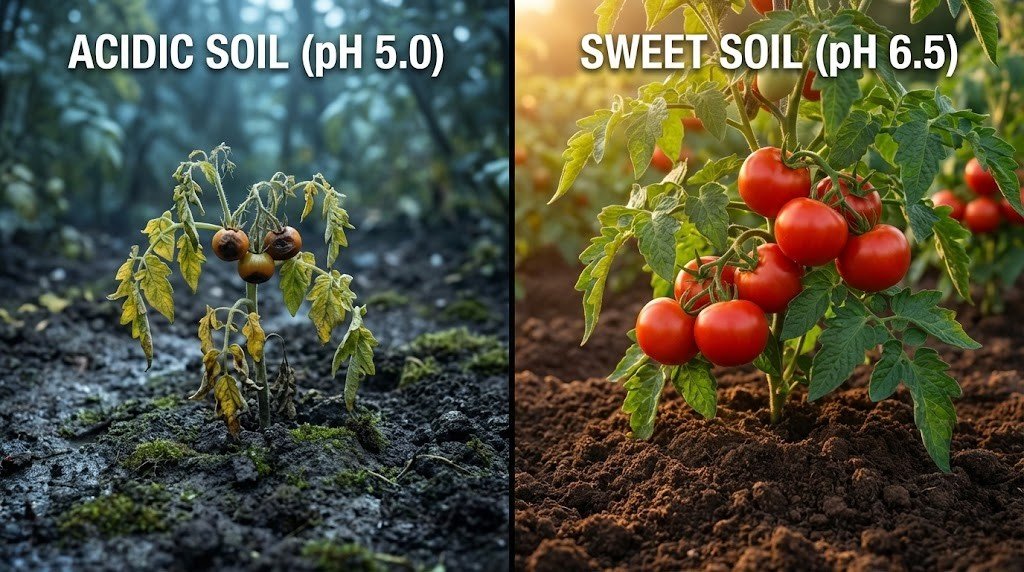
Most vegetable gardens love a neutral pH (around 6.5 to 7.0). If you live in an area with high rainfall or sandy soil, you likely have “sour” or acidic soil (pH below 6.0). In acidic soil, nutrients like calcium and magnesium become locked away, and your tomatoes suffer from blossom end rot.
The solution is Garden Lime (Calcium Carbonate). But how much do you add? Too little does nothing; too much locks out other nutrients. Use our Soil pH Lime Calculator below to determine the exact dosage needed to sweeten your soil.
🧪 Soil pH Lime Calculator
How to Use This Tool
Liming is a slow chemical process, so accuracy counts. Here is how to use the calculator:
- Current pH: Enter the number from your soil test kit (e.g., 5.5).
- Target pH: Enter your goal. For most vegetable gardens, 6.5 is the perfect target. Do not aim higher than 7.0 unless you have a specific reason.
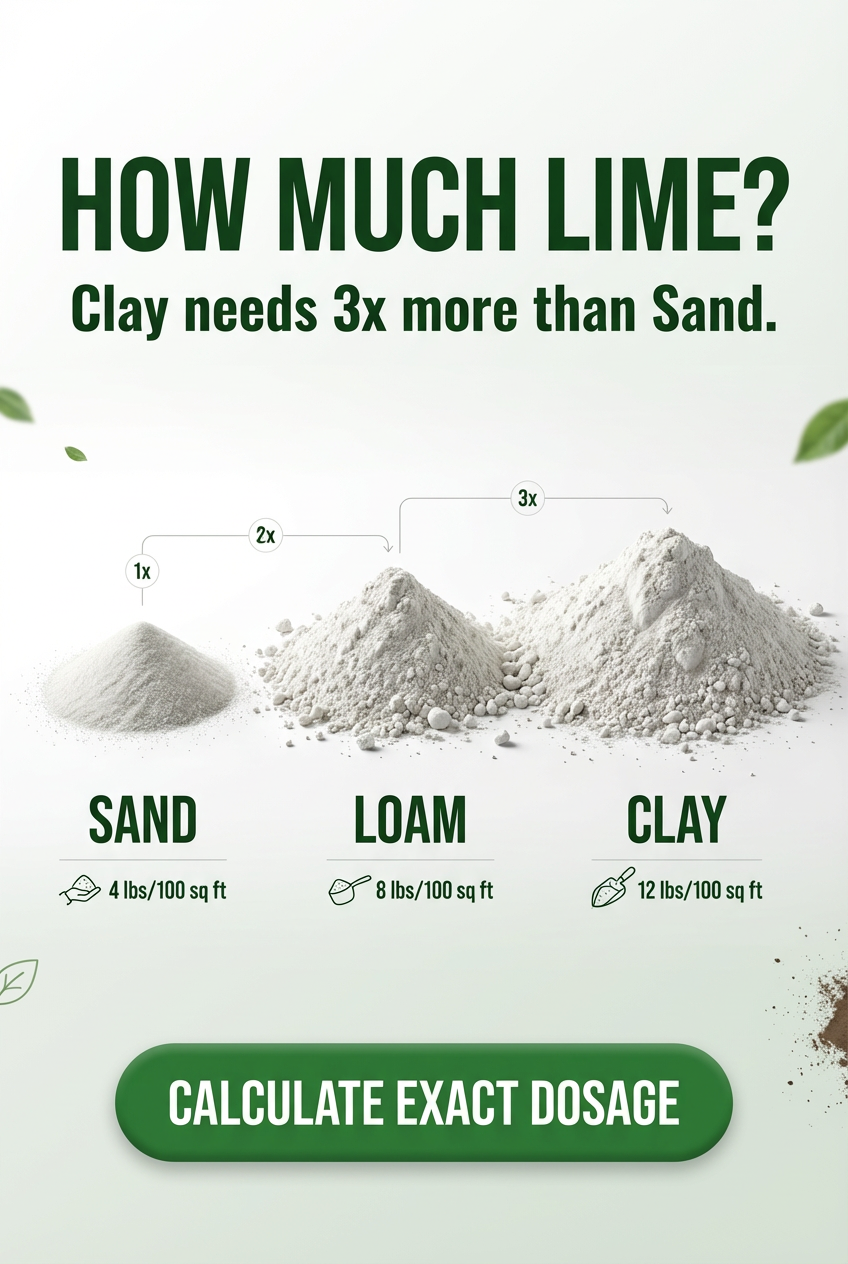
- Identify Soil Type: Clay soil is heavy and “buffers” pH changes, meaning it needs nearly 3x more lime than sandy soil to achieve the same result.
Why We Built This (The “Secret Sauce”)
Many bags of lime give vague instructions like “Apply 5 lbs per 100 sq ft.” That doesn’t account for your specific soil texture.
The Buffering Capacity Factor:
Think of your soil like a sponge. Sandy soil is a small sponge—it changes quickly with a little lime.
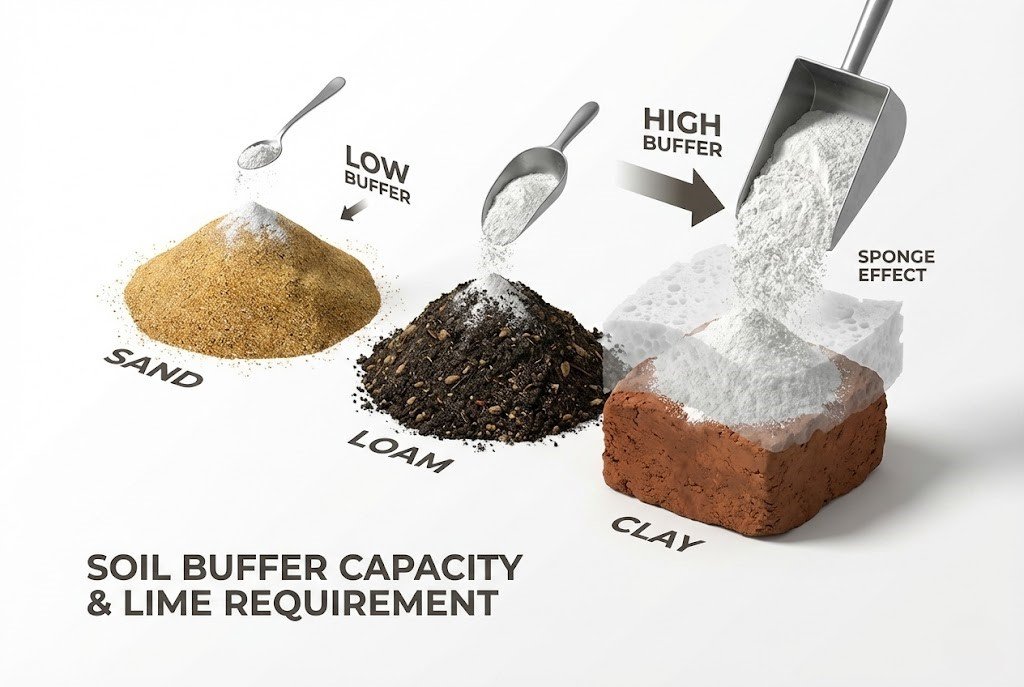
Clay soil is a giant sponge—it absorbs a huge amount of lime before the pH actually moves. Our calculator uses agricultural standard “Buffering Curves” to adjust the dose based on whether you selected Sand, Loam, or Clay.
Educational Guide: Dolomitic vs. Calcitic Lime
When you go to the store, you will see two main types of lime. Which one do you need?
1. Calcitic Lime (Standard)
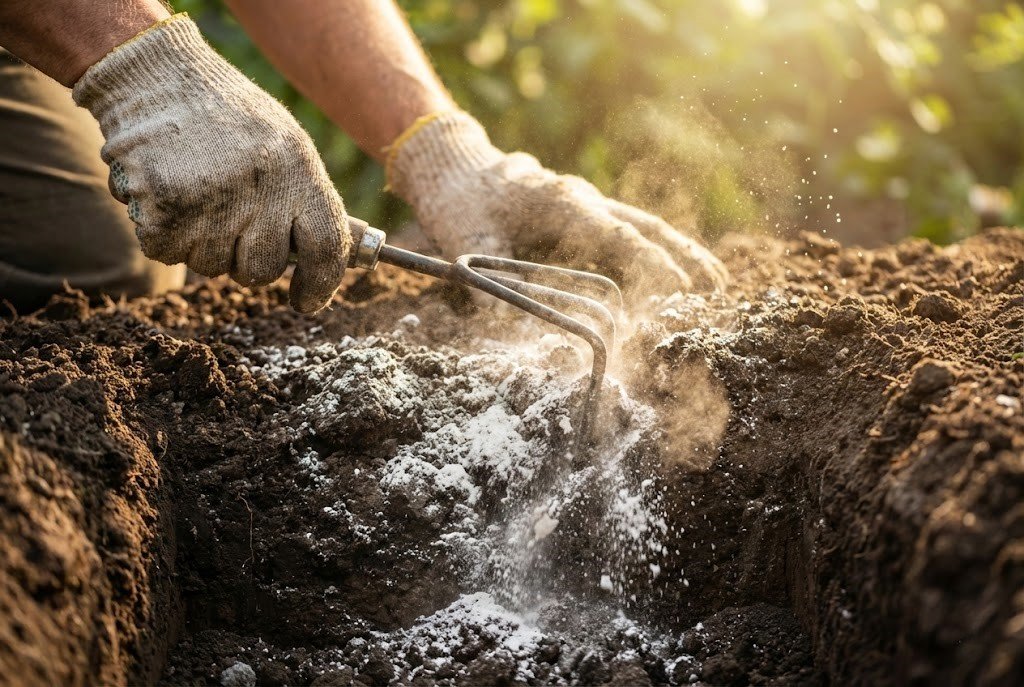
This is pure Calcium Carbonate. It is the fastest way to raise pH and provides Calcium to the soil. Use this if your soil test shows you have plenty of Magnesium but low pH.
2. Dolomitic Lime (The Gardener’s Friend)
This contains both Calcium and Magnesium. Many acidic soils are also deficient in Magnesium. Using Dolomitic lime fixes both problems at once. It reacts slightly slower than Calcitic lime but is generally preferred for home vegetable gardens.
3. “Fast Acting” Lime
You may see bags labeled “Fast Acting” or “Prilled” lime. This is simply lime that has been ground into ultra-fine dust and then pelleted. It works in weeks rather than months, but it is more expensive. The calculation remains roughly the same.
Frequently Asked Questions
How long does it take for lime to work?
Lime is slow. Standard agricultural lime takes 3 to 6 months to fully react with the soil. The best time to apply lime is in the Fall, so the winter rain/snow helps it break down before Spring planting.
Can I mix lime and fertilizer together?
It is best to wait. If you mix fresh lime with nitrogen-rich fertilizer (like Urea or Manure), a chemical reaction can occur that releases the nitrogen into the air as ammonia gas. Apply lime first, water it in, and wait at least 2 weeks before fertilizing.
Is wood ash the same as lime?
Wood ash acts similarly to lime (it raises pH) and works very fast because it is highly soluble. However, it is much more potent and can burn plants if overused. Generally, use 2x the weight of wood ash compared to lime, but be very careful not to exceed pH 7.0.