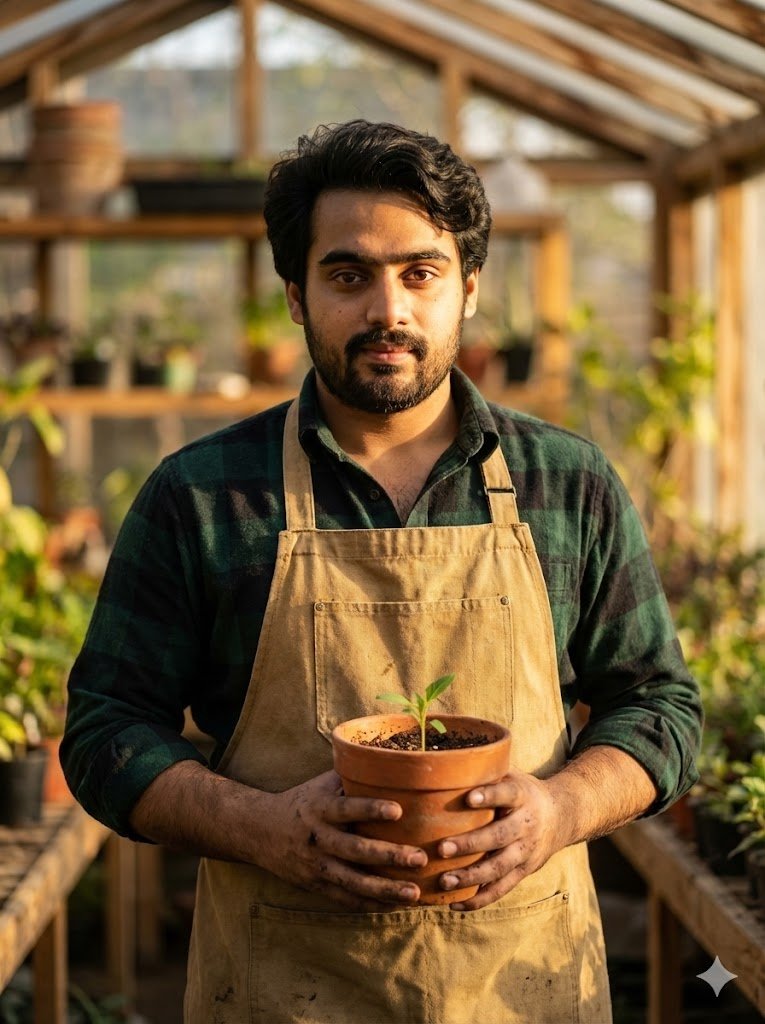
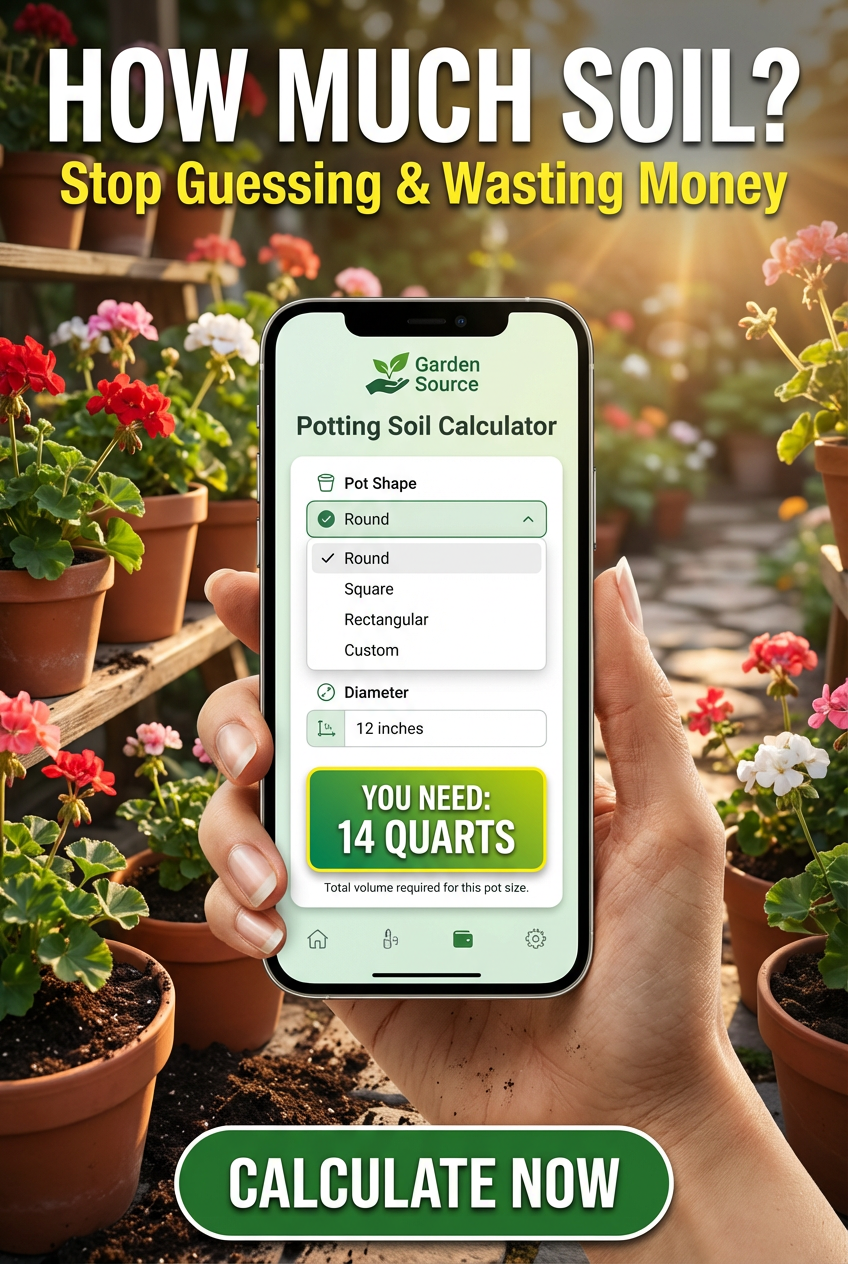
Container gardening is a fantastic way to grow food and flowers in small spaces, but figuring out how much soil to buy is surprisingly difficult. Bags of potting mix are sold in confusing sizes—quarts, liters, and cubic feet—while your pots are measured in inches.
Instead of guessing and ending up with half-empty planters (or five extra bags cluttering your garage), use our Free Potting Soil Calculator. It converts your specific pot dimensions directly into the shopping units you see at the store.
🪴 Potting Soil Calculator
How to Use This Calculator
Whether you have a single window box or a patio full of terra cotta pots, getting the right amount of mix is easy:
- Select Your Pot Shape: Choose "Round" for standard flower pots or "Square/Rectangular" for planter boxes.
- Measure the Top: Measure the diameter (width) across the top of the pot. If the pot is tapered (narrower at the bottom), measuring the top ensures you have enough soil.
- Measure Height: Measure from the bottom of the pot to the rim.
- Enter Count: If you are filling 5 identical pots, just type "5" in the count box.
Why We Built This (The "Secret Sauce")
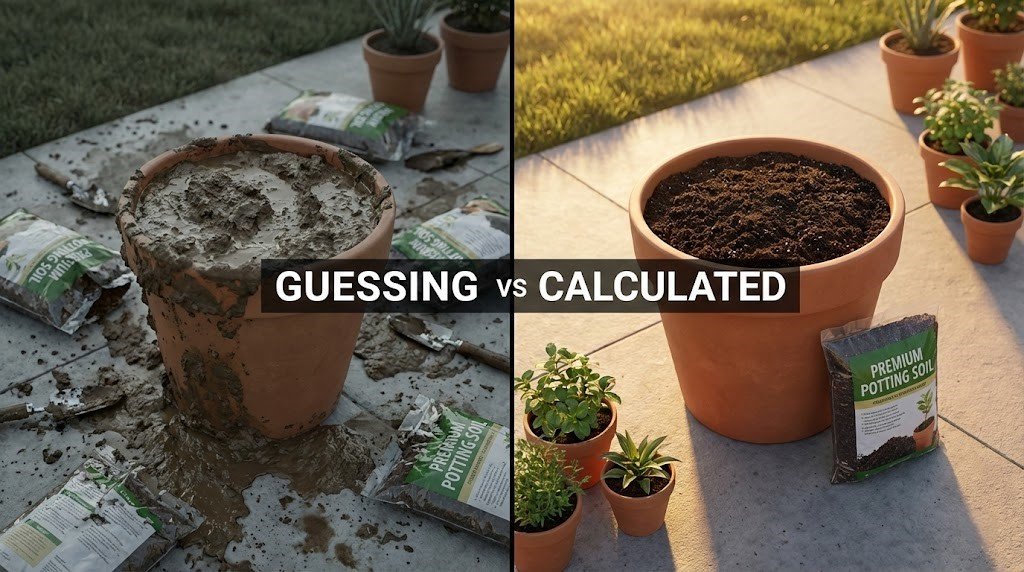
Most calculators on the web give you the exact mathematical volume of your pot. If you buy exactly that amount, you will make a huge mess.
We added a "Watering Gap" logic. Experienced gardeners never fill a pot to the very brim. You need to leave about 1 inch of space at the top so that when you water, the water pools and soaks in rather than overflowing onto your patio.
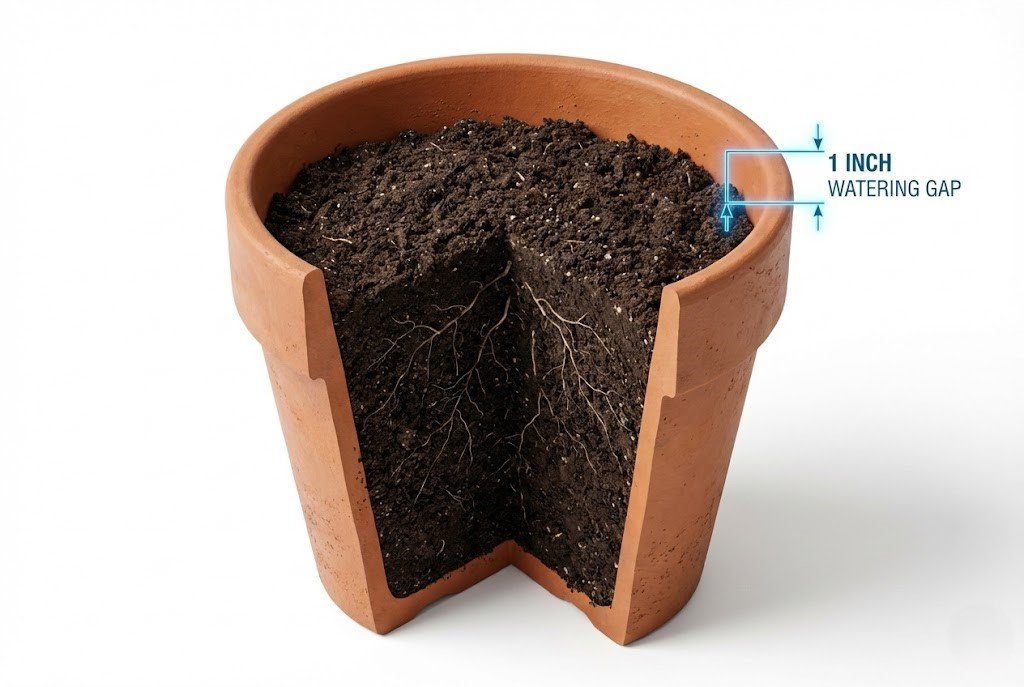
Our tool automatically subtracts 1 inch from your height input to give you the practical volume you actually need.
Educational Guide: Choosing the Right Potting Mix
Now that you know how many quarts you need, make sure you buy the right product. Never use garden soil or topsoil in containers. It is too dense and will rot the roots of your plants.
For containers, you need a "soilless" potting mix. Here is what to look for:
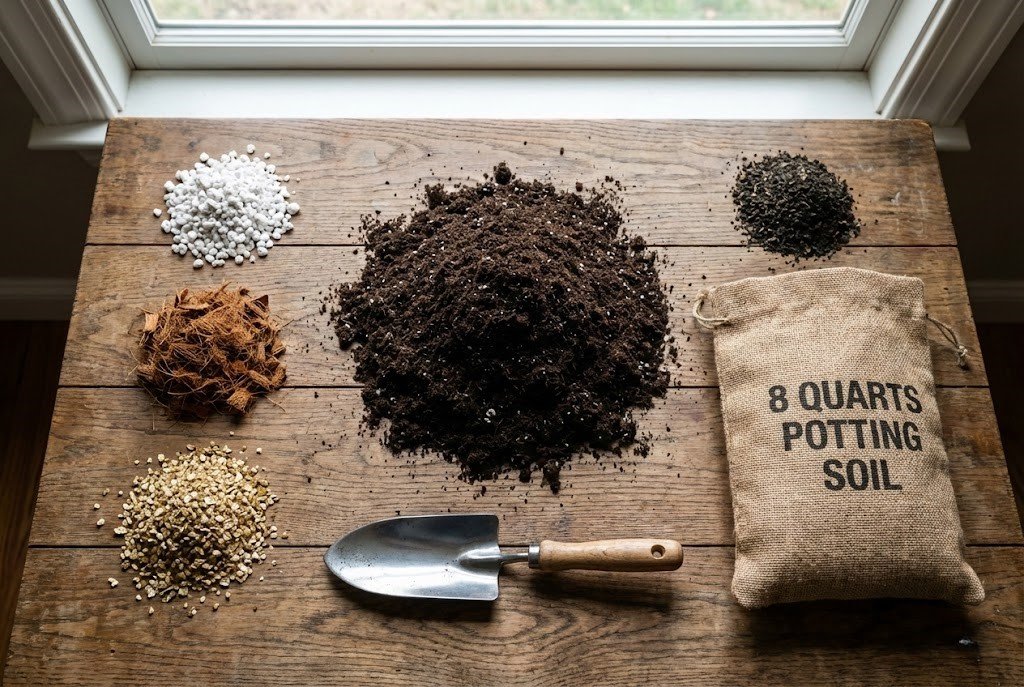
- Drainage is King: Look for mixes containing Perlite (the white rocky bits) or Vermiculite.
- Water Retention: Ingredients like Peat Moss or Coconut Coir hold moisture without drowning roots.
- Nutrition: Most quality mixes contain slow-release fertilizer. If yours doesn't, consider mixing in some compost or worm castings.
If you are filling very large containers (like a galvanized tub), filling the whole thing with premium potting mix is expensive. You can save money by filling the bottom third with bulkier organic material—similar to how we recommend filling tall raised beds.
Frequently Asked Questions
How many quarts are in a cubic foot of soil?
There are approximately 25.7 dry quarts in 1 cubic foot. However, most potting soil bags (like Miracle-Gro) are sold by the quart (8qt, 32qt, or 64qt bags). Our calculator does this conversion for you automatically.
Do I need to put rocks at the bottom of my pot?
No, do not put rocks at the bottom. This is a gardening myth called the "perched water table." Rocks actually raise the water level inside the pot, bringing saturated soil closer to the roots and causing rot. Fill the entire pot with high-quality potting mix instead.
How much soil do I need for a 5-gallon bucket?
A standard 5-gallon bucket holds approximately 19 to 20 quarts of potting soil. If you are buying a 1-cubic foot bag, it will fill about one and a half 5-gallon buckets.