
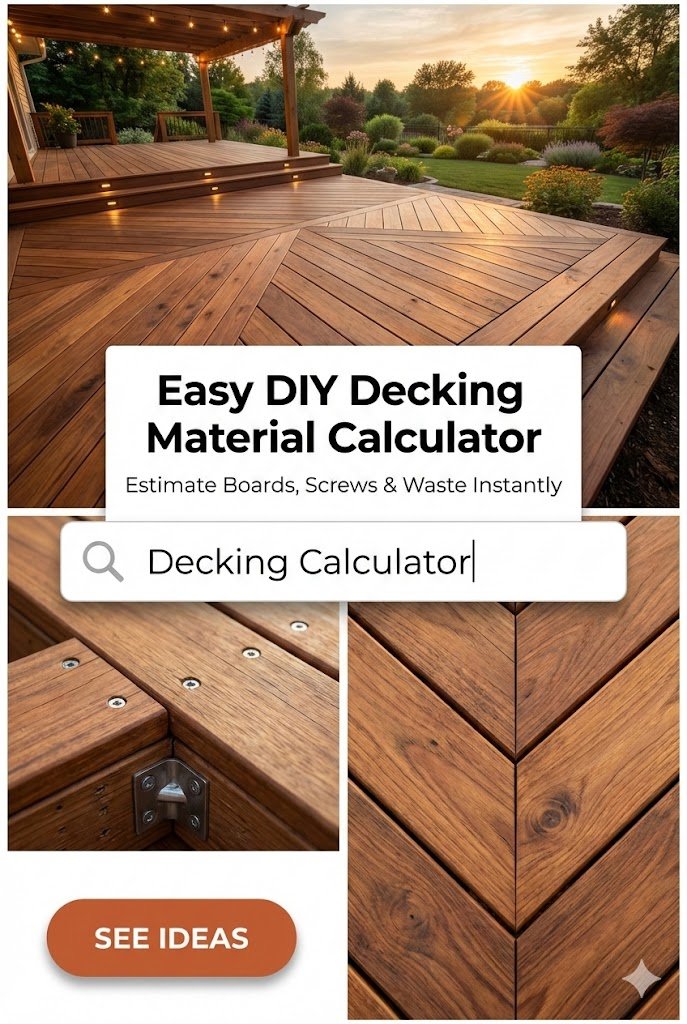
There is nothing worse than building a deck and ending up three boards short on a Sunday afternoon. Conversely, over-ordering expensive composite decking by 20% can cost you hundreds of dollars.
Use our free Decking Board Calculator below to get an accurate material list. It accounts for board width, gap spacing, and even complex diagonal patterns to tell you exactly how many linear feet and fasteners you need.
Decking Calculator
Estimate Boards, Clips & Screws
(Includes Waste)

How to Use This Calculator
- Dimensions: Enter the total Length and Width of your deck surface.
- Board Width: Select the actual width of your board, not the nominal width.
- Standard “5/4 x 6” decking is actually 5.5 inches wide.
- 2×4 decking is 3.5 inches wide.
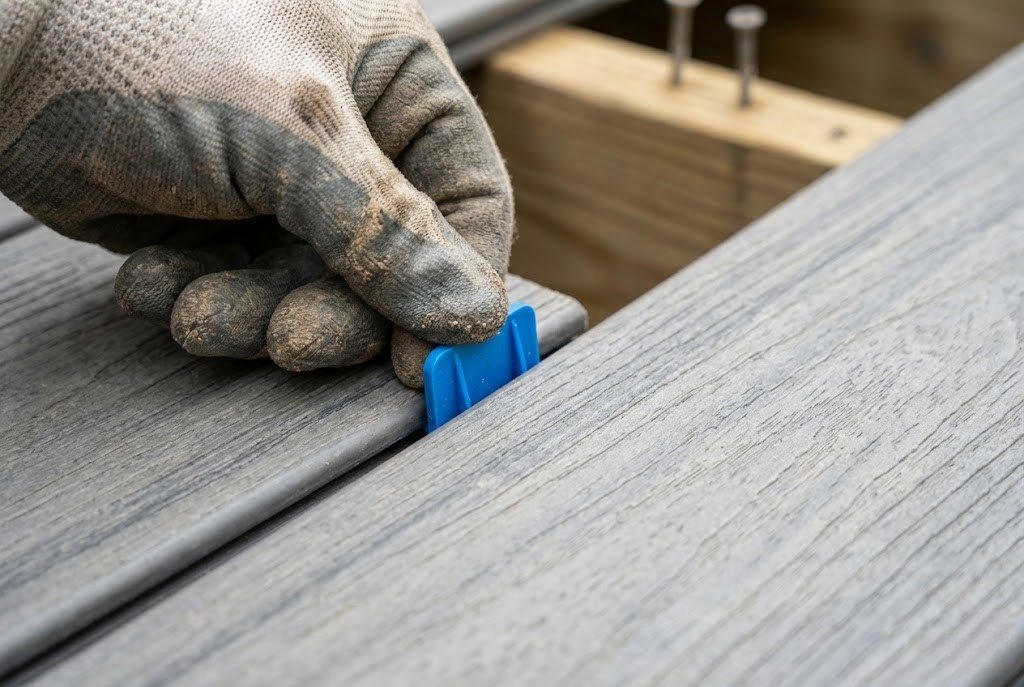
- Gap Size: This is the space between boards for drainage.
- 1/8″ is standard for pressure-treated wood (it will shrink later).
- 3/16″ or 1/4″ is often required for composite decking to allow for expansion in the sun.
- Diagonal Pattern: Check this box if you are laying boards at a 45-degree angle. This looks beautiful but increases waste significantly because you cut the ends off every single board.
Why We Built This (The “Secret Sauce”)
Most calculators treat all decks the same. We added two professional features:
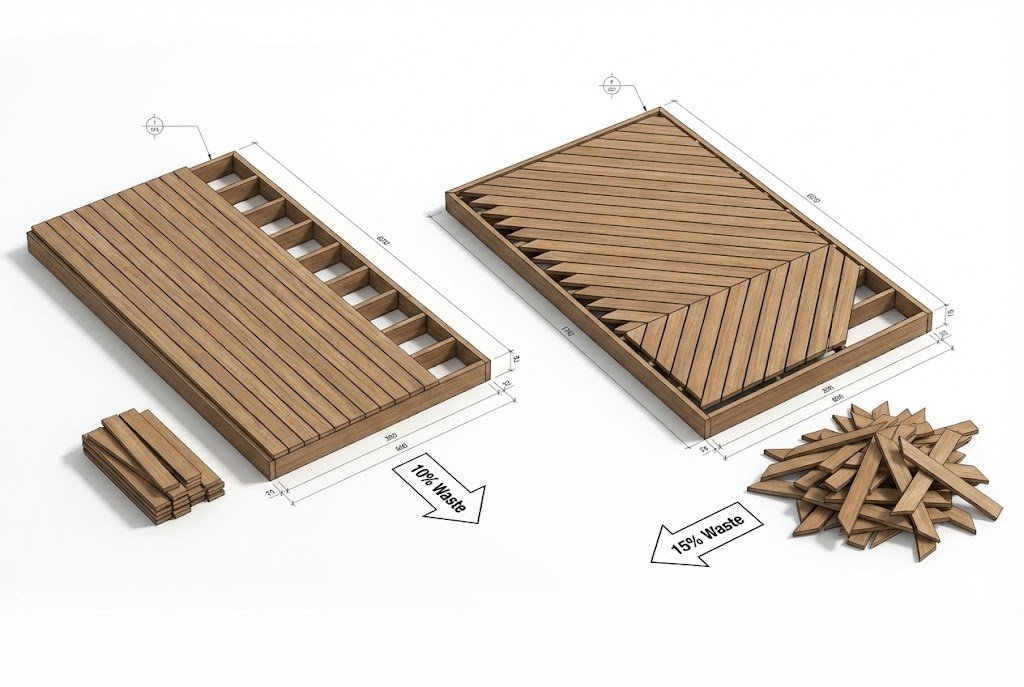
- Diagonal Waste Factor: Laying a deck diagonally increases structural rigidity but creates massive waste. Our tool automatically bumps the waste margin from 10% to 15% when you select this option, ensuring you don’t run short.
- Hidden Fastener Logic: If you use screws, you need 2 per joist. If you use hidden clips (like Camo or Trex Hideaway), you typically use 1 clip per intersection. Our calculator adjusts the total count based on your hardware choice.
Educational Guide: Linear Feet vs. Board Feet
When ordering decking, you will often hear two terms:
- Linear Feet (LF): This is the total length of all boards laid end-to-end. This is what our calculator provides because it is how you determine coverage.
- Board Feet (BF): This is a volume measurement used by sawmills (Volume = L x W x Thickness). You rarely use this for buying finished decking at a hardware store.
Pro Tip: The “Random Lengths” Order
Unless you are building a simple square deck, don’t just order one length of board (e.g., all 16-footers). “Random lengths” (a mix of 8′, 12′, and 16′) allow you to stagger joints across the deck, which creates a stronger and better-looking floor.
Frequently Asked Questions (FAQ)
What gap should I leave between deck boards?
For pressure-treated wood, install boards tight (1/16″ or less) because they are wet and will shrink to create a 1/8″ to 1/4″ gap as they dry. For composite decking, you MUST leave the manufacturer-specified gap (usually 3/16″ to 1/4″) to allow the plastic to expand in the heat without buckling.
How many screws do I need for a deck?
A general rule of thumb is roughly 350 screws per 100 square feet of decking, assuming 6-inch wide boards on 16-inch centers. This accounts for 2 screws at every joist intersection.
Should I stagger deck board joints?
Yes. Never align all your butt joints in a single row; it creates a structural weak point and looks unprofessional. You should random stagger joints so that no two adjacent rows have joints on the same joist.