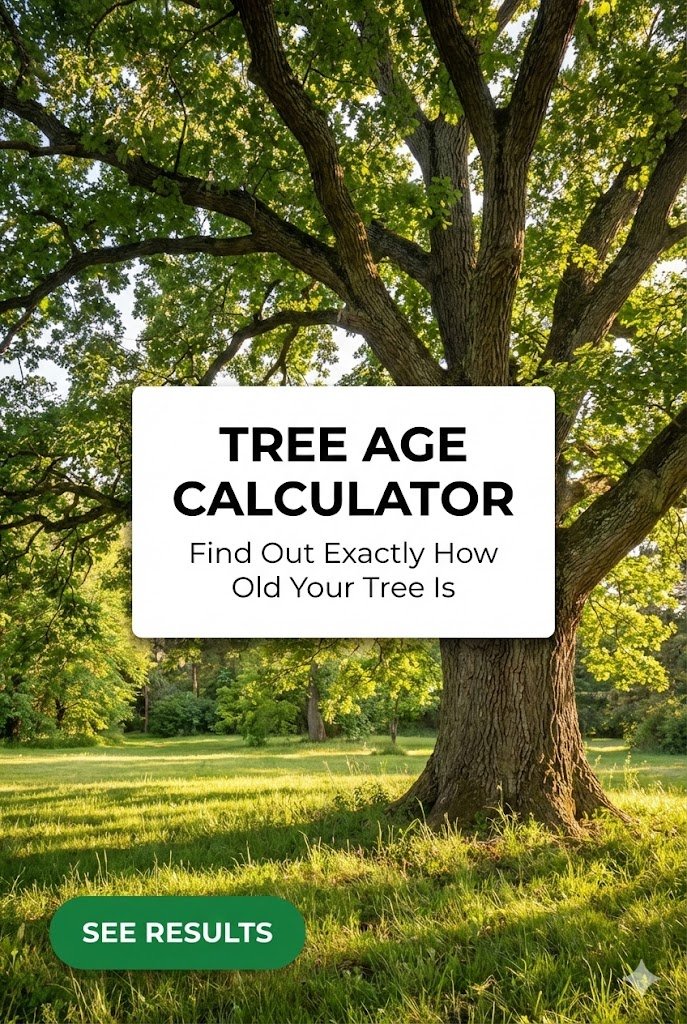
Ever wonder if that massive Oak in your backyard is older than your house? You don’t need to cut a tree down to count the rings. By measuring the trunk and knowing the species, you can get a surprisingly accurate estimate of its history.
Use our free Tree Age Calculator below. It uses the “Growth Factor” method commonly used by arborists to estimate age without harming the tree.
Tree Age Calculator
Estimate age by circumference & species
How to Use This Calculator
To get the best result, you need to measure the tree correctly:
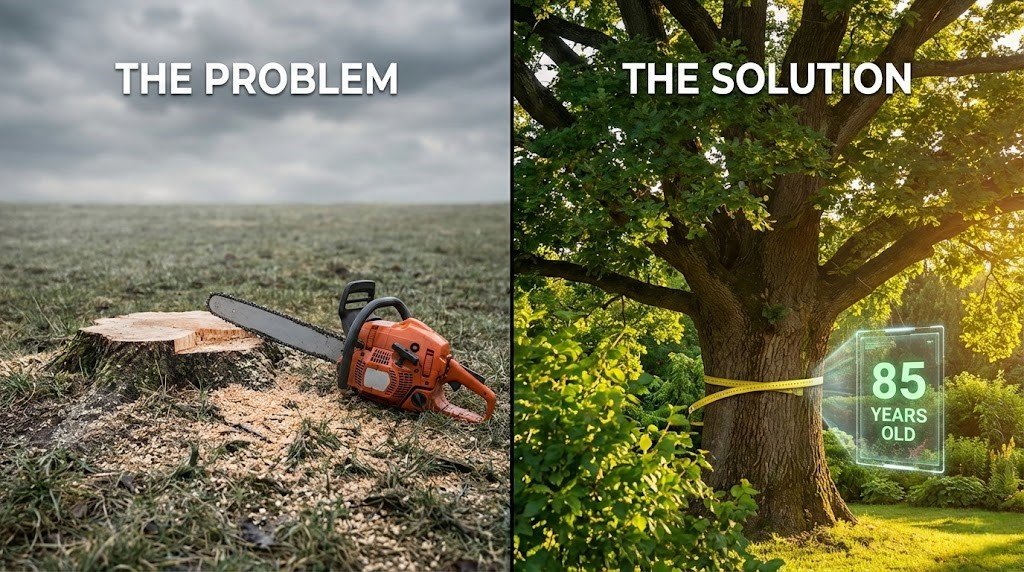
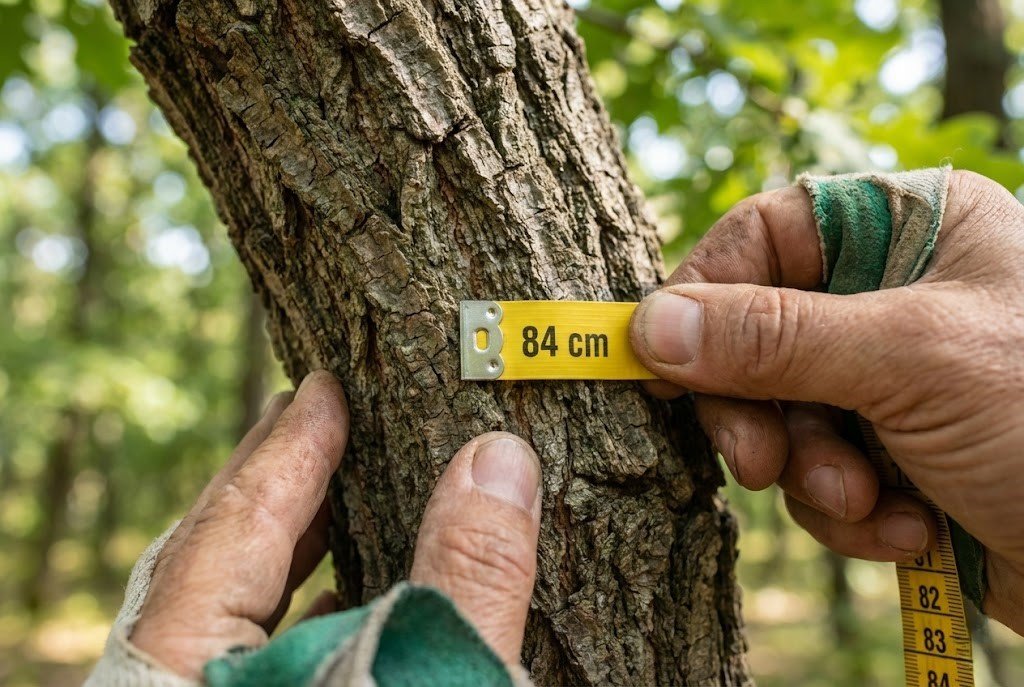
- Measure Circumference: Take a tape measure and wrap it around the trunk at 4.5 feet off the ground. This measurement height is the industry standard known as "DBH" (Diameter at Breast Height).
- Identify Species: Growth rates vary wildly. A "Silver Maple" grows like a weed (Factor 3.0), while a "White Oak" grows slowly and steadily (Factor 5.0). If you are unsure, select "Generic Hardwood."
Why We Built This (The "Secret Sauce")
While cutting a tree down allows you to count rings perfectly, it kills the tree. Our tool uses the International Society of Arboriculture (ISA) growth factor formula:
Diameter × Growth Factor = Estimated Age
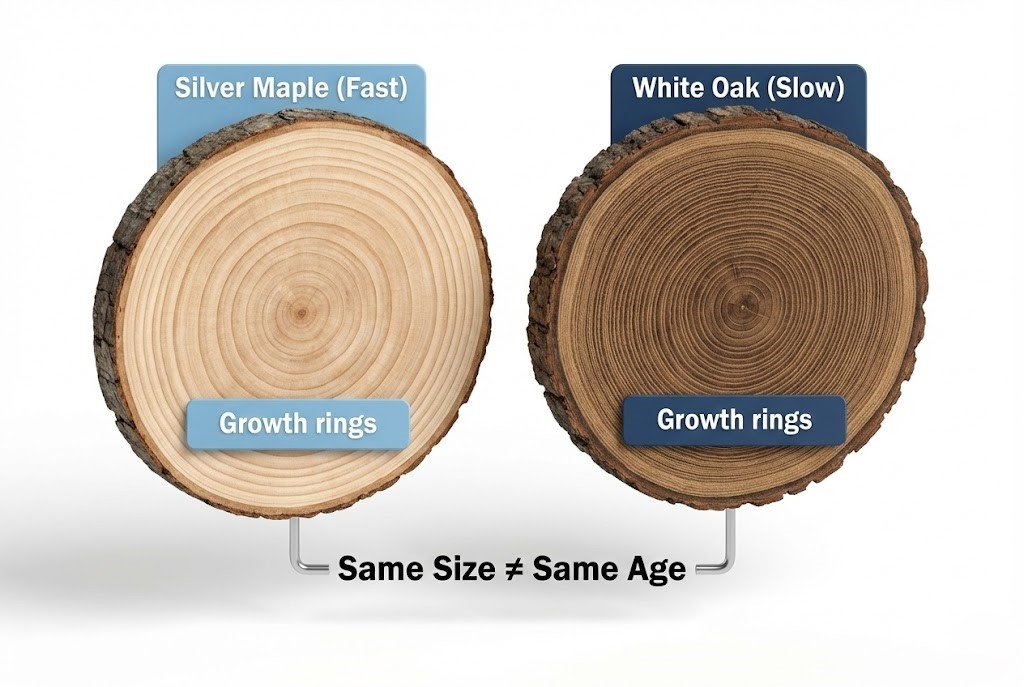
We also added a "Historical Context" feature. Seeing a number like "85 Years" is neat, but realizing your tree was planted before the invention of the microwave puts its survival into perspective.
Educational Guide: What Affects Tree Growth?
Keep in mind this calculator provides an estimate. Real-world conditions can speed up or slow down a tree's life:
- Competition: Trees in a dense forest grow slower (fighting for light) than "Open Grown" trees in a sunny front yard.
- Soil Quality: Rich, moist soil can double the growth rate compared to dry, compacted clay.
- Urban Stress: Street trees often grow slower due to limited root space and pollution.
Frequently Asked Questions (FAQ)
Is the tree age calculator accurate?
It is generally accurate within +/- 10% for trees grown in open environments (yards, parks). For forest trees, the calculation may overestimate age because forest trees stay thinner while fighting for light.
What is DBH in tree measuring?
DBH stands for Diameter at Breast Height. It is the standard height (4.5 feet or 1.37 meters) to measure a tree trunk to avoid the root flare at the bottom, which would give a falsely large reading.
What is the fastest growing tree?
In North America, the Hybrid Poplar and Silver Maple are among the fastest, capable of growing 5 to 8 feet per year. However, fast-growing trees often have weaker wood and shorter lifespans than slow growers like Oaks.