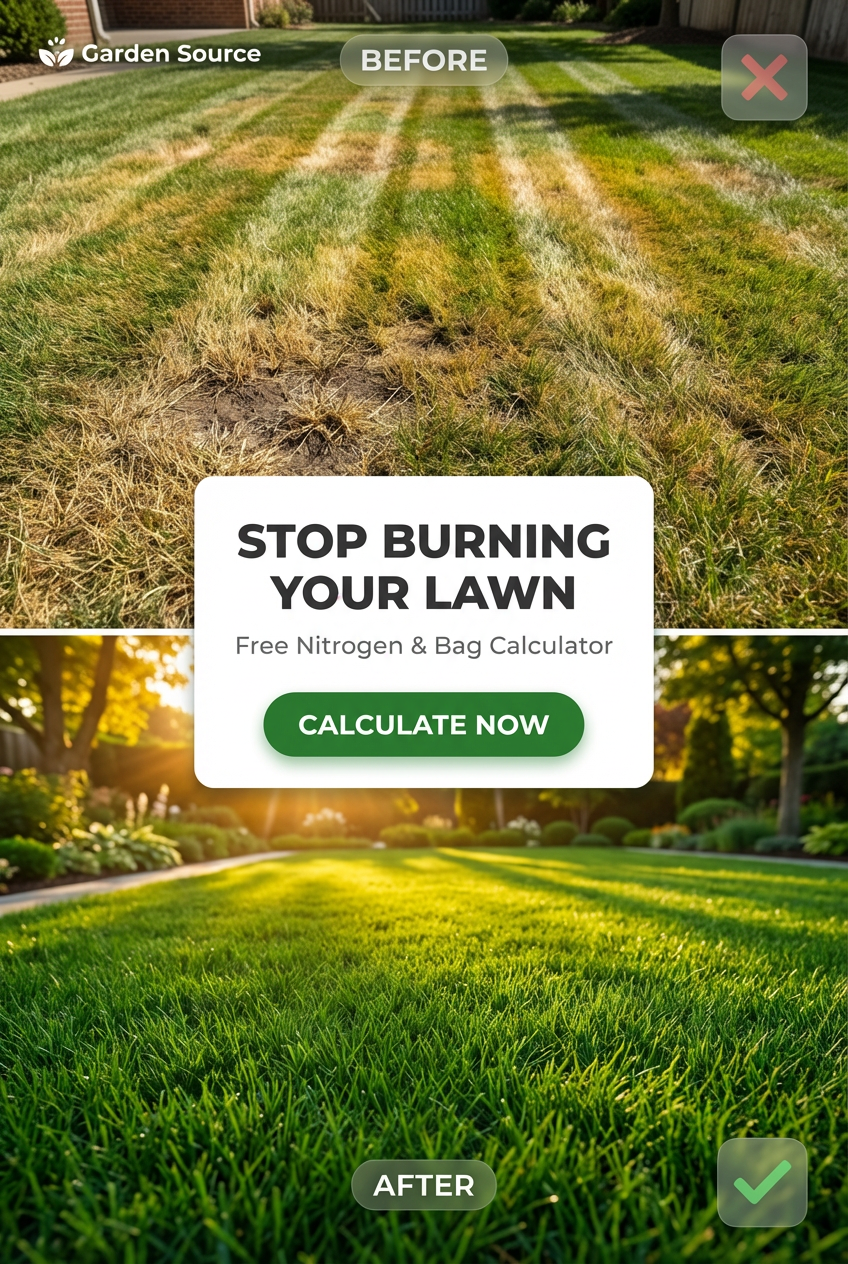
Maintaining a lush, green lawn is a point of pride for many homeowners, but “eyeballing” your fertilizer application is a recipe for disaster. Apply too little, and your grass remains yellow and thin. Apply too much, and you risk “fertilizer burn,” which can chemically scorch your turf and harm the environment. The key to a professional-grade lawn is calculating your Nitrogen load based on your specific fertilizer’s N-P-K ratio.
Use our Lawn Fertilizer Calculator to determine exactly how many pounds of product—and how many bags—you need to buy for your specific lawn square footage. Our tool ensures you hit the target application rate recommended by turfgrass experts.
Lawn Fertilizer Calculator
How to Use the Fertilizer Calculator
- Lawn Size: Enter the total square footage of your grass. If you aren't sure, use our Square Footage Calculator first.
- N-P-K Analysis: Look at the three numbers on the front of your fertilizer bag (e.g., 24-0-6). Enter the first number (Nitrogen) into the calculator.
- Bag Weight: Standard bags are usually 15, 20, or 50 lbs. This is required to calculate the total number of bags you need to purchase.
- Target N Rate: The industry standard is 1.0 lb of Nitrogen per 1,000 sq ft. For a "slow-release" feeding, you might drop this to 0.75 lbs.
Why We Built This: The "Secret Sauce" of Nutrient Delivery
The "Secret Sauce" of our tool is the Nitrogen Factor Logic. Most beginners assume that a 50lb bag of fertilizer equals 50lbs of nutrients.
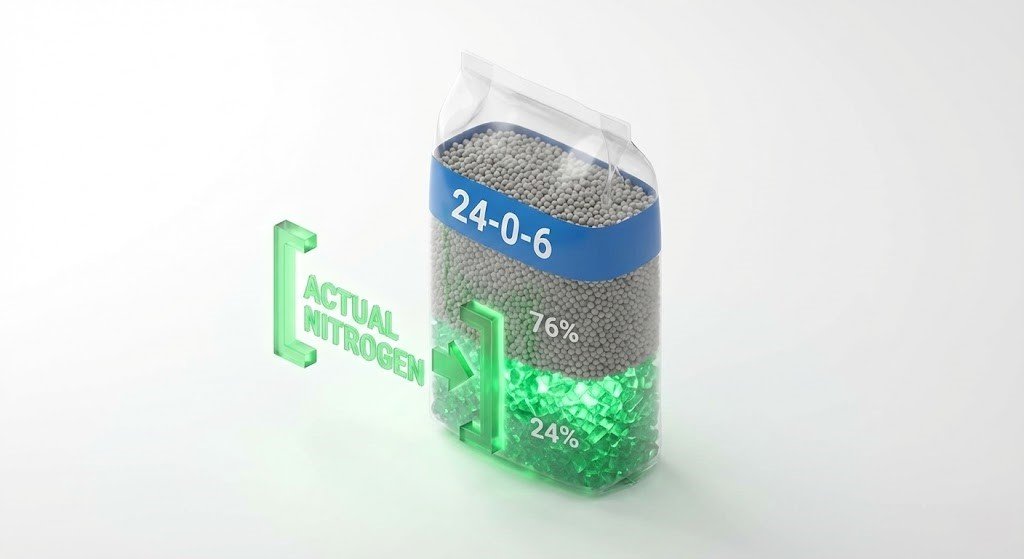
In reality, a bag of 24-0-6 is only 24% Nitrogen. This means 76% of the bag is filler or other nutrients. Our calculator does the heavy lifting to find the "Product-to-Nutrient" ratio, so you know exactly how much physical material must leave your spreader to achieve your target Nitrogen goal. We also include a Cost Per Application feature, allowing you to budget your seasonal lawn care with total transparency.
Educational Guide: Understanding N-P-K and Grass Health
Those three numbers on your fertilizer bag represent the "Big Three" macronutrients your lawn needs to thrive.
N - Nitrogen (The Up-and-Green)
Nitrogen is responsible for the lush, green leaf growth. It is the most used nutrient in a lawn and the most likely to be depleted. This is why our calculator focuses on Nitrogen as the primary driver for application rates.
P - Phosphorus (The Down-and-Out)
Phosphorus stimulates root development and seedling strength. Many "Starter Fertilizers" have a high middle number. Note: Many states have banned Phosphorus in maintenance fertilizers to protect local waterways from algae blooms.
K - Potassium (The All-Around)
Potassium improves the overall "toughness" of the grass, helping it resist disease, drought, and extreme temperature changes. It’s like a multivitamin for your lawn’s immune system.
Pro Tip: Always perform a soil test once every 2-3 years. While Nitrogen is consumed quickly, Phosphorus and Potassium can build up in the soil. A soil test will tell you if you should be using a "Nitrogen-only" fertilizer or a balanced blend.
Frequently Asked Questions
Q: What happens if I apply too much fertilizer?
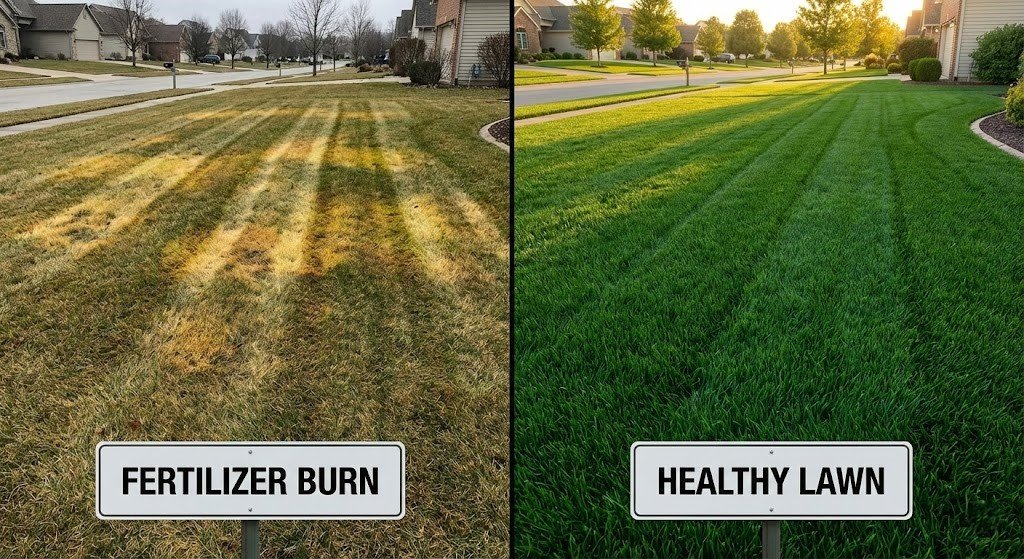
A: Over-application causes "Fertilizer Burn." The salts in the fertilizer draw moisture out of the grass blades, causing them to turn brown or yellow and die. If you over-apply, water the area heavily and immediately to flush the excess nutrients away.
Q: How many bags do I need for a 5,000 sq ft lawn?
A: It depends on the N-percentage. For a standard 24-0-6 fertilizer, you would need about 21 lbs of product. If the bag weighs 20 lbs, you would need just over one bag.
Q: Can I fertilize while the grass is wet?
A: It is generally better to fertilize dry grass. Fertilizer granules can stick to wet blades and cause leaf burn. The best practice is to apply to dry grass and then "water it in" with 1/4 inch of water to move the nutrients into the soil.