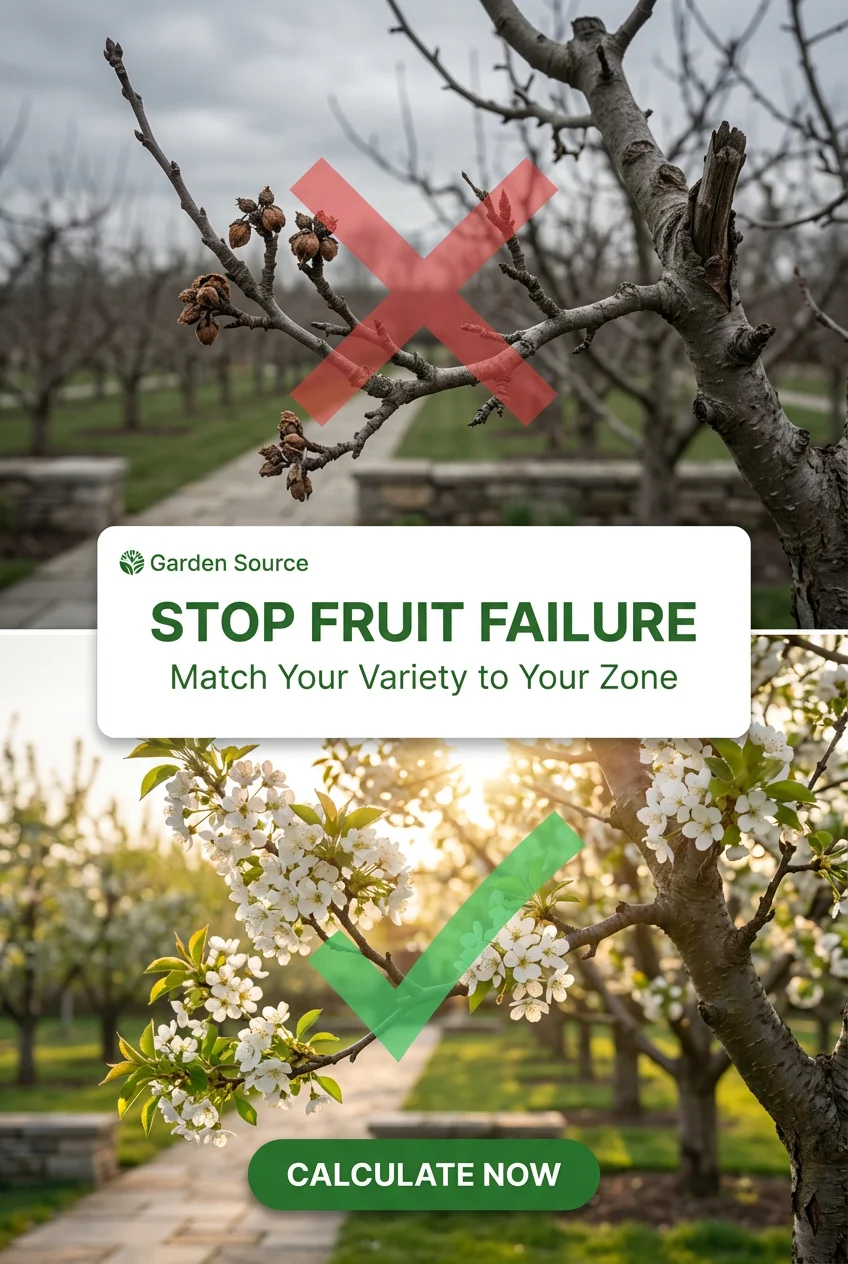
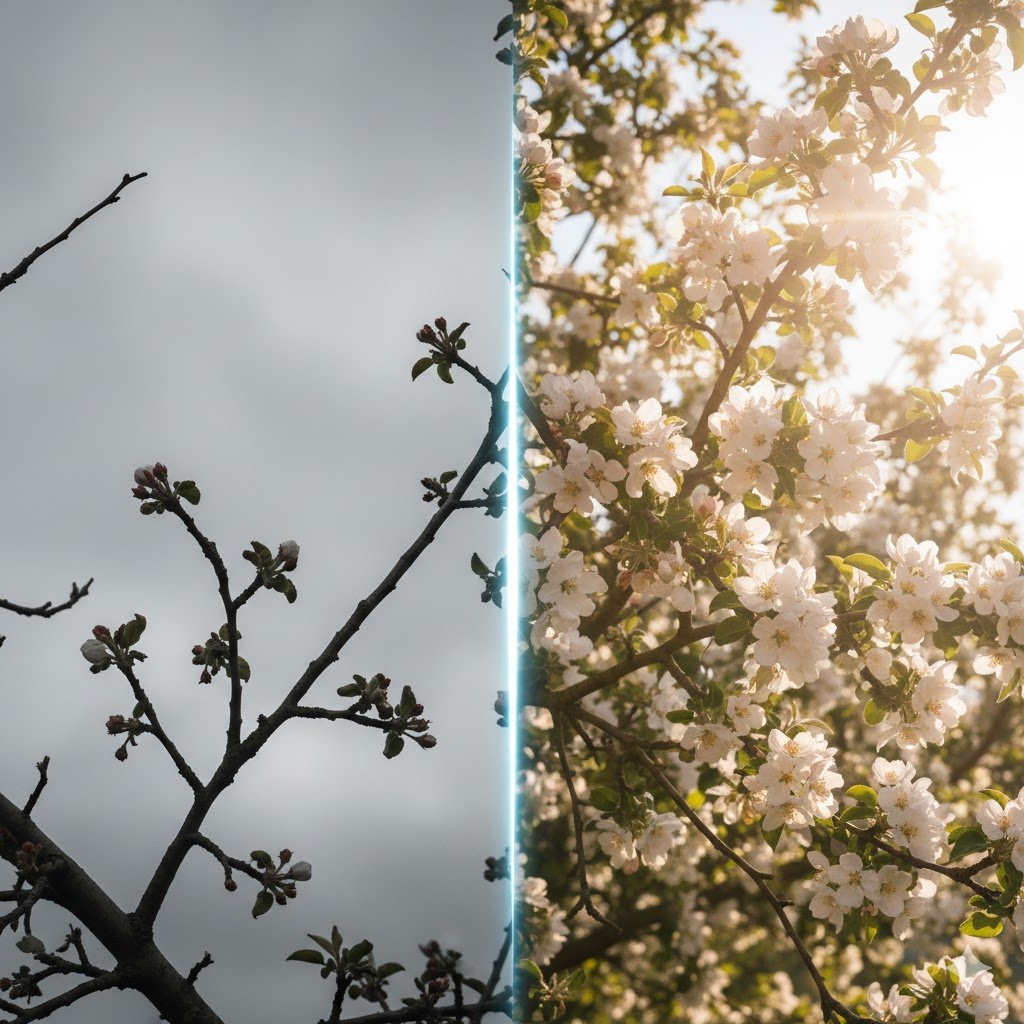
There is nothing more discouraging in gardening than spending four years nurturing a peach or apple tree, only for it to never produce a single piece of fruit. The most common cause of this “fruiting failure” isn’t soil or fertilizer—it’s a lack of Chill Hours. Deciduous fruit trees have a built-in biological clock that requires a specific amount of cold weather to “reset” before they can bloom in the spring.
Our Chill Hours Calculator helps you match your local climate to the specific requirements of fruit tree varieties, ensuring you invest your time and money in trees that are biologically destined to thrive in your backyard.
Fruit Tree Chill Hours Calculator
How to Use the Chill Hours Calculator
- Your USDA Zone: Select your hardiness zone. This provides an estimated range of the cumulative cold hours your region typically receives each winter.
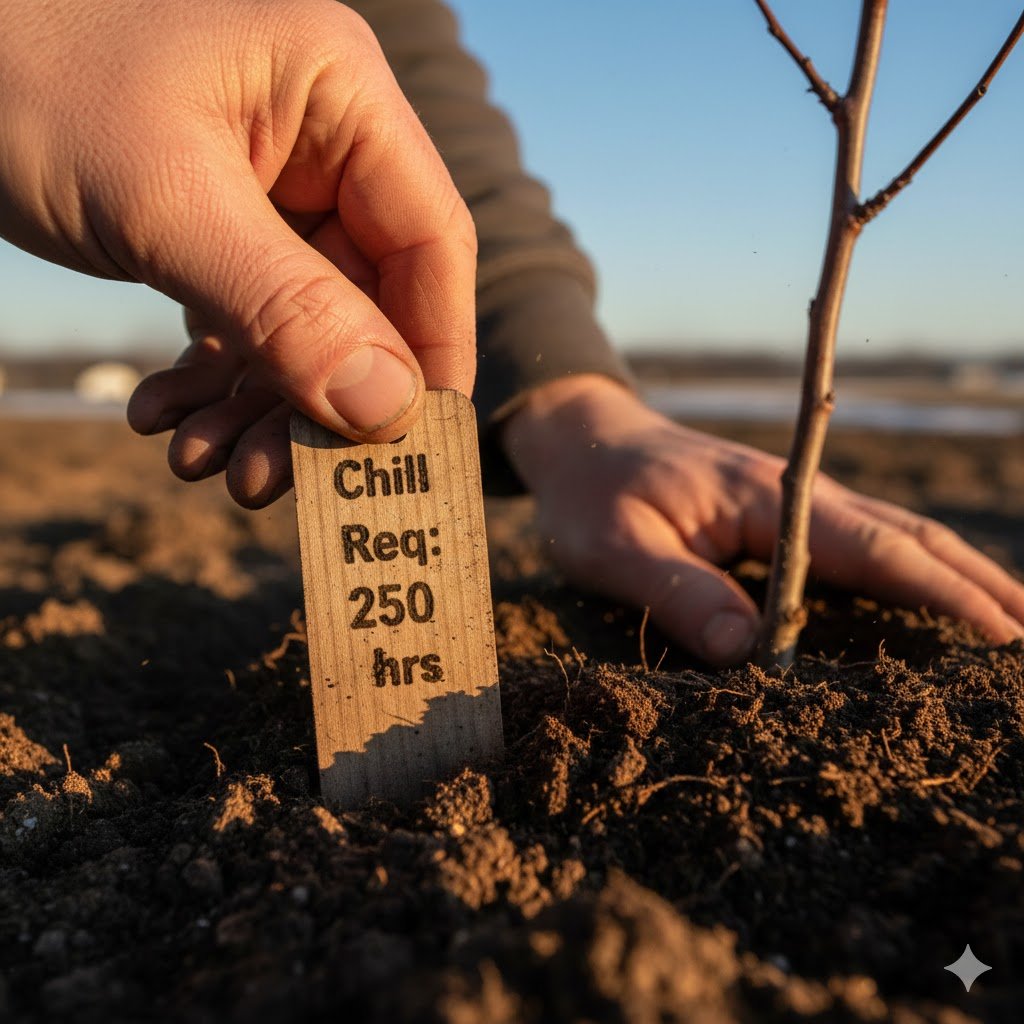
- Tree Variety Requirement: Most fruit trees are labeled with a “Chill Requirement” (e.g., “Requires 800 hours”). Enter this number from the nursery tag.
- Check Compatibility: The tool will instantly tell you if your zone provides enough “cold credit” for that specific tree to break dormancy.
Why We Built This: The “Secret Sauce” of Dormancy
The “Secret Sauce” of our tool is the Fruit Failure Logic. Most nurseries sell trees based on “Hardiness Zones,” which only tell you if a tree will survive the winter.
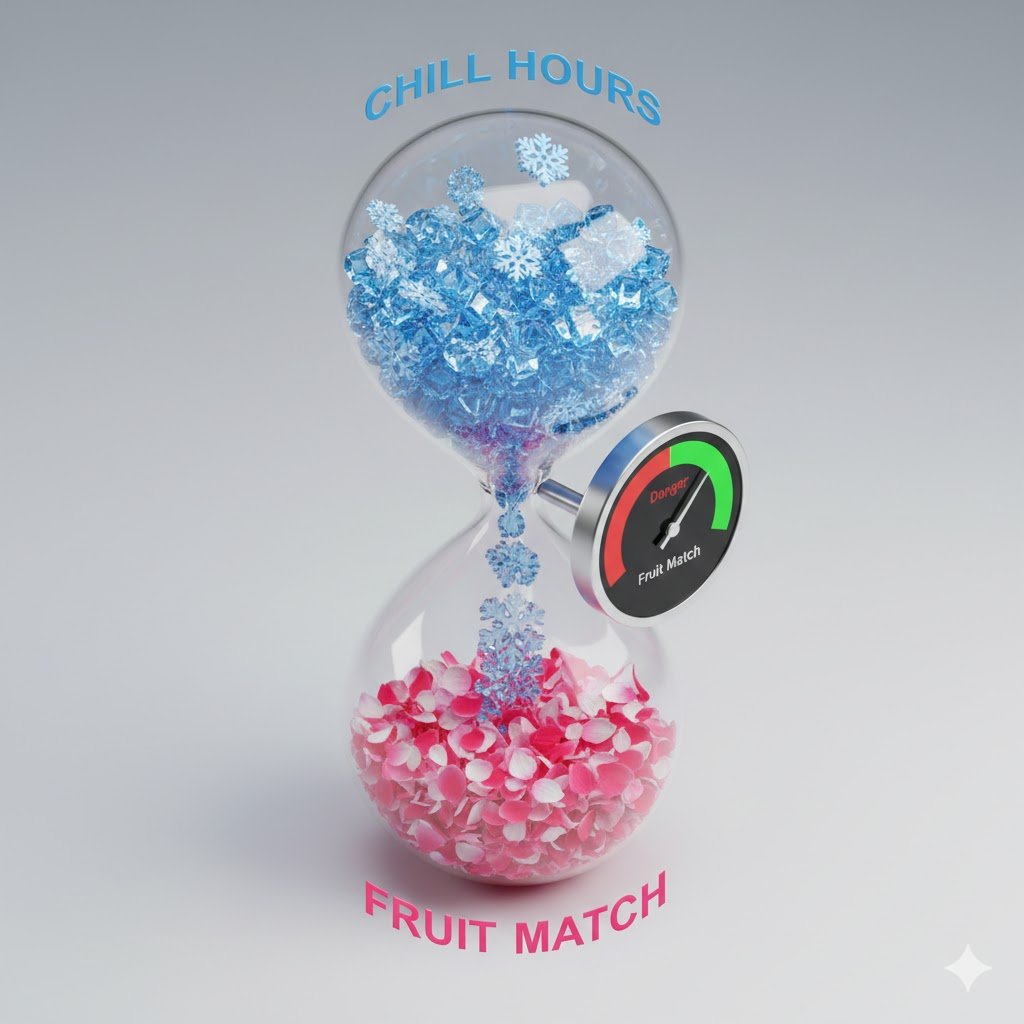
However, surviving is not the same as fruiting. A Honeycrisp Apple tree will survive a Florida winter, but because it needs 800+ chill hours and Florida only provides 200, the tree will never wake up properly to bloom. Our tool explicitly warns you about this mismatch and suggests Low-Chill Alternatives that fit your local weather profile.
Educational Guide: Understanding the Science of “Chill”
Fruit trees go into dormancy in the fall to protect themselves from freezing temperatures. To ensure they don’t bloom during a temporary “false spring” in January, they require a chemical reset triggered by cold temperatures.
What Qualifies as a Chill Hour?
In the standard model, a chill hour is defined as one hour spent between 32°F (0°C) and 45°F (7°C).
- Too Cold: Temperatures below 32°F do not count toward chill hours (the tree is in “deep freeze”).
- Too Warm: Temperatures above 60°F can actually subtract or cancel out chill hours previously accumulated if they occur during the winter.
The Utah Model vs. Standard Model
While the standard model is a simple 1:1 hour count, professionals often use the Utah Model, which assigns different values to different temperatures. For example, 40°F is “perfect” and counts as 1.0, while 50°F might only count as 0.5. Our calculator uses a weighted average to give home gardeners a safe, conservative estimate.
Frequently Asked Questions
Q: What happens if a tree doesn’t get enough chill hours?
A: The tree will experience “delayed foliation.” It may leaf out very late, produce sparse or deformed blossoms, and will fail to set fruit. Over several years, this stress can eventually kill the tree.
Q: Can I “cheat” and add chill hours?
A: No. There is no practical way to provide artificial cold to a full-sized tree. You must choose a variety that matches your local environment.
Q: What are “Low-Chill” varieties?
A: These are cultivars specifically bred to require very little cold (usually under 300 hours). They are essential for gardeners in Zones 9 and 10, such as Southern California, Arizona, and Florida.