
Planning a DIY fence project? The math gets tricky when you account for post spacing, gate gaps, and the thousands of screws required. A simple mistake in estimating material can leave you with a half-finished fence or a garage full of non-returnable lumber.
Use our free Fence Material Estimator below to generate a shopping list for Picket or Privacy fences. It automatically adjusts for gate width and hardware needs.
Fence Material Estimator
Calculate Posts, Rails, Pickets & Screws
How to Use This Calculator
Get an accurate material list by following these steps:
- Total Length: Measure the total perimeter of the fence line in feet. Do not subtract gates yet—enter the full length.
- Fence Height: Standard residential fences are 6 feet tall. Front yard picket fences are often 4 feet.
Note: Fences 6ft or taller require 3 horizontal rails. Fences under 6ft usually only need 2 rails. - Type:
- Privacy: Uses wide 5.5" boards (dog-ear) placed edge-to-edge with no gaps.
- Picket: Uses narrower 3.5" boards spaced apart (creating the classic "white picket fence" look).
- Gates: Enter the number of gates. The calculator assumes a standard 4-foot wide walk-through gate and adjusts the material list to remove pickets but add heavy-duty gate posts.
Why We Built This (The "Secret Sauce")
Most generic calculators assume a fence is just a straight line of wood. We added logic for the real-world headaches:
- Gate Detection: A gate isn't just a gap; it's a structural change. Our tool subtracts the 4-foot gate width from your picket count but adds 2 heavy-duty gate posts per gate to your shopping list, as standard line posts can't support the weight of a swinging door.
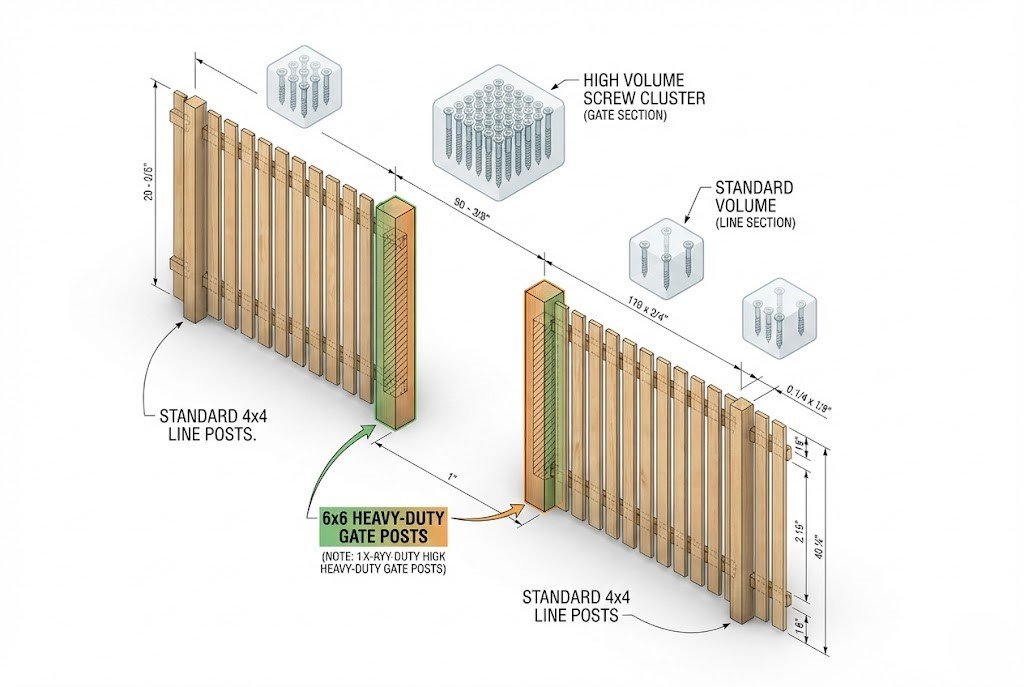
- Screw Estimator: You need about 6 screws per picket and 6-12 per rail bracket. This adds up to thousands of fasteners. We convert that total into "Lbs of Screws" so you know exactly how many boxes to grab.
Educational Guide: Wood vs. Vinyl
This calculator is optimized for Pressure-Treated Pine or Cedar lumber. If you are installing a Vinyl (PVC) fence, the logic is slightly different:
- Wood: You buy components (posts, rails, pickets) and assemble them piece-by-piece. This allows for custom spacing and racking over uneven ground.
- Vinyl: Sold in "Panels" (usually 6ft or 8ft wide). For vinyl, simply divide your total length by the panel width to get the number of units needed.
Frequently Asked Questions (FAQ)
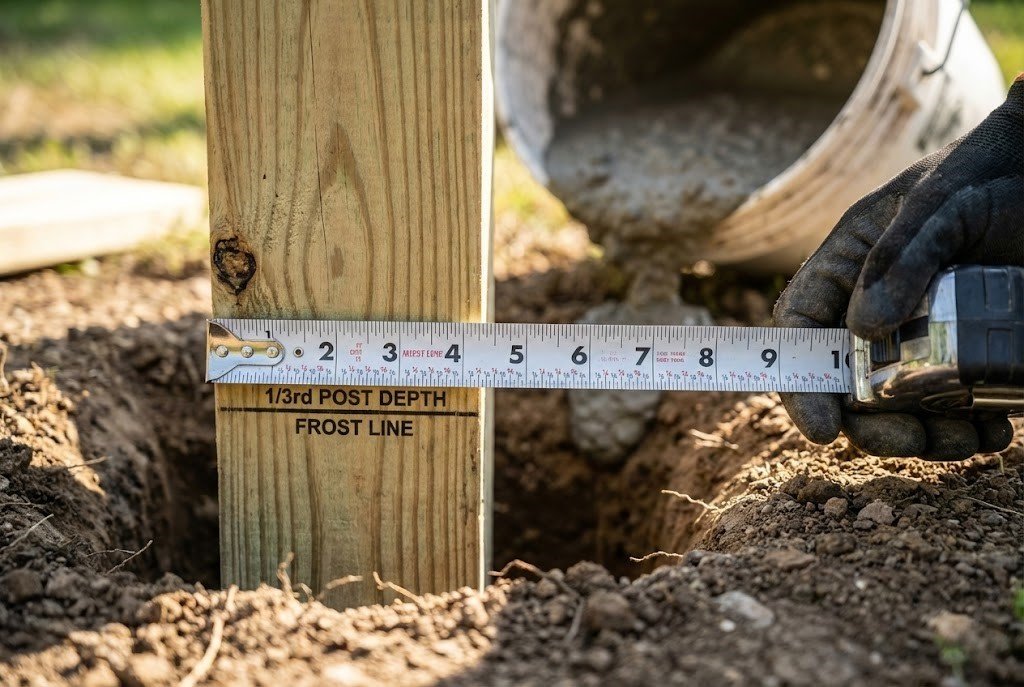
How deep should fence posts be buried?
A general rule is to bury 1/3 of the post's total length. For a 6-foot tall fence, you need an 8-foot post (2 feet buried) or preferably a 9-10 foot post (3+ feet buried) for stability, especially in windy areas or frost zones.
Should I use screws or nails for fencing?
Always use exterior-grade deck screws (coated or stainless steel). Nails eventually work loose as the wood expands and contracts with the seasons, causing pickets to fall off. Screws hold tight and allow you to replace damaged boards easily.
How many bags of concrete per fence post?
For a standard 4x4 fence post set 24 inches deep, you typically need 1 to 1.5 bags (50lb) of fast-setting concrete. Gate posts should have 2 bags for extra rigidity.