Applying liquid fertilizer is one of the fastest ways to give your plants a nutrient boost, but getting the mixing ratio right is critical. If you mix it too weak, you are just watering your plants. If you mix it too strong, you risk “fertilizer burn,” which can scorch leaves and kill roots overnight.
💧 Liquid Fertilizer Diluter
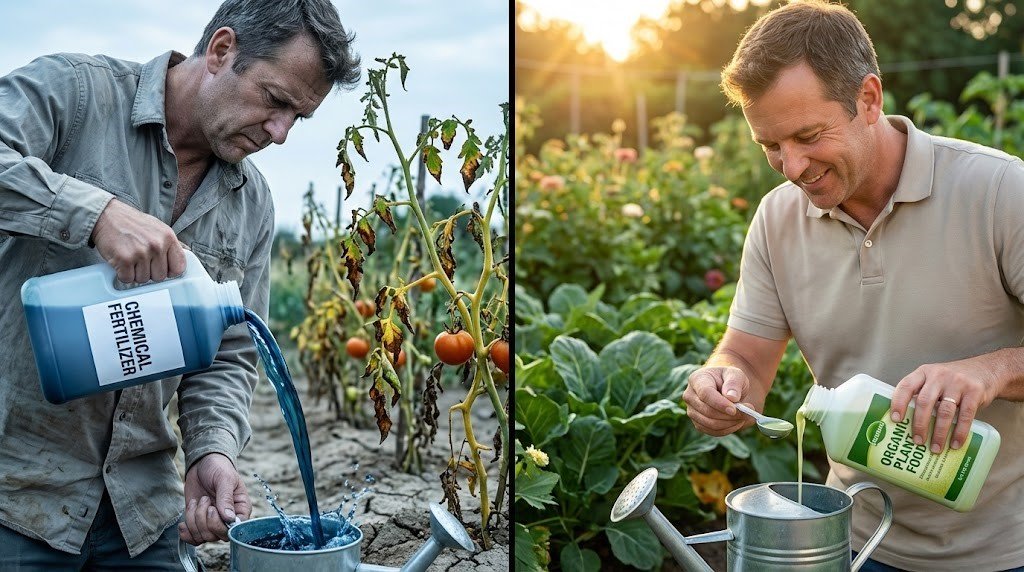
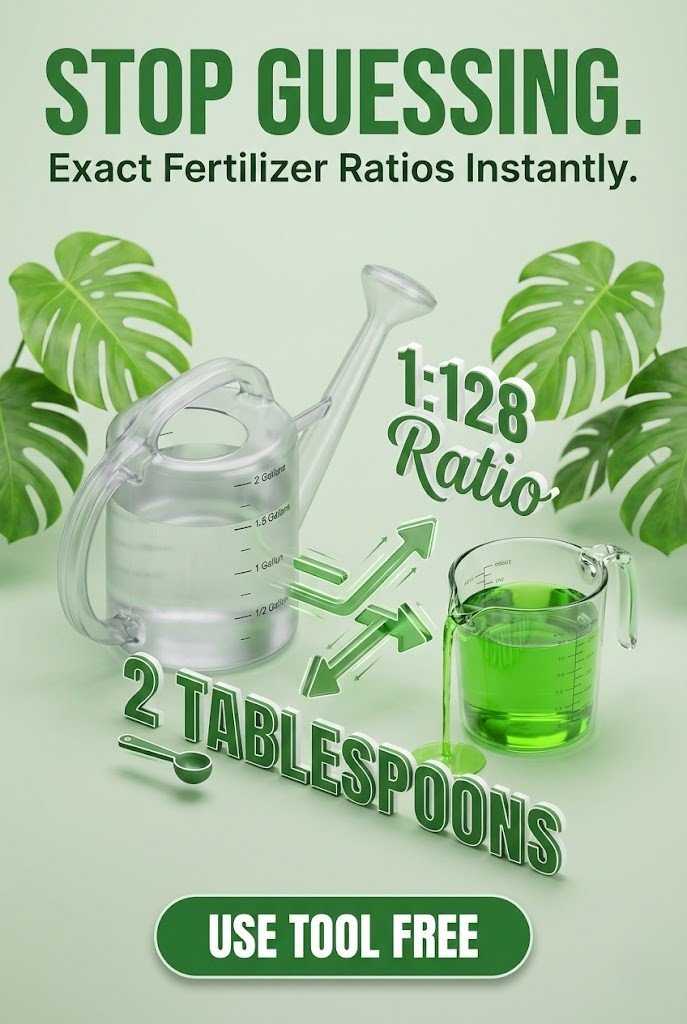
Commercial bottles often list confusing ratios like "1:100" or "1:128," leaving you to guess how much concentrate to pour into your 2-gallon watering can. Stop guessing. Use our Free Liquid Fertilizer Diluter to calculate the exact amount of concentrate you need in kitchen-friendly measurements (Tablespoons and Teaspoons).
How to Use This Tool
Whether you are using fish emulsion, seaweed extract, or a synthetic booster like Miracle-Gro, the process is simple:
- Enter Water Volume: How big is your container? A standard watering can is usually 2 gallons. A backpack sprayer is often 4 gallons.
- Select Ratio: Look at the back of your fertilizer bottle. It will say something like "Mix at 1:100" or "Use 1 oz per gallon" (which is 1:128). If your bottle has a unique number, select "Custom Ratio."
- Get Your Result: The tool calculates exactly how many ounces, tablespoons, or teaspoons of concentrate to add to your water.
Why We Built This (The "Secret Sauce")
Most industrial calculators only give you results in "Gallons of Concentrate," which is useless for a home gardener. Who measures 0.01 gallons?
We built this for the Home Gardener:
- Kitchen Unit Conversion: We know you probably don't have a graduated cylinder in your shed, but you definitely have a set of measuring spoons.
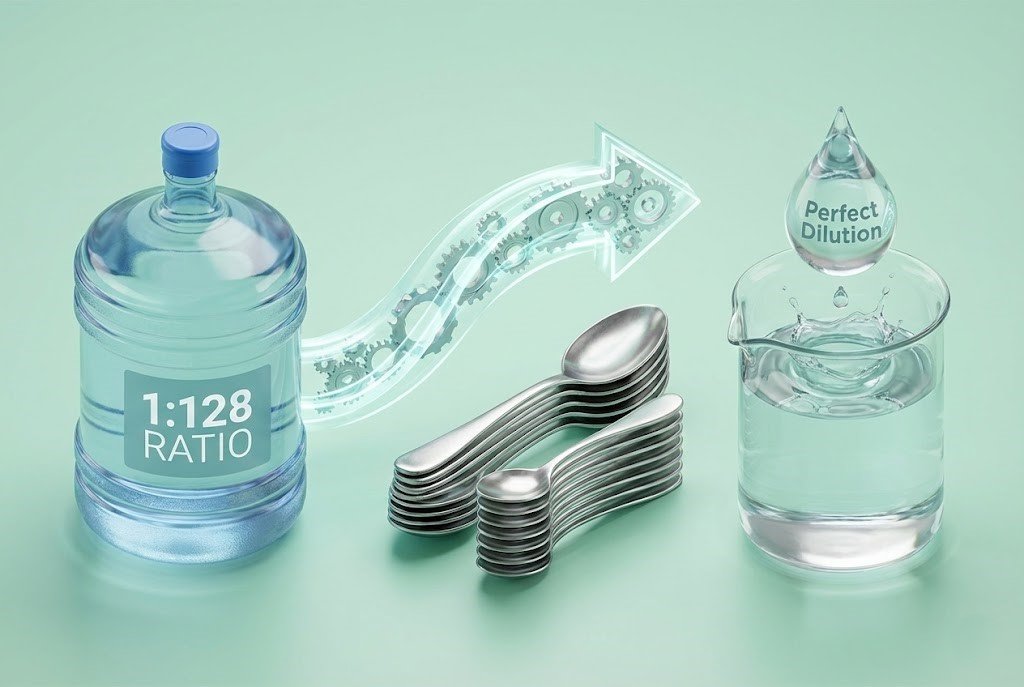
- We automatically convert the math into Tablespoons and Teaspoons so you can measure accurately.
- Precision Safety: By showing you the exact milliliters and teaspoons, we help you avoid the "glug-glug" method of pouring, which is the #1 cause of nutrient burn.
Educational Guide: Safe Fertilization Tips
Now that you have your mix ready, follow these rules to maximize uptake and minimize damage.
1. Water First, Feed Second
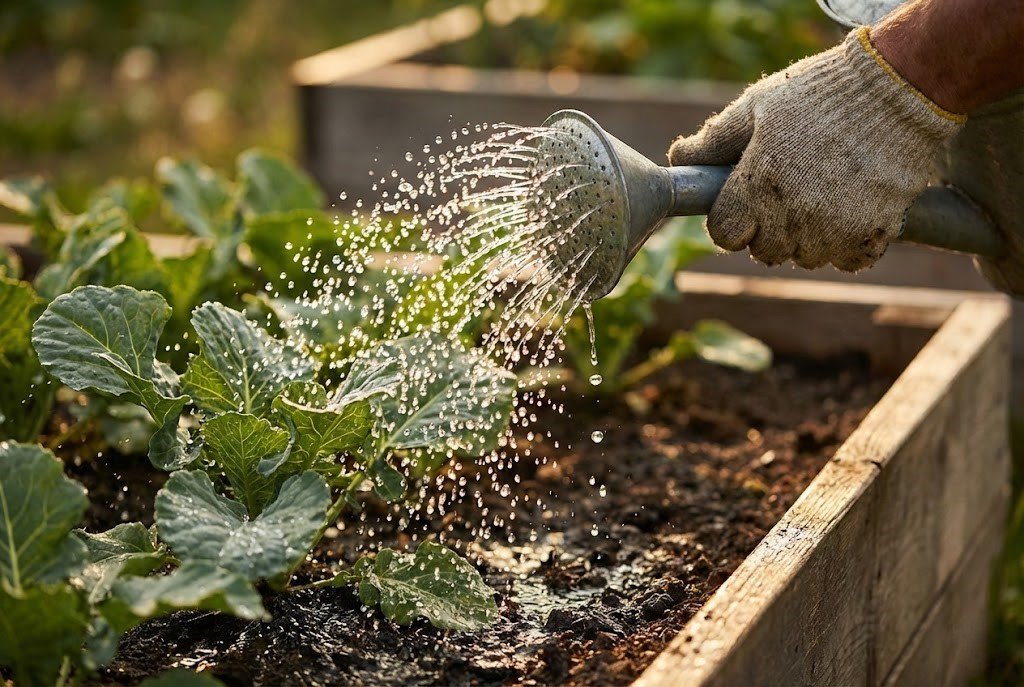
Never apply strong fertilizer to a thirsty, drought-stressed plant. The roots will suck up the nutrient salts too fast, leading to burn. Water your garden with plain water first, wait an hour, and then apply your liquid feed.
2. Foliar Feeding vs. Root Drench
Liquid fertilizers can be sprayed on leaves (foliar) or poured on soil (drench). If you are foliar feeding, use a weaker ratio (like 1:200). If you are drenching the soil of a raised bed, you can use a stronger ratio (1:100).
3. Using Compost Tea
If you prefer organic options, you can make your own nutrient-rich liquid. Check out our guide on making organic compost to learn how to brew compost tea, which is much harder to "overdose" than synthetic chemicals.
Frequently Asked Questions
What does a 1:128 ratio mean?
A 1:128 ratio is the most common mixing rate for US gardeners because there are exactly 128 fluid ounces in 1 gallon. Therefore, a 1:128 ratio simply means adding 1 ounce of fertilizer per 1 gallon of water.
How many tablespoons are in an ounce of fertilizer?
There are exactly 2 tablespoons in 1 fluid ounce. If your instructions say to add 1 ounce, you can simply add 2 tablespoons.
Can I store mixed liquid fertilizer?
Generally, no. Once mixed with water, organic fertilizers (like fish emulsion) will begin to rot and smell within 24 hours. Synthetic fertilizers may precipitate (separate) or change pH. It is best to mix only what you plan to use that day.