
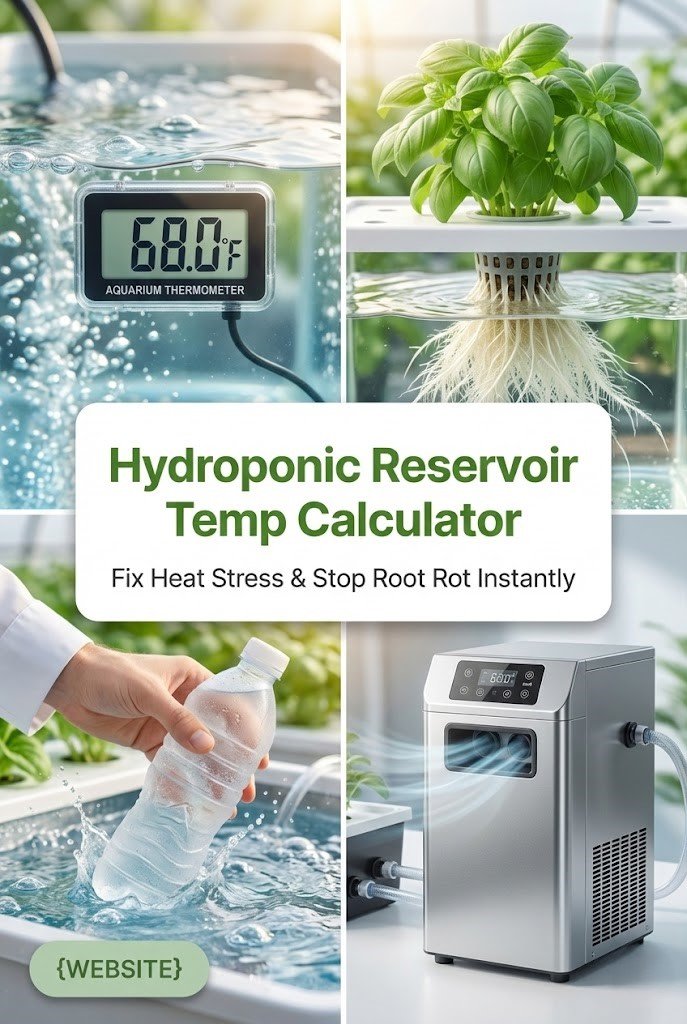
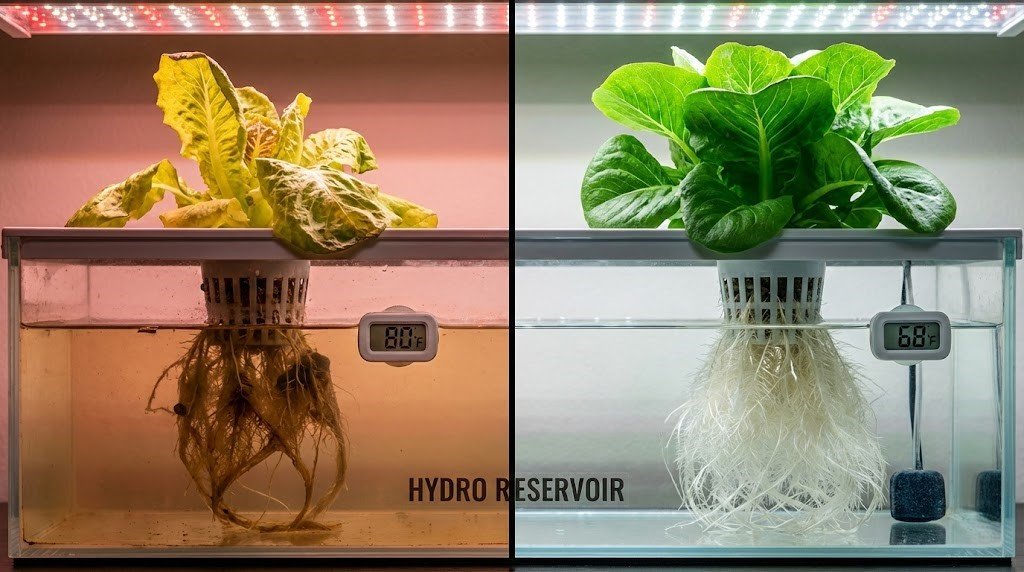
In hydroponics, the temperature of your nutrient solution is just as important as your pH or EC levels. If your water is too hot, it cannot hold enough dissolved oxygen, leading to root rot (Pythium) and plant suffocation. If it is too cold, the plant’s metabolism slows to a crawl, locking out vital nutrients like phosphorus. Finding that “Goldilocks zone” is the key to explosive growth.
Our Hydroponic Reservoir Temp Calculator uses Richmann’s Law of Mixing to tell you exactly how much cold (or hot) water you need to add to your system to hit your target temperature. Whether you are dealing with a heatwave in the greenhouse or a chilly basement grow, this tool provides the exact mathematical shift required.
Hydroponic Reservoir Temp Calc
How to Use the Water Temperature Calculator
- Current Volume & Temp: Enter how many gallons are currently in your reservoir and its current thermometer reading.
- Target Temp: For most hydroponic systems (DWC, NFT, Ebb & Flow), the ideal range is 65°F to 68°F (18°C to 20°C).
- Tap Water Temp: Measure the temperature of the water coming out of your hose or sink. This is the “tool” you will use to shift the bulk temperature.
Why We Built This: The “Secret Sauce” of Ice Cubes
The “Secret Sauce” of our tool is the Ice Cube Mode. Many indoor growers face a common dilemma: during a summer heatwave, even the tap water is too warm to cool down a 20-gallon reservoir. When the math shows that tap water replacement won’t work, our tool automatically calculates the Latent Heat of Fusion.
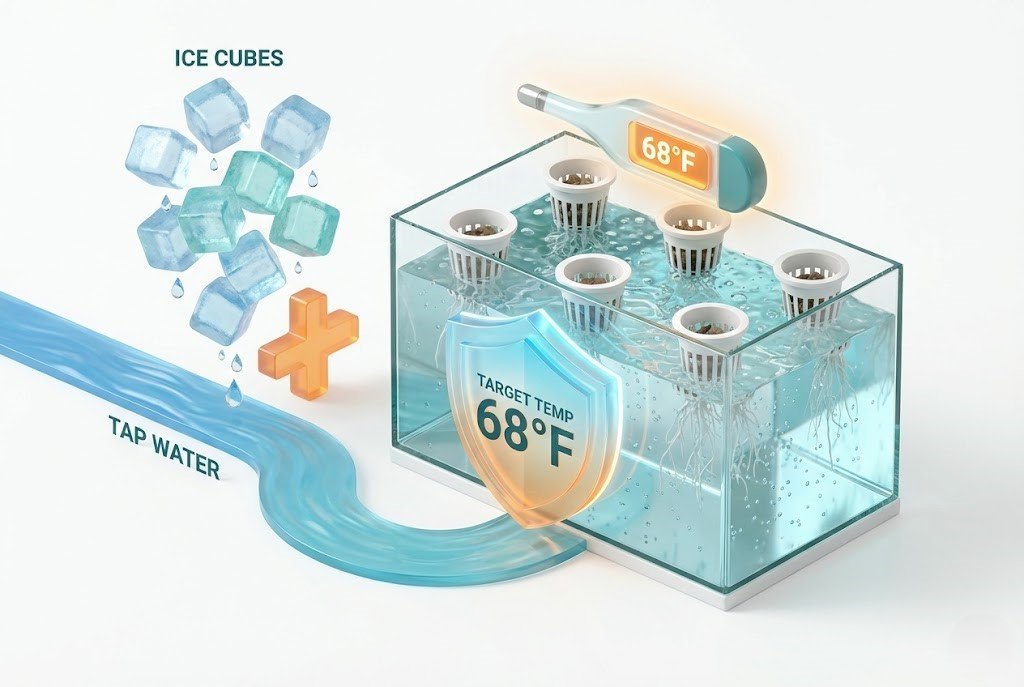
It tells you exactly how many pounds of ice you need to drop into the reservoir to reach your goal. This is a lifesaver for preventing root death when your water chiller fails.
Educational Guide: The Relationship Between Temp and Oxygen
The primary reason we obsess over reservoir temperature is Dissolved Oxygen (DO). There is an inverse relationship between water heat and oxygen capacity.
1. The Danger Zone (Above 72°F)
As water warms above 72°F, its ability to hold oxygen drops sharply. Simultaneously, pathogens like Pythium (root rot) replicate faster in warm water. This “double whammy” is the leading cause of crop failure in Deep Water Culture (DWC) systems.
2. The Sweet Spot (65°F – 68°F)
In this range, water holds maximum oxygen while remaining warm enough for the roots to remain active. This temperature also discourages the growth of algae and harmful bacteria.
3. Using a Water Chiller
If you find yourself using our calculator every day, it may be time to invest in an active Water Chiller. These units work like a mini-refrigerator for your reservoir, maintaining a precise temperature regardless of the room’s ambient heat. They are essential for high-intensity LED grows where the room temperature often hovers around 80°F.
Frequently Asked Questions
Q: Can I put ice directly into my reservoir?
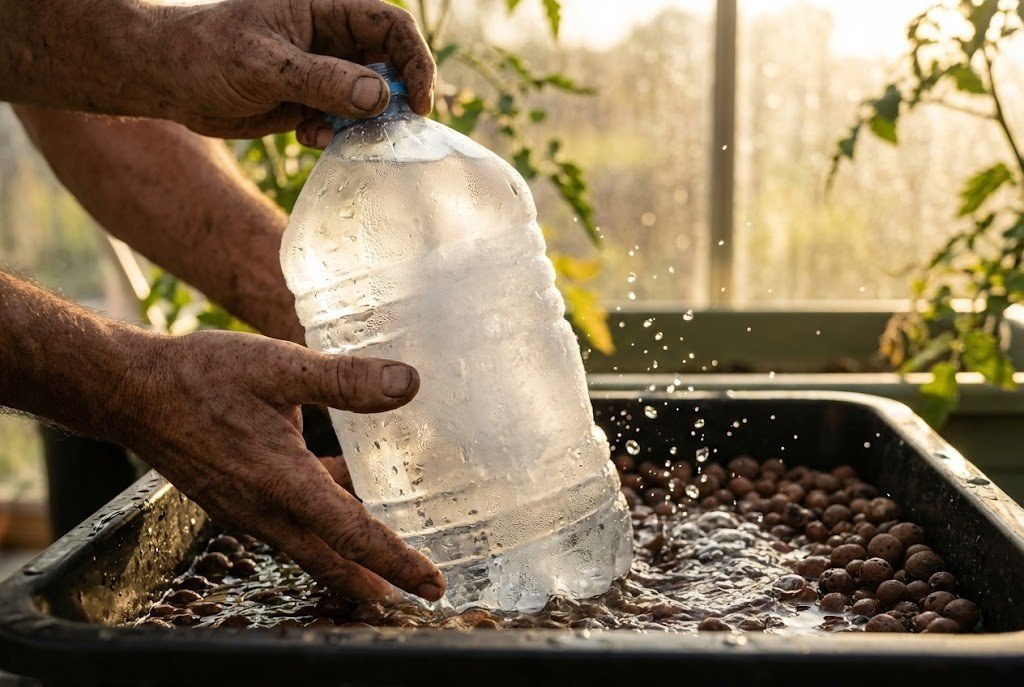
A: Yes, but it will dilute your nutrients as it melts. For a temporary fix, it is better to freeze water inside clean plastic bottles and float the sealed bottles in the reservoir like an “ice pack.”
Q: Does the reservoir temperature affect pH?
A: Indirectly, yes. Temperature affects the chemical activity in the water, and most pH pens require temperature compensation to give an accurate reading. Always check your pH after the water temperature has stabilized.
Q: How often should I check my water temperature?
A: In an ideal setup, you should have a digital monitor that displays temperature 24/7. At a minimum, check it daily when the lights are at their peak brightness.