If you’ve ever wondered why your indoor plants are leggy despite having a “bright” light, or why your greenhouse tomatoes aren’t fruiting, the answer likely lies in your Daily Light Integral (DLI). While PPFD (Photosynthetic Photon Flux Density) tells you how intense the light is at this second, DLI tells you the total amount of light your plants received over a 24-hour period. It is essentially the “daily dose” of light for your garden.
Think of it like rainfall: PPFD is the intensity of the downpour (how hard it’s raining now), while DLI is the total inches in the rain gauge at the end of the day. Our DLI Calculator helps you translate your sensor readings into actionable growth data.
Daily Light Integral (DLI) Calc
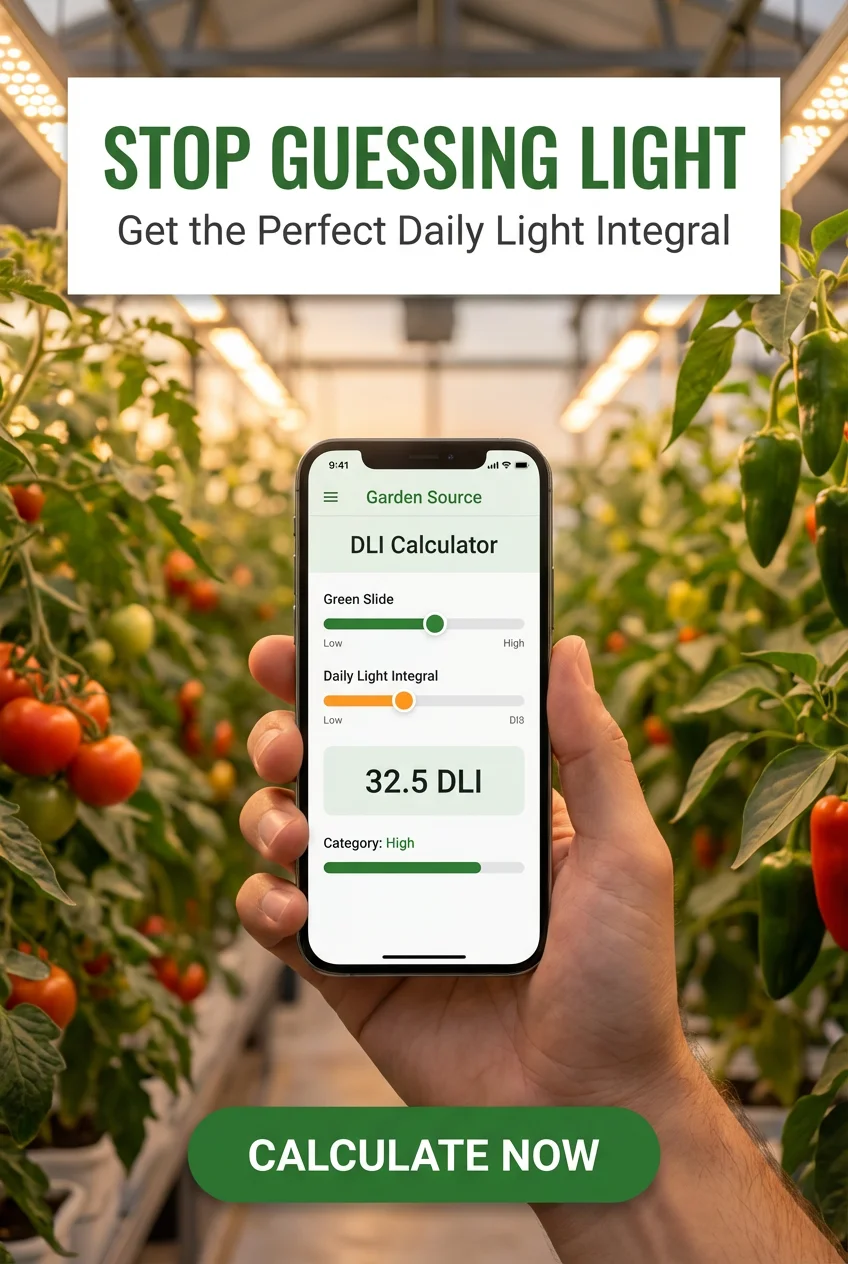
How to Use the DLI Calculator
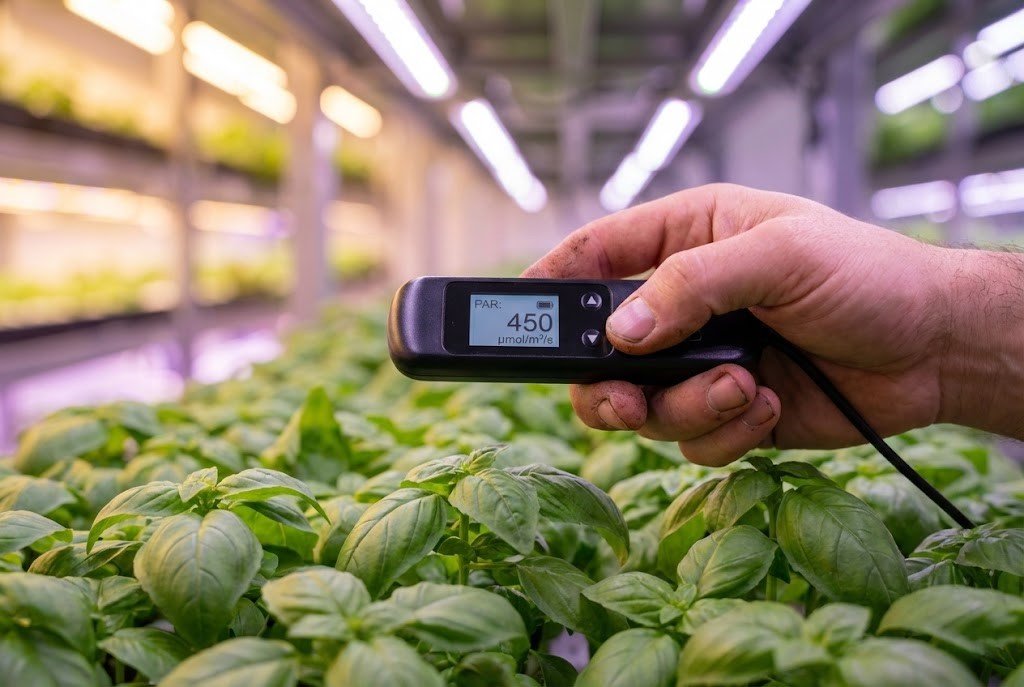
- PPFD (µmol/m²/s): Use a PAR meter or a mobile app (like Photone) to measure the light intensity at the canopy level of your plants.
- Photoperiod: Enter the total number of hours your grow lights are turned on per day.
- Analyze the Results: The tool will calculate the total Moles per square meter per day and suggest if your light levels match your crop type.
Why We Built This: The “Secret Sauce” of Yield Optimization
The “Secret Sauce” of our tool is the Optimization Engine. Most calculators just give you a number and leave you to figure out the rest. Our tool analyzes your result against biological benchmarks.
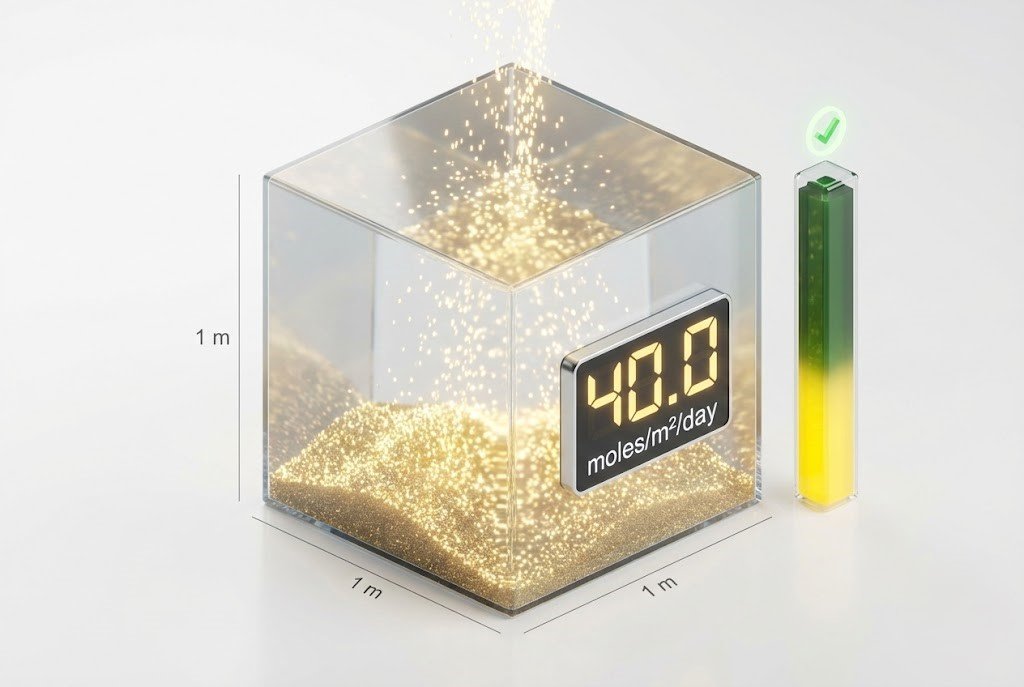
If your DLI is too low for your specific crop, we don’t just tell you it’s low—we calculate the exact number of extra hours or the required increase in light intensity (PPFD) needed to hit your target. This prevents “light starvation” and ensures you aren’t wasting electricity on an inefficient photoperiod.
Educational Guide: DLI Benchmarks for Success
Different plants have evolved to handle different “budgets” of light. Matching your DLI to your crop is the difference between a successful harvest and a wasted season.
1. Low DLI (6–12 Moles): Leafy Greens & Microgreens
Crops like lettuce, spinach, and microgreens thrive in this range. Because they don’t need to produce complex fruits or flowers, they are highly efficient at lower light integrals. High DLI in these crops can actually cause “tip burn” or bitter flavors.
2. Medium DLI (15–25 Moles): Vegetative Growth & Fruiting Veggies
This is the “Goldilocks” zone for tomatoes, peppers, and most garden vegetables. In this range, the plant has enough energy to build a strong stalk, deep roots, and begin the transition to flowering.
3. High DLI (30–50+ Moles): High-Value Flowering & Fruiting
For maximum yields in crops like strawberries, cucumbers, or cannabis, you need to push the DLI into the 30s or 40s. However, be aware of the “Law of Diminishing Returns.” Once you pass a DLI of 45-50, most plants require supplemental CO2 to actually process that much light energy without getting “sunburned.”
Frequently Asked Questions
Q: Can I just leave my lights on for 24 hours to get a higher DLI?
A: While it increases DLI, many plants (like tomatoes) require a dark period for “respiration”—a chemical process where they move the energy created during the day into their roots and fruits. 18 hours is generally the maximum recommended photoperiod for most crops.
Q: What is the difference between Footcandles, Lux, and PPFD?
A: Footcandles and Lux measure light for human eyes. PPFD and DLI measure PAR (Photosynthetically Active Radiation), which are the specific wavelengths of light that plants use for photosynthesis.
Q: Why does my DLI matter more than my light’s wattage?
A: A 1000W old-school HPS light might produce the same DLI as a 600W modern LED. DLI measures the actual energy delivered to the leaf, regardless of how much power the light pulls from the wall.