
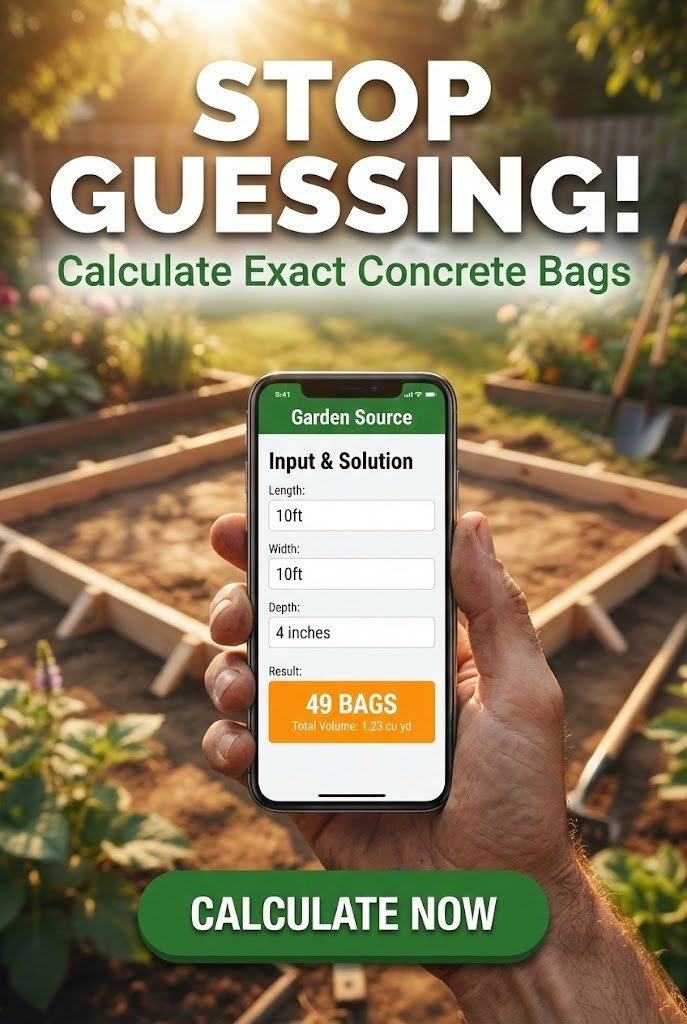
Whether you are laying the foundation for a new garden shed, setting heavy-duty fence posts, or pouring a weekend patio, concrete is the backbone of outdoor construction. But it presents a difficult challenge for DIY gardeners: How much do I actually need?
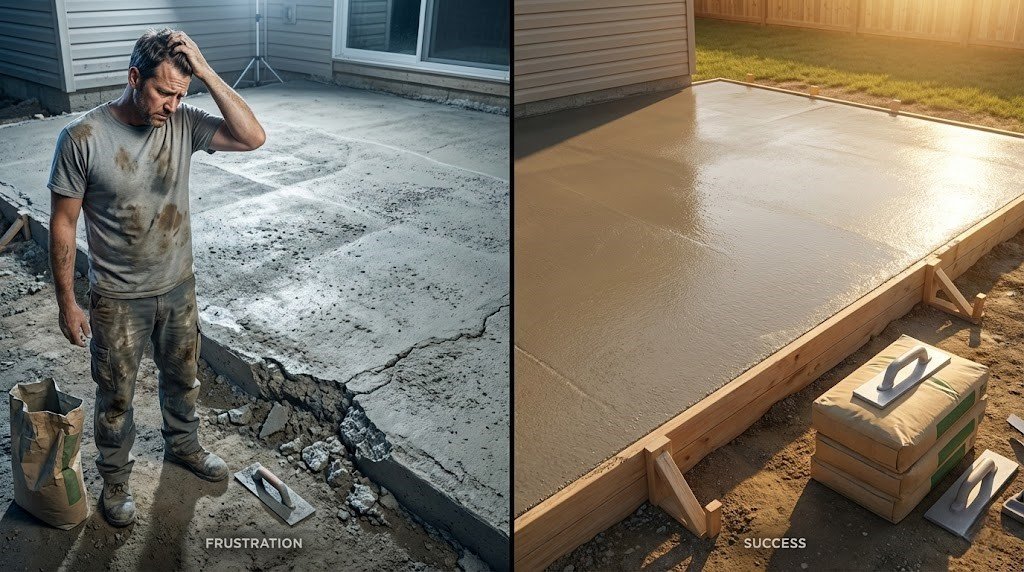
Buy too little, and you are forced to make a frantic mid-project run to the hardware store while your wet concrete cures into an unusable seam. Buy too much, and you are stuck hauling heavy, unused 80lb bags back. Use our reliable Concrete Bag Calculator below to get the exact count, including a crucial safety margin for spillage.
Concrete Bag Calculator
Exact estimate for Slabs & Post Holes
How to Use This Calculator for Garden Projects
We designed this tool specifically for the two most common backyard scenarios. Ensure you select the correct mode at the top of the calculator:
Mode 1: Slab / Patio (Rectangular Shapes)
Use this for shed bases, walkways, A/C unit pads, or garbage can pads.
- Length & Width (Feet): Measure the outer edges of your wooden forms.
- Thickness (Inches):
- 4 Inches: Standard for garden paths, patios, and small shed bases.
- 6 Inches: Required for heavy-duty applications like driveways or bases for very large structures (hot tubs).
Mode 2: Post Holes (Round Shapes)
Use this for fence posts, deck footings, pergola supports, or mailbox posts.
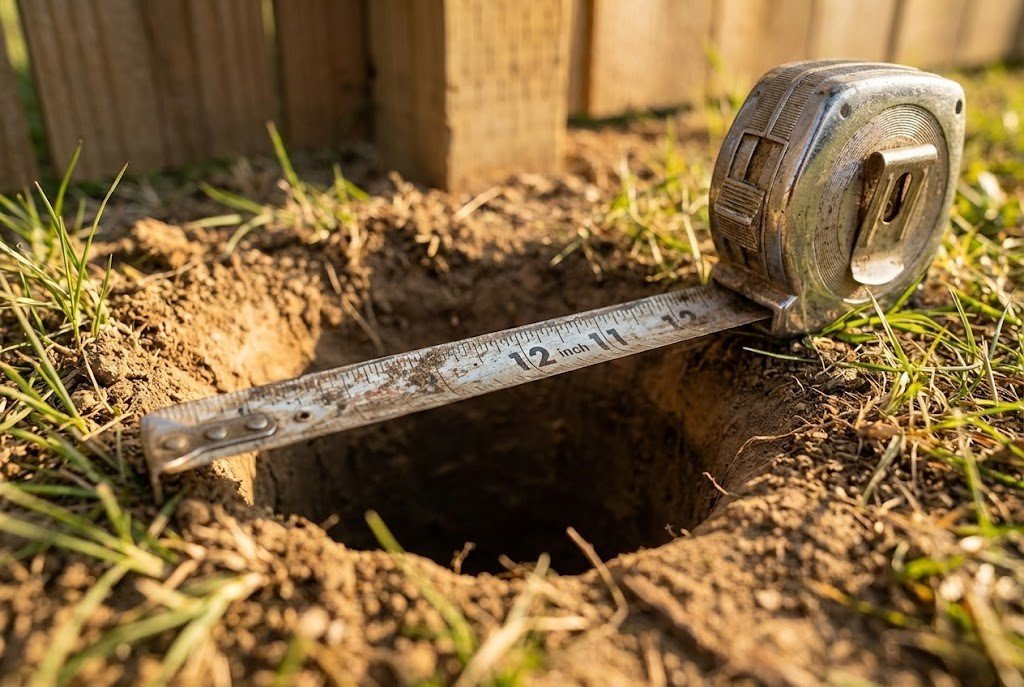
- Hole Diameter (Inches): Measure the width of the auger or shovel hole, not the wooden post itself. A 4×4 post usually needs a 10-inch to 12-inch diameter hole for proper strength.
- Hole Depth (Inches): This is critical for structural stability.
- Fence Posts: Usually 24 to 30 inches deep (about 1/3 of the post height).
- Deck/Structure Footings: You MUST dig below your local frost line to prevent heaving in winter. Check local codes, but 36 to 48 inches is common in northern climates.
Why We Built This (The “Secret Sauce”)
Why use this tool instead of doing the math on a napkin? Because garden geometry is messy.
1. The 10% “Real World” Margin:
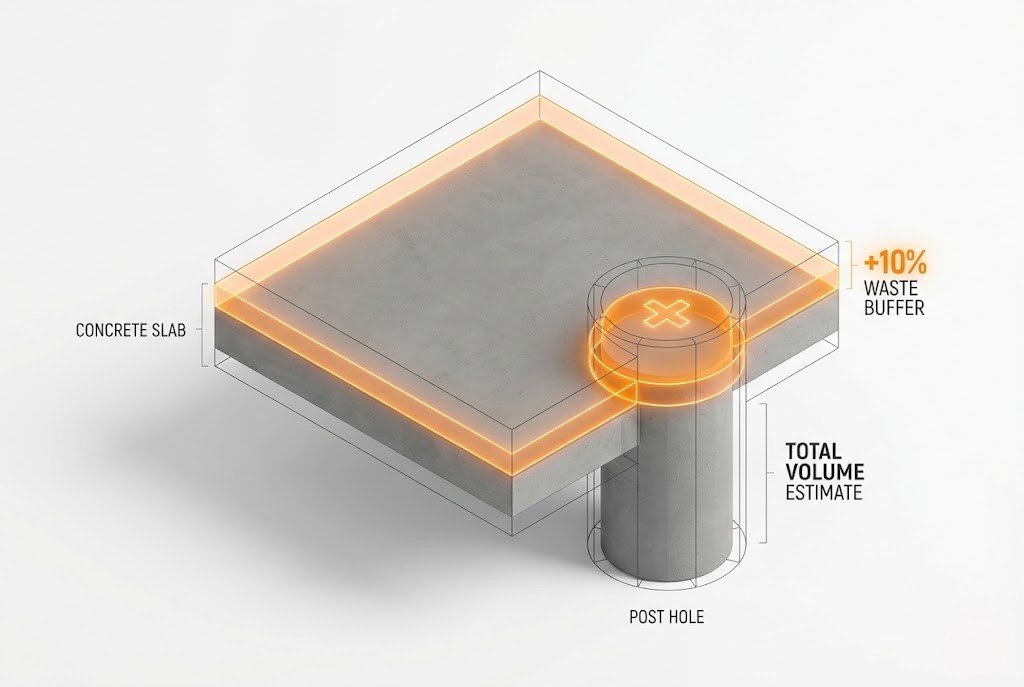
Standard math formulas assume your hole is a perfect cylinder or your ground is perfectly flat. In reality, augers wobble, making holes wider at the top, and sub-bases have dips. Our calculator automatically adds a 10% safety buffer so you don’t run short.
2. Preventing Unit Errors:
The most common mistake DIYers make is mixing up feet and inches in the same equation (e.g., multiplying 10 feet by 4 inches without converting). Our inputs force the correct units to ensure accurate volume calculations.
Educational Guide: Which Bag Should You Buy?
Walking down the concrete aisle can be confusing. Here is a quick guide to the bags you’ll see:
- 80lb Standard Mix (Yellow/Orange Bags): The most economical choice for large jobs like slabs. It is heavy but cheap. It sets in 24 hours and cures fully in 28 days.
- 60lb Standard Mix: The same product as the 80lb bag, just lighter. Worth the extra few cents if you are working alone and saving your back.
- 50lb Fast-Setting Mix (Red Bags): Designed specifically for posts. It sets in 20-40 minutes. You can often pour it dry into the hole and add water on top, though pre-mixing makes a stronger concrete. Do not use this for large slabs; it sets too fast to finish properly.
Frequently Asked Questions (FAQ)
How many 80lb bags of concrete make 1 yard?
One cubic yard equals 27 cubic feet. An 80lb bag yields approximately 0.60 cubic feet of wet concrete. Therefore, you need roughly 45 bags (80lb) to create one cubic yard.
Do I need gravel under a concrete slab?
Yes. Never pour concrete directly onto dirt or grass. You must excavate and lay a 2- to 4-inch base of compactable gravel or paver base. This provides necessary drainage. Without it, water trapped under the slab will freeze and heave, cracking your concrete over time.
How long until I can walk on new concrete?
For standard mixes, you can walk on the surface after 24 to 48 hours. However, do not drive vehicles or place heavy structures (like a large shed) on it for at least **7 days**. Concrete takes a full 28 days to reach its maximum rated strength.