Building a backyard pond is a major project, and the most expensive component is usually the liner. A common mistake beginners make is buying a liner that matches the exact dimensions of the hole (e.g., a 10×10 liner for a 10×10 pond). This will fail.
🌊 Pond Liner Sizing Tool
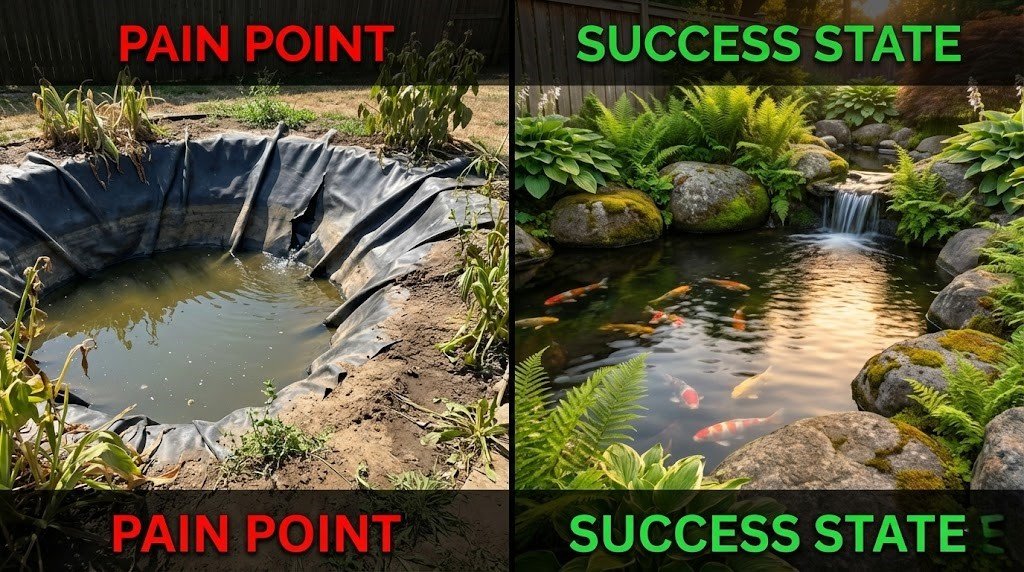
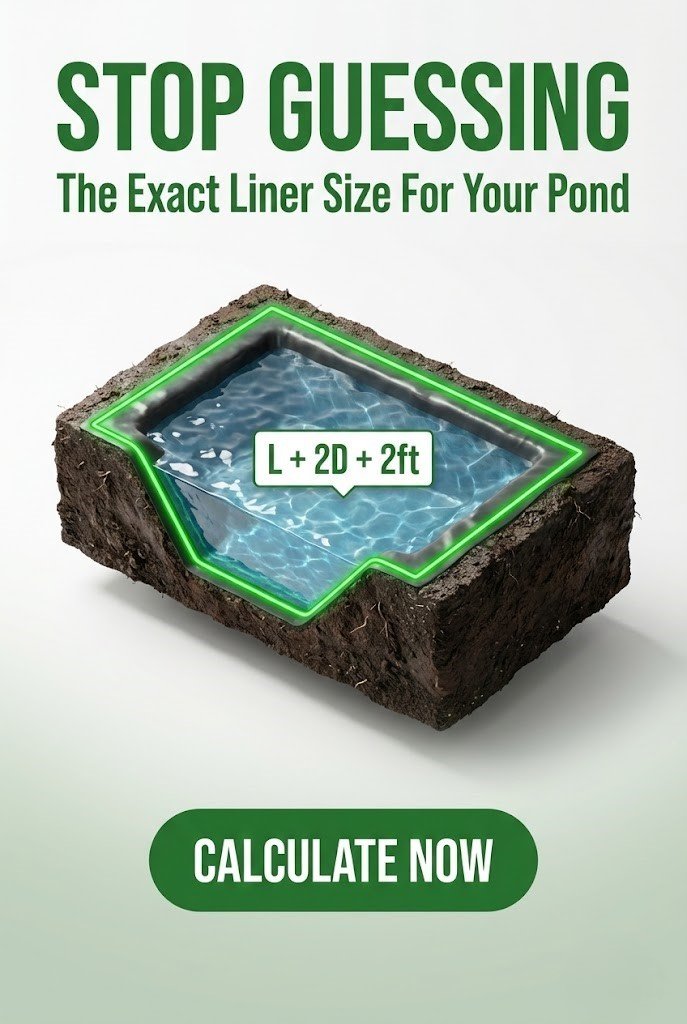
You must account for the vertical drop down the sides and the extra flap needed on top to anchor the liner under heavy rocks. If your liner is 6 inches too short, your pond will leak, and you will have to tear the whole thing out. Use our Pond Liner Sizing Tool below to calculate the exact dimensions you need including the safety overlap.
How to Use This Tool
Calculating the 2D surface area of a 3D hole requires a specific formula:
- Max Length & Width: Measure the longest and widest points of your excavation hole. Even if your pond is kidney-bean shaped, treat it as a rectangle that encompasses the entire shape.
- Max Depth: Measure the deepest part of the pond. Even if you have shallow plant shelves, the liner must be sized for the deepest point to stretch correctly.
- The Result: The tool calculates: (Length + 2x Depth + Overlap) by (Width + 2x Depth + Overlap).
Why We Built This (The "Secret Sauce")
Many generic calculators forget the most important part: The Anchor Collar.
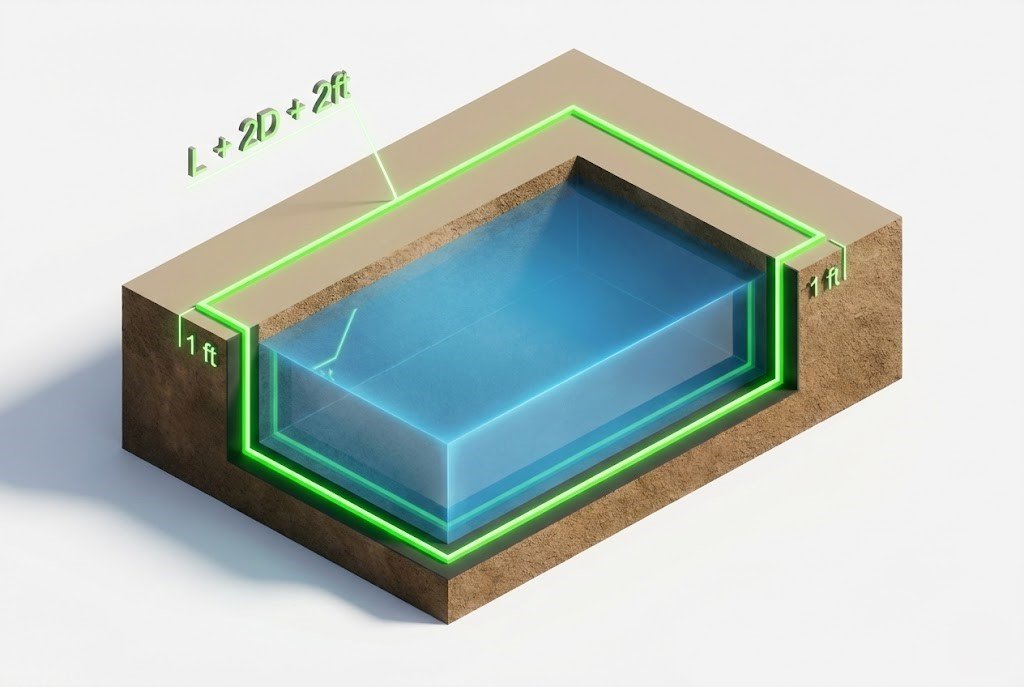
The +2 Foot Rule:
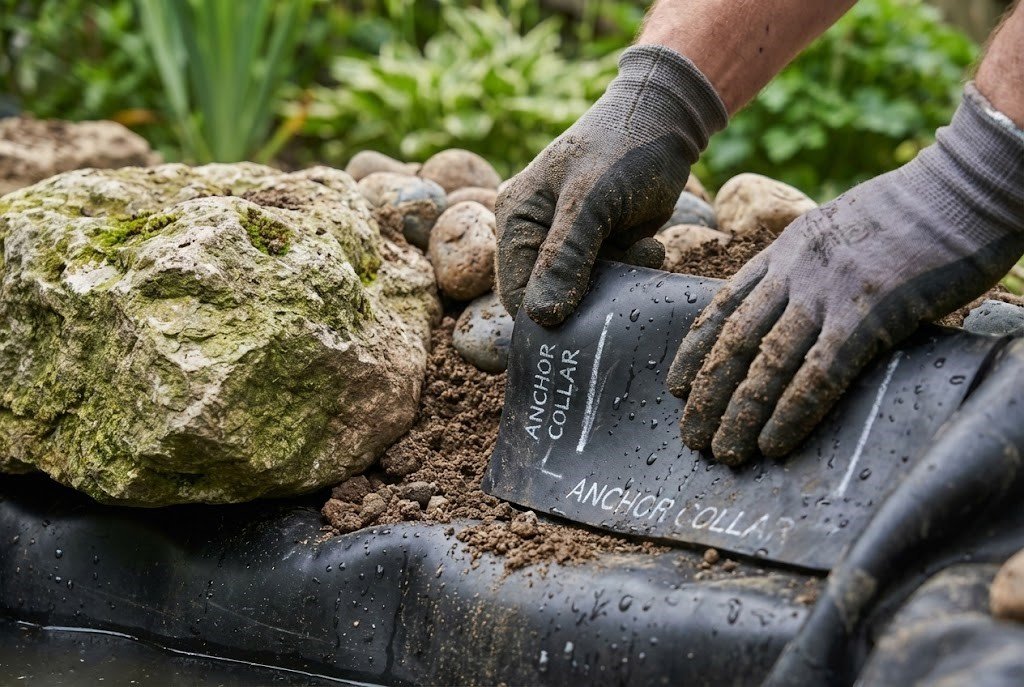
Our calculator automatically adds 2 feet to both the length and the width. This provides 1 foot of overlap on every side. You need this extra material to pull over the edge of the pond and bury under soil or heavy coping stones. Without this anchor, the weight of the water will pull the liner down into the hole, causing the edges to collapse.
Educational Guide: Choosing the Right Material
Once you know the size, you need to pick the material. Don't use a tarp!
1. EPDM (Rubber)
This is the gold standard for koi ponds. It is thick (45 mil), flexible, and UV resistant. It conforms easily to curves and shelves. It is heavy, but it lasts 20+ years.
2. PVC / HDPE
These are lighter and cheaper plastic liners. They are stiffer and harder to fold around tight corners. They are fine for small water features but can become brittle in freezing temperatures over time.
3. Don't Forget Underlayment
Before you lay your expensive liner, you must put down underlayment (a thick geotextile fabric). It protects the liner from sharp rocks and roots coming from below. If you skip this, water pressure will eventually force a sharp stone right through your liner.
Frequently Asked Questions
How do I measure an irregular shaped pond?
Treat your pond like a rectangle. Measure the maximum length at the longest point and the maximum width at the widest point. You will end up cutting off the excess corners of the rectangular liner, but this ensures you cover the widest curves.
Can I seam two pieces of liner together?
Yes, but it is risky. You need special EPDM primer and seam tape. It is difficult to get a perfect seal in a dirty backyard environment. It is almost always safer and better to buy a single piece large enough to cover the whole pond.
What is the "45 mil" rating?
"Mil" stands for thousandths of an inch. A 45 mil liner is 0.045 inches thick. This is the industry standard for durability. Anything thinner (like 20 mil) is prone to punctures from dog claws or falling branches.