
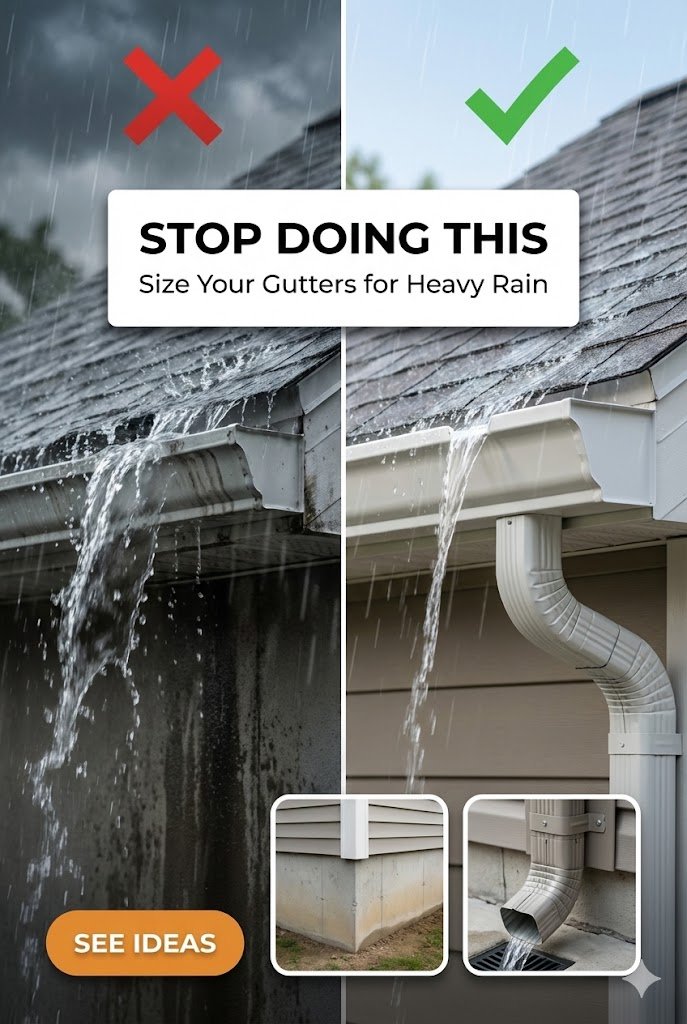
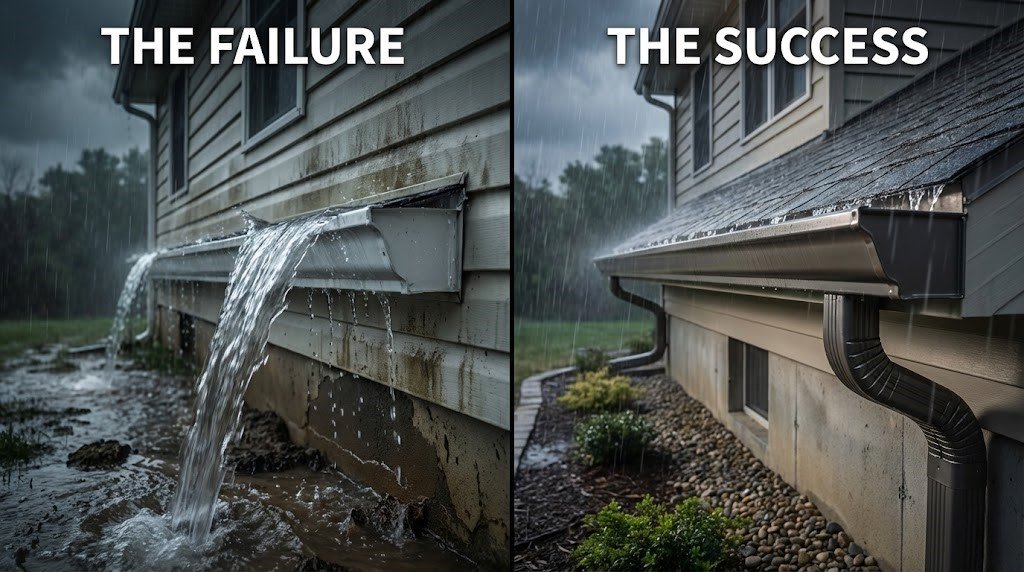
Protecting your garden shed, greenhouse, or home from water damage starts at the roofline. If your gutters are undersized, water will overflow during heavy storms, leading to foundation erosion, basement leaks, and damage to your landscaping. Choosing between 5-inch and 6-inch gutters isn’t just about looks—it’s a matter of hydraulic capacity.
Use our Gutter Calculator to determine the correct gutter size and number of downspouts required for your roof area and local rainfall intensity.
Gutter Sizing Calculator
How to Use the Gutter Calculator
- Roof Drainage Area: This is the square footage of the roof surface that drains into a single gutter run.
- Roof Pitch: Steeper roofs collect more wind-blown rain and deliver water to the gutter faster. Our tool applies a “Pitch Factor” to account for this increased load.
- Rain Intensity: This is measured in inches per hour. For most of the US, a 5-minute burst of 4 inches per hour is the standard design baseline.
- Leaf Guards: Check this if you plan to install mesh or hood guards. These can reduce the speed at which water enters the gutter, requiring a larger size to prevent overshooting.
Why We Built This: The “Secret Sauce” of Drainage
Most DIYers assume gutters only fail because they are clogged. In reality, many gutters fail because they were never sized for a “100-year storm.” Our “Secret Sauce” logic factors in Rain Intensity Bursts and Downspout Frequency.

Even the largest gutter will fail if there aren’t enough downspouts to carry the water away. Our tool calculates the minimum number of 2×3 or 3×4 downspouts needed to keep your system from backing up.
Educational Guide: K-Style vs. Half-Round Gutters
When selecting a gutter system, the profile matters as much as the width.
K-Style Gutters
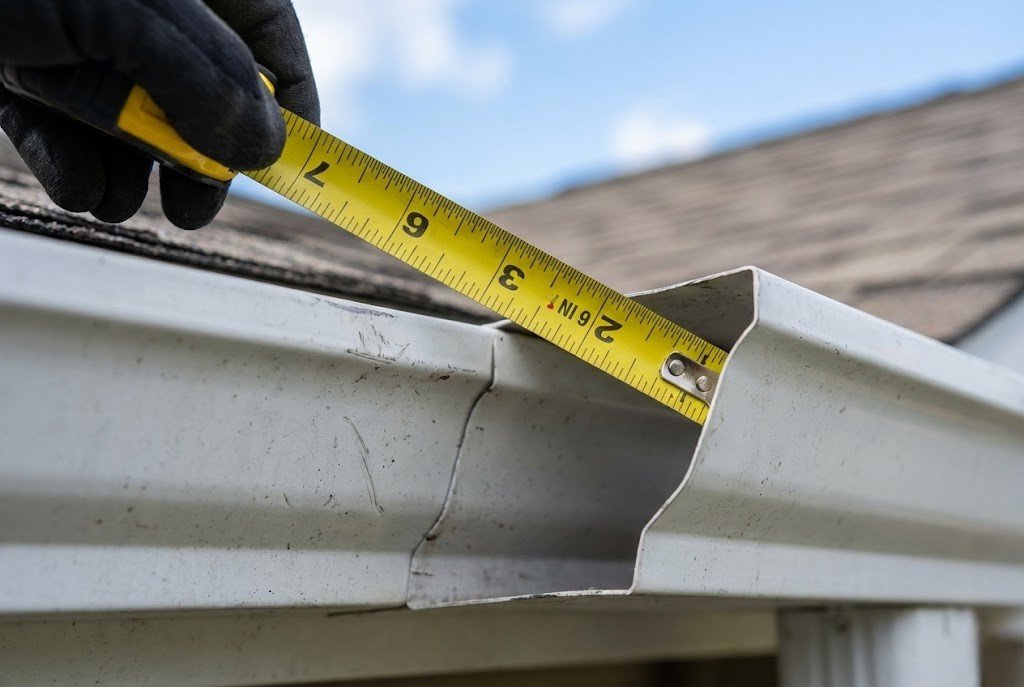
This is the standard “crown molding” look seen on most modern homes. K-Style gutters hold more water per linear foot than half-round gutters of the same width, making them the superior choice for high-rainfall areas. A 5-inch K-style gutter is often sufficient for small to medium roofs.
Half-Round Gutters
Common on historic or upscale gardening structures, half-round gutters offer a classic look but have less capacity. Because they are prone to overflowing more easily, we generally recommend sizing up to a 6-inch half-round where a 5-inch K-style would have sufficed.
Pro Tip: Always install gutters with a slight pitch (1/4 inch of drop for every 10 feet of run) toward the downspouts to ensure standing water doesn’t become a breeding ground for mosquitoes in your garden.
Frequently Asked Questions
Q: When should I upgrade to 6-inch gutters?
A: You should consider 6-inch gutters if you have a very steep roof, a drainage area larger than 1,000 sq ft per downspout, or if you live in a region with frequent tropical-strength downpours.
Q: How many downspouts do I need?
A: A general rule of thumb is one downspout for every 30 to 40 feet of gutter. If your roof area is large, you may need to add additional spouts to prevent the gutter from overflowing during peak intensity.
Q: Do leaf guards make gutters overflow?
A: Some designs can “overshoot” during extreme rain. It is vital to keep the guards clean of fine debris (like pine needles) to maintain the intake capacity calculated by our tool.