

There is nothing worse than spending a Saturday prepping your lawn, only to run out of grass seed when you are 80% finished. Conversely, grass seed has become incredibly expensive, and buying twice as much as you need is a waste of money.
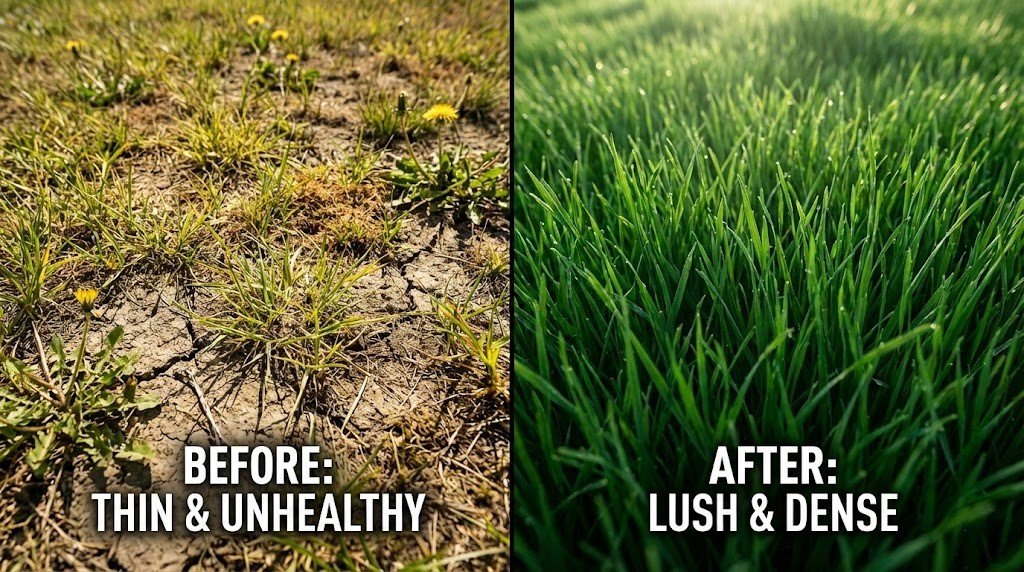
Whether you are patching a few thin spots or starting a brand new lawn from scratch, accuracy matters. Use our Free Grass Seed Calculator below to determine exactly how many pounds you need based on your specific project type.
🌱 Grass Seed Calculator
How to Use This Tool
We designed this calculator to account for the two most common lawn projects:
- Select Project Type: Choose "Overseeding" if you are thickening an existing lawn (this requires less seed). Choose "New Lawn" if you are planting on bare dirt (this requires double the seed).
- Enter Dimensions: Measure the Length and Width of your lawn area in feet.
- Get Your Result: The tool will calculate the total square footage and the exact pounds of seed required, rounding up to ensure you have full coverage.
Why We Built This (The "Secret Sauce")
Many generic calculators use a "one size fits all" approach, often suggesting 5 lbs per 1,000 square feet regardless of the situation.
We use professional landscaping standards:
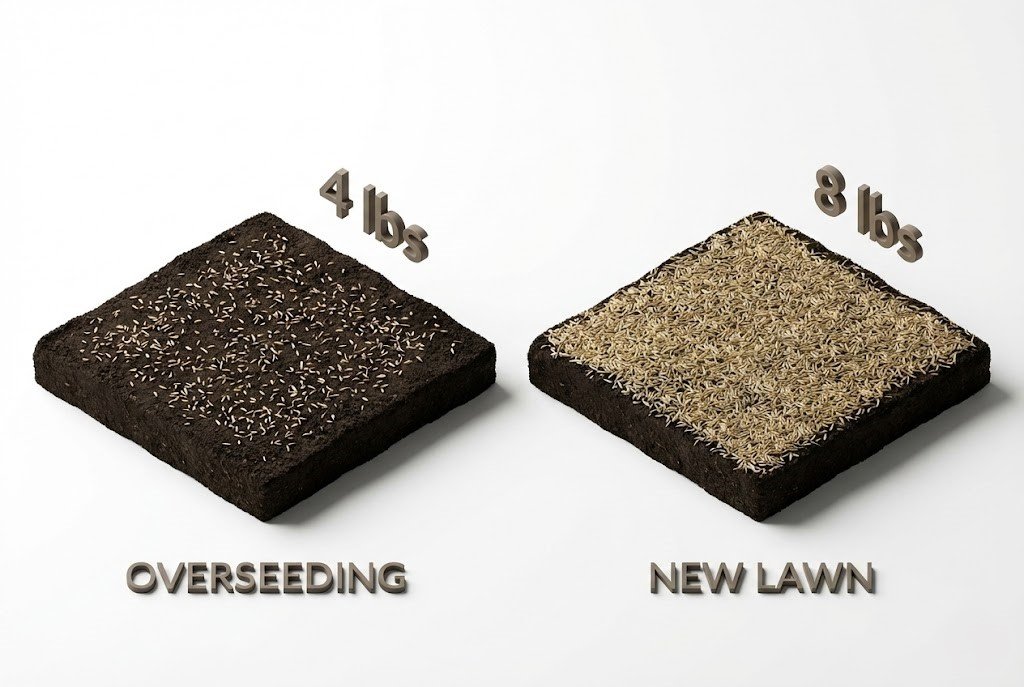
- New Lawns (8 lbs / 1000 sq ft): When starting from scratch, you need high density to outcompete weeds. Our calculator assumes a heavy application rate to ensure a lush green carpet.
- Overseeding (4 lbs / 1000 sq ft): When you are just filling in gaps, applying too much seed creates competition for resources. Our tool cuts the rate in half to save you money while ensuring success.
Educational Guide: Getting the Best Germination
Buying the right amount of seed is only the first step. To ensure that seed actually grows, follow these tips:
1. Prepare the Soil
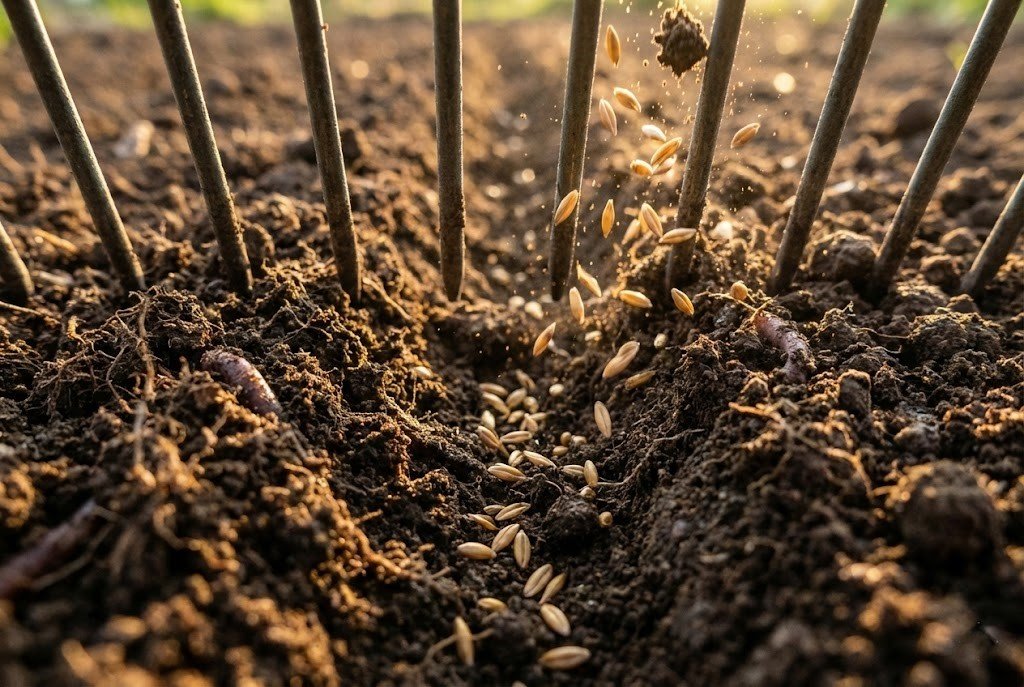
Seed needs soil contact to grow. If you just throw seed on top of hard dirt or dead thatch, it will dry out. Use a rake to loosen the top inch of soil. If your soil is heavy clay, consider reading our guide on using compost to improve soil structure before planting.
2. Topdress for Success
After spreading your seed, cover it lightly. A thin layer of peat moss or screened compost protects the seed from birds and holds in moisture. This is similar to the method we use when filling raised beds, layering materials helps retain water.
3. Water Correctly
New seed must stay moist. Water lightly 2-3 times a day until germination occurs. Once the grass is 2 inches tall, you can switch to deeper, less frequent watering.
Frequently Asked Questions
How much grass seed do I need for 1,000 square feet?
For a brand new lawn, you generally need 8 to 10 pounds of seed per 1,000 square feet. If you are overseeding an existing lawn, you only need 4 to 5 pounds for the same area.
Can I just throw grass seed on top of my lawn?
No. If you throw seed on top of an existing lawn without preparing it, the seed will sit on the grass blades or thatch and won't touch the soil. You must mow the lawn short and rake it vigorously to expose the soil before spreading seed.
Does this calculator work for all grass types?
Our calculator uses an average standard for common mixes (Tall Fescue, Ryegrass, and Bluegrass blends). If you are planting a specific specialty grass like pure Kentucky Bluegrass (which has smaller seeds), you might need slightly less. However, it is always safer to have a little extra than not enough.