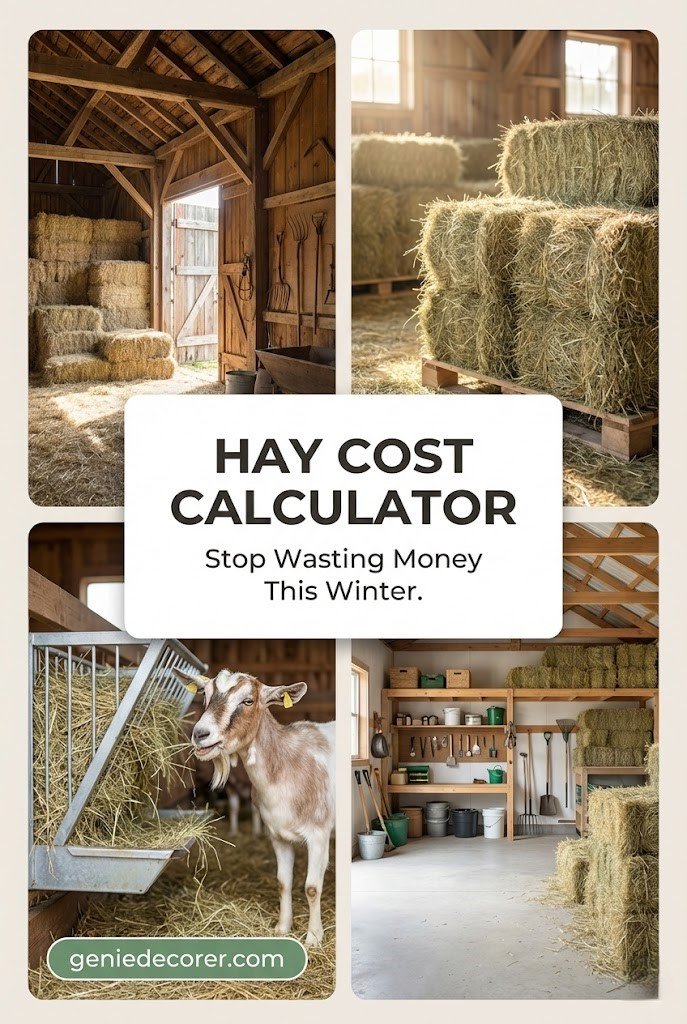
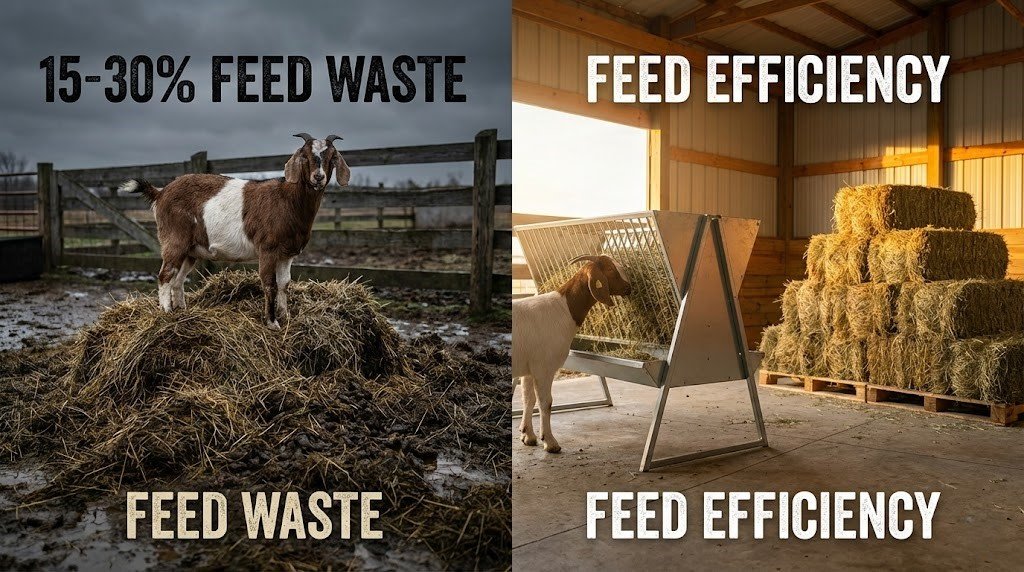
Winter is the most expensive season for livestock owners. Unlike cattle, goats and sheep are notoriously picky eaters. They will pull hay out of a feeder, trample it, and then refuse to eat it once it has touched the ground. If you calculate your feed needs based solely on body weight, you will run out of hay by February.
Use our Hay Cost Calculator to determine exactly how many bales you need to buy. Our tool accounts for the specific metabolic needs of small ruminants (3.5% body weight) and includes a critical “Waste Factor” to ensure your barn stays stocked through the cold months.
Goat/Sheep Hay Feeder Calc
How to Use the Hay Feeder Calculator
- Herd Size: Enter the number of animals you are feeding.
- Avg Weight: Estimate the average weight of your animals. For example, a Nigerian Dwarf goat weighs ~60 lbs, while a Boer goat can weigh 150 lbs+.
- Bale Type: Select the size of the bale you buy. Standard “Small Squares” are usually 50 lbs, while large “Round Bales” are 800-1000 lbs.
- Results: The tool calculates total monthly pounds needed, the number of bales to buy, and the estimated floor space required to store them.
Why We Built This: The “Secret Sauce” of Waste
The “Secret Sauce” of our tool is the 15% Waste Buffer. Most generic feed calculators assume 100% efficiency. Any goat owner knows this is a fantasy. Goats are “browsers,” meaning they like to sift through food to find the tastiest stems. Without a specialized waste-reducing feeder, they can waste up to 30% of their hay.
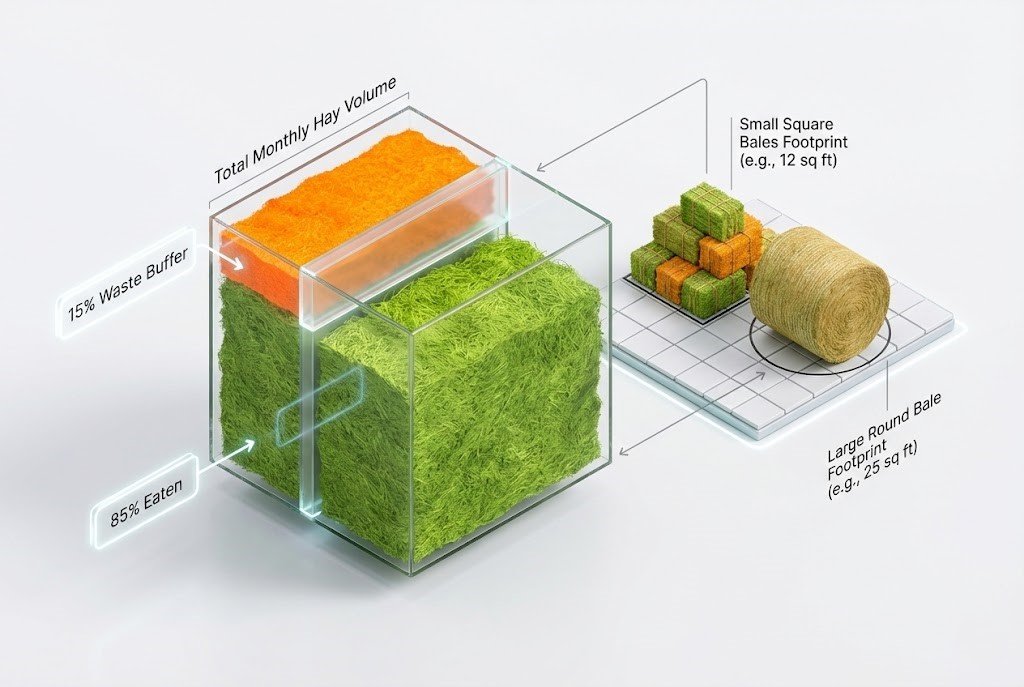
Our calculator builds in a safe 15% buffer so you don’t under-buy.
Educational Guide: Winter Feeding Tips
Small ruminants require more energy per pound of body weight than cows because they have faster metabolisms and less body fat insulation.
The 3.5% Rule
While a cow might survive on 2% of its body weight in dry matter daily, goats and sheep typically need 3.5% to 4% during winter, especially if they are pregnant or lactating. This percentage refers to “Dry Matter,” which is perfect for hay calculations.
Storage is Key
Buying hay in bulk is cheaper, but only if you can keep it dry.
- Ventilation: Stack hay on pallets, not directly on the ground, to prevent wicking moisture.
- Airflow: Leave gaps between rows of bales to allow air to circulate and prevent mold.
- Space: Use the “Barn Storage” result in our tool to ensure your hay loft or shed is big enough before the delivery truck arrives.
Frequently Asked Questions
Q: Should I feed Alfalfa or Grass Hay?
A: For wethers (neutered males), stick to Grass Hay (Timothy/Orchard) to prevent urinary calculi. For milking does or pregnant ewes, Alfalfa provides the extra calcium and protein they need.
Q: How do I reduce hay waste?
A: Use a feeder with small openings (like a keyhole feeder or 4×4 wire mesh). This forces the animal to pull out small bites rather than grabbing a whole mouthful and dropping half of it.
Q: How heavy is a “standard” square bale?
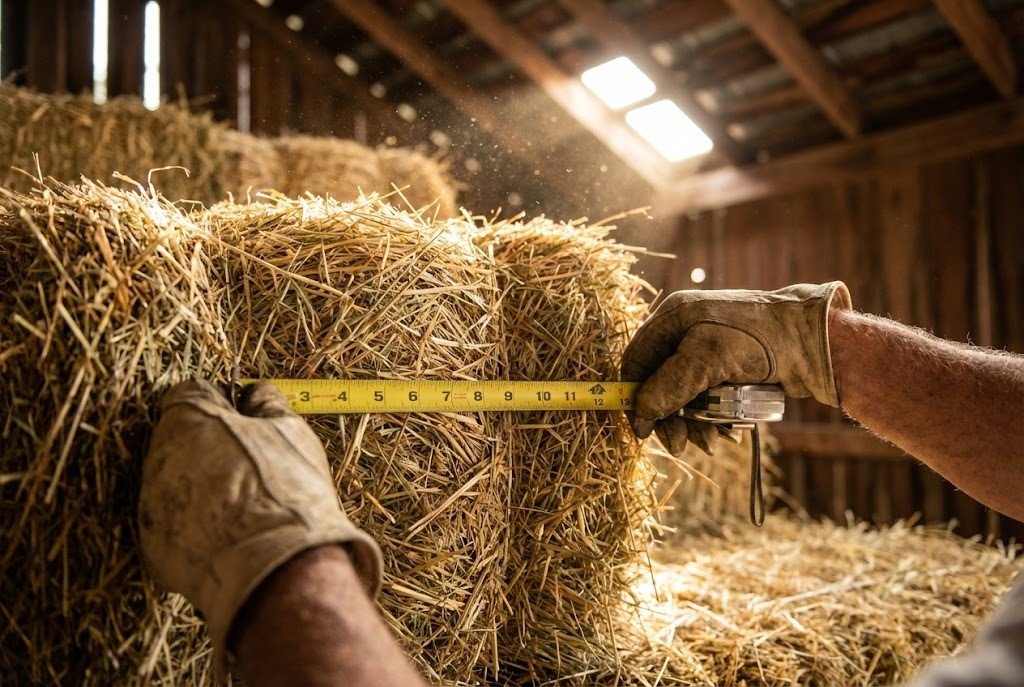
A: It varies by region and cut. A 2-string bale can weigh anywhere from 40 to 65 lbs. Always weigh a test bale before calculating your winter supply.