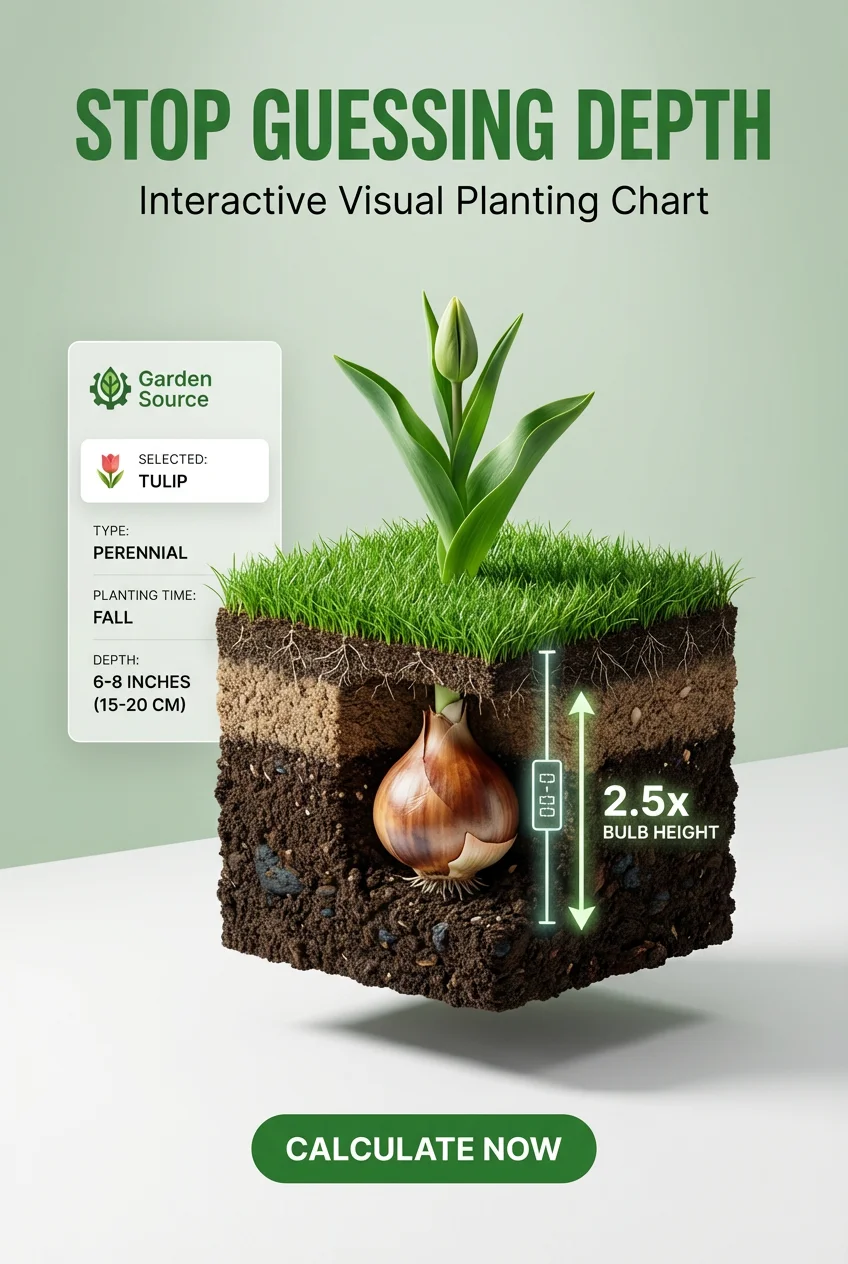
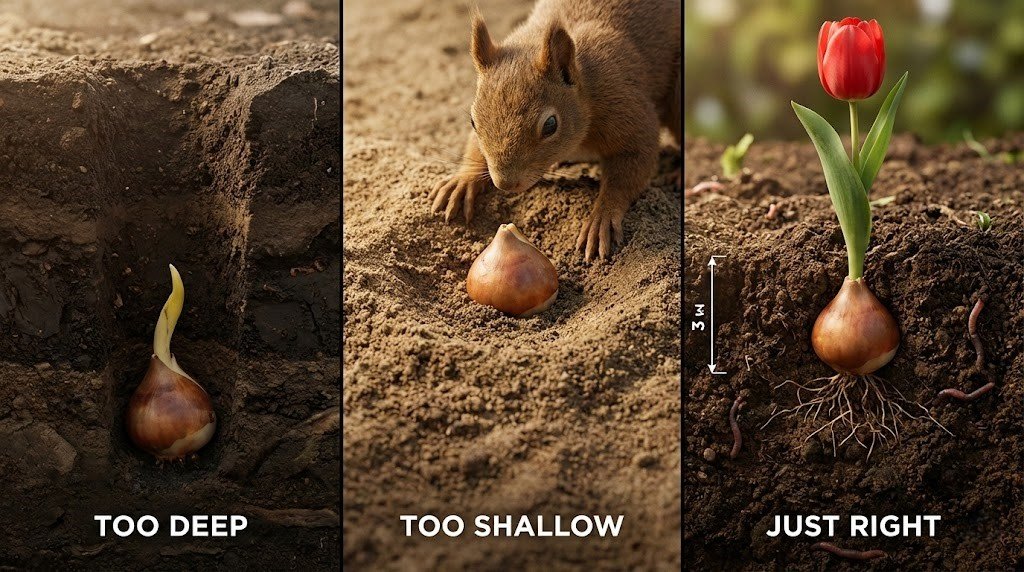
There is nothing more heartbreaking than planting 50 tulip bulbs in the fall, waiting all winter, and seeing… nothing in the spring. The culprit is almost always planting depth. If you plant too shallow, squirrels dig them up or the frost kills them. If you plant too deep, the sprout runs out of energy before it reaches the surface.
🌷 Bulb Planting Depth Calculator
Different bulbs have drastically different requirements. A giant Allium needs to be buried 8 inches deep, while a Bearded Iris likes to bake in the sun on the surface. Stop guessing. Use our Interactive Bulb Planting Depth Calculator below to find the "Goldilocks" zone for your specific flowers.
How to Use This Tool
We designed this tool to handle both common favorites and mystery bulbs:
- Select Your Bulb: Choose from our preset list of popular garden bulbs like Tulips, Daffodils, or Garlic.
- Custom Calculation: Have a bulb that isn't on the list? Select "Custom" and measure the height of the bulb from base to tip.
- Get Your Depth: The tool will visualize exactly how deep the bottom of the bulb should sit in the soil using the animated soil chart.
Why We Built This (The "Secret Sauce")
The old gardening adage says "plant 3 times the height of the bulb." While that is a good general rule, it creates disasters for specific plants.
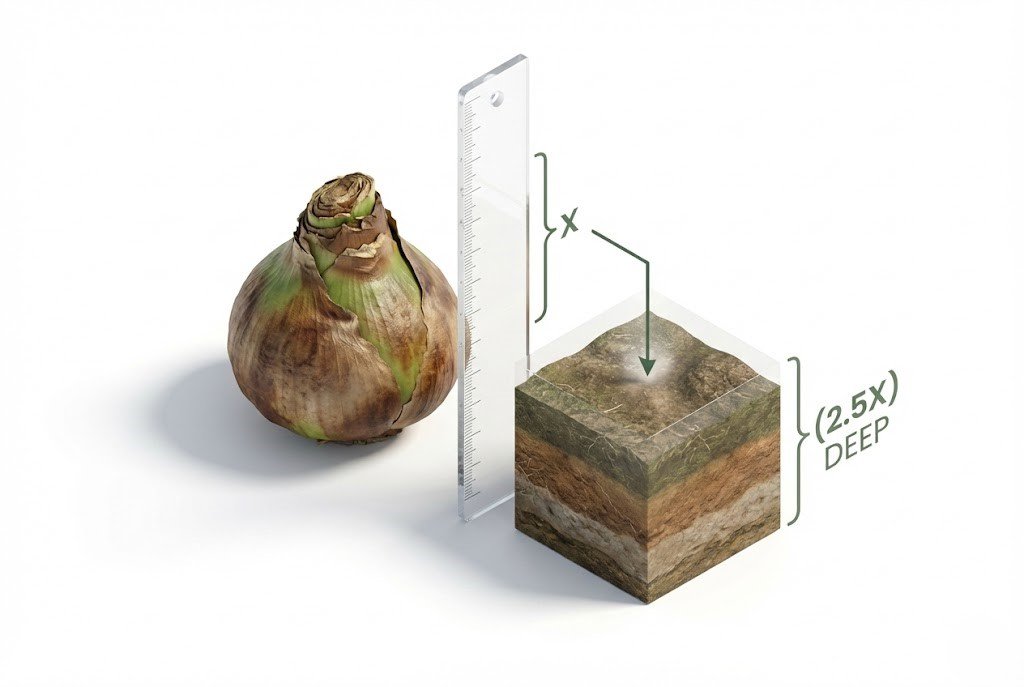
The Exception Logic: Our tool has built-in safety checks for the rule-breakers:
- The Shallow Lovers: Bearded Iris and Amaryllis will rot if buried deep. Our tool flags these immediately with a warning to keep them exposed.
- The Deep Divers: Large Daffodils and Alliums need extra depth not just for protection, but to support their heavy stems so they don't flop over in the wind.
Educational Guide: Planting for Success
Getting the depth right is step one. Here is how to ensure a colorful display.
1. Which Side is Up?
For 90% of bulbs (Tulips, Daffodils, Garlic), the pointy end goes up (towards the sky) and the flat, hairy end goes down (roots).
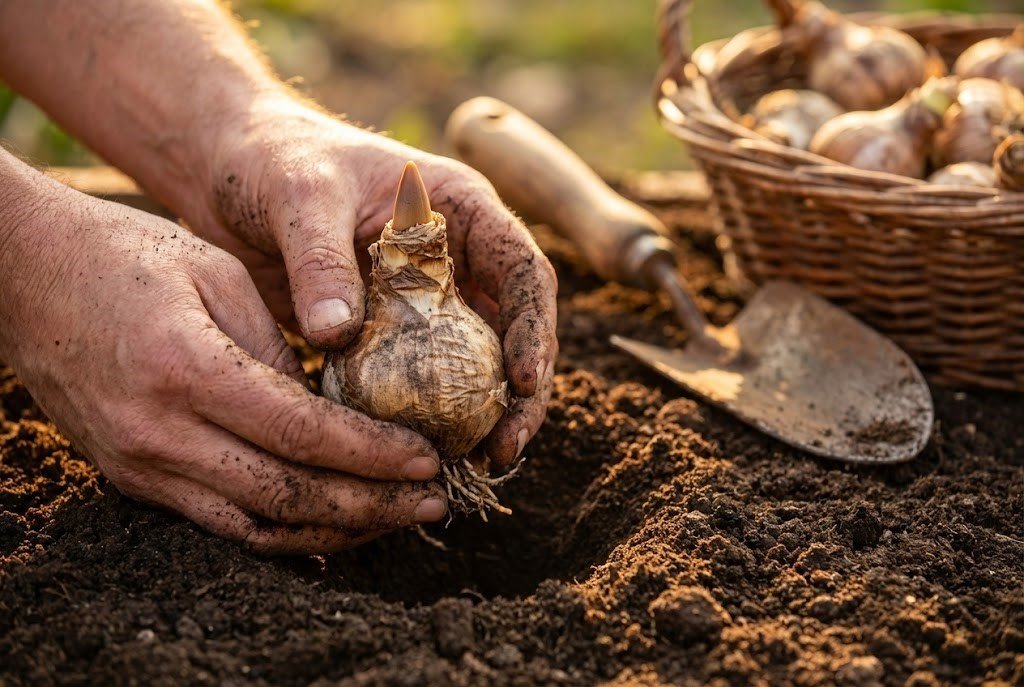
If you really can't tell (like with Anemones), plant them sideways. The plant uses gravity to figure out which way to send the shoot.
2. The "Lasagna" Method
If you have limited space in a raised bed or pot, try layering. Plant large bulbs (like Tulips) 8 inches deep, cover with soil, and then plant smaller bulbs (like Crocus) 3 inches deep directly on top. This gives you two waves of blooms in one spot.
3. Soil & Drainage
Bulbs are essentially storage tanks for the plant. If they sit in wet soil, they rot. Always mix plenty of compost and grit into your planting hole to ensure water drains away quickly.
Frequently Asked Questions
Does planting depth include the mulch layer?
No. Planting depth is measured from the soil surface. You should dig your hole to the recommended depth, plant the bulb, cover it with soil, and then add your 2-3 inches of mulch on top for winter protection.
What happens if I plant my bulbs too shallow?
Shallow bulbs are vulnerable to three things: 1) Predators (Squirrels love shallow tulips), 2) Freeze/Thaw cycles which can heave the bulb out of the ground, and 3) Toppling over when the heavy flower blooms.
Can I use a drill to plant bulbs?
Yes! Using a "bulb auger" drill bit is a fantastic way to save your back when planting hundreds of bulbs. Just mark the auger with a piece of tape at the 6-inch mark so you maintain consistent depth.