

Starting an aquaponics system is exciting, but sizing your tank incorrectly is the most expensive mistake you can make. If your tank is too small, your water chemistry will fluctuate wildly, killing your fish. If your tank is too big (and heavy), you might crack your floor joists.
🐟 Fish Tank Volume & Weight
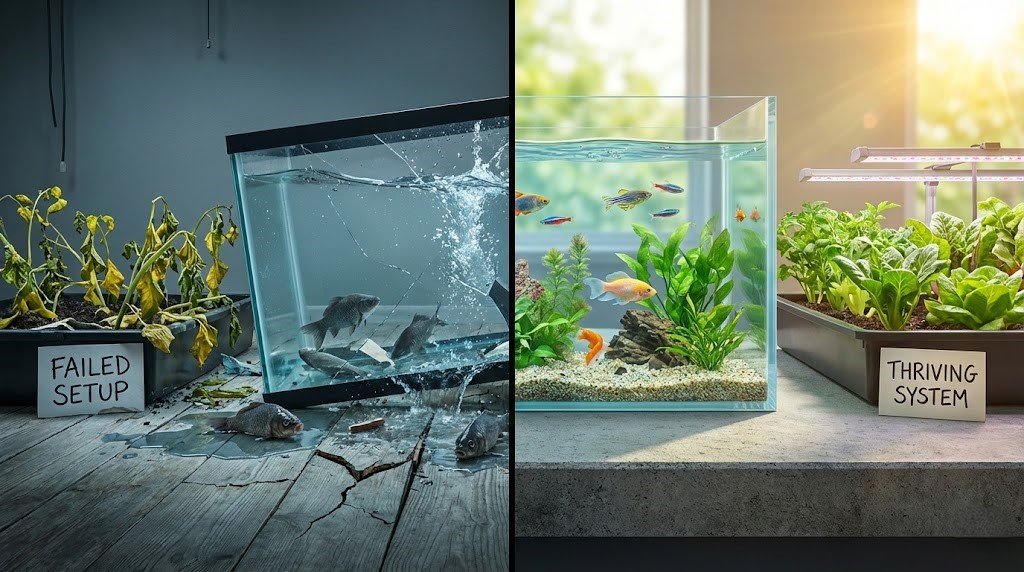
Water is deceptive—it looks light, but it weighs over 8 pounds per gallon. Use our Fish Tank Volume & Weight Calculator below to determine the exact capacity of your setup and ensure your floor can handle the load.
How to Use This Tool
Whether you are building a custom plywood tank or buying a glass aquarium, the math is the same:
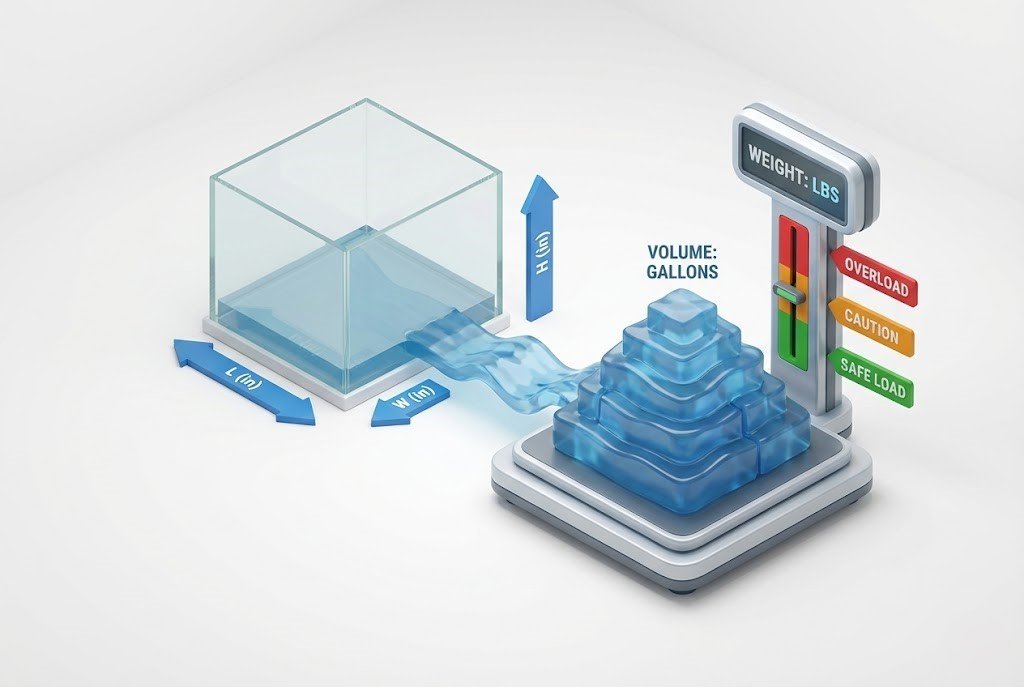
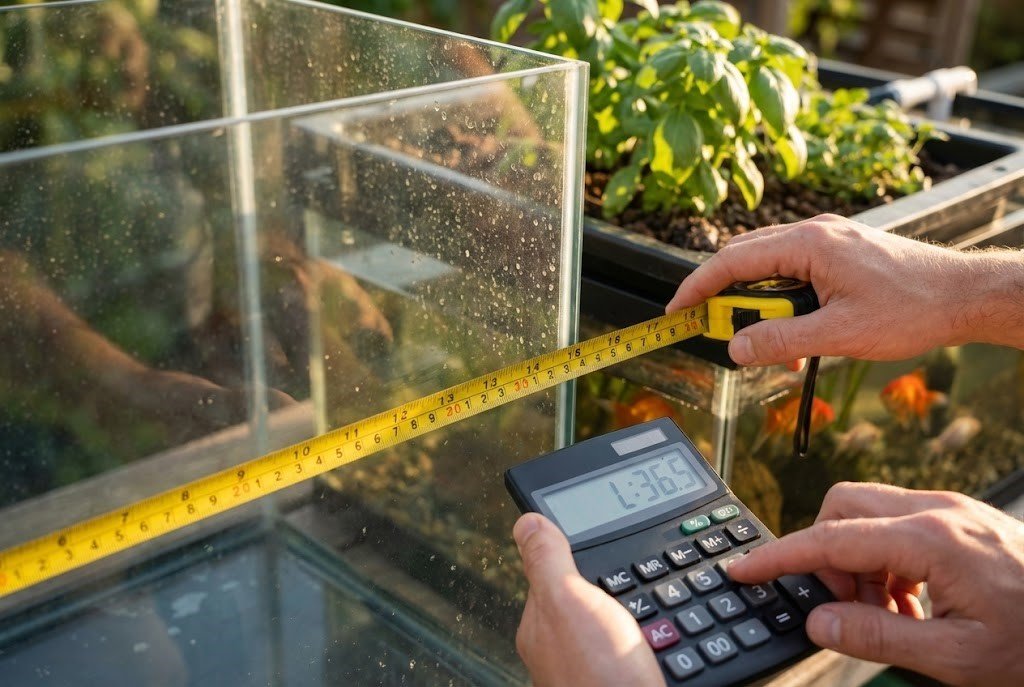
- Measure Interior Dimensions: For the most accuracy, measure the inside of the tank (Length, Width, Height) in inches. If you measure the outside, subtract the thickness of the glass/wood.
- Calculate Volume: The tool converts cubic inches into US Gallons.
- Check the Weight: Pay close attention to the “Total Water Weight.” This number does not even include the weight of the glass, gravel, or stand—so treat it as a minimum.
Why We Built This (The “Secret Sauce”)
Most calculators just give you gallons. We built this to keep you safe.
The Structural Limit:
A standard US residential floor is designed to support roughly 40 lbs per square foot (live load). A 50-gallon tank has a footprint of about 4 square feet but weighs over 400 lbs. That is 100 lbs per square foot—double the standard limit. Our tool flags these heavy loads so you know when to place tanks against load-bearing walls.
Educational Guide: Sizing for Aquaponics
In aquaponics, your tank size dictates how many plants you can grow. Here are the golden ratios.
1. The 1:1 Ratio (Media Beds)
For a simple media bed system (clay pebbles), aim for a 1:1 ratio of Fish Tank Volume to Grow Bed Volume.
Example: If you have a 50-gallon fish tank, you can support roughly 50 gallons (approx 6-7 cubic feet) of grow bed media.
2. Stocking Density
How many fish can you put in your new tank?
Conservative Rule: 1 lb of fish for every 5-10 gallons of water.
Example: A 50-gallon tank can safely support about 5-8 lbs of mature tilapia or goldfish. Don’t overstock until your biofilter is mature!
3. Floor Safety Tips
If your calculator result shows over 500 lbs:
Perpendicular is Better: Place the tank so it spans across multiple floor joists, rather than running parallel on top of just one.
Load Bearing Walls: Always place heavy tanks against an exterior wall or a main support wall, never in the middle of a room.
Frequently Asked Questions
How heavy is a 55-gallon drum of water?
A standard 55-gallon drum filled with water weighs approximately 460 lbs (just the water) plus about 20 lbs for the plastic barrel itself. This is roughly the weight of a large refrigerator concentrated in a 2-foot circle.
Does the shape of the tank matter for volume?
For volume, no. 50 gallons is 50 gallons whether it is a tall cylinder or a low rectangle. However, for fish health, surface area matters. A wide, shallow tank has more gas exchange (oxygen entering the water) than a tall, skinny tank.
What is the formula for cylinder tank volume?
If you are using a round tank, the math is slightly different: Volume = π × (Radius)² × Height. Or, just measure it as a square box for a rough “safe estimate”—the square calculation will slightly overestimate, giving you a safety buffer on weight.