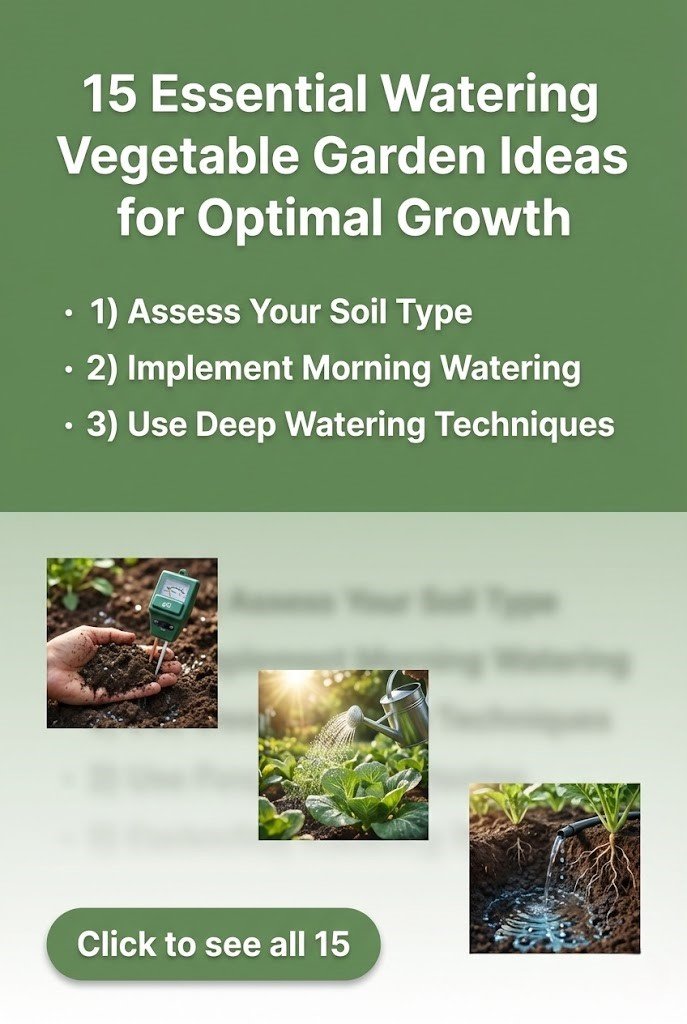
Maintaining proper hydration in your vegetable garden is crucial for promoting healthy plant development and maximizing yields. Watering vegetable garden practices directly influence nutrient uptake, disease resistance, and overall crop quality. By implementing effective strategies, you can ensure that your plants receive the right amount of moisture without waste or excess, leading to a bountiful harvest.
Understanding the nuances of watering vegetable garden techniques allows you to adapt to varying soil types, weather conditions, and plant requirements. This approach not only conserves water but also fosters sustainable gardening habits. In the following list, you will discover practical ideas to enhance your watering routine, each designed to support vigorous growth and productivity in your vegetable patch.
1) Assess Your Soil Type
You begin by evaluating the composition of your soil, as it determines how effectively water is retained and drained. Sandy soils drain quickly and may require more frequent watering, while clay soils hold moisture longer but can become compacted. Conduct a simple test by squeezing a handful of damp soil; if it crumbles easily, it is likely sandy, whereas if it forms a sticky ball, it indicates clay content.
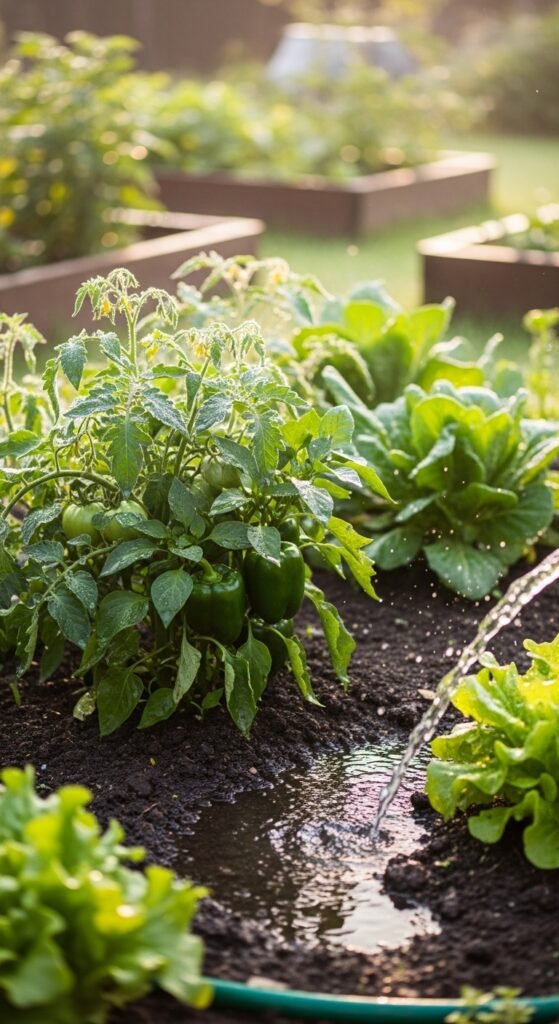
This assessment is essential because improper watering based on soil type can lead to root rot or drought stress in your vegetables. By understanding your soil, you tailor your watering schedule to prevent these issues, ensuring roots access necessary hydration without saturation.
To implement this, amend your soil with organic matter like compost to improve structure and moisture retention. Regularly monitor changes, especially after heavy rains or dry spells, to adjust your approach accordingly.
2) Implement Morning Watering
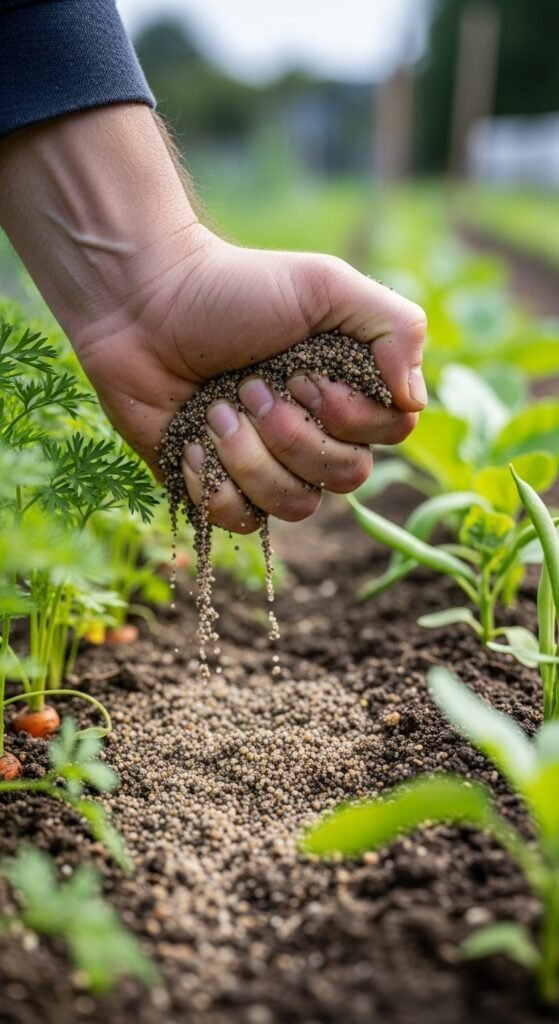
You should water your vegetable garden early in the morning to minimize evaporation and allow foliage to dry before evening. This timing aligns with natural plant processes, enabling efficient absorption during cooler hours. Best time to water plants is typically dawn, reducing the risk of fungal diseases that thrive in damp, nighttime conditions.
The benefit lies in conserving water and promoting deeper root growth, as plants draw moisture from the soil throughout the day. This practice enhances resilience against heat stress, leading to healthier produce.
Apply water slowly at the base of plants using a hose or watering can, aiming for one inch per week, adjusted for rainfall. Consistency in this routine will yield noticeable improvements in plant vigor and yield.
3) Use Deep Watering Techniques
You employ deep watering by delivering moisture directly to the root zone, encouraging roots to grow downward for better stability and access to nutrients. This method involves soaking the soil to a depth of six to eight inches, rather than frequent shallow applications that promote surface roots vulnerable to drying.
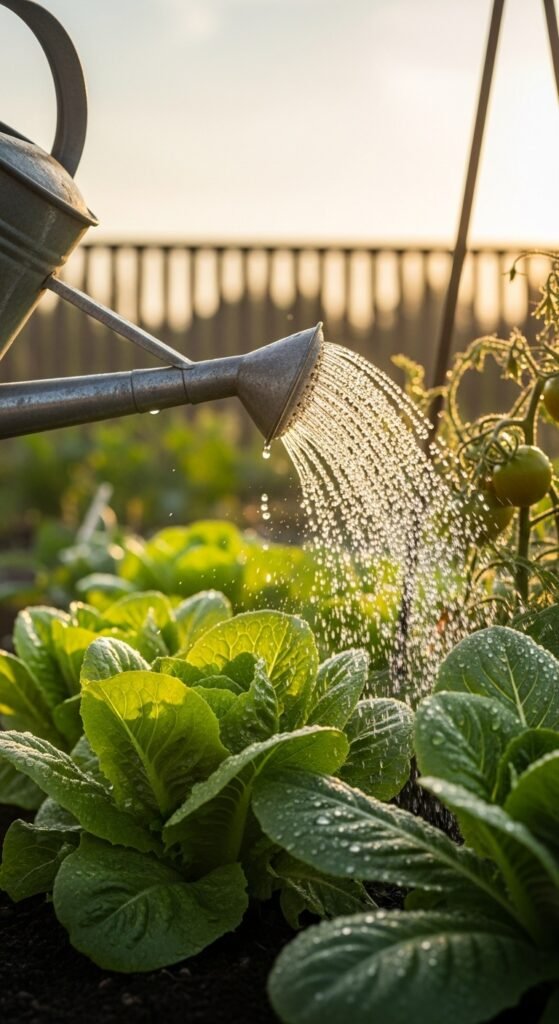
Deep watering is vital for vegetable gardens because it fosters drought tolerance and reduces the need for constant monitoring. Plants like tomatoes and peppers thrive under this regime, producing higher quality fruits with fewer issues.
To achieve this, use a soaker hose or drip system, allowing water to penetrate slowly. Check soil depth with a probe to ensure adequate saturation, repeating every few days based on weather and plant needs.
4) Install Drip Irrigation Systems
You set up a drip irrigation system to deliver water precisely to plant roots, minimizing waste and weed growth. This setup consists of tubes with emitters that release water slowly, ensuring consistent moisture without over-saturating the soil. Drip irrigation setup is straightforward and customizable for various garden layouts.
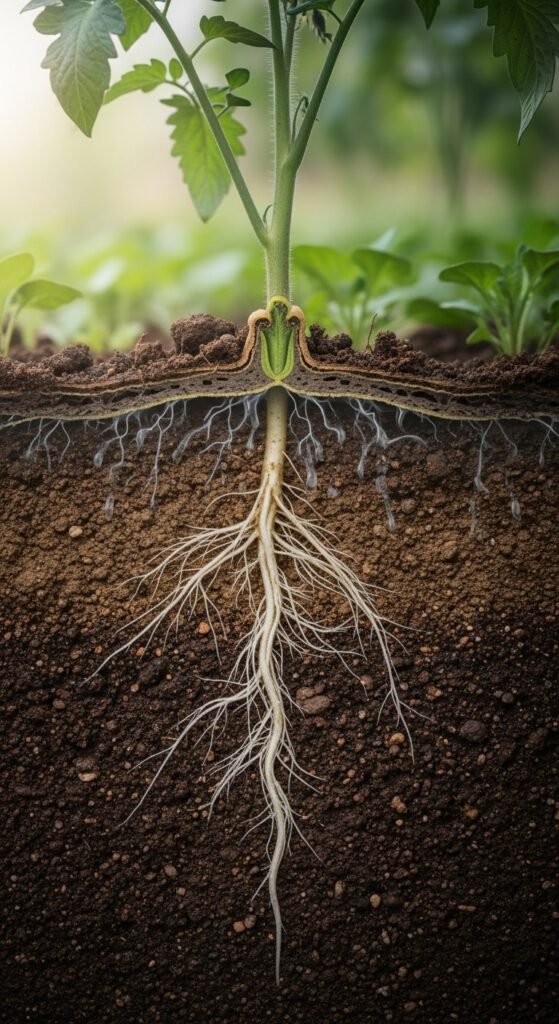
The advantage is efficient water use, especially in arid climates, leading to healthier plants and reduced utility bills. It also prevents leaf diseases by keeping foliage dry.
Begin by mapping your garden, installing main lines and emitters near each plant. Connect to a timer for automated operation, adjusting flow rates as seasons change to maintain optimal hydration.
5) Incorporate Soaker Hoses
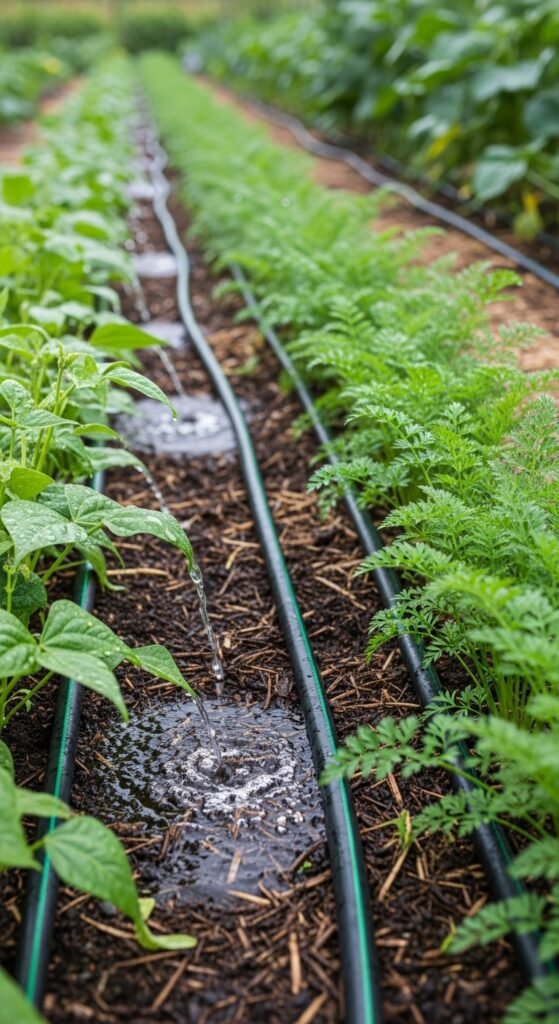
You lay soaker hoses along rows of vegetables to provide even, gentle watering directly to the soil. These porous tubes ooze water slowly, allowing deep penetration without runoff or erosion. Soaker hose layout optimizes coverage for efficient hydration.
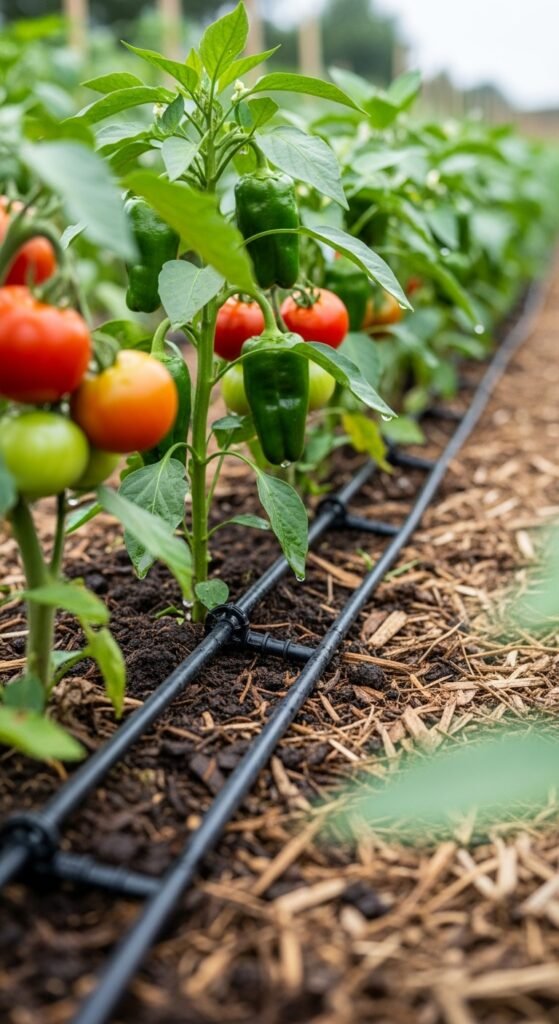
This technique conserves water and reduces evaporation, making it ideal for busy gardeners. It supports robust root systems in crops like beans and carrots, enhancing overall garden productivity.
Position hoses under mulch for added efficiency, connecting to a faucet with a timer. Run for 30 to 60 minutes weekly, monitoring soil moisture to fine-tune duration and frequency.
6) Apply Organic Mulch Layers
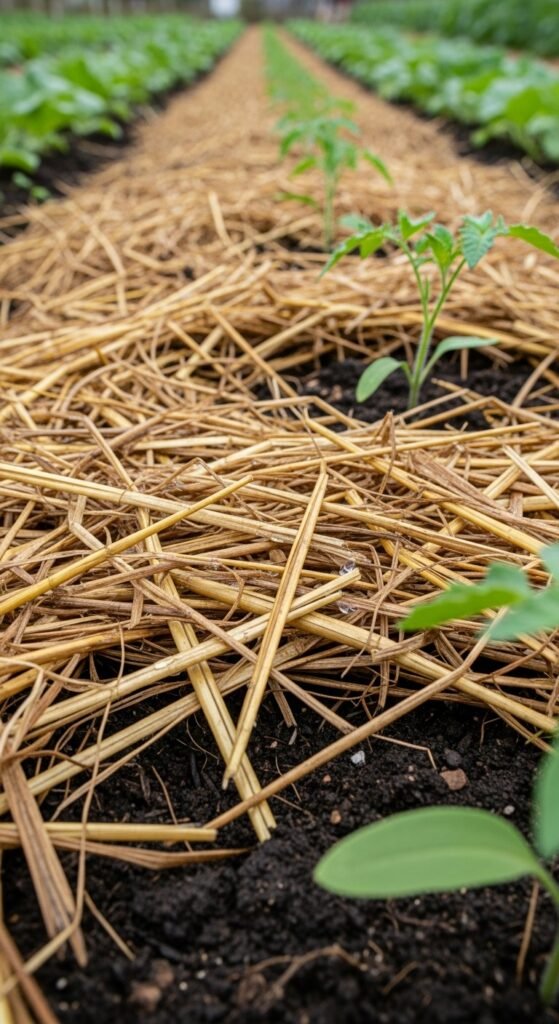
You spread organic mulch around your vegetables to retain soil moisture and suppress weeds. Materials like straw or wood chips create a barrier that slows evaporation and moderates soil temperature. Mulching vegetable garden practices integrate seamlessly with watering routines.
Mulch benefits your garden by improving soil structure as it decomposes, enriching nutrients for sustained growth. It minimizes the frequency of watering, saving time and resources.
Apply a two-to-three-inch layer after planting, avoiding direct contact with stems to prevent rot. Replenish as needed throughout the season to maintain effectiveness.
7) Collect Rainwater for Use
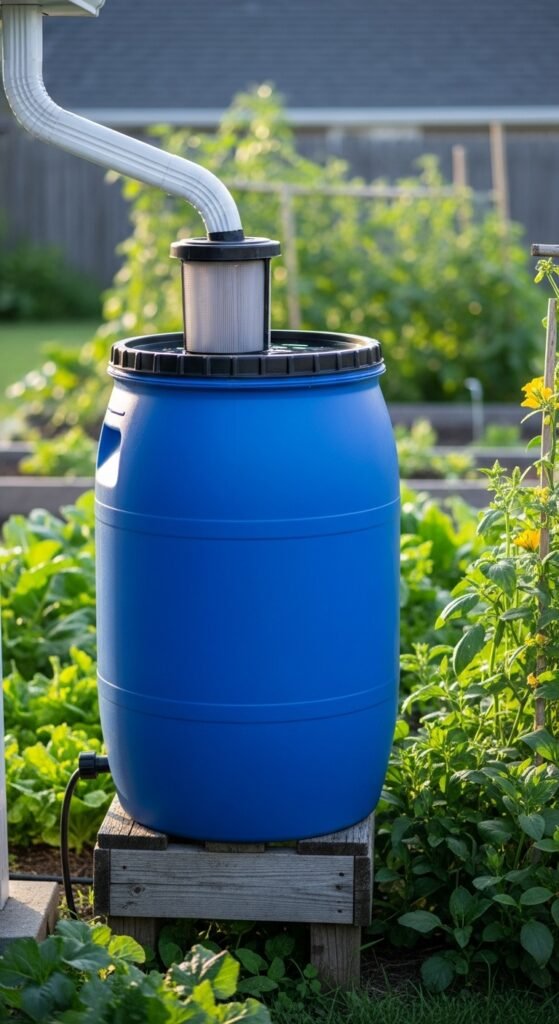
You harvest rainwater in barrels to supplement your watering needs, providing a natural, chlorine-free source for your vegetables. This method captures roof runoff, storing it for dry periods. DIY rain barrel projects are simple and cost-effective.
Rainwater is softer on plants, promoting better absorption and reducing reliance on municipal supplies. It supports eco-friendly gardening by conserving resources.
Install barrels under downspouts with screens to filter debris. Use collected water via gravity or pump, ensuring regular use to prevent stagnation.
8) Monitor Soil Moisture Levels
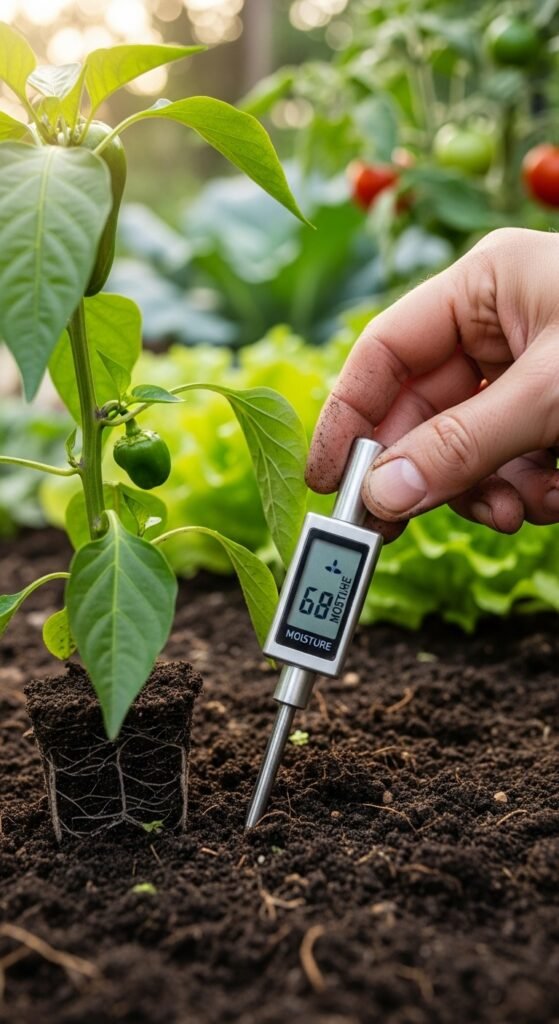
You use tools to check soil moisture, ensuring your vegetables receive adequate hydration without excess. Moisture meter for plants provides accurate readings, guiding your watering decisions.
This monitoring prevents overwatering, which can lead to root diseases, and underwatering, which stresses plants. Consistent checks lead to thriving crops with optimal yields.
Insert the meter probe into the soil near roots, reading levels before watering. Adjust based on results, aiming for moist but not soggy conditions.
9) Avoid Overhead Watering Methods
You direct water to the soil rather than sprinkling from above to keep leaves dry and reduce disease risk. Overhead methods can promote fungal growth on wet foliage, especially in humid climates.
Ground-level watering targets roots efficiently, conserving water and enhancing plant health. Vegetables like squash benefit greatly from this approach.
Utilize hoses or irrigation systems at the base, applying slowly to allow absorption. Schedule sessions to avoid peak sun hours for best results.
10) Group Plants by Water Needs
You organize your vegetable garden by clustering plants with similar hydration requirements, optimizing efficiency. Thirsty crops like cucumbers pair well together, separate from drought-tolerant ones like beans.
This grouping simplifies watering schedules, preventing over or under hydration in mixed beds. It leads to uniform growth and resource savings.
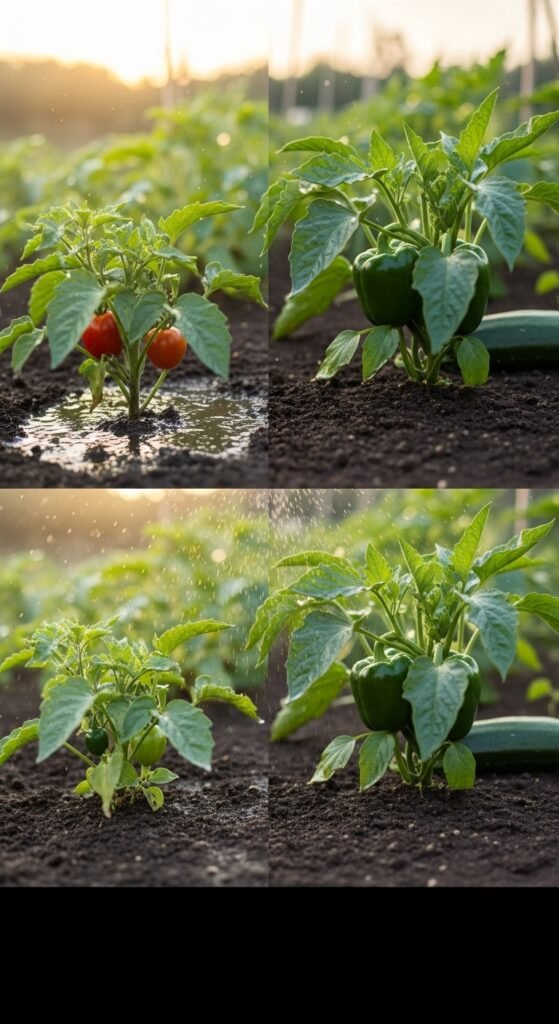
Plan your layout before planting, considering mature sizes and needs. Adjust zones as plants develop to maintain balance.
11) Utilize Self-Watering Containers
You incorporate self-watering systems for container-grown vegetables, maintaining consistent moisture through reservoirs. These setups wick water upward as needed, ideal for busy schedules.
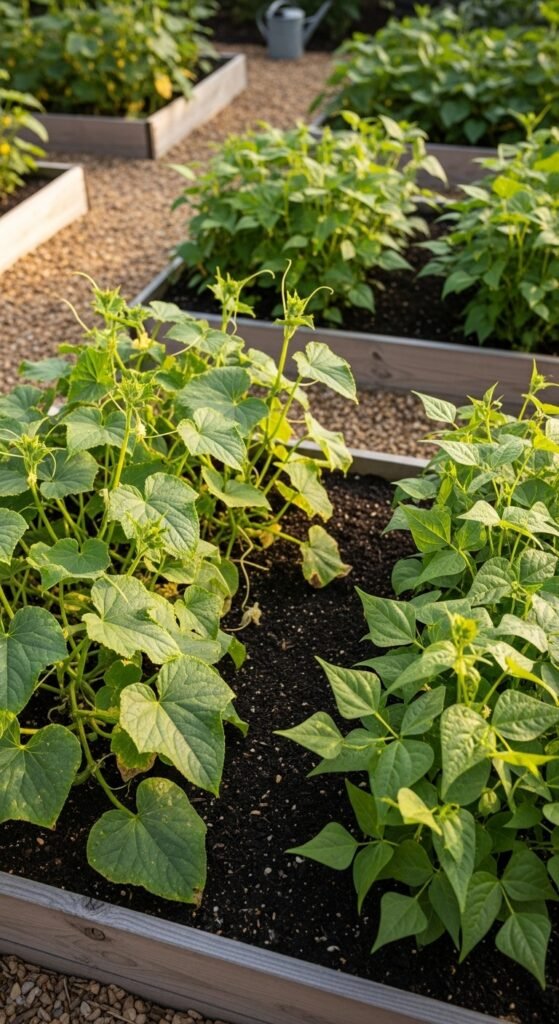
Self-watering reduces stress on plants, promoting steady growth and higher yields. It’s particularly useful for tomatoes and herbs in limited spaces.
Fill reservoirs regularly, monitoring levels to ensure supply. Choose designs suited to your vegetables for maximum benefit.
12) Adjust for Seasonal Weather Changes
You modify your watering routine based on weather patterns, increasing during hot spells and reducing after rains. Monitoring forecasts helps anticipate needs accurately.
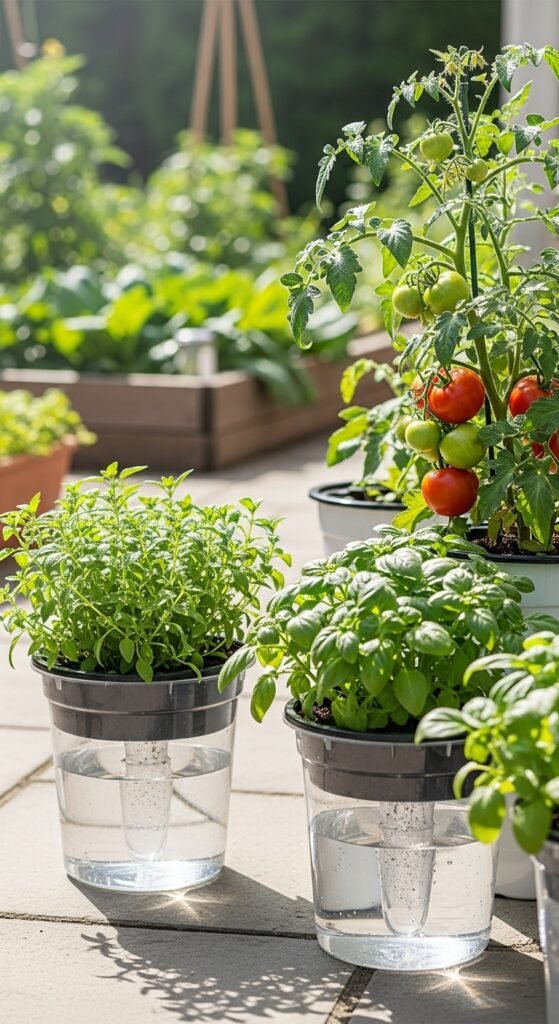
Adapting prevents water waste and plant stress, ensuring resilience across seasons. This proactive approach yields consistent results.
Track rainfall with gauges, supplementing as necessary. Observe plant responses to fine-tune your strategy.
13) Employ Olla Irrigation Pots
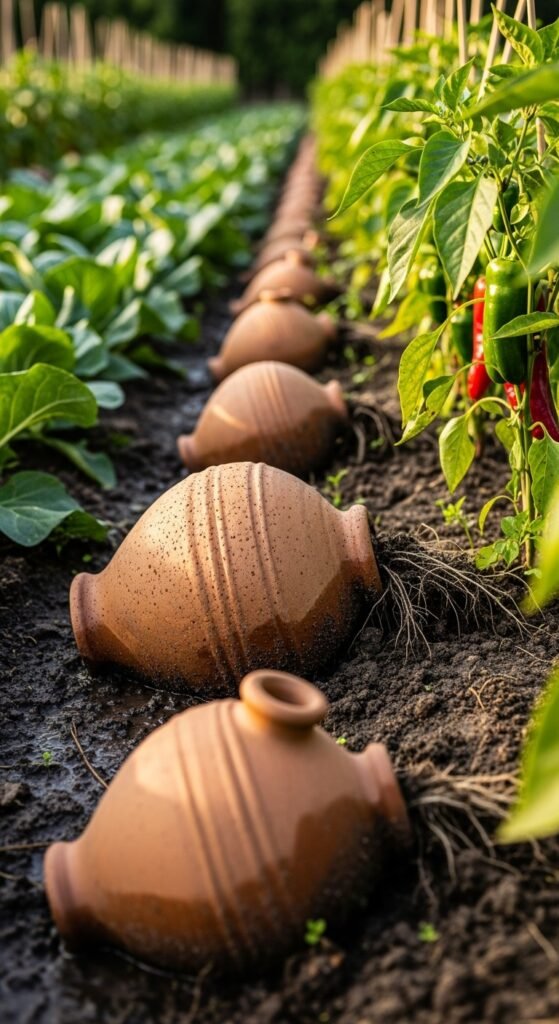
You bury unglazed clay pots filled with water near plants, allowing slow seepage into the soil. Olla irrigation delivers moisture directly to roots on demand.
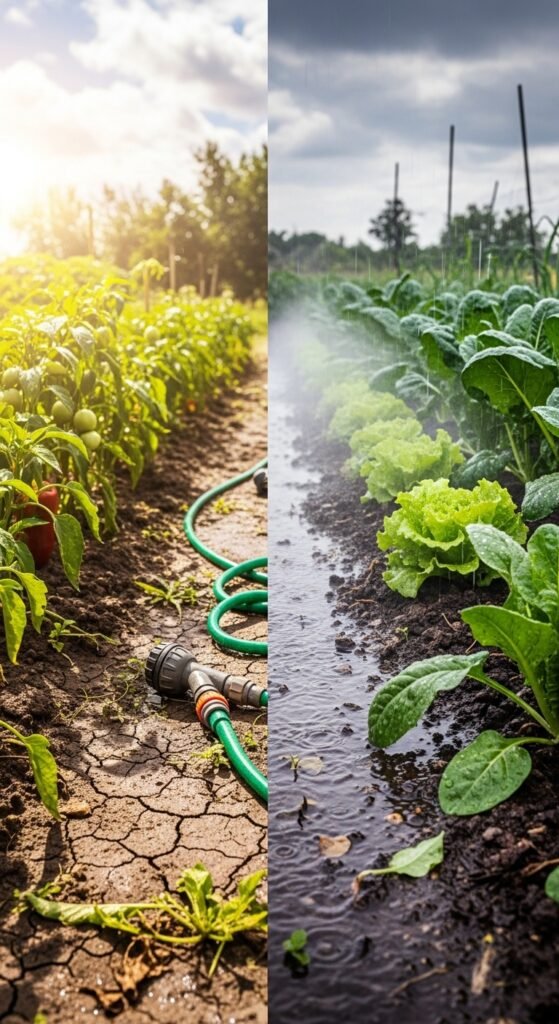
This ancient technique conserves water and encourages deep rooting, ideal for arid areas. It suits vegetables like peppers effectively.
Place ollas every few feet, refilling as levels drop. Cover tops to minimize evaporation.
14) Create Wicking Bed Systems
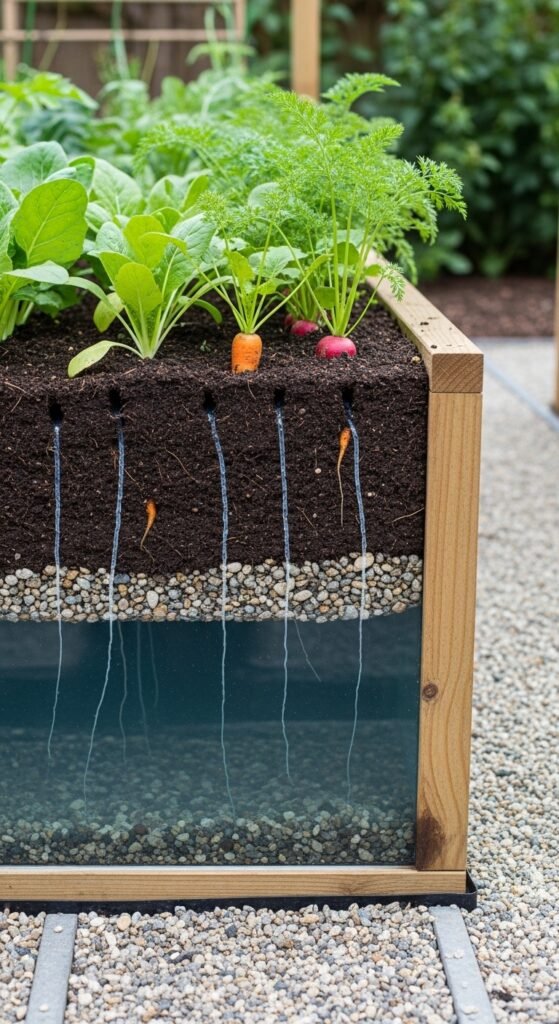
You construct wicking beds with reservoirs beneath soil, drawing moisture upward via capillary action. Wicking bed designs provide consistent hydration with minimal intervention.
Wicking systems save water and time, perfect for raised beds with various vegetables. They maintain even moisture for optimal growth.
Layer gravel and soil over the reservoir, planting directly above. Refill through pipes as needed.
15) Recognize Overwatering Signs
You identify symptoms of excess water, such as yellowing leaves or wilting despite moist soil. Overwatering symptoms indicate root issues that hinder nutrient uptake.
Early detection prevents irreversible damage, preserving your garden’s health. Awareness leads to better management practices.
Allow soil to dry between waterings, improving aeration. Amend with drainage materials if persistent.
Key Principles for Effective Watering
Understanding Plant Water Requirements
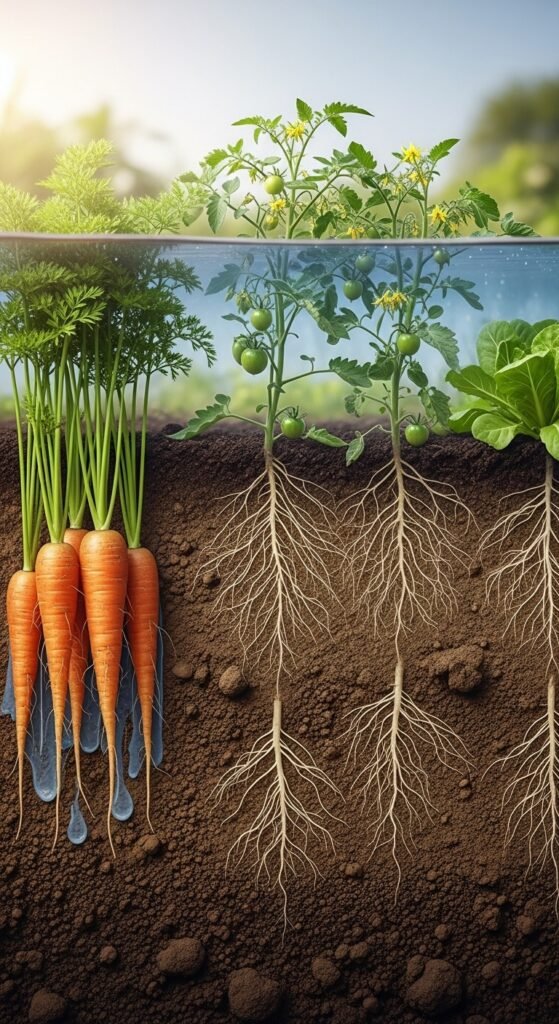
You consider each vegetable’s specific needs, as root vegetables like carrots prefer consistent moisture, while fruiting plants like tomatoes require more during flowering. Tailoring your approach ensures balanced growth.
Maintaining Soil Health
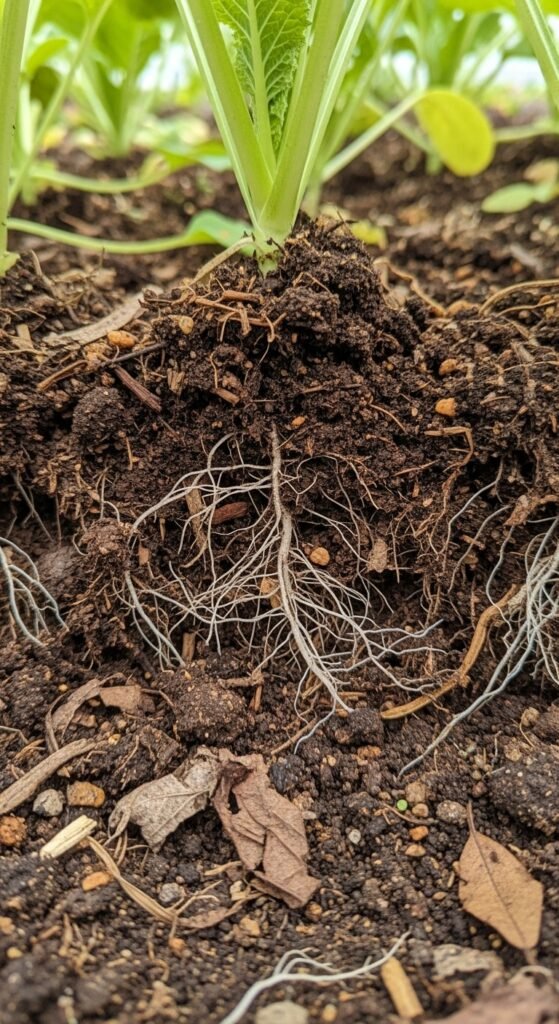
You enhance soil with amendments to improve water retention and drainage, fostering a supportive environment for roots. Healthy soil sustains moisture levels effectively.
Water Conservation Strategies
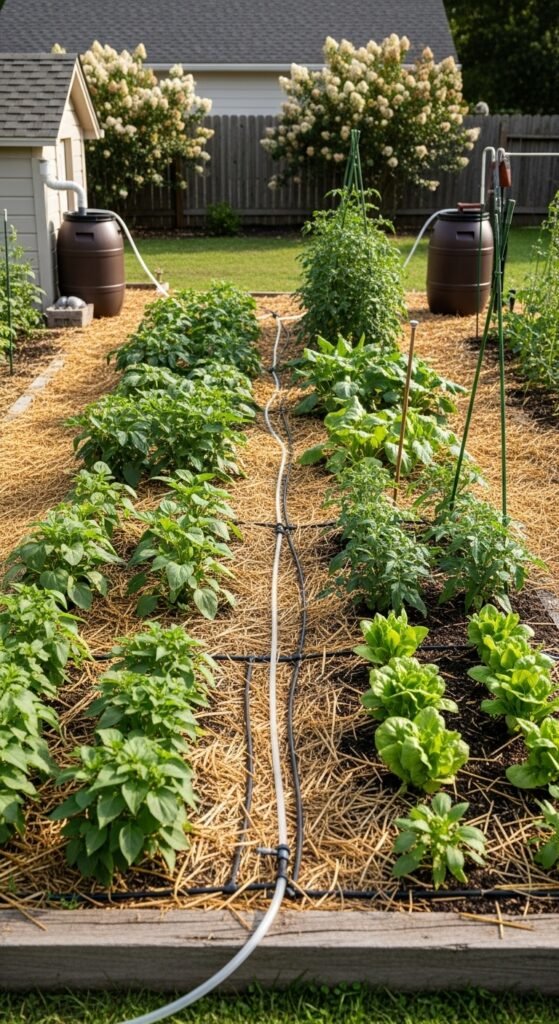
You adopt practices like mulching and efficient systems to minimize usage, contributing to sustainable gardening. These methods preserve resources while supporting productivity.
Frequently Asked Questions
How often should you water a vegetable garden?
Water your vegetable garden deeply once or twice a week, providing about one inch of moisture, adjusted for rainfall and soil type to maintain consistent hydration without saturation.
What are the signs of underwatering in vegetables?
Look for wilting leaves, dry soil, and stunted growth as indicators of underwatering, prompting immediate deep watering to revive plants and prevent yield loss.
Is it better to water vegetables in the morning or evening?
Water in the morning to allow evaporation and dry foliage, reducing disease risk, while evening watering may lead to prolonged dampness conducive to pathogens.
Can overwatering harm vegetable plants?
Yes, overwatering leads to root rot, nutrient deficiencies, and weakened plants, emphasizing the need for proper drainage and monitoring to avoid these issues.
What tools help with efficient garden watering?
Utilize moisture meters, timers, and irrigation systems to ensure precise watering, conserving resources and promoting healthy vegetable development.