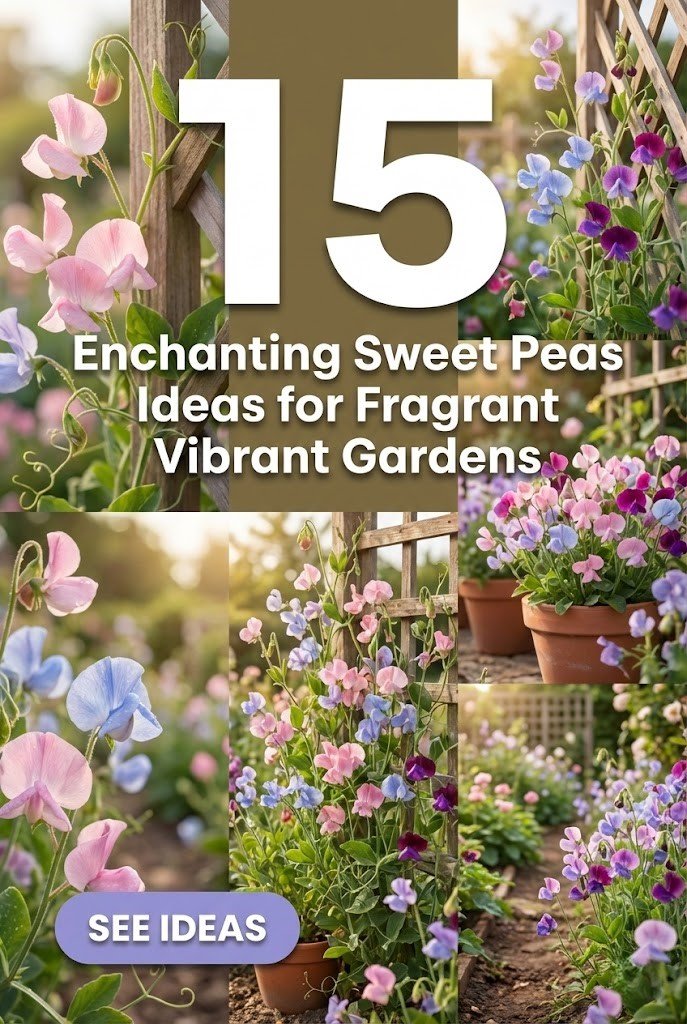
Sweet peas are the quintessential garden climbers, offering a burst of color and intoxicating fragrance that can transform any outdoor space. These annual vines, known scientifically as Lathyrus odoratus, thrive in cool weather and produce delicate blooms in shades ranging from soft pastels to bold jewel tones. You can easily incorporate sweet peas into your garden to create vertical interest, attract pollinators, and enjoy fresh-cut bouquets throughout the growing season.
Growing sweet peas rewards you with low-maintenance beauty and a sense of accomplishment, as they germinate quickly and climb vigorously with minimal intervention. Whether you’re a novice gardener or an experienced enthusiast, these ideas will help you maximize their potential. From innovative planting techniques to creative display methods, you’ll discover ways to make sweet peas the star of your landscape. For more inspiration on supporting climbing plants, check out our guide on garden trellis ideas.
1) Classic Trellis Climb
You start by selecting a sturdy trellis and planting sweet pea seeds at its base in early spring or fall for mild climates. This method allows the vines to ascend naturally, creating a living wall of flowers. The why is simple: it maximizes vertical space, prevents sprawling, and enhances air circulation to reduce disease risk.
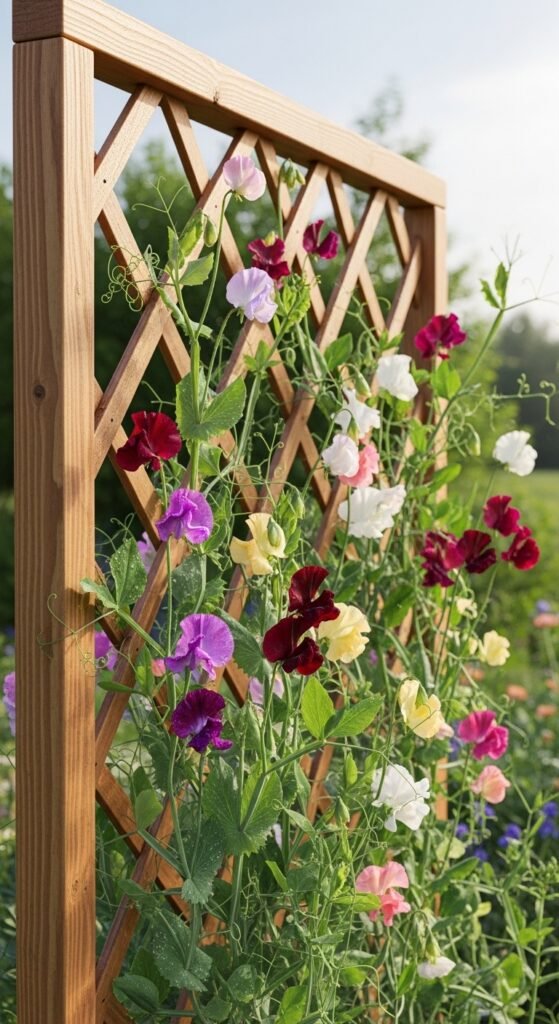
To implement, soak seeds overnight for better germination, then sow them 1 inch deep in well-drained soil enriched with compost. Water consistently and tie young vines gently to the trellis. Expect blooms in 10-12 weeks, providing abundant cut flowers for indoor arrangements. This approach suits small gardens perfectly, turning fences or walls into fragrant displays.
For similar climbing inspirations, explore our tips on pea trellis designs that can adapt seamlessly to sweet peas.
2) Container Cascade
You can grow sweet peas in large pots or hanging baskets, letting vines trail elegantly over the edges. This idea is ideal for balconies or patios where ground space is limited, offering portable fragrance that you can reposition as needed.
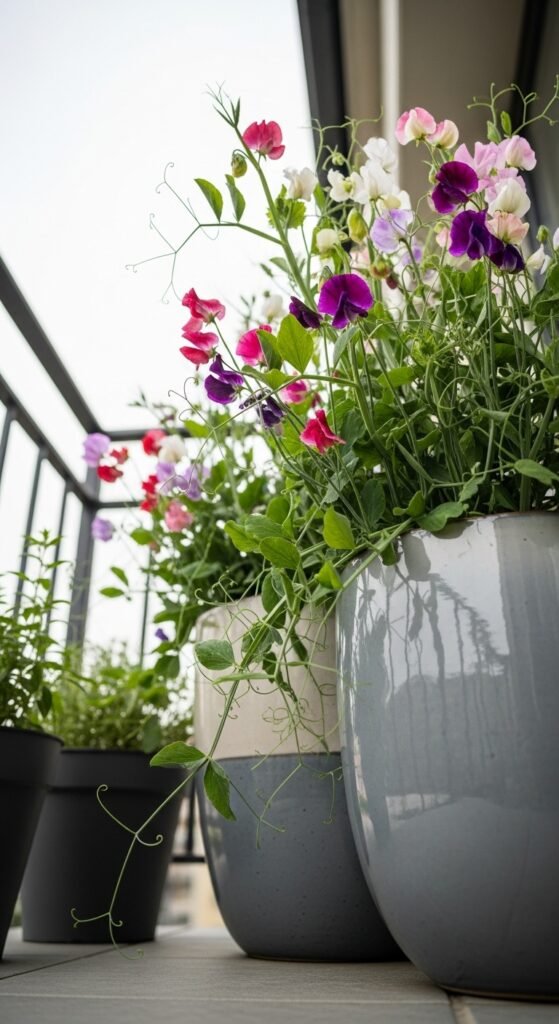
Choose containers at least 12 inches deep with good drainage, filling them with a mix of potting soil and perlite. Plant 3-5 seeds per pot, providing a small support structure like a teepee of bamboo stakes. Water when the top inch of soil dries, and fertilize monthly with a balanced formula. The how involves pinching tips for bushier growth, leading to more blooms.
This method yields versatile decor, perfect for urban gardeners. If you’re into container veggies, our article on peas in containers offers complementary advice.
3) Cut Flower Border
Incorporate sweet peas into dedicated cutting beds, planting in rows for easy harvesting. This setup ensures a steady supply of stems for vases, with the why centered on prolonged blooming through regular picking.
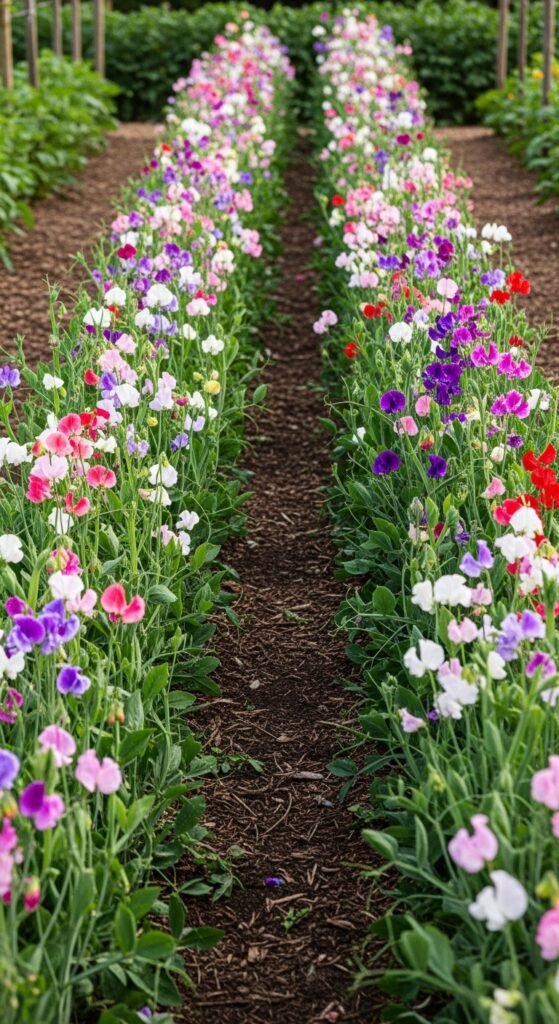
Prepare soil by adding organic matter, then sow seeds in trenches 6 inches apart. Mulch to retain moisture and suppress weeds. As plants grow, install netting or strings for support. Harvest in the morning when flowers are fresh, cutting just above a leaf node to encourage more buds.
You’ll enjoy weeks of vibrant arrangements, enhancing your home’s ambiance. For layout inspiration, refer to our cut flower garden layout strategies.
4) Companion Planting Harmony
Pair sweet peas with vegetables like lettuce or carrots, where they provide shade and fix nitrogen in the soil. The benefit is improved soil health and pest deterrence, creating a balanced ecosystem.
To do this, intersperse sweet pea seeds among low-growing crops in early season. Ensure companions have similar water needs. Monitor for aphids, using natural remedies as needed. This integration boosts overall garden productivity.
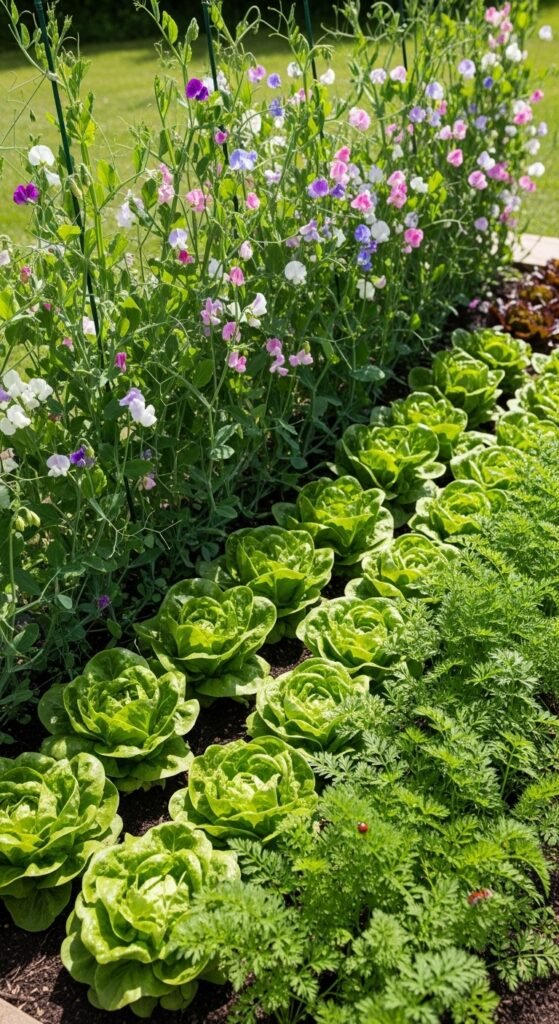
It’s a smart way to maximize space and yields. Dive deeper into pairings with our companion planting vegetables guide.
5) Arched Walkway Wonder
Create a tunnel of sweet peas over a garden path using arched supports. This immersive idea offers sensory delight, with fragrance enveloping you as you stroll through.
Install metal or wooden arches, planting seeds on both sides. Train vines upward, securing with ties. Water deeply and fertilize for robust growth. Prune spent flowers to extend the display into summer.
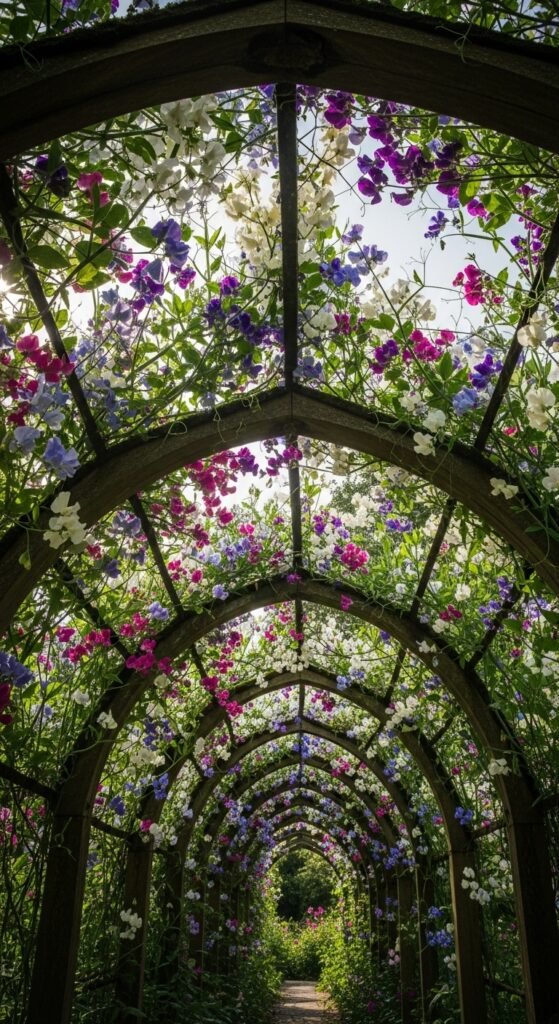
Perfect for romantic gardens, it adds height and charm. For arch alternatives, see our climbing rose trellis concepts, adaptable for sweet peas.
6) Window Box Whimsy
Plant sweet peas in window boxes for a cottage-style facade. This approach brings curb appeal and allows enjoyment from indoors, with blooms peeking through windows.
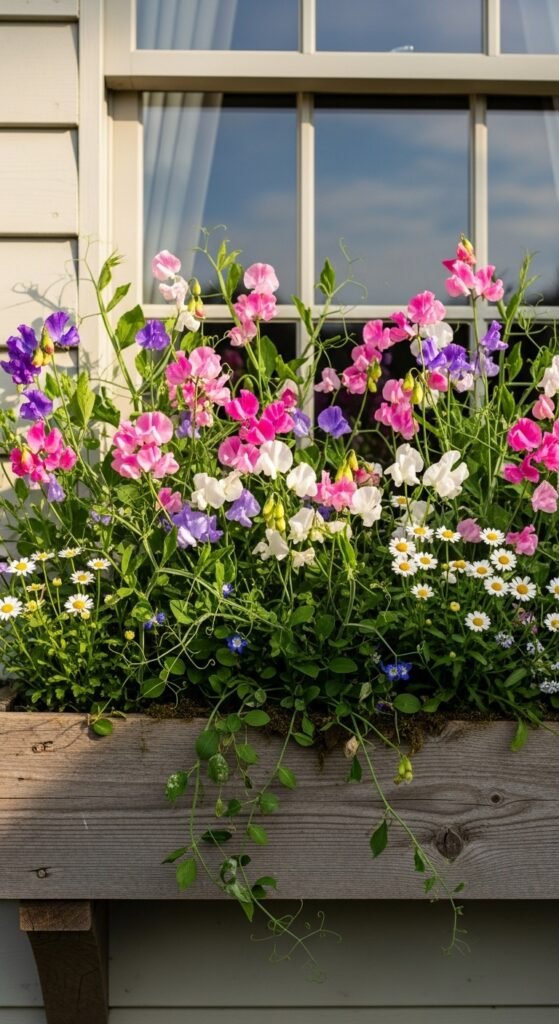
Use deep boxes with liners, sowing seeds closely for fullness. Position in partial sun to avoid overheating. Water frequently, as containers dry quickly, and pinch for density.
You’ll achieve a charming, low-effort display that brightens your home’s exterior.
7) Vertical Fence Screen
Train sweet peas along a chain-link or wooden fence to create a natural privacy screen. The why includes enhanced seclusion with added beauty and scent.
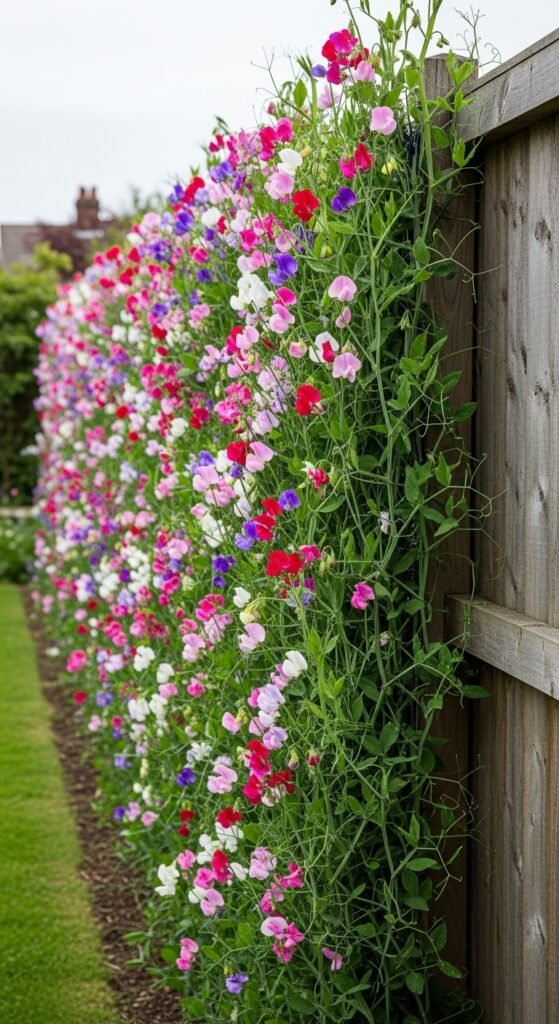
Sow seeds at the base, weaving vines through slats as they grow. Supplement with netting if needed. Regular watering and deadheading keep it lush.
This transforms utilitarian fences into floral features, ideal for urban lots.
8) Mixed Perennial Bed Integration
Blend sweet peas with perennials like lavender or roses for a layered look. This idea provides seasonal variety, with sweet peas filling early gaps.
Plant in sunny spots with rich soil, spacing to avoid overcrowding. Support with stakes or rings. The how: succession sow for continuous blooms.
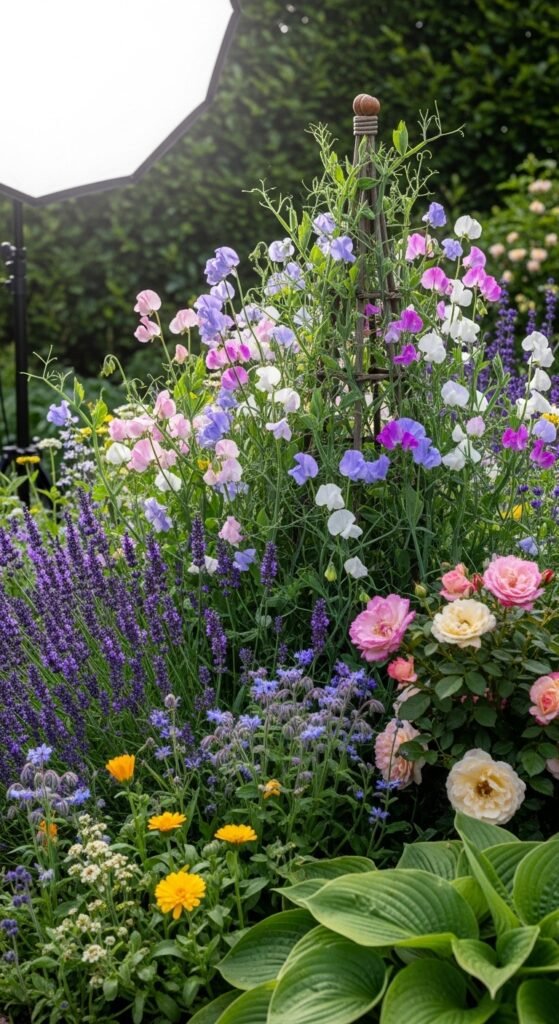
Enjoy a dynamic border that evolves through the year. For more on vertical elements, check vertical garden ideas.
9) Scented Patio Pots
Group potted sweet peas around seating areas to infuse gatherings with aroma. Offers mobile accents that you can rearrange for events.
Select dwarf varieties for compact growth, using large urns. Mix soil with slow-release fertilizer. Water and feed regularly for peak performance.
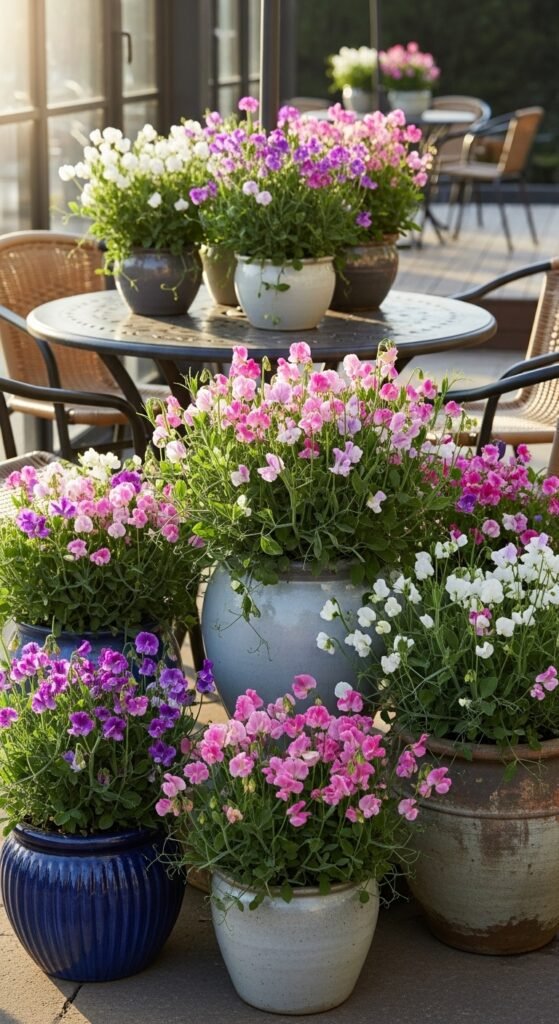
Creates an inviting outdoor room with minimal space commitment.
10) Autumn Sowing Strategy
Sow sweet peas in fall for earlier spring blooms in suitable climates. This technique yields stronger plants with deeper roots resisting heat.
Plant in trenches with protection from cold snaps. Use cloches or mulch for insulation. Come spring, they’ll surge ahead.
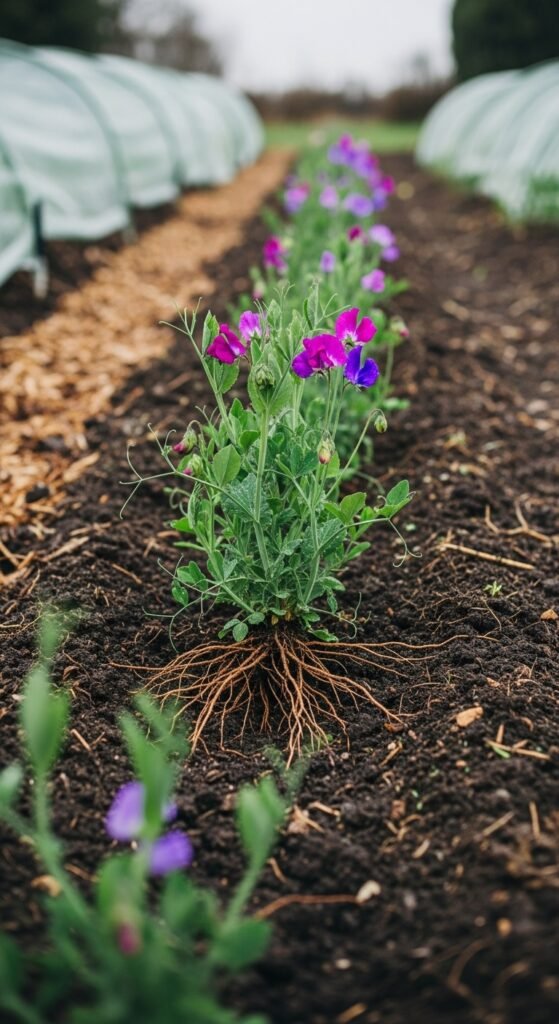
Extends your flowering season significantly. Learn more about timing in our what to plant in fall overview.
11) Color-Themed Clusters
Group sweet peas by hue for impactful displays, like all pinks or blues. Enhances visual cohesion in borders or vases.
Choose varieties accordingly, planting in blocks. Support collectively with mesh. Harvest selectively to maintain the scheme.
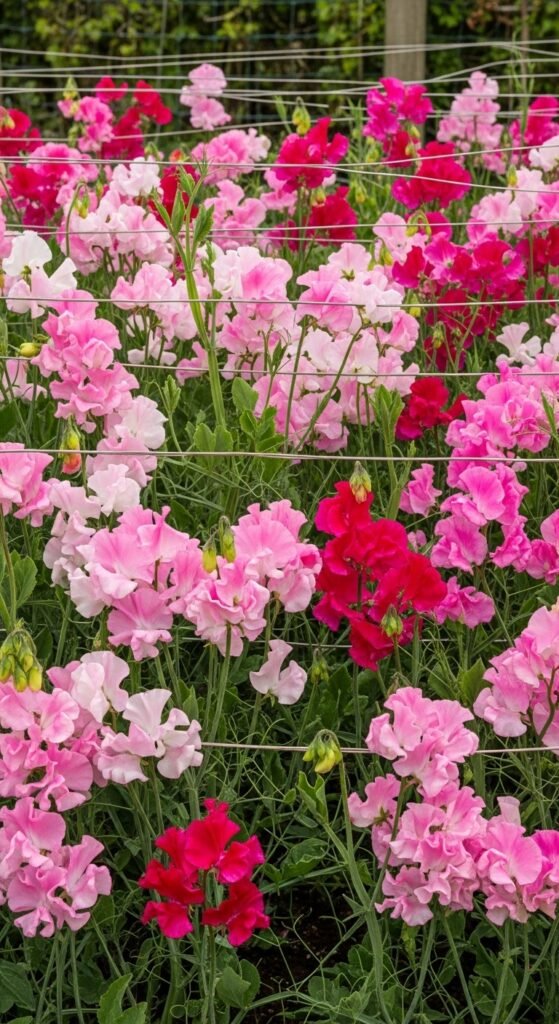
Results in garden art that’s both structured and whimsical.
12) Frost-Protected Starts
Start sweet peas indoors or under cover to beat frosts, transplanting later. Provides head start advantage for longer enjoyment.
Use biodegradable pots to minimize root disturbance. Harden off gradually before moving outside.
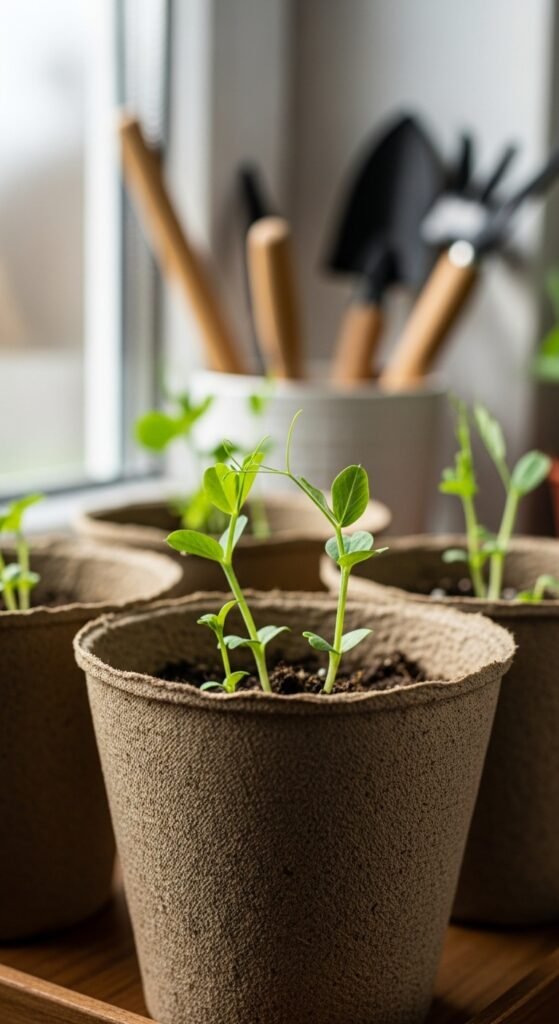
Ensures reliable germination in variable weather. For protection tips, see frost protection for plants.
13) Edible Landscape Edge
Though flowers are toxic, use sweet peas to border veggie patches for pollinator attraction. Boosts crop yields through better pollination.
Plant along edges, avoiding intermingling with edibles. Monitor for pests shared with veggies.
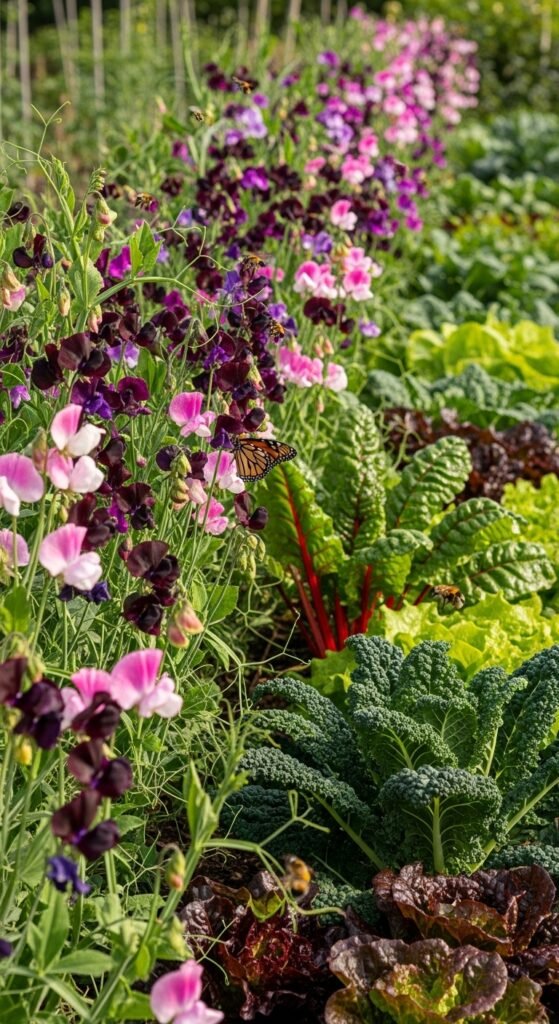
Combines beauty with functionality in productive gardens.
14) Hanging Basket Overflow
Suspend baskets of trailing sweet peas for elevated charm. Delivers overhead fragrance in porches or trees.
Opt for cascading varieties, lining baskets with moss. Water daily and fertilize weekly.
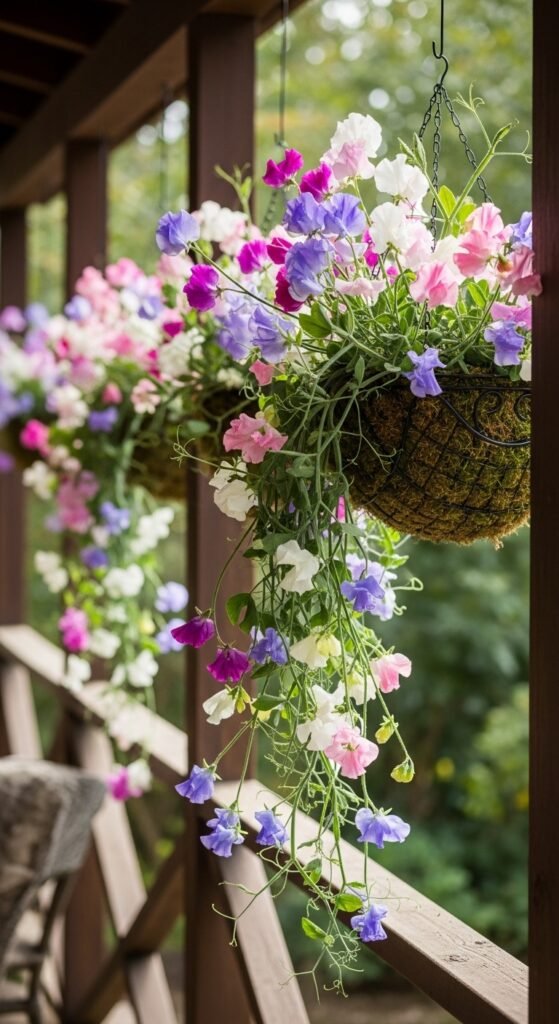
Adds dimension to flat spaces, creating magical nooks.
15) Spring Garden Focal Point
Designate sweet peas as the centerpiece in spring beds, surrounding with bulbs. Creates early-season spectacle awakening the garden.
Plan layouts with height in mind, using obelisks for drama. Coordinate colors with tulips or daffodils.
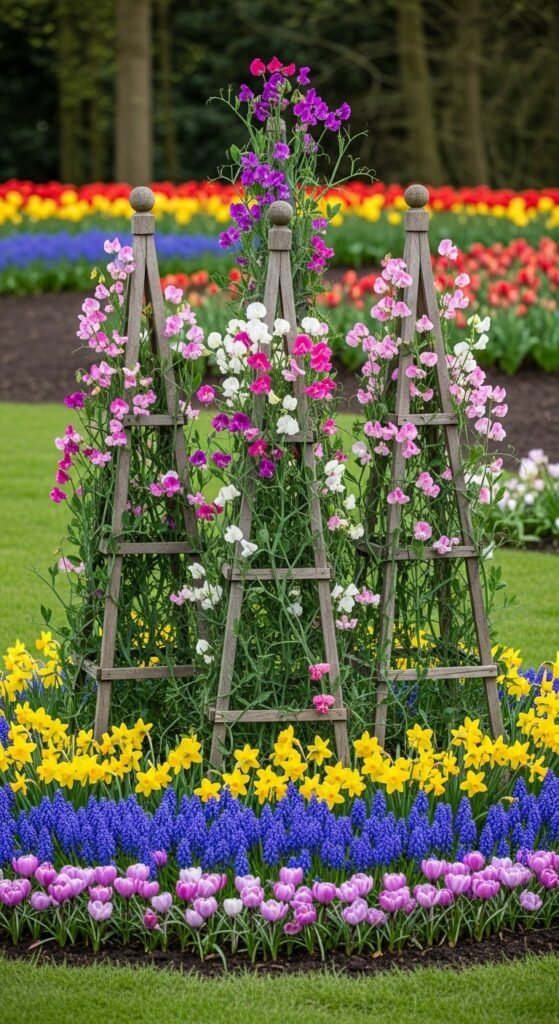
Sets a joyful tone for the year ahead. Get inspired by our spring garden ideas.
Key Principles for Sweet Pea Success
Soil and Site Selection
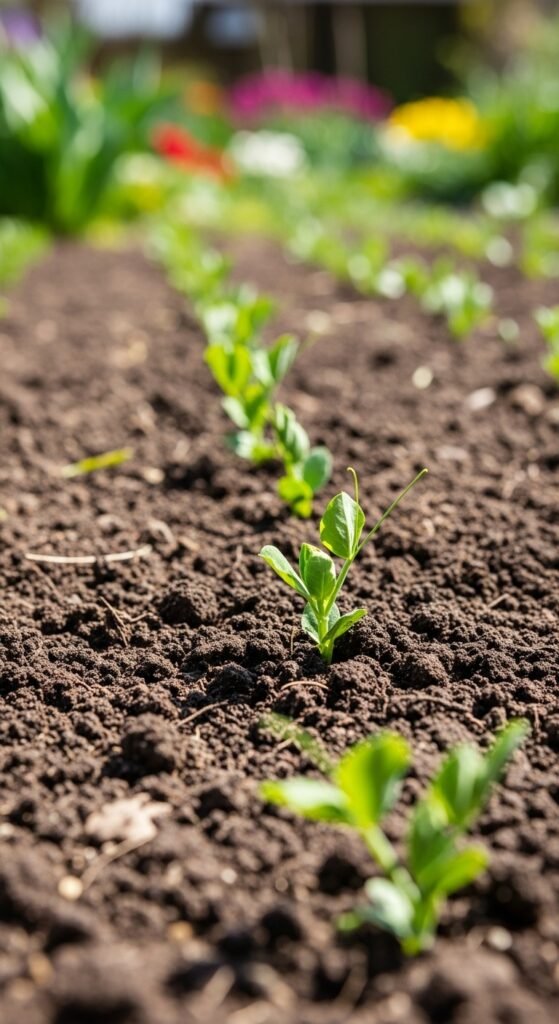
You need well-drained, fertile soil in full sun for optimal growth. Amend with compost and ensure pH around 7.0.
Watering and Feeding
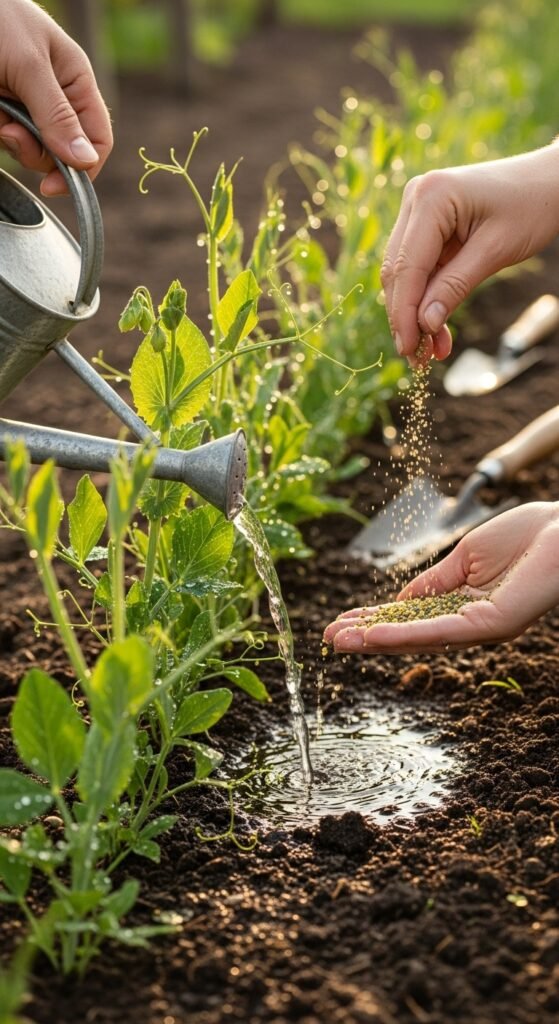
Maintain consistent moisture without waterlogging, fertilizing every few weeks with potassium-rich formulas for blooms.
Pest and Disease Management
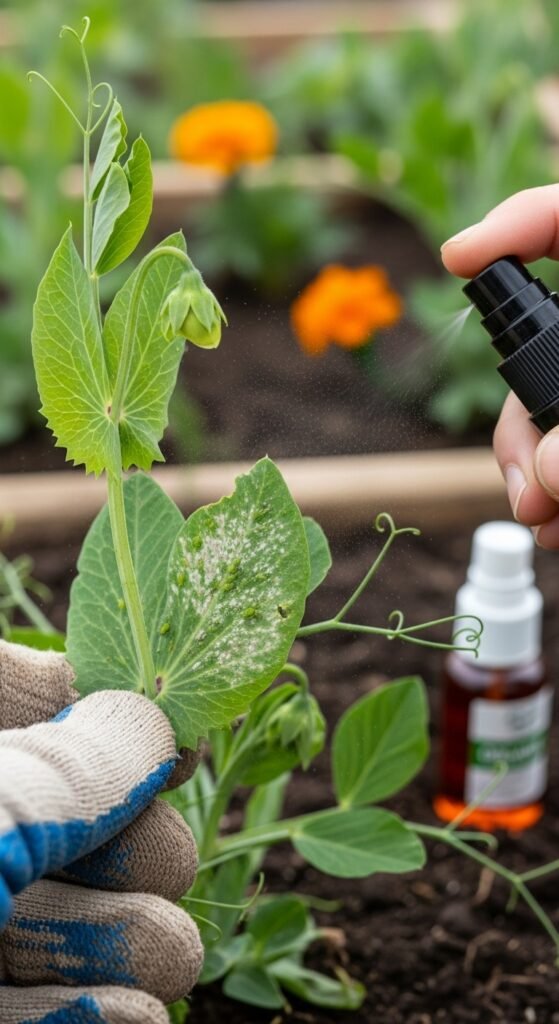
Watch for aphids and mildew, using organic sprays and good spacing to prevent issues.
Frequently Asked Questions
Are sweet peas easy to grow?
Yes, they’re beginner-friendly with quick germination and vigorous growth in cool conditions.
How long do sweet peas bloom?
Typically 8-10 weeks, extended by deadheading and cool weather.
Can sweet peas grow in shade?
They prefer full sun but tolerate partial shade, though with fewer flowers.
Are sweet pea flowers edible?
No, they’re toxic; only vegetable pea shoots and pods are safe to eat.
When should I sow sweet peas?
Fall in mild areas or early spring elsewhere for best results.