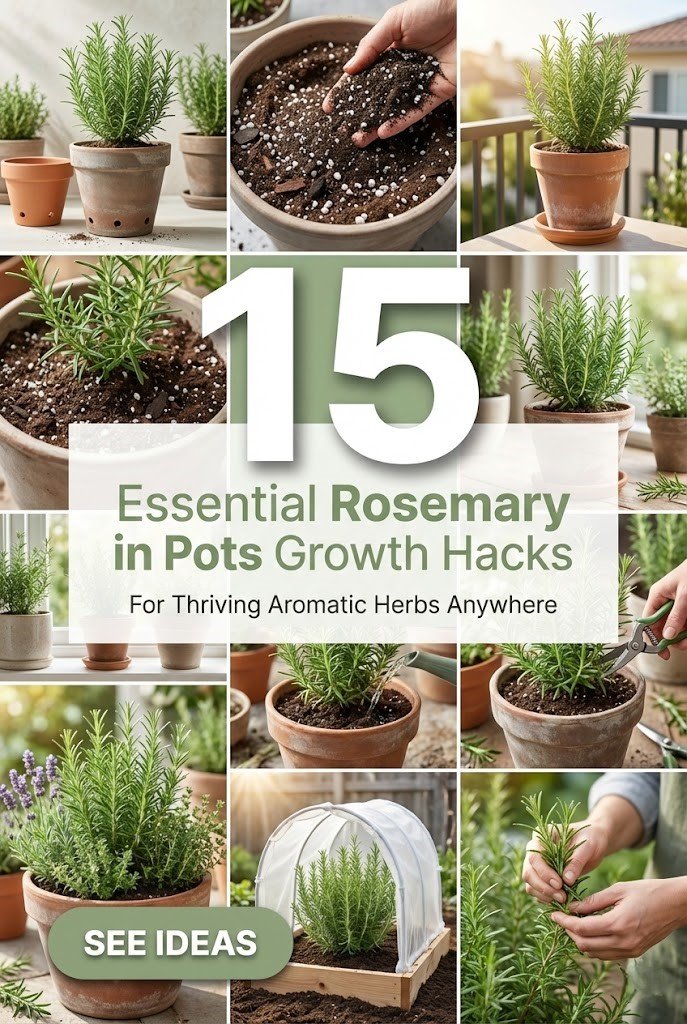
Growing rosemary in pots offers a versatile and convenient approach to cultivating this aromatic herb, allowing you to enjoy its culinary and medicinal benefits regardless of limited garden space. Rosemary thrives in container settings when provided with proper care, making it an ideal choice for balconies, patios, or indoor environments. By focusing on key elements such as soil quality, sunlight exposure, and watering practices, you can ensure robust growth and abundant harvests.
This method not only enhances your home’s aesthetic appeal but also provides easy access to fresh herbs for cooking and natural remedies. Whether you are a seasoned gardener or a beginner, incorporating rosemary in pots into your routine promotes sustainability and self-sufficiency. The following ideas will guide you through effective strategies to optimize your potted rosemary plants.
1) Selecting the Optimal Pot Size
You should choose a pot that accommodates rosemary’s root system, typically starting with a container at least 12 inches in diameter and depth. This size prevents root binding and supports healthy expansion, as rosemary can grow up to three feet tall in ideal conditions. Improved root development leads to stronger plants and higher yields.
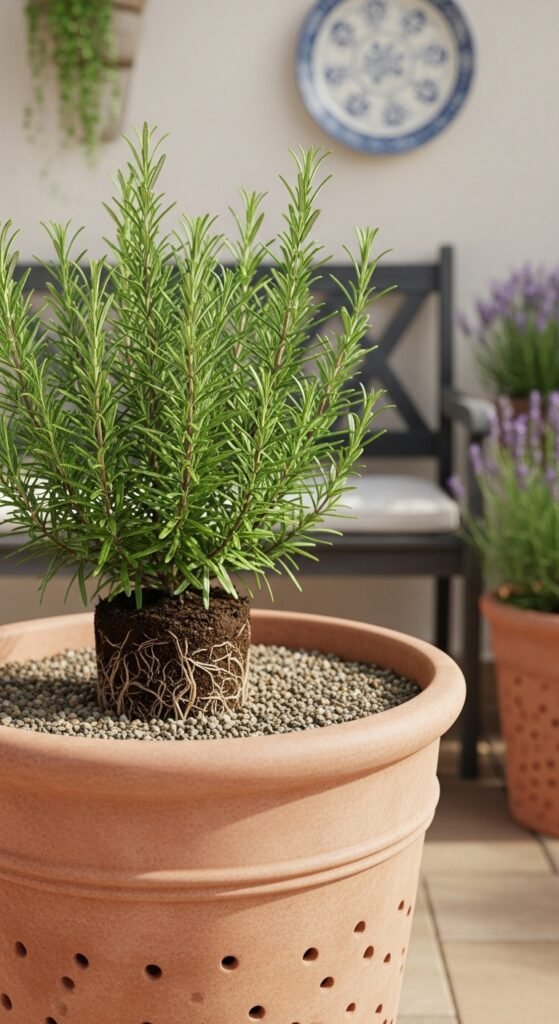
The reason for prioritizing pot size lies in rosemary’s preference for well-drained environments; smaller pots may retain excess moisture, risking root rot. To implement this, select terracotta or ceramic pots with drainage holes. Begin by filling the base with gravel for enhanced drainage, then plant your rosemary seedling or cutting. For additional inspiration on container choices, explore our spring container garden ideas, which offer versatile options suitable for herbs like rosemary.
Monitor growth every few months and repot as needed to maintain vitality, ensuring your rosemary in pots remains productive year-round.
2) Crafting the Ideal Soil Mix
You can create a custom soil blend by combining equal parts potting soil, sand, and perlite to mimic rosemary’s native Mediterranean conditions. This mixture promotes excellent drainage while retaining necessary nutrients, preventing waterlogged roots that could harm the plant. Enhanced soil aeration fosters vigorous growth and disease resistance.
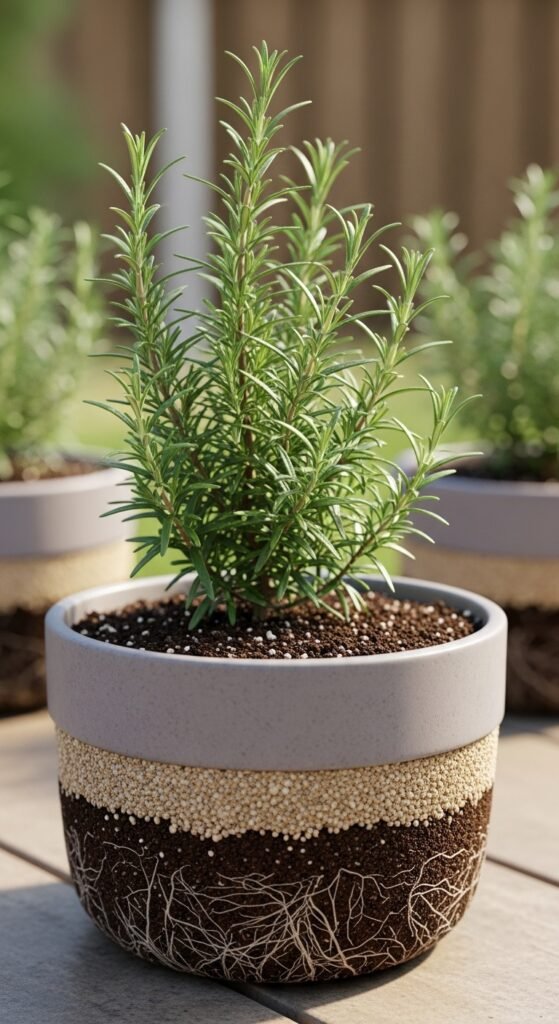
Soil quality is crucial because rosemary dislikes heavy, clay-based mediums that hold moisture. Prepare the mix in a large container, adding a handful of compost for organic matter. Plant your rosemary at the same depth as its nursery pot, firming the soil gently around the roots. This approach aligns well with broader herb cultivation techniques, such as those in our patio herb garden ideas.
Test the soil pH to ensure it stays between 6.0 and 7.0, adjusting with lime if necessary, for optimal nutrient uptake in your potted rosemary.
3) Positioning for Maximum Sunlight
You must place your potted rosemary in a location receiving at least six to eight hours of direct sunlight daily to encourage lush foliage and essential oil production. South-facing windows or patios are ideal, as insufficient light can lead to leggy, weak stems. Abundant sunlight intensifies the herb’s flavor and aroma.
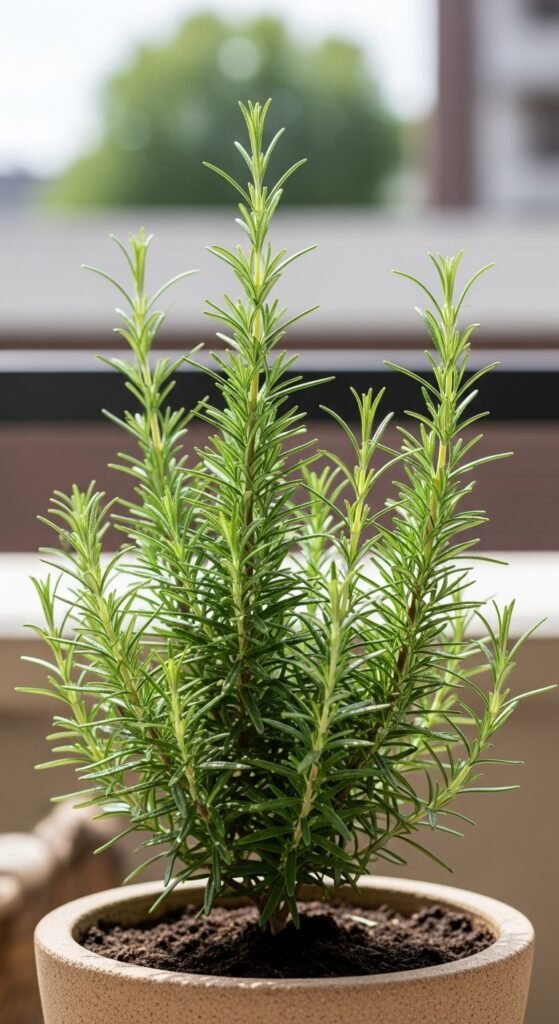
This positioning replicates rosemary’s natural habitat, reducing susceptibility to fungal issues in shaded areas. Rotate the pot weekly for even exposure, and consider supplemental grow lights during shorter winter days. Integrating this with seasonal adjustments can be informed by our fall container garden ideas, which emphasize light optimization for potted plants.
Observe your plant for signs of stress, such as yellowing leaves, and relocate as needed to sustain healthy development in rosemary in pots.
4) Implementing Efficient Watering Techniques
You should water your rosemary deeply but infrequently, allowing the top inch of soil to dry out between sessions to avoid overwatering pitfalls. Use room-temperature water and apply it at the base to keep foliage dry, minimizing disease risks. Balanced hydration supports root health and prevents wilting.
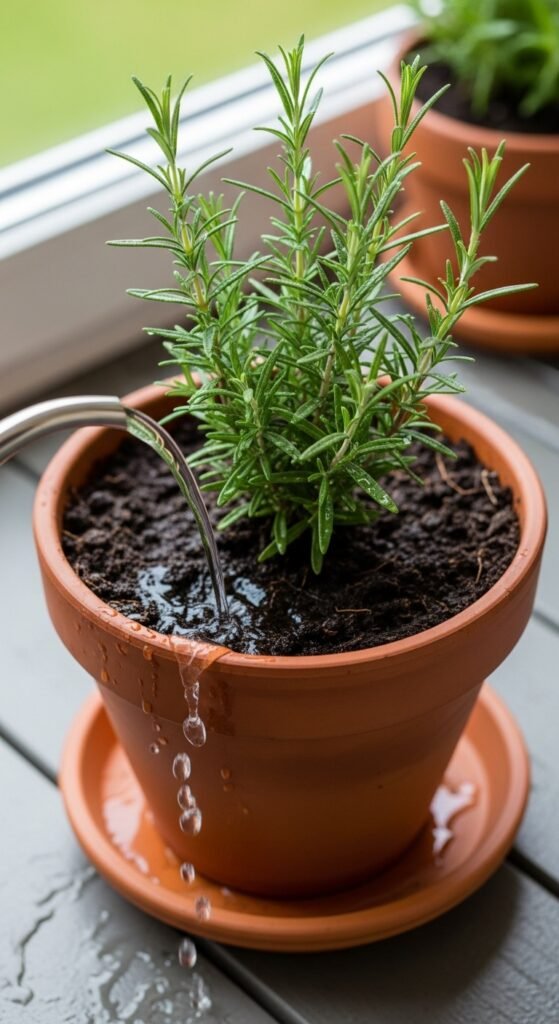
Rosemary’s drought-tolerant nature means excess moisture is more harmful than scarcity, so err on the side of caution. Install a saucer to catch runoff, emptying it promptly. For those managing multiple potted herbs, techniques from our spring porch planter ideas can enhance your watering routine.
Incorporate a moisture meter for precision, ensuring your rosemary in pots receives just the right amount for sustained vitality.
5) Mastering Pruning and Shaping
You can prune rosemary regularly to promote bushier growth, removing up to one-third of the branches at a time with clean shears. Focus on cutting just above leaf nodes to encourage new shoots. Increased density results in more harvestable material and a compact form.
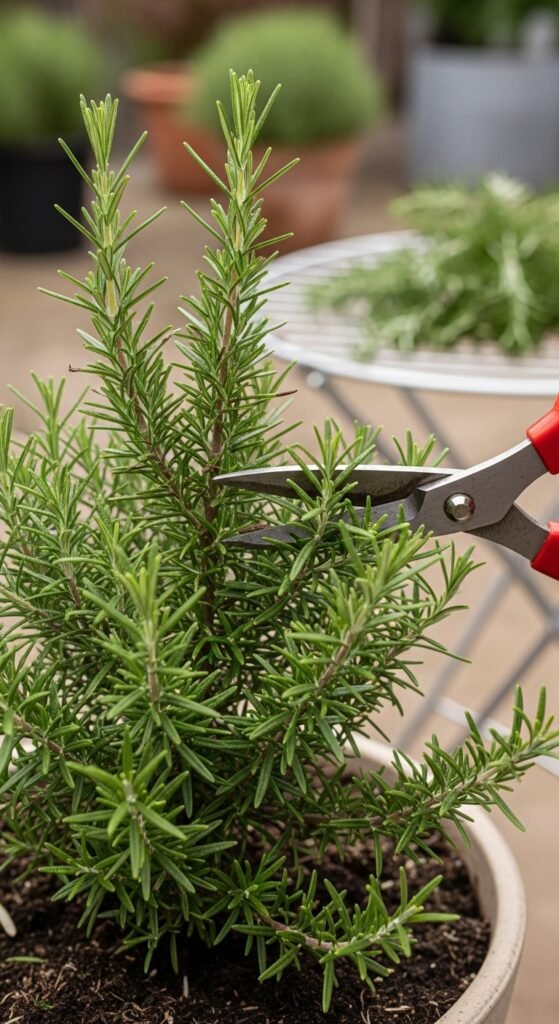
Pruning prevents woodiness and maintains the plant’s vigor, as overgrown rosemary becomes less productive. Perform this in spring or after flowering, shaping it into desired forms like topiaries. This practice complements herb preservation methods, such as building an outdoor herb drying rack for excess trimmings.
Always disinfect tools between cuts to avoid spreading pathogens, keeping your potted rosemary thriving.
6) Exploring Companion Planting Options
You may pair rosemary with compatible plants like lavender or sage in larger pots to enhance biodiversity and pest deterrence. These companions share similar care needs and can improve overall garden health. Natural pest control reduces the need for chemicals.
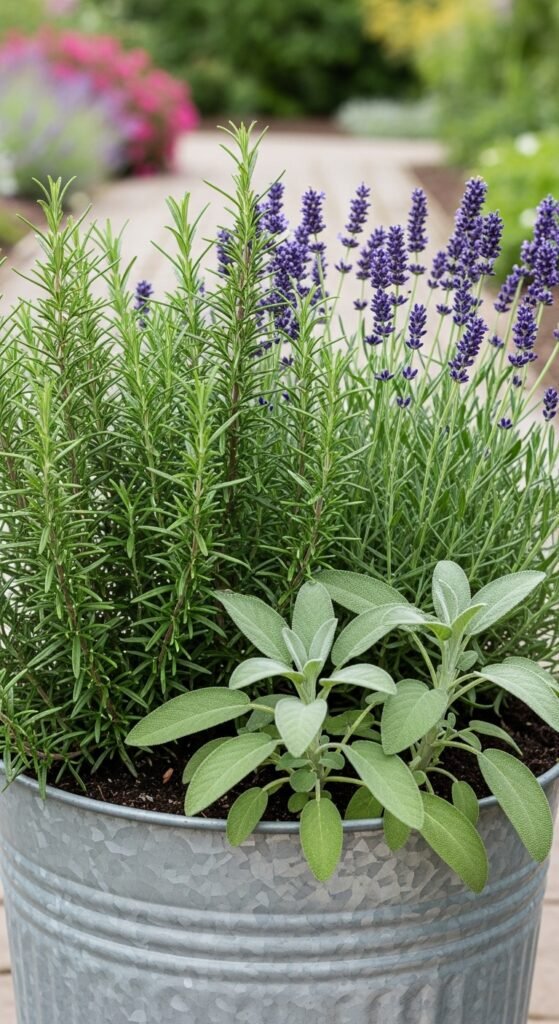
Companion planting leverages rosemary’s repellent properties against insects, benefiting neighboring plants. Choose a pot at least 18 inches wide, planting at appropriate spacings. This strategy ties into our guide on mosquito-repelling plants, where rosemary plays a key role.
Monitor interactions and adjust as plants mature, ensuring harmonious growth in your rosemary in pots setup.
7) Transitioning Between Indoor and Outdoor Settings
You need to acclimate rosemary gradually when moving between indoors and outdoors to prevent shock from temperature changes. Start with short outdoor exposures, increasing duration over a week. Seamless adaptation preserves plant health across seasons.
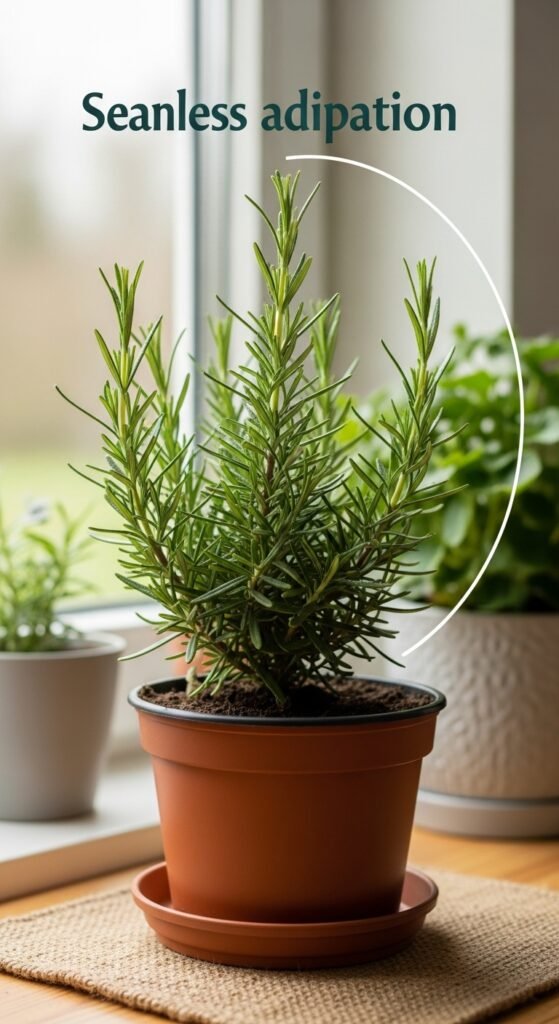
This transition accommodates varying climates, allowing year-round cultivation. Indoors, place near sunny windows; outdoors, protect from extreme weather. For winter strategies, refer to our winter houseplant care tips, adaptable to potted herbs.
Watch for stress indicators like leaf drop, intervening promptly for successful rosemary in pots management.
8) Applying Frost Protection Measures
You should cover potted rosemary with frost cloths or move it indoors during cold snaps to safeguard against freezing temperatures. Mulch the soil surface with straw for insulation. Winter survival ensures perennial growth in cooler regions.
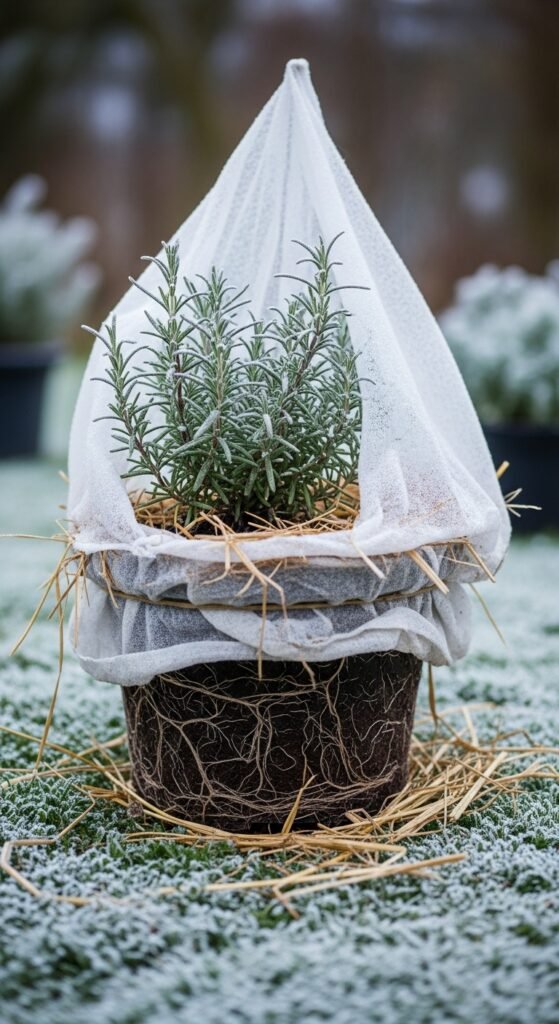
Rosemary is hardy to zone 7 but vulnerable in pots due to exposed roots. Implement these protections as temperatures drop below 30°F. Additional methods are detailed in our frost protection for plants article.
Combine with proper watering reductions in winter for optimal overwintering of rosemary in pots.
9) Identifying and Managing Pests
You can inspect rosemary regularly for aphids or spider mites, treating infestations with neem oil sprays applied in the evening. Encourage beneficial insects like ladybugs for natural control. Pest-free plants yield higher quality herbs.
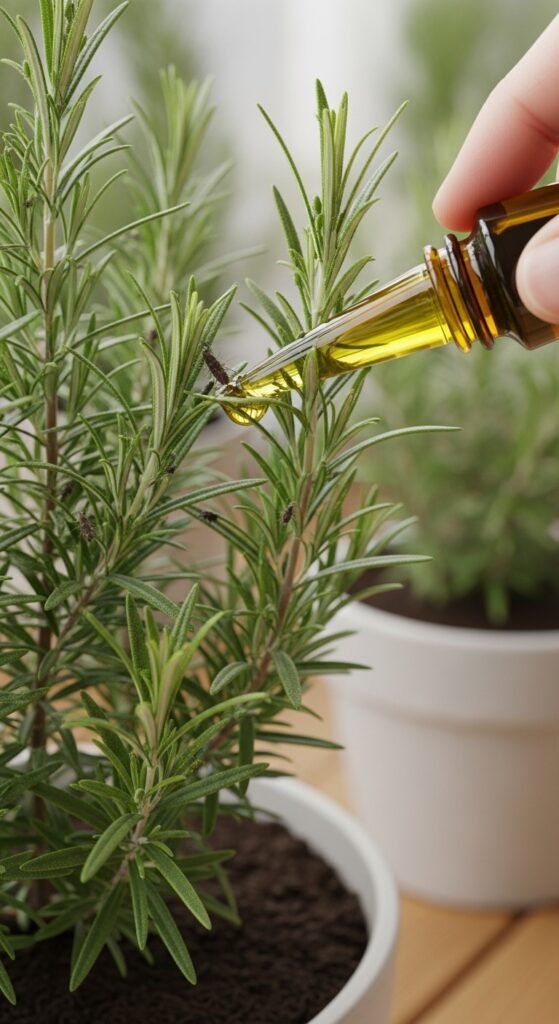
Early detection prevents widespread damage, as pests thrive in stressed conditions. Isolate affected pots and prune infested areas. This aligns with seasonal pest strategies in broader gardening contexts.
Maintain plant vigor through proper care to naturally deter pests in your potted rosemary.
10) Formulating a Fertilization Schedule
You ought to fertilize rosemary sparingly with a balanced, slow-release formula every six to eight weeks during the growing season. Avoid high-nitrogen options to prevent excessive foliage at the expense of flavor. Nutrient optimization boosts essential oil content.
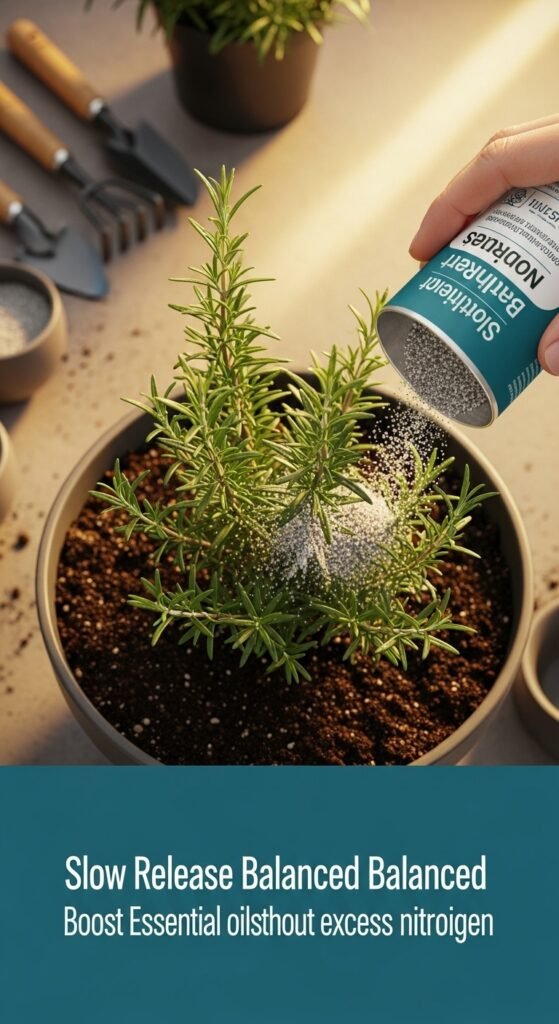
Over-fertilization can lead to salt buildup in pots, so flush the soil periodically. Mix fertilizer into the topsoil and water thoroughly afterward.
Adjust based on plant response, ensuring sustained productivity for rosemary in pots.
11) Propagating from Cuttings
You may propagate rosemary by taking 4-6 inch stem cuttings in spring, dipping them in rooting hormone, and planting in moist sand. Cover with plastic for humidity until roots form. Cost-effective expansion allows multiple plants from one.
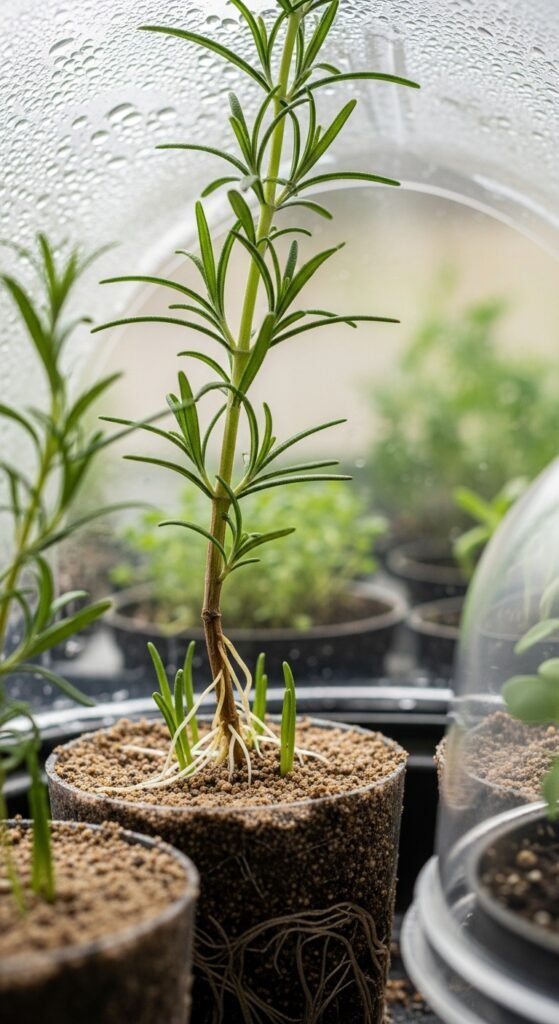
This method is reliable due to rosemary’s woody nature, outperforming seed starting. Provide bottom heat for faster rooting.
Transplant successful cuttings into individual pots for continued growth.
12) Incorporating Decorative Pot Designs
You can elevate your space by selecting ornamental pots in colors complementing your decor, such as glazed ceramics for a modern look. Ensure they have drainage to balance aesthetics with function. Visual enhancement integrates gardening into home design.
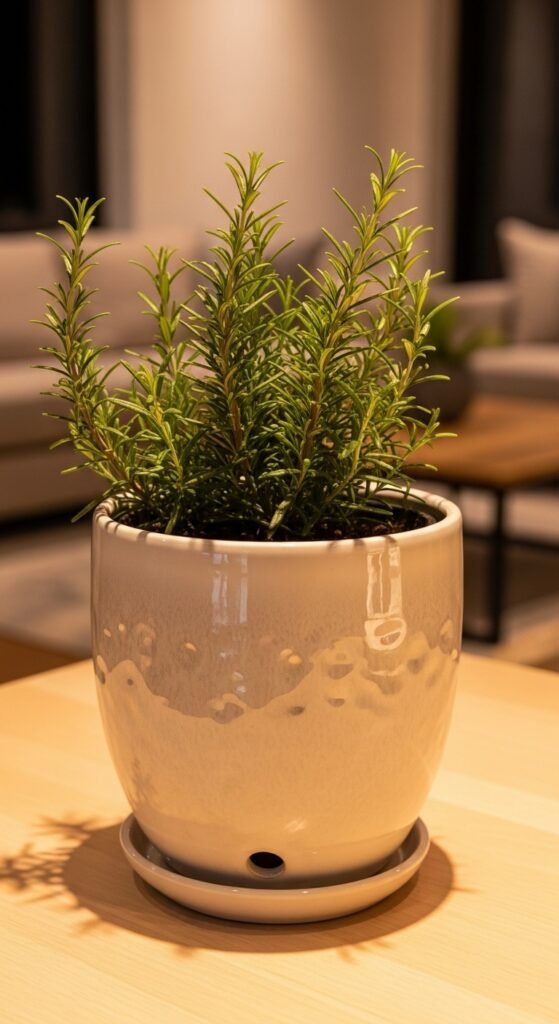
Decorative elements add personality without compromising care. Group pots for thematic displays.
Repaint or accessorize as desired, keeping rosemary in pots both beautiful and bountiful.
13) Utilizing Vertical Potting Systems
You should employ wall-mounted or stacked pots to save space while growing rosemary vertically, ideal for small areas. Secure systems firmly and ensure even watering. Space efficiency maximizes yield in limited environments.
Vertical setups improve air circulation, reducing disease risks. Choose lightweight pots for ease.
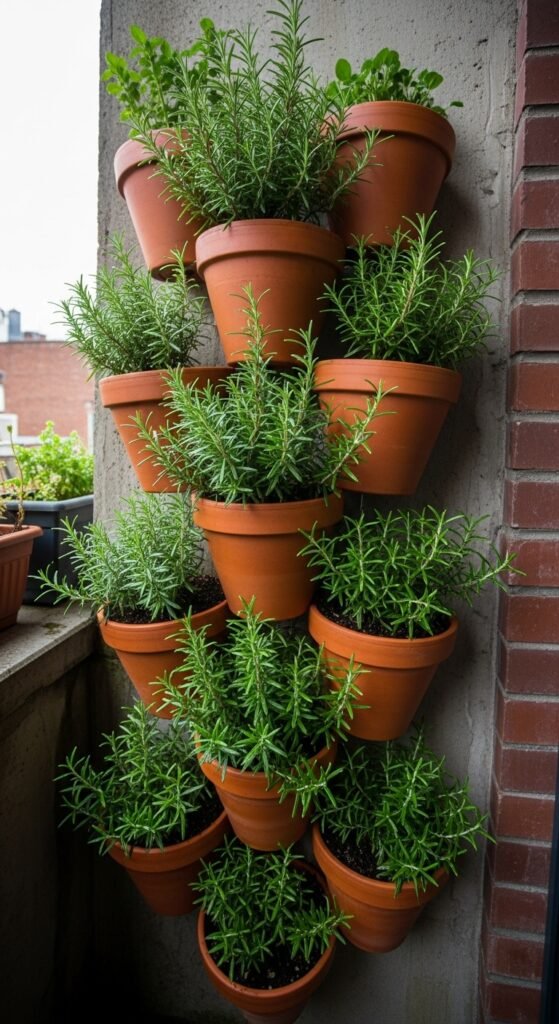
Harvest from all levels conveniently with this innovative approach to rosemary in pots.
14) Adopting Self-Watering Pots
You might opt for self-watering containers with reservoirs to maintain consistent moisture without daily attention. Fill the base periodically and monitor levels. Convenience for busy gardeners prevents under or overwatering.
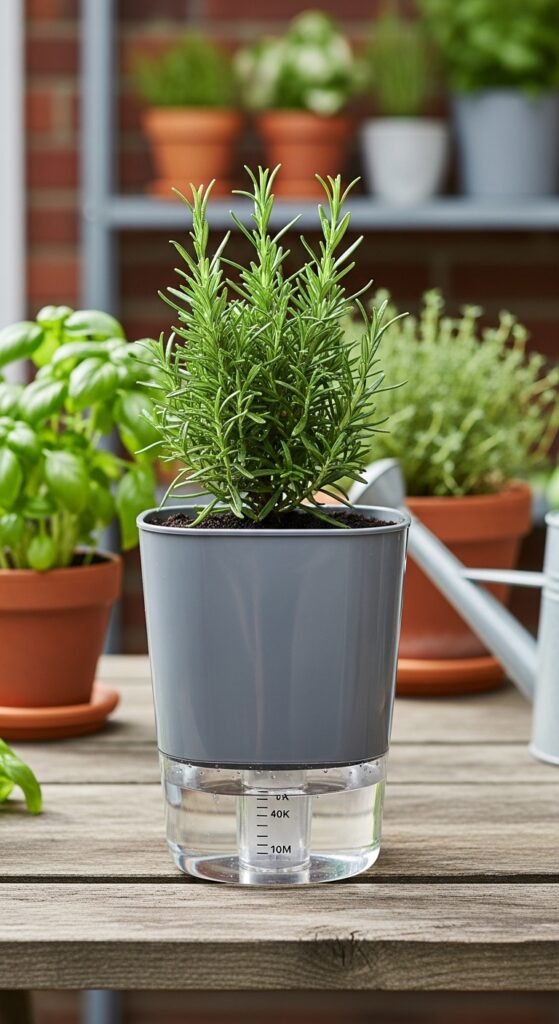
These pots suit rosemary’s needs by avoiding soggy soil. Select sizes appropriate for growth stage.
Combine with quality soil for best results in potted rosemary cultivation.
15) Perfecting Harvesting Methods
You need to harvest rosemary by snipping outer stems in the morning when oils are concentrated, using only what you need to encourage regrowth. Dry or freeze excess for storage. Fresh flavor preservation enhances culinary uses.
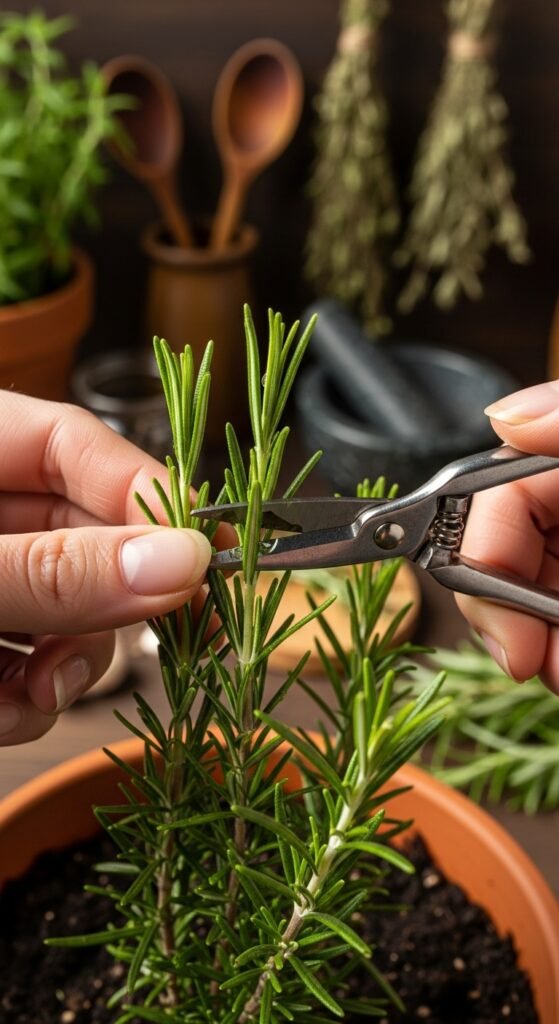
Regular harvesting keeps the plant productive and shaped. Avoid stripping more than a third at once.
Experiment with recipes to fully utilize your homegrown rosemary in pots.
Key Principles for Growing Rosemary in Pots
Emphasizing Drainage and Aeration
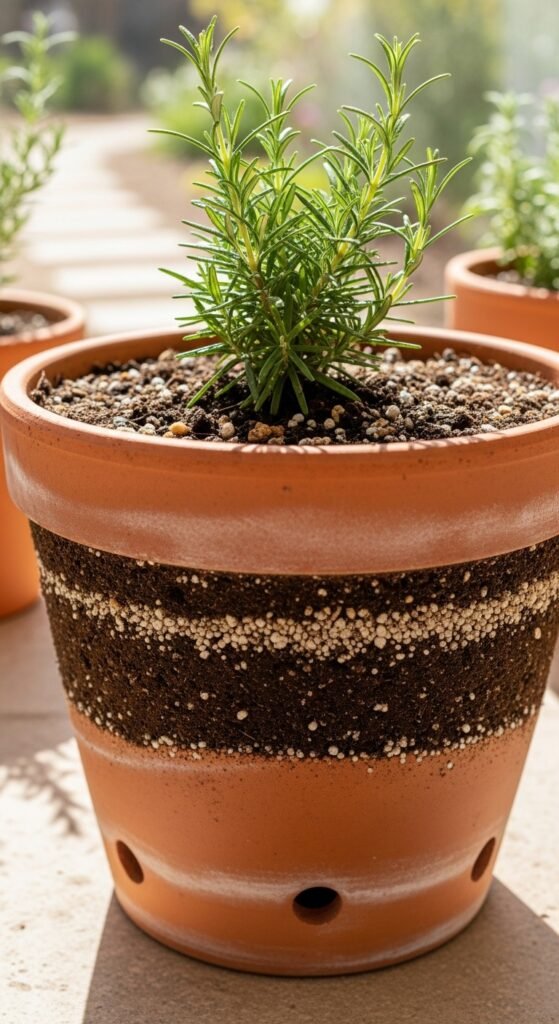
Prioritize pots with multiple drainage holes and aerated soil to prevent root issues, as rosemary demands quick-drying conditions.
Balancing Sunlight and Temperature
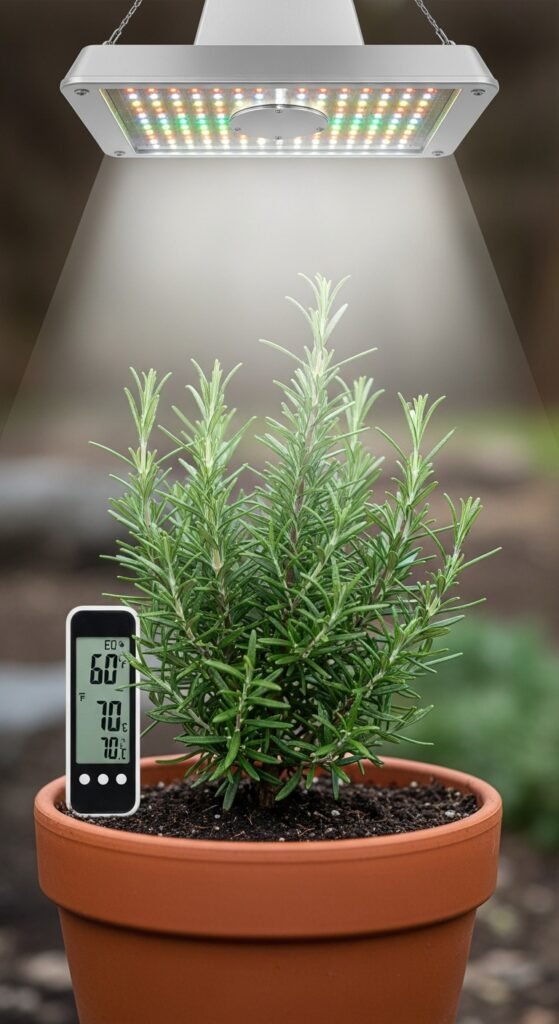
Maintain temperatures between 60-70°F and full sun to replicate its origins, adjusting seasonally for consistency.
Monitoring for Health Indicators
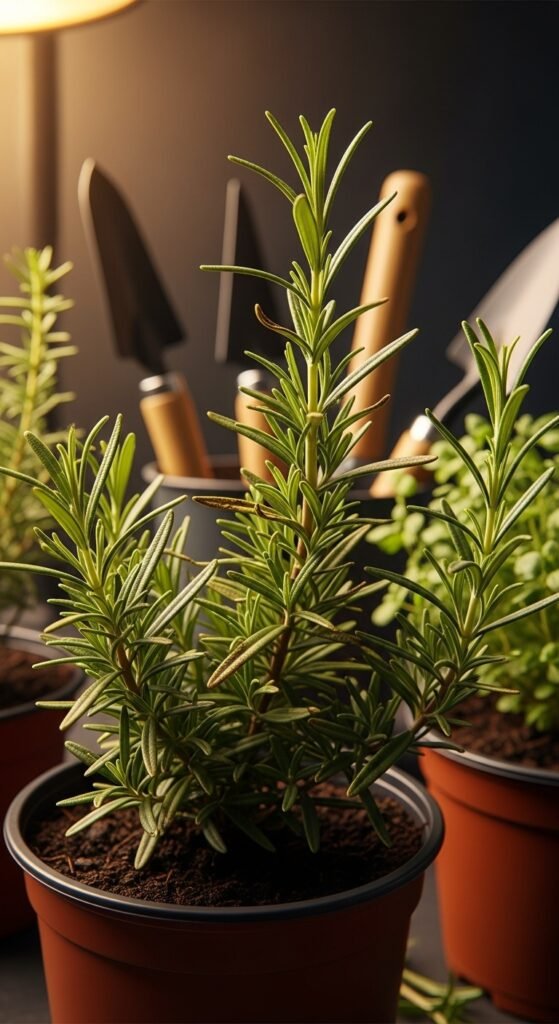
Regularly check for discoloration or pests, addressing promptly to uphold the integrity of your rosemary in pots.
Frequently Asked Questions
How often should you water rosemary in pots?
Water rosemary in pots every 7-10 days, or when the top inch of soil feels dry, to avoid root rot while keeping the plant hydrated.
Can rosemary in pots survive winter outdoors?
Rosemary in pots can survive mild winters outdoors with protection, but in colder zones, bring it indoors to prevent freeze damage.
What is the best pot material for rosemary?
Terracotta is the best pot material for rosemary due to its porosity, which aids in moisture evaporation and root health.
Why are the leaves on my potted rosemary turning yellow?
Yellowing leaves on potted rosemary often indicate overwatering or poor drainage; adjust your routine and ensure proper soil conditions.
How do you propagate rosemary in pots?
Propagate rosemary in pots by taking stem cuttings, rooting them in water or soil, and transplanting once established for new plants.