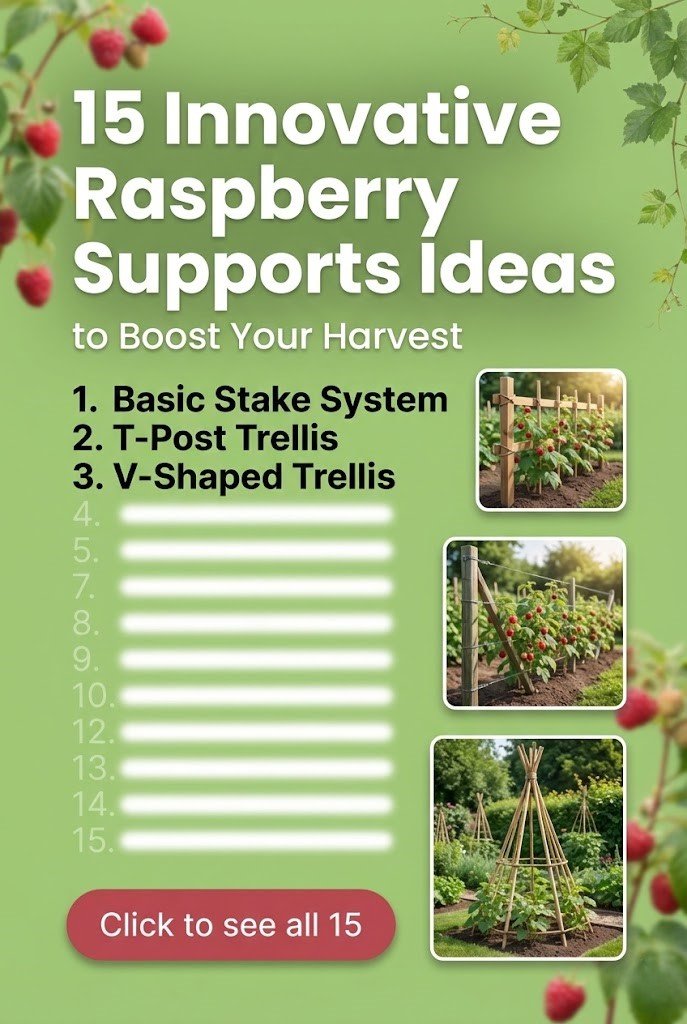
When you grow raspberries in your garden, providing proper support is essential for healthy plants and abundant yields. Raspberry supports keep the canes upright, improve air circulation to prevent diseases, and make harvesting easier by keeping berries off the ground. Without adequate support, your raspberry bushes can become tangled, leading to reduced fruit quality and increased pest issues.
Choosing the right raspberry supports depends on your garden space, budget, and aesthetic preferences. From simple DIY options to more elaborate structures, these ideas will help you maximize your raspberry patch’s potential. By implementing effective supports, you’ll enjoy stronger plants and bigger harvests season after season.
Explore these 15 creative ideas to find the perfect fit for your gardening needs, ensuring your raspberries thrive with minimal effort.
1) Basic Stake System
You can start with a straightforward stake system for your raspberry supports, using wooden or metal stakes driven into the ground along the row of plants. Tie the canes loosely to the stakes with soft twine or plant ties to allow for growth.
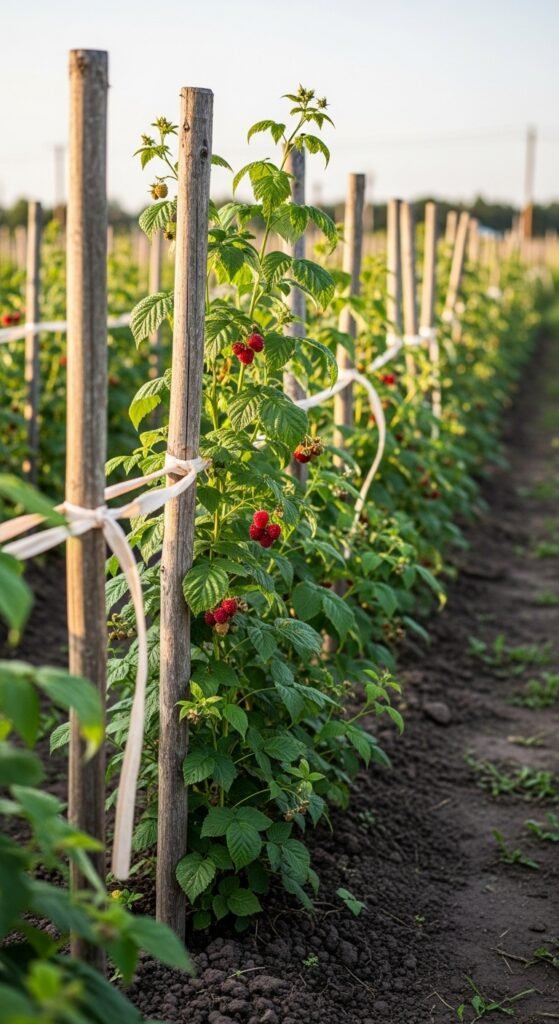
This method is ideal because it provides essential upright support while being cost-effective and easy to install. It prevents canes from bending under the weight of fruit, reducing breakage and improving sunlight exposure for better ripening.
To set it up, space stakes every 4-6 feet along your raspberry row. Drive them 18-24 inches deep for stability. As your plants grow, regularly check and adjust ties to avoid constriction. For related berry care, consider techniques like those in pruning raspberries to complement your support system. This simple approach can yield impressive results in small gardens.
2) T-Post Trellis
Construct a durable T-post trellis by pounding metal T-posts into the soil at each end of your raspberry row and every 10-15 feet in between. Stretch wires between the posts at heights of 2 feet and 4 feet to create horizontal supports.
The strength and longevity of T-posts make this an excellent choice for raspberry supports, as they withstand weather and heavy fruit loads without sagging. This setup promotes better air flow, minimizing fungal diseases common in dense berry patches.
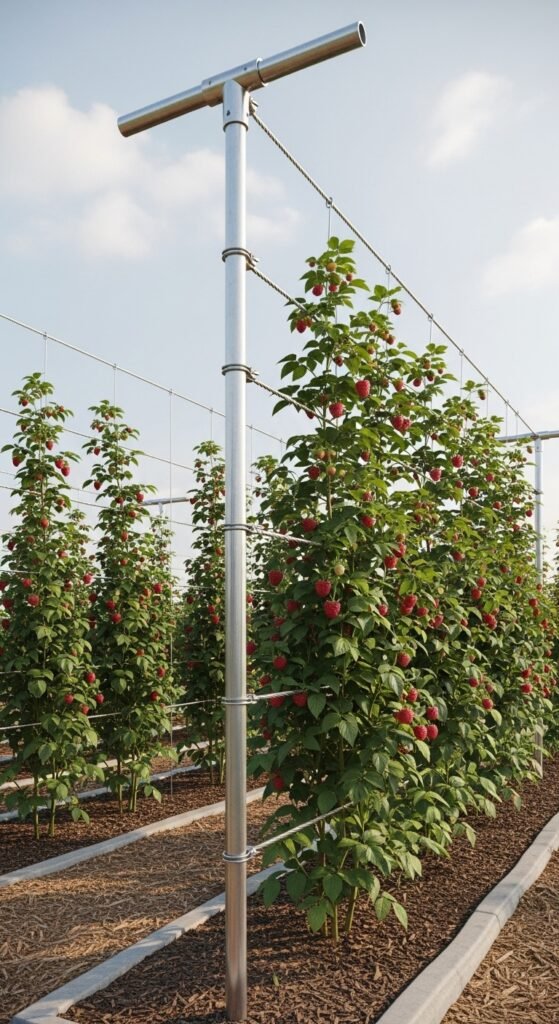
Begin by measuring your row and installing posts securely. Attach galvanized wire using clips or ties, ensuring taut lines. Train your raspberry canes between the wires as they grow. If you’re growing similar brambles, explore blackberry trellis ideas for adaptable designs. Maintenance involves occasional wire tightening for ongoing effectiveness.
3) V-Shaped Trellis
Design a V-shaped trellis using wooden posts angled outward to form a V along your raspberry row. Connect crossbars or wires between the posts to support the canes as they spread.
This configuration excels in raspberry supports by allowing canes to fan out, maximizing sunlight and air circulation for healthier plants and larger berries. It’s particularly useful for everbearing varieties that produce fruit on both old and new growth.
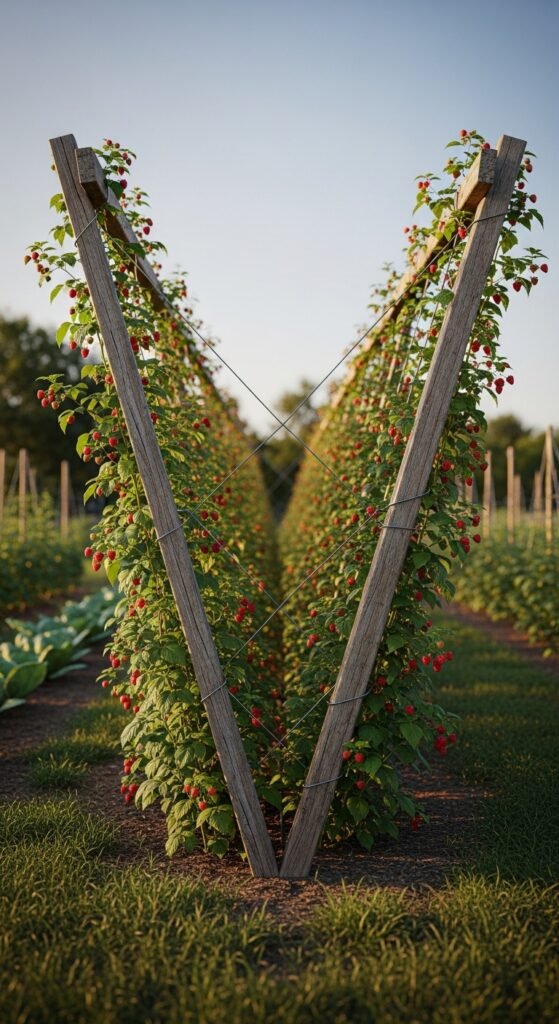
To build it, set posts 6-8 feet apart, leaning them at 45 degrees. Secure with braces and add horizontal elements. Guide young canes into the V as they emerge. For integrated garden structures, check out DIY raised bed trellis options that can enhance this setup in elevated planting areas.
4) Wire Fence Panel System
Utilize sturdy wire fence panels as vertical supports by securing them to posts along your raspberry patch. The grid pattern allows you to weave canes through or tie them as needed.
Wire panels offer versatile and reusable raspberry supports, easy to adjust for plant height and providing excellent stability against wind. They also facilitate easy access for pruning and picking.
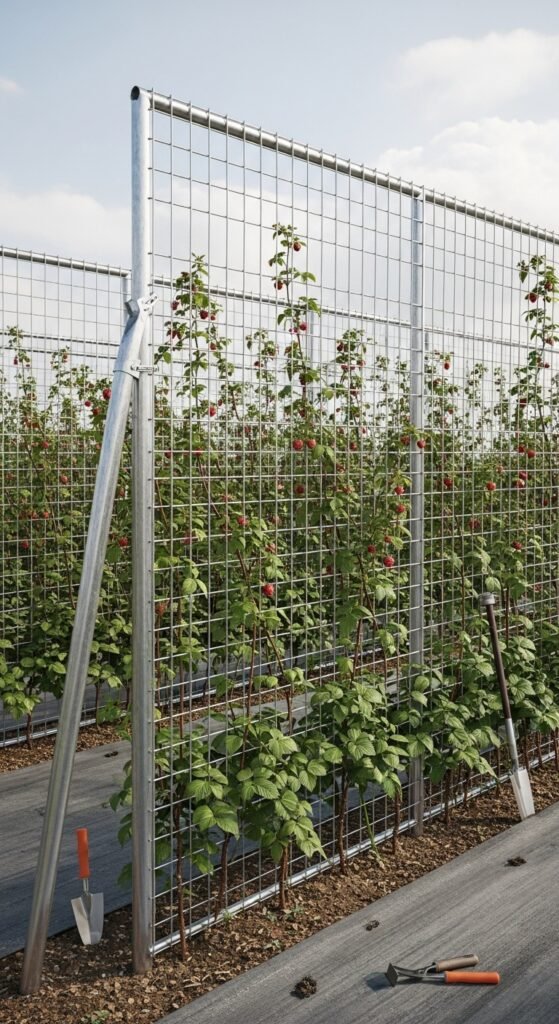
Install by anchoring posts firmly, then attach panels with zip ties or wire. Space panels to match your row length. As raspberries grow, gently secure canes to the grid. If you’re dealing with other vining crops, similar concepts appear in garden trellis ideas that can inspire expansions to your berry area.
5) Bamboo Teepee Structure
Create charming bamboo teepees by bundling 6-8 long bamboo poles together at the top and spreading the bases to form a cone over small clusters of raspberry plants.
This natural material provides eco-friendly and aesthetic raspberry supports, blending seamlessly into organic gardens while offering strong vertical guidance for canes.
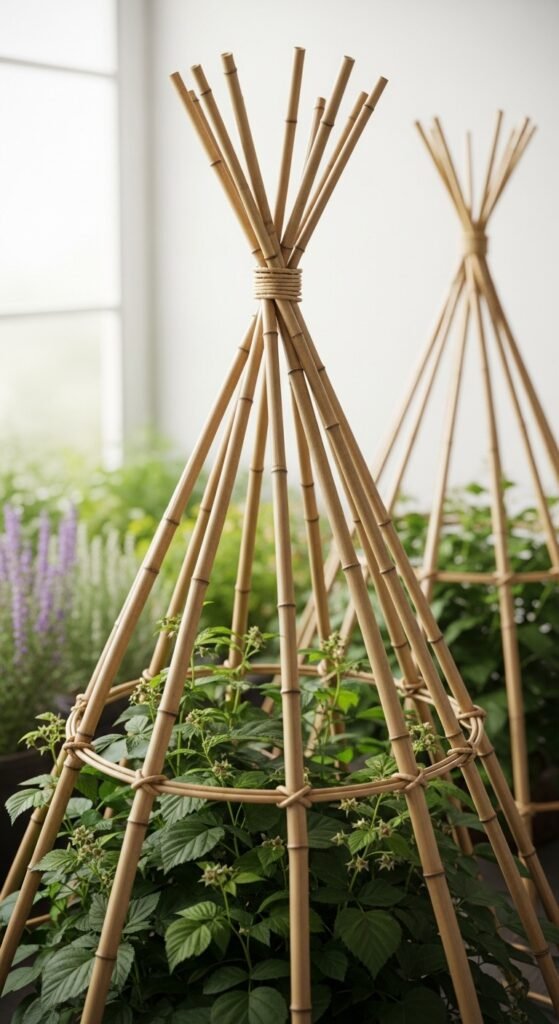
Gather poles about 6-8 feet tall, tie the tops with twine, and position over plants. Secure bases in soil for stability. Train canes up the poles as they elongate. For seasonal maintenance, incorporate advice from fall raspberry care to prepare your structures for winter. This idea works well for compact spaces or decorative accents.
6) PVC Pipe Frame
Assemble a lightweight PVC pipe frame by connecting pipes with fittings to create a rectangular or arched support system spanning your raspberry row.
PVC offers affordable, customizable, and weather-resistant raspberry supports, perfect for DIY enthusiasts who want quick assembly without heavy tools.
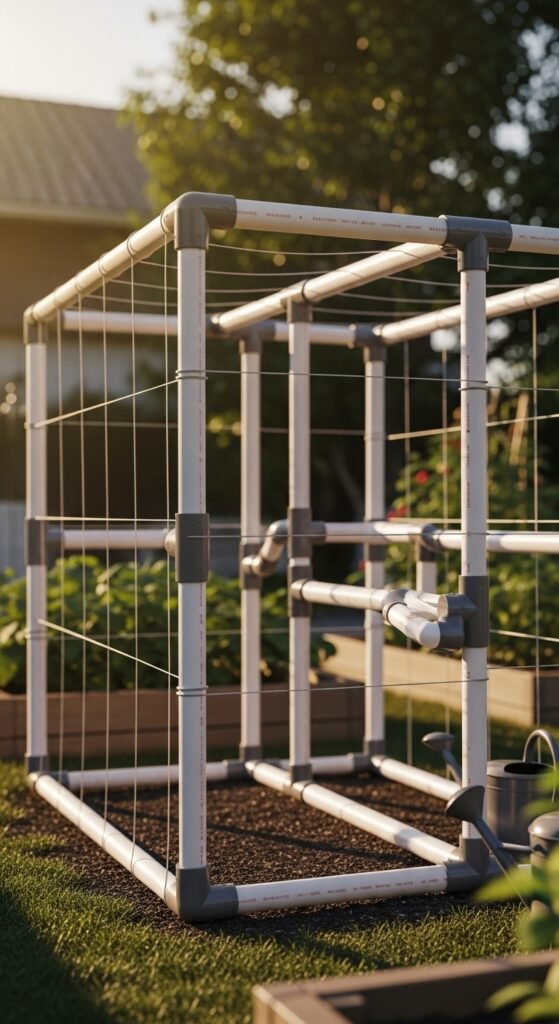
Cut pipes to desired lengths, connect with elbows and tees, and anchor into ground with rebar. Add netting or strings for cane attachment. If you’re exploring alternatives for other plants, look into tomato cage alternatives that share similar modular designs. Regular inspections ensure the frame remains secure throughout the growing season.
7) Wooden Lattice Panels
Install wooden lattice panels vertically between posts to serve as elegant backdrops for your raspberry canes, allowing them to climb and spread naturally.
The open design promotes excellent ventilation and visual appeal, making these raspberry supports ideal for integrating berries into ornamental gardens.
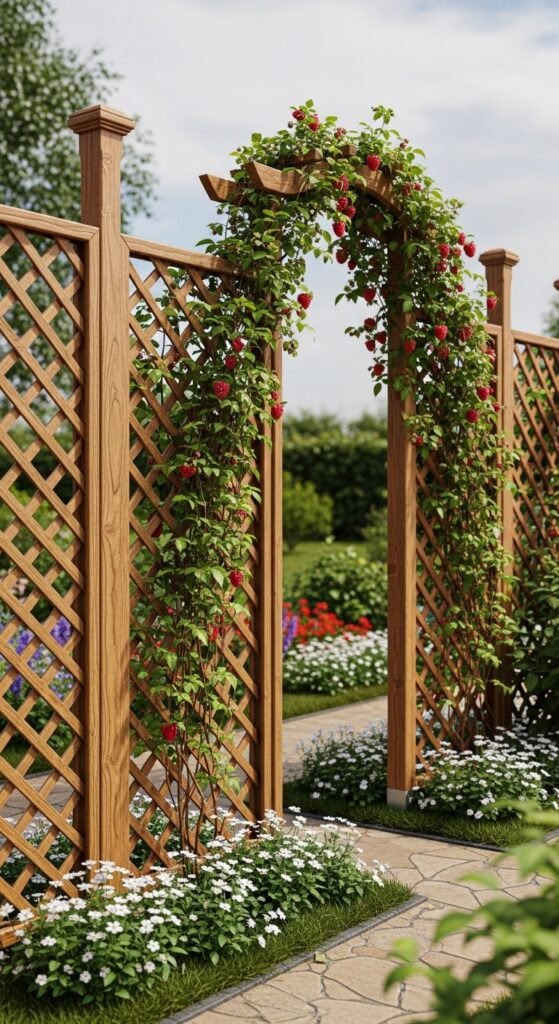
Secure panels to sturdy posts spaced appropriately, then gently tie canes to the lattice. Stain or paint for longevity. For berry companions, consider strawberry planter ideas to create a mixed fruit area with coordinated supports. This method enhances both productivity and garden aesthetics.
8) Metal Mesh Grid
Use heavy-duty metal mesh grids fastened to frames or posts, providing a robust grid for raspberry canes to weave through or be tied to.
Metal mesh delivers long-lasting durability and flexibility in raspberry supports, resisting rust and supporting heavy yields over multiple seasons.
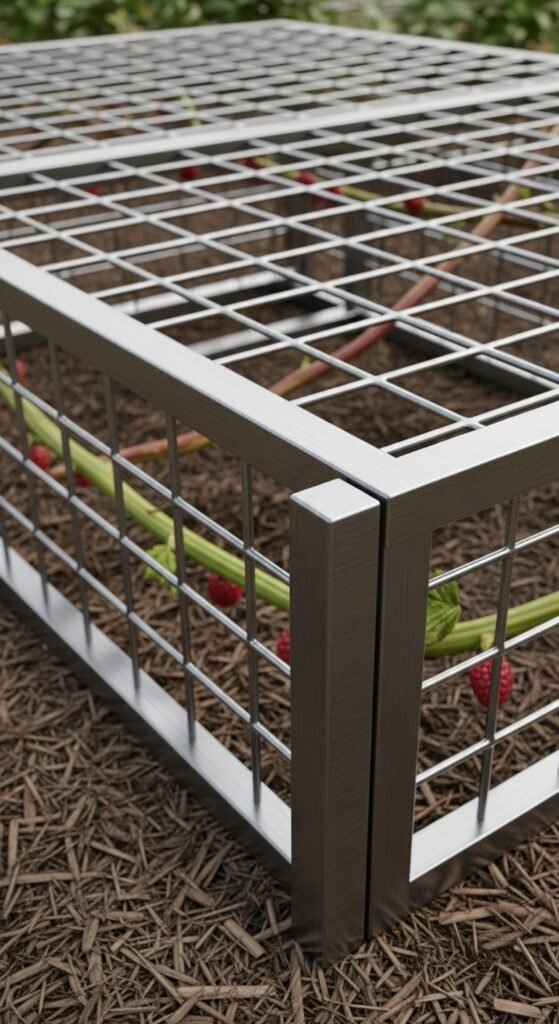
Construct frames if needed, attach mesh securely, and position along rows. Guide canes through openings. Similar to techniques for other berries, review blueberries in containers for container-based support adaptations. Clean the mesh annually to prevent disease buildup.
9) Espalier Training Method
Train your raspberries using the espalier method, tying canes horizontally to wires or a flat framework against a wall or fence.
This space-saving technique offers efficient use of vertical space and easier maintenance, turning raspberry supports into artistic garden features.
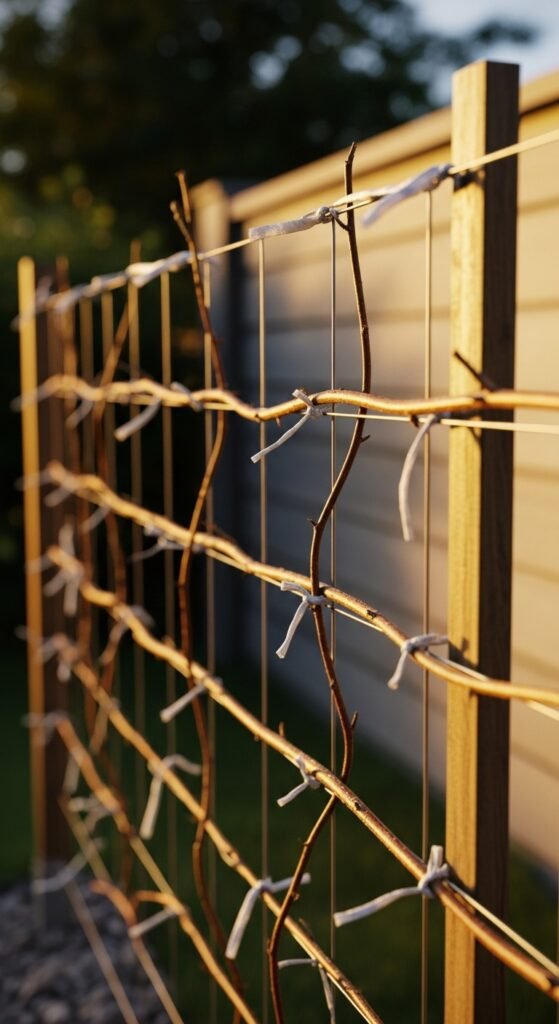
Set up wires at multiple levels on a sturdy backing, then prune and tie canes flat. For fruit tree inspirations, see espalier fruit trees that apply similar principles to berries. Regular pruning is key to maintaining the shape and health.
10) Raised Bed Integrated Supports
Incorporate supports directly into raised beds by adding vertical posts or trellises within the bed structure for seamless raspberry growth.
This integrated approach provides stable, contained support while improving soil drainage and accessibility for weeding and harvesting.
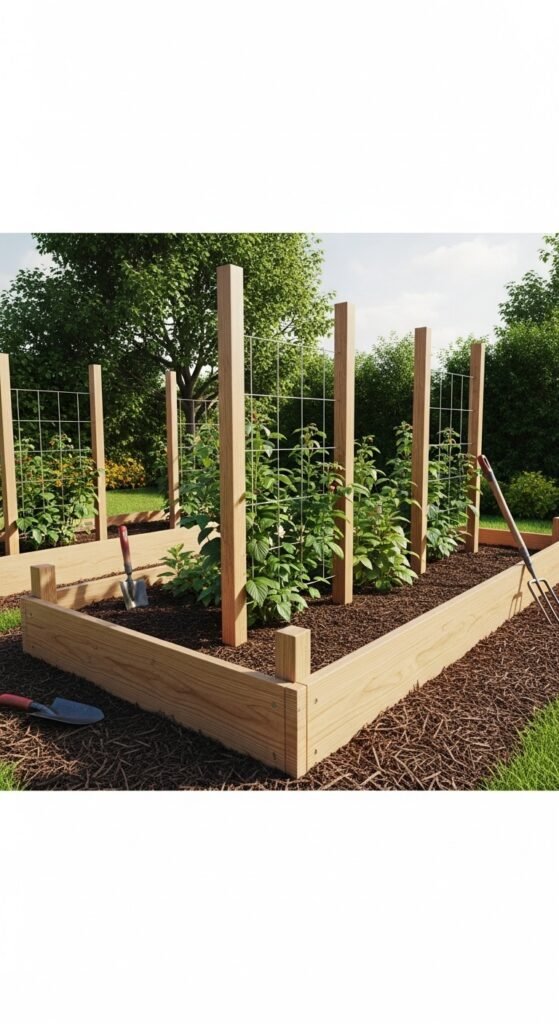
Build beds with built-in post holes, insert supports, and plant raspberries nearby. For design variations, explore DIY raised bed trellis to customize your setup. Mulch around bases to retain moisture and suppress weeds.
11) Recycled Fence Sections
Repurpose old fence sections or pallets into upright supports by standing them along your raspberry rows and securing canes to the slats.
Recycling materials creates sustainable and unique raspberry supports, reducing waste while adding rustic charm to your garden.
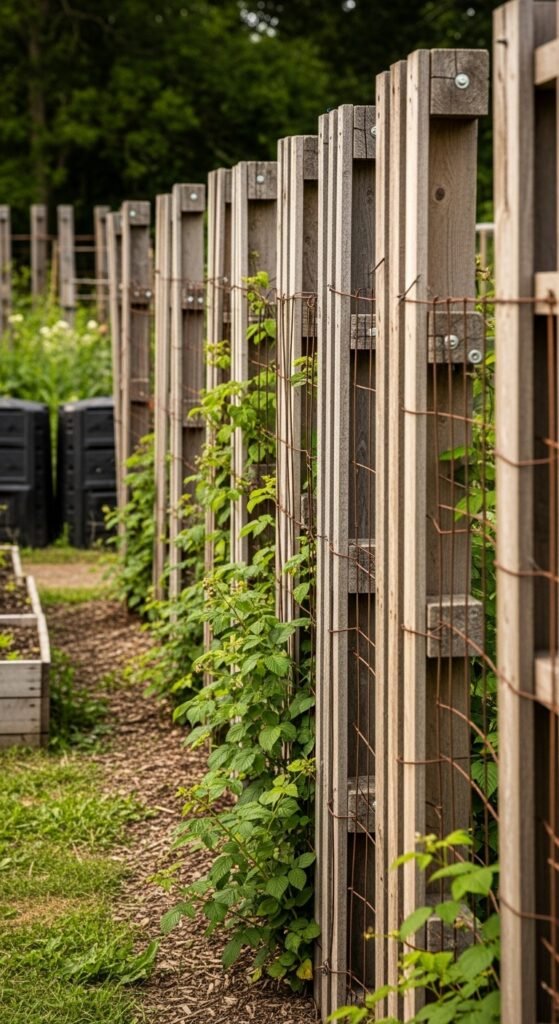
Clean and reinforce sections, anchor firmly, and attach plants. Draw from garden trellis ideas for creative repurposing tips. This eco-friendly option suits budget-conscious gardeners seeking character.
12) Commercial Trellis Kits
Opt for pre-made commercial trellis kits designed for berries, which often include adjustable wires and posts for quick installation.
These kits ensure professional-grade stability and ease, making raspberry supports hassle-free for beginners or large-scale growers.
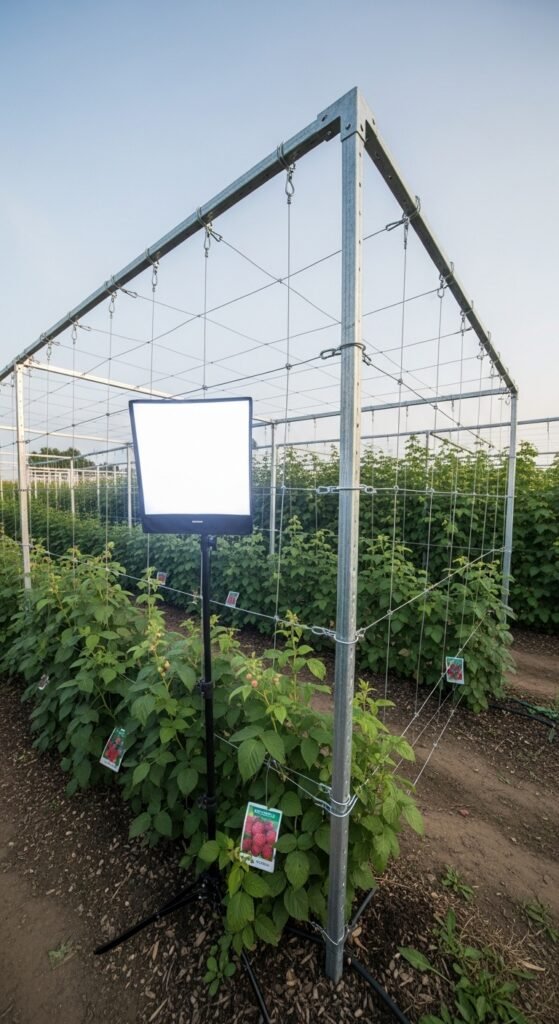
Follow kit instructions for assembly, positioning them over plants. Complement with pruning from prune raspberries for optimal results. Kits often expand for growing patches.
13) Hedgerow Style Supports
Form a natural hedgerow by planting raspberries densely and using minimal stakes to guide the overall shape, allowing self-supporting growth.
This low-maintenance style fosters dense, productive hedges as raspberry supports, ideal for privacy screens or windbreaks in larger yards.
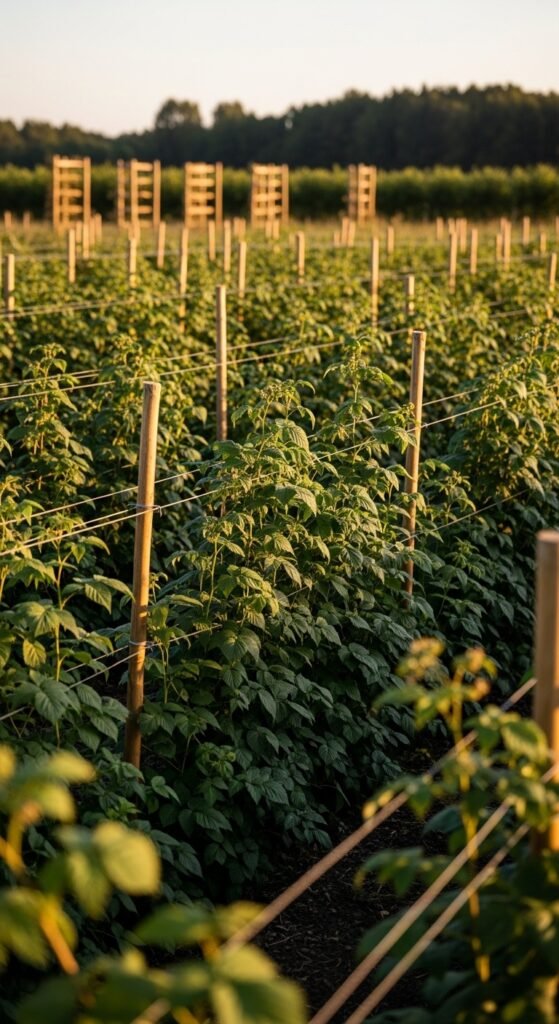
Plant in rows, add occasional stakes, and prune selectively. For fall prep, use fall raspberry care strategies. This method mimics wild growth for robust plants.
14) Container-Specific Supports
For potted raspberries, use cage-like supports or small trellises inserted directly into containers to keep canes upright.
Container supports offer mobility and space efficiency, perfect for balconies or patios where ground planting isn’t possible.
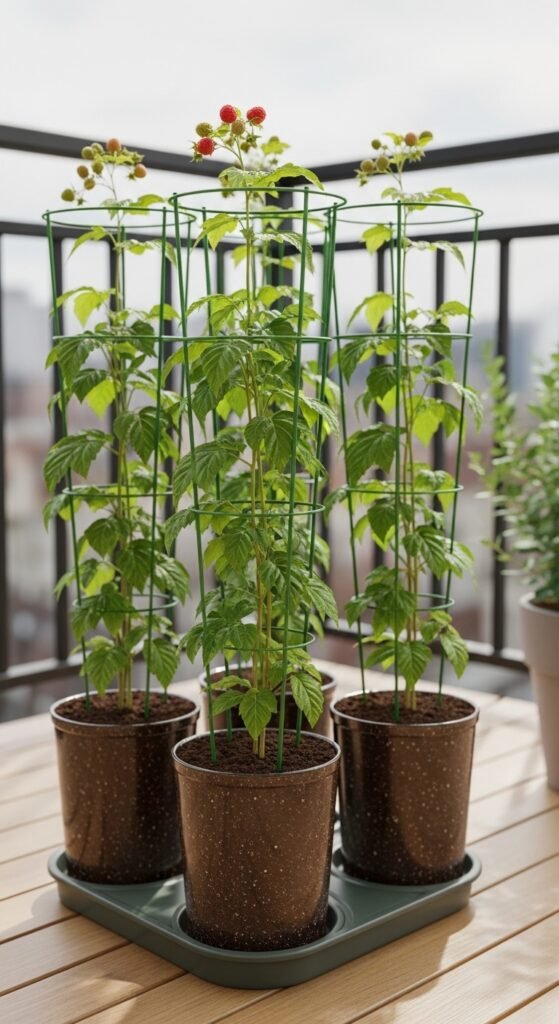
Choose pots with drainage, add supports early, and tie as needed. Similar to blueberries in containers, this adapts well to limited spaces. Monitor watering closely for potted setups.
15) Decorative Garden Arches
Incorporate ornamental arches over pathways or rows, training raspberry canes to climb for both support and visual interest.
Arches provide elegant, multifunctional raspberry supports, enhancing garden design while offering sturdy guidance for vines.

Position arches securely, plant at bases, and guide growth upward. For similar berry ideas, consider blackberry trellis ideas with arched elements. This creates inviting garden features with productive yields.
Key Principles for Raspberry Supports
Material Selection
Choose weather-resistant materials like treated wood, metal, or bamboo to ensure longevity. Consider your climate—opt for rust-proof options in wet areas.
Installation Timing
Install supports early in the season before canes grow tall. This prevents damage and allows plants to adapt naturally to the structure.
Maintenance Tips
Regularly inspect for wear, tighten connections, and remove old canes after harvest to keep supports effective and plants healthy.
Frequently Asked Questions
Why do raspberries need supports?
Raspberries need supports to keep canes upright, improve air flow, prevent diseases, and make harvesting easier by elevating fruit.
What is the best height for raspberry supports?
The best height is 4-6 feet, accommodating most varieties while allowing easy access for maintenance and picking.
Can I use the same supports for different berry types?
Yes, many supports work for similar brambles like blackberries, but adjust for specific growth habits and spacing needs.
How often should I replace raspberry supports?
Replace every 5-10 years depending on material and weather exposure, or sooner if damage occurs.
Are DIY supports as effective as commercial ones?
DIY supports can be just as effective if built sturdy and maintained well, often at a lower cost.