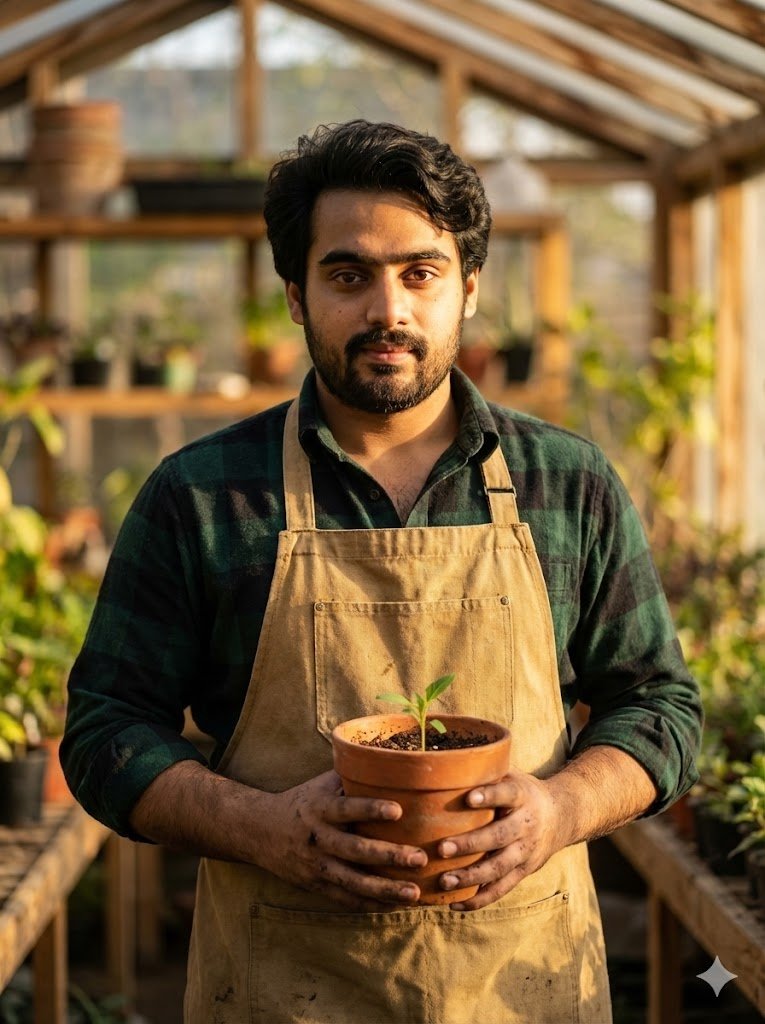
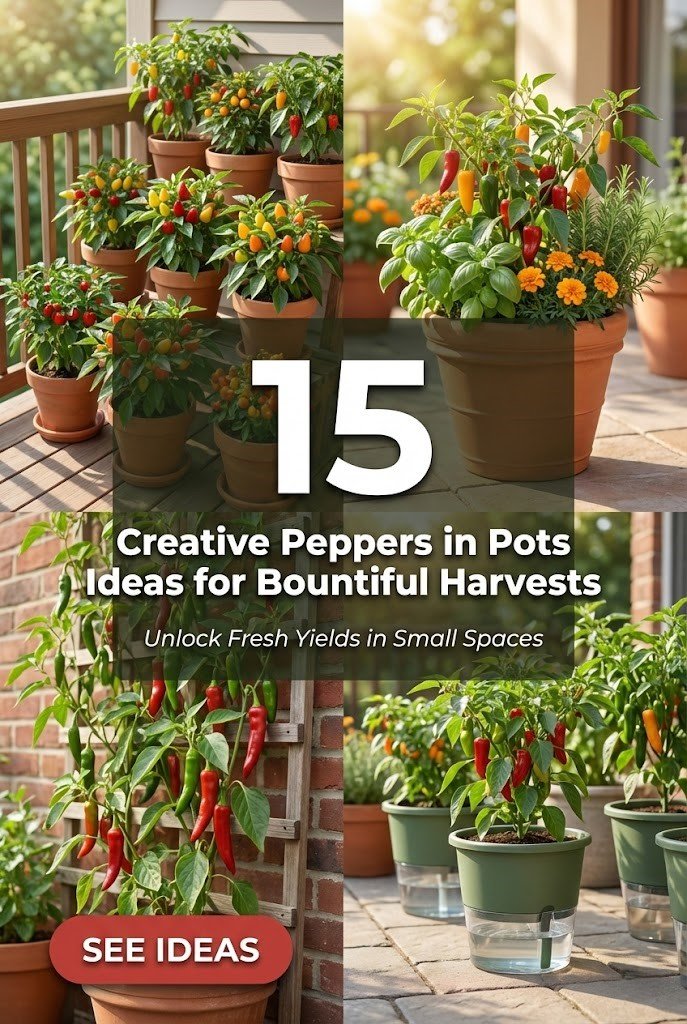
Growing peppers in pots is a fantastic way to enjoy fresh, homegrown produce even if you have limited space. Whether you’re dealing with a small balcony, patio, or windowsill, container gardening allows you to cultivate a variety of peppers without the need for a traditional garden bed. This approach not only saves space but also gives you greater control over soil quality, watering, and pest management, leading to healthier plants and bigger yields.
You’ll find that peppers thrive in pots because they love warm, sunny spots and well-draining soil. Starting with the right container and setup can make all the difference in preventing issues like root rot or nutrient deficiencies. Plus, potted peppers are easy to move indoors during cooler weather, extending your growing season. In this article, we’ll explore 15 innovative ideas to help you get the most out of your pepper plants, incorporating tips on varieties, care, and creative setups.
1) Compact Balcony Setup
You can transform a small balcony into a productive pepper paradise by choosing compact varieties like ‘Lunchbox’ or ‘Mini Bell’ peppers. These smaller plants fit perfectly in 5-7 gallon pots, allowing you to maximize vertical space with hanging baskets or tiered stands. Position them in a spot that gets at least 6-8 hours of direct sunlight daily to encourage robust growth and fruiting.
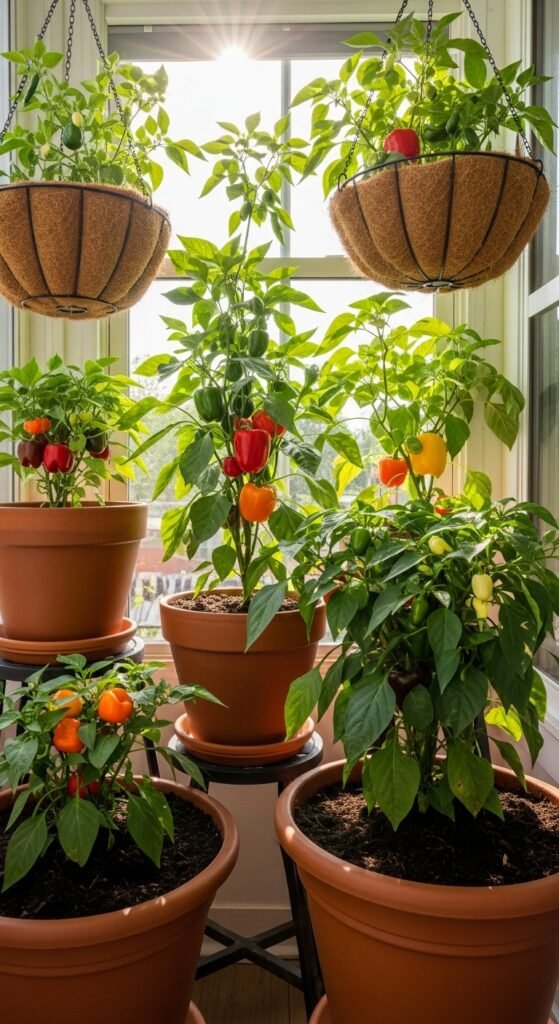
The key benefit here is mobility—you can easily shift pots to chase the sun or protect from wind. Use a high-quality potting mix enriched with compost for better drainage and nutrients. Water consistently, keeping the soil moist but not soggy, and fertilize every two weeks with a balanced organic option. This setup not only yields sweet, colorful peppers but also adds vibrant greenery to your urban oasis. For more on soil choices, check out our guide on best soil for container gardening.
2) Herb Companion Planting
Pair your peppers in pots with compatible herbs like basil or oregano to create a symbiotic growing environment. These companions deter pests naturally—basil repels aphids and flies, while oregano wards off spider mites. Plant them together in a larger 10-gallon container for shared resources and enhanced flavors in your kitchen.
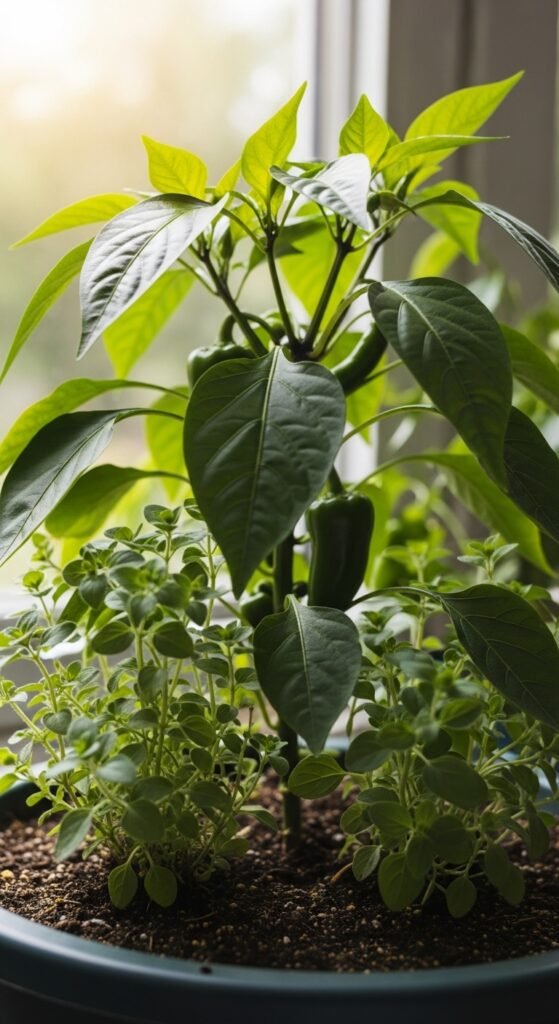
This method boosts pollination and soil health, as herbs help retain moisture and add nutrients through their roots. Ensure the pot has drainage holes to prevent waterlogging, and use a lightweight soil blend. You’ll notice healthier plants with fewer interventions, leading to a bountiful harvest. Rotate the pot weekly for even sun exposure. If you’re interested in similar pairings, explore herbs in containers for more ideas.
3) Vertical Trellis System
For vining pepper varieties like ‘Cayenne’ or ‘Jalapeño’, incorporate a simple trellis in your pot to support upward growth. This saves space and improves air circulation, reducing disease risk. Use bamboo stakes or a wire cage inserted into the soil for stability, training stems gently as they grow.
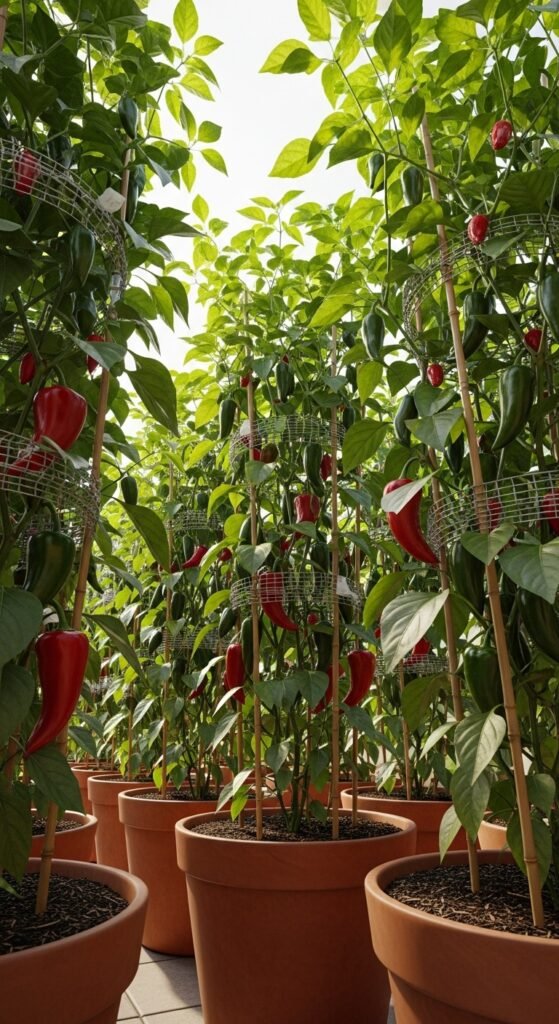
The vertical approach exposes more leaves to sunlight, promoting larger fruits and easier harvesting. Opt for deeper pots (at least 12 inches) to accommodate roots, and mulch the surface to retain moisture. You’ll enjoy a decorative element that doubles as a privacy screen on patios. Monitor for ties that might constrict growth, and prune lower leaves for better airflow. Similar techniques work well for cucumbers in containers.
4) Self-Watering Container Hack
Convert a standard pot into a self-watering system by adding a reservoir at the bottom with PVC pipes or inverted bottles. This ensures consistent moisture for peppers, which hate drying out completely. Ideal for busy gardeners, it prevents overwatering while keeping roots hydrated during hot spells.
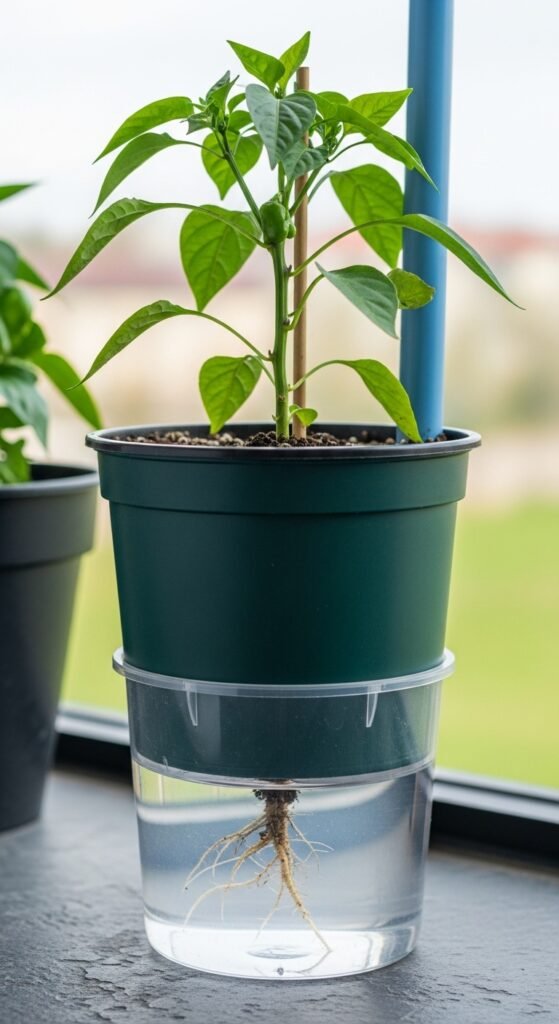
You’ll see stronger plants with fewer stress signs, like wilting or blossom drop. Fill the reservoir weekly and use a moisture meter to check levels. This setup is especially useful for hot peppers that need steady water for spiciness. Add perlite to the soil for aeration. For advanced watering tips, see our article on drip irrigation for planters.
5) Ornamental Pepper Display
Select ornamental peppers like ‘Black Pearl’ or ‘Medusa’ for pots that double as decorative elements. Their colorful fruits and foliage add visual appeal to entryways or tables. Plant in terracotta pots for a rustic look, ensuring full sun for vivid hues.
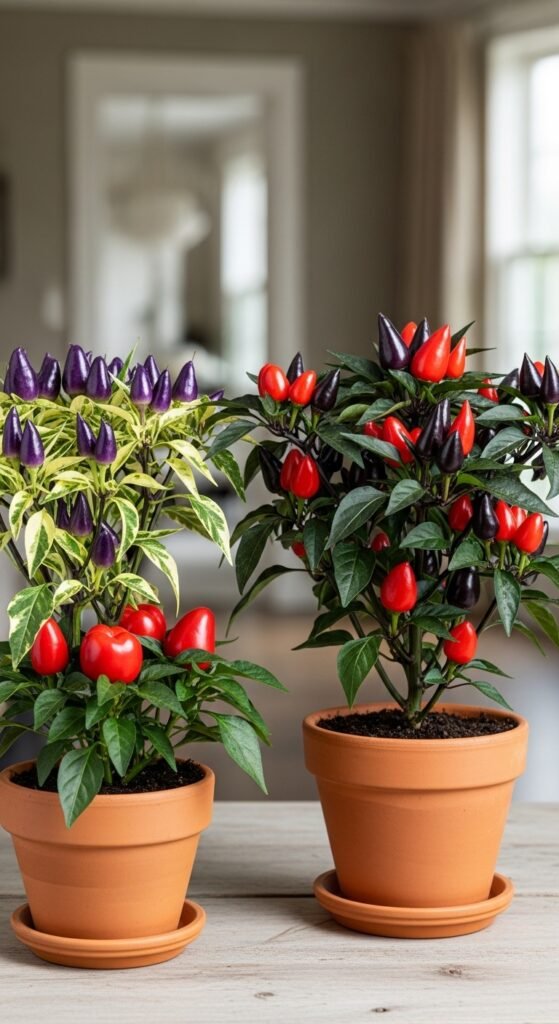
Beyond beauty, these peppers are edible and pack heat or sweetness. The compact size makes them perfect for small spaces, with minimal pruning needed. Harvest regularly to encourage more production. This idea blends aesthetics with functionality, brightening your home while providing fresh produce.
6) Overwintering Indoor Transition
Bring potted peppers indoors before the first frost to extend their life through winter. Choose healthy plants and prune back by a third to reduce stress. Place in a sunny window or under grow lights, maintaining temperatures above 60°F.
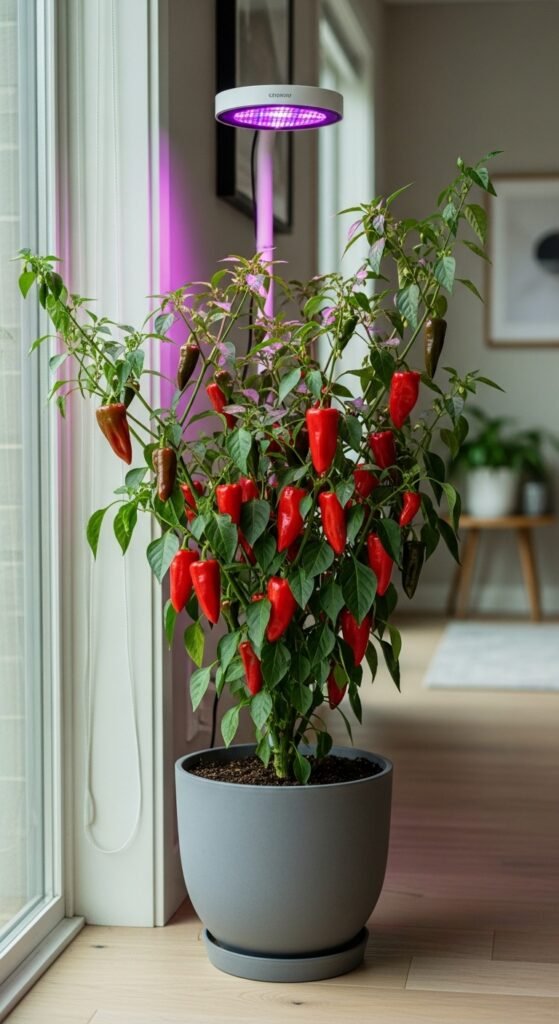
You’ll enjoy fresh peppers year-round and save on seeds for the next season. Water sparingly and watch for pests. This method works best for perennials like ‘Rocoto’. For detailed steps, refer to our guide on overwintering peppers.
7) Mixed Heat Level Assortment
Grow a variety of peppers in one large pot, from mild bells to fiery habaneros, for a diverse harvest. Label each section to track heat levels. Use a 15-gallon container with divided spaces for root separation.
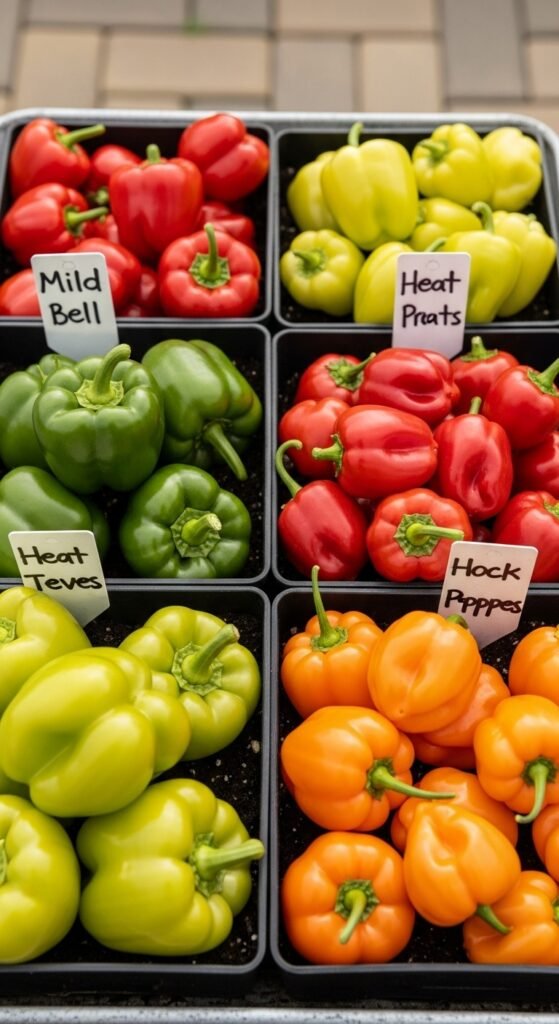
This saves space and creates a colorful display. Ensure even watering and fertilize with a potassium-rich formula for fruit development. You’ll have peppers for every recipe, from salads to salsas. Rotate for uniform growth.
8) Raised Pot on Wheels
Mount your pepper pots on wheeled caddies for easy mobility. This allows you to follow the sun or protect from rain. Ideal for patios, it prevents strain from lifting heavy containers.
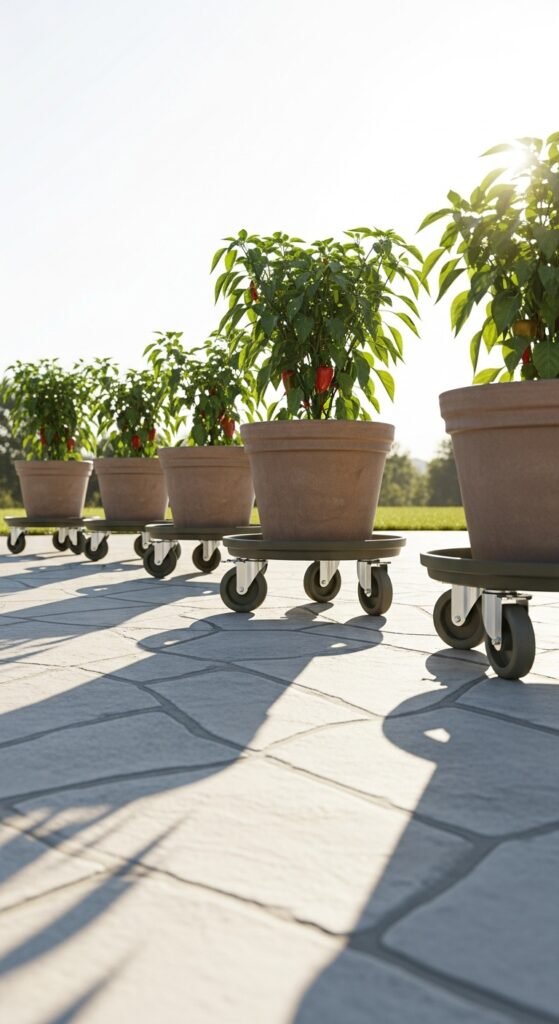
Stronger plants result from optimal conditions, with better yields. Choose weather-resistant wheels and secure pots. This is great for renters or variable climates. Pair with similar mobile setups like zucchini in containers.
9) Organic Pest Control Integration
Incorporate natural pest deterrents like marigolds around your pepper pots. These flowers repel nematodes and aphids without chemicals. Plant in the same container or surrounding ones for a barrier effect.
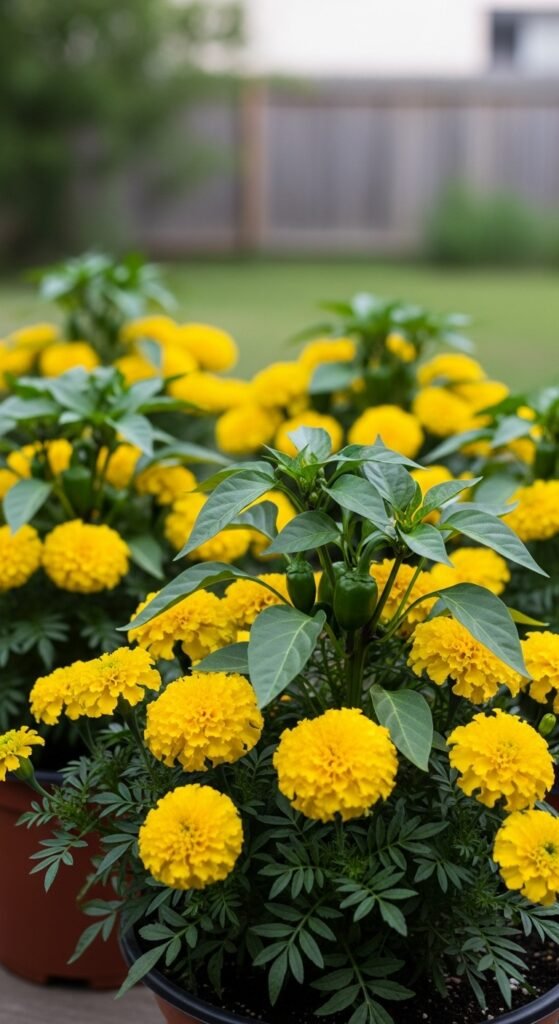
Healthier peppers mean more fruits and less hassle. Monitor weekly and use neem oil if needed. This eco-friendly approach supports pollinators too.
10) Succession Planting Schedule
Stagger your pepper plantings every 2-3 weeks in multiple pots for continuous harvest. Start with early varieties and follow with longer-season ones.
You’ll avoid gluts and enjoy fresh peppers all summer. Use seed trays for starters and transplant carefully. This maximizes space and extends the season.
11) Decorative Pot Upcycling
Repurpose old buckets or tins into pepper pots with added drainage. Paint them for style, matching your decor. This budget-friendly idea adds personality.
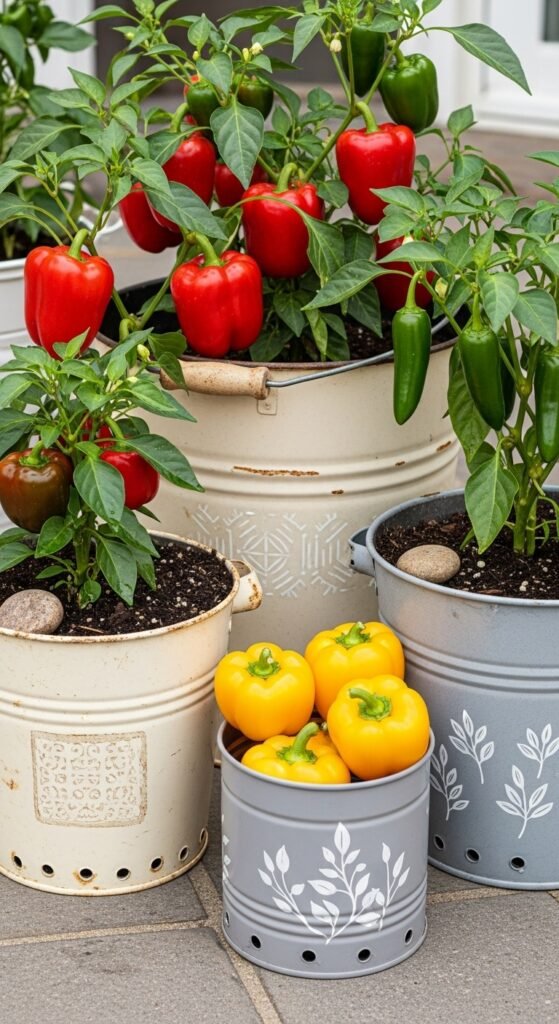
Thriving peppers in unique containers enhance your space. Ensure proper size and soil. It’s a creative twist on traditional gardening.
12) Fertilizer Tea Brewing
Create homemade fertilizer tea from compost or worm castings for your potted peppers. Steep in water and apply bi-weekly for nutrient boosts.
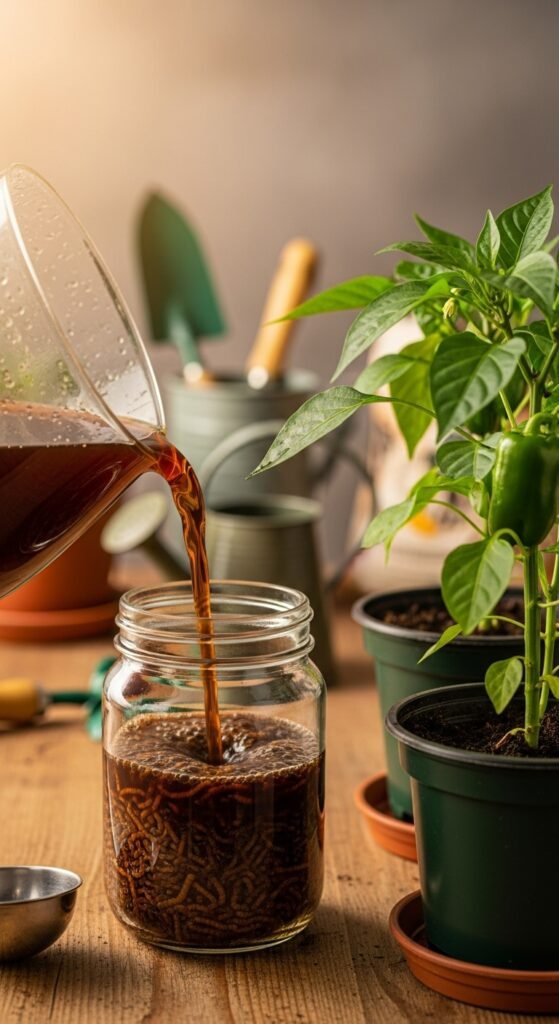
Stronger growth and bigger fruits follow. This organic method is cost-effective and sustainable. Strain before use to avoid clogs.
13) Shade Cloth Protection
Use shade cloth over pots during peak heat to prevent sunscald on peppers. Clip to stakes for easy adjustment.
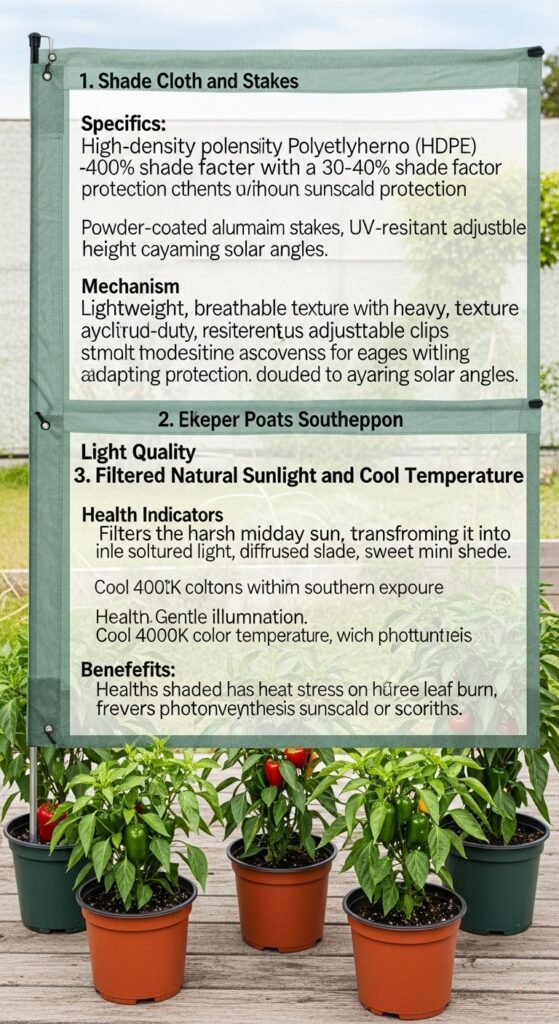
You’ll protect fruits while maintaining warmth. Ideal for southern exposures, it reduces water needs too. Remove in evenings for airflow.
14) Harvesting Technique Mastery
Harvest peppers by cutting stems to avoid plant damage. Pick when fully colored for best flavor.
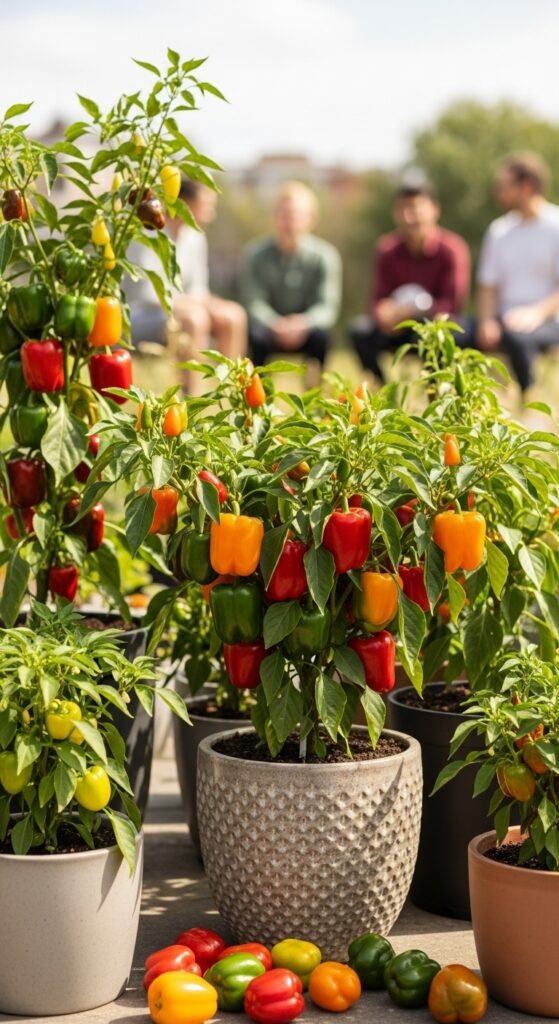
Regular harvesting encourages more production. Store in cool spots or preserve. This ensures peak taste and plant health.
15) Community Sharing Pots
Grow extra peppers in pots to share with neighbors, fostering community. Choose prolific varieties for abundance.
You’ll build connections while enjoying surplus. This social aspect adds joy to gardening.
Key Principles for Successful Peppers in Pots
Soil and Drainage Essentials
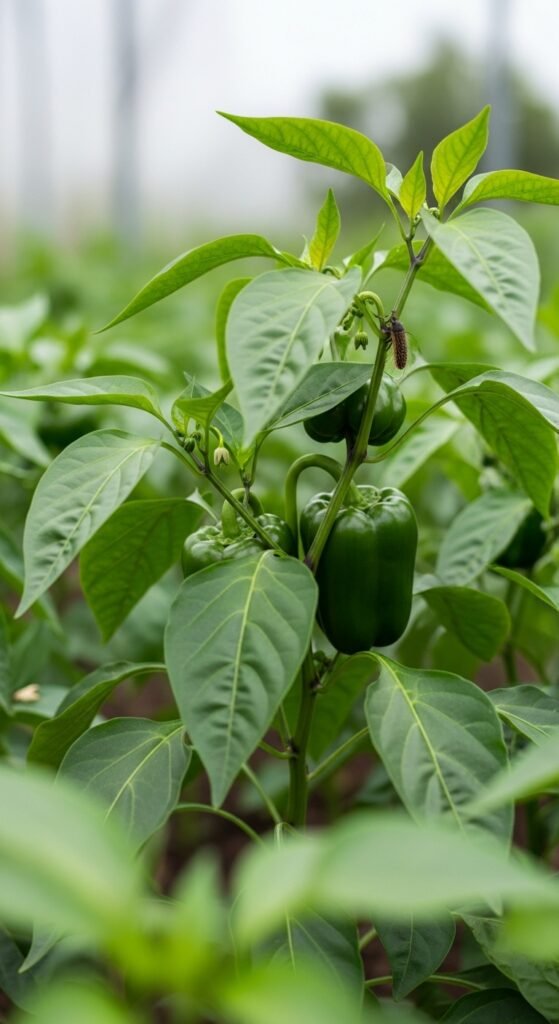
Always prioritize well-draining soil to prevent root issues. Mix in perlite or sand for aeration.
Watering and Feeding Routine
Establish a consistent schedule, checking soil moisture daily. Use balanced fertilizers for optimal growth.
Pest and Disease Monitoring
Inspect plants regularly and act early on problems. Natural remedies keep your setup healthy.
Frequently Asked Questions
What size pot is best for peppers?
A 5-10 gallon pot works well, depending on variety, to allow root expansion.
How often should I water potted peppers?
Water when the top inch of soil feels dry, typically 2-3 times weekly in summer.
Can peppers grow in shade?
They prefer full sun but can tolerate partial shade with reduced yields.
Why are my pepper leaves turning yellow?
This could indicate overwatering, nutrient deficiency, or pests—check soil and foliage.
When to harvest peppers?
Pick when they reach desired size and color for best flavor and continued production.