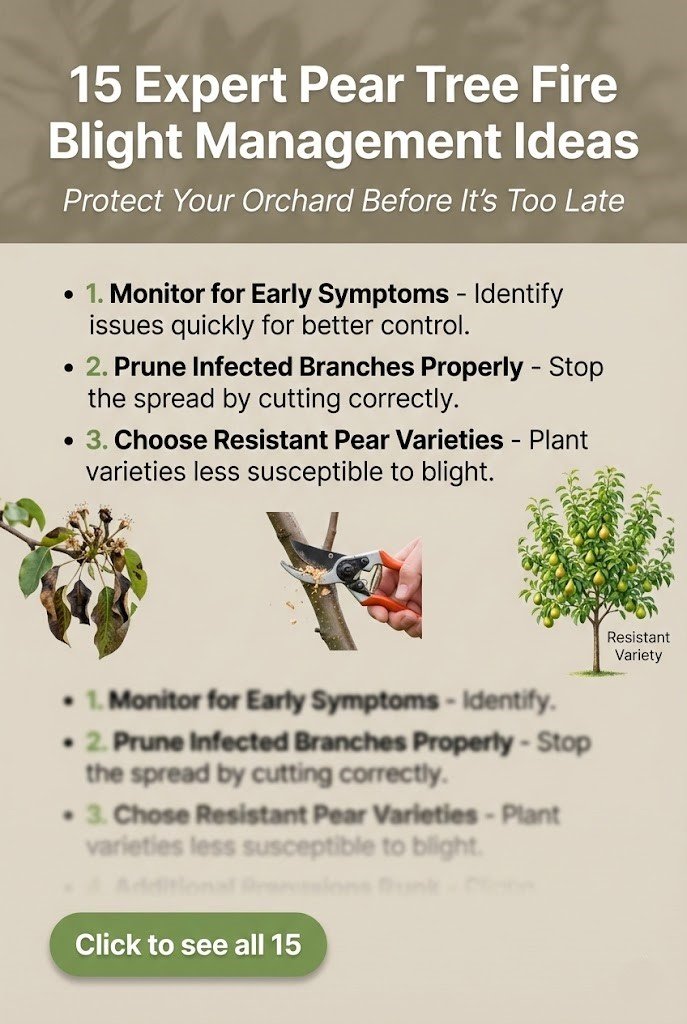
Fire blight is a devastating bacterial disease that can wreak havoc on your pear trees, causing wilting, blackening of branches, and significant fruit loss if left unchecked. Caused by the bacterium Erwinia amylovora, it spreads rapidly in warm, moist conditions, making early detection and proactive management essential for maintaining a healthy orchard. As a gardener, you face the challenge of balancing prevention with treatment to safeguard your trees and ensure bountiful harvests.
Understanding the value of these strategies goes beyond mere survival; implementing them can enhance your pear trees’ resilience, reduce chemical dependency, and promote overall ecosystem health. By incorporating these ideas, you’ll not only combat fire blight effectively but also foster stronger, more productive trees. This guide provides practical, step-by-step advice tailored to your needs, drawing on proven horticultural practices.
Whether you’re dealing with an outbreak or aiming to prevent one, these management ideas offer comprehensive solutions. You’ll learn how to integrate cultural, biological, and chemical approaches for optimal results, considering factors like climate, tree variety, and orchard size.
1) Monitor for Early Symptoms
You start by regularly inspecting your pear trees for the first signs of fire blight, such as wilting blossoms, shepherd’s crook-shaped shoots, and oozing cankers. Early detection allows you to act swiftly, preventing widespread infection. Why is this crucial? The bacteria multiply quickly in spring, and missing initial symptoms can lead to irreversible damage, reducing your yield by up to 50% or more.
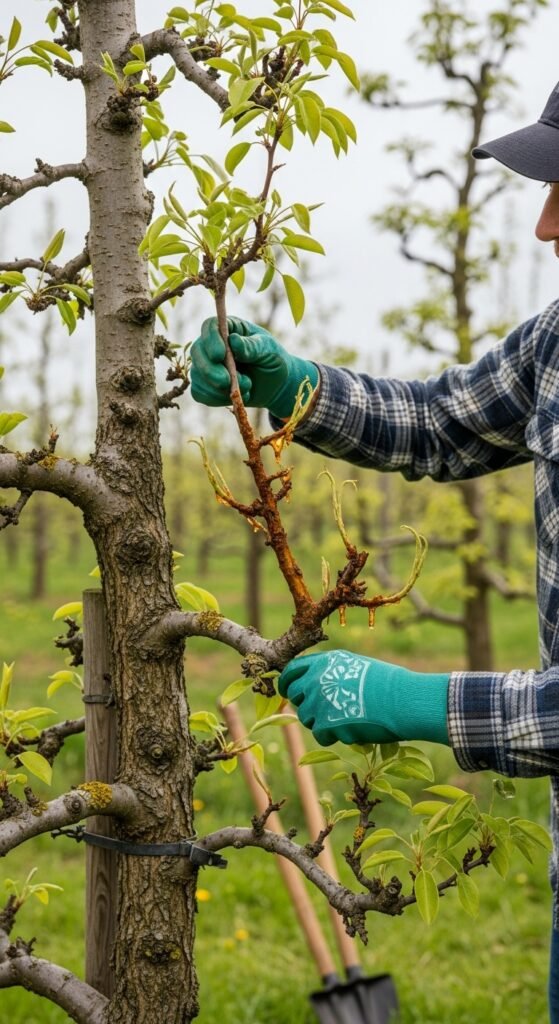
To implement this, schedule weekly checks during bloom time, using a magnifying glass to spot bacterial ooze. Remove and destroy affected parts immediately, ensuring tools are sanitized between cuts. This proactive approach minimizes spread and integrates well with other strategies, like identifying common plant diseases in your garden.
Consider environmental factors; humid weather accelerates symptoms, so adjust your monitoring frequency accordingly. By staying vigilant, you empower yourself to maintain tree health without resorting to extreme measures later.
2) Prune Infected Branches Properly
You tackle fire blight by pruning out diseased wood at least 8-12 inches below visible symptoms, using sharp, sterilized shears to avoid spreading the bacteria. This removes infection sources, promoting healthier regrowth and airflow. The reason it works is that fire blight travels through vascular tissues, so thorough cuts halt its progress, potentially saving the entire tree.
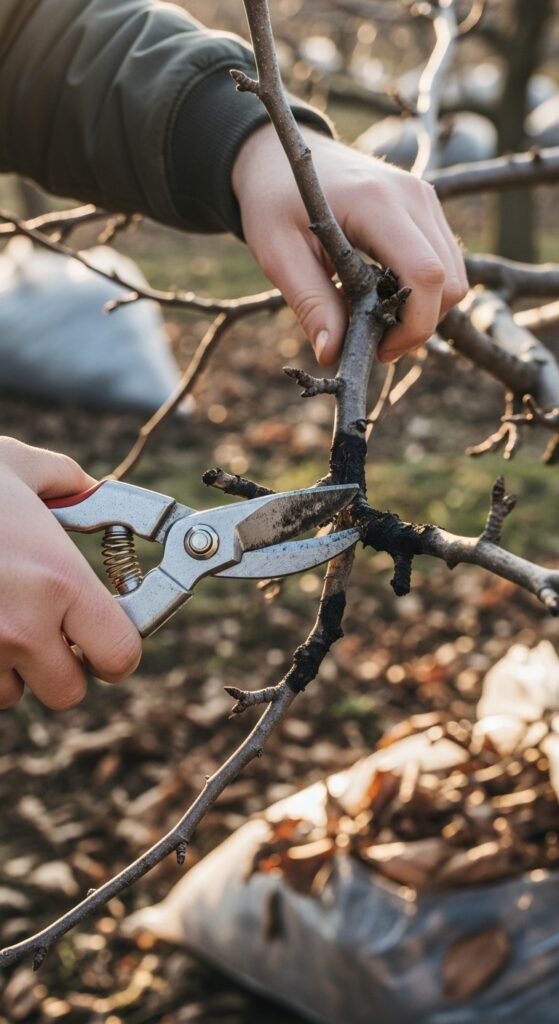
How do you do it? Prune during dry winter dormancy when bacteria are less active, disposing of clippings by burning or bagging—never composting. For guidance on technique, refer to established methods like those for pear tree pruning. This not only controls the disease but also shapes your tree for better fruit production.
Be mindful of tree age; young trees recover faster from pruning. Combining this with sanitation practices ensures long-term orchard vitality, reducing recurrence risks.
3) Choose Resistant Pear Varieties
You select fire blight-resistant cultivars like ‘Moonglow’ or ‘Magness’ when planting new trees, as they have genetic traits that limit bacterial invasion. Resistance means fewer outbreaks and less maintenance, saving you time and resources. Why prioritize this? Susceptible varieties like ‘Bartlett’ suffer severe losses, while resistant ones yield reliably even in prone areas.
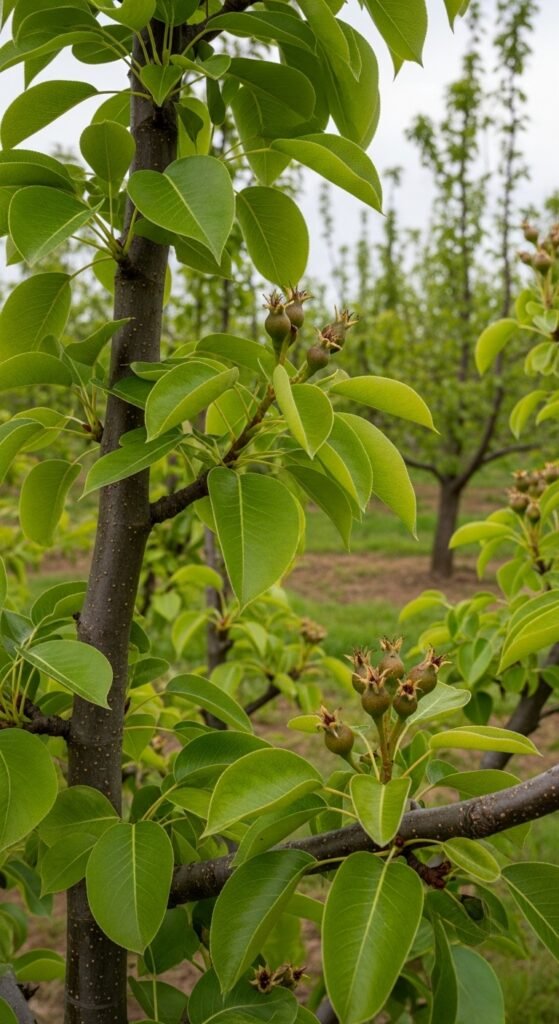
To apply this idea, research local nurseries for certified resistant stock, considering your climate and soil. Plant them with adequate spacing to enhance airflow, reducing humidity that favors the disease. This strategy complements others, such as monitoring, for a layered defense.
Remember, no variety is immune, so combine with cultural practices. Over time, you’ll notice healthier trees and consistent harvests, transforming your gardening experience.
4) Apply Copper-Based Sprays
You use copper fungicides during dormancy and bloom to create a protective barrier against bacterial entry. These sprays suppress Erwinia amylovora effectively, minimizing infection without harming beneficial insects. The science behind it: copper ions disrupt bacterial cell walls, preventing colonization in vulnerable tissues.
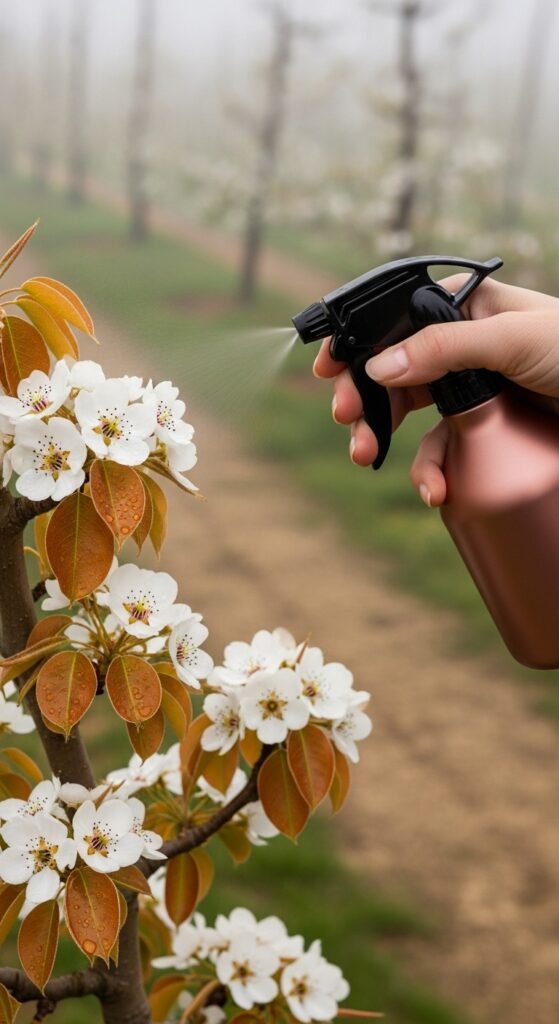
How to proceed? Mix according to label instructions and apply on calm days to avoid drift, targeting buds and flowers. For more on application, explore resources about copper-based fungicides. Repeat every 7-10 days during wet periods, but limit to prevent resistance buildup.
Consider organic alternatives if preferred, and always test on a small area first. This method integrates seamlessly with pruning, offering robust protection for your pears.
5) Avoid Excessive Nitrogen Fertilization
You moderate nitrogen inputs to prevent lush, susceptible growth that attracts fire blight. Balanced fertility strengthens tree defenses, leading to hardier wood and better disease resistance. Excess nitrogen promotes soft tissues, ideal for bacterial penetration, increasing infection risk.
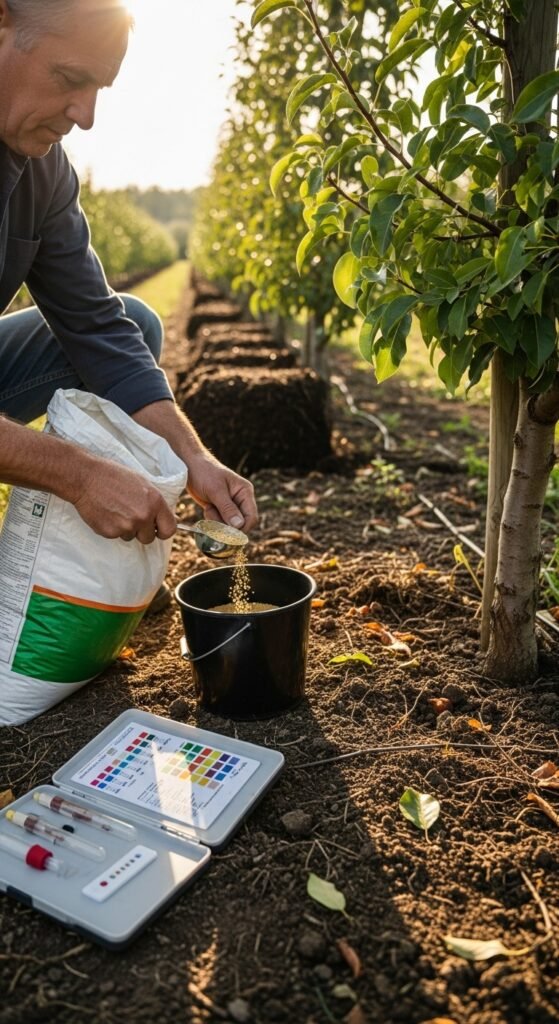
Implement by soil testing annually and using slow-release fertilizers with lower nitrogen ratios in spring. Focus on potassium and phosphorus for root health. This approach not only curbs fire blight but enhances fruit quality.
In high-risk zones, reduce applications by 50% and monitor growth. You’ll achieve sustainable orchard management, with trees less prone to stress-related issues.
6) Ensure Proper Irrigation Practices
You adopt drip irrigation to keep foliage dry, reducing humidity that fosters bacterial spread. This conserves water while directly targeting roots, promoting deep growth and resilience. Overhead watering splashes bacteria, exacerbating outbreaks in pear trees.
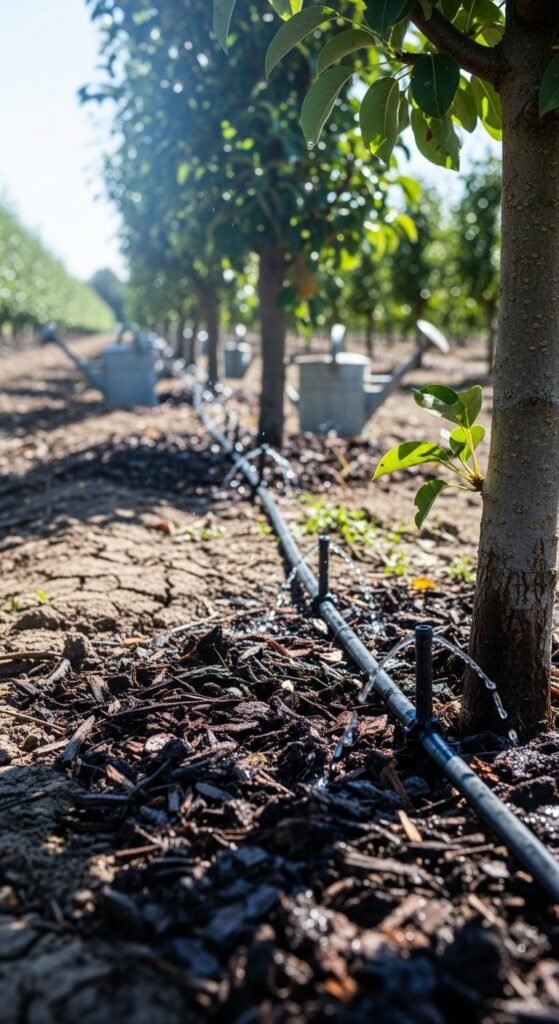
To set it up, install emitters at the tree base and water deeply but infrequently, aiming for 1-2 inches weekly. Mulch around trunks to retain moisture. This technique pairs well with spacing strategies for optimal airflow.
Adjust for rainfall; overwatering weakens defenses. By mastering this, you’ll see fewer infections and vibrant, productive trees.
7) Sanitize Tools and Equipment
You disinfect pruning tools with 10% bleach or alcohol between cuts to eliminate bacterial residues. Proper sanitation halts cross-contamination, protecting healthy trees from inadvertent spread. Neglecting this can turn a single infected branch into a orchard-wide epidemic.
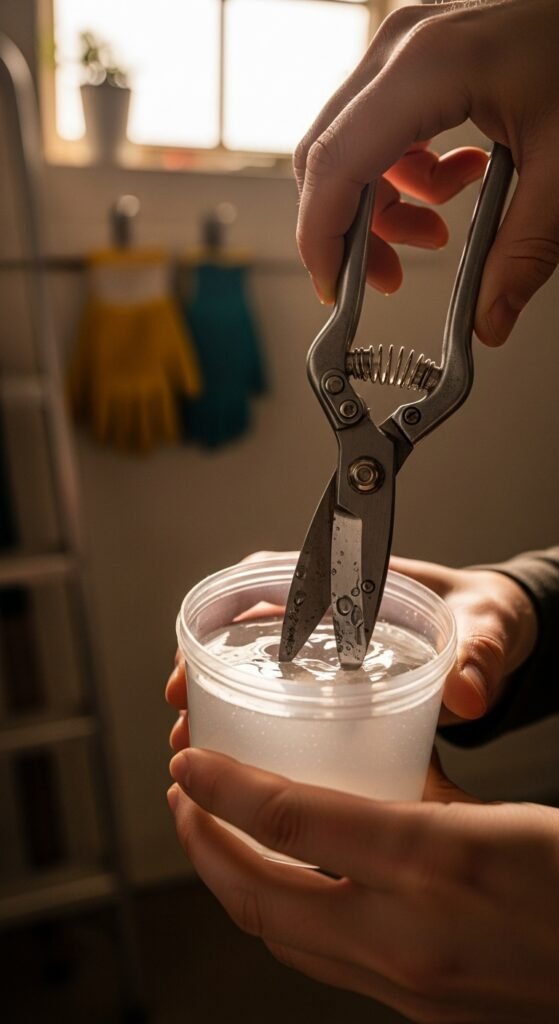
How? Dip tools for 30 seconds, rinse, and dry. Extend to ladders and gloves. This simple habit, done consistently, amplifies the effectiveness of other controls.
In large orchards, dedicate tools per tree. You’ll foster a cleaner environment, reducing overall disease pressure.
8) Remove and Destroy Infected Debris
You clear fallen leaves, fruits, and prunings promptly, burning or burying them away from the orchard. This eliminates overwintering sites for bacteria, breaking the disease cycle. Debris harbors pathogens, leading to spring reinfections.
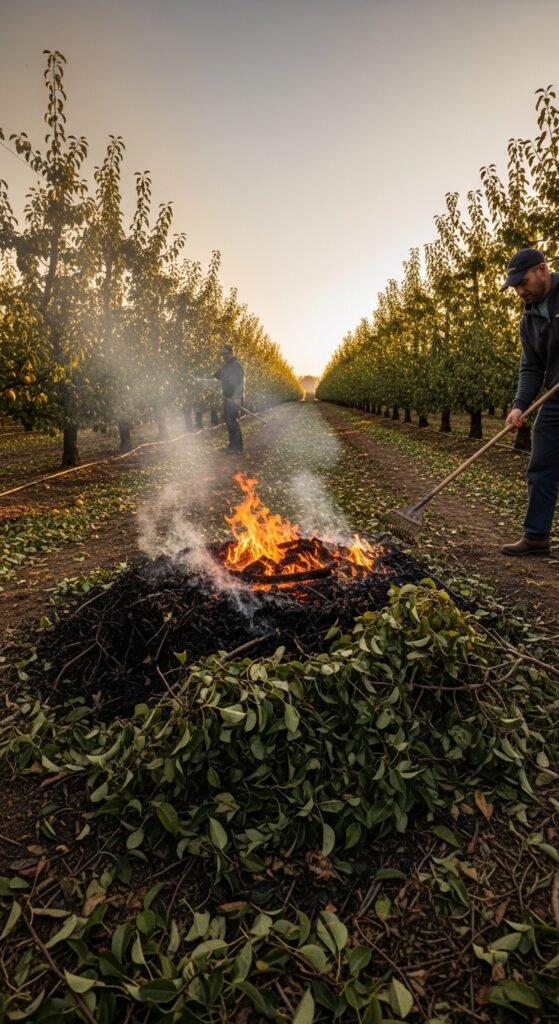
Execute after pruning or harvest, using rakes and bags for disposal. Avoid composting infected material. This cultural practice supports biological balance in your garden.
Combine with monitoring for comprehensive control. Over seasons, you’ll notice diminished incidence, allowing focus on growth.
9) Optimize Tree Spacing and Airflow
You plant pear trees 15-20 feet apart to enhance ventilation, drying foliage quickly after rain. Good airflow discourages bacterial proliferation, resulting in healthier canopies. Crowded trees trap moisture, ideal for fire blight.
Plan layouts with prevailing winds in mind, thinning inner branches as needed. This setup also eases maintenance and harvesting.
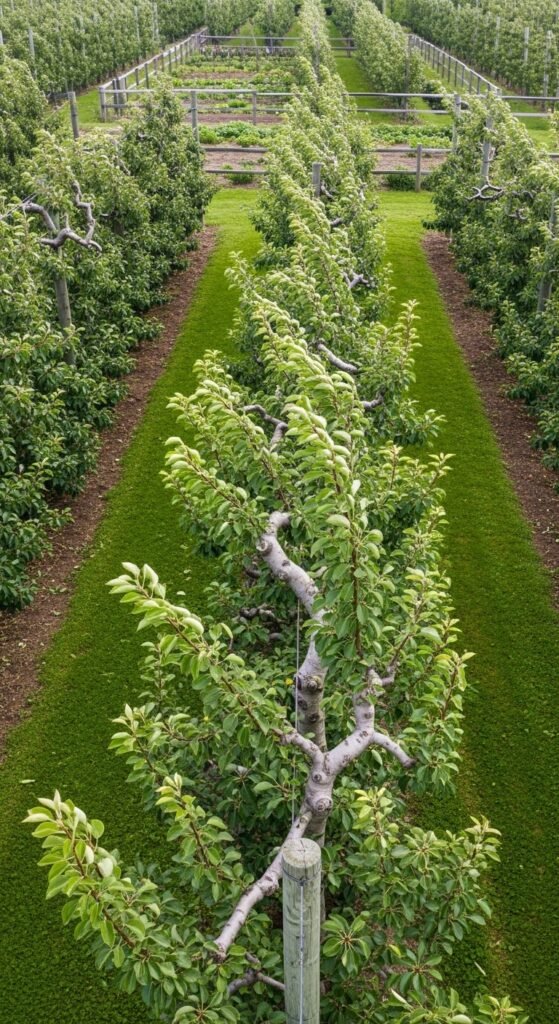
For established orchards, selective pruning helps. You’ll enjoy reduced humidity-related issues and stronger trees.
10) Utilize Biological Control Agents
You introduce beneficial bacteria like Bacillus subtilis to compete with Erwinia amylovora on blossoms. These agents provide natural suppression, eco-friendly and sustainable. They colonize surfaces, denying pathogens entry points.
Apply during bloom via sprays, following product guidelines. This method reduces chemical use, benefiting pollinators.
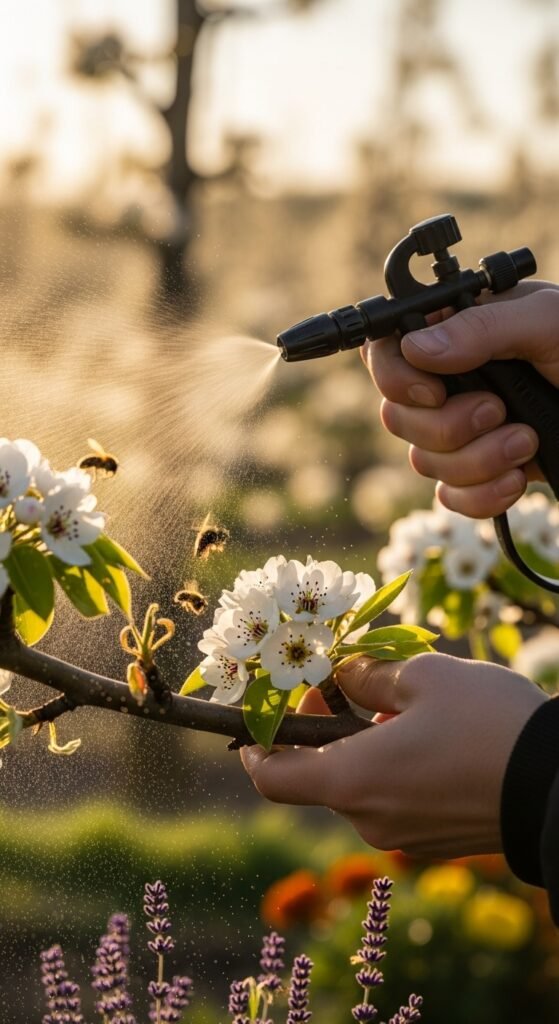
Monitor efficacy and reapply as needed. Integrated with copper, it offers multi-faceted protection.
11) Time Chemical Treatments Strategically
You apply antibiotics like streptomycin during bloom when infection risk peaks, based on weather forecasts. Targeted use maximizes control while minimizing resistance development. Timing aligns with bacterial activity cycles.
Consult extension services for local recommendations, rotating chemicals. This preserves treatment options long-term.
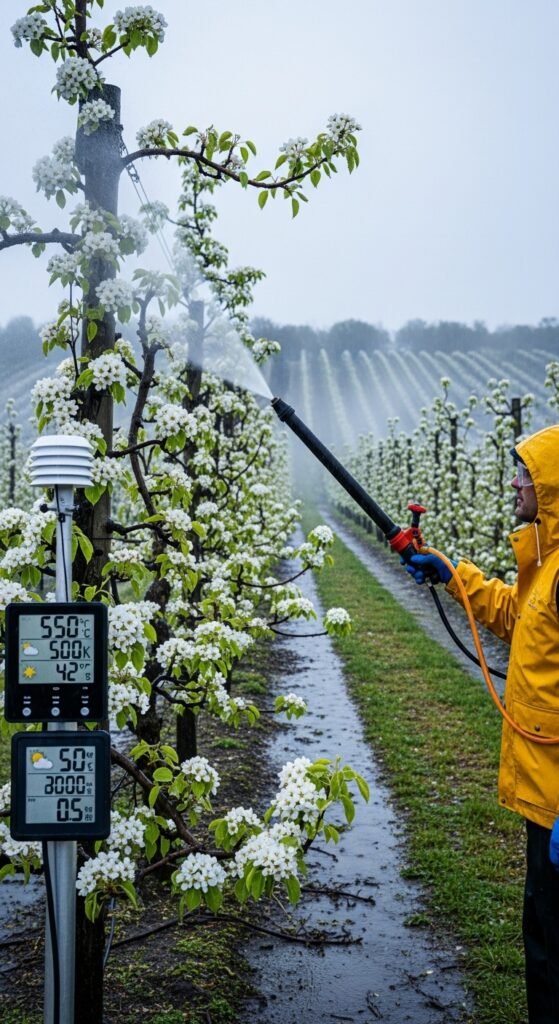
Avoid overuse; combine with cultural methods. You’ll achieve effective management with lower inputs.
12) Track Weather Patterns for Predictions
You use apps or stations to monitor temperature and humidity, predicting fire blight risks via models like Maryblyt. Forecasting enables preemptive actions, averting major outbreaks. Warm, wet conditions trigger infections.

Record data weekly, adjusting sprays accordingly. This data-driven approach optimizes resources.
In variable climates, it’s invaluable. You’ll gain confidence in proactive gardening.
13) Quarantine New Plants and Grafts
You isolate incoming pear stock for 1-2 seasons, observing for symptoms before integration. This prevents introducing infected material, safeguarding your orchard. Nurseries may harbor hidden diseases.
Inspect thoroughly upon arrival, rejecting suspicious plants. This vigilance maintains biosecurity.
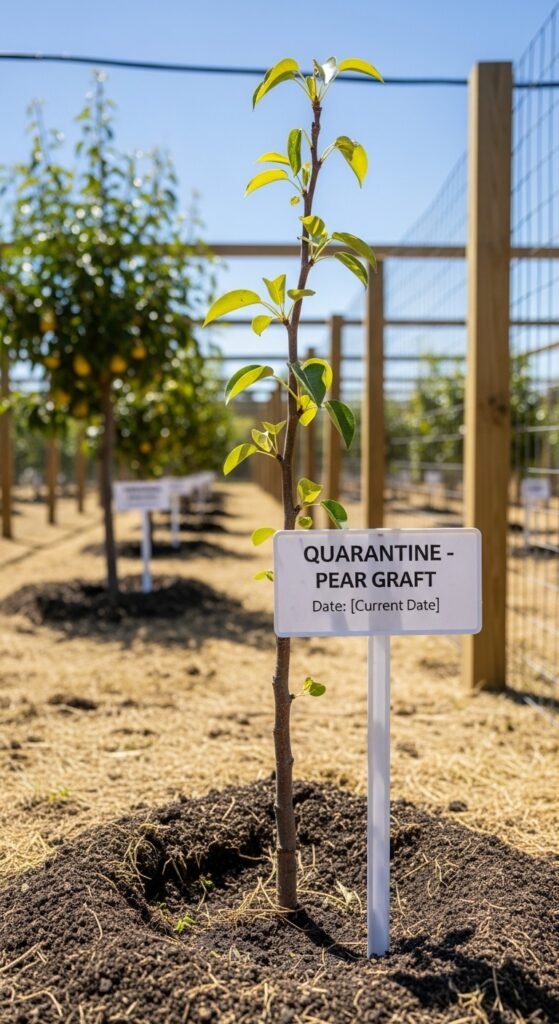
Especially for grafts, use certified sources. You’ll build a resilient collection over time.
14) Enhance Soil Health and Nutrition
You amend soil with organic matter to boost microbial diversity, indirectly bolstering tree immunity. Healthy soil supports vigorous roots, improving disease tolerance. Nutrient imbalances weaken defenses.
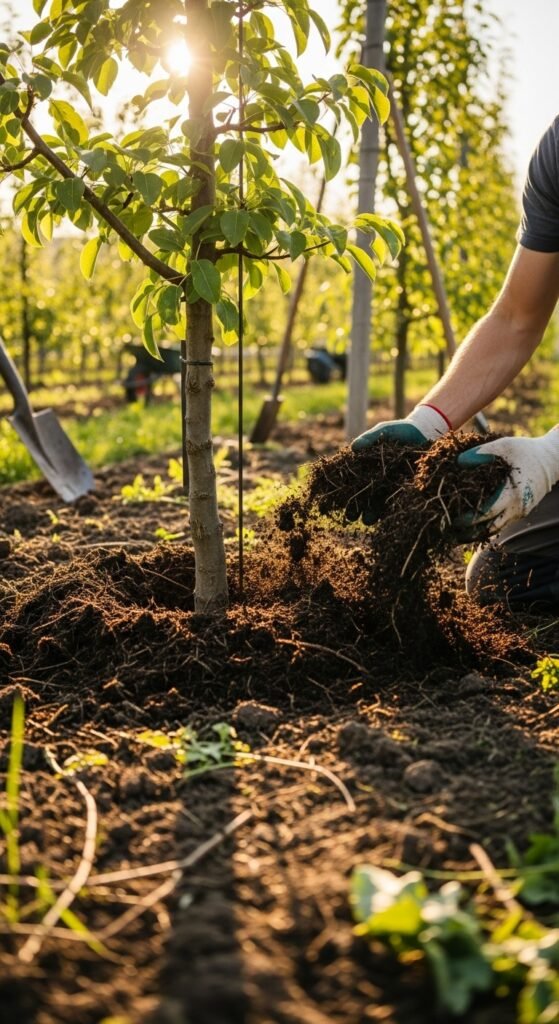
Test pH and add compost annually, avoiding excesses. This foundational practice underpins all others.
Observe improvements in growth. You’ll cultivate thriving, blight-resistant pears.
15) Seek Professional Consultation When Needed
You consult arborists or extension experts for severe cases, gaining tailored advice and diagnostics. Expert input resolves complex issues, preventing total loss. DIY limits may overlook nuances.
Schedule visits during outbreaks, implementing recommendations promptly. This collaboration elevates your skills.
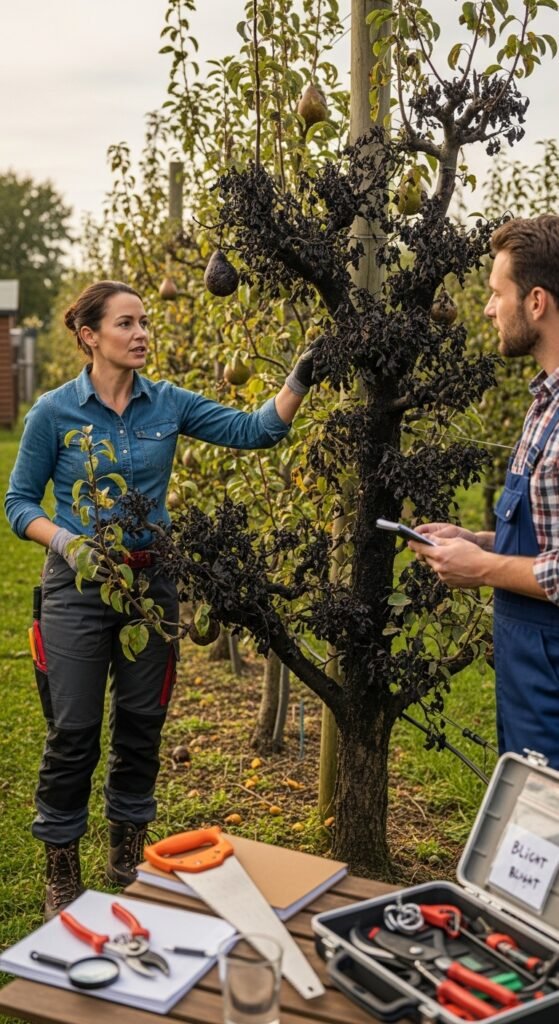
For large-scale problems, it’s essential. You’ll ensure orchard longevity and success.
Key Principles for Preventing Pear Tree Fire Blight
Integrated Pest Management (IPM)
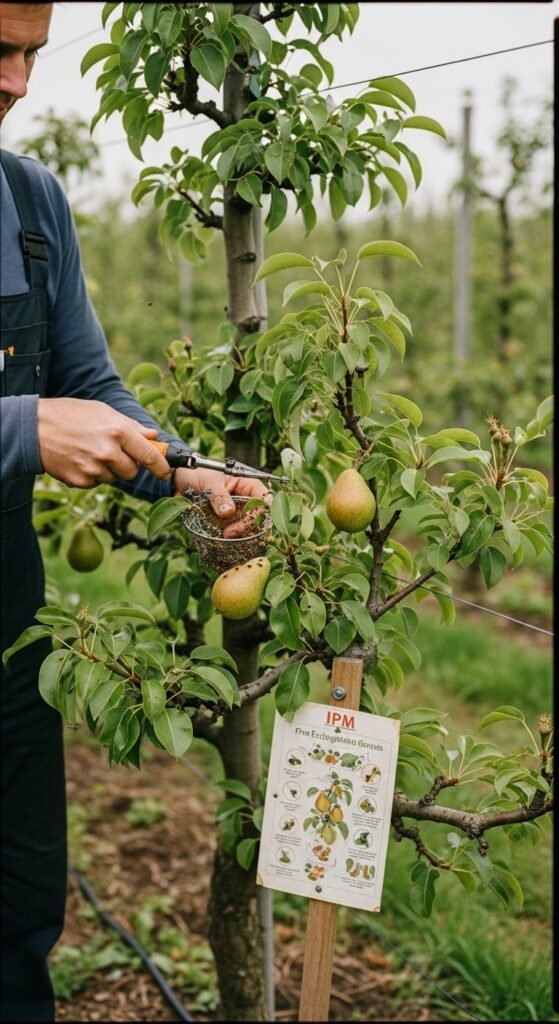
You embrace IPM by combining cultural, biological, and chemical tactics for holistic control. This reduces reliance on any single method, promoting sustainability and minimizing environmental impact.
Understanding Disease Lifecycle
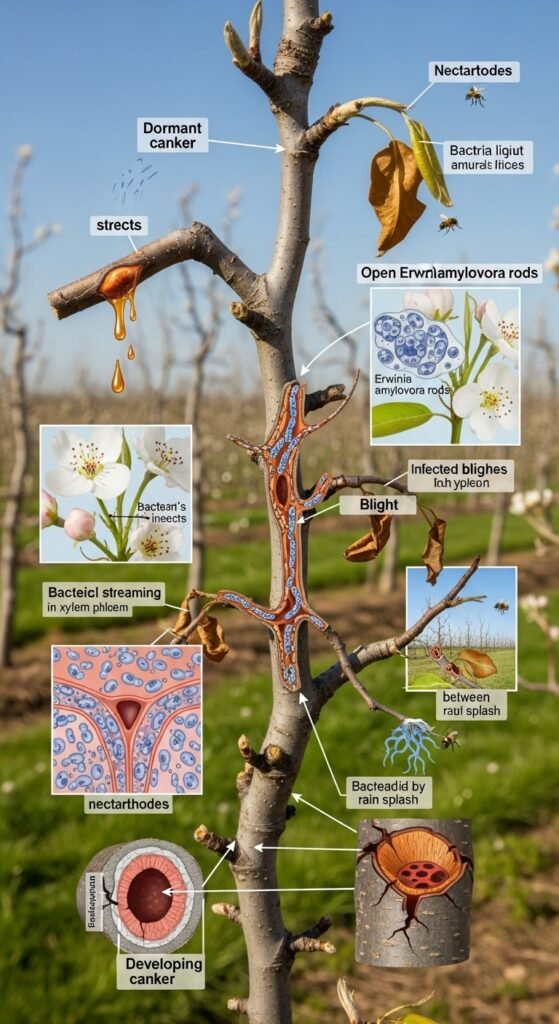
You study the bacterium’s overwintering in cankers and spring spread via insects or rain. Knowledge of this cycle informs timely interventions, breaking transmission chains effectively.
Long-Term Orchard Planning

You design orchards with diversity, including companion plants that deter pests. Forward-thinking layouts account for expansion, ensuring enduring health and productivity.
Frequently Asked Questions
What are the first signs of fire blight in pear trees?
The initial indicators include wilting flowers and young shoots that bend like a shepherd’s crook, followed by blackened tissues and bacterial ooze. Prompt recognition is key to containment.
Can fire blight spread to other fruit trees?
Yes, it affects members of the Rosaceae family, including apples, quinces, and hawthorns. Isolate infected pears to protect nearby susceptible plants.
Is there a cure for fire blight?
While not fully curable, management through pruning, sprays, and cultural practices can control it. Severely affected trees may need removal to prevent spread.
How often should I prune pear trees to prevent fire blight?
Prune annually in late winter, removing infected wood and shaping for airflow. Avoid summer pruning, which can invite infections.
Are organic methods effective against fire blight?
Organic approaches like copper sprays and biological agents work well for mild cases, especially when combined with sanitation and resistant varieties for comprehensive protection.