
Cultivating a passionfruit vine can transform your garden into a tropical paradise, offering not just vibrant flowers and lush foliage but also delicious, tangy fruits packed with vitamins. Passionfruit vine care involves understanding the plant’s needs for warmth, support, and nutrition to thrive. Native to subtropical regions, these vigorous climbers require attention to detail, but the rewards are well worth the effort, providing fresh produce for smoothies, desserts, or eating straight from the vine.
Whether you’re a seasoned gardener or just starting out, mastering passionfruit vine care ensures healthy growth and abundant yields. You’ll need to focus on aspects like soil quality, watering, and pest management while adapting to your local climate. With the right approach, your vine can produce fruit within a year, enhancing your outdoor space with its exotic appeal and supporting pollinators in the process.
From planting to harvesting, these tips cover the essentials to help you succeed. Embrace the journey of growing this rewarding plant, and you’ll enjoy both the beauty and bounty it brings to your home.
1) Select the Right Variety for Your Climate
You’ll want to start your passionfruit vine care journey by choosing a variety suited to your local conditions. Passionfruit vines, or Passiflora species, come in options like the hardy Passiflora incarnata for cooler zones or the tropical Passiflora edulis for warmer areas. Consider factors such as frost tolerance, fruit flavor, and growth habit—some are self-pollinating, while others need companions for better yields. Research local nurseries or extension services to identify varieties that perform well in your USDA hardiness zone, ensuring resilience against temperature fluctuations and diseases common to your region.
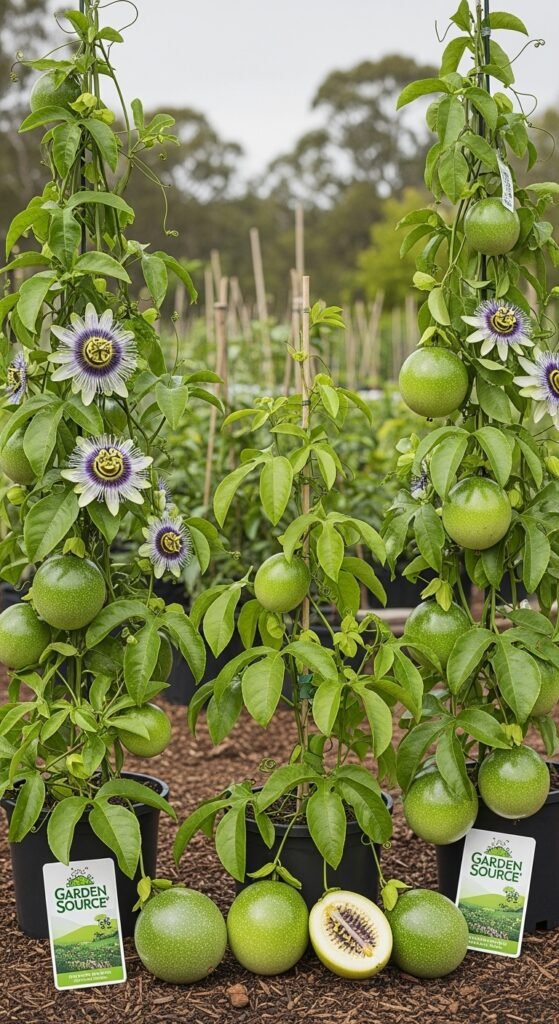
Why does variety matter? The right choice minimizes care challenges, promotes vigorous growth, and maximizes fruit production. For instance, in subtropical climates, purple passionfruit thrives with its sweet-tart fruits, but in temperate areas, you might opt for hybrids that withstand light frosts. This prevents issues like poor pollination or vine dieback, saving you time and resources in the long run.
To implement this, assess your garden’s microclimate, including sunlight exposure and wind protection. Purchase certified disease-free plants or seeds from reputable sources. If cross-pollination is needed, plant multiple vines or select self-fertile types. Monitor early growth for adaptation signs, adjusting with protective measures like mulch for cooler starts. This foundational step sets the stage for a thriving vine.
2) Choose an Ideal Planting Location
For optimal passionfruit vine care, select a spot with full sun exposure—at least six to eight hours daily—to fuel photosynthesis and fruit development. These vines prefer sheltered positions away from strong winds that could damage blossoms or young fruits. Ensure the site has well-draining soil to prevent root rot, and proximity to a sturdy support structure like a fence or arbor for the climbing tendrils.
The location is crucial because passionfruit vines are sensitive to cold and thrive in warm, humid environments similar to their native habitats. Poor site selection can lead to stunted growth, reduced flowering, or vulnerability to pests. A south-facing wall in cooler climates can provide extra warmth, while in hot areas, afternoon shade might prevent scorching.
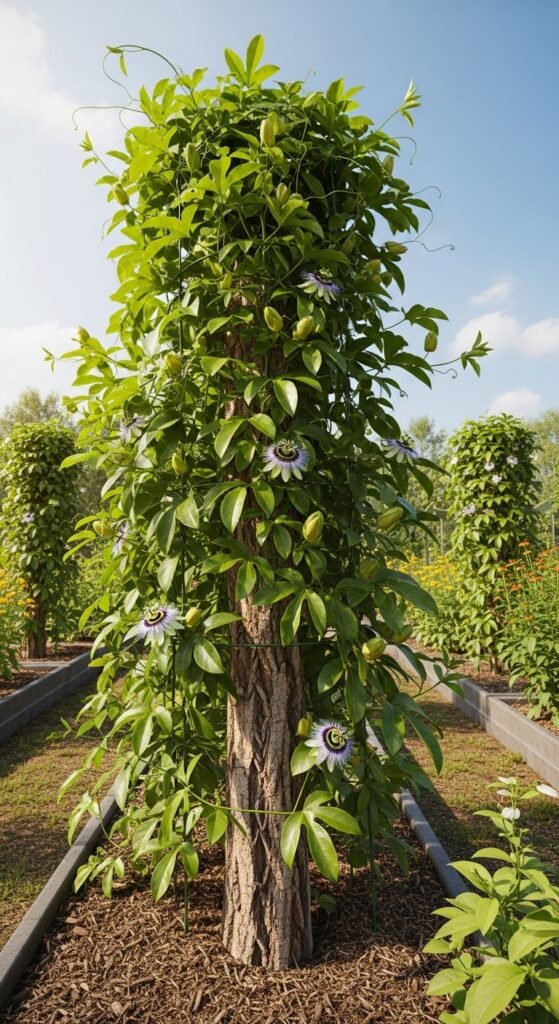
Prepare the area by testing soil pH (aim for 6.0-7.0) and amending with compost for fertility. Plant in spring after the last frost, spacing vines 8-12 feet apart for air circulation. If your garden lacks natural support, consider installing a trellis early. This setup not only supports healthy growth but also makes harvesting easier, contributing to long-term vine productivity.
3) Prepare the Soil Properly
Effective passionfruit vine care begins with soil preparation to create a nutrient-rich, well-aerated base. These vines favor slightly acidic to neutral soil with good drainage, so incorporate organic matter like compost or aged manure to improve structure and fertility. Avoid heavy clay soils that retain water, opting instead for loamy mixes that allow roots to expand freely.
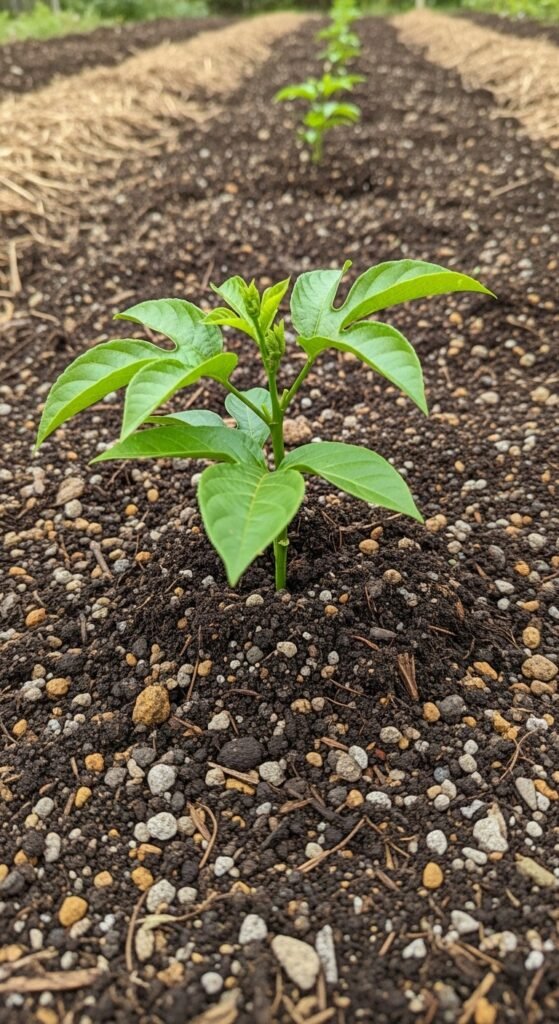
Why focus on soil? Passionfruit roots are shallow and susceptible to fungal diseases in soggy conditions, while nutrient deficiencies can hinder flowering and fruit set. Proper preparation ensures steady nutrient uptake, supporting robust vines and flavorful fruits. It also enhances water retention in sandy soils, balancing moisture levels for consistent growth.
Test your soil’s pH and adjust with lime if too acidic or sulfur if alkaline. Dig a hole twice the root ball’s width, mixing in slow-release fertilizer. For ongoing health, apply a layer of mulch to suppress weeds and retain moisture. If planting in containers, use a high-quality potting mix. This groundwork pays off with vigorous vines less prone to stress.
4) Plant at the Optimal Time and Depth
In passionfruit vine care, timing your planting is key—aim for spring in most regions when soil warms to 60°F (15°C) and frost risk passes. Plant seedlings or grafted vines at the same depth as their nursery pot, ensuring the graft union sits above soil level to prevent rot. Space them adequately for airflow and support attachment.
Correct planting promotes quick establishment and reduces transplant shock, allowing roots to anchor firmly before summer heat. Improper depth can cause stem rot or weak growth, while untimely planting exposes young vines to cold snaps or excessive rain, impacting long-term vitality and yield.
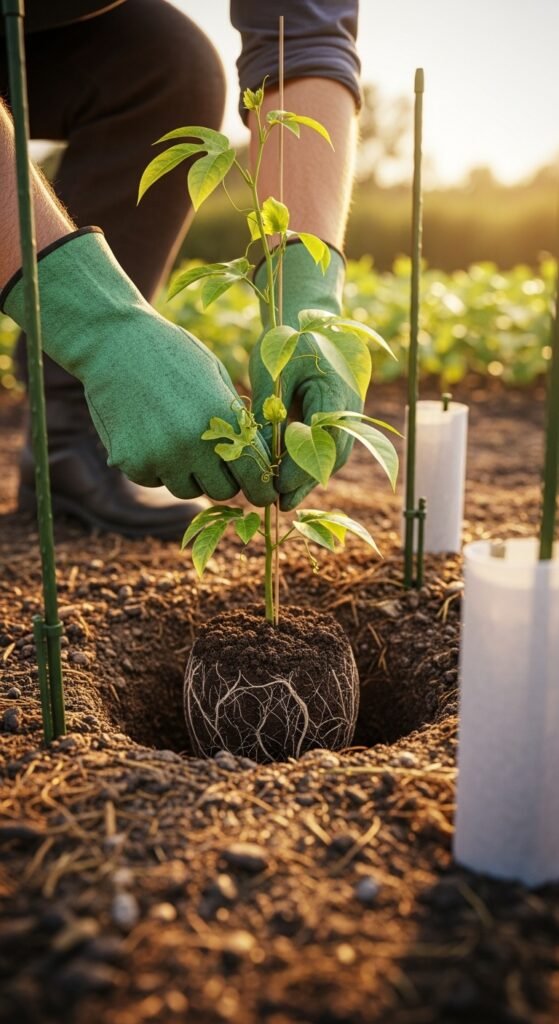
Water deeply after planting to settle soil, then mulch around the base. In cooler climates, use row covers for protection. Monitor for settling and adjust soil as needed. This method encourages deep rooting, resilience to drought, and early flowering, setting your vine up for success from the start.
5) Provide Sturdy Support Structures
Passionfruit vines are vigorous climbers needing strong supports as part of essential care. Install a trellis, arbor, or wire framework at planting to guide growth upward, preventing tangling and improving sun exposure. Materials like galvanized wire or bamboo offer durability against the vine’s weight when fruit-laden.
Support is vital because unsupported vines sprawl on the ground, increasing disease risk from moisture and pests. Proper structures enhance air circulation, reduce fungal issues, and make maintenance like pruning easier. They also maximize space in smaller gardens, turning vertical areas into productive zones.
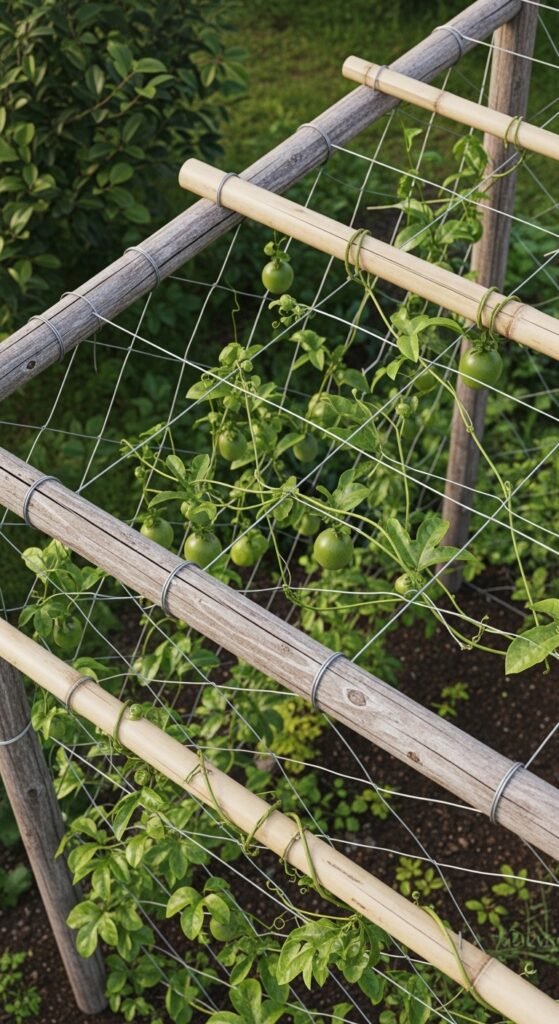
Build your support at least 6-8 feet tall, anchoring firmly. Train tendrils gently onto it, tying loosely if needed. For inspiration, explore various garden trellis ideas that suit your aesthetic. Regular checks ensure stability, especially during windy seasons, fostering a healthy, accessible vine for years.
6) Establish a Consistent Watering Schedule
Watering is a cornerstone of passionfruit vine care, requiring deep, regular moisture without waterlogging. Aim for 1-2 inches weekly, adjusting for rainfall and soil type—more in sandy soils, less in clay. Use drip irrigation to target roots efficiently, minimizing leaf wetness that invites diseases.
Consistent hydration supports fruit development and prevents blossom drop from stress. Overwatering leads to root rot, while underwatering causes wilting and poor yields. Monitoring soil moisture helps maintain the balance, especially during hot spells when evaporation increases.
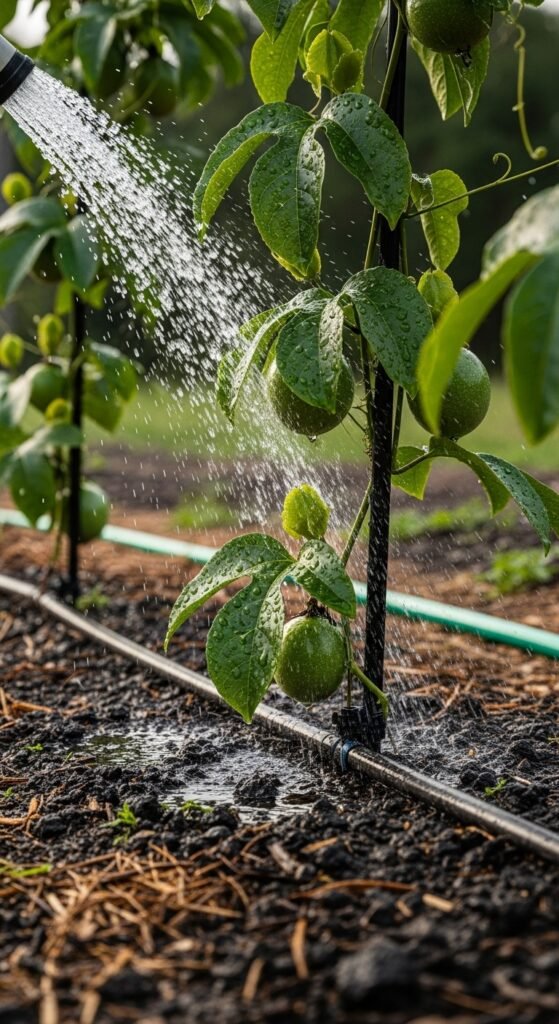
Water early in the morning to reduce evaporation losses. Mulch helps retain soil moisture and regulate temperature. In containers, check daily as they dry faster. Observe vine responses—yellow leaves may signal overwatering, curled ones underwatering—and adjust accordingly for optimal health and productivity.
7) Fertilize Appropriately for Growth and Fruiting
For thriving passionfruit vine care, fertilize with a balanced, low-nitrogen formula every 4-6 weeks during the growing season. Use organic options like compost tea or slow-release granules to provide essential nutrients without promoting excessive foliage over fruit.
Fertilization fuels vigorous growth, flowering, and fruit set, compensating for soil deficiencies. Too much nitrogen encourages leaves at the expense of fruits, while deficiencies cause yellowing or stunted development. Tailored feeding ensures nutrient availability at key stages, boosting overall yield and plant resilience.
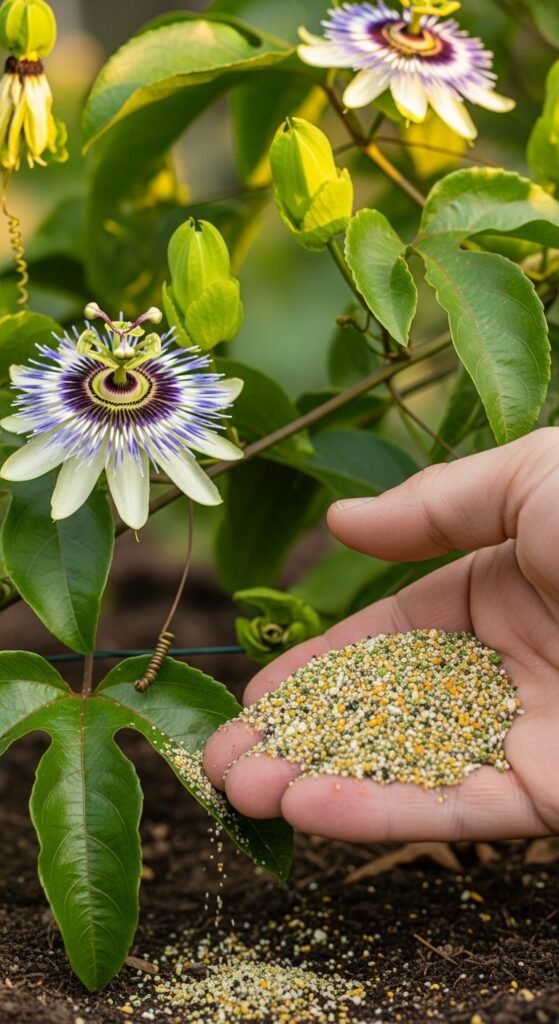
Apply after watering to prevent root burn, focusing around the drip line. In fall, switch to potassium-rich blends for winter hardiness. Test soil periodically to guide amendments. This targeted approach, perhaps incorporating organic fertilizer for vegetables, sustains healthy vines and abundant harvests.
8) Prune Regularly to Promote Health and Productivity
Pruning is essential in passionfruit vine care to shape the plant, remove dead wood, and encourage new growth. Trim in late winter or early spring, cutting back to 3-5 main stems and shortening laterals to 2-3 buds for better light penetration and air flow.
Regular pruning prevents overcrowding, reduces disease risk, and directs energy to fruit production. Overgrown vines become tangled, shading fruits and harboring pests. Proper cuts stimulate vigorous shoots, leading to more flowers and higher yields while keeping the plant manageable.
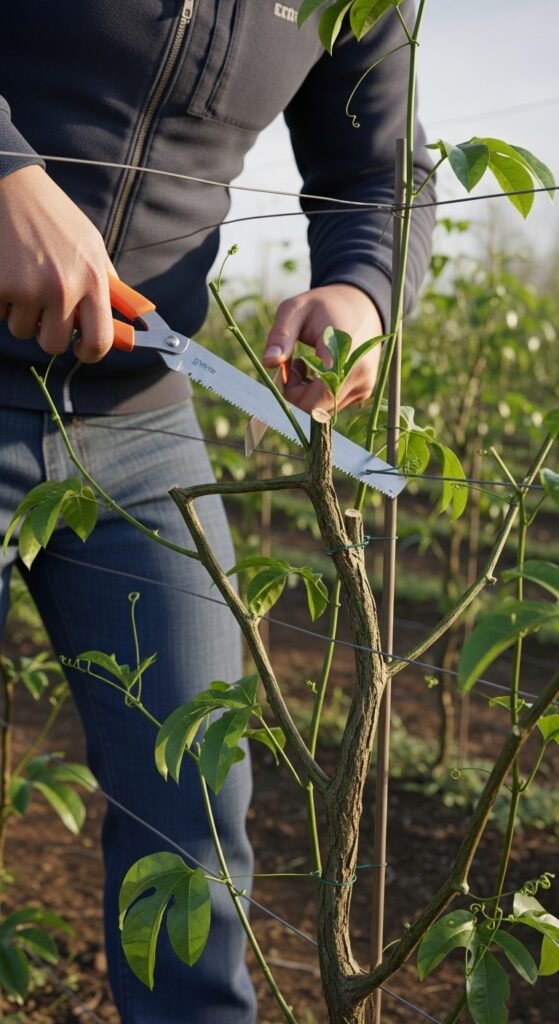
Use sharp, clean tools for angled cuts above buds. After fruiting, prune spent stems. For techniques on similar plants, reference how to prune grapevines. Monitor for regrowth and thin as needed, ensuring a balanced structure that supports heavy fruit loads.
9) Encourage Pollination for Better Fruit Set
In passionfruit vine care, pollination is key for fruit development, often relying on bees or hand methods. Plant pollinator-attracting flowers nearby to boost bee activity, or gently transfer pollen between blooms using a soft brush if natural pollination is low.
Adequate pollination ensures full fruit formation, preventing empty husks or low yields. Many varieties need cross-pollination, and poor weather or pesticide use can reduce pollinator visits, impacting harvest quality and quantity.
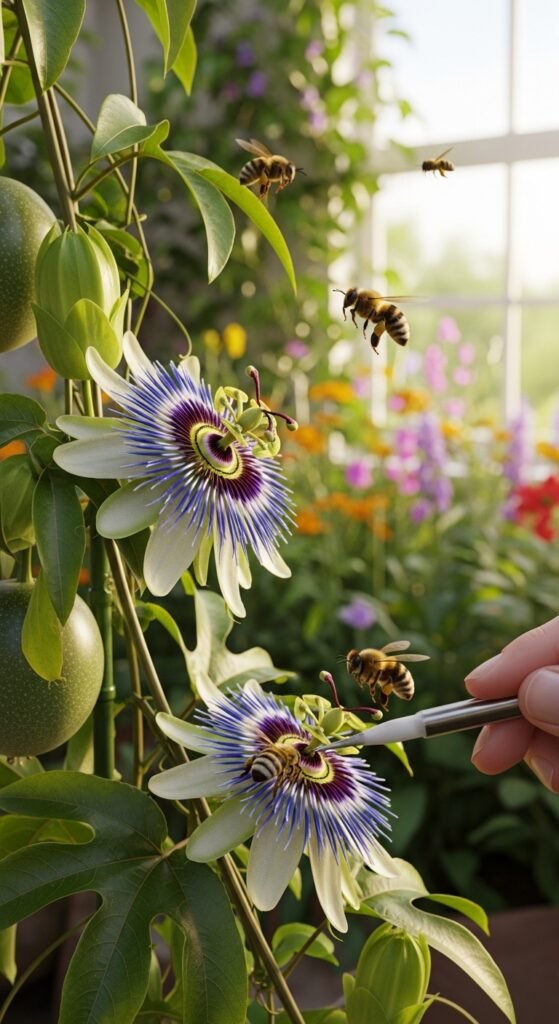
Time hand-pollination for mornings when flowers open. Avoid overhead watering during bloom to preserve pollen. Enhance your garden with pollinator-friendly flowers for sustained activity. This proactive step maximizes fruit set, turning beautiful blooms into bountiful produce.
10) Monitor and Control Common Pests
Passionfruit vine care includes vigilant pest monitoring for aphids, spider mites, and fruit flies that can damage foliage and fruits. Use insecticidal soaps or neem oil for organic control, applying in evenings to avoid harming beneficial insects.
Pest management prevents defoliation, reduced vigor, and fruit spoilage, preserving plant health and yield. Early detection curbs infestations, minimizing chemical use and environmental impact while maintaining ecological balance.
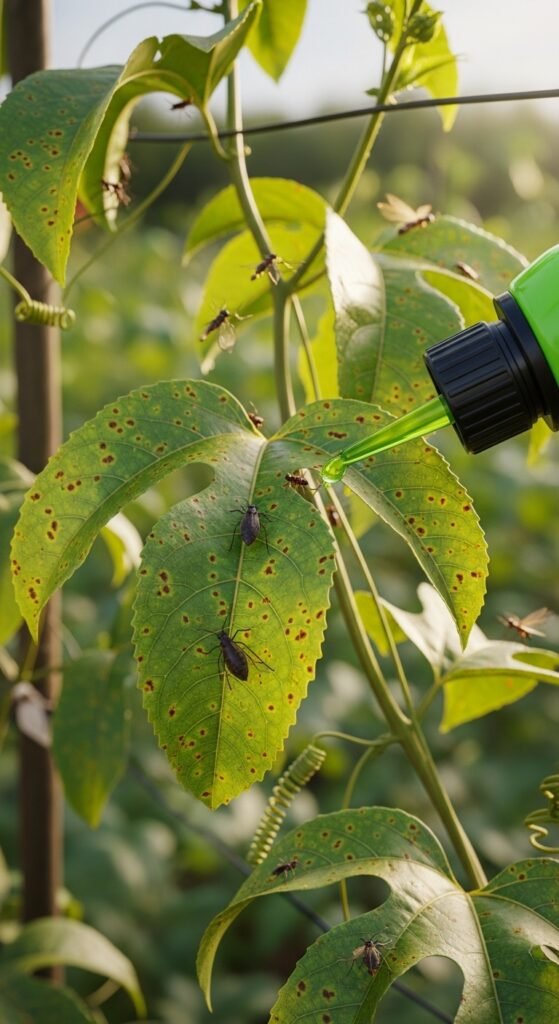
Inspect undersides of leaves weekly, removing affected parts. Encourage natural predators like ladybugs. For persistent issues, rotate treatments to prevent resistance. This integrated approach keeps your vine robust and productive throughout the season.
11) Prevent and Treat Diseases Promptly
Disease prevention in passionfruit vine care involves good hygiene, like removing debris and ensuring air circulation. Common issues include fusarium wilt and anthracnose; treat with fungicides or resistant varieties, avoiding overhead watering to reduce fungal spread.
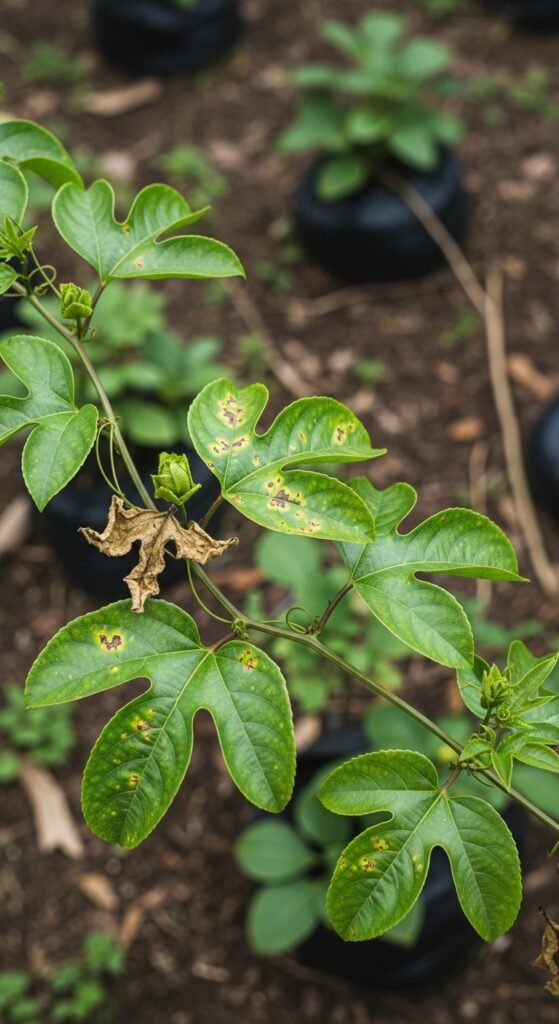
Timely intervention stops disease progression, safeguarding vine longevity and fruit quality. Untreated infections can weaken plants, leading to dieback or total loss, affecting future seasons’ productivity.
Quarantine new plants and sterilize tools. Apply copper-based sprays preventively in humid conditions. Monitor for symptoms like leaf spots or wilting, acting swiftly. This diligence maintains a healthy, resilient vine ecosystem.
12) Harvest Fruits at Peak Ripeness
Harvest passionfruits when they drop or turn fully colored, a critical part of vine care to encourage continued production. Gently twist or cut fruits, storing at room temperature until wrinkled for sweetest flavor.
Proper harvesting timing maximizes taste and nutrition, signaling the vine to produce more. Picking too early yields sour fruits, while overripe ones may spoil quickly, wasting potential.
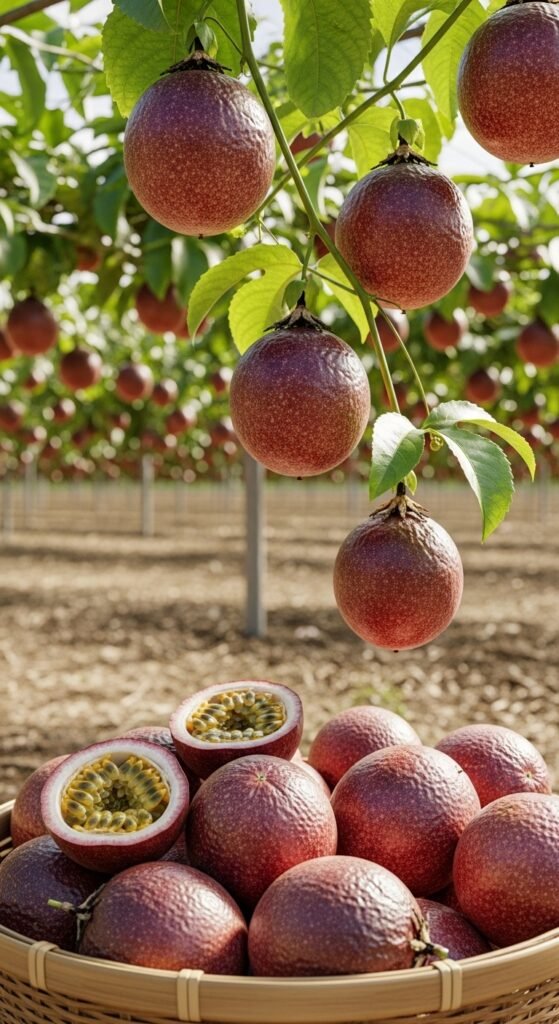
Check vines daily during peak season, using baskets to avoid bruising. Refrigerate ripe fruits for extended freshness. This practice not only rewards your efforts but sustains vine health for ongoing cycles.
13) Protect Vines During Winter Months
For passionfruit vine care in cooler climates, overwinter by mulching roots heavily and covering with frost cloth. In zones below 9, consider container growing for indoor relocation during cold snaps.
Winter protection prevents root freeze and stem damage, ensuring spring regrowth. Exposure to prolonged cold can kill vines, disrupting perennial cycles and requiring replanting.
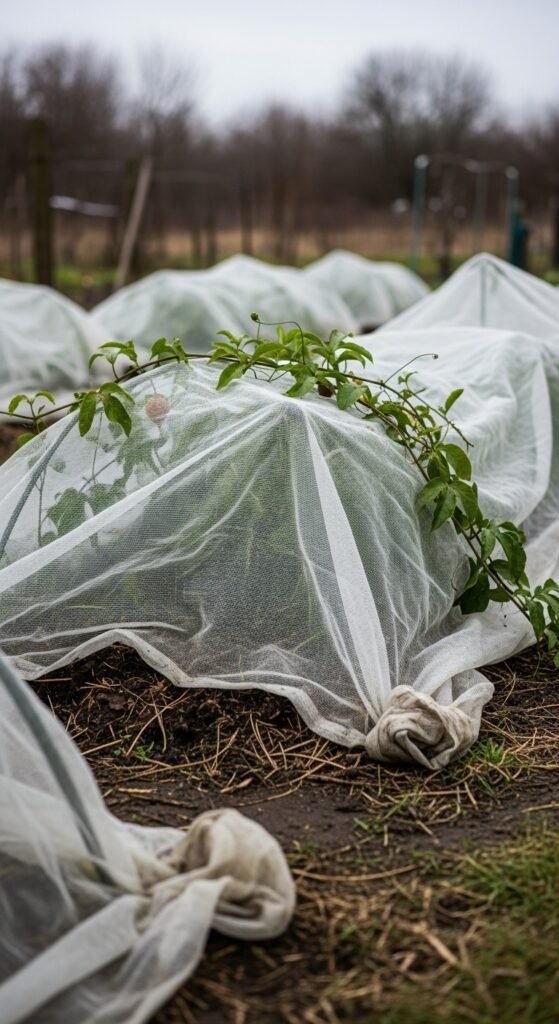
Prune lightly before covering, reducing water. Use heaters in greenhouses if needed. This preparation preserves your investment, allowing vines to rebound vigorously come warmer weather.
14) Propagate New Vines for Expansion
Expand your garden through passionfruit vine care by propagating via cuttings or seeds. Take semi-hardwood cuttings in summer, rooting in moist soil under humidity for new plants.
Propagation allows cost-effective multiplication, preserving desirable traits like fruit quality. It also rejuvenates older vines, maintaining genetic diversity and garden productivity.
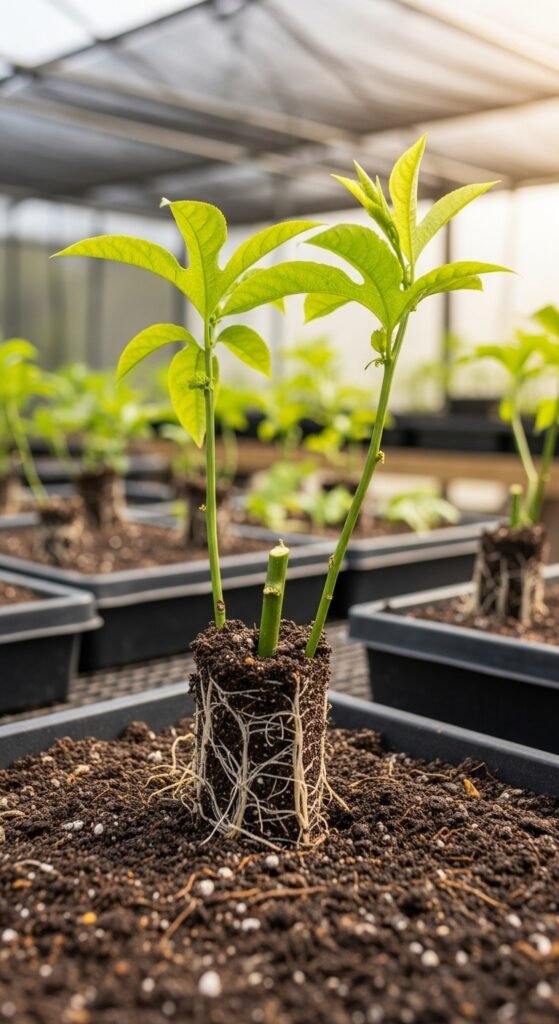
Use rooting hormone for better success, keeping cuttings warm and shaded. Transplant once rooted. Similar to grape vine cuttings, this method yields robust offspring ready for your trellis system.
15) Avoid Common Care Mistakes
In passionfruit vine care, sidestep errors like over-fertilizing, which causes lush leaves but few fruits, or neglecting support, leading to ground sprawl and disease. Always balance inputs and monitor closely.
Avoiding pitfalls ensures sustained health and yields; mistakes can stress vines, inviting pests or reducing lifespan. Awareness prevents costly corrections and frustration.
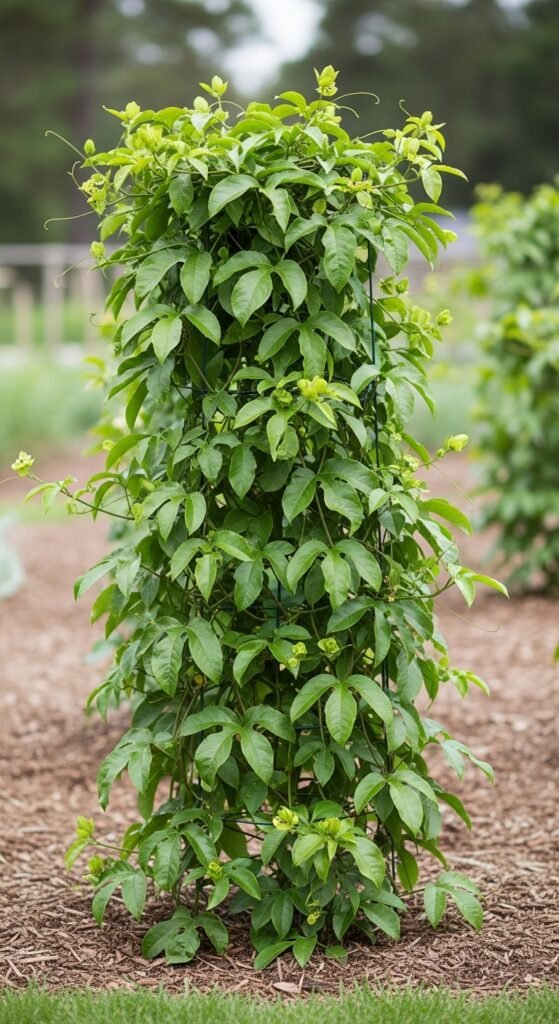
Educate yourself on symptoms, adjusting practices seasonally. Join gardening communities for tips. This proactive mindset fosters thriving vines, turning potential setbacks into learning opportunities for better results.
Key Principles of Passionfruit Vine Maintenance
Balancing Sunlight and Shade
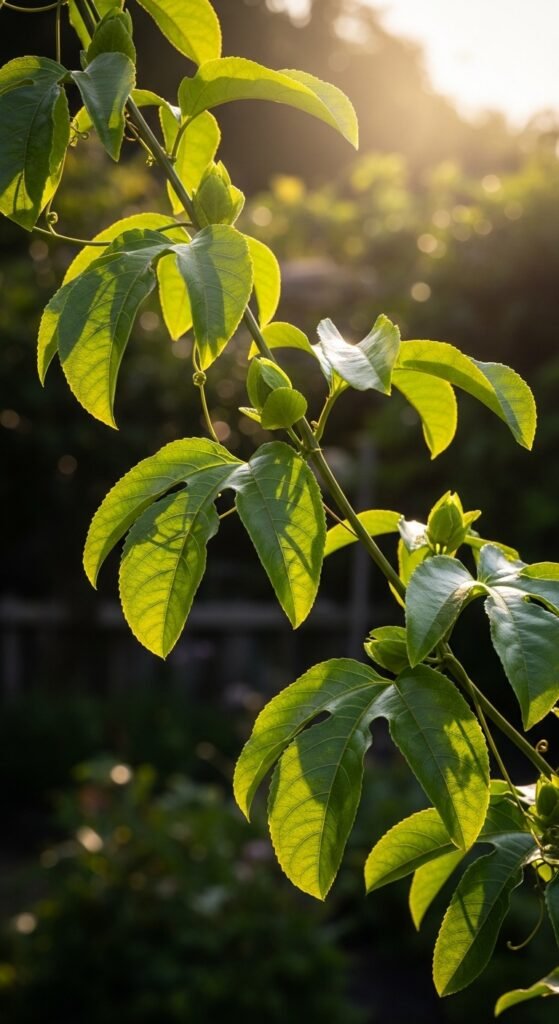
You’ll find that passionfruit vines flourish with ample sunlight but benefit from partial afternoon shade in scorching climates to prevent leaf burn. This balance promotes photosynthesis while protecting delicate tissues, leading to healthier growth and more resilient plants against environmental stresses.
Integrated Pest Management Strategies
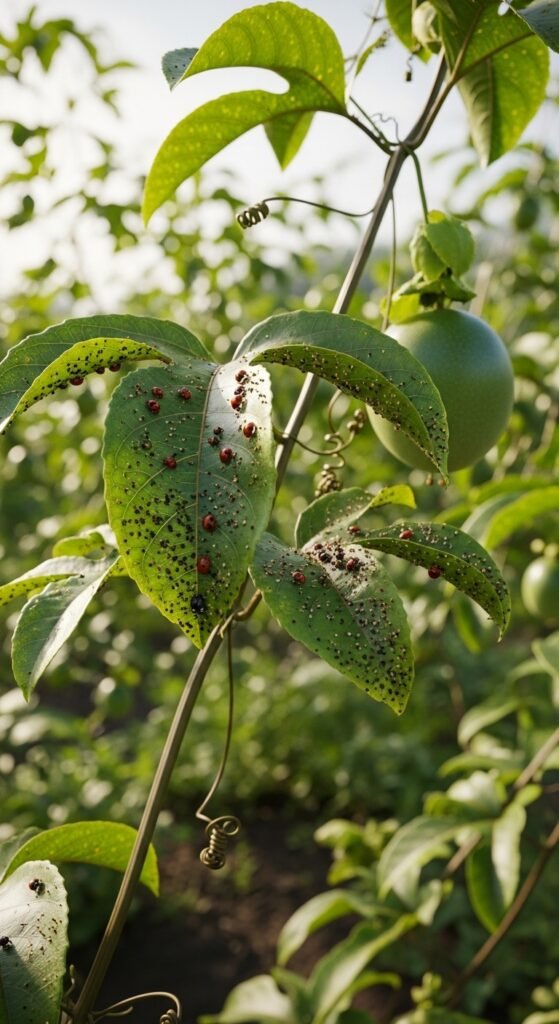
Adopt an integrated approach in passionfruit vine care by combining cultural, biological, and minimal chemical controls. Encourage beneficial insects, maintain hygiene, and use targeted treatments only when necessary, reducing reliance on pesticides and fostering a sustainable garden ecosystem.
Sustainable Watering Practices
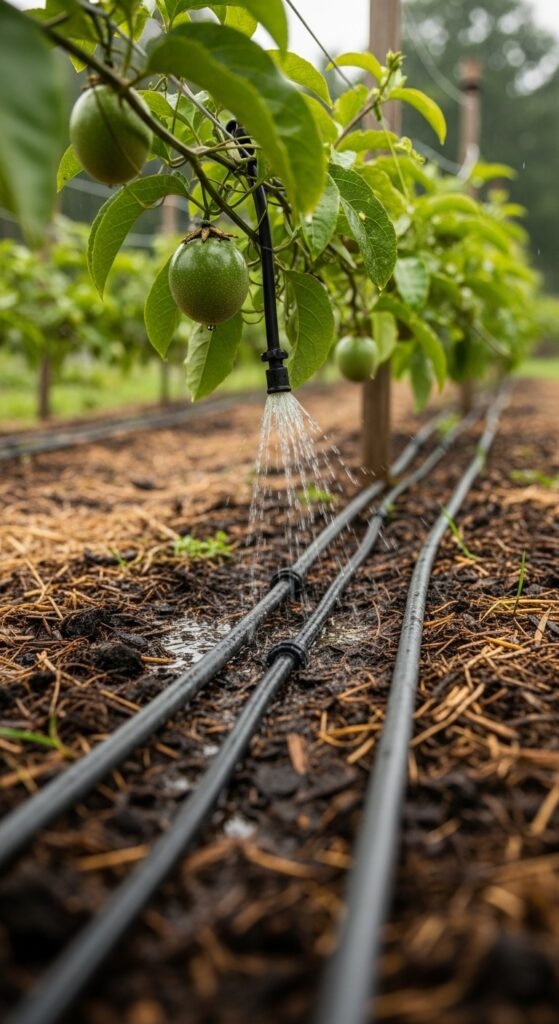
Implement water conservation in care routines by using mulch, drip systems, and rainwater harvesting. These methods ensure efficient moisture delivery, minimize waste, and support root health, contributing to environmental stewardship while keeping your vines hydrated and productive.
Frequently Asked Questions
How long does it take for a passionfruit vine to produce fruit?
Most passionfruit vines begin fruiting within 6-18 months after planting, depending on variety, climate, and care. Grafted plants often produce sooner than those grown from seed.
Can passionfruit vines grow in pots?
Yes, they can thrive in large containers with good drainage, support, and regular feeding. This is ideal for patios or regions with harsh winters where mobility is beneficial.
What causes yellow leaves on passionfruit vines?
Yellowing can result from nutrient deficiencies, overwatering, pests, or diseases. Check soil moisture, fertilize appropriately, and inspect for issues to address the root cause.
How often should I prune my passionfruit vine?
Prune annually in late winter to shape and thin, with light maintenance after fruiting. This encourages new growth and improves air circulation for better health.
Are passionfruit vines self-pollinating?
Some varieties are self-fertile, but many benefit from cross-pollination. Planting multiple vines or hand-pollinating can enhance fruit set in your garden.