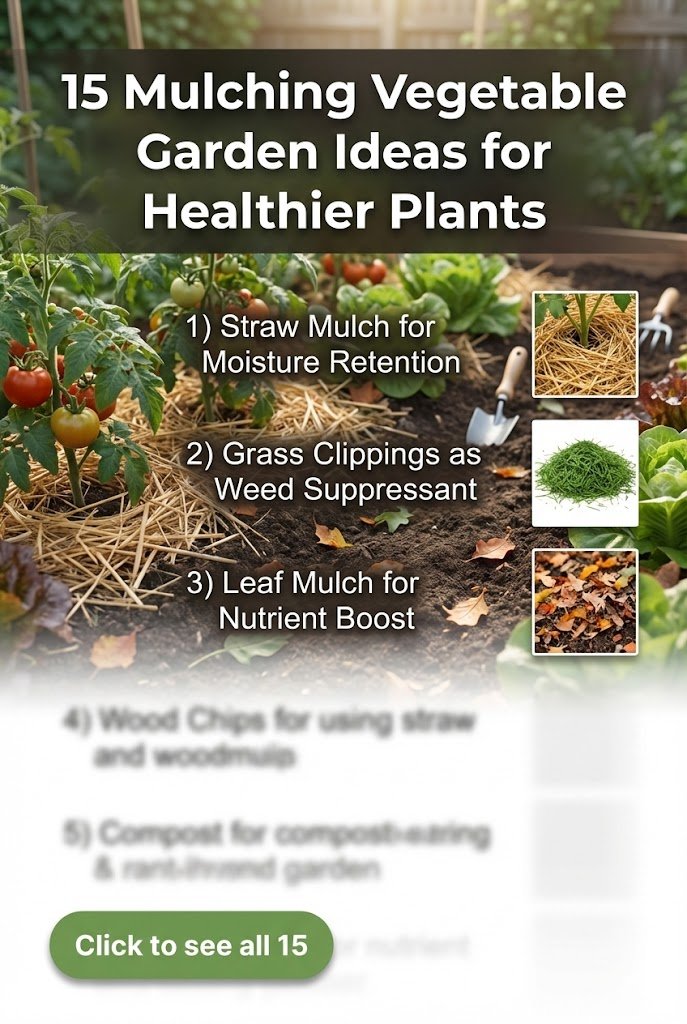
Mulching your vegetable garden involves applying a layer of material over the soil surface to conserve moisture, suppress weeds, and improve overall soil health. This practice is particularly beneficial in vegetable gardens, where consistent soil conditions can lead to higher yields and healthier plants. By choosing the right mulch and applying it correctly, you can reduce the need for frequent watering and weeding, allowing more time to enjoy your harvest.
In addition to these advantages, mulching helps regulate soil temperature, preventing extremes that can stress vegetable crops. It also enriches the soil as organic mulches decompose, providing essential nutrients. Whether you are a seasoned gardener or just starting, incorporating mulching strategies tailored to your vegetable garden will promote sustainable growth and resilience against environmental challenges.
1) Straw Mulch for Moisture Retention
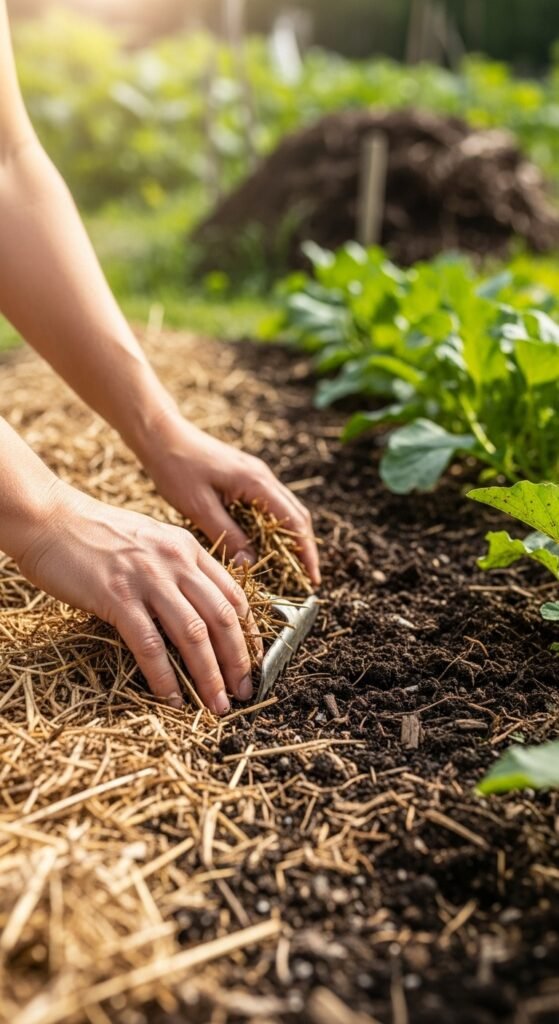
Straw mulch, derived from wheat or oat stalks, serves as an excellent organic option for your vegetable garden. It excels in retaining soil moisture by reducing evaporation, which is crucial during hot summer months. This type of mulch also suppresses weed growth effectively, minimizing competition for nutrients among your vegetables.
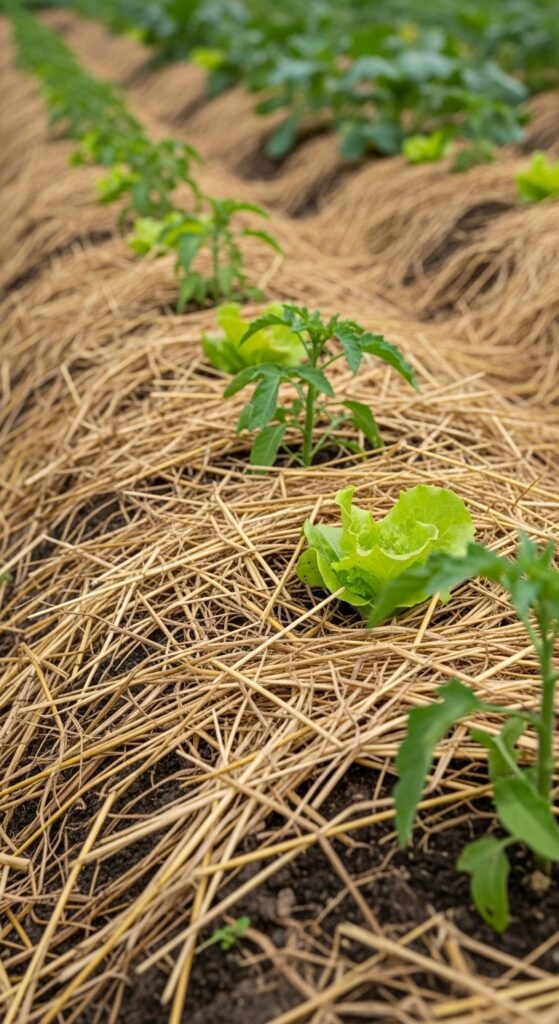
You will appreciate how straw mulch moderates soil temperature, keeping roots cool and protected. As it breaks down over time, it adds organic matter to the soil, enhancing fertility. To apply, spread a 3-4 inch layer around your plants after the soil has warmed in spring, ensuring it does not touch stems to prevent rot. For optimal results, combine this with a drip irrigation setup to maintain consistent moisture levels without overwatering.
Regularly replenish the mulch as it decomposes to sustain its benefits throughout the growing season. This approach not only supports healthier plants but also contributes to a more sustainable gardening practice.
2) Grass Clippings as Natural Weed Suppressant
Utilizing grass clippings from your lawn provides a cost-effective and readily available mulch for your vegetable garden. These clippings act as a natural barrier against weeds, decomposing quickly to release nitrogen into the soil, which benefits leafy vegetables like lettuce and spinach.
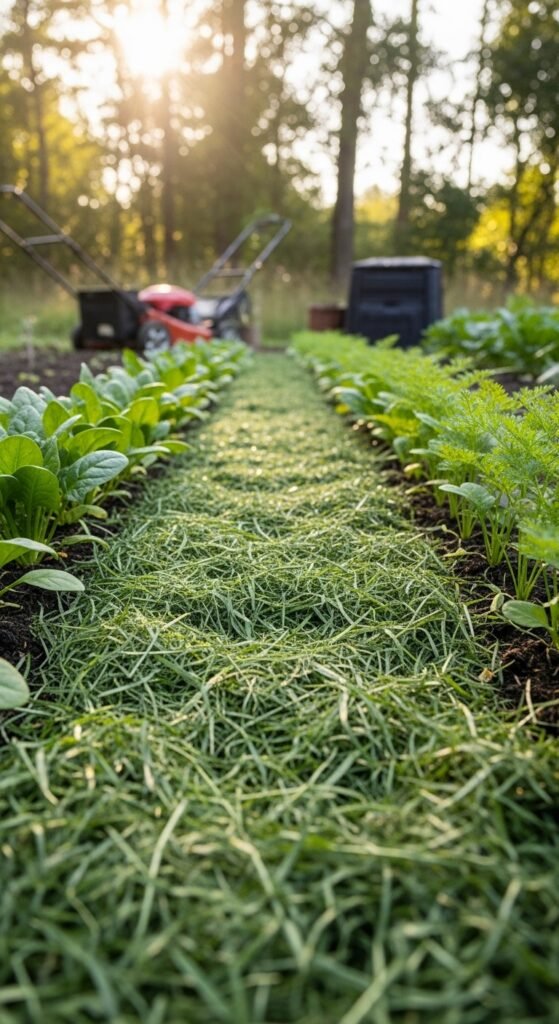
The primary advantage lies in their ability to retain moisture and improve soil structure as they integrate over time. However, ensure the clippings are free from herbicides to avoid harming your crops. Apply a 2-3 inch layer after mowing, allowing them to dry slightly to prevent matting.
You can enhance this method by incorporating it into your spring garden checklist, preparing beds early for planting. Monitor for any signs of excessive heat buildup during decomposition, and turn the mulch periodically if needed. This simple technique fosters robust plant growth while recycling yard waste efficiently.
3) Leaf Mulch for Nutrient Enrichment
Shredded leaves, collected in autumn, make an ideal mulch that enriches your vegetable garden soil with essential nutrients as they decompose. This organic material improves soil aeration and water retention, supporting root development in crops such as carrots and beets.
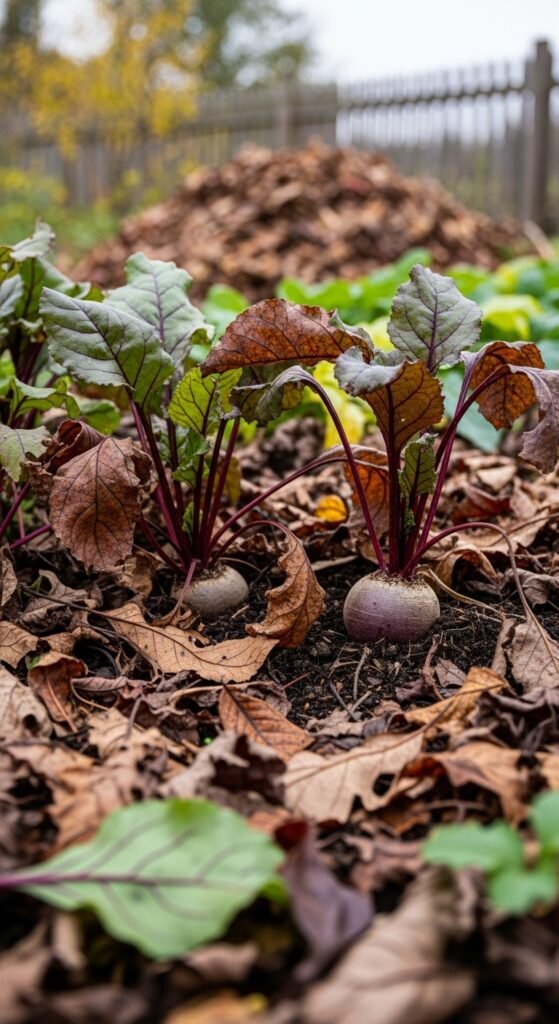
By using leaf mulch, you prevent soil erosion and maintain a stable temperature, which is vital for consistent vegetable production. Gather fallen leaves, shred them with a mower, and apply a 4-6 inch layer in fall or spring, avoiding direct contact with plant bases.
Integrate this with planning what vegetables to grow by referring to guides on what to plant in spring. As the leaves break down, they contribute to a fertile environment, reducing the need for additional fertilizers and promoting long-term garden health.
4) Wood Chip Mulch for Long-Term Coverage
Wood chips, often sourced from arborist waste, offer durable mulching for your vegetable garden paths and around perennial vegetables. They provide excellent weed control and moisture conservation over extended periods, breaking down slowly to add organic matter.
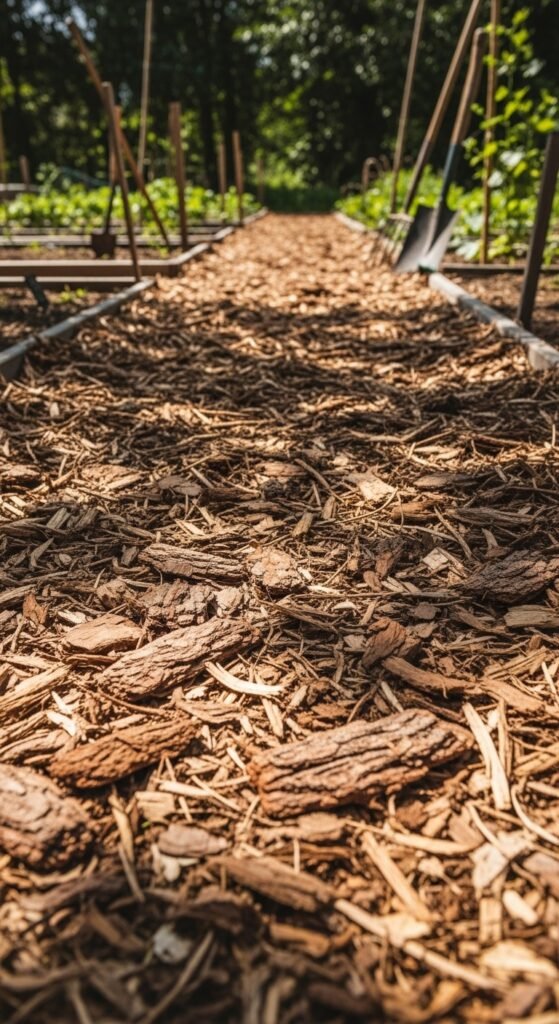
This mulch type is particularly effective in regulating soil temperature, protecting roots from summer heat and winter cold. Select untreated chips to ensure safety for edible crops. Spread a 3-5 inch layer, replenishing annually as needed.
For vegetables like cucumbers that benefit from support, consider combining wood chip mulch with trellis ideas for cucumbers. This combination enhances garden efficiency, allowing you to focus on harvesting rather than maintenance tasks.
5) Compost Mulch for Soil Fertility Boost
Applying finished compost as mulch directly benefits your vegetable garden by supplying nutrients while suppressing weeds. This method recycles kitchen and yard waste into a valuable resource, improving soil structure and microbial activity.
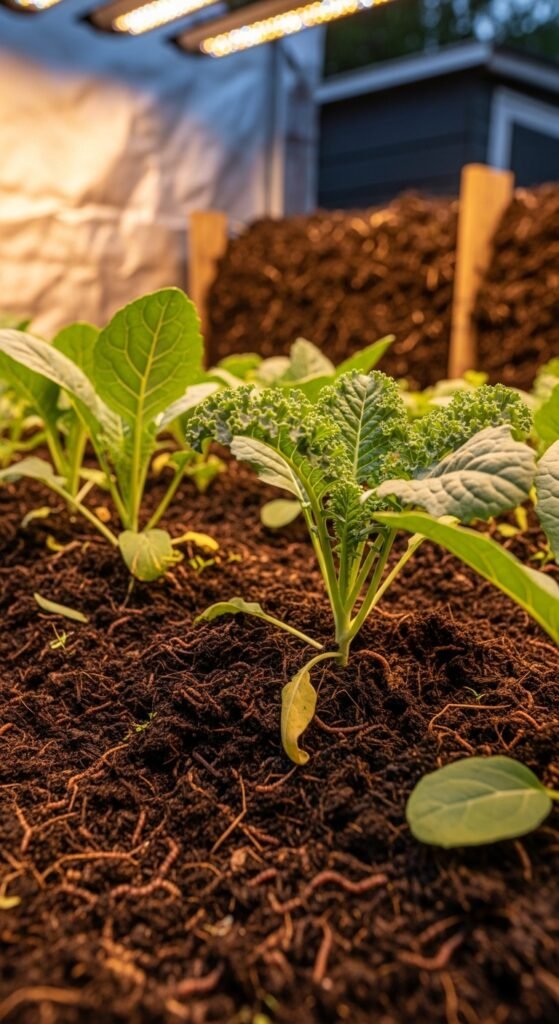
You will notice enhanced plant vigor, as compost retains moisture and moderates temperature fluctuations. Produce your own by following reliable methods for compost at home. Spread a 2-4 inch layer around established plants, incorporating it lightly into the topsoil if desired.
This approach is ideal for intensive vegetable gardening, ensuring sustained productivity. Regularly test soil to adjust compost application, maintaining balance for optimal growth.
6) Plastic Mulch for Warm-Season Crops
Black plastic mulch is a synthetic option that warms the soil quickly, ideal for heat-loving vegetables like tomatoes and peppers. It effectively blocks weeds and conserves water by minimizing evaporation.
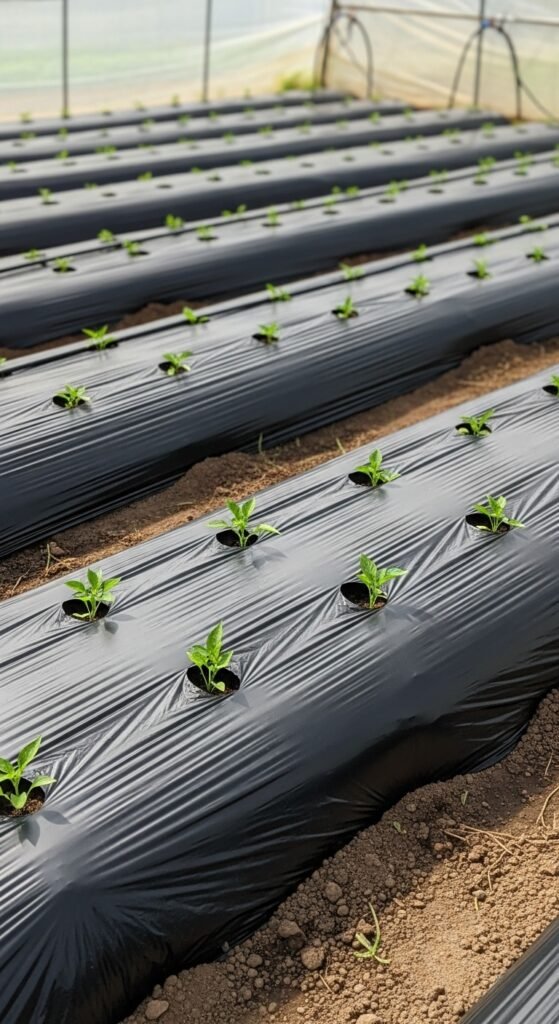
The key benefit is extended growing seasons in cooler climates, promoting earlier harvests. Install by laying sheets over prepared beds, securing edges, and cutting holes for plants. Remove at season’s end to prevent soil compaction.
Pair this with protective measures such as frost protection for plants to safeguard young seedlings. While not organic, plastic mulch can significantly increase yields when used judiciously.
7) Newspaper Mulch for Eco-Friendly Weed Control
Recycled newspapers provide an environmentally friendly mulch option for your vegetable garden, effectively smothering weeds without chemicals. Layered and topped with organic material, they decompose to enrich the soil.
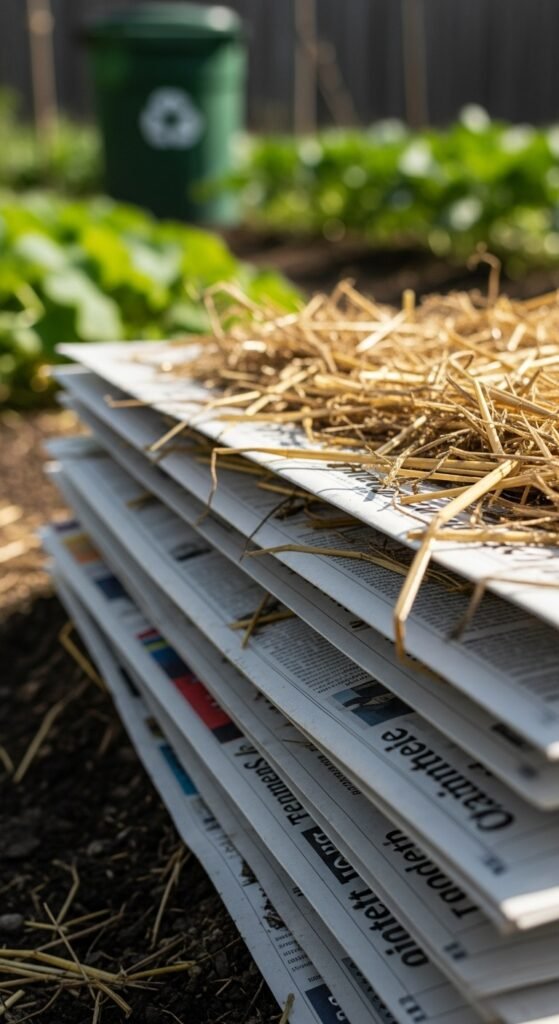
This method conserves moisture and stabilizes soil temperature, benefiting root vegetables. Use 4-6 sheets, wetting them to hold in place, then cover with straw or grass clippings for aesthetics and added benefits.
Incorporate into your routine alongside spring pest control strategies to maintain a healthy garden ecosystem. This cost-free approach supports sustainable practices while delivering reliable results.
8) Cardboard Mulch for Large Areas
Cardboard sheets are excellent for covering expansive vegetable garden areas, suppressing persistent weeds and preparing new beds. They break down over time, improving soil quality without synthetic inputs.
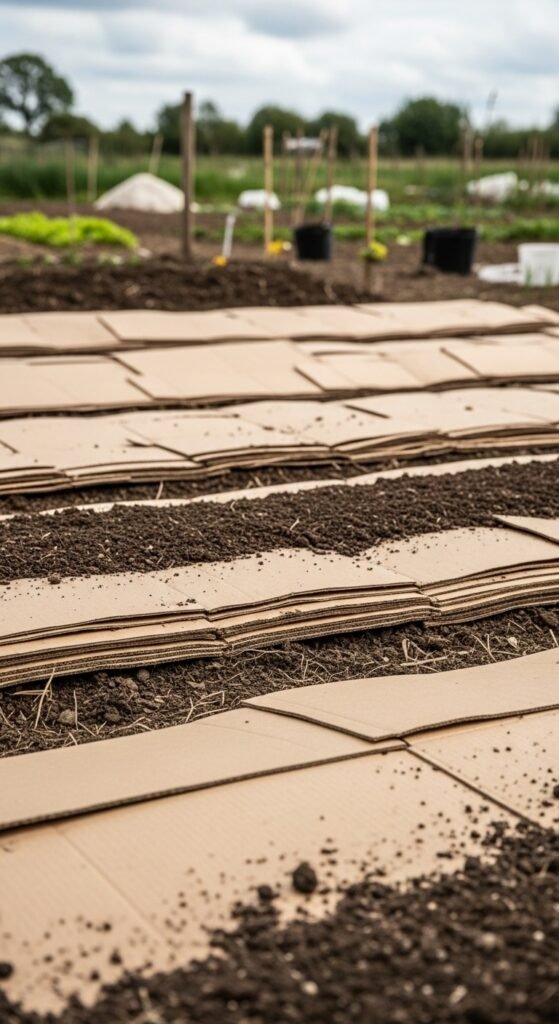
You benefit from reduced labor in weeding and better moisture retention. Remove tape and labels, lay flat, overlap edges, and top with 4 inches of organic mulch. This is particularly useful for establishing herb patches or vegetable rows.
Align this with ideas for a patio herb garden to create defined spaces. Monitor decomposition and replenish as necessary for continued effectiveness.
9) Living Mulch with Cover Crops
Planting cover crops like clover or vetch as living mulch offers dynamic benefits for your vegetable garden. These plants suppress weeds, prevent erosion, and fix nitrogen in the soil.
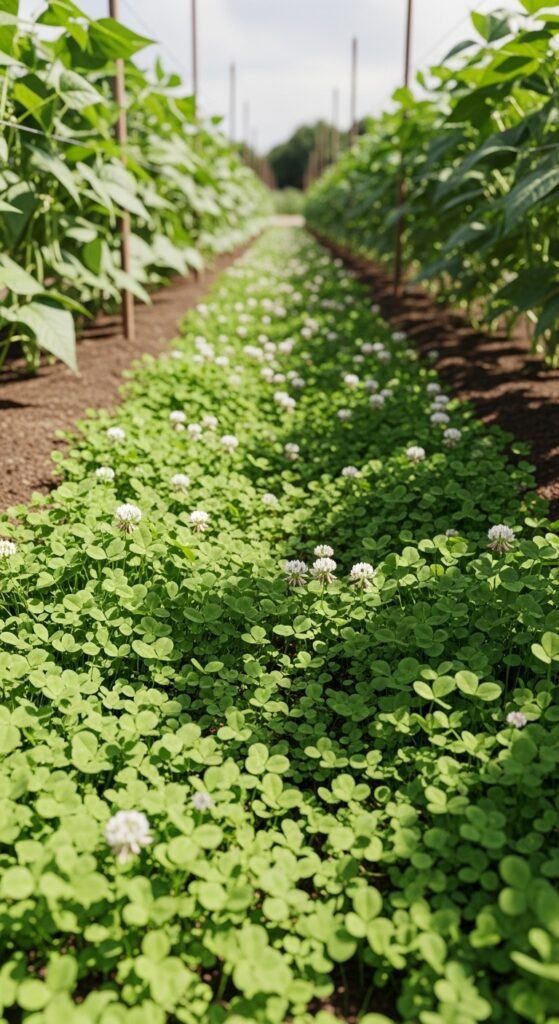
The advantage is ongoing soil improvement without annual replacement. Sow between vegetable rows in late summer, allowing growth to protect soil over winter. Mow or till in spring before planting main crops.
This integrates well with planning for winter vegetable garden ideas, enhancing year-round productivity. Select species compatible with your vegetables for best results.
10) Pine Needle Mulch for Acid-Loving Vegetables
Pine needles, or pine straw, provide an acidic mulch suitable for vegetables like potatoes and blueberries. They retain moisture well and deter slugs with their texture.
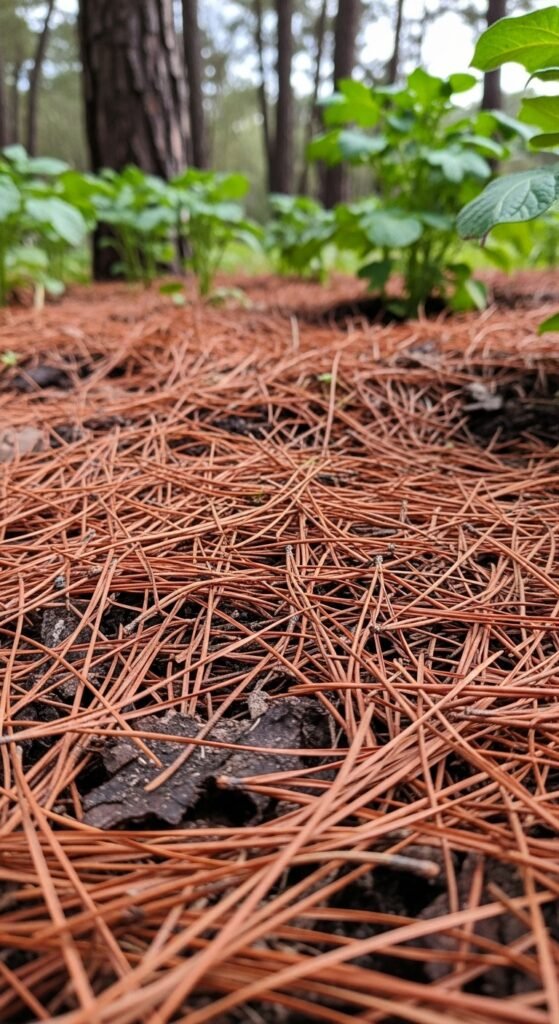
As they decompose slowly, they maintain soil pH levels favorably. Collect or purchase, then apply a 3-5 inch layer around plants, refreshing as needed.
Combine with water conservation techniques such as a DIY rain barrel to optimize resource use. This targeted approach ensures thriving acid-preferring crops in your garden.
11) Mulching Around Tomatoes for Disease Prevention
Specifically for tomatoes, applying mulch helps prevent soil-borne diseases by reducing splash-back. Organic options like straw keep foliage dry and soil moist.
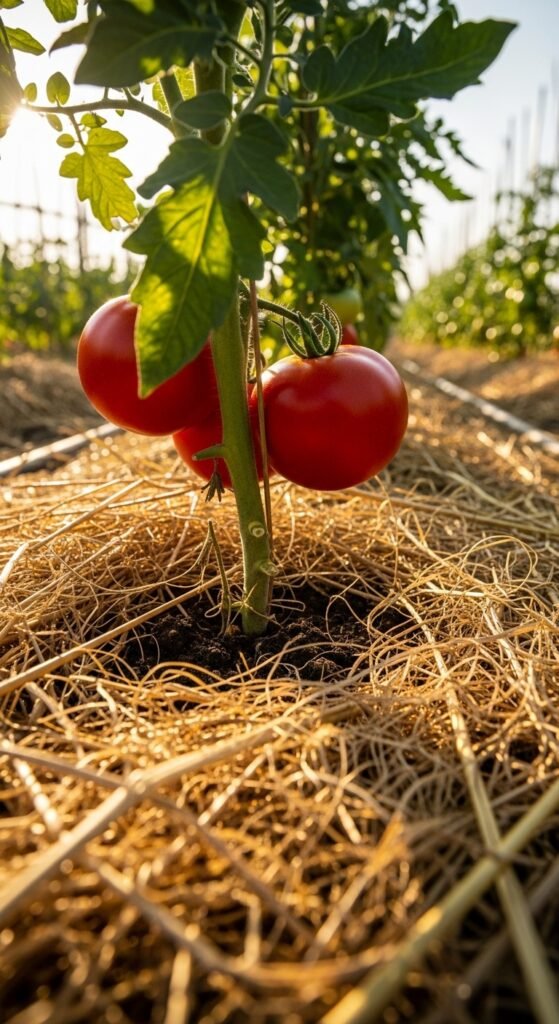
You will see fewer issues with blight and improved fruit quality. After planting, spread 3-4 inches, keeping mulch away from stems. Water deeply but infrequently to encourage strong roots.
This technique complements growing hardy varieties, similar to those in hardy winter vegetables. Consistent application leads to bountiful, healthy tomato harvests.
12) Mulch in Raised Beds for Efficient Gardening
Raised beds benefit immensely from mulching, as it maximizes limited space by conserving moisture and nutrients. Use a mix of compost and wood chips for best results.
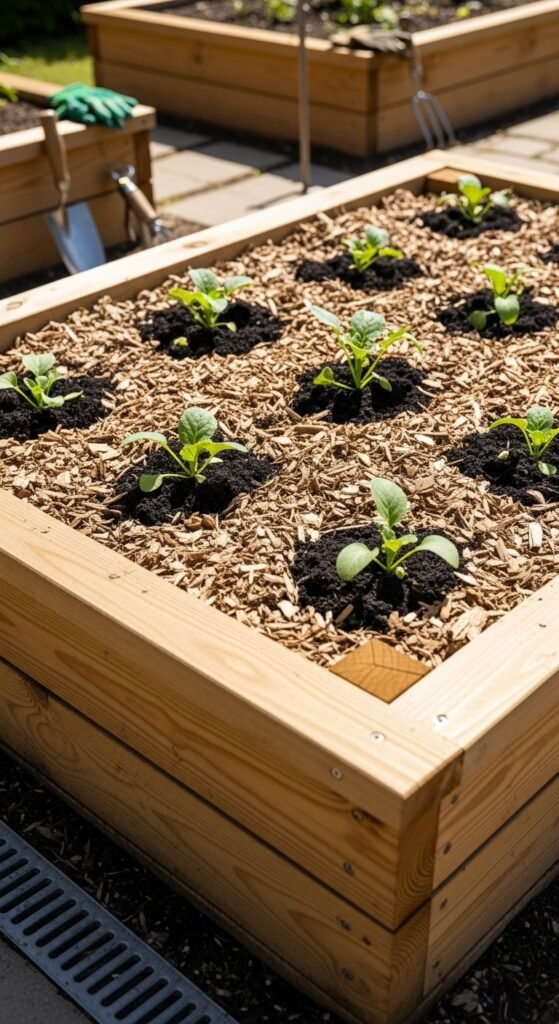
The elevated structure allows better drainage, enhanced by mulch. Fill beds, plant, then apply 2-4 inches, ensuring even coverage.
Incorporate fall preparations like planting garlic, as outlined in guides on plant garlic in fall. This method supports intensive vegetable production in small areas.
13) Seasonal Mulching for Year-Round Protection
Adapting mulch types by season protects your vegetable garden throughout the year. Use lighter mulches in spring and heavier ones in winter for insulation.
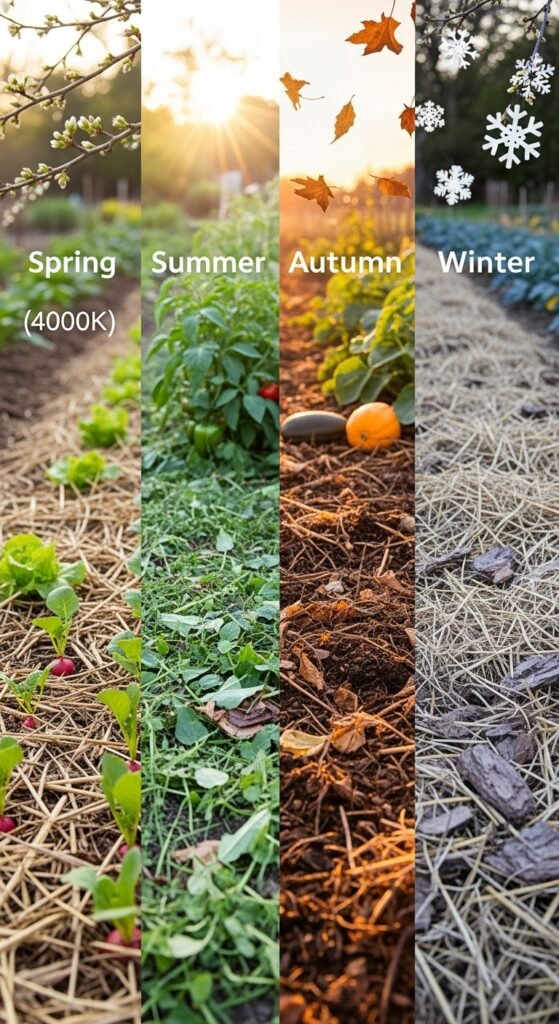
This strategy maintains soil health across temperature changes. Assess garden needs, apply accordingly, and adjust based on weather patterns.
By planning ahead, you ensure continuous benefits, fostering resilient plants regardless of the season.
14) Weed-Free Mulching Techniques
Implementing weed-free mulching involves prepping soil thoroughly before application. Remove existing weeds, then layer mulch deeply to prevent regrowth.
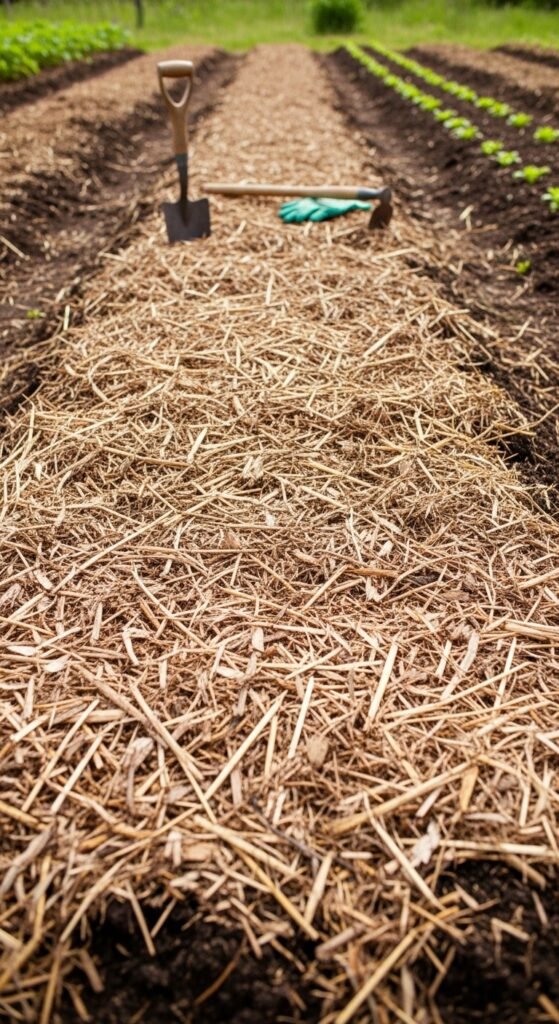
You achieve a low-maintenance garden with sustained soil moisture. Use landscape fabric under organic mulch for added barrier in persistent areas.
This proactive approach minimizes labor, allowing focus on crop care and harvesting.
15) Mulch for Water Conservation in Dry Climates
In arid regions, thick mulch layers are essential for water conservation in vegetable gardens. Organic mulches like bark reduce evaporation significantly.
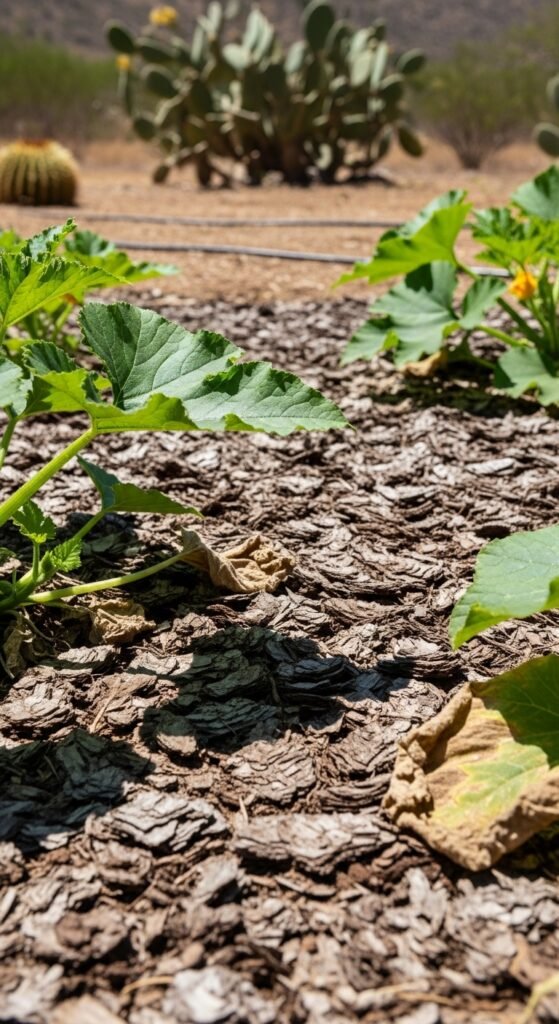
The benefit is reduced irrigation needs while maintaining productive soil. Apply 4-6 inches after thorough watering, monitoring soil moisture levels.
This efficient method supports sustainable gardening, ensuring vegetables thrive with minimal water input.
Key Principles of Mulching in Vegetable Gardens
Choosing the Right Mulch Type
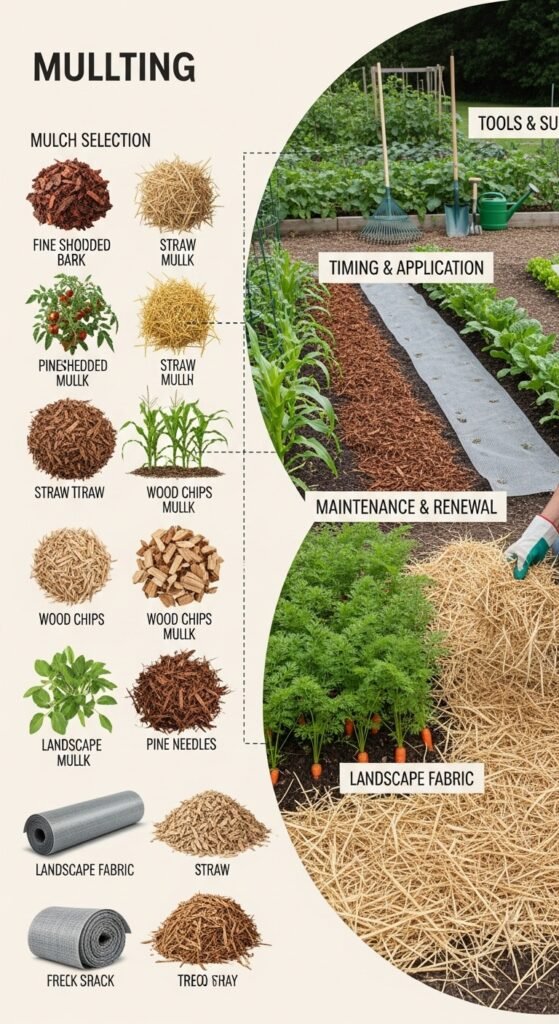
Select mulch based on your soil type, climate, and vegetable needs. Organic mulches improve fertility, while inorganic ones offer longevity.
Application Timing and Depth
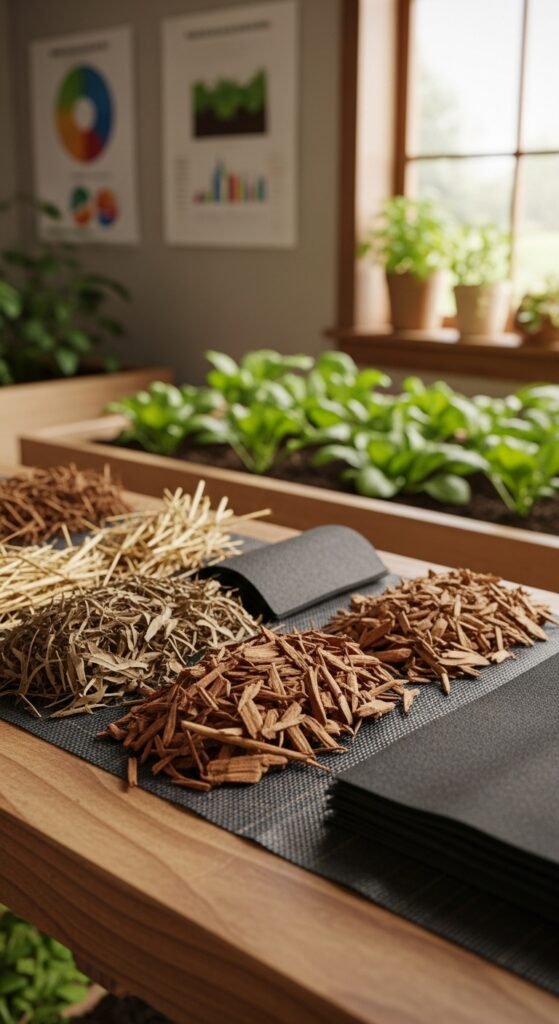
Apply mulch after soil warms in spring, at depths of 2-4 inches for most vegetables. Avoid piling against stems to prevent disease.
Maintenance and Renewal
Inspect mulch regularly, replenishing as it decomposes. This sustains benefits and keeps your garden tidy.
Frequently Asked Questions
What is the best mulch for a vegetable garden?
The best mulch depends on your specific needs, but organic options like straw or compost are generally recommended for their nutrient contributions and moisture retention properties.
How thick should mulch be in a vegetable garden?
Aim for a 2-4 inch layer of mulch to effectively suppress weeds and conserve moisture without suffocating plant roots.
Can I use mulch in containers for vegetables?
Yes, mulch can be used in containers to help retain moisture and regulate temperature, though use a thinner layer to avoid waterlogging.
When should I apply mulch to my vegetable garden?
Apply mulch after the soil has warmed in spring and plants are established, typically a few weeks after planting.
Does mulch attract pests to vegetables?
While some mulches may harbor pests, proper selection and maintenance, such as using dry materials, can minimize this risk.