Marigolds are one of the most versatile and beloved flowers in the gardening world. With their bright orange, yellow, and red blooms, they add instant cheer to any landscape while offering practical benefits like pest repulsion and soil enhancement. Whether you’re a beginner or seasoned gardener, incorporating marigolds into your space can transform it into a lively, low-maintenance haven. These hardy annuals thrive in full sun, tolerate poor soil, and bloom from spring through fall, making them ideal for various climates and garden styles.
Beyond their visual appeal, marigolds serve as natural companions in vegetable gardens, deterring nematodes and other pests that can harm crops. They’re also edible, adding a peppery flavor to dishes, and attract beneficial pollinators like butterflies and bees. By exploring these ideas, you’ll discover how to maximize their potential, creating a garden that’s not only beautiful but also functional and eco-friendly.
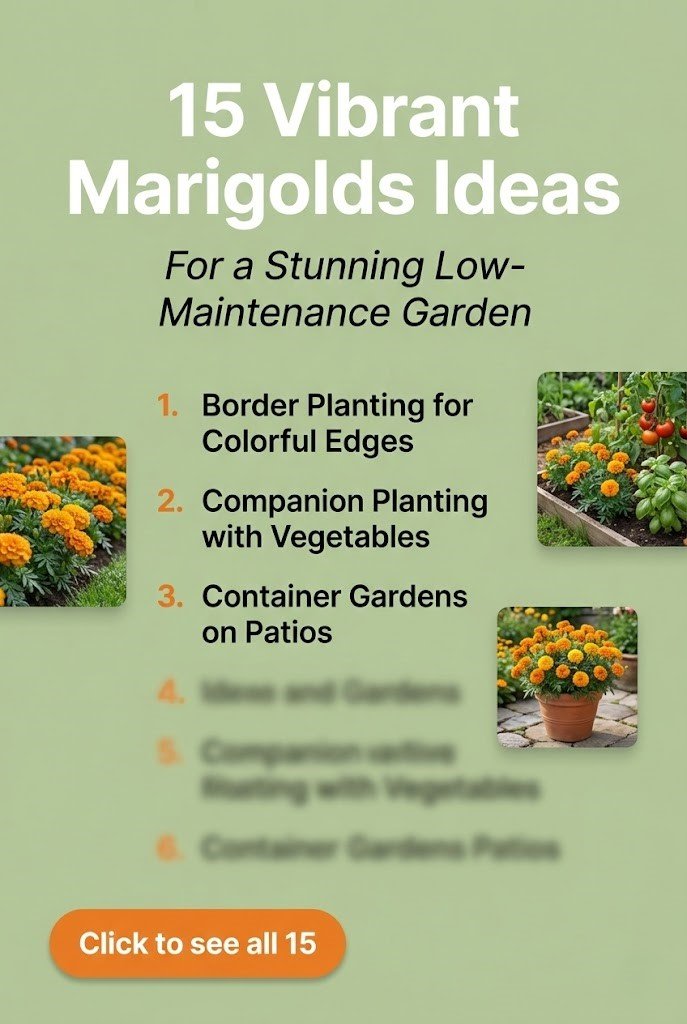
1) Border Planting for Colorful Edges
You can line your garden beds with marigolds to create a vivid border that defines spaces and adds a pop of color. Choose varieties like French marigolds for shorter edges or African marigolds for taller accents. This approach enhances visual appeal while naturally repelling rabbits and deer with their strong scent. To implement, prepare the soil by loosening it and mixing in compost for better drainage. Plant seedlings 6-12 inches apart after the last frost, ensuring full sun exposure. Water moderately, allowing the top inch of soil to dry between sessions to prevent root rot. As they grow, deadhead spent blooms to encourage continuous flowering. This method works well in formal gardens or along pathways, providing a low-maintenance frame that blooms all season. Consider combining with other low-growers for layered effects, but avoid overcrowding to maintain air circulation and reduce disease risk.
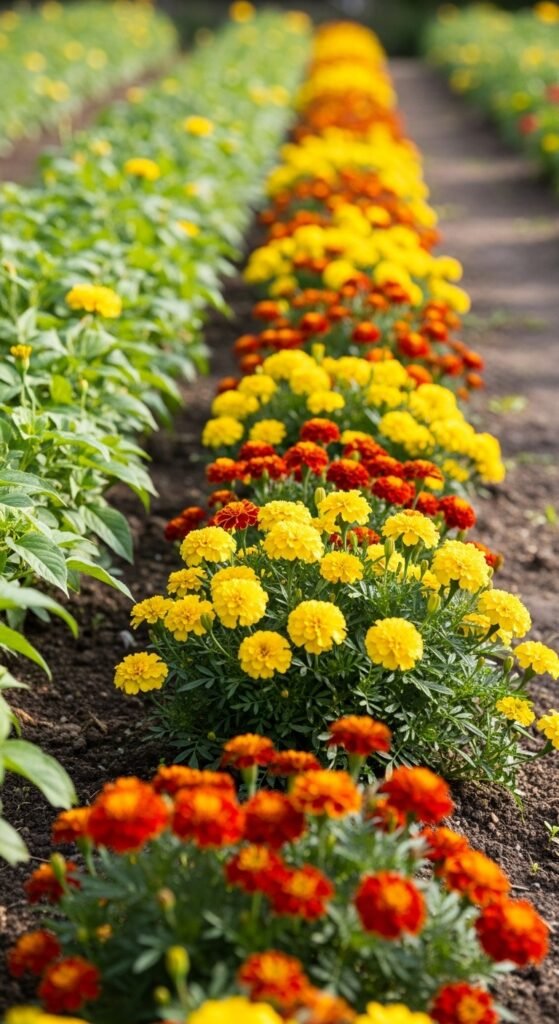
Incorporating marigolds in borders also improves soil health over time, as their roots help aerate compacted areas. You’ll notice fewer weeds due to their dense foliage, saving time on maintenance. For best results, mulch around plants to retain moisture and suppress unwanted growth.
2) Companion Planting with Vegetables
Pair marigolds with tomatoes, peppers, or cucumbers to boost your vegetable yield naturally. Their roots release compounds that deter soil nematodes, while the flowers attract beneficial insects like ladybugs that control aphids. This symbiotic relationship promotes healthier plants without chemicals. Start by planting marigolds around the perimeter of your veggie patch or interspersing them every few feet. Use a companion planting for vegetables guide to optimize pairings. Ensure spacing allows for airflow, planting in well-drained soil enriched with organic matter. Water at the base to avoid wetting leaves, which can invite fungal issues. Monitor for pests, but you’ll likely see reduced infestations. This idea is perfect for organic gardens, enhancing biodiversity and potentially increasing harvests by 20-30%. Edge cases include avoiding over-fertilizing, as marigolds thrive in modest conditions, and rotating crops annually to prevent buildup of any residues.
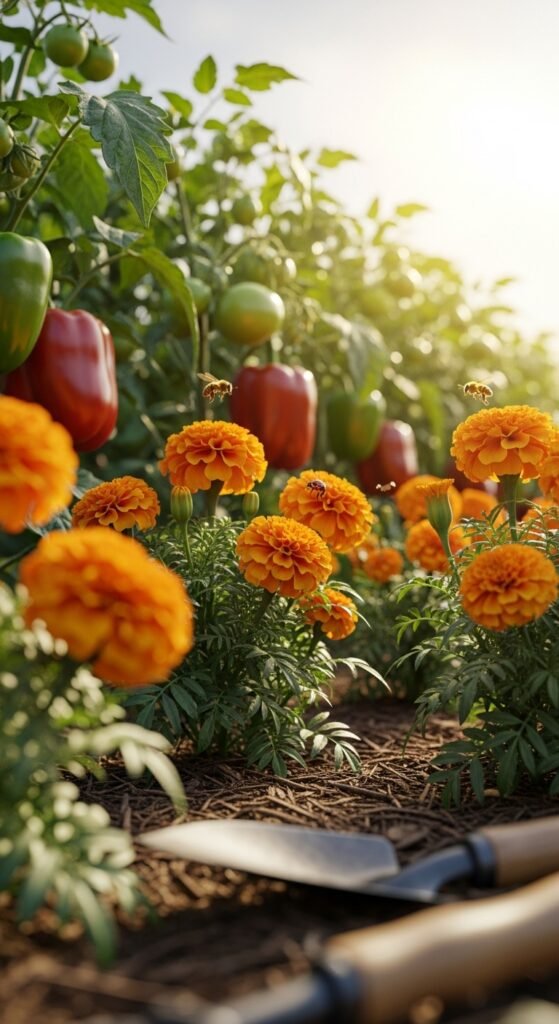
You’ll appreciate how marigolds mask the scent of veggies from pests like hornworms. Experiment with varieties like Tagetes patula for maximum repellent effect, considering local climate for bloom duration.
3) Container Gardens on Patios
Bring marigolds to your patio or balcony by planting them in pots for portable color bursts. Opt for dwarf varieties that fit smaller containers, mixing with trailing plants for dimension. This setup offers flexibility in rearranging your outdoor space seasonally. Fill pots with a well-draining potting mix, adding perlite for aeration. Position in sunny spots, rotating occasionally for even growth. Water when the top soil feels dry, but avoid soggy conditions to prevent rot. Fertilize lightly every 4-6 weeks with a balanced formula. Ideal for urban gardeners with limited ground space, this idea allows easy overwintering indoors in colder zones. Consider self-watering containers for consistent moisture, especially in hot summers. Nuances include selecting frost-resistant pots and grouping for microclimates that retain heat. You’ll enjoy vibrant displays from spring to frost, with the added benefit of easy pest inspection in confined areas.
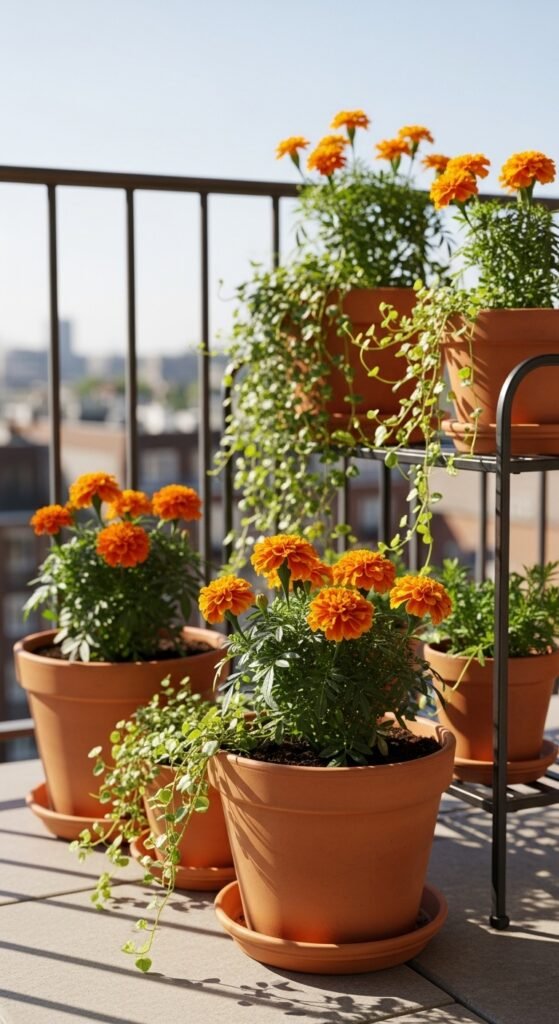
You can customize themes, like a fiery orange pot collection, tying into broader garden aesthetics while exploring container flowers for variety.
4) Edible Accents in Salads
Use marigold petals as edible garnishes to elevate your salads with color and a mild, citrusy flavor. Harvest fresh blooms in the morning, removing petals from the base for best taste. This adds nutritional value, including antioxidants, while making meals visually appealing. Incorporate into greens, grain bowls, or fruit salads, starting with small amounts to gauge preference. Grow organic varieties to avoid pesticides, planting in sunny, fertile soil. Pinch tips to encourage bushiness and more flowers. This idea bridges garden and kitchen, promoting farm-to-table practices. For how-to, scatter petals just before serving to retain vibrancy. Edge cases: Not all marigolds are equally tasty—stick to Tagetes species. Considerations include allergies; test small portions first. You’ll find this enhances culinary creativity, with implications for hosting garden-fresh dinners. Pair with herbs for complex flavors, exploring edible flowers for more options.

Harvest regularly to sustain production, storing excess petals in the fridge for up to a week.
5) Natural Pest Repellent Borders
Plant marigolds around your garden perimeter to form a natural barrier against pests like nematodes and aphids. Their pungent aroma confuses insects, while roots exude protective chemicals. This eco-friendly method reduces chemical use, fostering a balanced ecosystem. Sow seeds directly after frost in sunny spots with average soil, spacing 8-10 inches apart. Mulch to conserve water and suppress weeds. Maintain by deadheading to prolong blooms and vigilance for any breakthrough pests. Perfect for vegetable gardens, this integrates seamlessly with other repellents. Nuances: Combine with trap crops for enhanced efficacy. In hot climates, provide afternoon shade to extend lifespan. You’ll see healthier plants overall, with implications for sustainable gardening. This approach also attracts hoverflies that prey on pests, amplifying benefits. For deeper insights, consider companion planting for pests strategies.
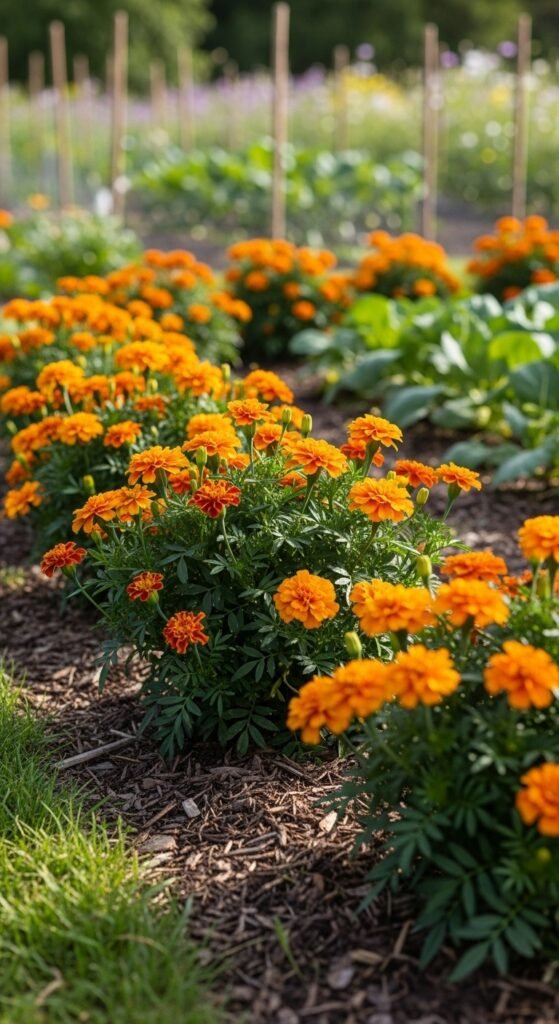
Rotate placements yearly to maintain soil health and prevent adaptation by pests.
6) Butterfly-Attracting Meadows
Scatter marigolds in wildflower meadows to draw butterflies with their nectar-rich blooms. Mix with other pollinators for a diverse habitat. This boosts biodiversity, supporting local wildlife and pollination. Prepare by clearing weeds and sowing seeds in full sun on tilled soil. Thin seedlings to avoid crowding. Water sparingly once established, as marigolds are drought-tolerant. This idea suits naturalistic gardens, creating serene spots for observation. Considerations: Avoid pesticides to protect visitors. In windy areas, stake taller varieties. You’ll enjoy fluttering displays from summer to fall, with educational value for families. Edge cases include urban meadows in small yards, using containers if needed. Implications extend to conservation, enhancing ecosystem services like pest control via natural predators.
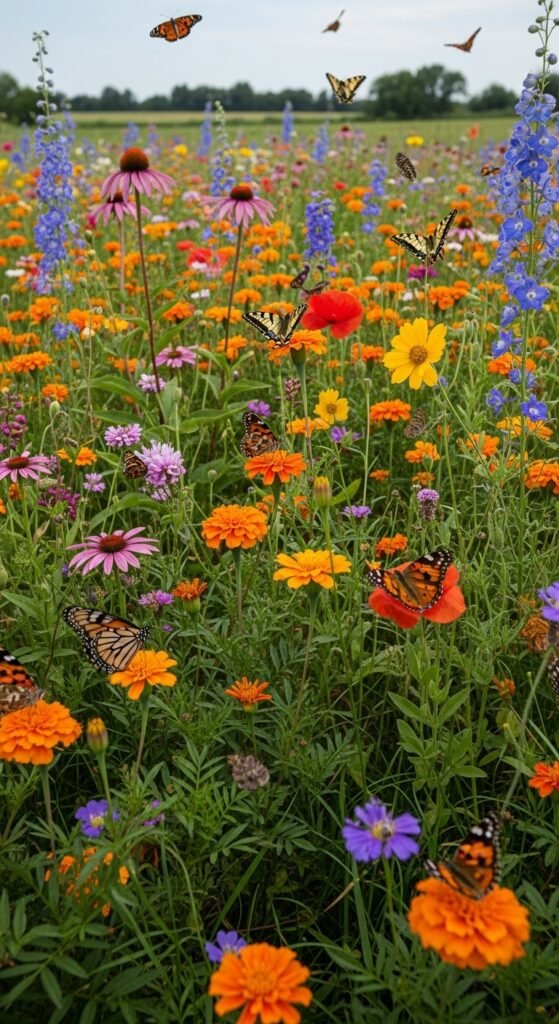
Plant in clusters for better attraction, referencing pollinator flowers for complementary species.
7) Fall Color Extensions
Extend your garden’s vibrancy into autumn by planting late-blooming marigolds alongside fall foliage. Their warm tones complement changing leaves. This prolongs seasonal interest, bridging summer and winter. Start seeds indoors 6-8 weeks before last frost for earlier blooms, transplanting to enriched beds. Provide consistent moisture during establishment. Ideal for mixed borders, this adds warmth to cooling landscapes. Nuances: Choose heat-tolerant varieties for prolonged flowering in mild falls. In colder zones, mulch roots for potential overwintering. You’ll appreciate the continuity, reducing bare spots. Considerations include soil pH—aim for neutral to slightly acidic. Implications for design: Layer with perennials for year-round appeal.
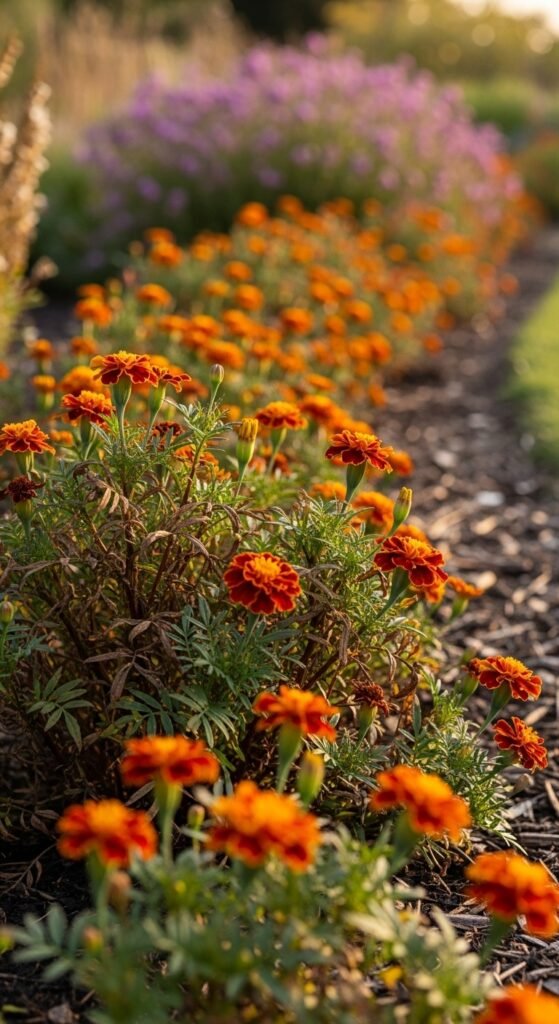
Deadhead diligently to encourage reblooming, exploring fall flowers for additional ideas.
8) Window Box Displays
Adorn window boxes with marigolds for curbside charm and easy access. Pair with spillers like ivy for cascading effects. This elevates home aesthetics from outside and in. Use lightweight soil mix in boxes with drainage holes, planting densely for fullness. Position in sunny windows, watering more frequently due to exposure. This suits apartments or homes with limited yards. Edge cases: Secure boxes on high windows for safety. In shaded spots, opt for tolerant varieties. You’ll gain privacy screening plus color. Considerations: Refresh soil annually to prevent compaction. Implications include boosting mood with daily views of blooms.
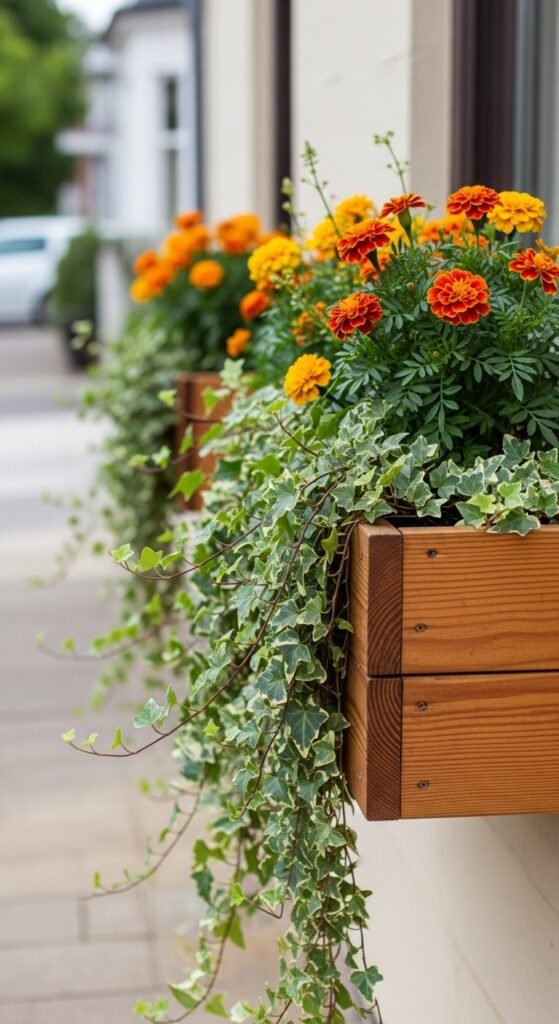
Fertilize sparingly to avoid legginess, drawing from window box flowers inspirations.
9) Mixed Perennial Beds
Integrate marigolds into perennial beds for annual pops amid lasting plants. Their height variations fill gaps effectively. This creates dynamic layers, ensuring constant interest. Plant among hostas or daylilies in sunny areas with amended soil. Space according to size, mulching to retain moisture. Maintain by removing faded flowers. Perfect for cottage styles, this enhances texture contrasts. Nuances: Use as fillers in new beds while perennials establish. In clay soils, improve drainage to avoid issues. You’ll see improved pollination across the bed. Considerations: Select disease-resistant strains for longevity.
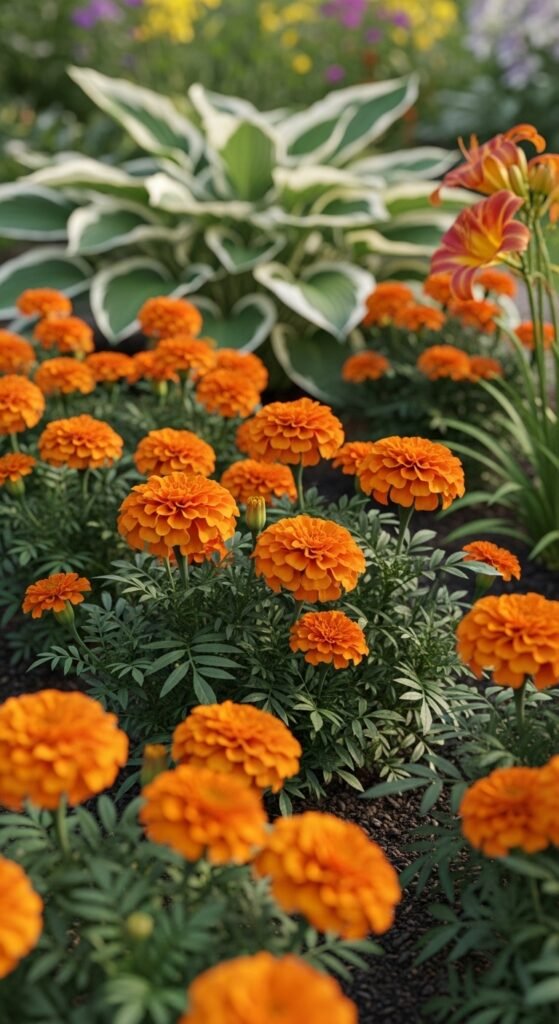
Plan for succession planting, aligning with flower bed design principles.
10) Pathway Liners for Guidance
Line garden paths with marigolds to guide visitors and add fragrance. Low-growing types prevent overstepping. This defines routes aesthetically, enhancing navigation. Prepare edges with compost, planting evenly spaced. Water along roots, avoiding overhead to minimize disease. Suits meandering stone paths or gravel walks. Edge cases: In high-traffic areas, choose sturdy varieties. Implications: Reduces soil erosion along edges. You’ll enjoy scented strolls, with bees adding life.

Combine colors for patterns, inspired by pathway flowers.
11) Raised Bed Companions
Add marigolds to raised beds for pest protection and color in veggie plots. Interplant with carrots or beans. This optimizes space efficiently, improving yields. Fill beds with quality soil, positioning marigolds at edges. Irrigate deeply but infrequently. Ideal for intensive gardening. Nuances: Monitor for shading taller crops. In small beds, use compact forms. You’ll notice fewer root issues, promoting organic practices.
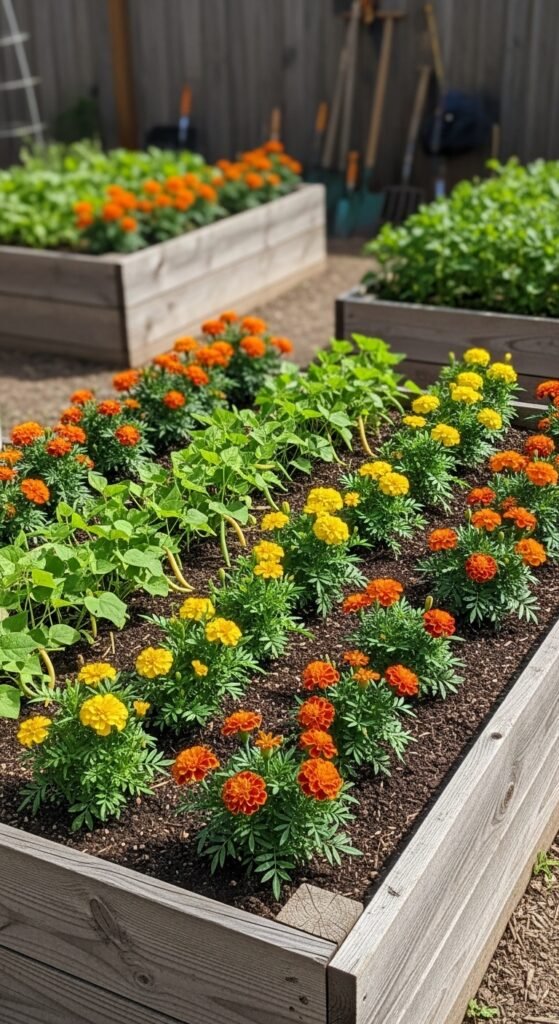
Rotate annually, referencing raised bed vegetable garden layouts.
12) Drought-Tolerant Landscapes
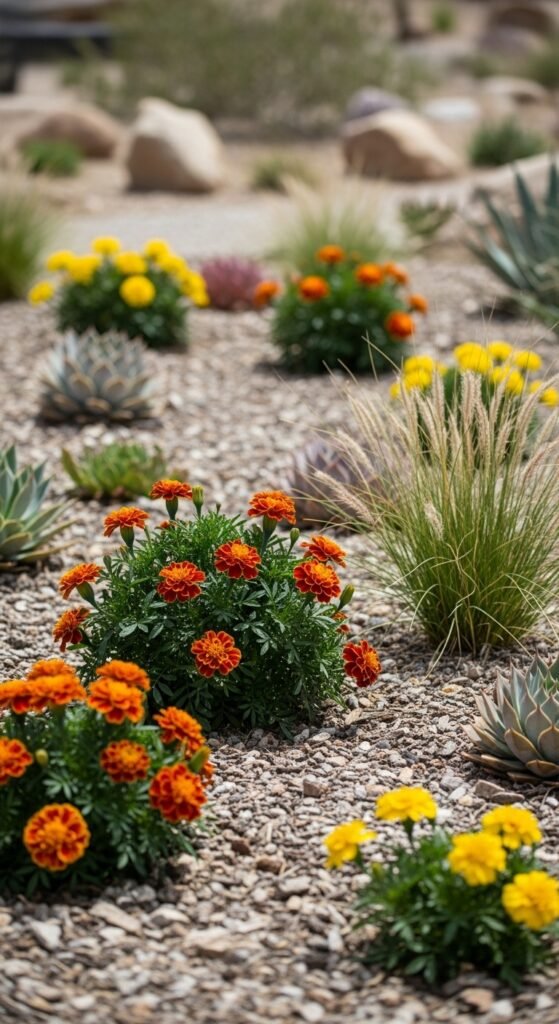
Incorporate marigolds in xeriscapes for resilient color in dry conditions. Group with succulents or grasses. This conserves water while maintaining beauty. Plant in gravelly soil with minimal amendments, spacing widely. Water sparingly after establishment. Suits arid regions or low-water goals. Considerations: Mulch with rocks for heat retention. Implications: Lowers bills and supports sustainability. You’ll have reliable blooms even in heatwaves.
Select native-adapted types, exploring drought-tolerant flowers.
13) Pollinator Garden Boosters
Feature marigolds in pollinator gardens to lure bees and butterflies. Cluster for impact. This aids ecosystem health, increasing fruit sets nearby. Sow in sunny, sheltered spots with nectar companions. Maintain moisture during peaks. Perfect for wildlife corridors. Edge cases: Avoid hybrids with less nectar. You’ll observe more activity, educating on conservation.
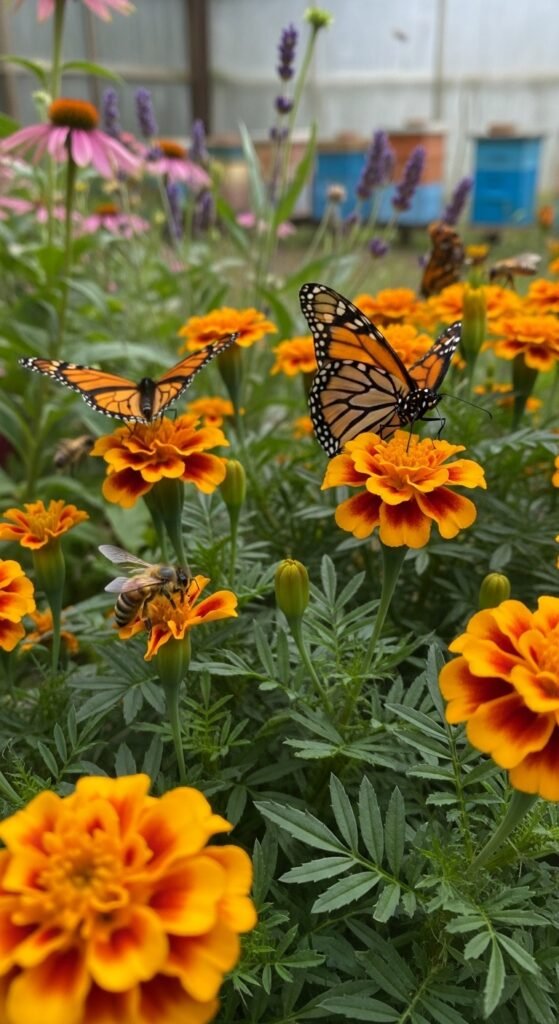
Diversify heights, using bee-friendly plants list.
14) Herbal Infusions and Teas
Brew marigold petals into teas for calming, anti-inflammatory drinks. Dry flowers first for storage. This utilizes garden bounty healthfully. Harvest clean blooms, steeping in hot water. Grow in herb sections for convenience. Considerations: Consult for interactions. Implications: Promotes wellness gardening. You’ll savor homegrown flavors year-round.

Blend with mint, inspired by edible uses.
15) Cut Flower Bouquets
Cut marigolds for indoor arrangements, extending garden joy inside. Mix with greens for balance. This brightens homes affordably. Snip stems in cool mornings, conditioning in water. Plant successions for ongoing supply. Suits tabletop displays. Nuances: Change water daily to prolong vase life. You’ll reduce store buys, with creative outlets.
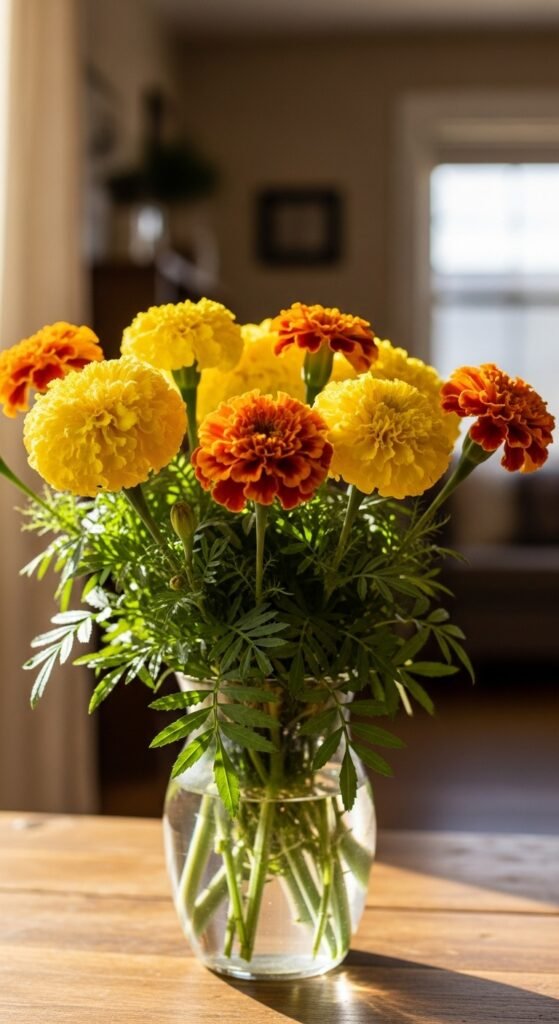
Arrange by color, drawing from floral crafts.
Key Tips for Growing Marigolds
Soil Preparation and Planting
You’ll want well-drained soil with a pH of 6.0-7.0. Amend with compost for nutrients, planting after frost in full sun.
Watering and Maintenance
Water deeply once a week, allowing drying between. Deadhead regularly to promote blooms and prevent self-seeding overload.
Pest and Disease Management
Monitor for slugs; use organic controls. Good spacing prevents mildew, ensuring vigorous growth.
Frequently Asked Questions
Are marigolds easy to grow for beginners?
Yes, marigolds are forgiving and thrive with basic care like sun and moderate water, making them ideal starters.
Do marigolds really repel garden pests?
Absolutely, their scent and root secretions deter many insects, especially when planted near vegetables.
Can marigolds survive in shade?
They prefer full sun but can tolerate partial shade, though blooming may be reduced.
How long do marigolds bloom?
From planting until first frost, with continuous deadheading extending the season.
Are all marigolds edible?
Most Tagetes varieties are, but confirm species and grow organically for safety.