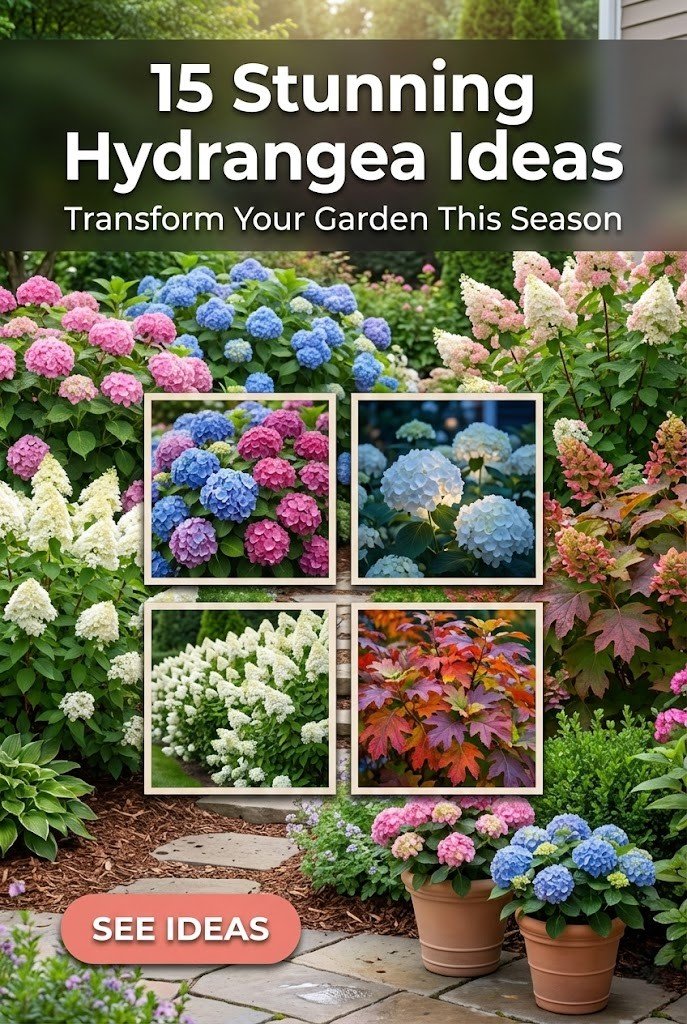
Hydrangeas are the undisputed queens of the summer garden, offering massive, colorful blooms that can turn any ordinary yard into a showstopping display. Whether you’re a beginner or seasoned gardener, these versatile shrubs deliver reliable beauty with relatively low effort. From classic mopheads to elegant panicles, you can find hydrangeas suited to almost any style, climate, and space.
What makes hydrangeas so special is their ability to thrive in partial shade, their long bloom period, and the magical way some varieties change color based on your soil’s pH. In this ultimate listicle, you’ll discover 15 creative and practical hydrangea ideas to inspire your planting, design, and care routine. Get ready to elevate your outdoor space with these timeless favorites.
1) Plant a Classic Mophead Border for Instant Drama
You’ll love how bigleaf hydrangeas (Hydrangea macrophylla) create a lush, colorful border that demands attention. Their rounded, globe-like flower clusters in shades of blue, pink, or purple make a bold statement along walkways or fences. Plant them in groups of 3–5 for maximum impact, spacing them about 3–5 feet apart.
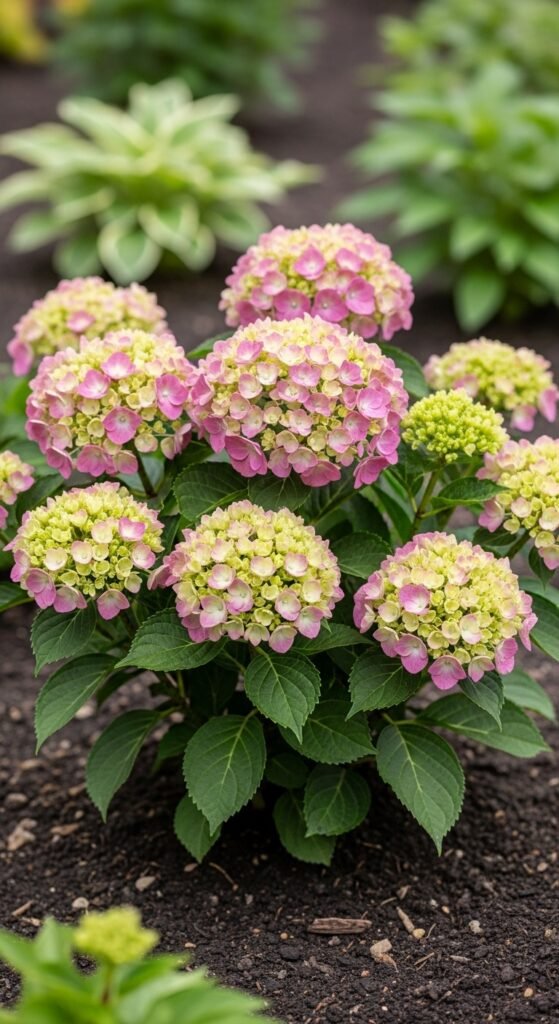
Choose a spot with morning sun and afternoon shade to prevent wilting, and amend the soil with plenty of organic matter for good drainage. These beauties pair wonderfully with other shade-loving perennials. For more inspiration on designing flower beds, check out our guide to spring garden design ideas. With consistent moisture, your mophead border will reward you with months of vibrant blooms.
2) Create a Color-Changing Magic Show with Soil pH
One of the most exciting things about certain hydrangeas is their ability to shift colors based on soil acidity. Acidic soil (pH below 6) produces stunning blue flowers, while alkaline conditions (pH above 7) bring out rich pinks. You can experiment by adding aluminum sulfate for blues or garden lime for pinks.
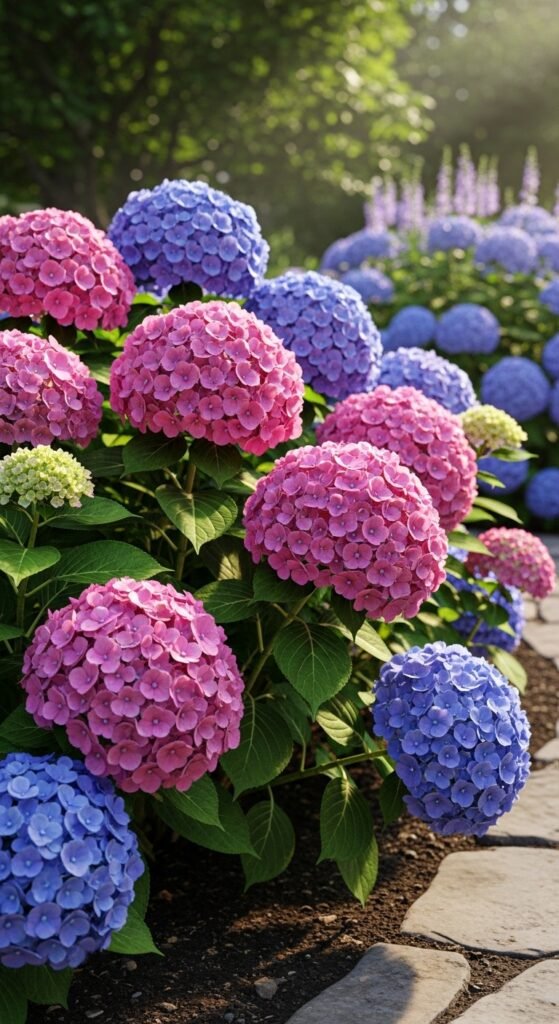
Bigleaf and mountain varieties respond best to this trick. Test your soil first, then adjust gradually. This fun project keeps your garden evolving season after season. For related soil tips, see our soil pH lime calculator.
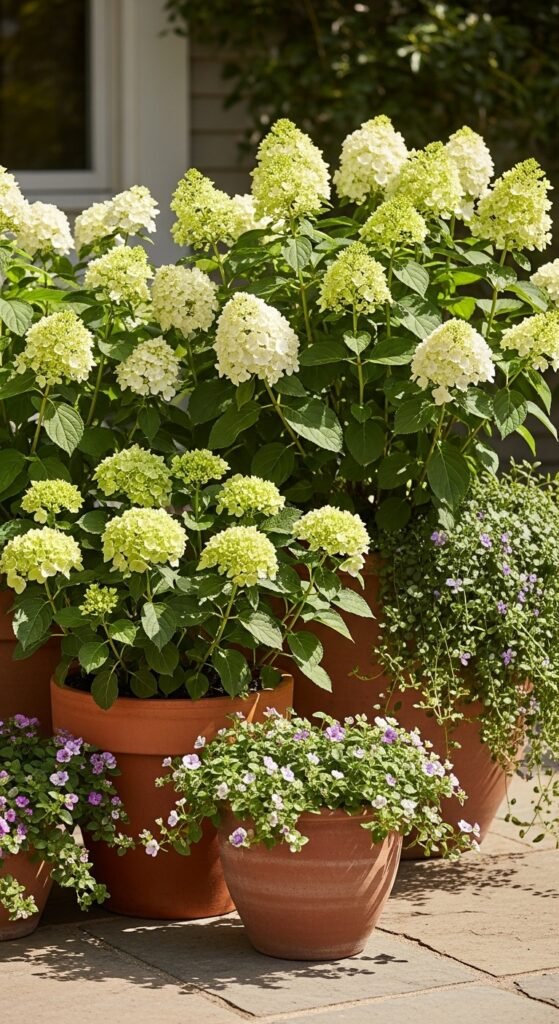
3) Grow Dwarf Hydrangeas in Patio Containers
If space is limited, dwarf varieties are perfect for pots on your patio or balcony. Compact types like ‘Little Lime’ or ‘Bobo’ stay under 4 feet tall while still producing full-sized blooms. Use large containers with drainage holes and high-quality potting mix to keep roots happy.
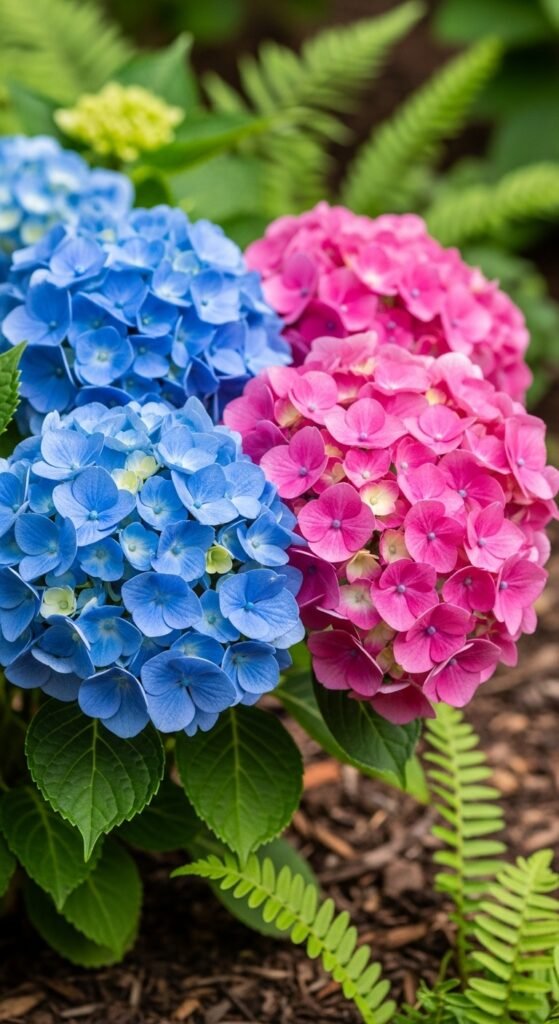
Place them where they get filtered light and water deeply but infrequently. This setup adds portable color you can move as needed. Pair with trailing annuals for extra flair, and you’ll have a stunning outdoor living area.
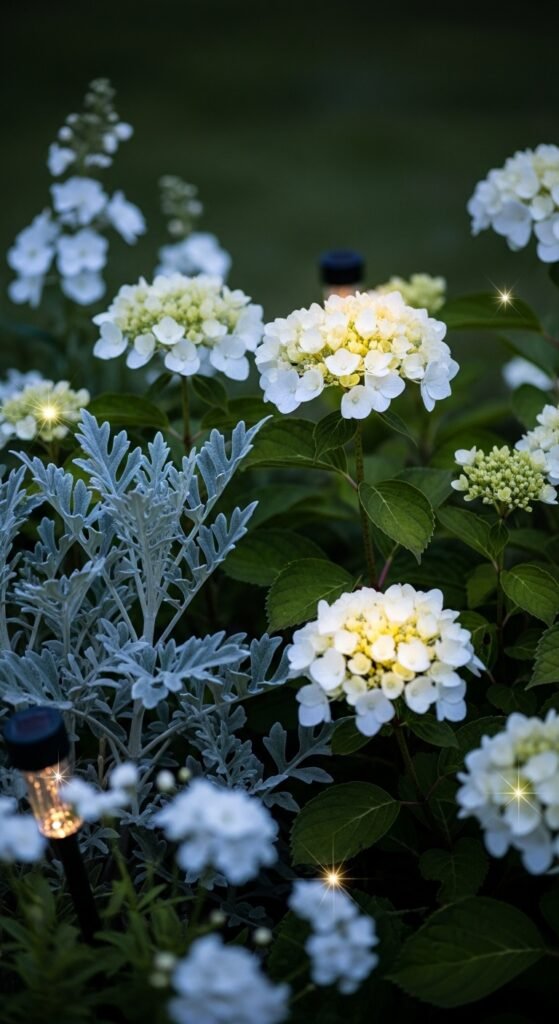
4) Design a White Hydrangea Moon Garden for Evening Glow
White-blooming hydrangeas like ‘Annabelle’ or ‘Limelight’ shine in a moon garden, reflecting light beautifully at dusk. Plant them alongside other white flowers and silvery foliage for a luminous nighttime retreat.
These varieties tolerate more sun than their colorful cousins. Add solar lighting nearby for extra sparkle. For complementary outdoor lighting ideas, explore our solar garden lighting ideas.
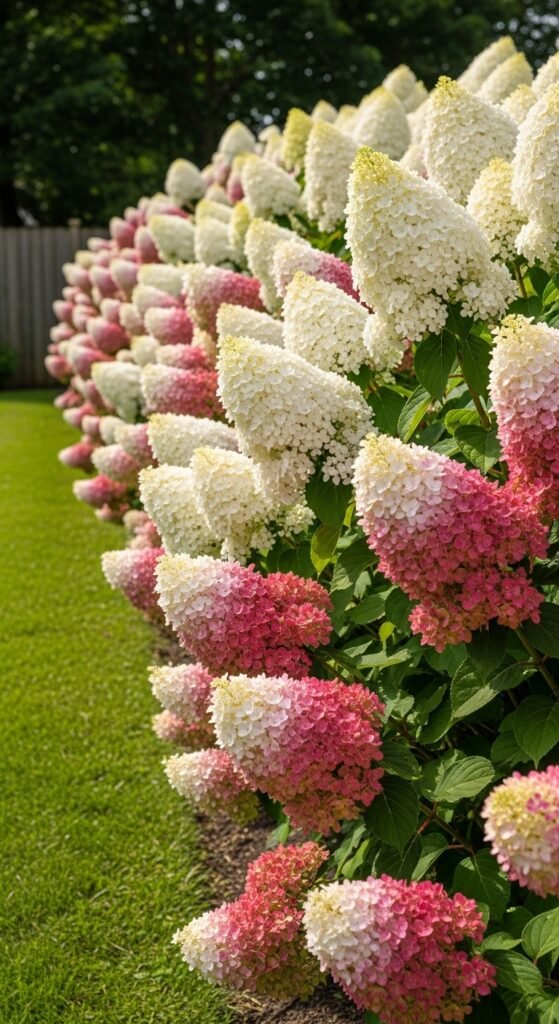
5) Use Panicle Hydrangeas as Privacy Hedges
Panicle hydrangeas (Hydrangea paniculata) grow taller and more upright, making them excellent for natural privacy screens. Varieties like ‘Pinky Winky’ or ‘Quick Fire’ reach 6–10 feet and bloom reliably on new wood.
Plant them 4–6 feet apart along property lines. They’re drought-tolerant once established and handle full sun better than most. Prune in late winter for shape and abundant flowers.
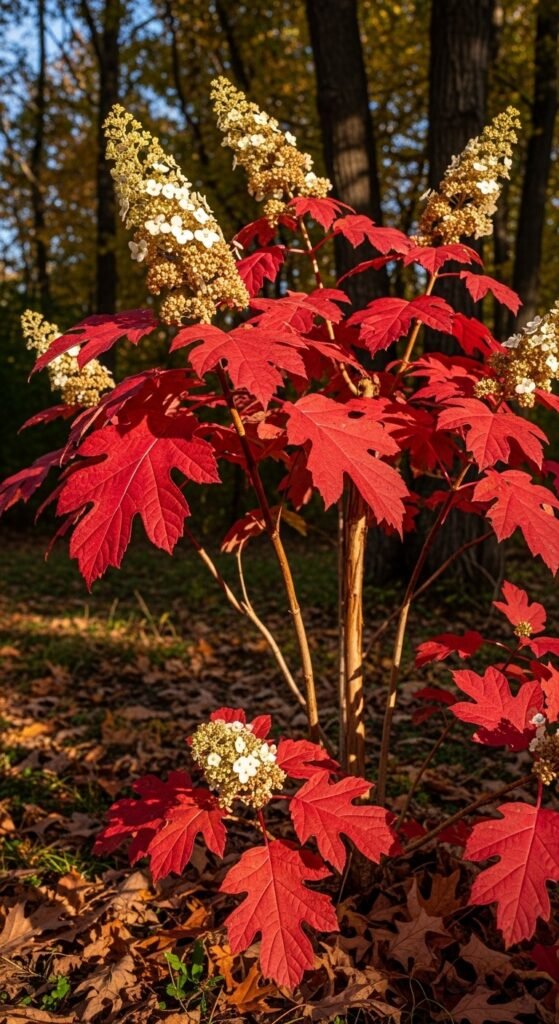
6) Incorporate Oakleaf Hydrangeas for Four-Season Interest
Oakleaf varieties (Hydrangea quercifolia) offer large, oak-shaped leaves that turn brilliant red in fall, exfoliating bark for winter texture, and cone-shaped white blooms in summer. This native shrub brings year-round appeal.
They’re ideal for woodland edges or mixed borders. Plant in well-drained soil with partial shade. Their fall color rivals any maple.
7) Mix Hydrangeas with Perennials for Layered Borders
Combine hydrangeas with hostas, astilbe, and ferns for lush, textured layers in shade gardens. The big blooms provide height while groundcovers fill the base. This creates a professional, cohesive look with minimal effort.
Choose companions that enjoy similar moist, rich conditions. For more perennial pairing ideas, see our patio privacy plants suggestions.
8) Train Climbing Hydrangeas on Walls or Arbors
Climbing hydrangea (Hydrangea anomala subsp. petiolaris) is a slow-growing vine that eventually covers fences, walls, or trees with white lacecap flowers. It clings naturally with aerial roots.
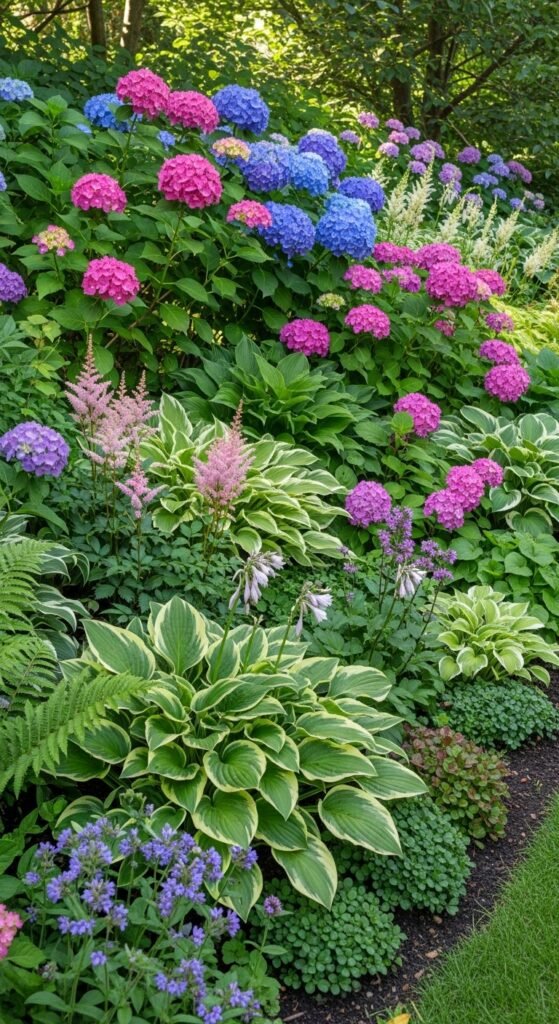
Give it sturdy support and consistent moisture. Once established, it’s low-maintenance and shade-tolerant. Perfect for vertical interest.
9) Create a Cutting Garden Focused on Long-Lasting Blooms
Dedicate a sunny spot to hydrangeas bred for cutting, like panicle or smooth types that hold up well in vases. Harvest stems when flowers feel papery for the longest life.
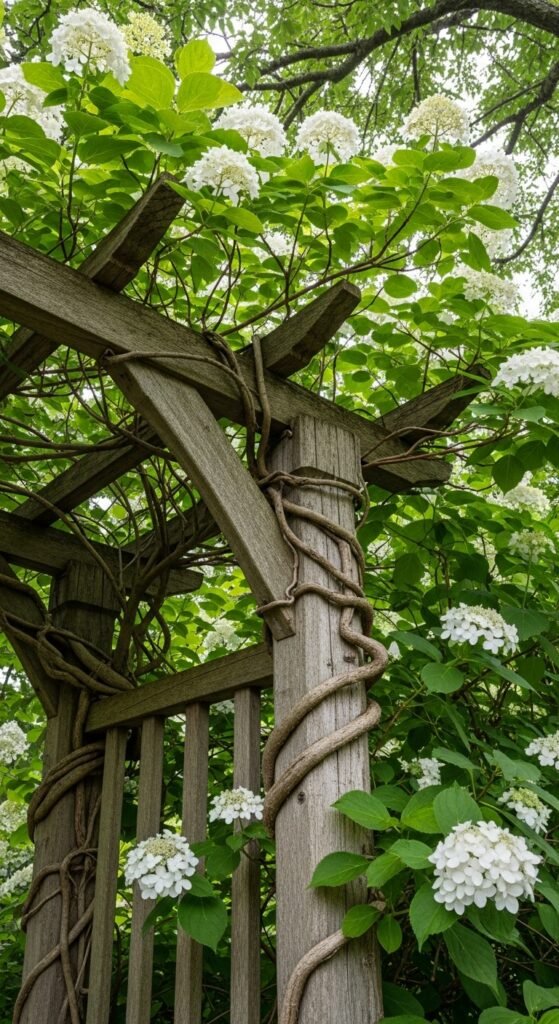
Plant extra so you always have bouquets. These make thoughtful gifts or home decor. For preserving your harvest, try our food dehydration chart techniques on other garden items.
10) Use Hydrangeas in Fairy Garden Features
Miniature hydrangea varieties or young plants add whimsical scale to fairy gardens. Their tiny blooms look magical among mosses and small accessories.
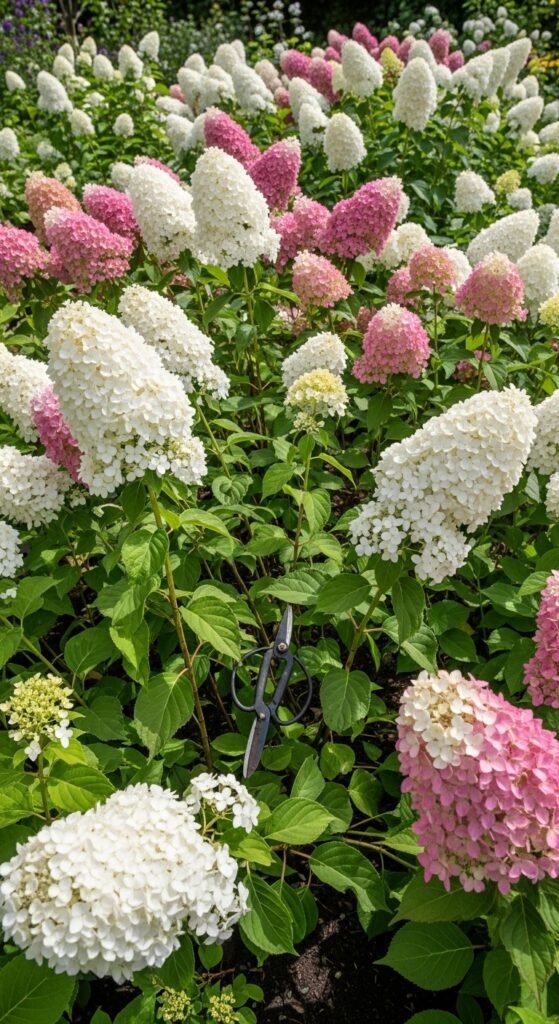
Combine with fall fairy garden ideas or summer versions for seasonal charm. This project delights kids and adults alike.
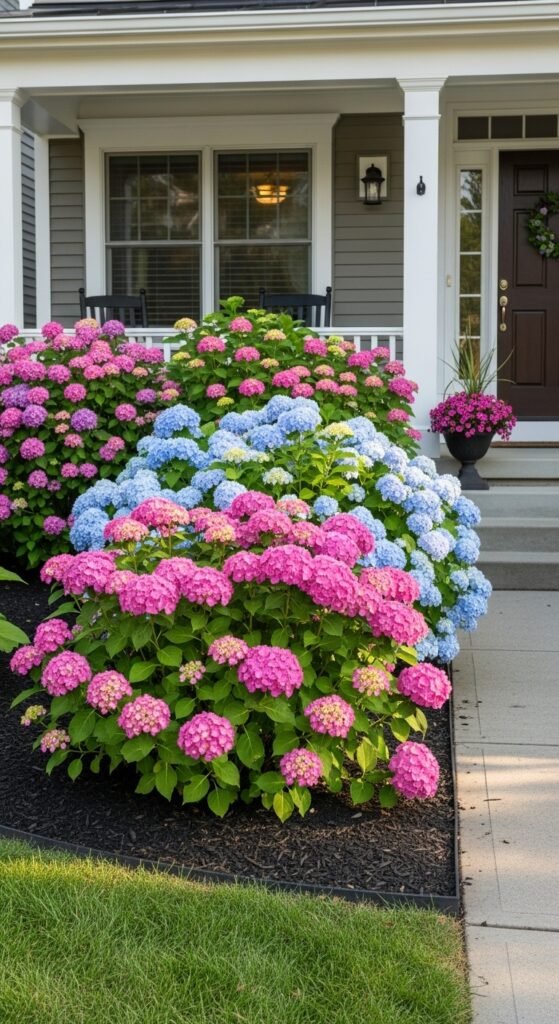
11) Plant a Hydrangea Foundation for Curb Appeal
Frame your home’s foundation with rounded hydrangea bushes for timeless curb appeal. Choose reblooming varieties for flowers from spring through fall.
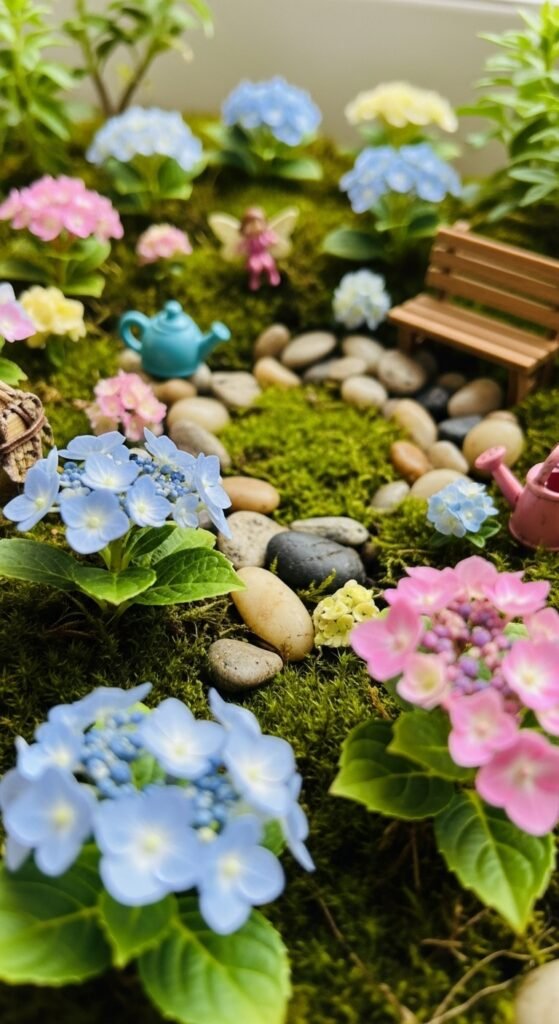
Keep them pruned neatly and mulched for a polished look. This simple upgrade boosts your home’s value and beauty.
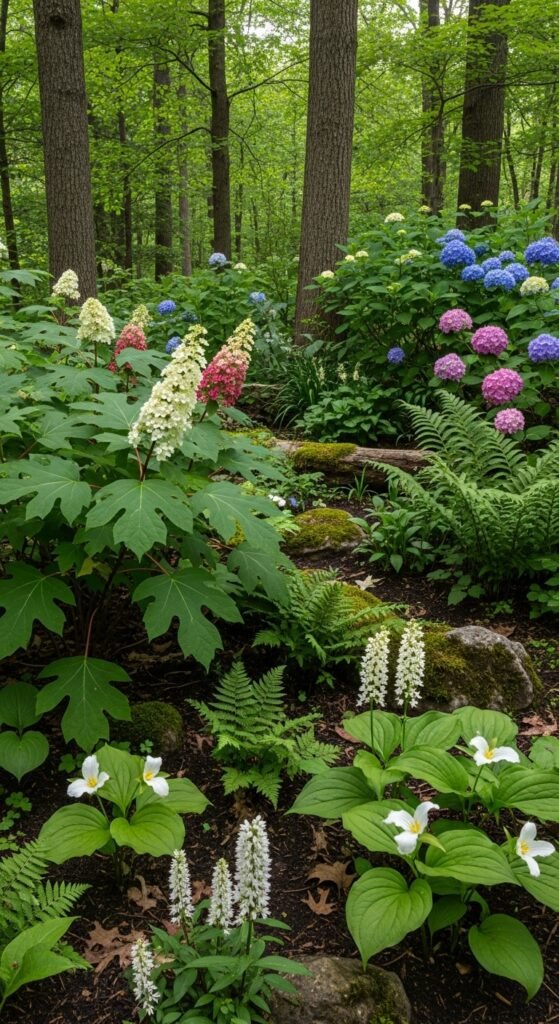
12) Add Hydrangeas to a Woodland Shade Garden
In dappled woodland settings, hydrangeas thrive under tall trees. Pair oakleaf or bigleaf types with native ferns and wildflowers for a natural, serene escape.
They appreciate the cool, moist conditions. For seasonal prep, reference our frost protection for plants tips.
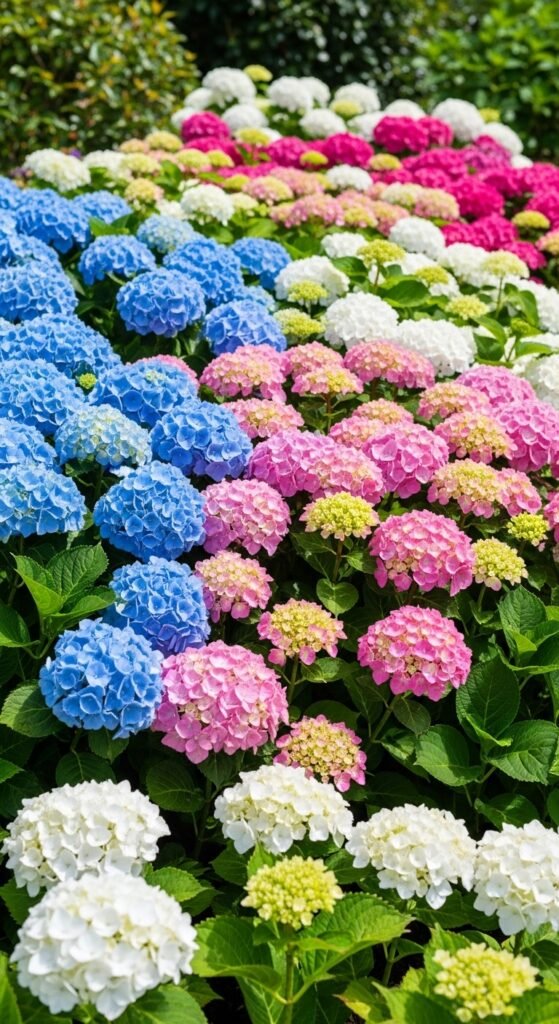
13) Experiment with Hydrangea Color Blends in One Bed
Plant a mix of blue, pink, and white varieties together for a multicolored spectacle. Adjust soil pH in zones to create intentional gradients.
This creates a living rainbow. Rebloomers ensure continuous color. Great for Instagram-worthy gardens.
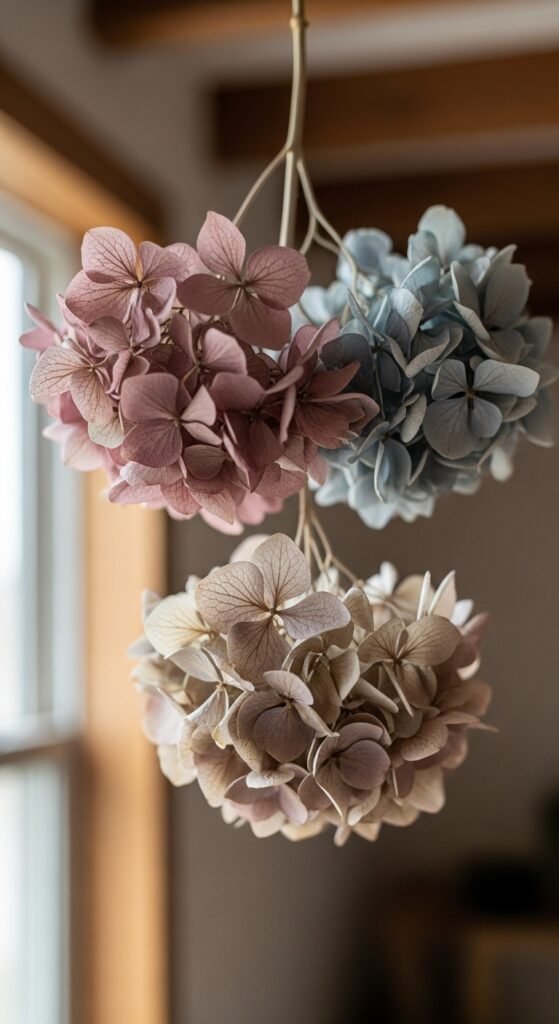
14) Use Dried Hydrangeas for Year-Round Decor
Many hydrangeas dry beautifully, retaining color and shape for wreaths or arrangements. Cut blooms when they start to feel leathery.
Hang upside down in a cool, dry place. This extends their beauty into winter. For more drying inspiration, see related preservation guides on the site.
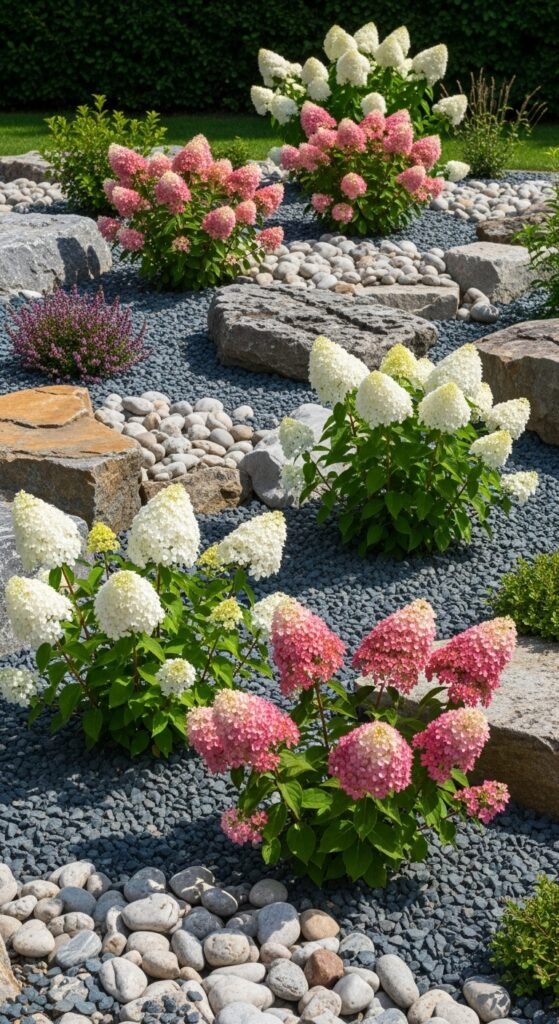
15) Build a Low-Maintenance Hydrangea Rock Garden
Incorporate hydrangeas into a rock garden with good drainage and mulch. Panicle types excel here, tolerating tougher conditions once established.
Add stones and gravel for contrast against lush foliage. This low-water design suits modern landscapes.
Key Tips for Growing Gorgeous Hydrangeas
Watering and Mulching Essentials
You should aim for about 1 inch of water weekly, more during hot spells. Apply 2–3 inches of organic mulch to retain moisture and regulate soil temperature.
Best Pruning Practices by Type
Prune bigleaf and oakleaf after flowering (old wood); prune panicle and smooth in late winter (new wood). This ensures maximum blooms.
Soil and Fertilizer Advice
Use acidic fertilizer in spring for blues or balanced for pinks/whites. Test soil annually and amend as needed.
Frequently Asked Questions
Why are my hydrangea leaves wilting even though I water them?
Hydrangeas wilt quickly in heat or intense afternoon sun. They often recover in the evening. Ensure consistent moisture and add shade if needed.
When is the best time to plant hydrangeas?
Early spring or fall is ideal, allowing roots to establish before extreme weather.
How do I make my hydrangeas turn blue?
Lower soil pH below 6.0 with aluminum sulfate or acidic amendments like pine needles.
Do hydrangeas come back every year?
Yes, they’re perennials in zones 3–9 depending on variety. Proper care ensures reliable returns.
Ready to bring these hydrangea ideas to life? Start planting and watch your garden bloom! For more gardening inspiration, explore the full range of tips at Garden Source.