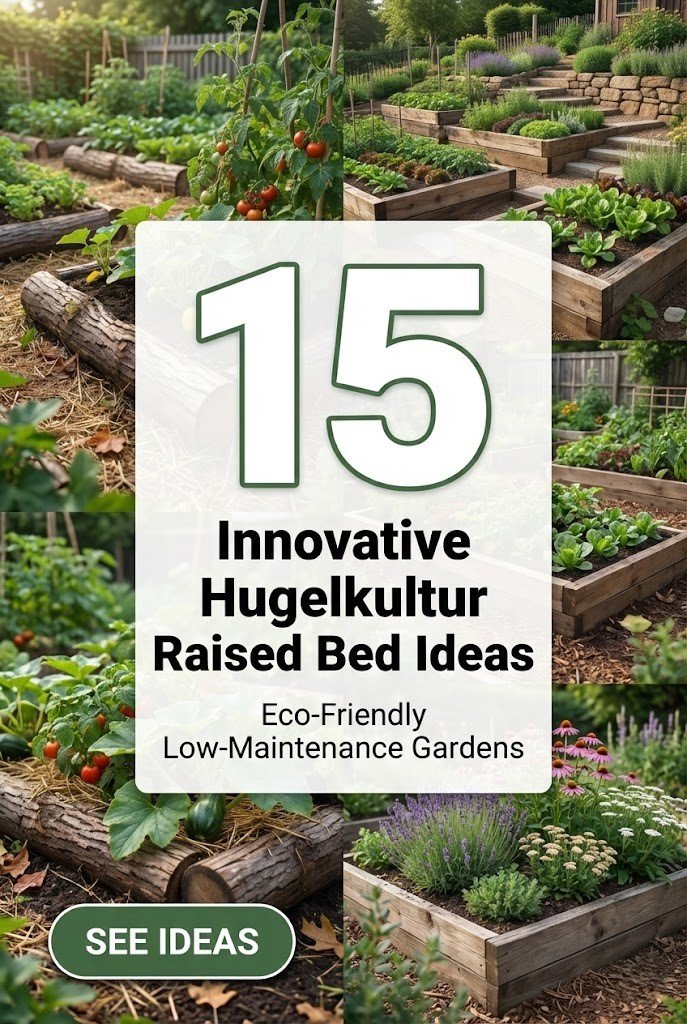
You may have heard of hugelkultur raised beds as a permaculture-inspired technique that transforms garden waste into productive soil. Originating from Central European traditions, a hugelkultur raised bed involves layering woody debris, such as logs and branches, at the base, then covering it with compost, soil, and mulch. This creates a mound that decomposes over time, enriching the earth naturally.
The value of implementing a hugelkultur raised bed lies in its eco-friendly benefits. It conserves water by retaining moisture from the decaying wood, reduces the need for fertilizers through nutrient release, and promotes biodiversity in your garden. Whether you are a beginner or seasoned gardener, these beds enhance soil health while minimizing maintenance, making them ideal for sustainable practices.
By adopting hugelkultur, you contribute to a healthier ecosystem, recycling materials that might otherwise go to waste. Explore these 15 ideas to inspire your next project, each tailored to different spaces and needs.
1) Basic Log-Filled Foundation Bed
A basic log-filled foundation bed starts with a simple mound constructed from larger logs at the bottom, followed by smaller branches, leaves, and topsoil. This classic approach forms the core of hugelkultur, where the wood acts as a sponge for water and nutrients.
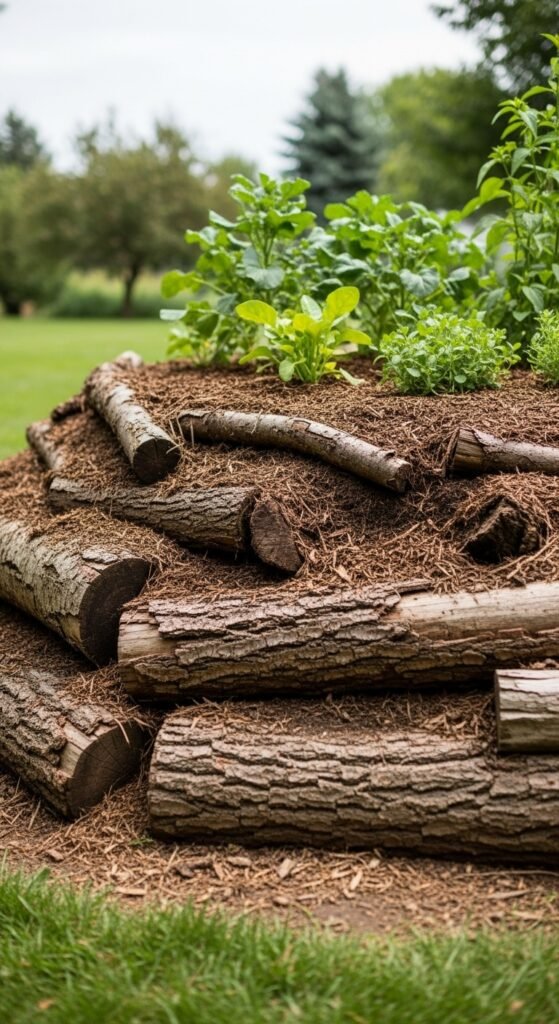
You will appreciate the long-term water retention and reduced irrigation needs, as the decomposing materials create a self-sustaining environment. It also builds fertile soil without synthetic inputs, aligning with permaculture ethics for earth care.
To build it, dig a shallow trench about 1-2 feet deep, place logs horizontally, add green waste and compost, then cover with 6-12 inches of soil. Plant directly into the mound, mulching the surface to prevent erosion. Over time, the bed settles, providing a robust base for annual vegetables or perennials, yielding bountiful harvests with minimal effort.
2) Tiered Slope-Adapted Mound
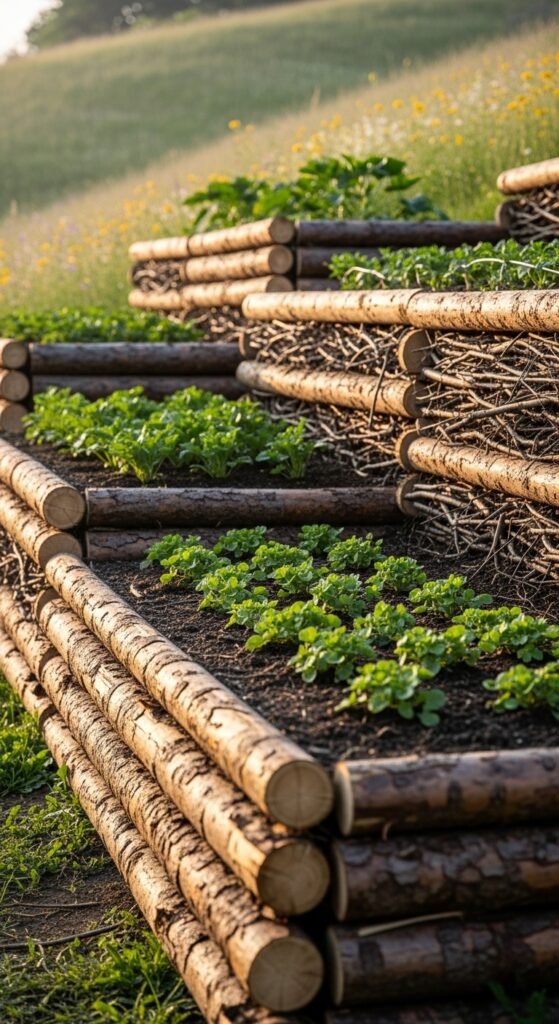
For uneven terrain, a tiered slope-adapted mound incorporates hugelkultur principles by building multiple levels along a hillside, using logs to create natural terraces that prevent soil runoff.
This design offers erosion control and improved drainage, making it perfect for hilly gardens. It maximizes space while enhancing water absorption, embodying the efficiency of permaculture principles like observing and interacting with your landscape.
Begin by outlining contours with stakes, then layer logs perpendicular to the slope for stability. Fill gaps with branches and nitrogen-rich materials, topping with soil. Plant erosion-resistant species on the edges. This setup not only stabilizes the ground but also creates microclimates for diverse crops, ensuring productivity even in challenging areas.
3) Perennial Polyculture Integration
Integrate perennials into your hugelkultur raised bed by layering woody base with companion plants like herbs, flowers, and shrubs, fostering a diverse ecosystem.
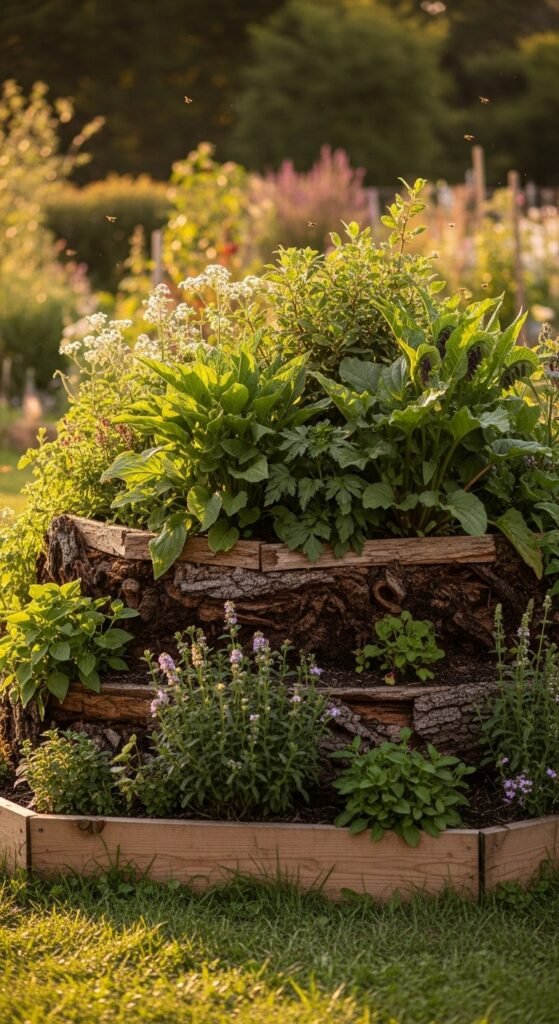
You gain biodiversity benefits and pest resistance, as mixed plantings attract beneficial insects and improve soil structure. This mirrors polyculture garden strategies, promoting resilience and ongoing yields without annual replanting.
Construct the bed with a core of hardwood logs, add compost layers interspersed with perennial roots like comfrey or rhubarb, then mulch heavily. Position sun-loving plants at the top and shade-tolerant ones lower. Over seasons, the bed evolves into a self-regulating system, reducing your workload while providing continuous harvests and habitat for wildlife.
4) Vegetable-Focused Harvest Bed
A vegetable-focused harvest bed tailors hugelkultur for annual crops, with a woody base optimized for root vegetables and leafy greens.
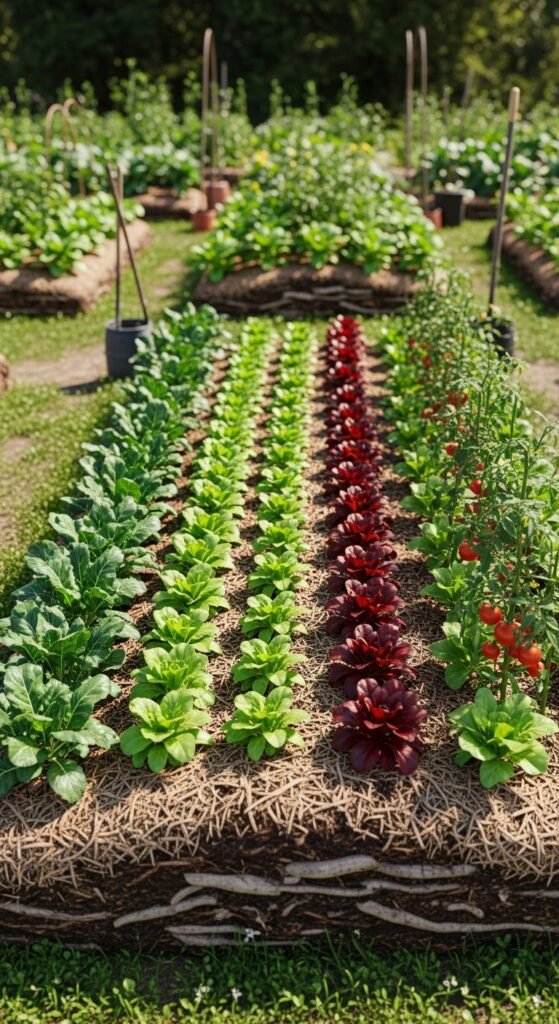
The nutrient-rich decomposition supports vigorous growth, and the raised structure offers better accessibility for harvesting. It’s an excellent match for raised bed vegetable garden layouts, ensuring high productivity in limited spaces.
Layer large branches at the bottom, cover with grass clippings and manure for quick breakdown, then add fertile topsoil. Plant in rows or squares, incorporating crop rotation. This method minimizes weeding and watering, allowing you to focus on enjoying fresh produce from a thriving, low-maintenance setup.
5) Fruit Tree Guild Mound
Build a fruit tree guild mound by centering a young fruit tree in the hugelkultur bed, surrounded by supportive plants like nitrogen-fixers and pollinators.
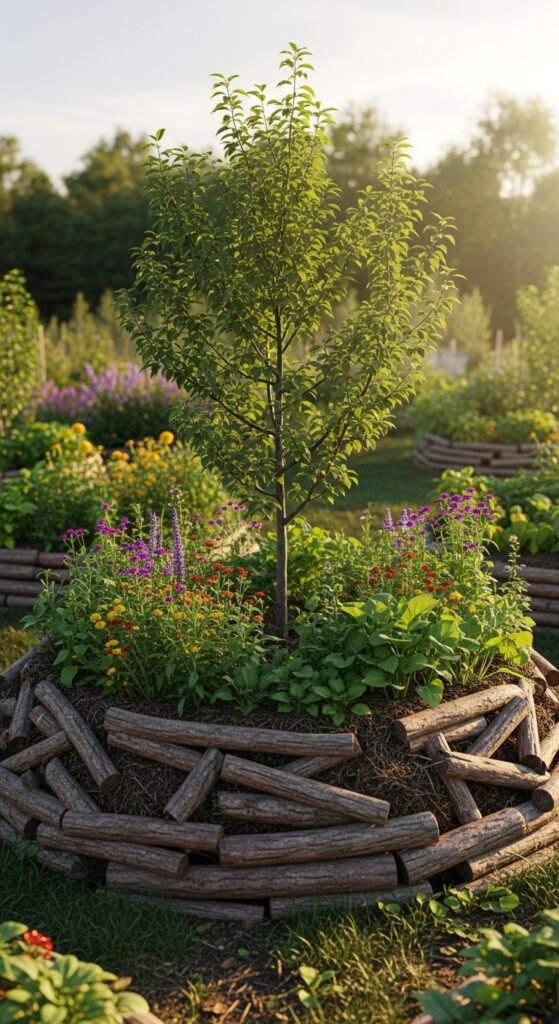
You achieve symbiotic relationships and increased yields, as the guild mimics natural forests. This aligns with food forest design, creating layered, productive systems.
Start with logs radiating from the tree spot, layer organic matter, and plant companions like beans and flowers around the base. Mulch to retain moisture. As the tree matures, the bed provides ongoing nutrients, fostering a mini-ecosystem that enhances fruit quality and garden health.
6) Compact Urban Space Adaptation
For small yards, a compact urban space adaptation scales down hugelkultur into narrower mounds or boxes, using branches and urban waste like pruned twigs.
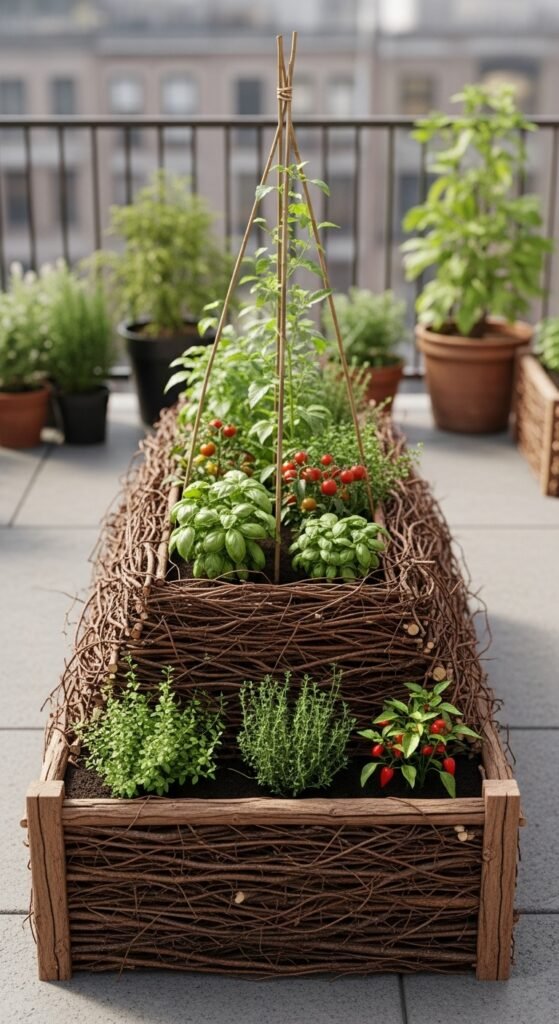
This provides space efficiency and urban sustainability, turning limited areas into productive zones without heavy digging.
Outline a 3-4 foot wide bed, layer small wood pieces, add kitchen compost, and top with soil. Plant vertically with climbers. It fits balconies or patios, offering fresh herbs and veggies while recycling materials effectively.
7) Layered Compost-Enhanced Build
Enhance your hugelkultur with layered compost by alternating wood with fresh compost tea-soaked materials for accelerated decomposition.
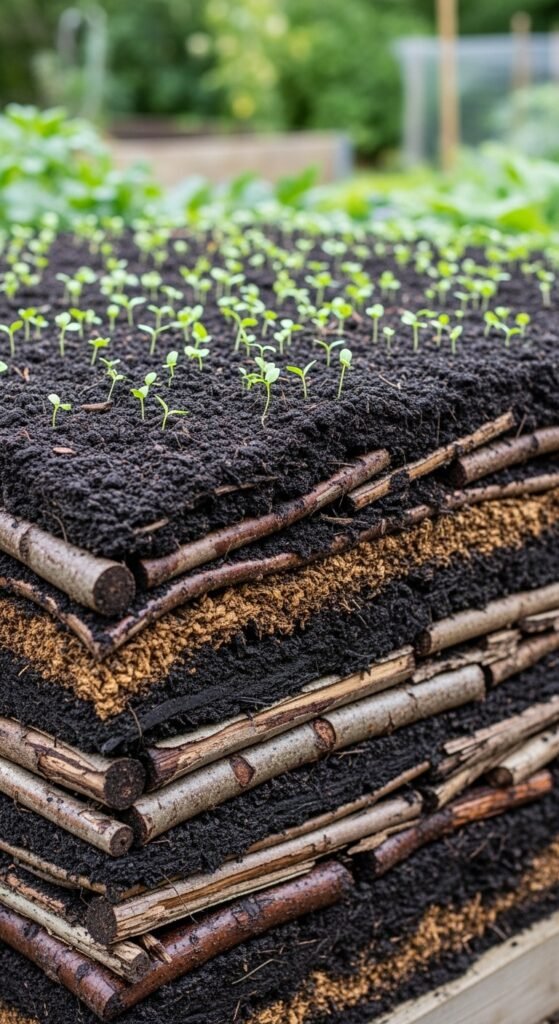
The boosted microbial activity leads to faster soil fertility, ideal for impatient gardeners seeking quick results.
Assemble logs, soak with compost tea, add greens and browns, then soil. This enriches the bed rapidly, supporting intensive planting from the first season onward.
8) Wildlife Habitat Incorporation
Incorporate wildlife habitat by leaving gaps in the wood layers for insects and small animals, planting native species on the mound.
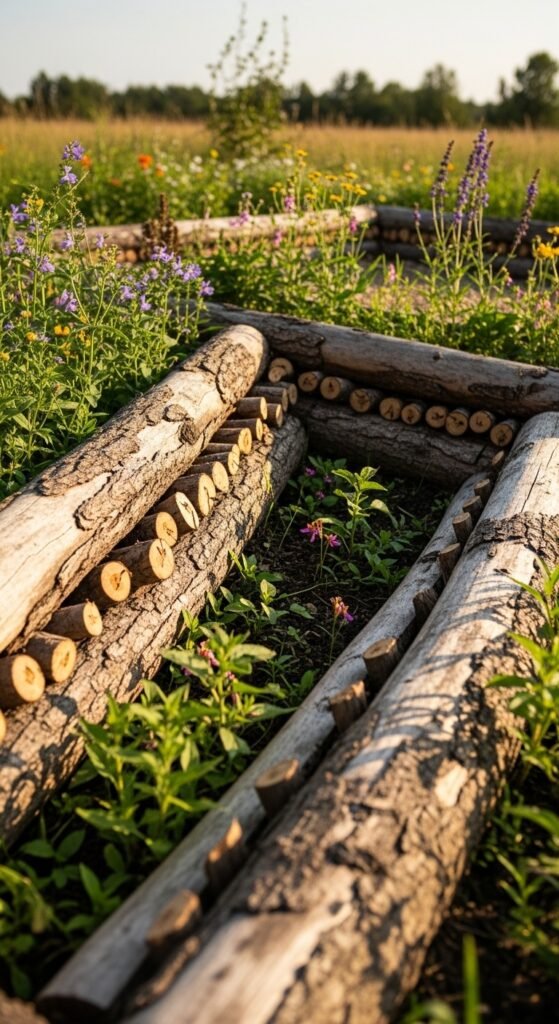
You promote ecological balance and natural pest control, creating a thriving garden ecosystem.
Build with irregular log placements, add leaf litter, and select pollinator-friendly plants. This design invites beneficial creatures, enhancing biodiversity and garden resilience.
9) Spiral-Shaped Herb Configuration
A spiral-shaped herb configuration twists the hugelkultur into a coiled mound, with varying heights for microclimates.
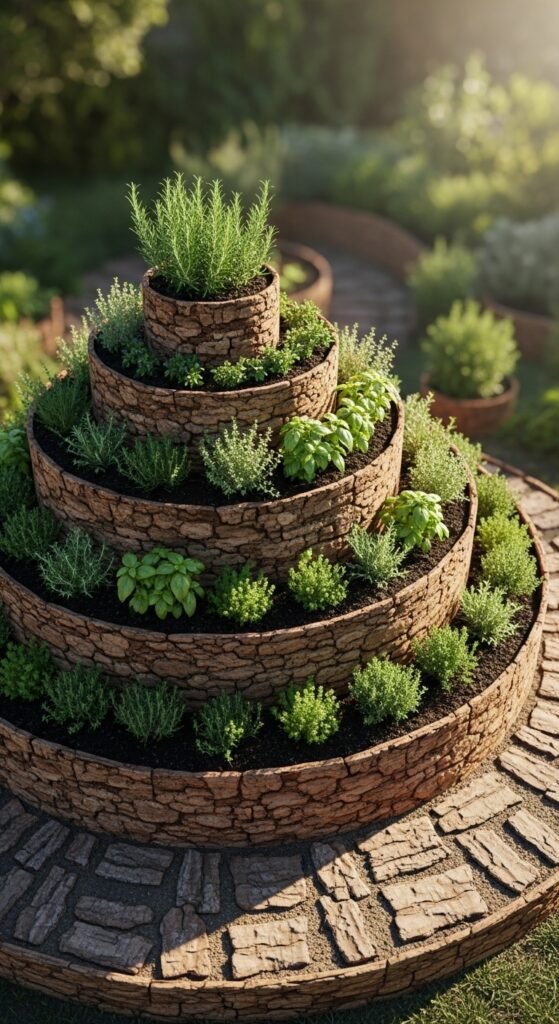
Offers diverse growing conditions and aesthetic appeal, perfect for herbs needing different sun and moisture levels.
Form a spiral with logs, build up layers, and plant accordingly. It maximizes space while providing easy access for harvesting.
10) Integrated Seating Edge Design
Add integrated seating by capping the hugelkultur edges with flat stones or logs, creating a multifunctional space.
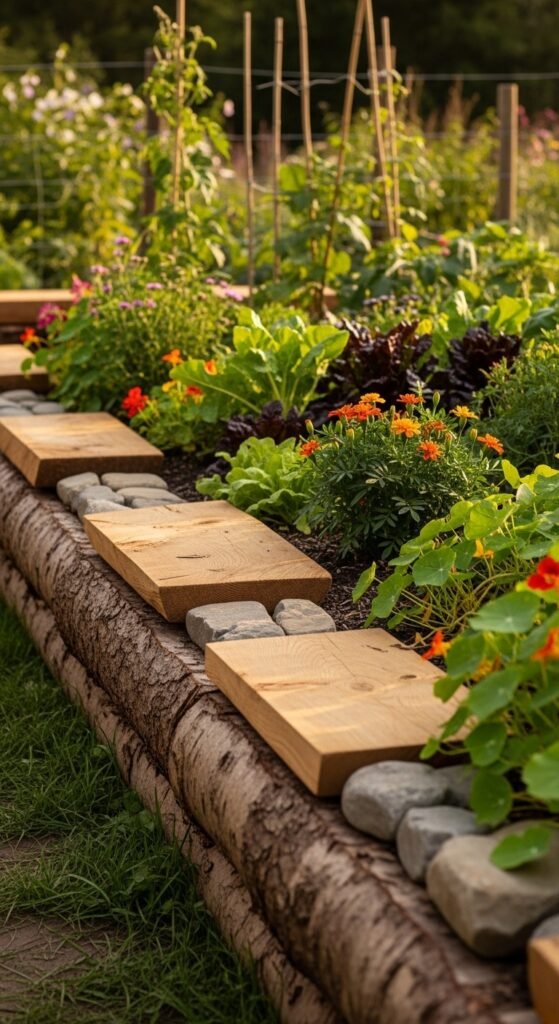
Provides comfortable garden lounging and practical borders, blending utility with relaxation.
Layer the core as usual, then secure seating materials. This invites you to enjoy your garden up close, fostering a deeper connection.
11) Container-Adapted Mini Version
Adapt hugelkultur for containers by using large pots with branch bases, suitable for patios or indoors.
Yields portability and small-scale sustainability, extending the technique to non-ground spaces.
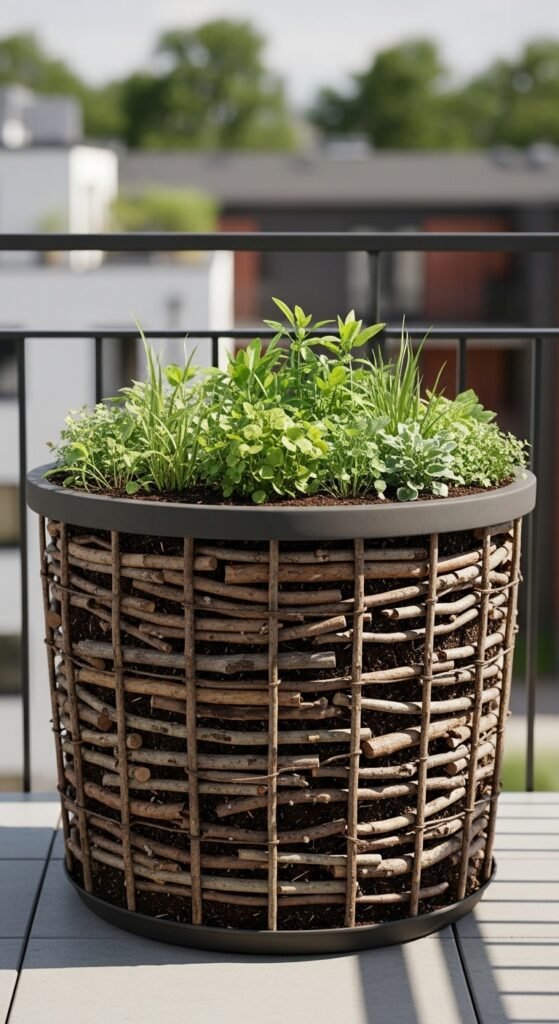
Fill pots with sticks, compost, and soil. Plant compact varieties. It’s versatile for urban dwellers, maintaining benefits in confined areas.
12) Crop Rotation Optimized Layout
Optimize for crop rotation by dividing the hugelkultur into sections, rotating families annually.
Ensures soil health maintenance and disease prevention, sustaining long-term productivity.
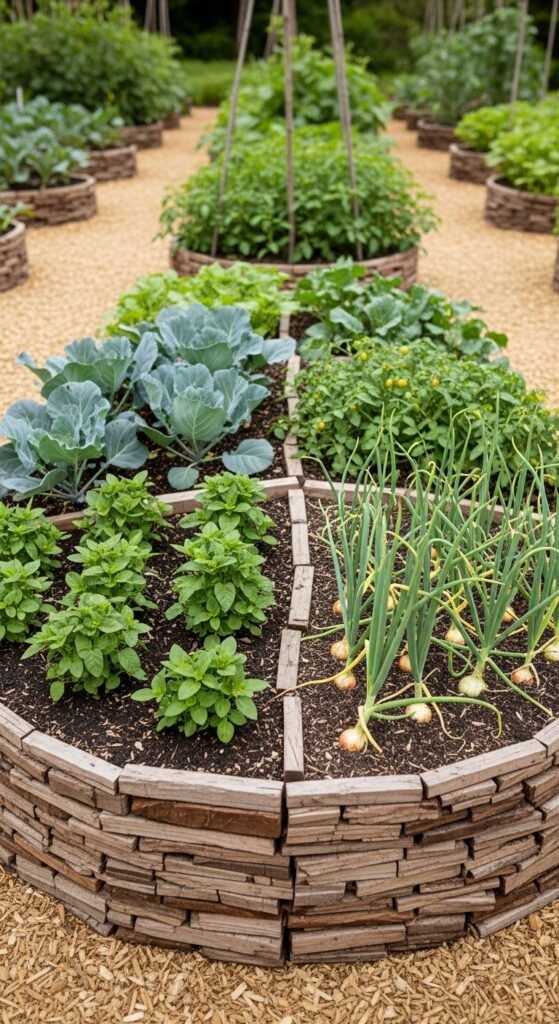
Mark zones with stakes, layer uniformly, and plan rotations. This strategic approach keeps the bed vibrant year after year.
13) Rainwater Harvesting Synergy
Synergize with rainwater harvesting by shaping the mound to direct water into adjacent barrels or swales.
Enhances water conservation and self-sufficiency, integrating with broader eco-systems.
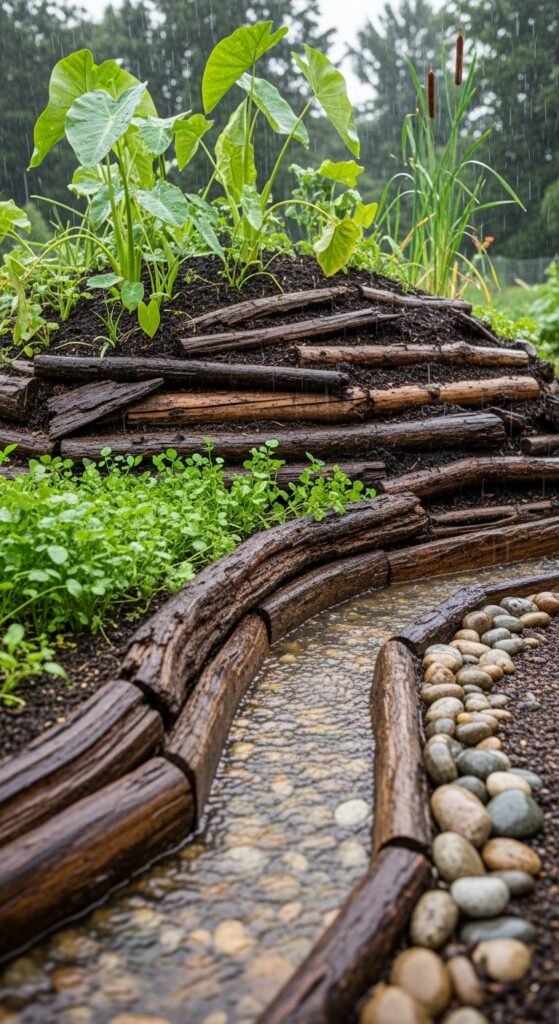
Contour the bed slopes, connect to collection points. It amplifies hugelkultur’s moisture retention, supporting drought-prone gardens.
14) Aesthetic Flower-Integrated Border
Integrate flowers along the borders of your hugelkultur raised bed, blending edibles with ornamentals.
Delivers visual beauty and pollinator attraction, elevating garden appeal.
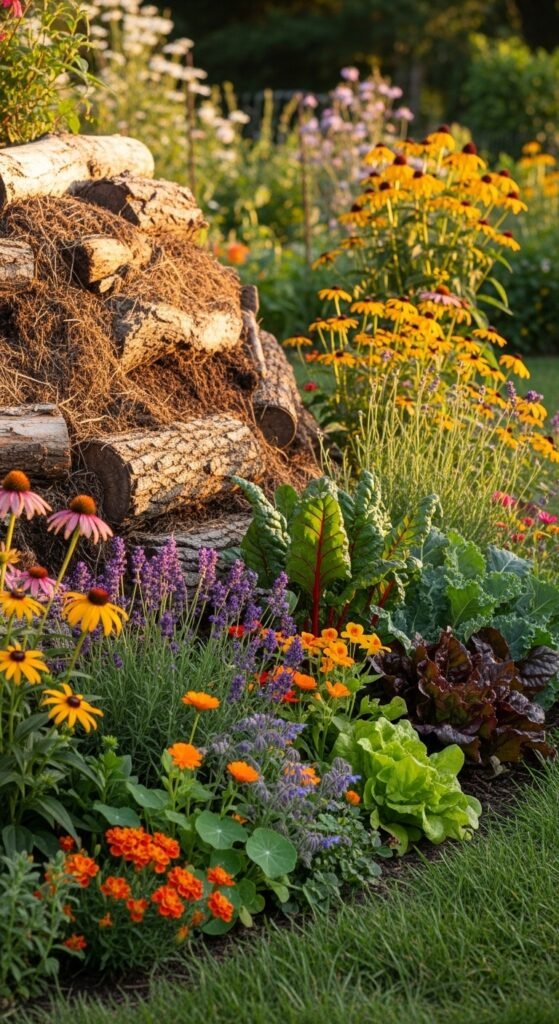
Layer the core, then edge with blooming perennials. This creates a picturesque, functional space that delights the senses.
15) Multi-Layered Guild Expansion
Expand into a multi-layered guild by incorporating understory plants, vines, and ground covers around the hugelkultur core.
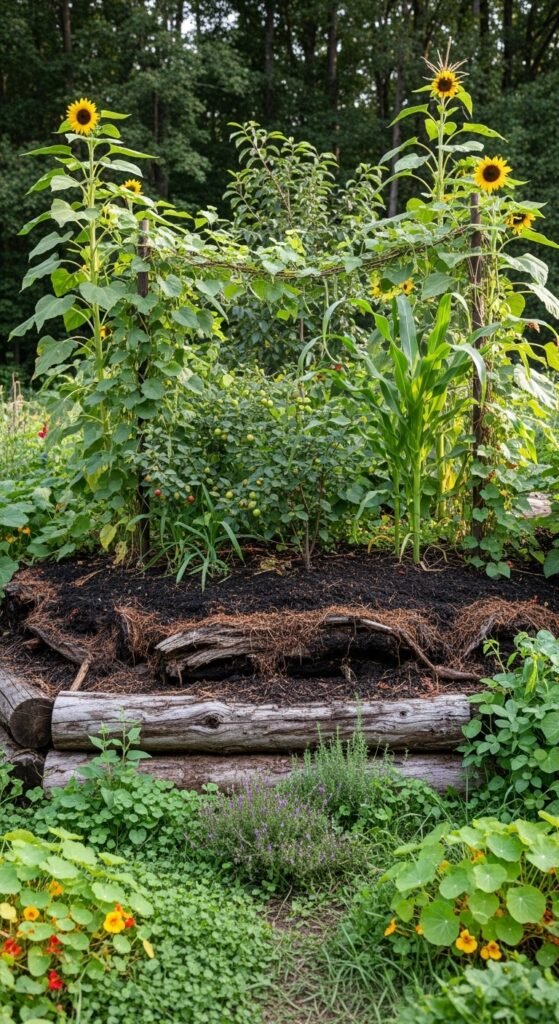
Maximizes yield diversity and ecosystem support, drawing from advanced permaculture designs.
Build the base, plant in layers by height. It evolves into a productive, harmonious bed over time.
Key Principles of Hugelkultur
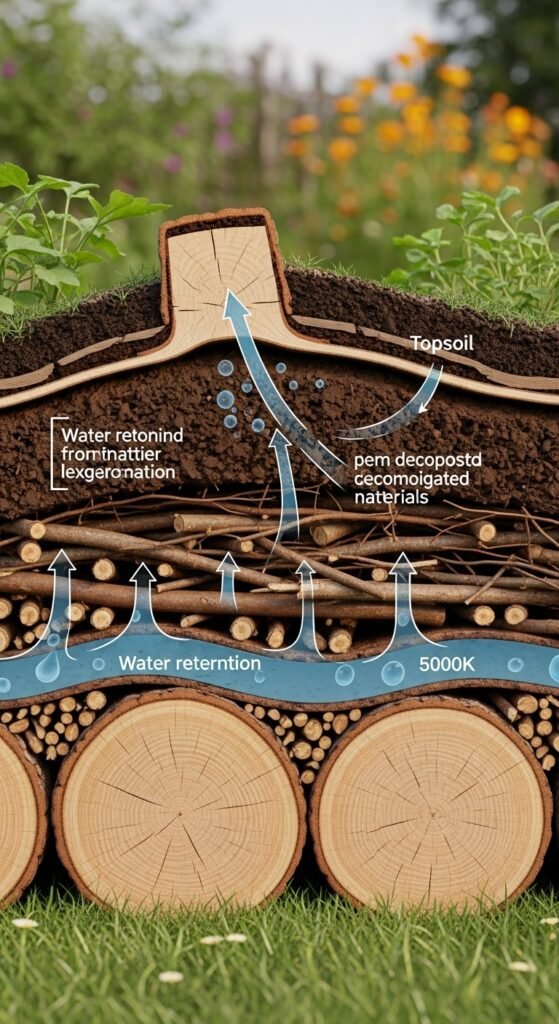
Water Retention Mechanisms
The woody core absorbs and slowly releases moisture, reducing watering frequency and aiding in drought conditions.
Soil Fertility Building
Decomposition provides ongoing nutrients, eliminating the need for chemical fertilizers and improving soil structure.
Sustainability Aspects
By recycling organic waste, hugelkultur minimizes environmental impact and promotes regenerative gardening practices.
Frequently Asked Questions
What materials are essential for building a hugelkultur raised bed?
Essential materials include logs, branches, leaves, compost, and topsoil. Start with larger wood at the base for structure, then layer smaller organics for decomposition.
How long does a hugelkultur raised bed last?
A well-built hugelkultur raised bed can last 5-20 years, depending on wood type and climate, as it gradually breaks down and enriches the soil.
Can hugelkultur raised beds be used in any climate?
Yes, they adapt to various climates, though in arid areas, focus on water-retaining mulches, and in wet regions, ensure good drainage to prevent sogginess.
What plants thrive best in hugelkultur raised beds?
Vegetables, herbs, perennials, and even small fruits thrive, benefiting from the nutrient-rich, moisture-holding environment created by the decaying wood layers.