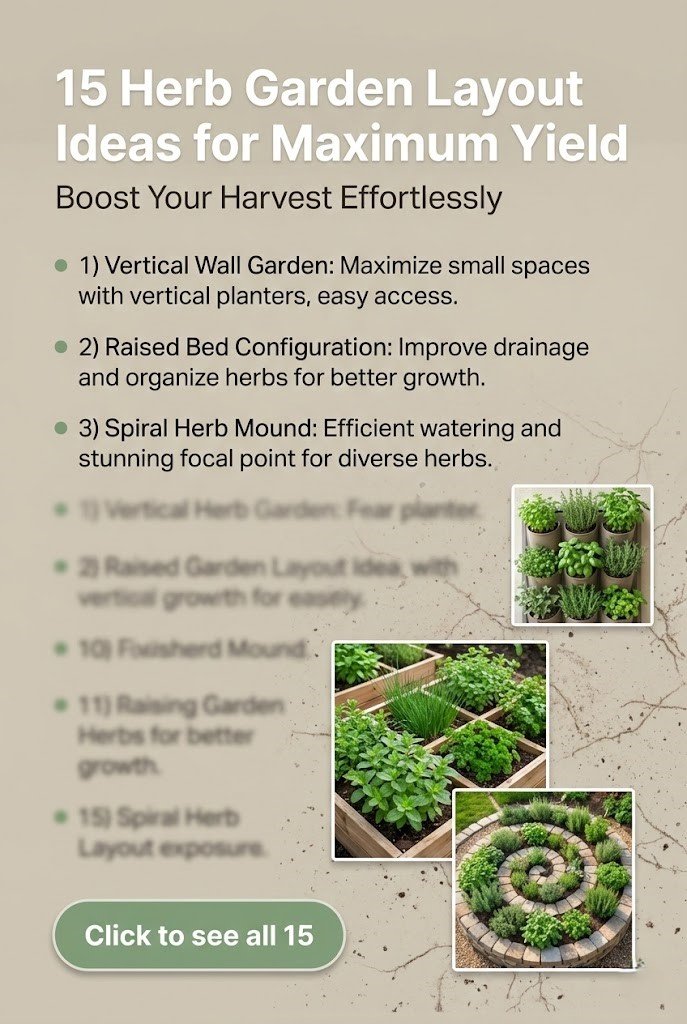
Creating an herb garden can transform your outdoor or indoor space into a productive and aromatic haven. By focusing on herb garden layout ideas, you ensure efficient use of space, optimal sunlight exposure, and easy access for harvesting. Whether you have a spacious backyard or a compact balcony, these layouts cater to various needs, promoting healthy growth and bountiful harvests.
The key to a successful herb garden lies in understanding your herbs’ requirements, such as soil type, watering needs, and companion planting. Thoughtful planning minimizes pests and maximizes flavor, allowing you to enjoy fresh herbs year-round. With these ideas, you can design a layout that suits your lifestyle while enhancing your culinary experiences.
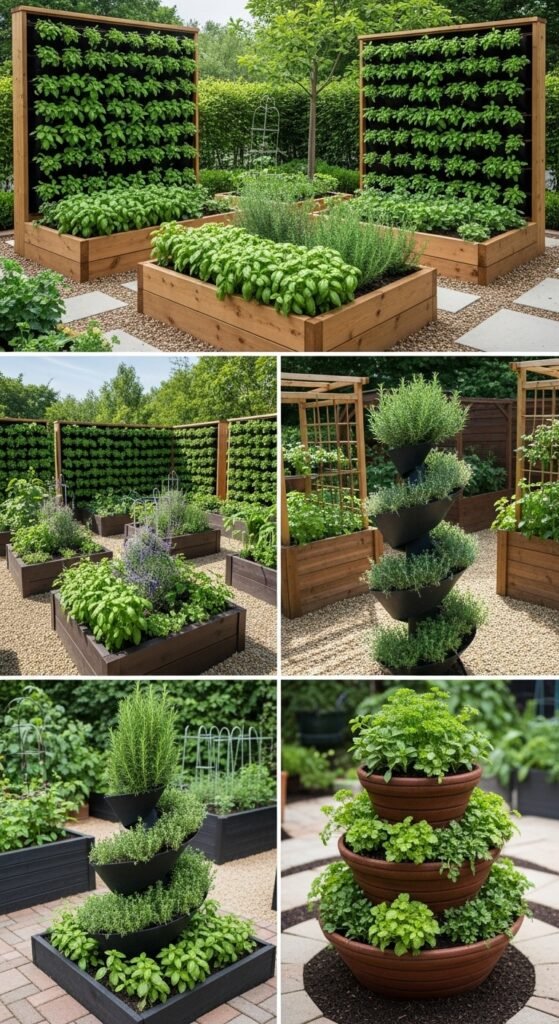
Explore the following 15 herb garden layout ideas, each designed to inspire and guide you toward creating your ideal setup.
1) Vertical Wall Garden
You can maximize limited space by installing a vertical wall garden for your herbs. This layout involves mounting planters or pockets on a wall, allowing herbs like basil and mint to grow upwards. It’s ideal for urban dwellers with small patios or balconies, providing easy access and adding a green aesthetic to your environment.
The benefits include better air circulation, reduced pest issues, and efficient use of vertical space, leading to higher yields without expanding your footprint. To implement, select a sunny wall, use weather-resistant materials for the structure, and arrange herbs by height—taller ones at the bottom. Incorporate a drip irrigation setup for consistent watering, ensuring your herbs thrive throughout the season.
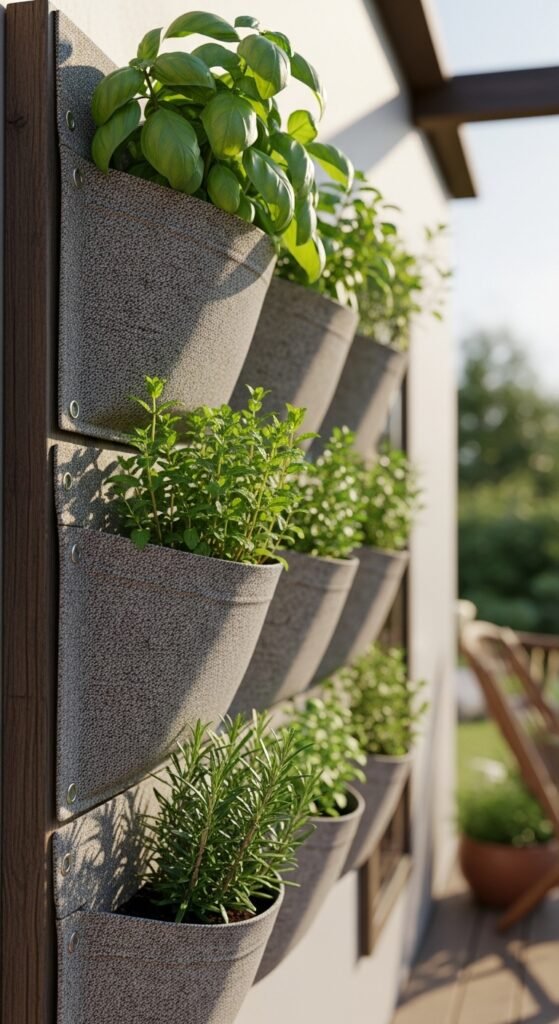
Start with sturdy brackets or a pallet frame, fill with well-draining soil, and plant companions like thyme alongside rosemary for mutual benefits. This approach not only saves space but also creates a visually appealing focal point in your garden.
2) Raised Bed Configuration
You might opt for a raised bed layout to cultivate herbs in a controlled environment. This involves building elevated boxes filled with nutrient-rich soil, perfect for herbs such as parsley and cilantro that prefer good drainage. Raised beds warm up faster in spring, extending your growing season and making maintenance easier on your back.
Why choose this? It prevents soil compaction, improves root health, and allows customization of soil mixes for specific herbs. For setup, construct beds 3-4 feet wide using untreated wood, position in full sun, and divide into sections for organized planting. Consider integrating soaker hose layouts to deliver water directly to roots, minimizing evaporation and disease.
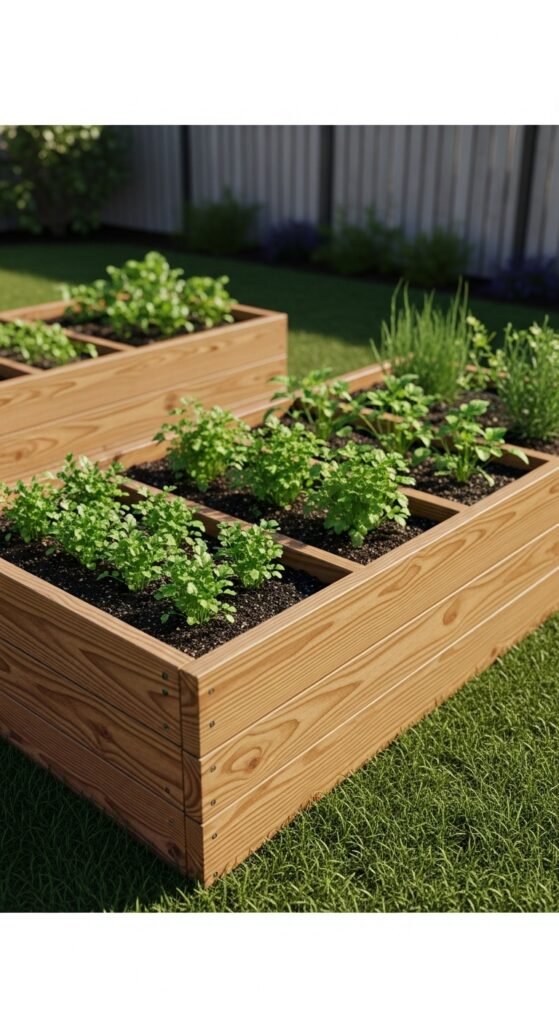
Plant densely but allow space for growth, rotating crops to maintain soil fertility. This layout yields abundant herbs while simplifying weeding and harvesting tasks.
3) Spiral Herb Mound
You can create a spiral herb mound for a unique and functional layout. This design features a coiled mound of soil, with herbs planted along the spiral path, allowing for varying microclimates—drier at the top for Mediterranean herbs like oregano, moister at the base for basil.
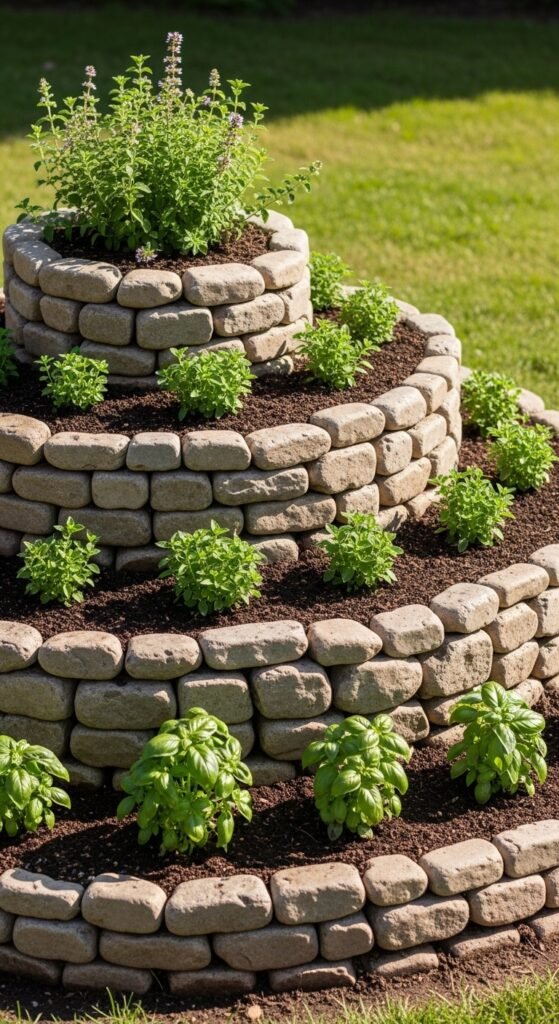
The advantage lies in its space efficiency and natural drainage, promoting diverse herb growth in one compact area. To build, stack stones or bricks in a spiral shape about 3 feet high, fill with compost-amended soil, and plant accordingly. This mimics natural ecosystems, enhancing biodiversity.
Enhance it by adding companion plants that repel pests, ensuring a healthy, productive garden. The spiral’s aesthetic appeal also makes it a conversation starter in your yard.
4) Container Cluster Arrangement
You should consider a container cluster for flexible herb gardening. Group pots of various sizes on a patio or deck, housing herbs like chives and sage. This layout offers mobility, letting you move plants to optimize sunlight or protect from weather.
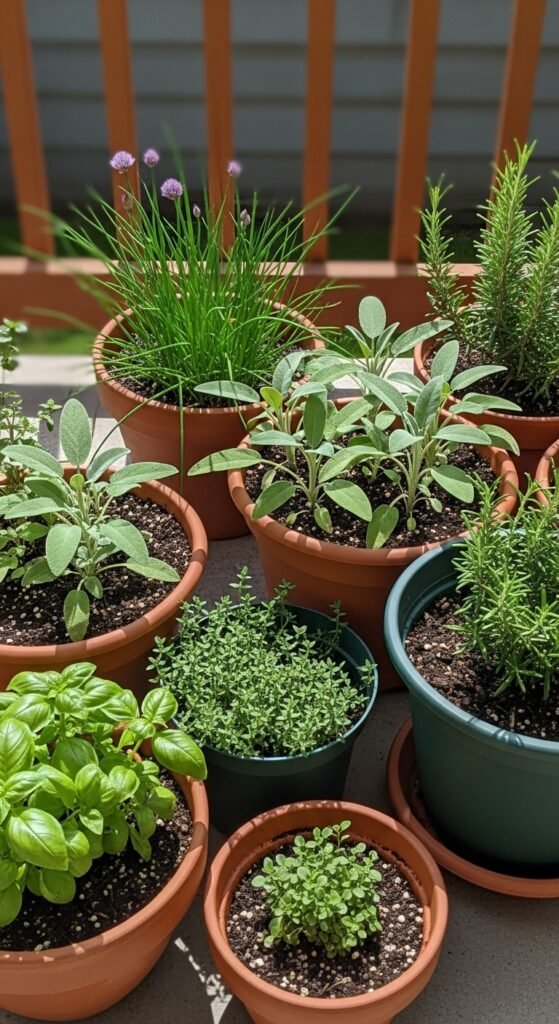
Benefits include easy customization and portability, ideal for renters or seasonal adjustments. Select terracotta or plastic containers with drainage holes, fill with potting mix, and arrange by herb needs—sun-loving ones together. Draw inspiration from spring container garden ideas to refresh your setup annually.
Water individually to meet specific requirements, and rotate pots for even growth. This method provides fresh herbs at your fingertips without committing to permanent beds.
5) Keyhole Garden Design
You can adopt a keyhole garden layout for efficient herb cultivation. This circular bed with a central compost bin and a keyhole-shaped access path allows easy reach to all plants, suitable for herbs like dill and fennel.
It excels in water conservation and soil enrichment, as compost leaches nutrients directly into the bed. Construct using bricks or stones, about 6 feet in diameter, with the compost area in the center. Plant herbs radially, with taller varieties outward.
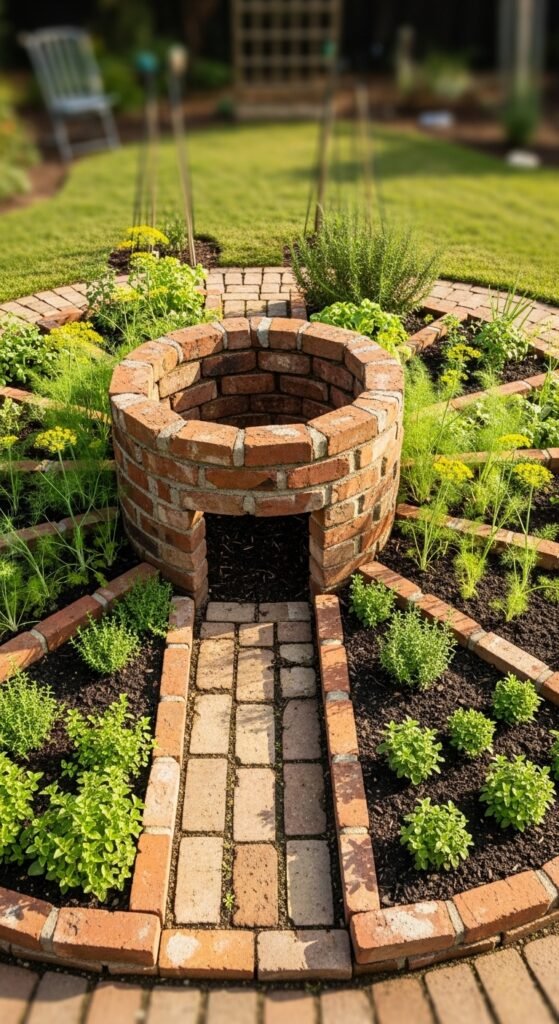
Refer to established keyhole garden techniques for optimal results. This sustainable approach boosts yields while reducing effort in maintenance.
6) Window Box Linear Setup
You might install window boxes for a simple herb layout. Mount elongated planters outside windows, growing herbs such as mint and lemon balm within arm’s reach for kitchen use.
This saves space and provides fresh aromas indoors, enhancing your cooking routine. Choose boxes with secure brackets, fill with lightweight soil, and select herbs that tolerate partial shade if needed. Group compatible plants to avoid overcrowding.
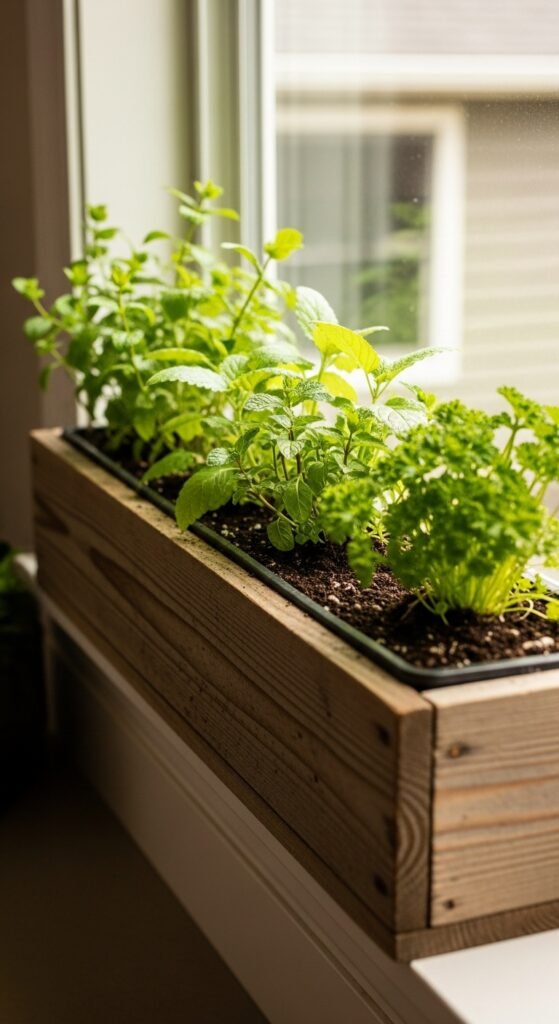
Regular pruning encourages bushy growth, yielding more leaves for harvest. This layout integrates seamlessly with home architecture, adding charm and functionality.
7) Hanging Basket Cascade
You can utilize hanging baskets for a cascading herb garden. Suspend baskets from porches or pergolas, planting trailing herbs like thyme and oregano that drape elegantly.
The elevation protects from ground pests and maximizes vertical space, increasing air flow for healthier plants. Select macrame or chain hangers, use coconut coir liners for moisture retention, and position in dappled sun. Water frequently, as baskets dry out faster.
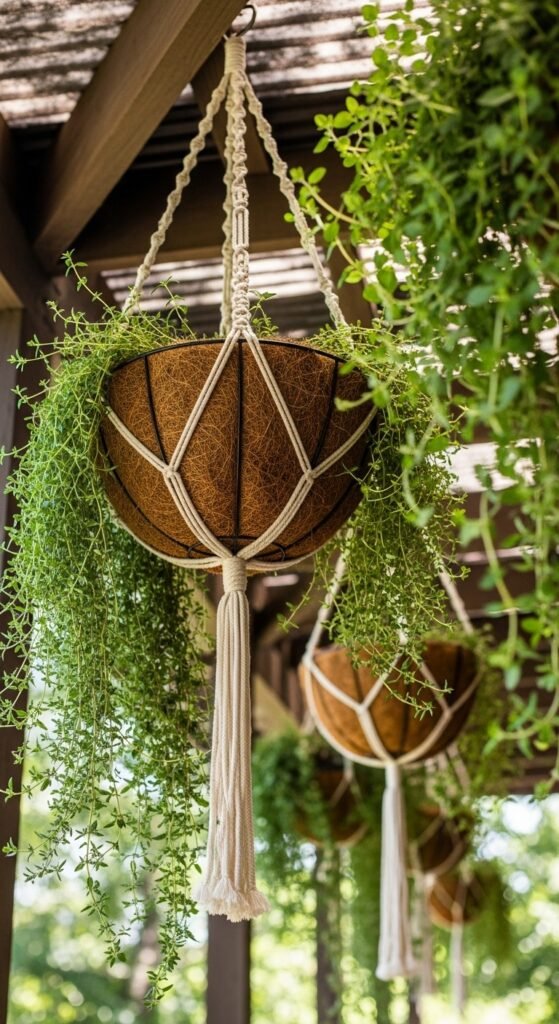
This dynamic layout creates a lush, overhead display, perfect for small areas and offering easy harvesting.
8) Companion Planting Grid
You should implement a companion planting grid in your herb garden. Arrange herbs in a grid pattern where beneficial pairs, like basil with tomatoes (though focused on herbs), enhance growth and deter pests.
Why? It promotes natural pest control and nutrient sharing, leading to robust yields. Map out a 4×4 grid on paper, assign herbs based on compatibility—lavender near rosemary. Plant in rows or beds, ensuring adequate spacing.
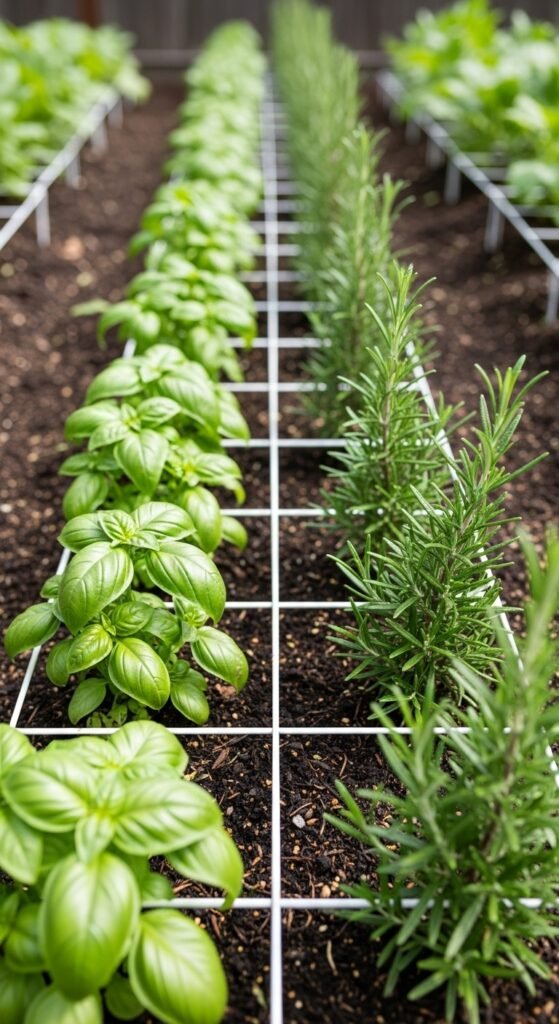
Incorporate ideas from mosquito-repelling plants to add protective herbs. This ecological method fosters a balanced, thriving garden.
9) Square Foot Intensive Plot
You can apply square foot gardening principles to herbs. Divide a bed into 1-foot squares, planting different herbs in each for intensive cultivation.
This maximizes space and simplifies planning, ideal for beginners seeking high output. Build a 4×4 frame, fill with mel’s mix, and use a grid overlay. Plant 1-16 herbs per square depending on size— one rosemary, multiple parsley.
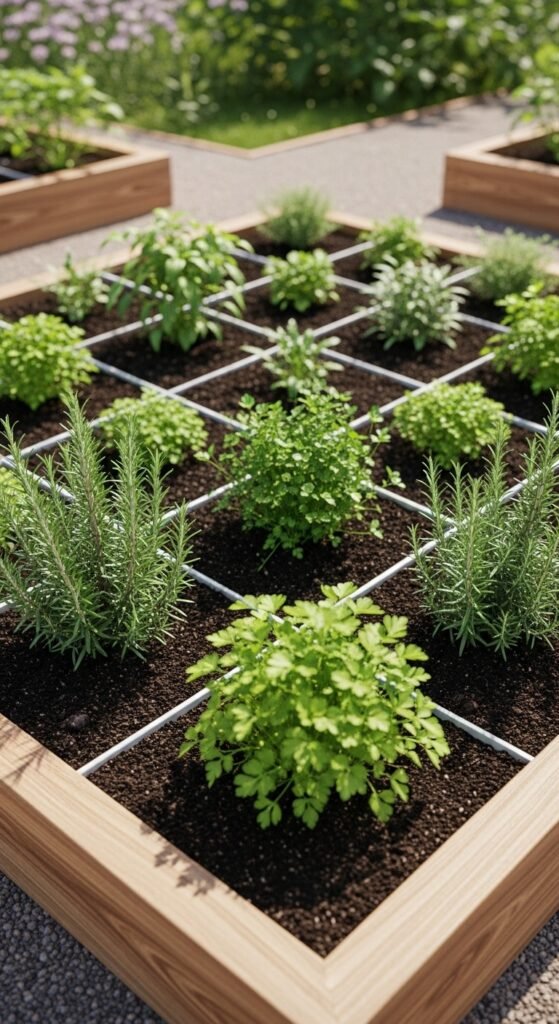
Rotate annually to prevent depletion. This precise layout ensures efficient use of resources and abundant harvests.
10) Hydroponic Tower System
You might set up a hydroponic tower for soil-free herb growing. Vertical tubes or towers circulate nutrient-rich water to herbs like cilantro and parsley.
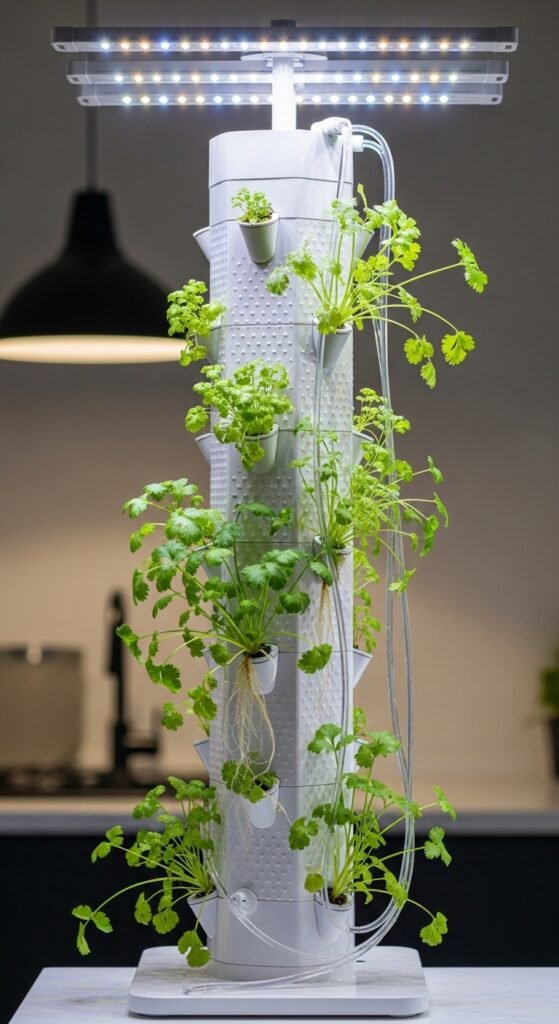
Benefits include faster growth and water savings, suitable for indoor or outdoor use. Purchase or build a tower kit, install a pump, and monitor pH levels. Arrange herbs by light needs, with shade-tolerant at the bottom.
This modern layout provides year-round fresh herbs, even in limited spaces, revolutionizing your gardening approach.
11) Balcony Rail Herb Line
You can line balcony rails with herb planters for urban gardening. Attach slim boxes or pots along railings, growing compact herbs such as chives.
It utilizes overlooked space, offering convenience for apartment living. Select lightweight, secure planters, fill with well-draining mix, and ensure 6 hours of sun. Water consistently and fertilize monthly.
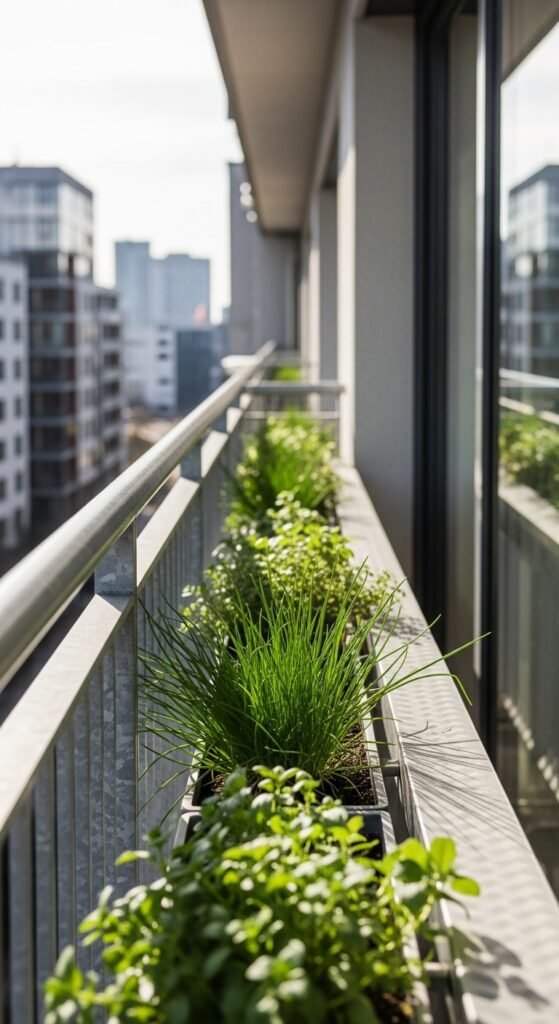
Explore patio herb garden ideas for complementary designs. This layout brings nature to your high-rise home effectively.
12) Indoor Kitchen Shelf Garden
You should create an indoor shelf garden near your kitchen. Install shelves with grow lights for herbs like basil, ensuring fresh supply for cooking.
This extends growing seasons indoors, controlling environment for optimal health. Use wall-mounted shelves, pots with saucers, and LED lights. Position based on light requirements, rotating for even exposure.
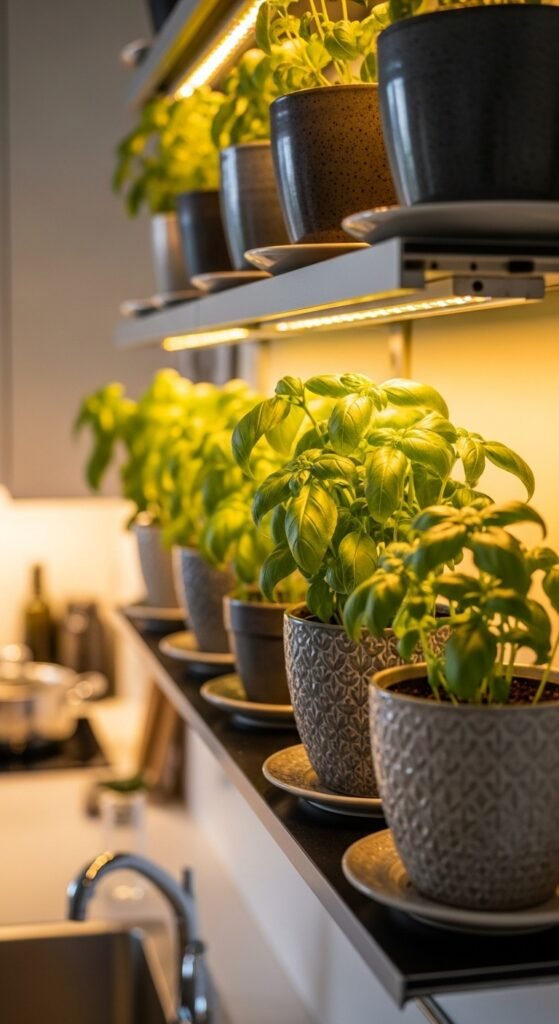
This convenient layout integrates seamlessly with your daily routine, enhancing meal preparation.
13) Permaculture Guild Circle
You can design a permaculture guild for herbs, grouping them with supportive plants in circular beds.
It mimics nature for sustainability, improving soil and yields. Plan guilds around central herbs, adding nitrogen-fixers. Build mounded circles, plant densely.
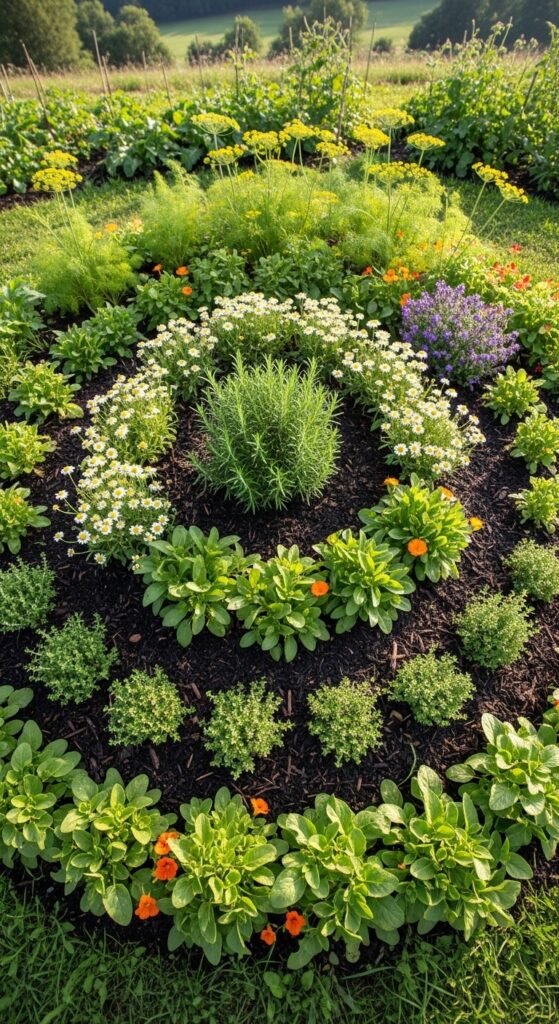
Draw from permaculture guilds for effective combinations. This holistic layout fosters long-term garden vitality.
14) Tiered Step Planter
You might build a tiered planter for sloped herb layouts. Stacked levels allow herbs like sage to receive ample sun without shading others.
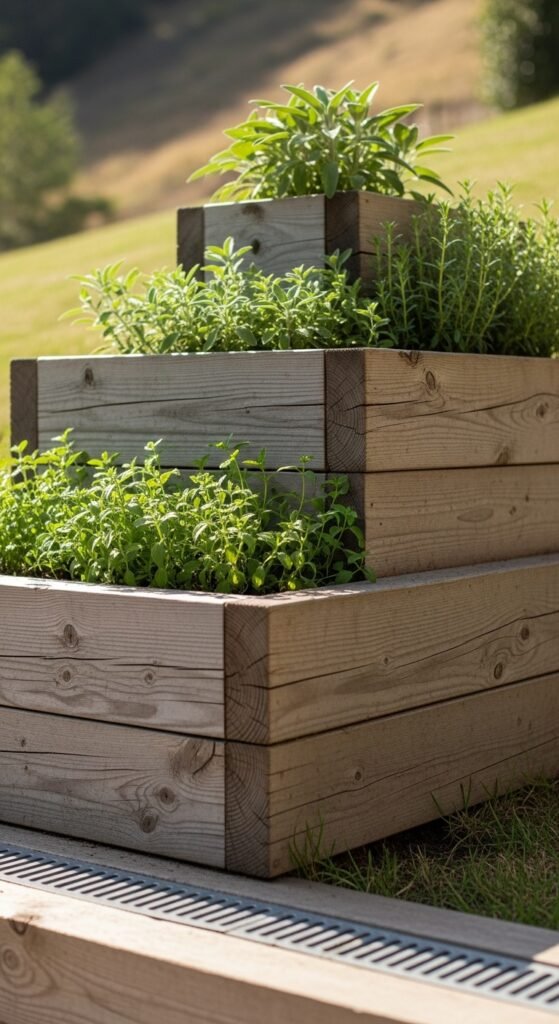
Benefits include better drainage and accessibility. Construct using wood or stone steps, fill tiers with soil, plant shorter herbs on top.
Consider herb planter box ideas for variations. This stepped design optimizes hilly areas beautifully.
15) Herb Wheel Radial Pattern
You can fashion an herb wheel layout, dividing a circular bed into pie slices with paths for access.
This traditional design facilitates rotation and harvesting, suiting herbs like dill. Use bricks for divisions, center a focal point like a sundial.
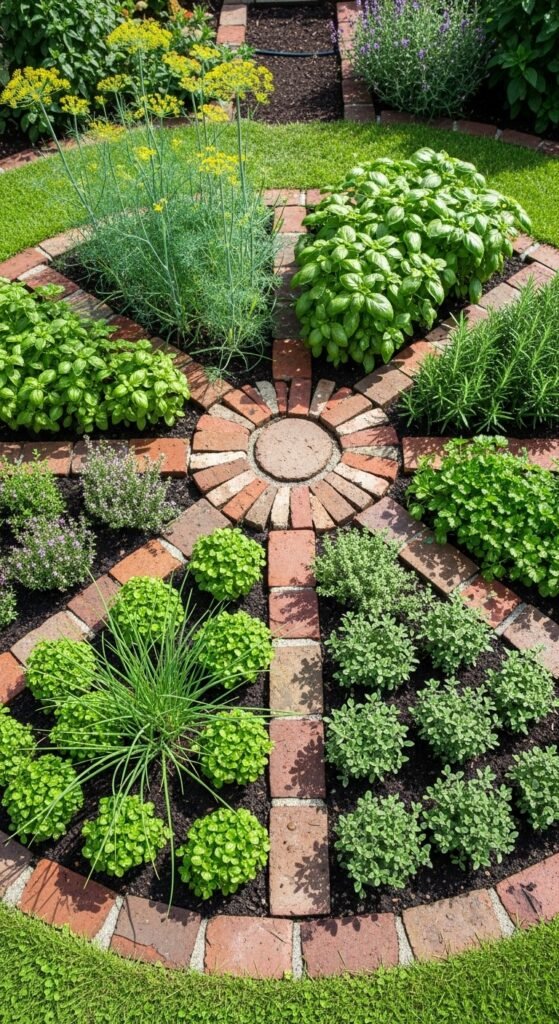
Plant thematically per wedge. Inspired by historical gardens, this layout combines functionality with ornamental appeal.
Key Principles for Herb Garden Success
Soil and Sunlight Optimization
You must prioritize well-draining soil and at least 6 hours of sunlight daily for most herbs. Amend with compost to boost nutrients.
Watering and Maintenance Tips
You should water deeply but infrequently, allowing soil to dry between sessions. Mulch to retain moisture and suppress weeds.
Companion Planting Strategies
You can pair herbs like marjoram with vegetables to enhance flavors and repel insects naturally.
Frequently Asked Questions
What is the best location for an herb garden?
The ideal spot receives full sun, has good air circulation, and is close to your kitchen for convenience. Avoid low-lying areas prone to waterlogging.
How do I prevent pests in my herb garden?
Encourage beneficial insects, use organic sprays, and practice crop rotation. Regularly inspect plants for early detection.
Can I grow herbs indoors year-round?
Yes, with sufficient light from windows or grow lamps, proper pots, and consistent care, herbs thrive indoors regardless of season.
What herbs are easiest for beginners?
Start with resilient ones like mint, basil, and rosemary, which forgive minor care lapses and provide quick rewards.
How often should I harvest herbs?
Harvest regularly to encourage growth, ideally in the morning when oils are concentrated, but never remove more than one-third of the plant at once.