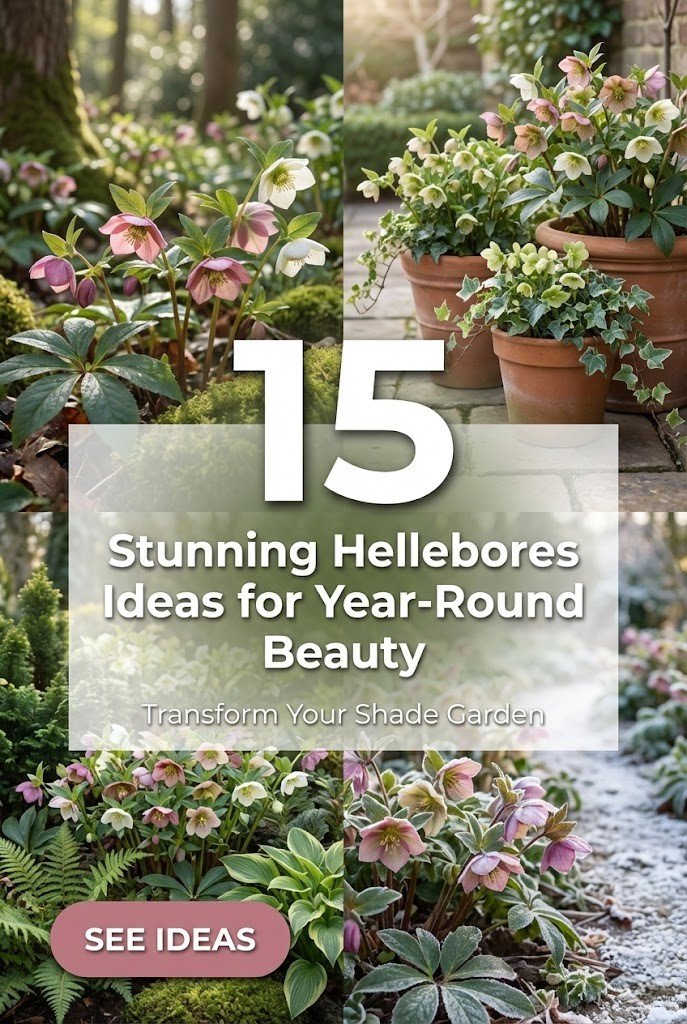
You’ve likely admired the resilient charm of hellebores, those hardy perennials that bring color to your garden when most plants are dormant. Often called Lenten roses or Christmas roses, hellebores thrive in shady spots and offer nodding blooms in shades of white, pink, purple, and even green. Their leathery leaves provide evergreen interest, making them a staple for low-maintenance landscapes.
Incorporating hellebores into your garden not only adds early-season vibrancy but also supports pollinators emerging in late winter. You can enjoy their blooms from December through April, depending on your climate, turning barren areas into focal points. Whether you’re a novice or seasoned gardener, these ideas will help you maximize their potential for enduring elegance.
1) Woodland Shade Retreat
You can create a serene woodland retreat by planting hellebores beneath deciduous trees, where they receive dappled light. This setup mimics their natural habitat, allowing them to flourish with minimal intervention. Choose varieties like Helleborus orientalis for its robust growth and varied colors.
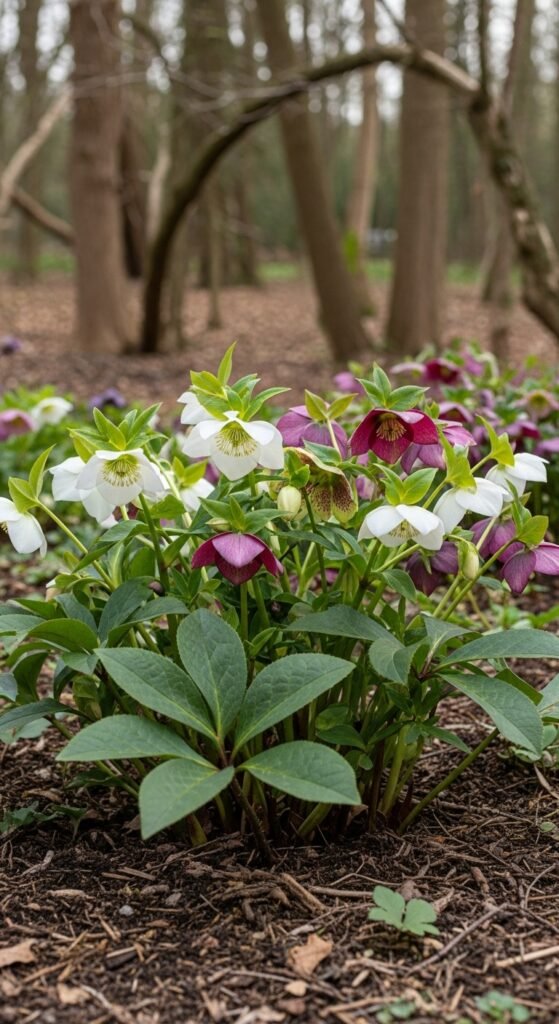
The why is simple: hellebores excel in shade, providing groundcover that suppresses weeds while adding texture. Their evergreen foliage maintains structure year-round, enhancing biodiversity in your shade garden ideas.
To implement, prepare the soil with compost for drainage, space plants 18 inches apart, and mulch to retain moisture. Water regularly until established, then enjoy their low-maintenance appeal as they self-seed gently over time.
2) Mixed Perennial Border
Incorporate hellebores into a mixed perennial border for seamless transitions between seasons. Pair them with later-blooming plants like astilbe or hostas, where hellebores kick off the show in early spring.
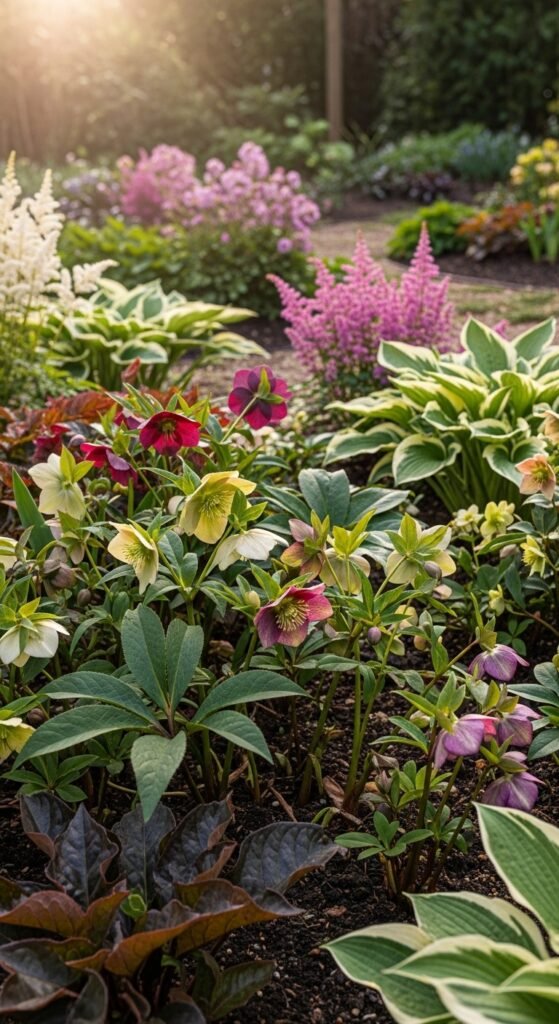
This approach offers continuous color and interest, as hellebores’ blooms fade gracefully into foliage that complements other perennial flowers. It’s ideal for creating layered depth in your garden beds.
Start by selecting a partially shaded spot with rich, well-drained soil. Plant in groups of three to five for impact, ensuring they get morning sun. Deadhead spent flowers to encourage vigor, and divide clumps every few years for propagation.
3) Container Elegance
You’ll love using hellebores in containers for flexible placement on patios or balconies. Opt for large pots with drainage holes to prevent root rot, filling them with a mix of potting soil and perlite.
The benefit lies in their adaptability, bringing winter blooms to urban spaces or shaded corners where ground planting isn’t feasible. They add a touch of sophistication without demanding much care.
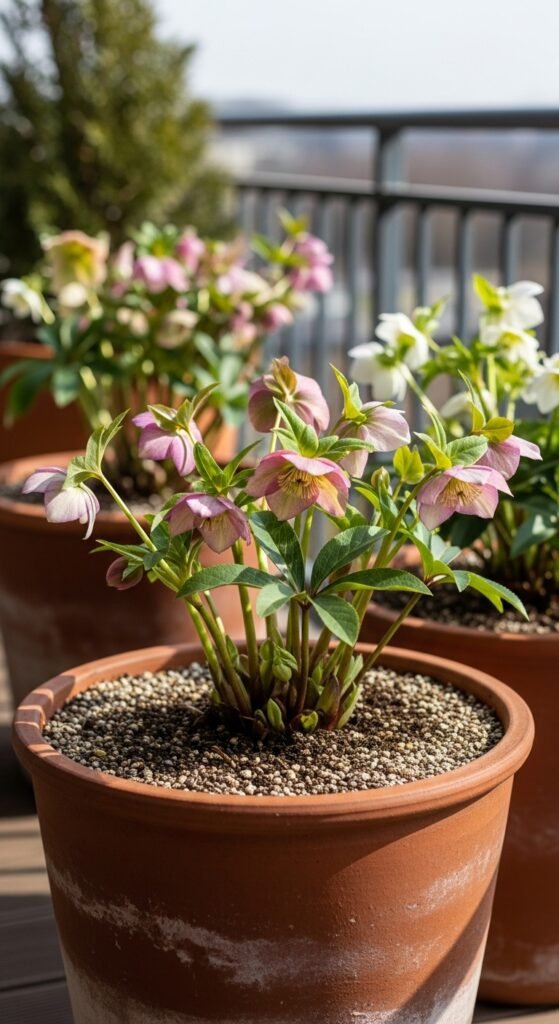
How-to: Choose frost-resistant containers, plant at the same depth as in the nursery pot, and water when the top inch of soil dries. Overwinter by moving to a sheltered spot, and fertilize lightly in spring for robust growth.
4) Understory Companions
Plant hellebores as understory companions beneath shrubs or trees, where they thrive in the filtered light and enrich the soil with their decomposing leaves.
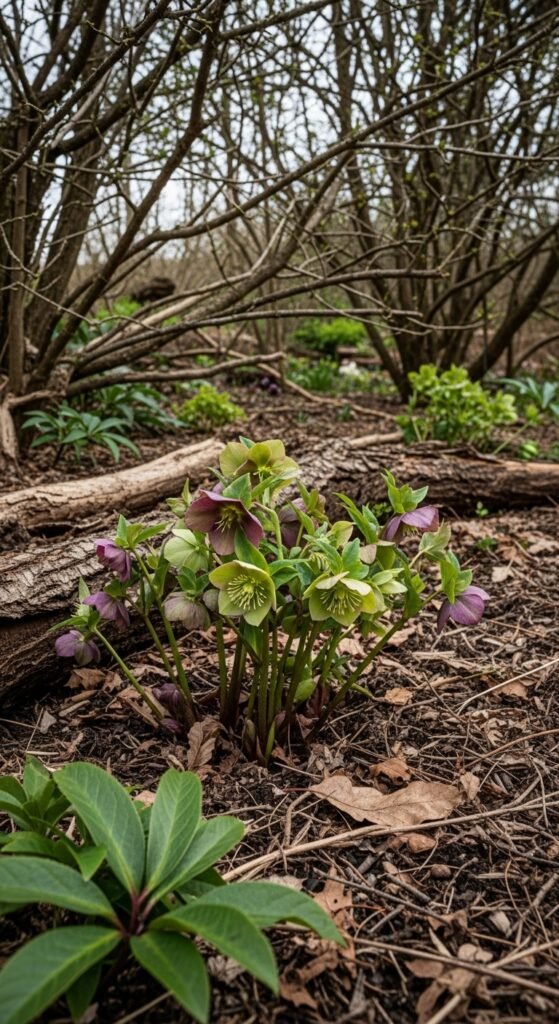
This idea maximizes vertical space, offering multi-layered beauty and habitat for wildlife. Hellebores’ tolerance for dry shade makes them perfect partners for established plantings.
Prepare by amending soil with organic matter, spacing plants evenly. Mulch annually to mimic forest floors, and avoid disturbing roots during maintenance for optimal health and spread.
5) Rock Garden Accents
Enhance your rock garden with hellebores tucked among stones, where their blooms contrast beautifully against rugged textures. Select compact varieties like Helleborus lividus for tighter spaces.
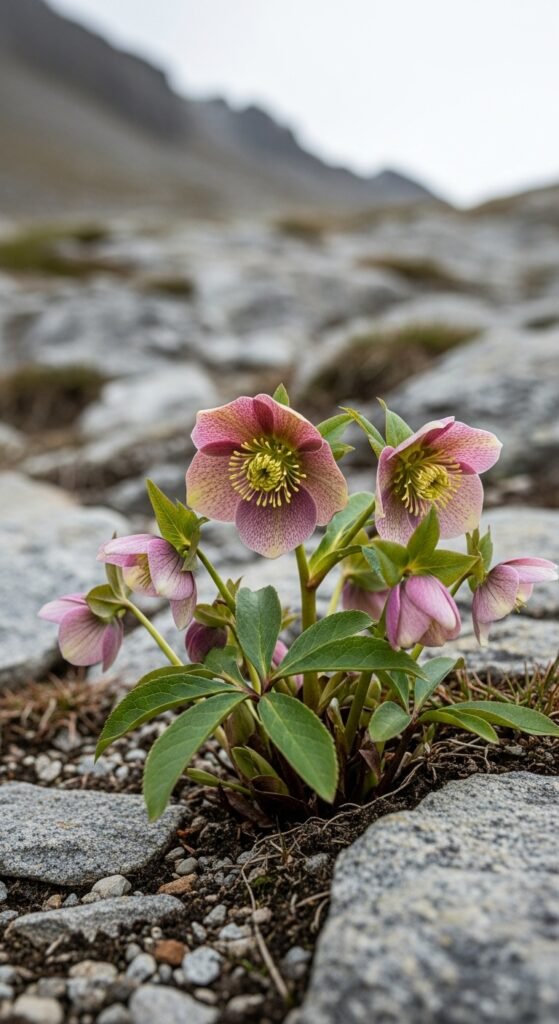
Why it works: They provide early color in alpine settings, thriving in well-drained, gritty soil typical of rockeries. This creates a naturalistic, low-water display.
Implementation involves positioning plants in crevices with added grit for drainage. Water sparingly, and protect from afternoon sun to prevent scorching, ensuring longevity in this unique environment.
6) Winter Focal Points
Position hellebores as winter focal points near entryways or paths, where their blooms greet you during colder months. Group contrasting colors for visual impact.
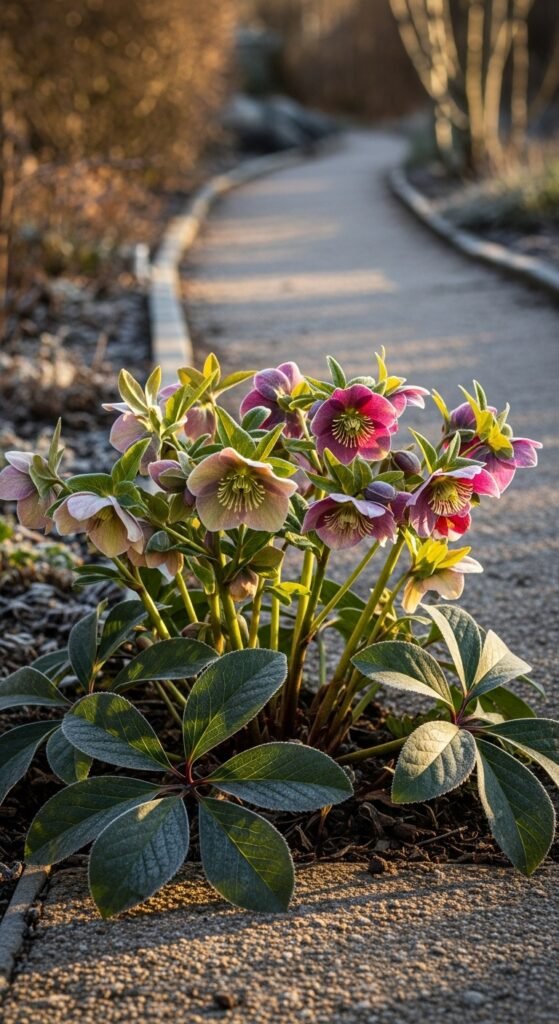
The advantage is seasonal cheer when little else flowers, extending your garden’s appeal. They’re hardy in zones 4-9, resisting frost with grace.
To achieve this, plant in enriched soil, mulch for insulation, and cut back old leaves in late winter to showcase new growth. This simple step keeps them looking pristine.
7) Bulb Companionship
Pair hellebores with spring bulbs like daffodils or snowdrops for a layered bloom sequence. The hellebores’ foliage hides fading bulb leaves post-flowering.
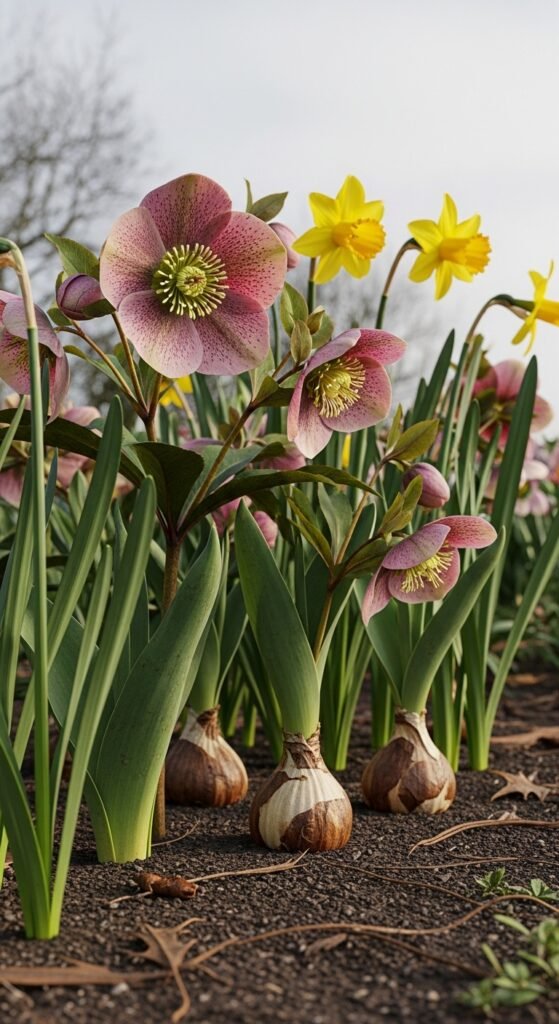
This synergy delivers extended interest, with hellebores bridging winter to spring. It’s a smart way to optimize space in borders or woodlands.
Plant bulbs around hellebores in fall, ensuring similar light and soil needs. Water during dry spells, and let nature handle the rest for a harmonious display.
8) Deer-Resistant Haven
Create a deer-resistant haven by mass-planting hellebores, whose toxic leaves deter browsing animals. Combine with other repellents for added protection.
You’ll appreciate the peace of mind, as hellebores maintain their form despite wildlife pressures, ideal for rural or suburban gardens.
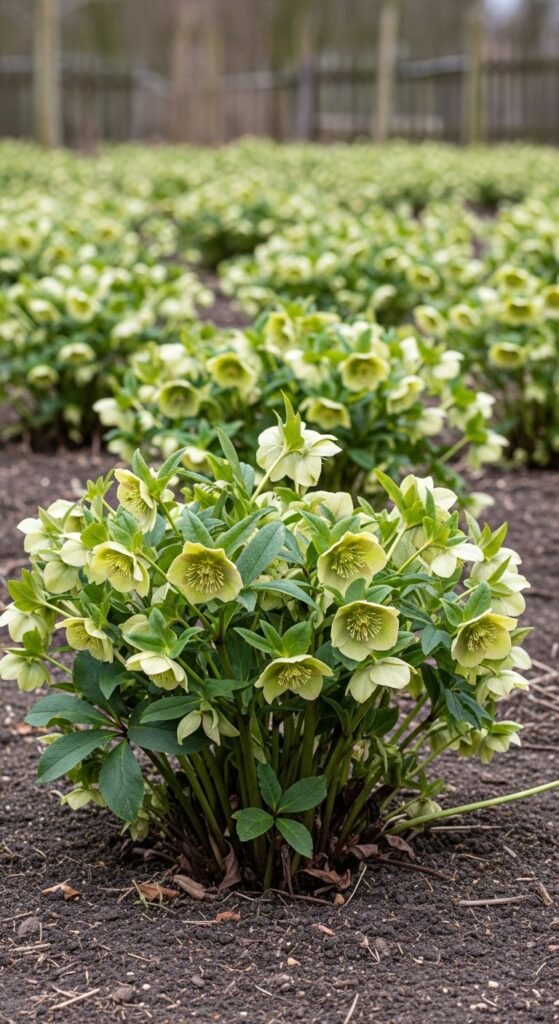
Select a site with partial shade, amend soil, and plant densely. Minimal pruning required, just remove damaged foliage to keep your deer-resistant flowers thriving.
9) Groundcover Spread
Use hellebores as a low-maintenance groundcover in shaded areas, where they form dense mats over time through self-seeding.
The key benefit is weed suppression and soil stabilization, reducing your workload while adding evergreen texture to bare spots.
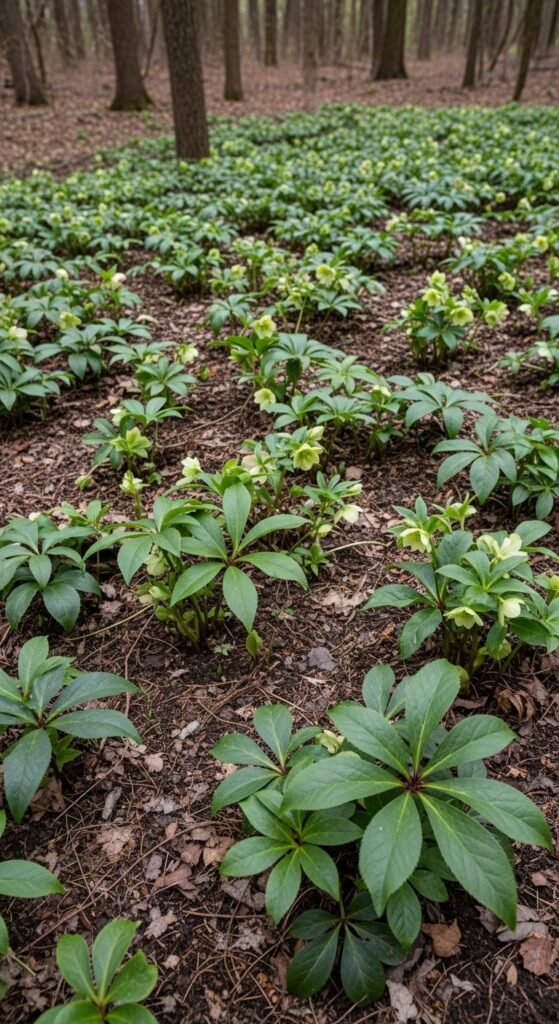
Start with young plants spaced 12-18 inches apart in moist, fertile soil. Encourage spread by not disturbing seedlings, and enjoy their gradual colonization.
10) Cut Flower Displays
Harvest hellebores for indoor cut flower displays, floating blooms in bowls or arranging in vases for long-lasting elegance.
This extends their beauty indoors, providing fresh arrangements during off-seasons. Their sturdy stems and colors complement various decor styles.
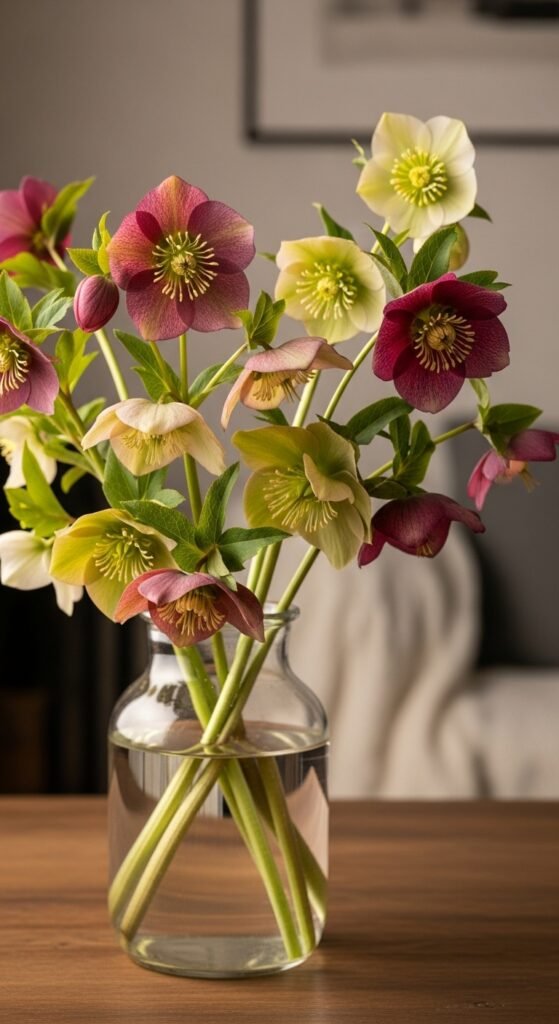
Cut stems at an angle in morning, condition in water overnight, and change vase water regularly to prolong vase life up to two weeks.
11) Pollinator Patches
Design pollinator patches with hellebores to attract early bees and insects, planting in clusters for easy access.
Why bother? They offer vital nectar in late winter, supporting biodiversity and enhancing your pollinator garden ideas.
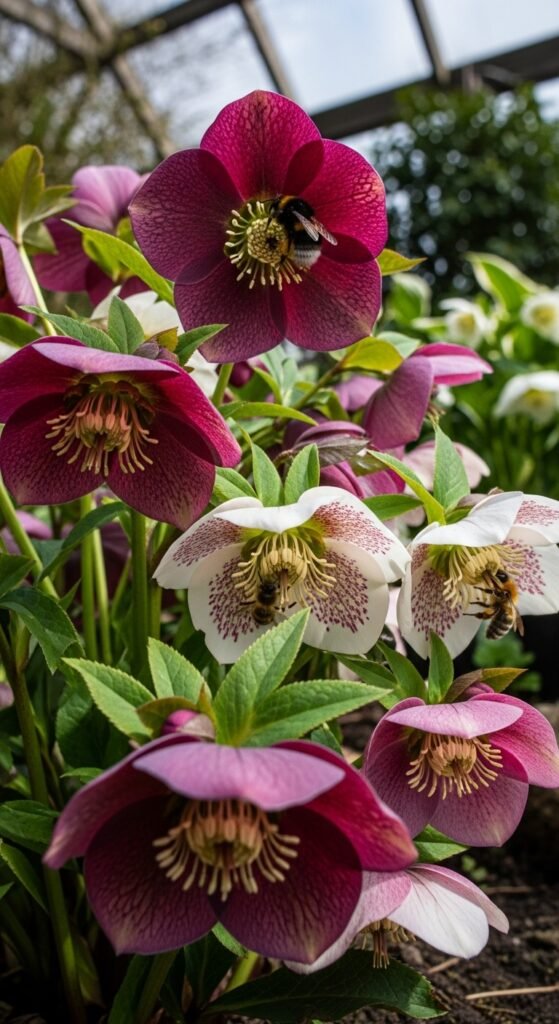
Choose nectar-rich hybrids, site in sheltered shade, and avoid pesticides. Supplement with water sources nearby for a thriving ecosystem.
12) Pathway Edging
Edge pathways with hellebores for a soft, blooming border that guides the eye and softens hardscapes.
This adds charm and functionality, with their low growth defining edges without obstructing views or walks.
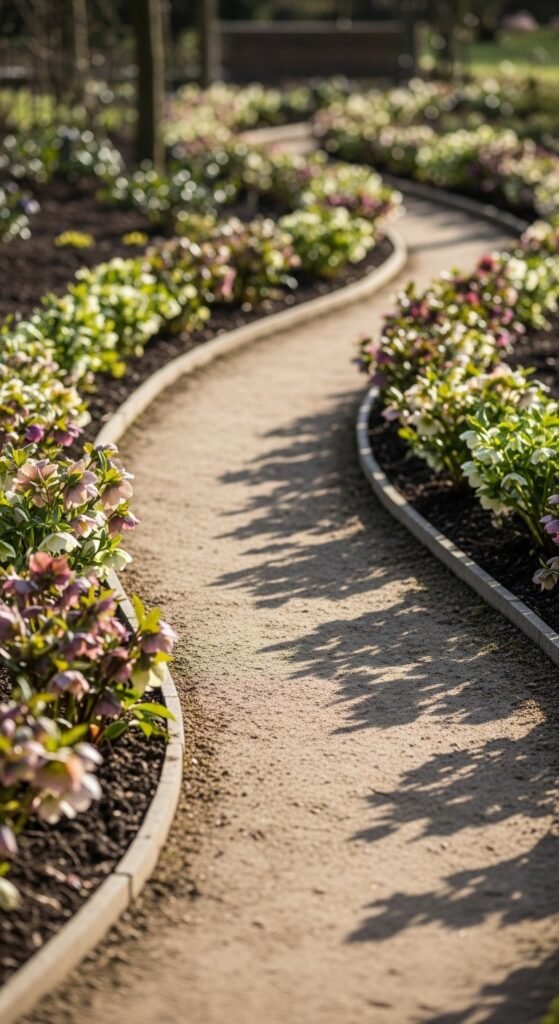
Plant along curves in well-drained soil, spacing evenly. Trim occasionally for neatness, creating an inviting garden stroll.
13) Hanging Basket Wonders
Experiment with hellebores in hanging baskets for elevated displays, using trailing varieties for cascading effects.
The appeal is vertical interest in small spaces, bringing blooms to eye level on porches or trees.
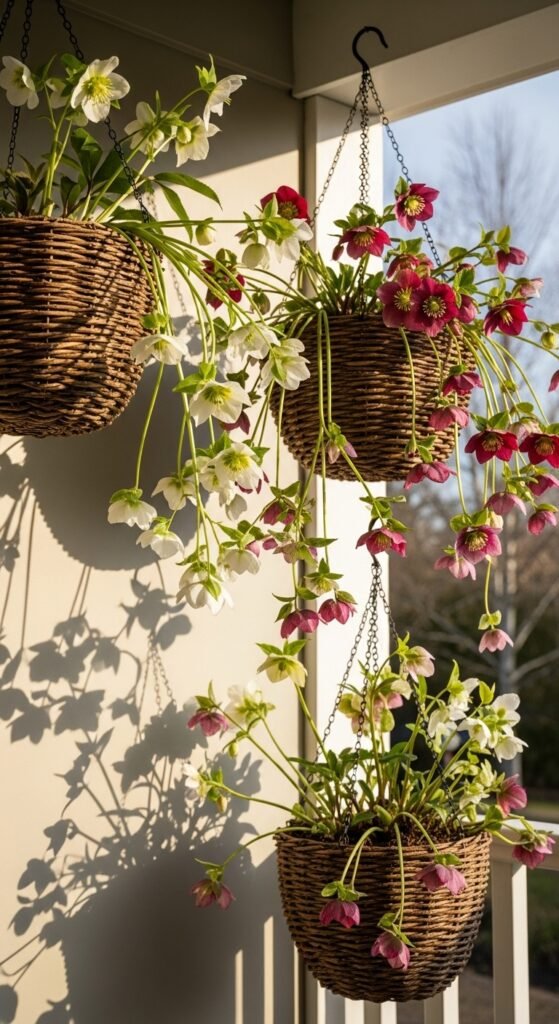
Use lightweight soil mixes, ensure drainage, and water consistently. Protect from strong winds to maintain their delicate structure.
14) Fern and Hosta Harmony
Combine hellebores with ferns and hostas for a textured shade ensemble, where each plant’s form contrasts beautifully.
This creates a lush, woodland vibe, with hellebores providing early color before companions leaf out.
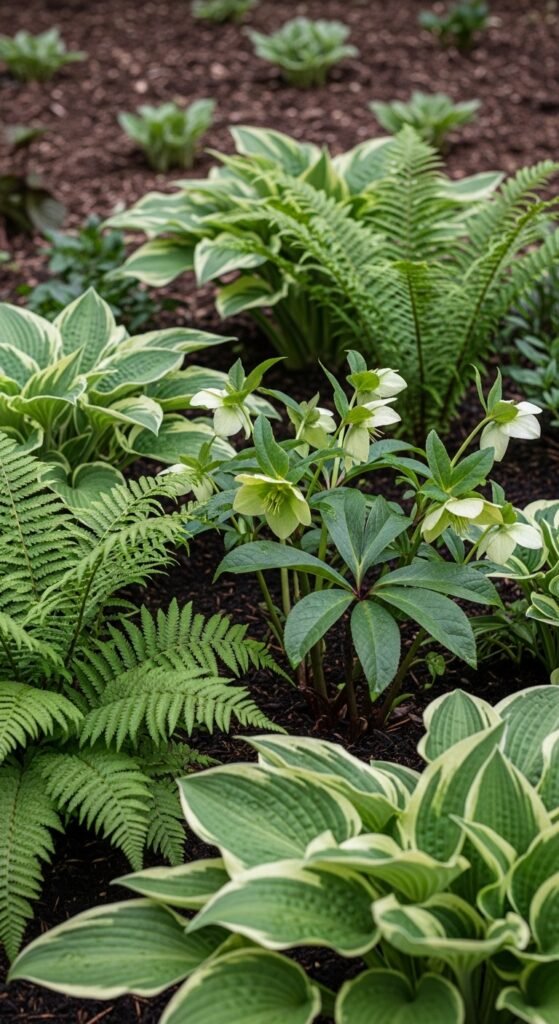
Plant in humus-rich soil, mulch to conserve moisture, and divide as needed for balanced growth in your shaded haven.
15) Modern Minimalist Integration
Integrate hellebores into modern minimalist designs with clean lines, using them in geometric beds or as singular accents.
You’ll gain subtle sophistication, their simple blooms aligning with contemporary aesthetics in urban landscapes.
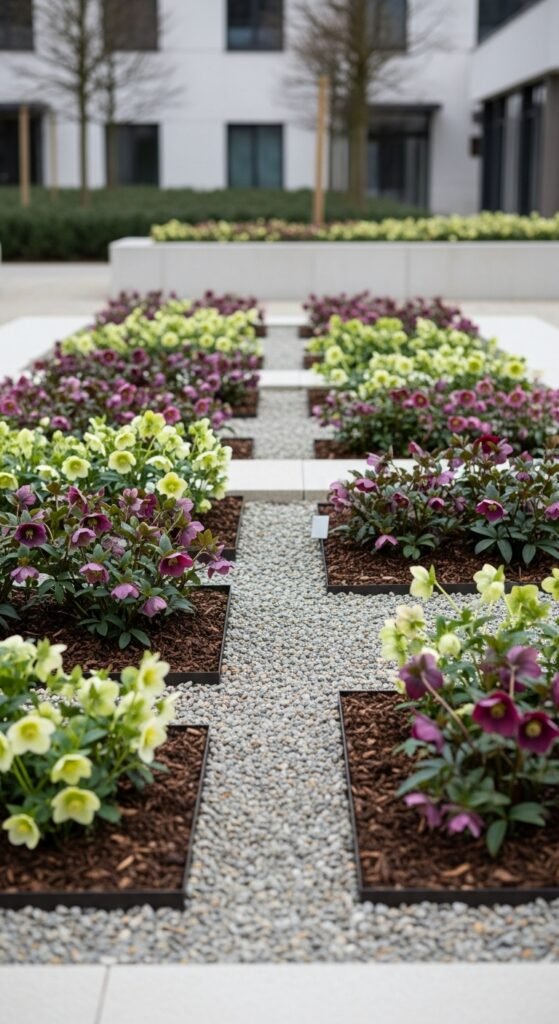
Select uniform varieties, plant in gravel-mulched areas for drainage, and prune sparingly to preserve their natural form.
Key Principles for Hellebore Success
Soil and Site Selection
You should prioritize well-drained, slightly alkaline soil in partial to full shade for optimal growth. Test your soil pH and amend with lime if needed to avoid issues like yellowing leaves.
Maintenance Tips
Regularly remove old foliage in late winter to prevent disease and showcase blooms. Mulch annually with organic matter to retain moisture and suppress weeds effectively.
Propagation Methods
Divide mature clumps in fall or allow self-seeding for natural expansion. For hybrids, seed propagation may vary, so label plants to track true-to-type offspring.
Frequently Asked Questions
Are hellebores toxic to pets?
Yes, hellebores contain compounds that can cause digestive upset in pets if ingested. Keep them out of reach or opt for pet-safe alternatives in high-traffic areas.
How do I overwinter hellebores?
Hellebores are hardy and typically require no special overwintering. Mulch around the base in colder zones to protect roots from freeze-thaw cycles.
Can hellebores grow in full sun?
While tolerant of some sun, hellebores prefer shade to avoid scorching. In hotter climates, morning sun with afternoon protection is ideal for healthy blooms.
Why aren’t my hellebores blooming?
Lack of blooms may stem from poor drainage, insufficient chill hours, or overcrowding. Ensure proper site conditions and divide plants every 3-4 years.
Do hellebores self-seed?
Yes, many hellebores self-seed readily, creating natural drifts. Thin seedlings as needed to prevent overcrowding and maintain vigor.