
Growing hardy kiwi vines can transform your garden into a productive paradise, offering delicious, nutrient-packed fruits that thrive in cooler climates. A well-designed hardy kiwi trellis is essential, as these vigorous vines can reach up to 20 feet and need strong support to prevent tangling and promote airflow. By choosing the right structure, you ensure better sun exposure, easier harvesting, and reduced disease risk, leading to bountiful yields season after season.
Whether you’re working with a small backyard or a sprawling plot, these ideas incorporate durable materials and clever designs tailored for hardy kiwi. You’ll discover options that blend functionality with aesthetics, helping you create a trellis that not only supports your plants but also enhances your outdoor space. Get ready to elevate your gardening game with these expert suggestions.
1) Classic A-Frame Trellis
The classic A-frame trellis offers a simple yet effective support system for your hardy kiwi vines. Constructed from sturdy wood or metal poles angled to form an ‘A’ shape, it provides ample vertical space for vines to climb while allowing easy access for pruning and picking.
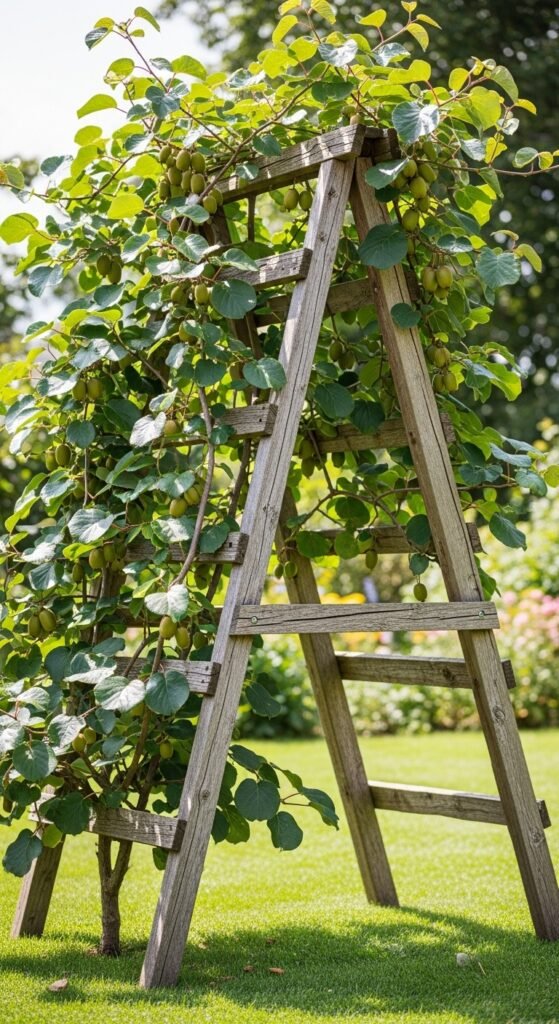
Why opt for this design? It maximizes sunlight penetration and air circulation, crucial for preventing fungal issues in humid areas. Plus, its stability handles the weight of mature vines laden with fruit, ensuring long-term durability without sagging.
To build one, start by securing two 8-foot posts in the ground about 6 feet apart, then connect them at the top with a crossbeam. Add horizontal wires or slats every 12 inches for vine training. For added inspiration on similar structures, check out our guide on trellis ideas for cucumbers, which shares versatile climbing supports adaptable to kiwis.
2) Pergola-Style Overhead Trellis
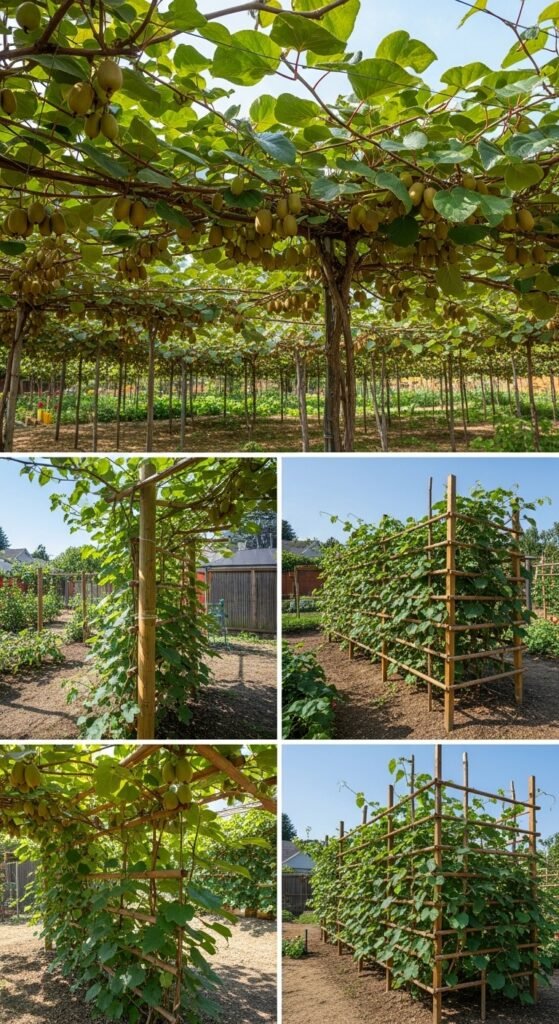
A pergola-style trellis creates an elegant overhead canopy, perfect for shading patios while supporting hardy kiwi vines. Built with vertical posts and horizontal beams, it allows vines to spread across the top, forming a lush green roof.
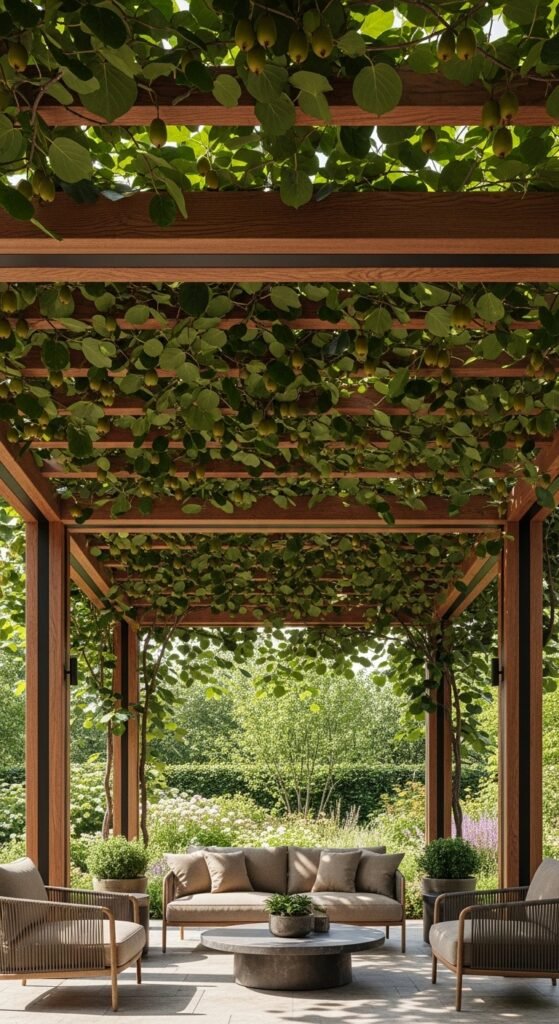
This setup excels in providing extensive growing space, ideal for prolific vines that need room to expand. It also enhances garden aesthetics, turning a functional structure into a focal point that invites relaxation beneath fruit-dangling branches.
Begin by installing four corner posts sunk into concrete footings, then attach rafters and crossbeams. Train vines up the posts and along the top. If you’re interested in fruit-specific designs, explore melon trellis ideas for heavy-load bearing tips that apply here too.
3) Wall-Mounted Wire System
Utilize your existing walls or fences with a wall-mounted wire system, where tensioned wires run horizontally between anchors, guiding hardy kiwi vines upward in a flat, espalier-like fashion.
It’s space-efficient for urban gardens, promoting better fruit quality through even ripening and simplified maintenance. The design minimizes ground contact, reducing pest risks and improving overall plant health.

Install eye hooks into the wall every 4 feet vertically, then string galvanized wire tautly between them. Attach vines as they grow, pruning side shoots for control. For more on vertical supports, our article on beans on trellis offers practical wiring techniques.
4) Arched Arbor Trellis
An arched arbor trellis forms a tunnel-like pathway, with curved metal or wooden frames supporting hardy kiwi vines that weave over the top, creating a picturesque garden entrance.
This idea combines beauty and utility, offering shade along walkways while maximizing vertical space for higher yields. It’s particularly great for creating microclimates that protect fruits from harsh winds.
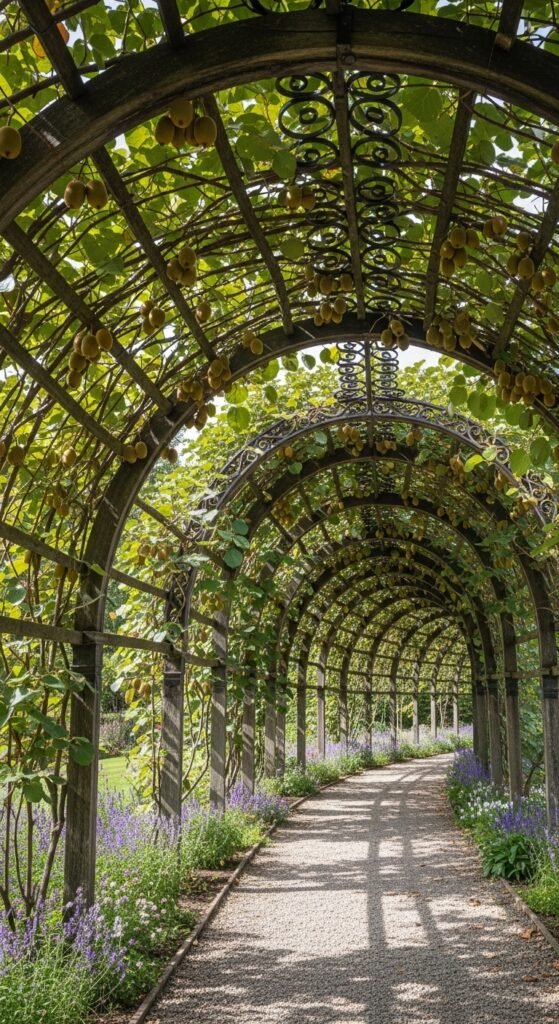
Assemble pre-made arch kits or bend rebar into shape, securing ends in the ground. Plant vines at the base and train them over the curve. Draw from front yard trellis ideas to integrate this into your landscape seamlessly.
5) Fan-Shaped Espalier Trellis
The fan-shaped espalier trellis trains hardy kiwi vines in a radiating pattern against a flat surface, using wires or bamboo to splay branches outward like a fan.
Perfect for limited spaces, it enhances ornamental appeal and facilitates precise pruning, leading to healthier plants and easier fruit access. The open structure improves light and air flow, boosting productivity.
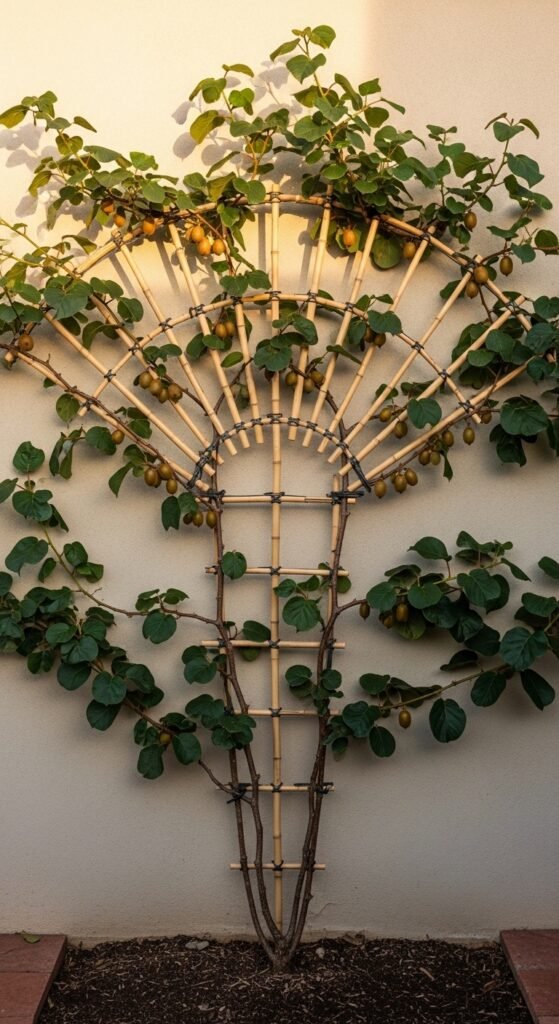
Fix a central post, then attach radiating arms with wires. Tie young shoots to the framework as they develop. Similar methods are detailed in our blackberry trellis ideas, adaptable for kiwi vines.
6) Portable Container Trellis
For flexible gardening, a portable container trellis combines a large pot with an integrated upright frame, allowing you to move hardy kiwi plants as needed for optimal sun exposure.
This is ideal for renters or variable climates, providing mobility without sacrificing support. It also enables better soil control, ensuring vines get the acidic conditions they crave.
Choose a deep container, insert a sturdy trellis insert, and plant your vine. Use casters for easy relocation. For container climbing tips, see cucumbers on trellis.
7) Rustic Bamboo Teepee Trellis
A rustic bamboo teepee trellis uses bundled poles tied at the top to form a conical structure, offering natural, eco-friendly support for hardy kiwi vines to spiral upward.
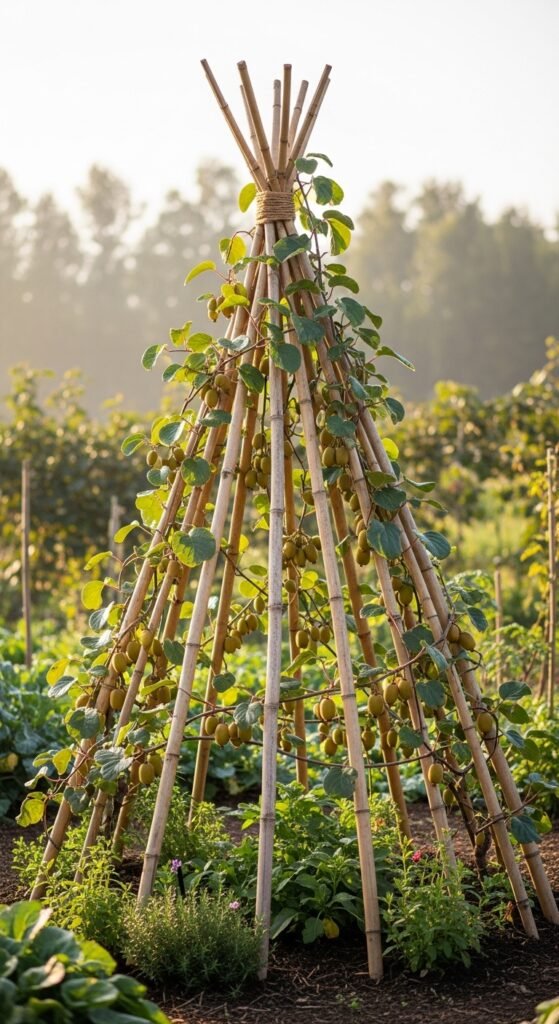
It’s budget-friendly and biodegradable, blending seamlessly into organic gardens. The design encourages vertical growth, reducing sprawl and making harvesting a breeze.
Gather 6-8 bamboo stakes, lash them together at one end, and spread the base. Plant vines around the perimeter. Enhance your setup with insights from raspberry supports.
8) Multi-Level Tiered Trellis
A multi-level tiered trellis features stacked horizontal platforms connected by vertical supports, allowing hardy kiwi vines to climb through multiple layers for increased density.
This maximizes yield in small areas by utilizing height efficiently, while promoting even fruit distribution and simplified care routines.
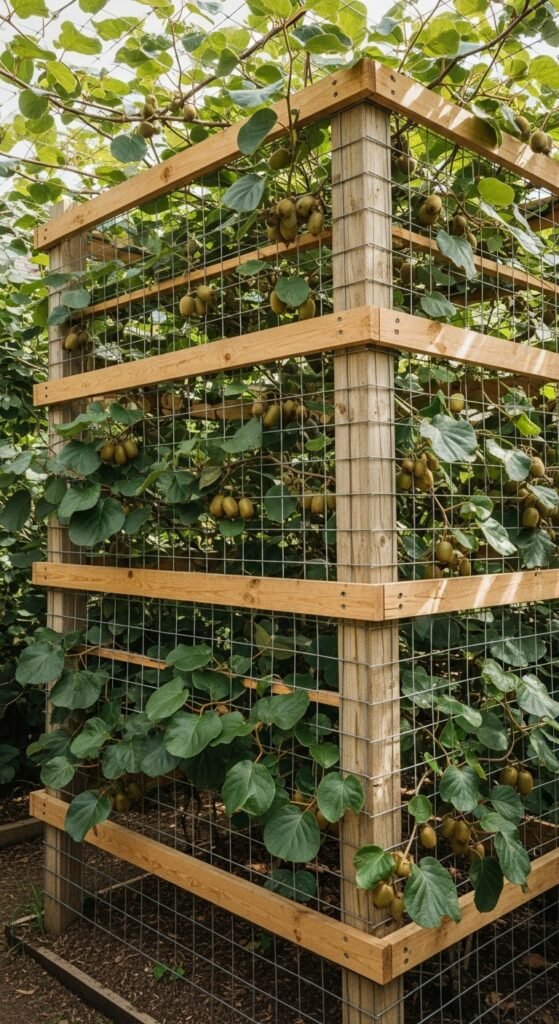
Build frames from lumber, stacking them with spacers. Wire mesh aids climbing. For tiered inspiration, reference trellis planter box designs.
9) Industrial Pipe Frame Trellis
An industrial pipe frame trellis employs metal pipes and fittings for a modern, durable structure, with horizontal bars for vine attachment in a grid pattern.
Resistant to weather and heavy loads, it’s suited for long-term use, adding an urban edge to your garden while ensuring robust support.
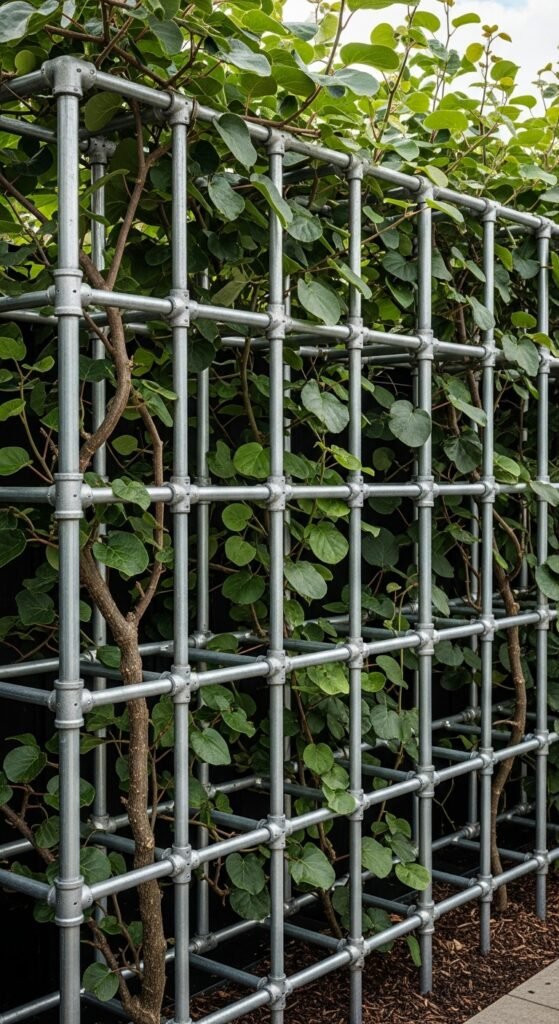
Assemble pipes with elbows and tees, anchoring to the ground. Train vines across the grid. Adapt concepts from garden trellis ideas.
10) Living Willow Trellis
Create a living willow trellis by planting flexible willow branches that grow into a woven structure, supporting hardy kiwi while becoming part of the landscape.
Eco-conscious and dynamic, it evolves over time, providing natural shade and habitat for wildlife alongside fruit production.
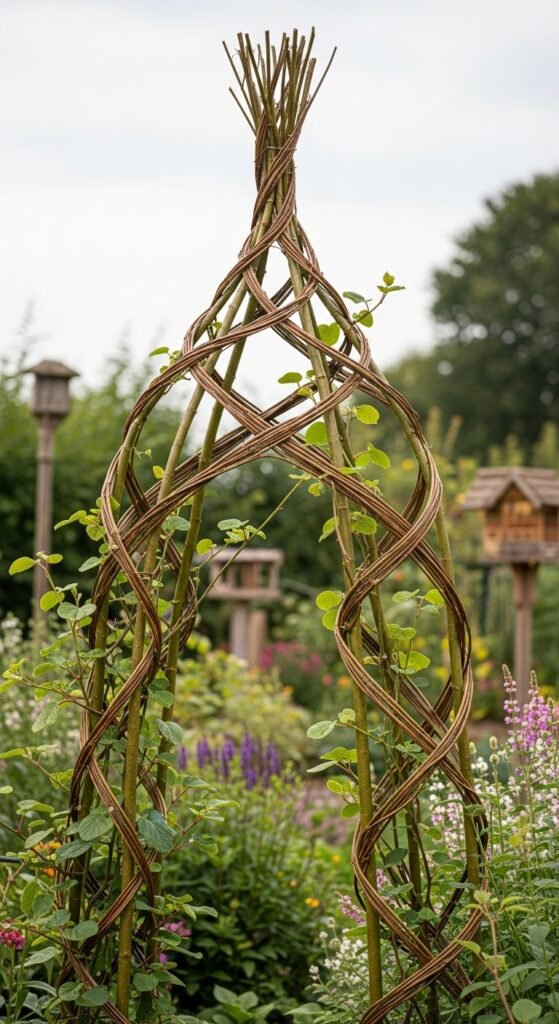
Plant willow cuttings in a frame shape, weaving as they grow. Interplant kiwi at the base. For living structures, consider indoor trellis ideas for scaled-down versions.
11) Vertical Pallet Trellis
Repurpose wooden pallets into a vertical trellis by standing them upright and adding wire or slats for hardy kiwi vines to climb.
Upcycled and cost-effective, it adds rustic charm while offering ample support in compact spaces, ideal for sustainable gardening.
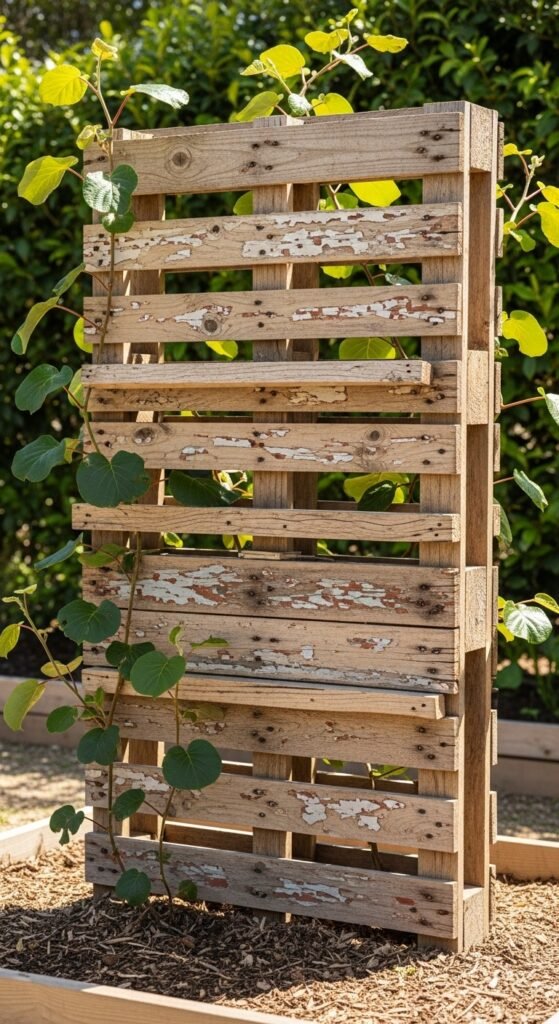
Secure pallets to posts, fill gaps if needed, and plant vines below. This echoes techniques in various climbing plant guides.
12) Spiral Wire Trellis
A spiral wire trellis twists heavy-gauge wire into a helical form, allowing hardy kiwi vines to wind naturally upward in a compact, artistic display.
Space-saving and visually striking, it focuses growth vertically, enhancing airflow and fruit accessibility for healthier plants.
Form the spiral around a central stake, anchoring firmly. Guide vines along the coils.
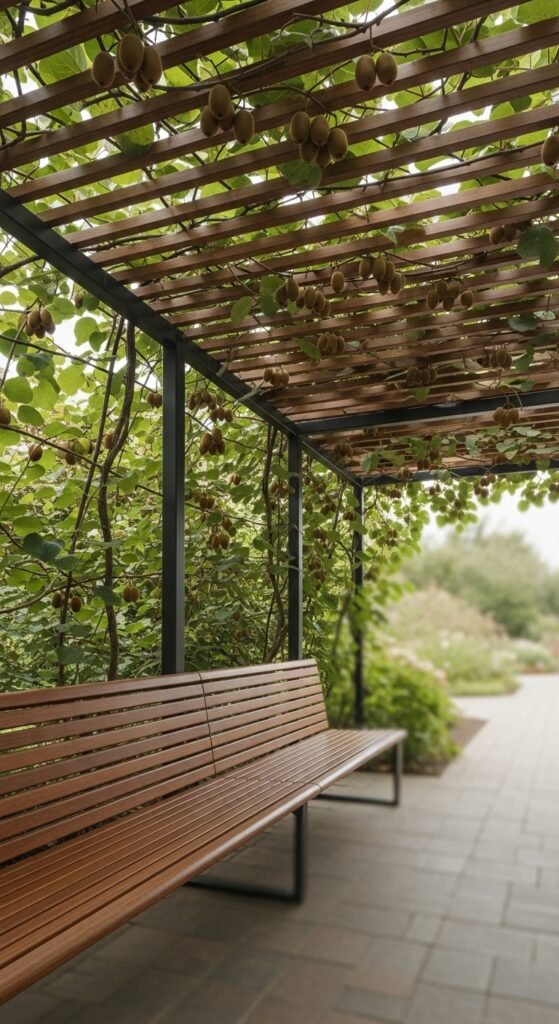
13) Combined Arbor and Bench Trellis
Integrate a bench beneath an arbor trellis, where hardy kiwi vines cover the overhead slats, creating a shaded seating area with functional support.
Multifunctional, it combines relaxation with productivity, perfect for enjoying your garden while vines thrive above.
Build the arbor frame over a bench, adding crossbeams for vines.
14) Modular Panel Trellis
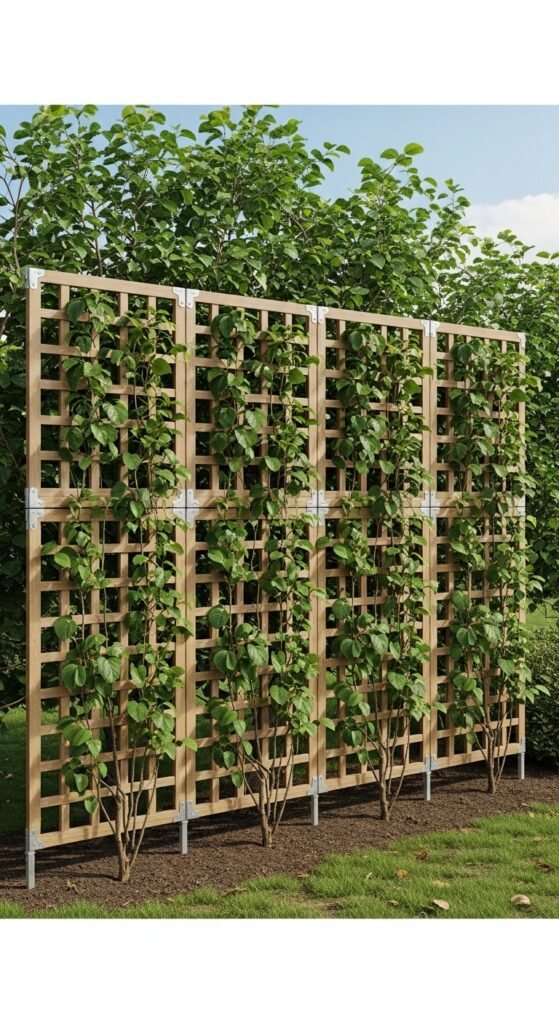
Modular panel trellises use connectable lattice sections that can be expanded, providing customizable support for growing hardy kiwi patches.
Adaptable to changing needs, they offer flexibility and strength, ensuring even distribution of vine weight.
Link panels with hooks, staking into soil. Train vines across the surface.
15) Decorative Obelisk Trellis
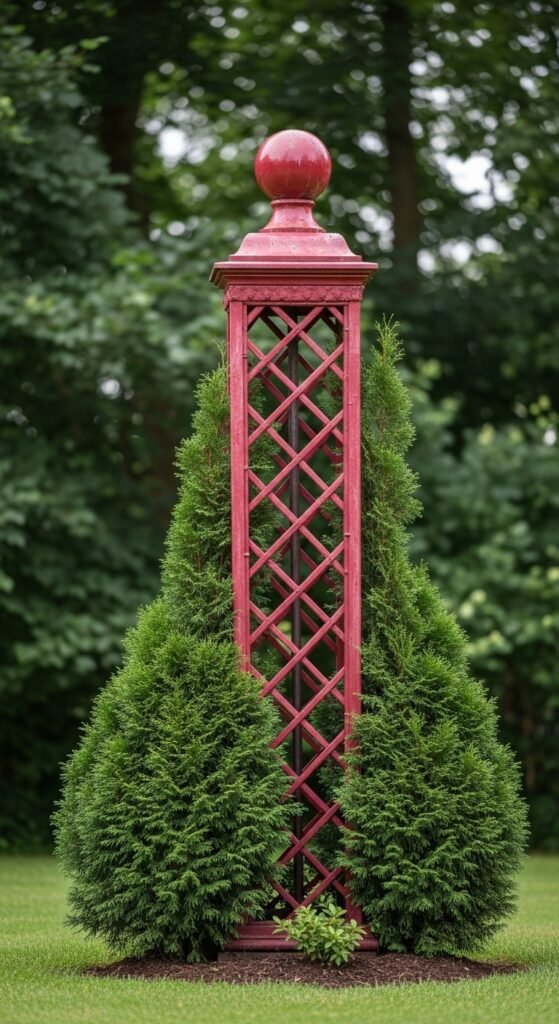
A decorative obelisk trellis stands as a pyramidal focal point, with intricate metalwork or wood for hardy kiwi vines to ascend elegantly.
Ornamental yet practical, it adds height and interest to beds, supporting vines while elevating garden design.
Position the obelisk securely, planting vines at the base to climb the sides.
Key Principles for Hardy Kiwi Trellis Success
Material Selection and Durability
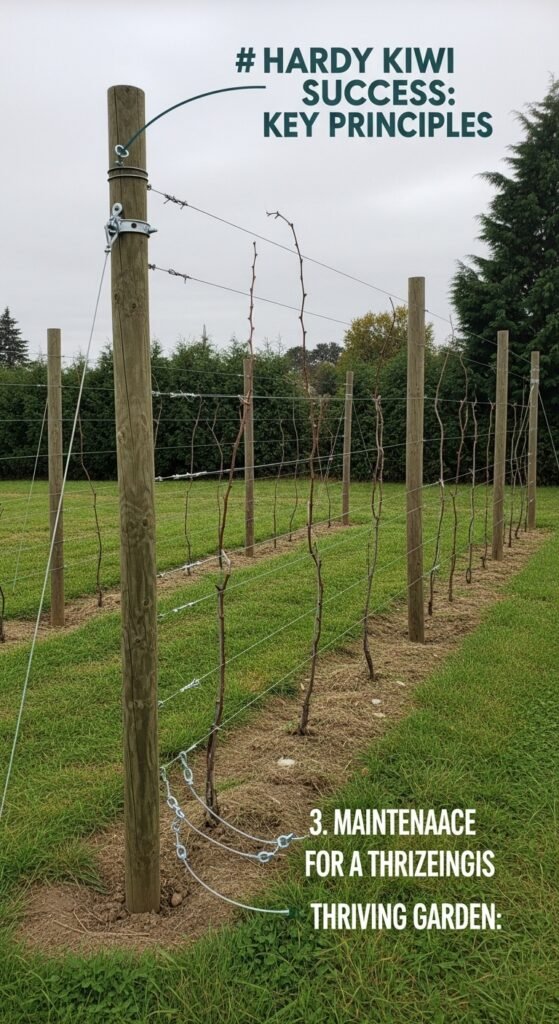
Choose weather-resistant materials like treated wood, galvanized metal, or PVC to withstand the elements and support heavy vines over years. Avoid thin wires that may rust or break under fruit weight.
Spacing and Training Techniques
Space supports 6-8 feet apart with wires at 12-inch intervals. Train main vines along the structure, pruning laterals to maintain airflow and encourage fruiting spurs.
Maintenance and Longevity Tips
Inspect annually for damage, tighten connections, and apply protective coatings. Mulch around bases to retain moisture, and fertilize sparingly to promote healthy growth without excess vigor.
Frequently Asked Questions
How tall should a hardy kiwi trellis be?
Aim for at least 6-8 feet in height to accommodate the vine’s rapid growth, allowing room for overhead spreading and easy harvesting from below.
Can hardy kiwi share a trellis with other vines?
Yes, but pair with compatible plants like grapes; ensure the structure is robust enough for multiple vines and monitor for competition over nutrients and space.
What soil conditions do hardy kiwi prefer?
They thrive in well-drained, slightly acidic soil with a pH of 5.5-7.0, enriched with organic matter to support vigorous root development and fruit production.
How often should I prune hardy kiwi vines?
Prune in late winter to remove dead wood and shape the plant, then lightly in summer to control growth and improve air circulation.
Are hardy kiwi vines self-pollinating?
Most varieties require both male and female plants for pollination; plant one male for every 5-7 females to ensure optimal fruit set.