Transforming your front yard into a vegetable garden combines functionality with aesthetic appeal, allowing you to enjoy fresh produce right at your doorstep. A front yard vegetable garden maximizes space in urban or suburban settings where backyards may be limited, turning an often underutilized area into a productive haven. By integrating edibles with ornamentals, you create a visually pleasing landscape that boosts curb appeal while providing nutritious, organic food for your family.
The benefits extend beyond the harvest; such gardens promote sustainability by reducing your carbon footprint through homegrown veggies, encourage biodiversity, and can even foster community interactions as neighbors admire your setup. Whether you’re a beginner or seasoned gardener, starting a front yard vegetable garden is achievable with thoughtful planning. Focus on soil quality, sunlight exposure, and water access to ensure thriving plants. With the right ideas, you’ll cultivate a space that’s both beautiful and bountiful.
1) Raised Bed Oasis
What makes a raised bed setup ideal for your front yard vegetable garden is its elevated structure, which improves drainage and soil quality while keeping things neat and contained. You can plant tomatoes, carrots, and lettuce in organized rows, surrounded by low borders for a tidy look.
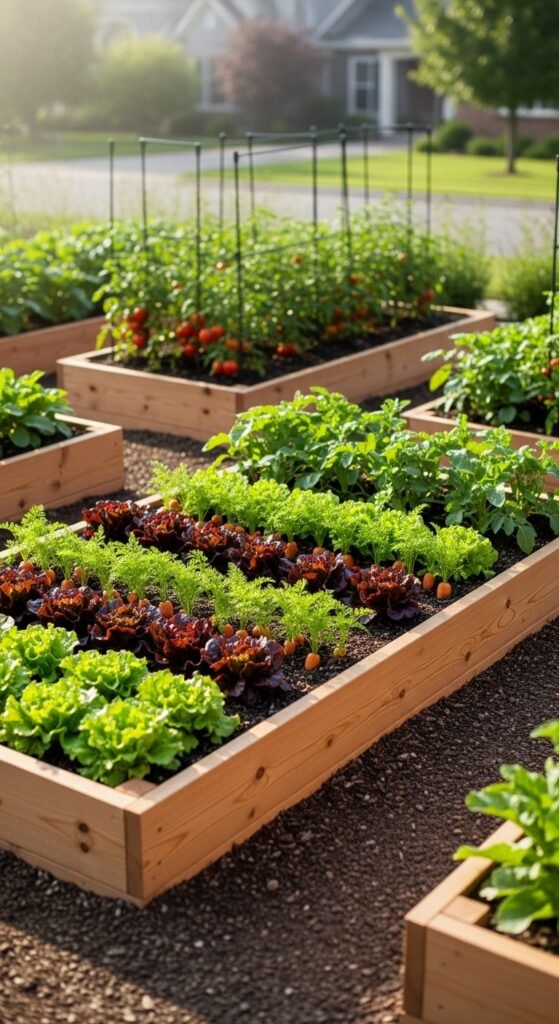
Why choose this? Raised beds warm up faster in spring, extend the growing season, and reduce weed invasion, making maintenance easier. They also prevent soil compaction since you don’t walk on the beds, leading to healthier roots and higher yields. Plus, they add visual height and structure to your landscape, enhancing curb appeal.
How to implement: Select a sunny spot with at least six hours of light. Build or buy beds 4×8 feet using cedar for durability. Fill with a mix of topsoil, compost, and perlite. Plant according to spacing needs—tomatoes 24 inches apart. Mulch to retain moisture. For more on layouts, check out our guide on raised bed vegetable gardens. Water deeply but infrequently to encourage deep roots.
2) Container Cluster
What defines a container-based front yard vegetable garden is the use of pots, barrels, or troughs filled with veggies like peppers, herbs, and dwarf tomatoes, arranged artfully on your lawn or driveway edge.
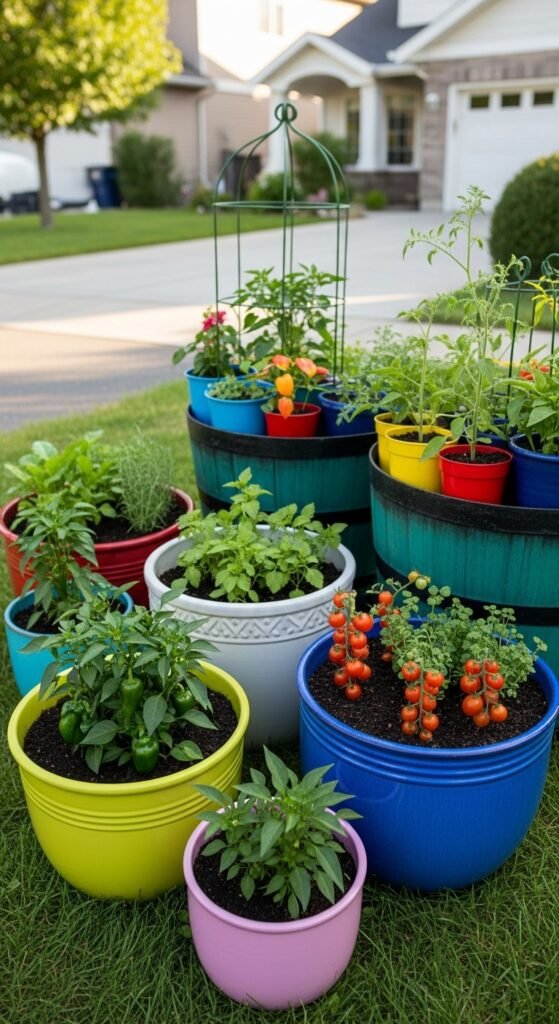
Why opt for containers? They’re perfect for small spaces or poor soil, allowing mobility to chase sun or protect from frost. This method minimizes digging, reduces pests, and lets you experiment with colorful pots for decorative flair, blending seamlessly with your home’s exterior.
How to set it up: Choose containers with drainage holes, at least 12 inches deep. Use potting mix enriched with compost. Group by water needs—group thirsty tomatoes with basil. Place in full sun. Fertilize every two weeks with organic feed. Rotate for even growth. Explore more in our article on container vegetable gardening. Overwinter indoors if needed for perennials like strawberries.
3) Edible Border Bliss
What this idea entails is lining your front walkway or driveway with edible plants such as kale, Swiss chard, and beets, mixed with flowers for a border that’s both productive and pretty.
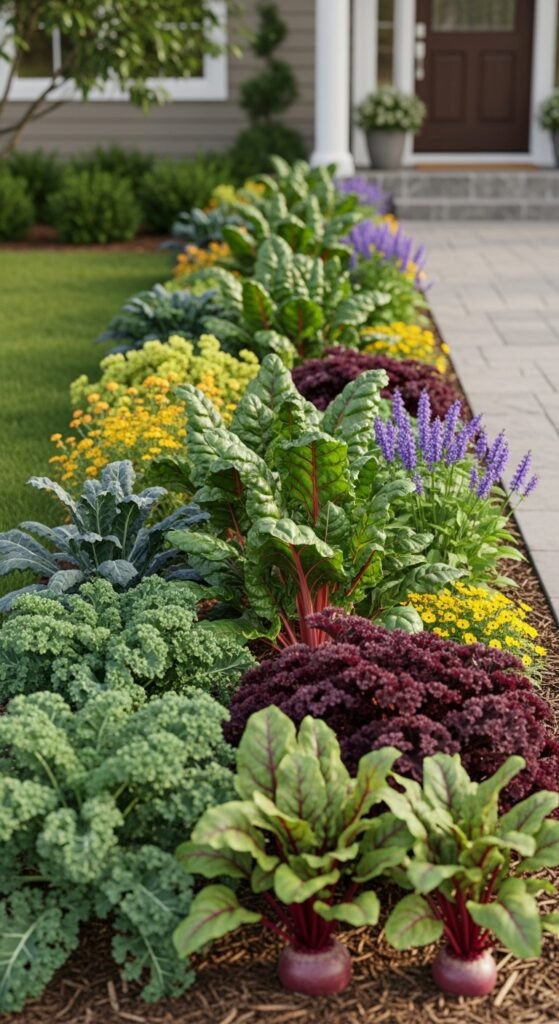
Why it’s beneficial: It maximizes edge spaces, deters weeds naturally, and creates a welcoming entryway. The mix of textures and colors from veggies enhances aesthetics, while providing easy access for harvesting fresh greens without venturing deep into the yard.
How to create it: Prepare soil by amending with compost. Plant in staggered rows for fullness—tall chard in back, low beets in front. Space 12-18 inches apart. Water consistently. Companion plant with marigolds to repel pests. For inspiration, see our tips on edible landscaping ideas. Harvest leaves regularly to encourage bushier growth and continuous production.
4) Vertical Veggie Wall
What characterizes a vertical front yard vegetable garden is using trellises, walls, or fences to grow climbing veggies like beans, cucumbers, and peas upward, saving ground space.
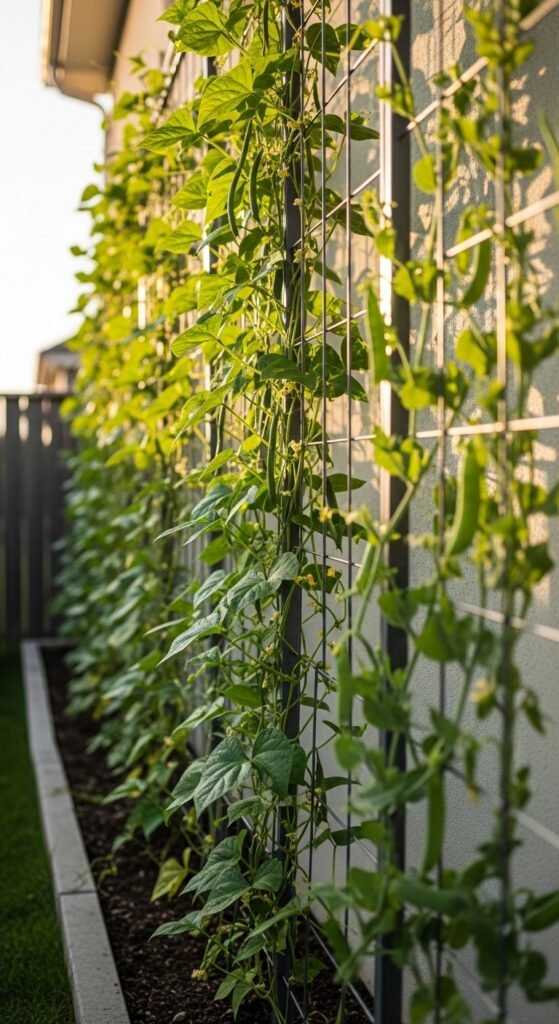
Why go vertical? It increases yield in limited areas, improves air circulation to reduce diseases, and adds architectural interest to your facade. Vines create natural privacy screens, softening hard lines while offering shade and fresh produce.
How to build: Install sturdy trellises against a sunny wall. Plant seeds at base, 6 inches apart. Train vines as they grow. Use drip irrigation for efficiency. Choose compact varieties. Learn more from our vertical vegetable garden guide. Prune excess foliage for better fruiting and harvest young for tenderness.
5) Companion Planting Harmony
What this approach involves is interplanting compatible veggies, like tomatoes with basil and marigolds, in your front yard to boost health and productivity.
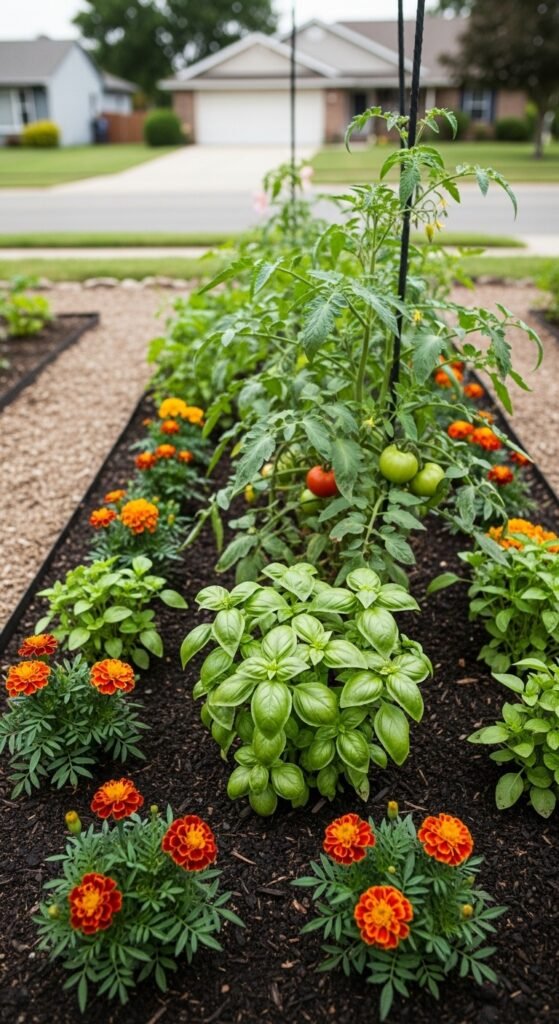
Why it’s advantageous: Companions deter pests naturally—basil repels flies from tomatoes—while improving flavor and soil nutrients. This method creates a diverse, resilient ecosystem, reducing chemical needs and attracting pollinators for better harvests.
How to apply: Map your garden with a companion chart. Plant basil around tomato bases. Space appropriately to avoid overcrowding. Rotate crops annually. For detailed pairings, refer to our companion planting vegetables resource. Monitor for issues and adjust as needed for optimal symbiosis.
6) Herb-Integrated Patch
What sets this apart is incorporating herbs like rosemary, thyme, and oregano among vegetables in your front yard, creating a fragrant, multi-use space.
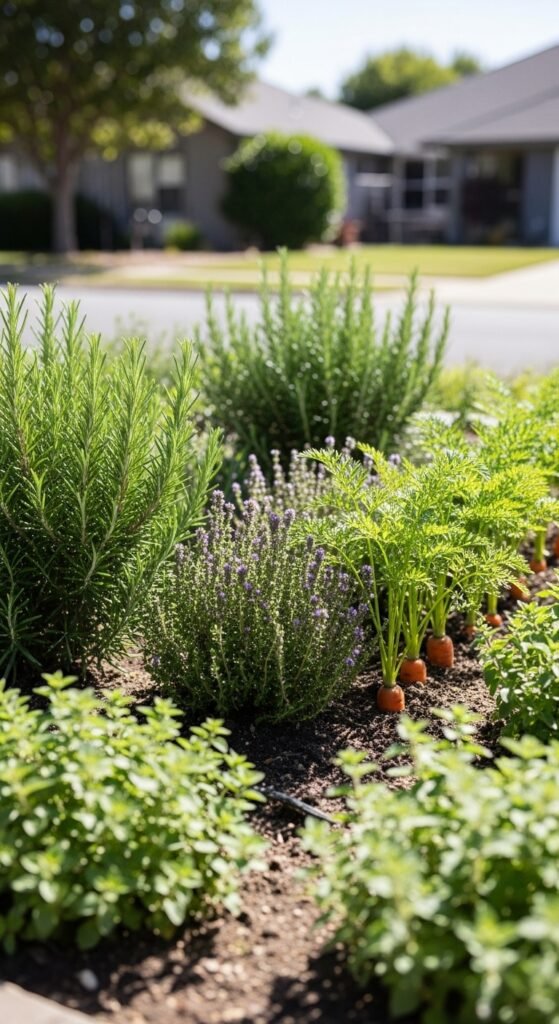
Why integrate herbs? They act as natural pest repellents, enhance veggie flavors when harvested together, and add evergreen structure for year-round interest. Herbs are low-maintenance, drought-tolerant, and provide quick yields for culinary use.
How to design: Amend soil for drainage. Plant herbs as borders around veggie rows—rosemary with carrots. Ensure full sun. Water sparingly. Harvest tips to promote bushiness. Check our herb garden layout ideas for patterns. This setup doubles as a sensory garden, inviting touch and smell.
7) Fruit and Veggie Fusion
What this fusion creates is blending dwarf fruit trees or bushes with vegetables, such as strawberries under apple trees in your front yard.
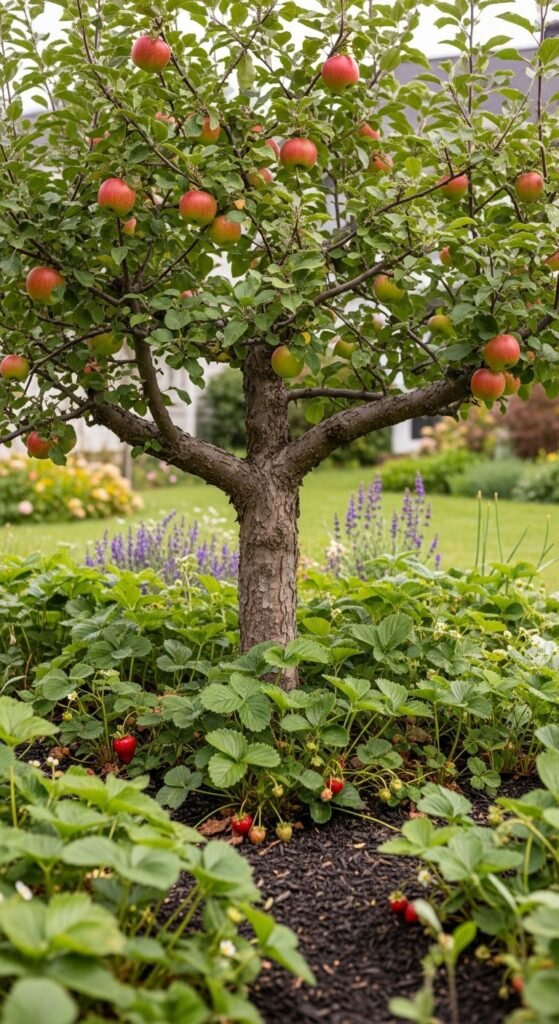
Why fuse them? It diversifies your harvest, maximizes vertical space, and creates layered aesthetics. Fruits attract beneficial insects, improving pollination for veggies, while providing shade and windbreaks.
How to execute: Select compact varieties like dwarf apples. Plant trees centrally, veggies around bases. Ensure compatible soil pH. Prune trees for shape. For more, see our edible landscaping ideas. Mulch to conserve water and suppress weeds, harvesting fruits as they ripen.
8) Pollinator Paradise Plot
What makes this plot special is adding flowers like zinnias and sunflowers amid veggies to attract bees and butterflies in your front yard vegetable garden.
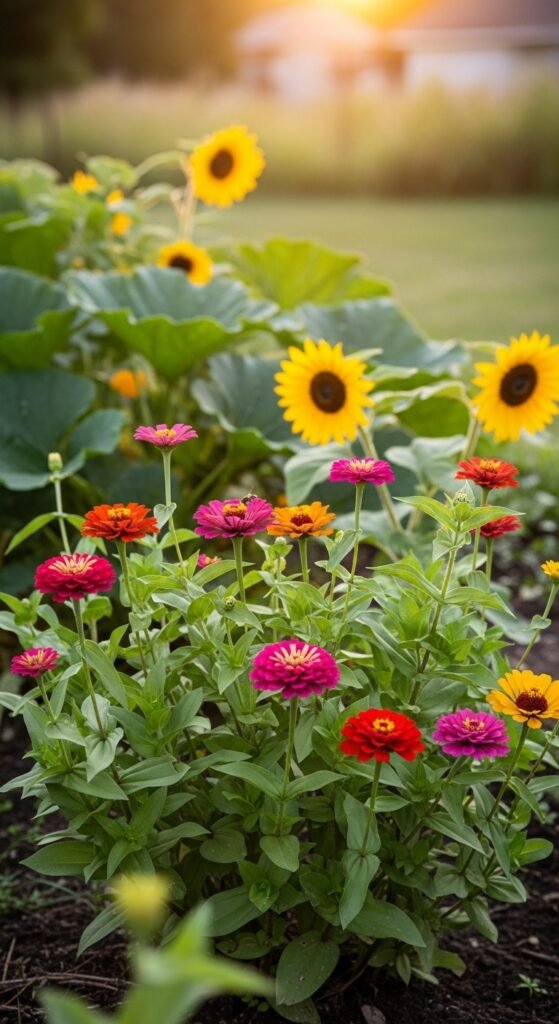
Why attract pollinators? They boost fruit set and yields—essential for crops like squash. This enhances biodiversity, creates a vibrant display, and supports local ecosystems, making your garden more resilient.
How to establish: Sow flowers in borders or intersperse. Choose nectar-rich varieties. Avoid pesticides. Provide water sources. Explore our pollinator garden ideas. Observe activity and plant more of what works, ensuring continuous blooms for season-long support.
9) Drought-Tolerant Design
What this design features is selecting water-wise veggies like okra, eggplant, and beans, arranged with mulch in your front yard for minimal irrigation.
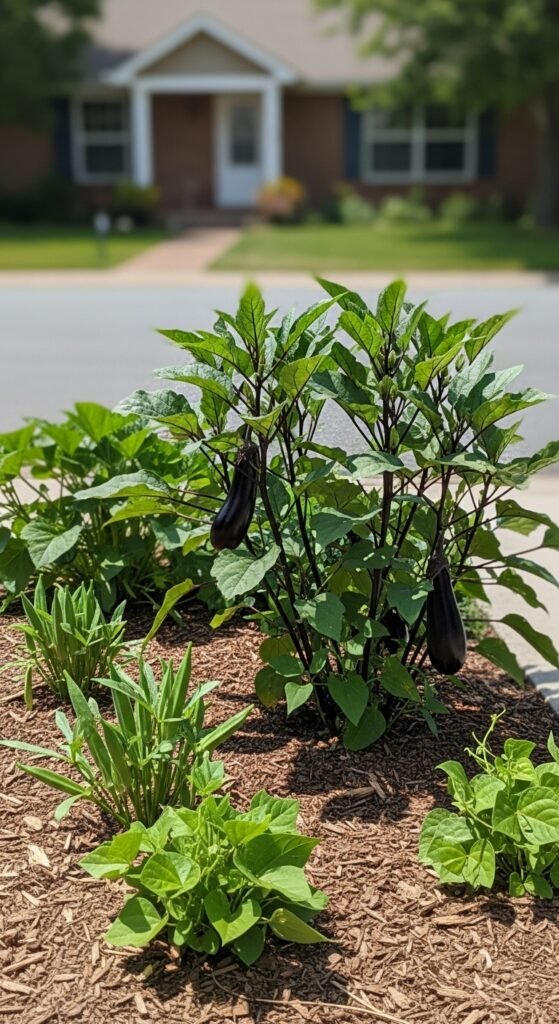
Why choose drought-tolerant? It conserves water, reduces bills, and suits arid climates. These plants are hardy, requiring less care, yet produce abundantly, promoting sustainable gardening practices.
How to plan: Test soil and amend for drainage. Group plants by water needs. Use deep mulch layers. Install rain barrels. For layout tips, visit our drought-tolerant vegetables page. Water deeply at dawn to minimize evaporation and encourage deep roots.
10) Succession Planting Sequence
What succession planting means is sowing crops in phases, like radishes followed by beans, to extend harvest in your front yard vegetable garden.
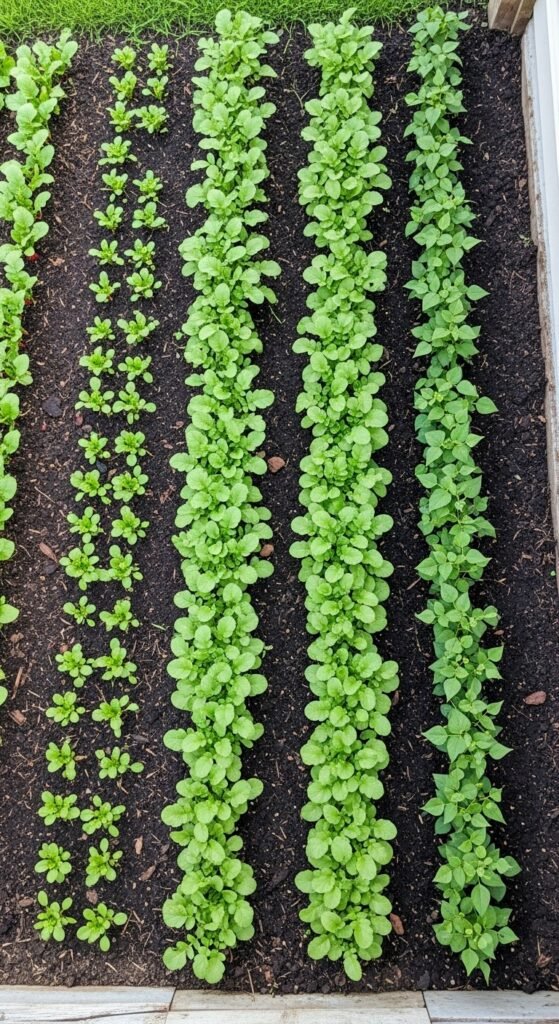
Why sequence? It ensures continuous supply, maximizes space efficiency, and prevents bare spots, keeping your yard productive and attractive throughout seasons.
How to schedule: Use a planting calendar. Start quick crops early, replace with slower ones. Rotate families to avoid disease. Check our vegetable planting calendar. Monitor growth and harvest promptly to make room for the next wave.
11) Pathway Produce Path
What this path incorporates is planting veggies along walkways, such as lettuce edging paths, in your front yard for easy access and visual flow.
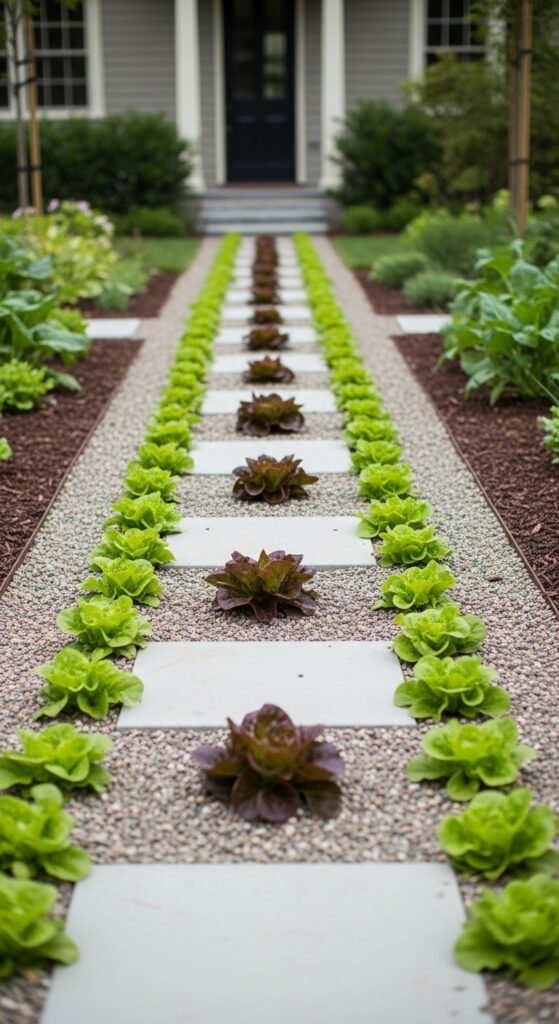
Why along paths? It utilizes narrow spaces, facilitates maintenance, and integrates gardening into daily routines. The linear design guides the eye, enhancing landscape cohesion.
How to construct: Lay gravel or stepping stones. Plant low-growers beside. Ensure 3-foot widths for access. Water via soaker hoses. For front yard inspo, see front yard landscaping ideas. Trim regularly to keep paths clear and plants healthy.
12) Fence-Line Harvest
What fence-line gardening involves is using fences for support, growing climbers like tomatoes or squash vertically in your front yard.
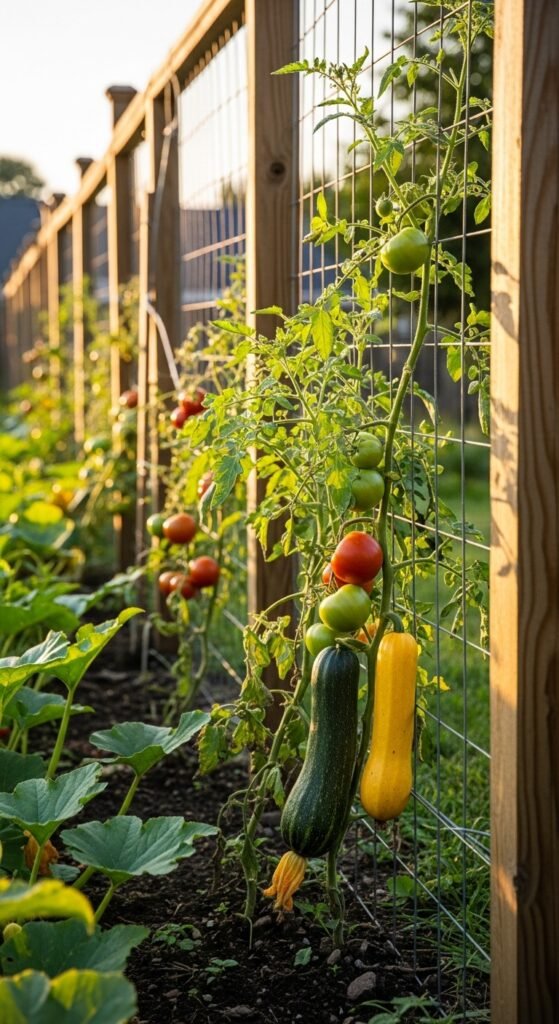
Why on fences? It saves space, provides structure, and creates natural barriers for privacy. Fences offer sun exposure and protection, boosting growth.
How to utilize: Attach trellising to fences. Plant at base. Tie stems gently. Choose sunny sides. For privacy enhancements, read our front yard privacy ideas. Harvest from both sides if accessible, pruning for airflow.
13) Ornamental Edibles Array
What this array showcases is colorful veggies like rainbow chard and purple carrots mixed for beauty in your front yard vegetable garden.
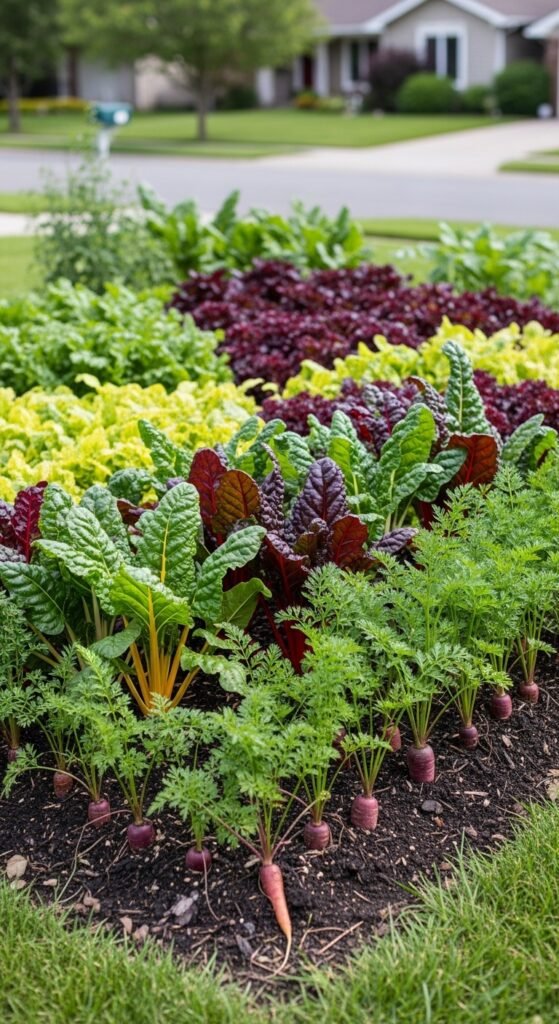
Why ornamental? It elevates aesthetics, making your garden a focal point. Varied colors attract attention, while still providing edibles, blending form and function seamlessly.
How to arrange: Group by color schemes. Plant in patterns. Amend soil richly. Water evenly. Draw from our low-maintenance front yard ideas for easy care. Rotate annually to maintain soil health and visual variety.
14) Hydroponic Front Haven
What hydroponics brings is soil-less growing in water systems, suitable for veggies like lettuce and herbs in compact front yard setups.
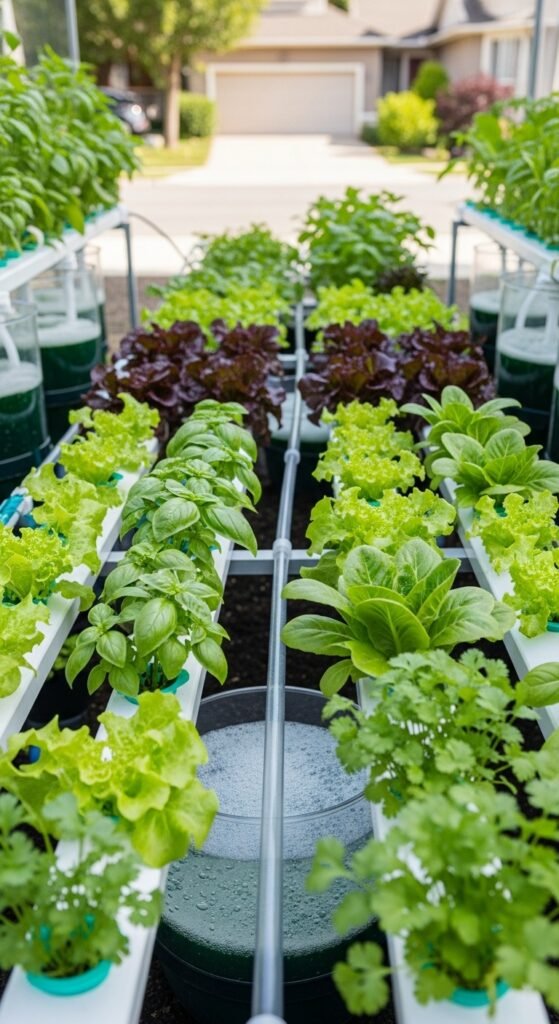
Why hydroponic? It uses less water, grows faster, and avoids soil issues. Ideal for urban fronts, it offers clean, modern looks with high yields.
How to start: Set up a simple NFT system. Use nutrient solutions. Place in sun. Monitor pH. For layouts, consult our vegetable garden layout ideas. Harvest leaves continuously for ongoing production.
15) Community-Inspired Corner
What this corner emulates is shared garden vibes, with grouped veggies inviting neighbor interaction in your front yard vegetable garden.
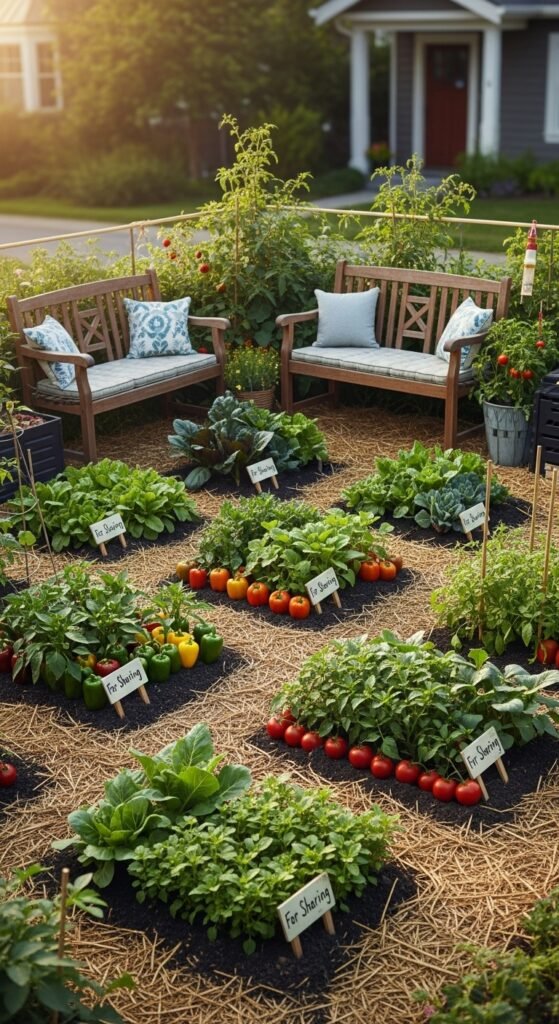
Why community-style? It fosters connections, shares knowledge, and can lead to swaps. The open design encourages sustainability and adds social value to your space.
How to inspire: Label plants educationally. Include benches. Plant extras for sharing. Use organic methods. For overall front yard tips, see front yard landscaping ideas. Engage locals through signs or events for collaborative growth.
Key Principles for a Thriving Front Yard Vegetable Garden
Soil Preparation Essentials
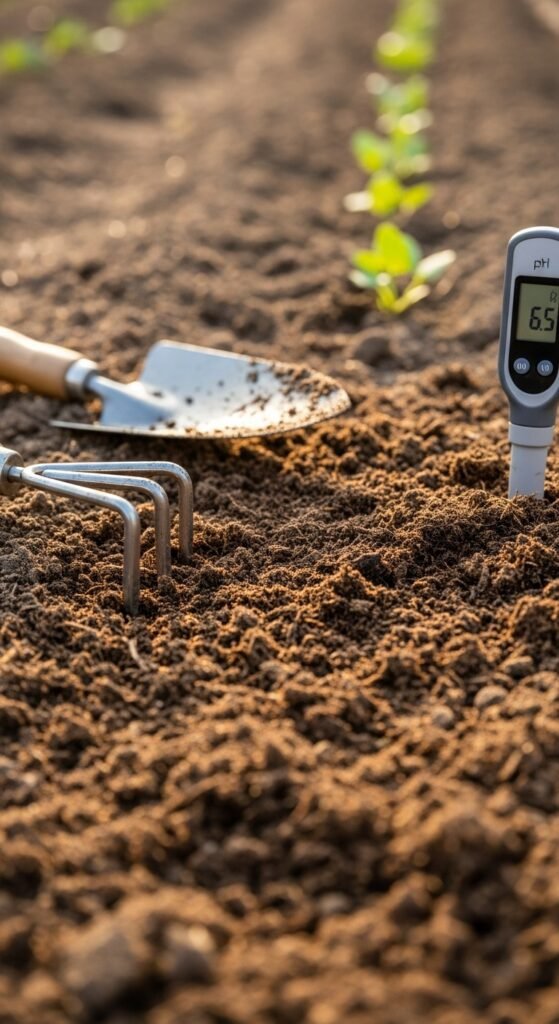
Start with testing your soil’s pH and nutrients to ensure it’s suitable for vegetables. Amend with organic matter like compost to improve fertility and structure. This foundation supports robust plant growth and higher yields.
Sunlight and Spacing Strategies
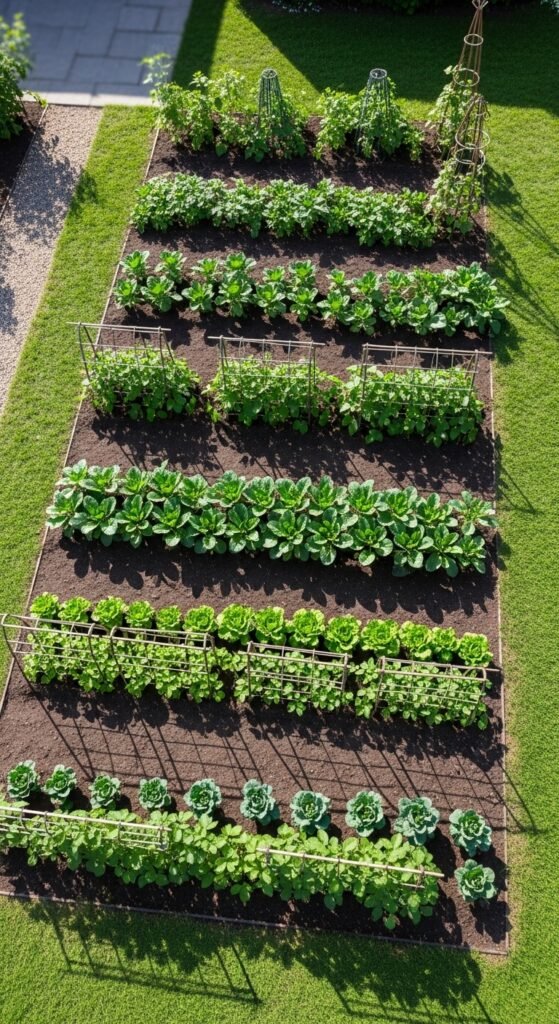
Assess your yard’s sun patterns, aiming for 6-8 hours daily. Proper spacing prevents overcrowding, reduces disease risk, and allows air circulation. Use garden planners to optimize layouts for efficiency.
Maintenance and Sustainability Tips
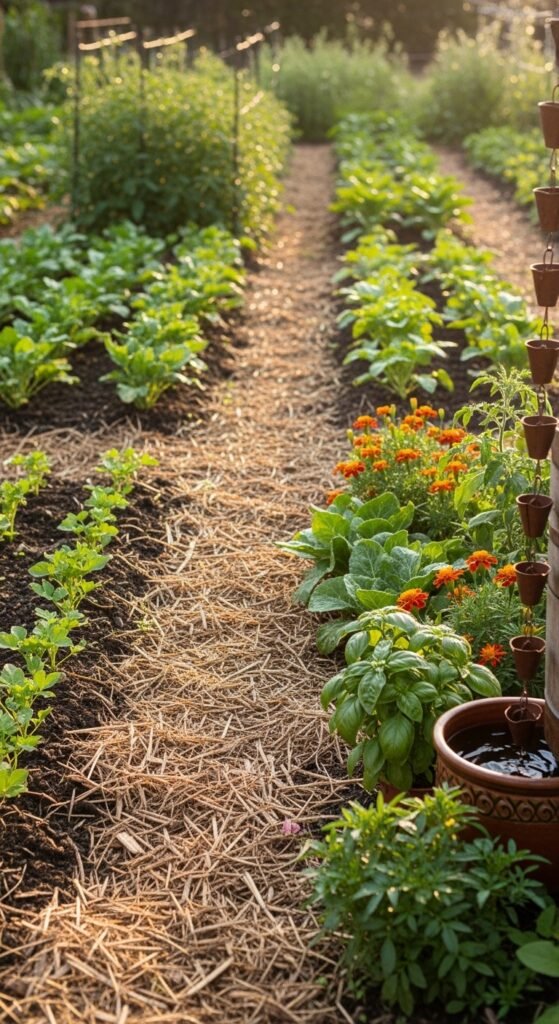
Implement mulching to conserve moisture and suppress weeds. Rotate crops yearly to maintain soil health. Incorporate rain harvesting and companion planting for eco-friendly practices that minimize inputs while maximizing output.
Frequently Asked Questions
Is a front yard vegetable garden legal in my area?
Check local zoning laws and HOA rules, as some restrict front yard edibles. Many areas allow them if maintained neatly and not obstructing views.
How do I deal with pests in a front yard setup?
Use natural repellents like neem oil, encourage beneficial insects, and practice crop rotation. Netting can protect from birds and larger animals without chemicals.
What vegetables grow best in front yards?
Opt for compact, attractive varieties like cherry tomatoes, leafy greens, and herbs. They thrive in sun and add visual appeal without overwhelming space.
Can I have a front yard vegetable garden in shade?
Yes, but choose shade-tolerant veggies like lettuce, spinach, and kale. Supplement with reflective mulches or grow lights if needed for better results.
How much water does a front yard vegetable garden need?
Aim for 1 inch per week, adjusted for rainfall. Deep, infrequent watering promotes strong roots; use mulch to retain moisture efficiently.