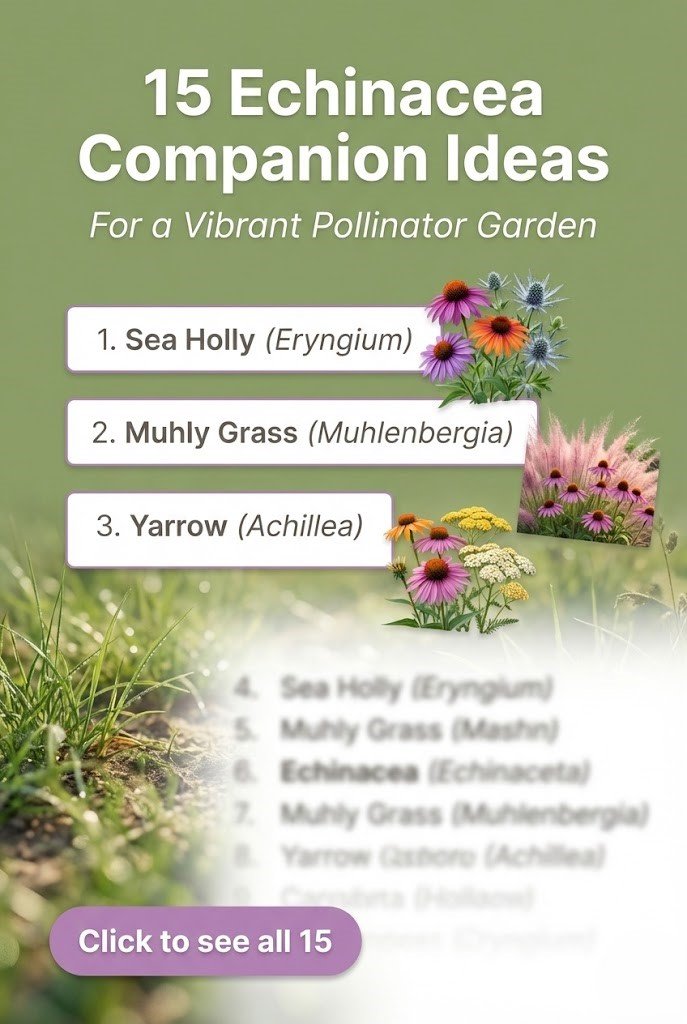
Echinacea, often called coneflower, is a resilient perennial native to North America that brings bold, daisy-like blooms to your garden in shades of purple, pink, white, and more. These flowers not only offer stunning visual appeal but also serve as a magnet for butterflies, bees, and other pollinators, enhancing biodiversity in your outdoor space. Beyond aesthetics, echinacea is valued for its drought tolerance, low maintenance needs, and potential medicinal uses, such as boosting immune health through herbal teas or tinctures.
Companion planting with echinacea elevates your garden design by pairing it with plants that share similar growing conditions, deter pests, improve soil health, or create harmonious color and texture contrasts. This approach fosters a balanced ecosystem, reduces the need for chemical interventions, and maximizes space efficiency. Whether you’re aiming for a prairie-style meadow, a cottage garden, or a compact container setup, these ideas will help you integrate echinacea seamlessly. Consider factors like sunlight, soil type, and water requirements to ensure success, and explore related tools for precise planning.
From ornamental grasses to flowering shrubs, the following 15 companion ideas provide practical what, why, and how guidance. Each pairing considers edge cases like varying climate zones or soil challenges, while highlighting nuances such as seasonal interest or wildlife benefits for a comprehensive, thriving garden.
1) Sea Holly (Eryngium)
You’ll love pairing echinacea with sea holly for its striking spiky blue blooms that contrast beautifully with coneflower’s daisy shapes, creating a textured, modern garden look. What makes this duo exceptional is sea holly’s thistle-like flowers, which thrive in full sun and well-drained soil, much like echinacea. This combination works well in xeriscape designs or coastal gardens where salt tolerance is key.
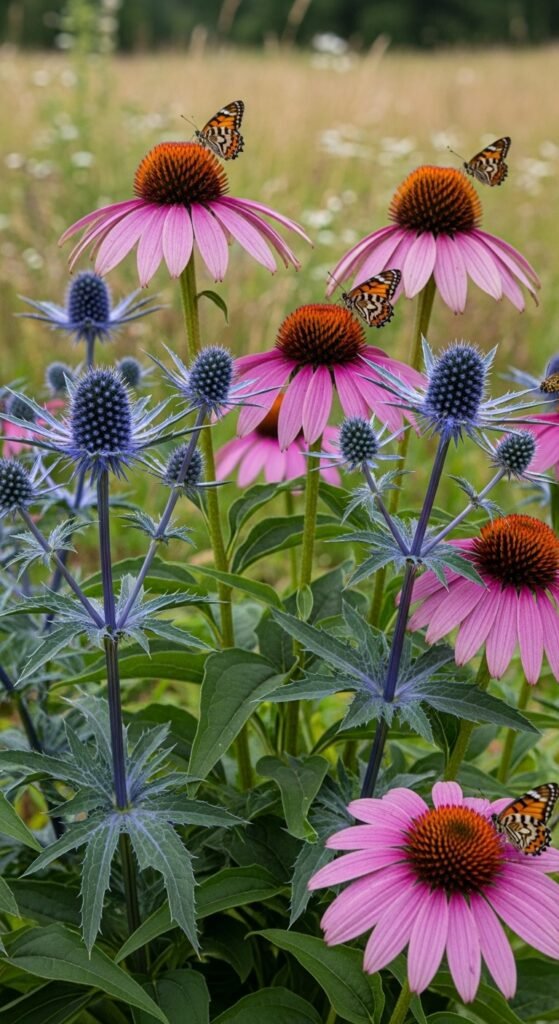
Why choose this? Sea holly deters deer naturally while attracting pollinators with its nectar-rich heads, boosting your garden’s ecological value. It also extends visual interest into late summer and fall, when echinacea’s seed heads provide winter structure. In poor soils, this pair minimizes maintenance, as both are drought-resistant once established, reducing watering needs by up to 50% in arid regions.
How to implement: Plant them 18-24 inches apart in a sunny border. Amend sandy soil with compost for better drainage—check our compost at home guide for tips. Mulch lightly to retain moisture, and divide every 3-4 years to prevent overcrowding. In colder zones, provide winter protection to avoid root rot.
2) Muhly Grass (Muhlenbergia)
Imagine the airy, pinkish plumes of muhly grass swaying alongside your echinacea’s sturdy blooms—this ornamental grass adds a soft, ethereal backdrop that enhances movement in your garden. What defines this pairing is muhly’s fine texture and fall color show, turning vibrant pink or red, complementing echinacea’s summer flowers in prairie or naturalistic landscapes.
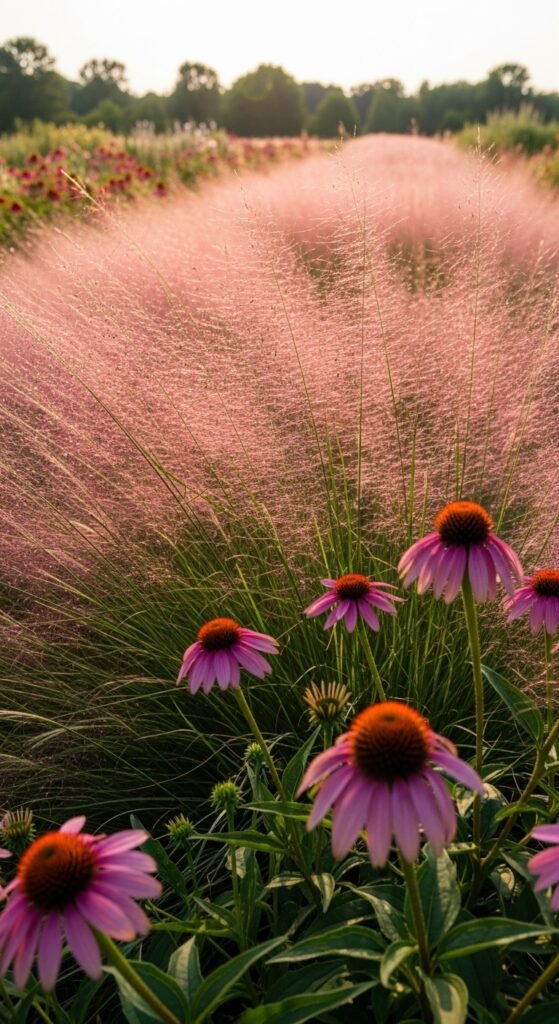
Why it works: This native grass is highly adaptable, resisting deer, pests, and diseases, while providing habitat for beneficial insects. It thrives in heat and drought, making it ideal for southern gardens or areas with inconsistent rainfall. The combination creates year-round interest, with grass plumes persisting into winter, and helps suppress weeds naturally.
How to grow: Space plants 2-3 feet apart in full sun with average soil. Use a plant spacing calculator to optimize layout. Cut back grass in early spring before new growth, and water deeply but infrequently. In humid climates, ensure good air circulation to prevent fungal issues.
3) Yarrow (Achillea)
You can create a colorful, low-growing hedge by combining echinacea with yarrow, whose flat-topped clusters in reds, yellows, or whites mingle perfectly with coneflower petals. What stands out is yarrow’s fern-like foliage, adding fine texture and ground cover that fills gaps around echinacea’s taller stems in borders or meadows.
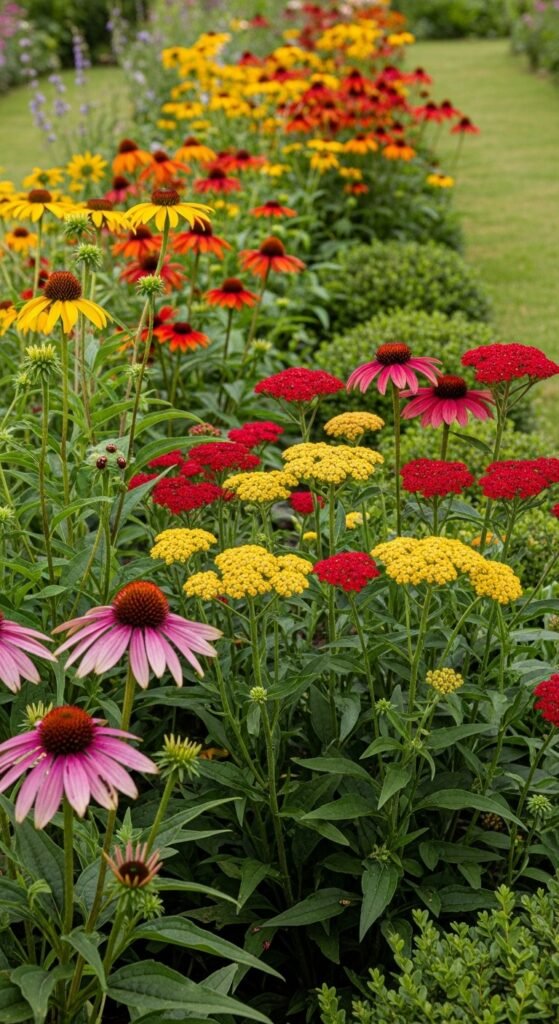
Why pair them: Yarrow’s vivid blooms extend the flowering season and attract beneficial insects like ladybugs for natural pest control. Both plants share sun-loving, dry-soil preferences, making them resilient in challenging conditions. This duo supports soil health by drawing pollinators and can tolerate light foot traffic in informal paths.
How to: Plant in well-drained areas, spacing 12-18 inches. Test and adjust pH with our soil pH lime calculator if needed for optimal growth. Deadhead spent flowers to encourage reblooming, and divide clumps every few years. In wet winters, elevate beds to avoid waterlogging.
4) Blazing Star (Liatris)
Pairing echinacea with blazing star introduces vertical spikes of purple or white flowers that rise dramatically above coneflower blooms, adding height and drama to your garden beds. What makes this compelling is blazing star’s bottlebrush-like inflorescences, blooming from top to bottom for extended interest in pollinator gardens.
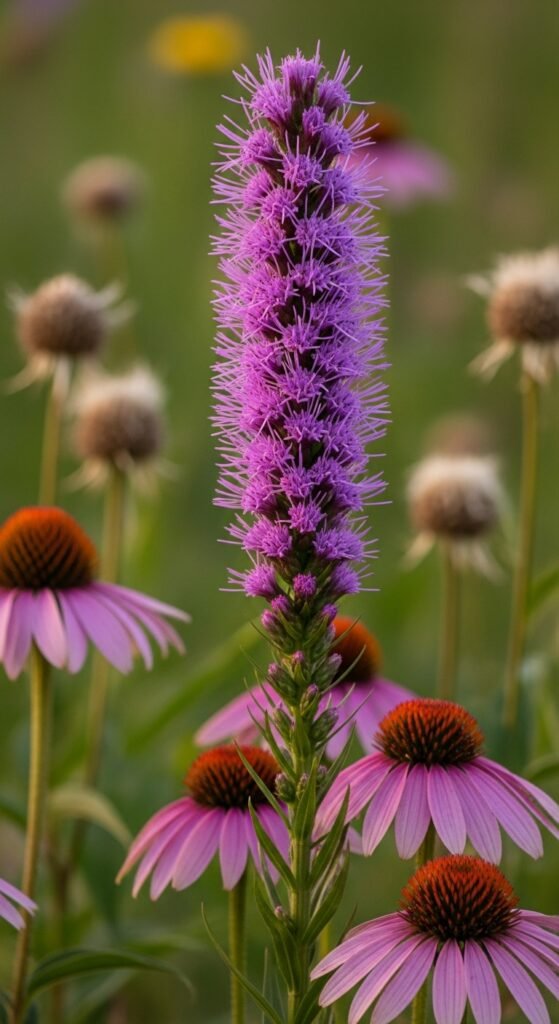
Why beneficial: It draws swallowtail butterflies and provides nectar late into summer, enhancing biodiversity. Native to prairies, it shares echinacea’s tolerance for poor soils and drought, reducing irrigation needs. This combination creates a wildflower meadow vibe, with seed heads offering winter food for birds.
How to plant: Position in full sun, 12-15 inches apart. Incorporate a drip irrigation setup for efficient watering during establishment. Bulbs should be planted in fall in northern zones; mulch to protect from frost heaves.
5) Spirea
You’ll achieve a layered hedge effect by planting echinacea with spirea, a shrub whose clustered pink or white flowers provide a bushy foundation for coneflower’s upright form. What distinguishes this is spirea’s mounded habit, offering structure in mixed borders or foundation plantings.
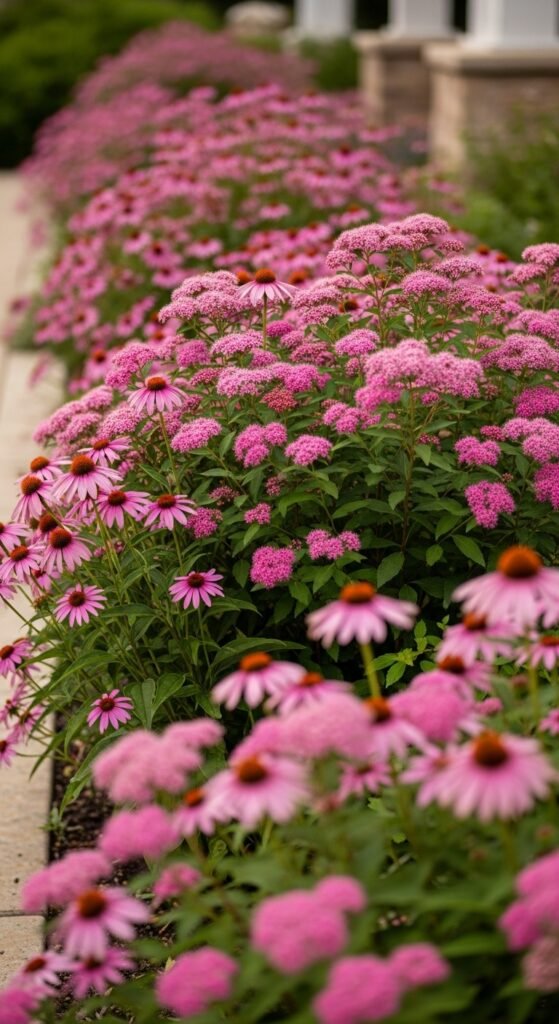
Why choose it: Spirea’s long bloom time complements echinacea, creating continuous color while being low-maintenance and deer-resistant. It adapts to various soils, including clay, and helps shade echinacea’s roots in hot climates, preventing stress.
How to: Space 3-4 feet apart in sunny spots. Prune spirea after flowering; use compost to enrich soil. In fall-planting areas, reference what to plant in fall for timing. Monitor for aphids in humid conditions.
6) Bee Balm (Monarda)
Combine echinacea with bee balm for a buzzing pollinator haven, where tubular red or pink flowers attract hummingbirds alongside coneflower’s daisy heads. What sets this apart is bee balm’s aromatic foliage, adding scent and repelling some pests in herb or cottage gardens.
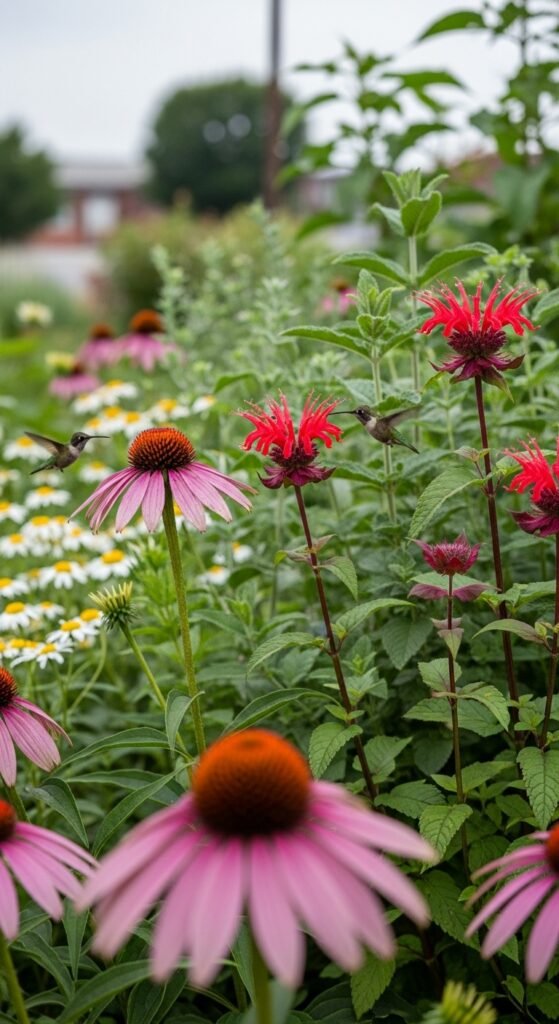
Why effective: It boosts pollinator activity with nectar, supporting bees and butterflies in urban or rural settings. Both prefer moist, well-drained soil, and bee balm can mask echinacea’s legginess in midsummer.
How to grow: Plant 18-24 inches apart; improve drainage in heavy soils. For guilds, explore permaculture guilds. Divide every 3 years to control spread and prevent mildew.
7) Maiden Grass (Miscanthus)
You can add graceful movement with maiden grass’s arching blades behind echinacea, creating a naturalistic screen or backdrop in large landscapes. What highlights this is the grass’s feathery plumes in fall, contrasting coneflower’s bold colors.
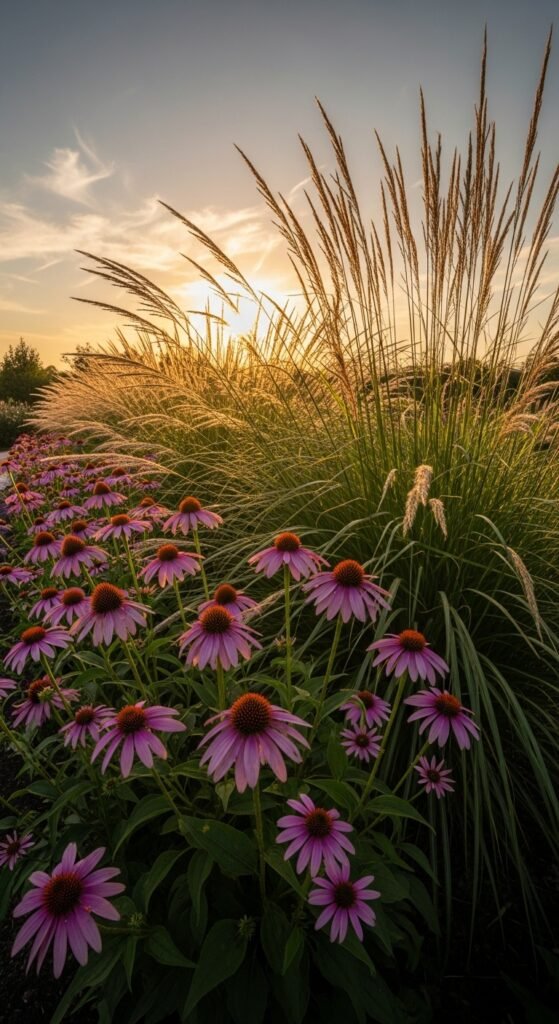
Why pair: Deer-resistant and drought-tolerant, it provides privacy and wind protection for delicate blooms. It thrives in similar conditions, extending seasonal interest with winter silhouettes.
How to: Space 4-6 feet; cut back in spring. Protect from frost using frost protection for plants methods. Avoid overwatering to prevent rot.
8) Bluebeard (Caryopteris)
Pair echinacea with bluebeard’s blue blooms for a cool-toned contrast, ideal in dry, sunny borders or containers. What makes it unique is bluebeard’s late-summer flowers, extending the display.
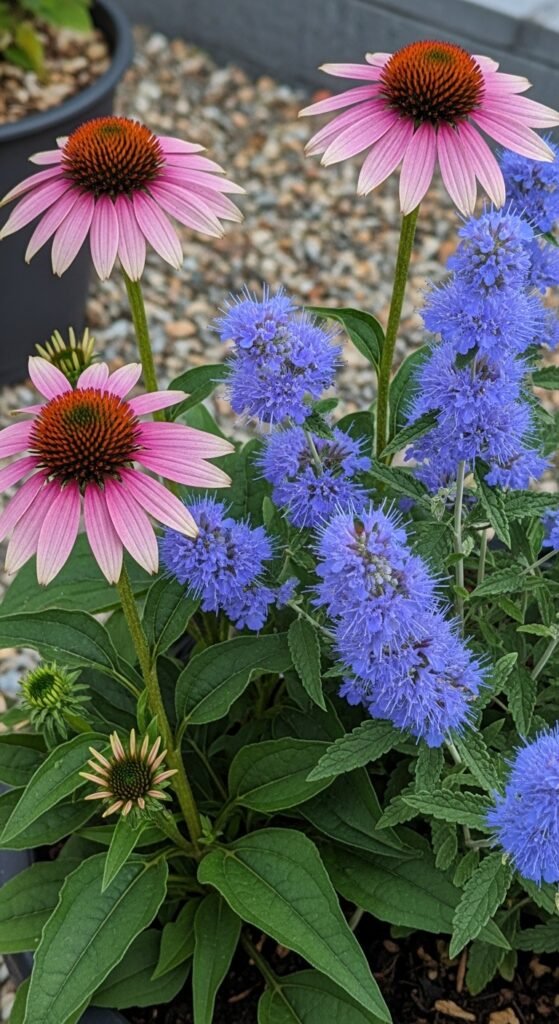
Why: Unbothered by deer, it attracts butterflies in low-water gardens. Shares heat tolerance, reducing maintenance.
How to: Plant 2-3 feet apart; prune in spring. For perennials, see perennial vegetable garden ideas. Ensure good airflow.
9) Milkweed (Asclepias)
Create a butterfly nursery by planting milkweed with echinacea, where orange or pink clusters host monarchs. What stands out is milkweed’s role as a larval host, complementing coneflower’s nectar.
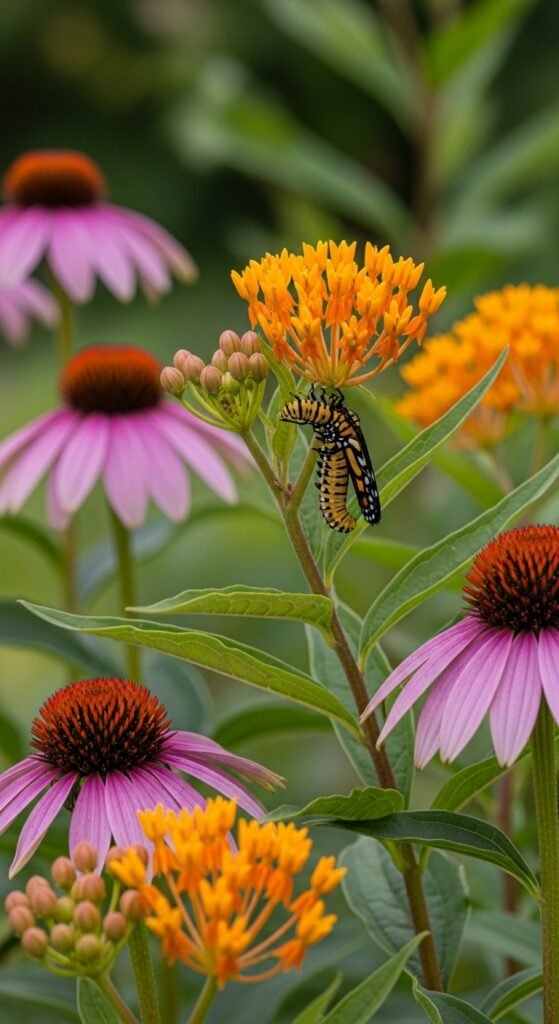
Why: Vital for monarch conservation, it enhances wildlife value. Drought-tolerant duo for native plantings.
How to: Space 18 inches; plant in sun. Repel mosquitoes with nearby mosquito-repelling plants. Tolerate aphids as they feed butterflies.
10) Hydrangea
You’ll get bold summer statements with hydrangea’s large mopheads beside echinacea’s cones, perfect for shaded borders. What defines it is hydrangea’s fall persistence, adding texture.
Why: Extends color into autumn; shades roots in hot areas. Adapts to partial shade nuances.
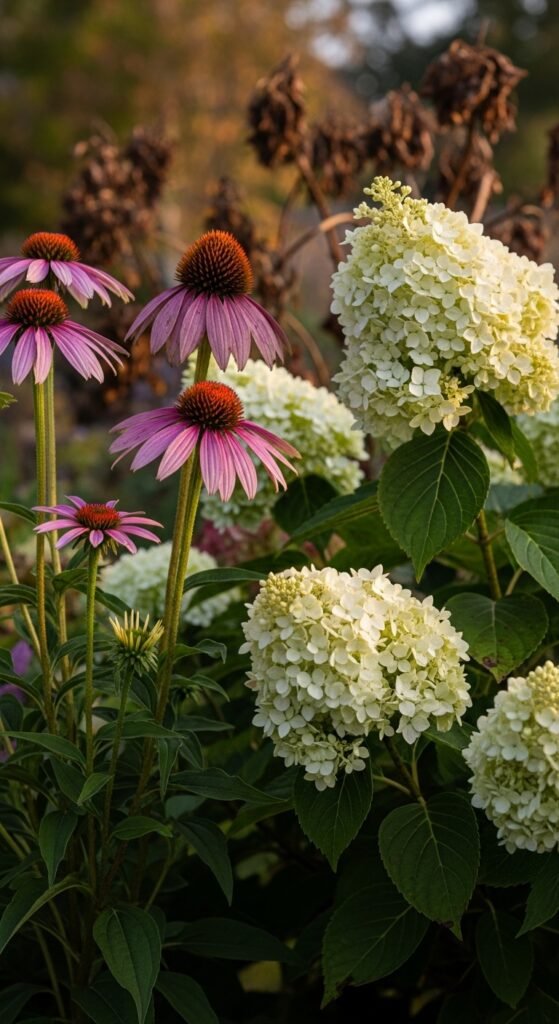
How to: Space 4-5 feet; amend acidic soil. Harvest for drying via food dehydration chart.
11) Foxglove (Digitalis)
Add vertical charm with foxglove’s spires towering over echinacea in cottage settings. What captivates is the bell-shaped blooms in pastels.
Why: Classic pairing for summer interest; attracts bees. Biennial cycle offers self-seeding benefits.
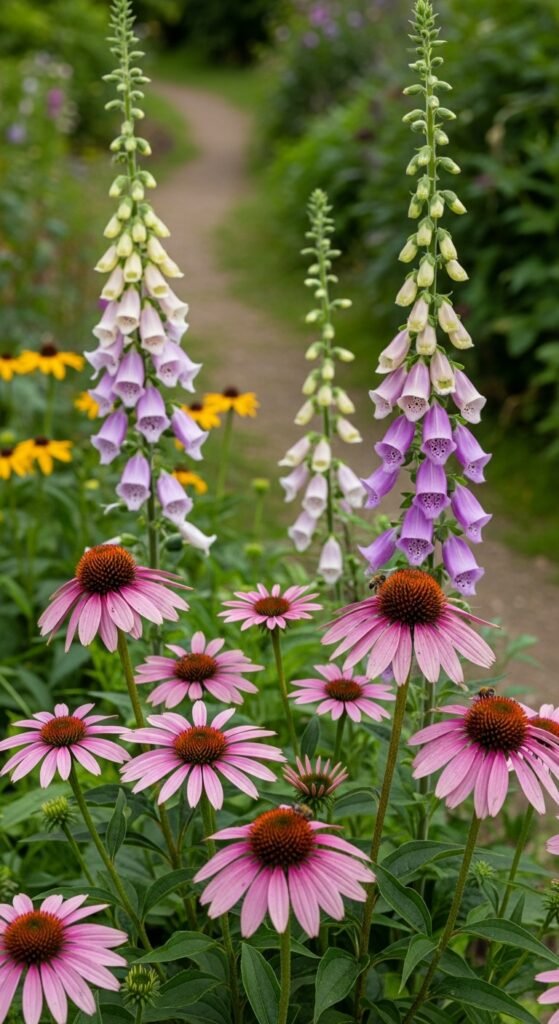
How to: Plant 12-18 inches apart in part shade. Deadhead for reblooms; consider biennial timing.
12) Hummingbird Mint (Agastache)
Pair with hummingbird mint’s spikes for a hummingbird hotspot, blending scents and colors. What excels is its minty aroma.
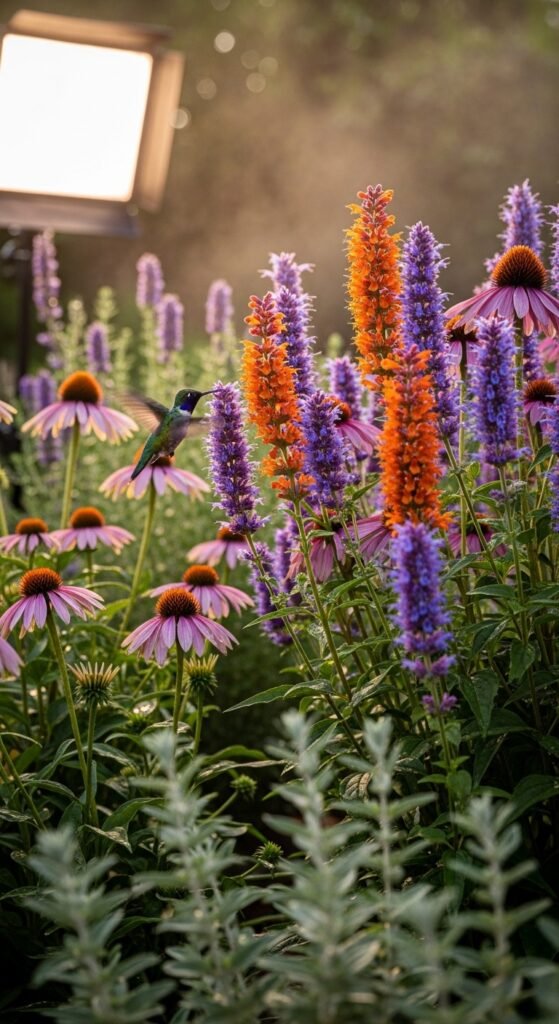
Why: Drought-tolerant pollinator magnet; deters pests. Native resilience in tough soils.
How to: Space 15-20 inches; full sun. Prune lightly; harvest leaves for tea.
13) Shasta Daisy (Leucanthemum)
Mass plant shasta daisies with echinacea for a cheerful cottage meadow. What shines is the white petals echoing coneflower shapes.
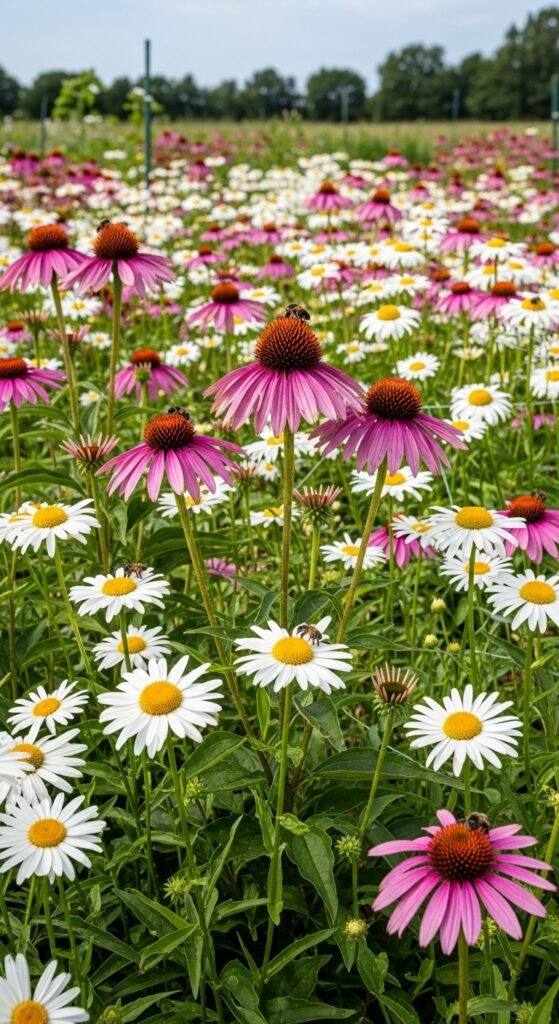
Why: Long-blooming; great for cuts and pollinators. Shares maintenance ease.
How to: 12-18 inches apart; divide regularly. Support in wind-prone areas.
14) Russian Sage (Perovskia)
You can achieve airy elegance with Russian sage’s lavender wands around echinacea. What impresses is the fragrant foliage.
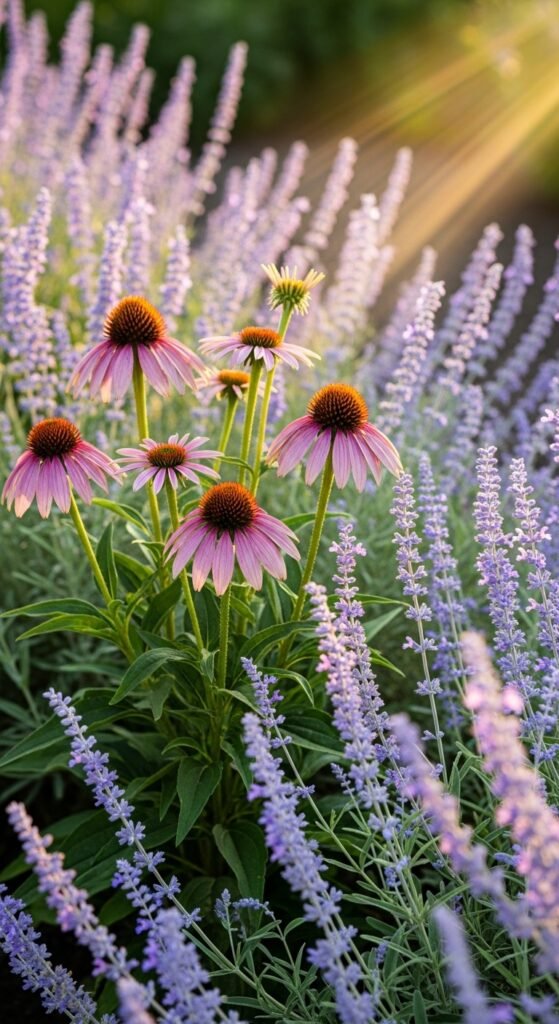
Why: Low-maintenance; deer-repellent and butterfly-friendly. Thrives in dry conditions.
How to: Space 2-3 feet; prune hard in spring. Avoid rich soils.
15) Rudbeckia
Combine with rudbeckia’s golden daisies for a native prairie burst. What highlights is the cheery yellow contrast.
Why: Pop of color; drought-tolerant with sedums. Ideal for wild gardens.
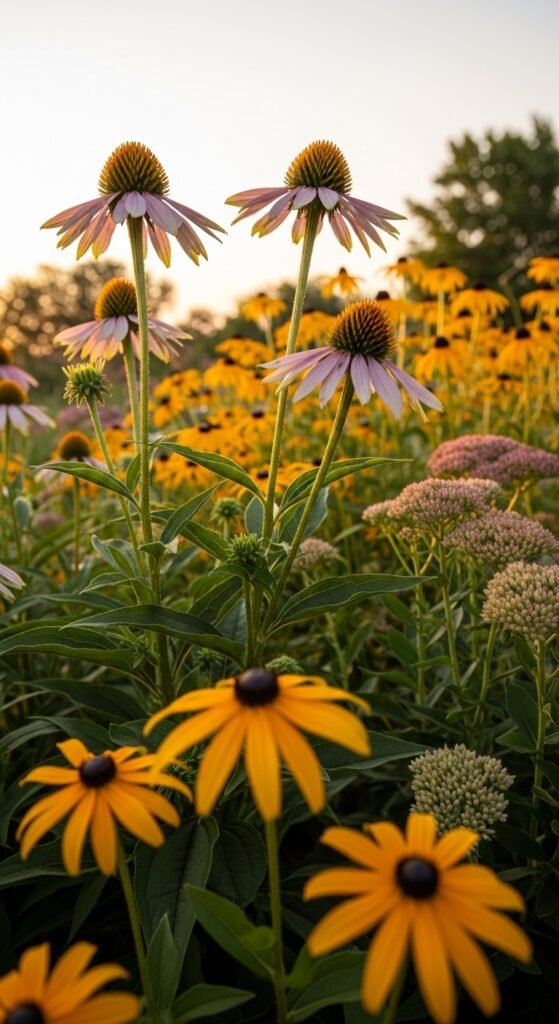
How to: Plant 18 inches apart; full sun. Self-seeds; manage spread.
Key Principles of Companion Planting with Echinacea
Understanding Soil and Sun Compatibility
Ensure companions match echinacea’s full sun and well-drained soil needs. Test pH (6.0-7.0) and amend as necessary for nutrient balance, considering regional variations like alkaline soils in the West.
Promoting Pollinator Health
Select nectar-rich plants to create habitats, factoring in bloom sequences for continuous food sources. Include host plants for larvae, and avoid pesticides to protect beneficial insects across seasons.
Maintenance and Sustainability Tips
Incorporate mulching and efficient watering to conserve resources. Rotate or divide perennials every 3-5 years, adapting to climate challenges like humidity or drought for long-term garden resilience.
Frequently Asked Questions
What are the main benefits of growing echinacea in my garden?
Echinacea enhances your garden with vibrant flowers, attracts pollinators like bees and butterflies, and offers drought resistance for low-maintenance appeal. It also provides potential medicinal uses, such as in herbal remedies, while supporting biodiversity and adding structural interest through seed heads in winter.
When is the best time to plant echinacea and its companions?
Plant in spring after the last frost or early fall to allow root establishment before winter. This timing varies by zone—earlier in warmer climates, later in cooler ones—ensuring plants acclimate without extreme heat or cold stress.
How do I handle common pests or diseases with echinacea?
Monitor for aphids or Japanese beetles, using neem oil or hand-picking as natural controls. Prevent fungal issues like powdery mildew by ensuring good air circulation and avoiding overhead watering, especially in humid regions.
Can echinacea be grown in containers?
Yes, choose large pots with drainage for echinacea and compact companions. Use well-draining potting mix, place in full sun, and water consistently, adjusting for smaller root systems that dry out faster than in-ground plants.
What varieties of echinacea should I start with?
Begin with Echinacea purpurea for classic purple blooms or try hybrids like ‘Cheyenne Spirit’ for mixed colors. Consider your garden’s color scheme and height preferences, as varieties range from 18 inches to 4 feet tall.