If you’re looking to create a vibrant garden that thrives with minimal water, drought tolerant flowers are your best bet. These resilient blooms are specially adapted to survive in dry conditions, making them ideal for regions with water restrictions or hot summers. By incorporating drought tolerant flowers into your landscape, you can enjoy colorful displays while conserving precious resources and reducing maintenance efforts.
Choosing the right drought tolerant flowers means selecting varieties that suit your soil type, sunlight exposure, and climate zone. They often feature deep roots, waxy leaves, or succulent tissues that help retain moisture. Whether you’re revamping your front yard or adding pops of color to containers, these flowers offer beauty and sustainability. Plus, many attract pollinators, enhancing your garden’s ecosystem.
Ready to transform your space? Explore these 15 stunning ideas, complete with tips on planting and care to help you succeed.
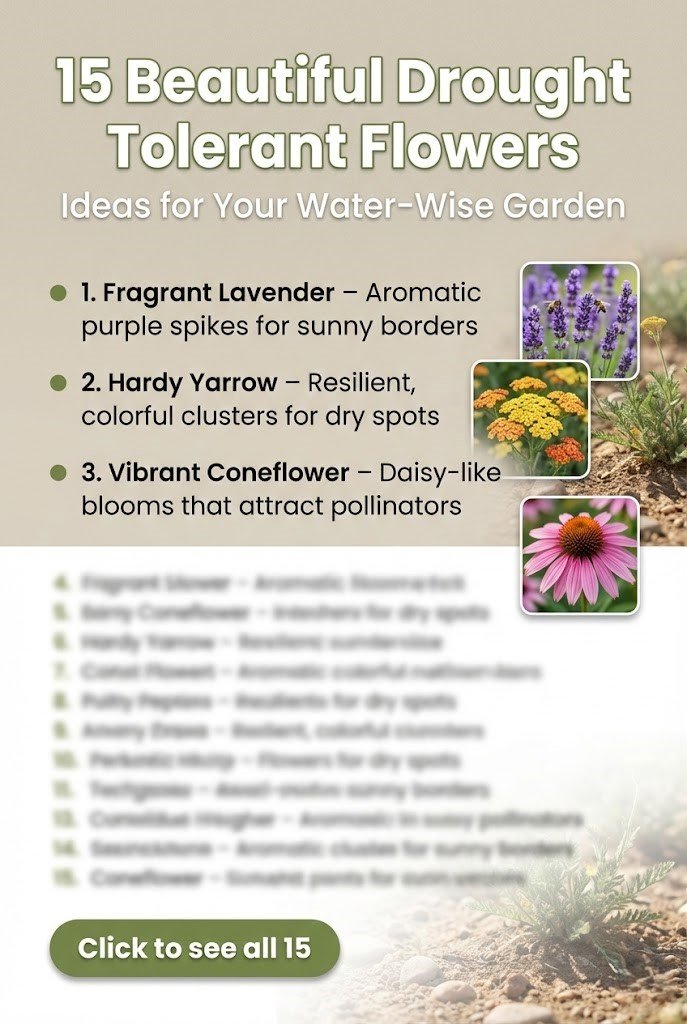
1) Fragrant Lavender
Lavender is a classic among drought tolerant flowers, known for its aromatic purple spikes that add both color and scent to your garden. This Mediterranean native thrives in dry, sunny spots, making it perfect for borders or rock gardens. Its key benefits include repelling pests naturally and attracting bees and butterflies, boosting biodiversity.
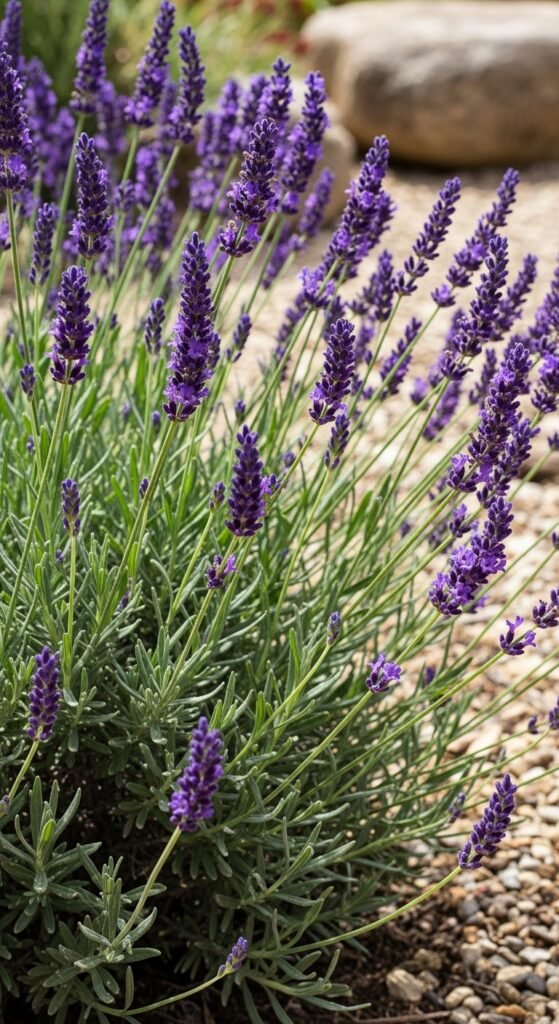
Why choose lavender? It requires little water once established, thanks to its deep root system that accesses moisture efficiently. You’ll appreciate how it flourishes in poor, well-drained soil without needing frequent fertilization. For best results, plant in full sun and prune annually to maintain shape and encourage new growth.
To incorporate lavender, space plants 12-18 inches apart in a sunny location. Water deeply but infrequently, allowing the soil to dry out between sessions. If you’re planning a larger drought tolerant yard, pair it with complementary stones or gravel for a low-maintenance look. Expect blooms from late spring through summer, providing long-lasting appeal.
2) Hardy Yarrow
Yarrow stands out with its flat-topped clusters of tiny flowers in shades of white, pink, or yellow, offering a wildflower charm to your drought tolerant garden. This perennial is incredibly tough, tolerating heat and poor soil while spreading gently to fill spaces.
The durability and low water needs make yarrow a top choice for sustainable landscaping. Its feathery foliage helps conserve moisture, and it resists deer, adding practical value. Plant it in full sun for the best blooms, and you’ll see it return year after year with minimal care.
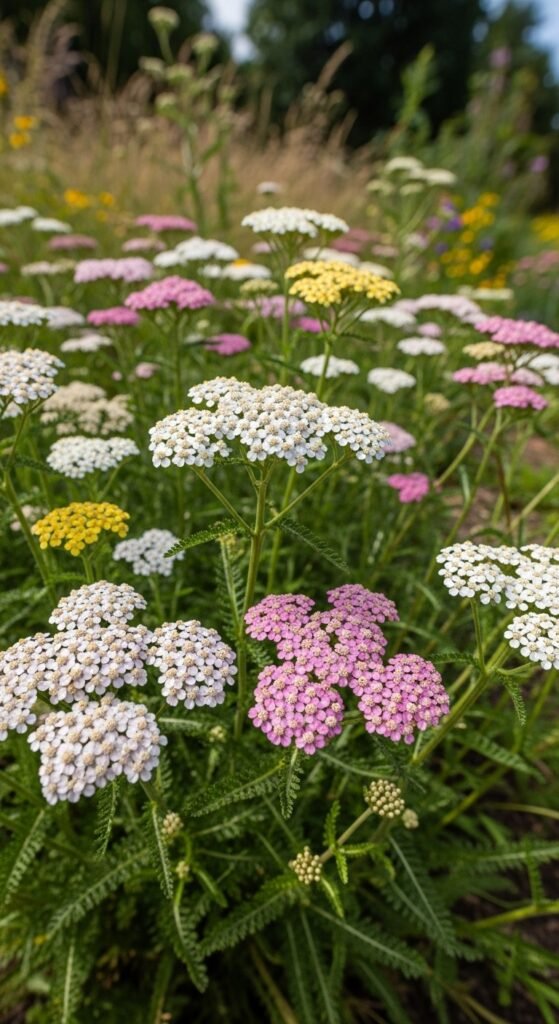
Start by sowing seeds or dividing clumps in spring. Ensure good drainage to prevent root rot, and mulch around the base to retain soil moisture. For enhanced efficiency, consider integrating a drip irrigation system during establishment. Yarrow’s versatility allows it to thrive in meadows or mixed borders, blooming profusely from summer to fall.
3) Vibrant Coneflower
Coneflower, or Echinacea, features daisy-like petals in purple, pink, or white surrounding a spiky center, drawing butterflies and birds to your yard. As one of the most popular drought tolerant flowers, it adapts well to various climates.
Its medicinal properties and pollinator support are standout benefits, alongside its ability to withstand dry spells once roots are deep. You won’t need to water often, saving time and resources in your eco-friendly garden.
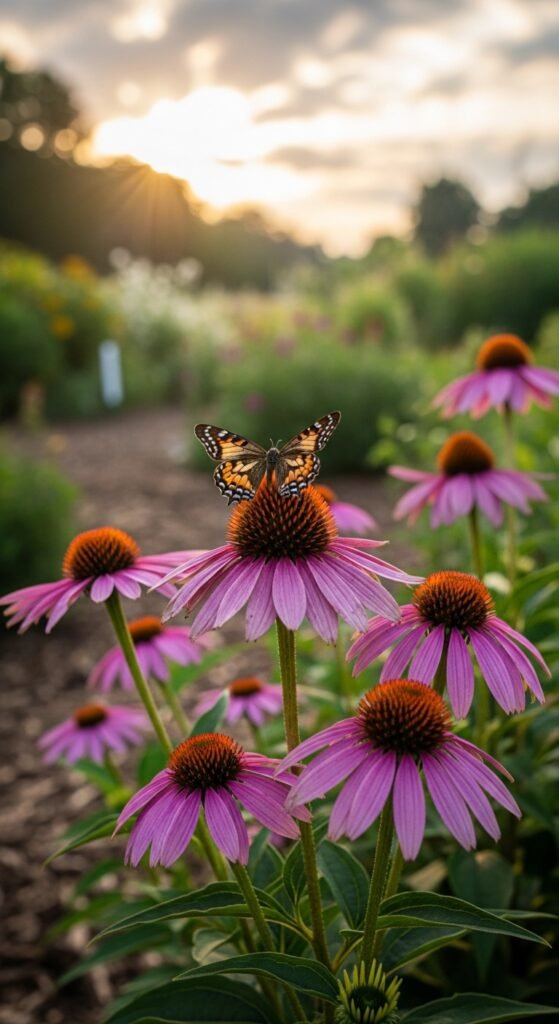
Plant coneflowers in well-drained soil with full sun exposure. Space them 18-24 inches apart and deadhead spent blooms to prolong flowering. If expanding to herbs, explore drought tolerant herbs for companion planting. Enjoy the show from midsummer onward, with some varieties offering winter interest through seed heads.
4) Cheerful Black-Eyed Susan
Black-eyed Susan brings sunny yellow petals with dark centers, resembling mini sunflowers that brighten any space. This native North American flower excels in drought conditions, making it a reliable pick for beginners.
Appreciate its long blooming period and self-seeding nature, which means less replanting and more natural growth. It’s also deer-resistant and attracts beneficial insects, contributing to a balanced garden ecosystem.
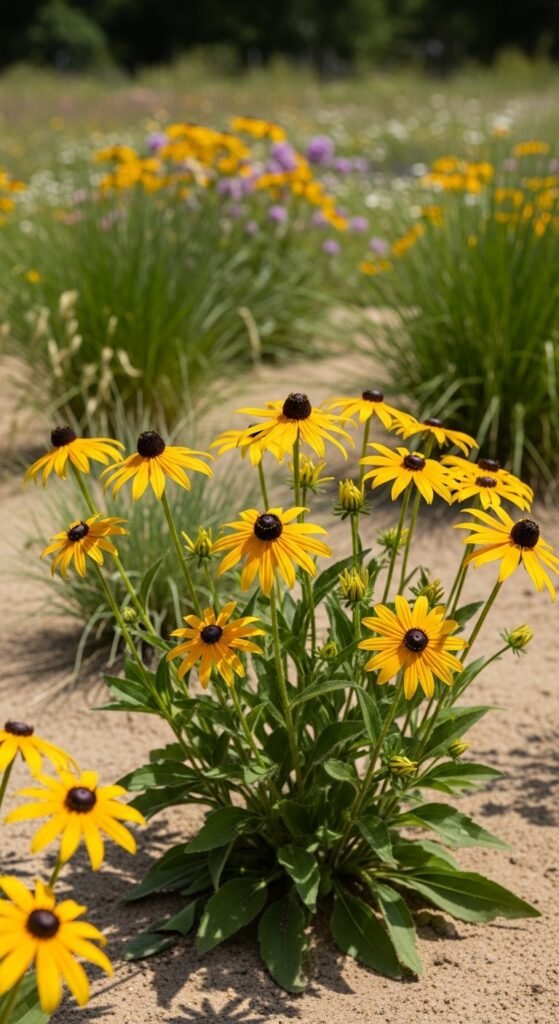
Sow seeds directly in spring or fall in sunny, dry areas. Thin seedlings to 12 inches apart and avoid overwatering to encourage resilience. For a cohesive design, link it with low maintenance flowers. Watch it flourish from June to frost, providing continuous color with little effort.
5) Succulent Sedum
Sedum, often called stonecrop, offers fleshy leaves and star-shaped flowers in pink or yellow, ideal for ground cover or rockeries. As a succulent, it’s exceptionally drought tolerant, storing water in its tissues.
The versatility in forms and textures allows you to use it in containers or borders, with minimal upkeep. It’s perfect for hot, dry spots where other plants struggle.
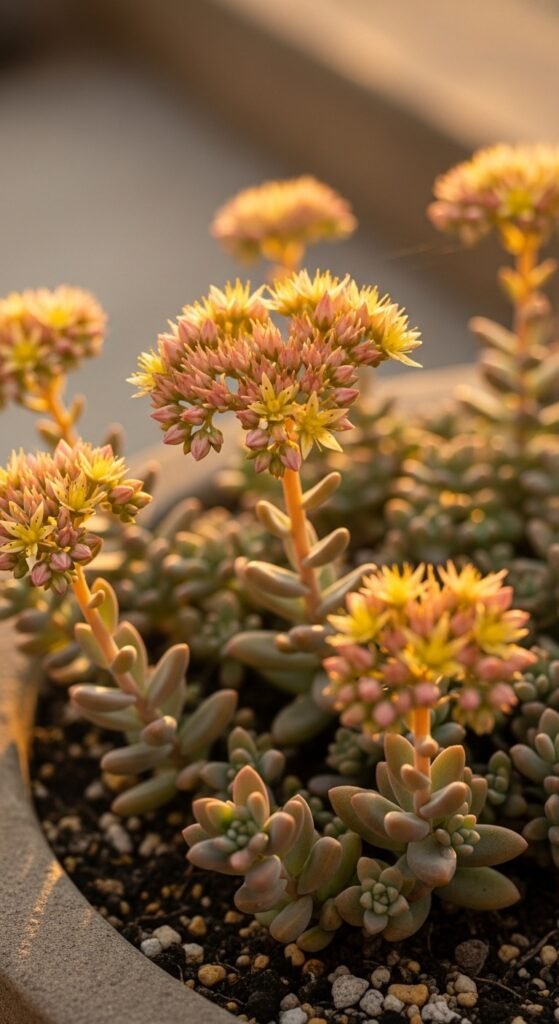
Propagate by cuttings or divisions in spring, planting in gritty soil for drainage. Water sparingly, following a succulent watering schedule. Sedum blooms late summer to fall, adding late-season interest and attracting pollinators.
6) Airy Russian Sage
Russian sage delivers tall spires of lavender-blue flowers atop silvery foliage, creating a hazy, ethereal effect in your garden. This perennial shrub thrives in arid environments, mimicking steppe conditions.
Its aromatic leaves and height provide structure and fragrance, while deterring pests. Once established, it needs almost no water, making it a smart choice for water-wise designs.
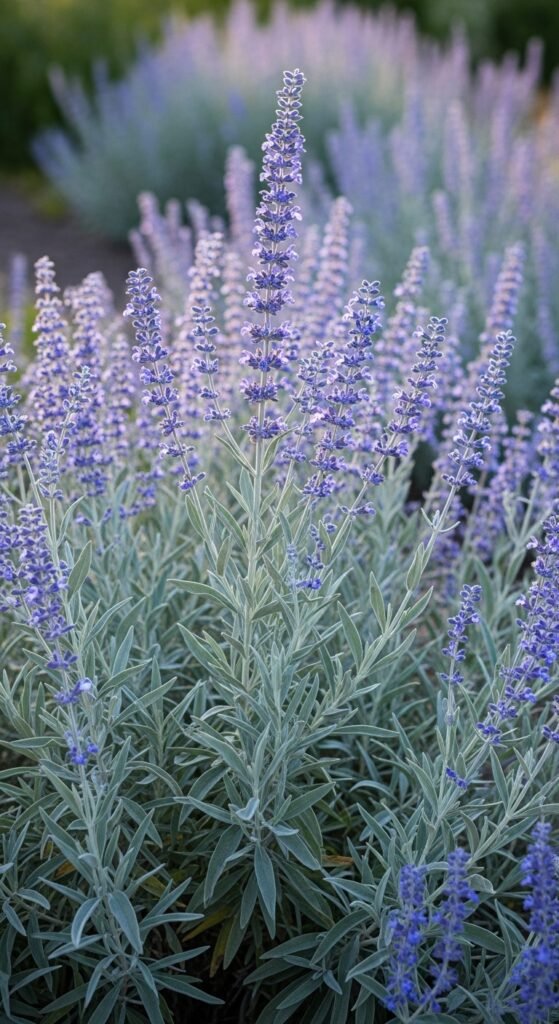
Plant in full sun with lean soil, spacing 24-36 inches apart. Prune back in spring for bushier growth. Complement it with drought tolerant front yard ideas for curb appeal. Blooms persist from midsummer to frost, offering extended beauty.
7) Bold Blanket Flower
Blanket flower, or Gaillardia, boasts fiery red and yellow daisy blooms that resemble Native American blankets. It’s a heat-loving perennial that excels in dry soils.
Enjoy its continuous flowering and butterfly attraction, with self-seeding for easy propagation. This flower reduces your watering chores significantly.
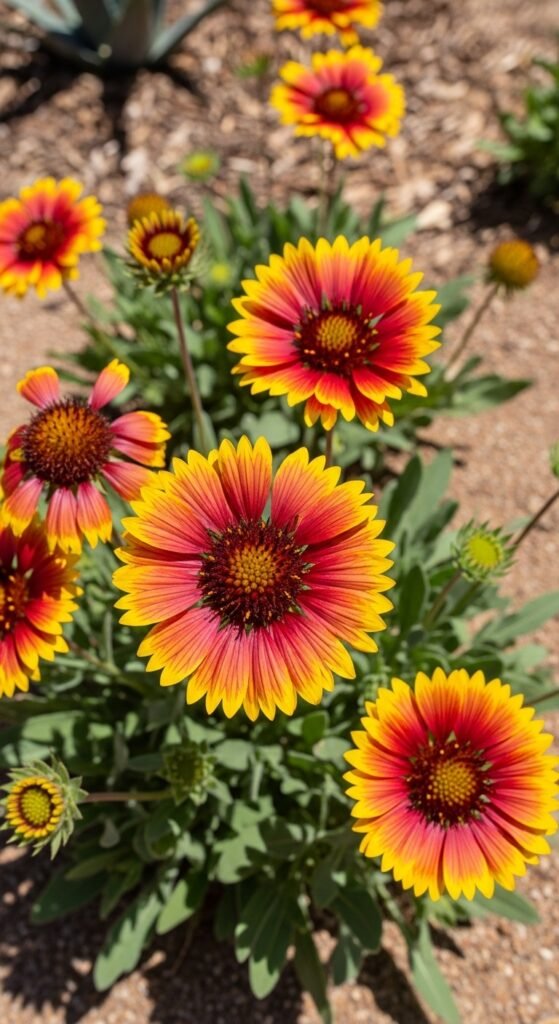
Sow seeds in sunny spots with sandy soil. Deadhead to encourage more blooms, and divide every few years. Pair with desert garden ideas for a thematic landscape. It shines from early summer through fall.
8) Sunny Coreopsis
Coreopsis, known as tickseed, features bright yellow or pink flowers on slender stems, adding a meadow-like feel. It’s highly adaptable to drought once rooted.
The sheer abundance of blooms and low care make it ideal for mass plantings. It supports wildlife and reseeds readily.
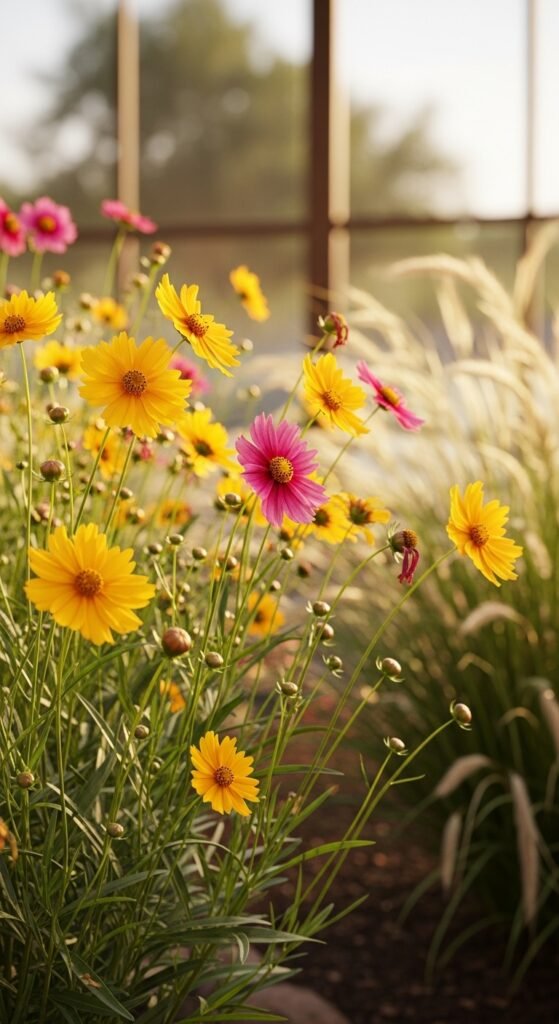
Plant in well-drained areas with full sun. Shear back after first flush for rebloom. Integrate with xeriscape ideas for efficiency. Expect waves of color from spring to fall.
9) Spiky Salvia
Salvia offers tubular flowers in vibrant blues, reds, or purples, beloved by hummingbirds. Many varieties are drought tolerant, originating from dry habitats.
Its medicinal uses and intense color enhance any garden, with foliage that releases a sage-like scent.
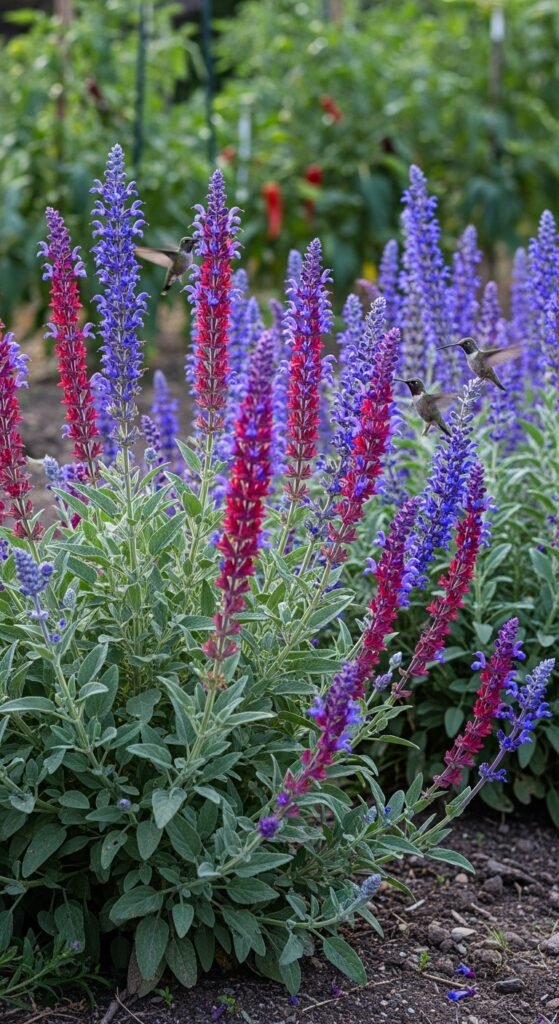
Position in sunny, dry soil and prune regularly. Water minimally after establishment. For veggies, consider drought tolerant vegetables alongside. Blooms repeatedly throughout the season.
10) Fragrant Agastache
Agastache, or hyssop, produces spikes of tubular flowers in pink, orange, or blue, with minty-scented leaves. It’s a magnet for pollinators in dry gardens.
Benefit from its long bloom time and herbal qualities, perfect for teas or borders. It handles drought with ease.
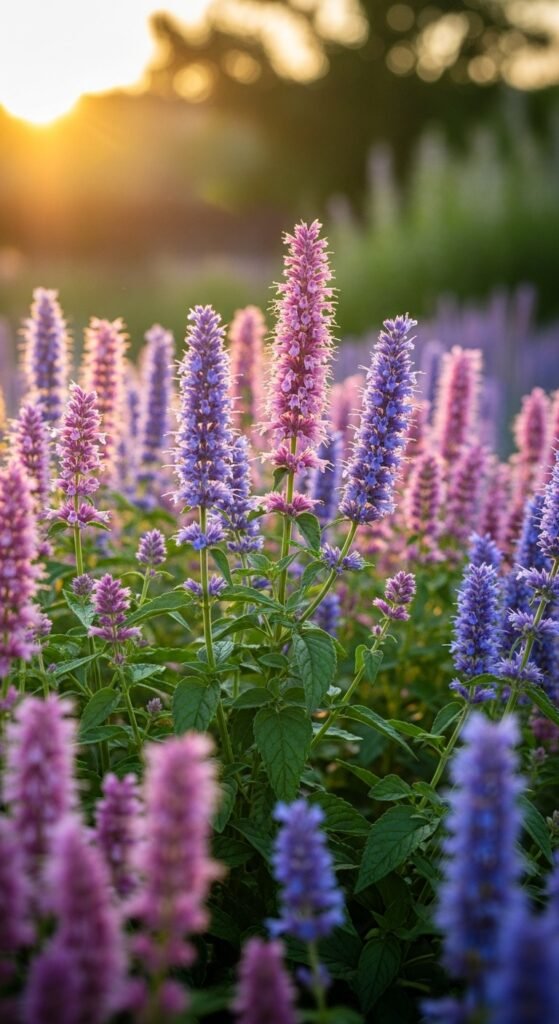
Plant in full sun with good drainage. Pinch tips for bushiness. Use rainwater harvesting ideas to supplement sparingly. Flowers from summer to frost.
11) Tubular Penstemon
Penstemon features bell-shaped flowers on tall stalks in various colors, thriving in rocky, dry soils. It’s a native favorite for Western gardens.
Its hummingbird appeal and adaptability make it essential for wildlife-friendly spaces with low water use.
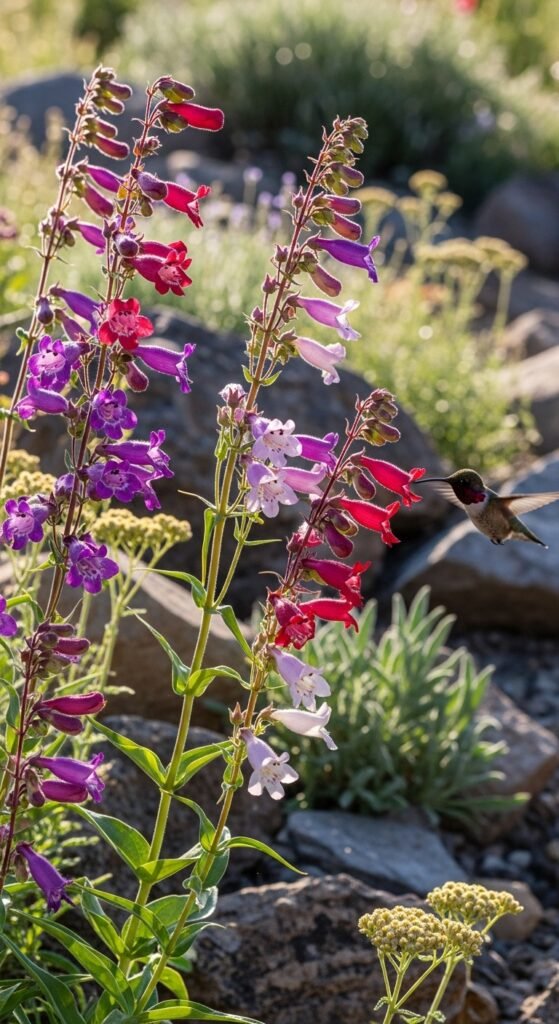
Sow in spring in sunny locations. Avoid rich soil to prevent legginess. Deadhead for prolonged blooming throughout summer.
12) Spreading Ice Plant
Ice plant forms mats of succulent foliage with daisy-like flowers in bright hues, ideal for ground cover in arid areas.
The erosion control and vivid colors are key, as it suppresses weeds while conserving moisture.
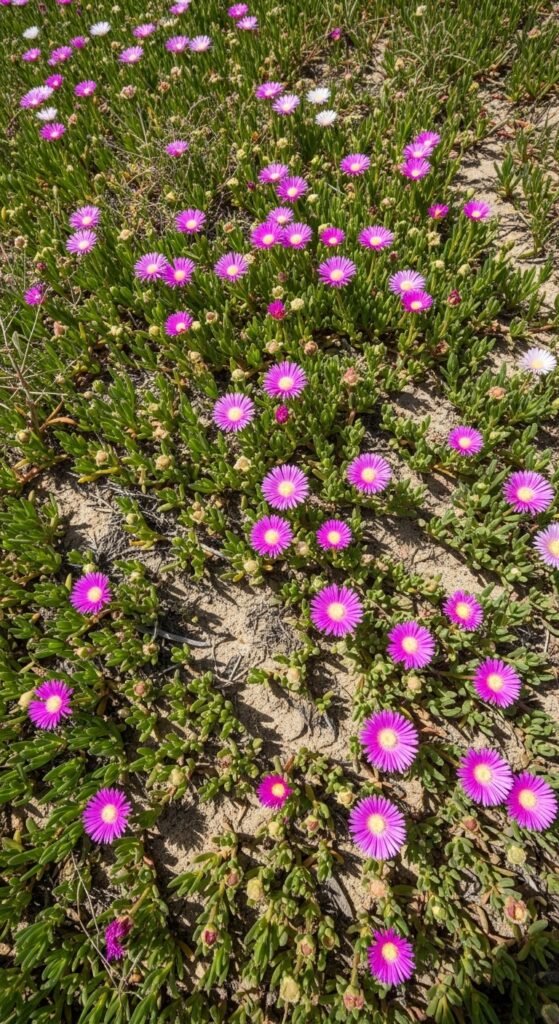
Plant in sandy soil with full sun. Propagate by cuttings. It blooms profusely in spring and summer.
13) Trailing Portulaca
Portulaca, or moss rose, offers rose-like blooms in jewel tones on succulent stems, opening in sunlight. It’s perfect for hot, dry spots.
Appreciate its self-seeding and heat tolerance, filling containers or borders effortlessly.
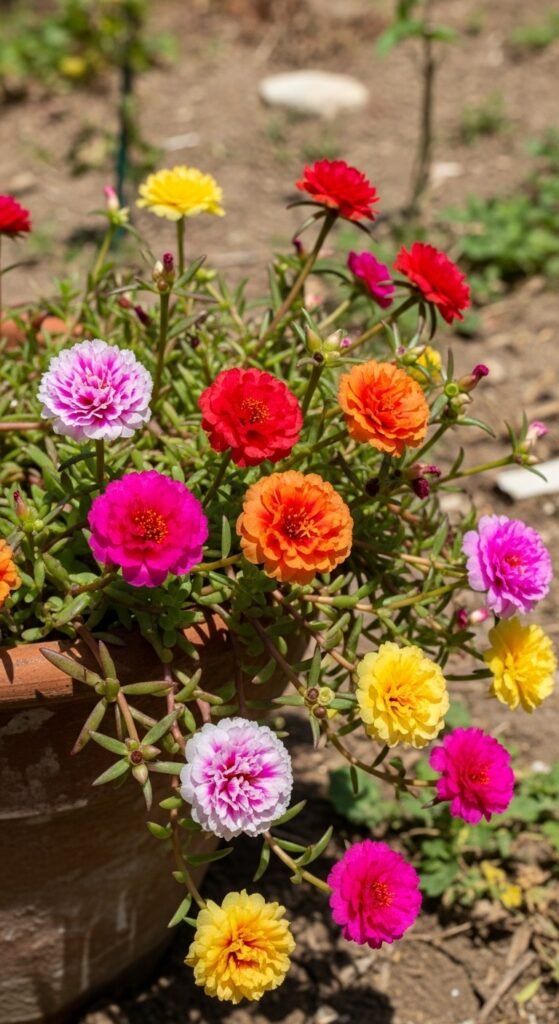
Sow seeds after frost in poor soil. Water lightly; it thrives on neglect. Summer-long color ensues.
14) Tropical Lantana
Lantana produces clusters of multicolored flowers, attracting butterflies in warm climates. It’s drought resistant once established.
Its continuous blooming and mounding habit add vibrancy with minimal input.
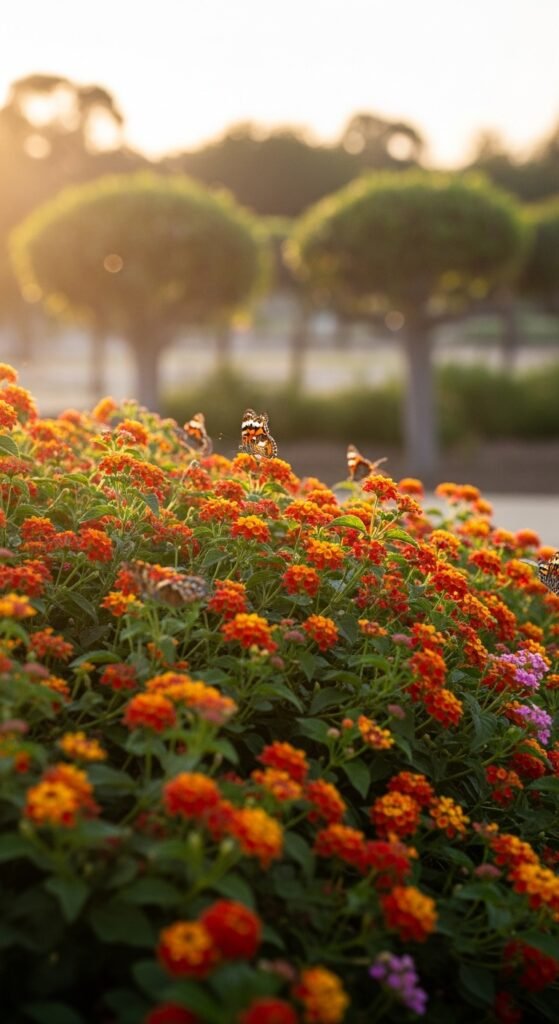
Plant in full sun; prune for shape. Frost-tender, but annual in cooler zones. Blooms all season.
15) Resilient Zinnia
Zinnia boasts bold, daisy-shaped flowers in every color, easy to grow from seed in dry conditions.
The cut-flower potential and pollinator draw make it versatile for beds or pots.
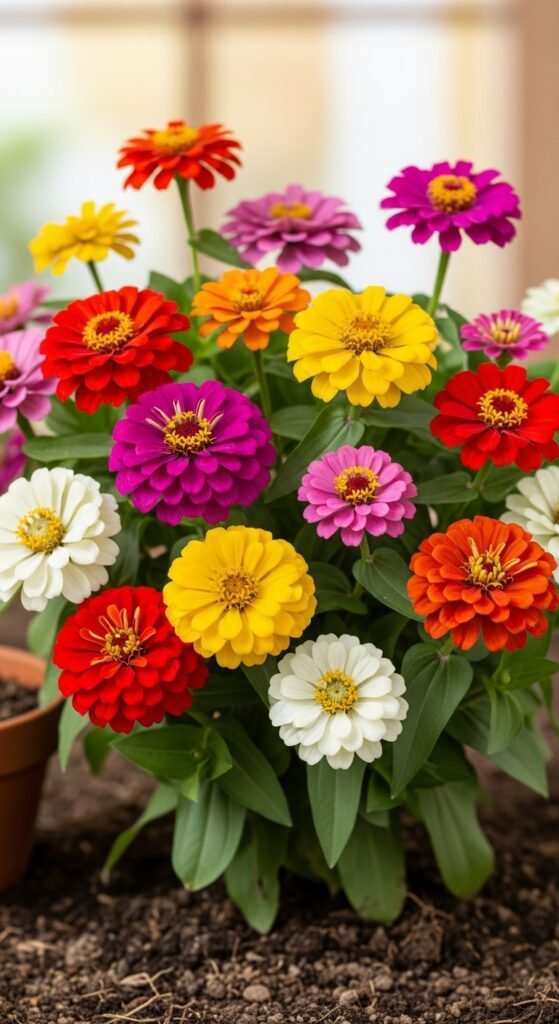
Sow directly in sunny, well-drained soil. Thin seedlings and water at base. Enjoy from midsummer to frost.
Key Tips for Growing Drought Tolerant Flowers
Soil Preparation
Amend your soil with gravel or sand for better drainage, preventing waterlogged roots. Test pH to ensure it’s neutral to slightly alkaline, as many drought tolerant flowers prefer this range.
Watering Strategies
Water deeply but infrequently to encourage deep roots. Mulch generously to retain moisture and suppress weeds, extending time between waterings.
Maintenance Practices
Prune dead growth in spring and divide overcrowded clumps every few years. Monitor for pests, using natural remedies to keep your garden healthy.
Frequently Asked Questions
What makes a flower drought tolerant?
Drought tolerant flowers have adaptations like deep roots, thick leaves, or hairy surfaces that reduce water loss. They originate from arid regions and can survive extended dry periods with minimal irrigation.
How do I choose drought tolerant flowers for my climate?
Select varieties suited to your USDA hardiness zone. Research native plants or those from similar climates for best performance and resilience.
Can drought tolerant flowers grow in containers?
Yes, many thrive in pots with well-draining soil. Choose compact varieties and water carefully to avoid over-saturation.
Do drought tolerant flowers need fertilizer?
They typically require little fertilizer. Use a low-nitrogen organic option sparingly in spring to avoid lush growth that demands more water.
How often should I water new drought tolerant flower plantings?
Water regularly for the first few weeks to establish roots, then taper off. Once settled, they may need water only during extreme droughts.