
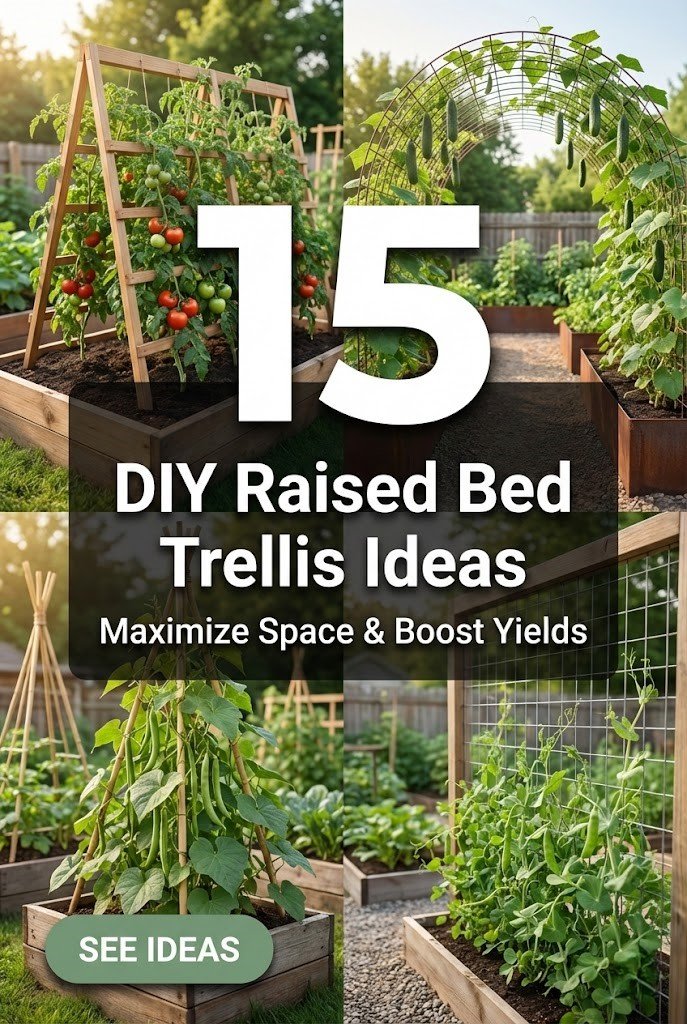
A DIY raised bed trellis represents an efficient solution for vertical gardening, allowing you to support climbing plants while optimizing limited space. By combining a raised bed with a trellis structure, you create a self-contained unit that promotes healthy plant growth and simplifies maintenance. This approach is particularly valuable for urban gardeners or those with smaller yards, as it enables the cultivation of vining crops such as tomatoes, cucumbers, and beans without sprawling across the ground.
The primary advantages of implementing a DIY raised bed trellis include improved air circulation, reduced pest issues, and easier harvesting. You will find that this method enhances sunlight exposure for your plants, leading to higher yields and healthier produce. Moreover, constructing your own trellis allows customization to fit your specific garden layout and aesthetic preferences, ensuring both functionality and visual appeal.
As you explore these ideas, consider integrating complementary gardening techniques to further elevate your setup. For instance, exploring spring garden design ideas can provide inspiration for overall layout planning.
1) A-Frame Wooden Trellis
You construct an A-frame trellis by forming two triangular supports connected at the top, positioned over your raised bed. This design offers sturdy support for heavy vines and can be built using basic lumber and hinges for easy folding and storage.
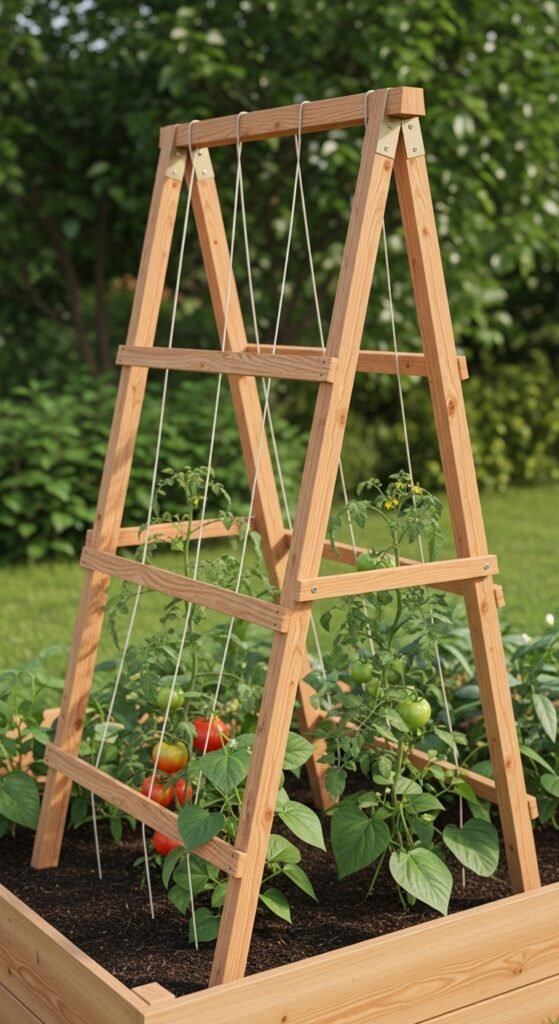
The key benefits include versatile plant support and space efficiency, as it allows plants to grow upward, freeing ground space for other crops. It also facilitates better airflow, minimizing disease risks. To build it, measure your bed’s width and cut four wooden legs to equal lengths. Attach crossbars for stability, then hinge the frames together at the peak. Secure it to the bed’s edges for wind resistance.
Customize the height based on your plants’ needs; for example, taller structures suit pole beans. If you incorporate companion planting, refer to permaculture guilds for optimal combinations.
2) Cattle Panel Arch Trellis
A cattle panel arch involves bending a sturdy metal livestock panel into an arch shape over your raised bed, creating a tunnel-like structure for climbing plants. This durable option withstands weather and supports substantial weight from mature vines.
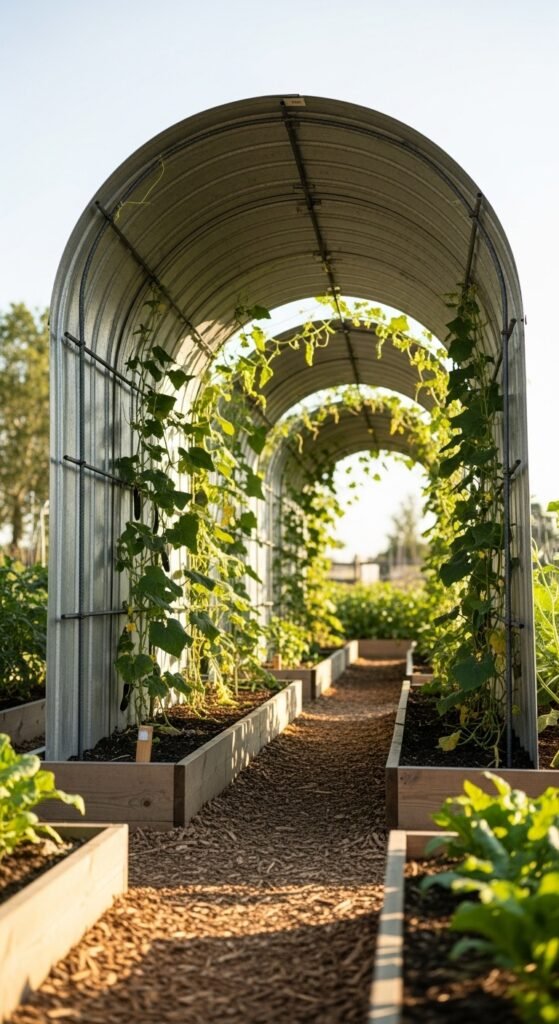
You will appreciate the high yield potential and aesthetic charm it adds to your garden, transforming a simple bed into a focal point. The arch promotes even sunlight distribution and simplifies picking fruits hanging underneath. Begin by selecting a 16-foot panel, bending it gently into an arch, and anchoring the ends into the soil or bed frame with rebar stakes for stability.
For plants like cucumbers that thrive on such supports, this design excels. Explore additional trellis ideas for cucumbers to refine your approach.
3) Bamboo Teepee Trellis
You create a bamboo teepee by gathering long bamboo poles and tying them at the top to form a conical structure, ideal for centering in a raised bed. This natural material blends seamlessly with your garden while providing robust support.
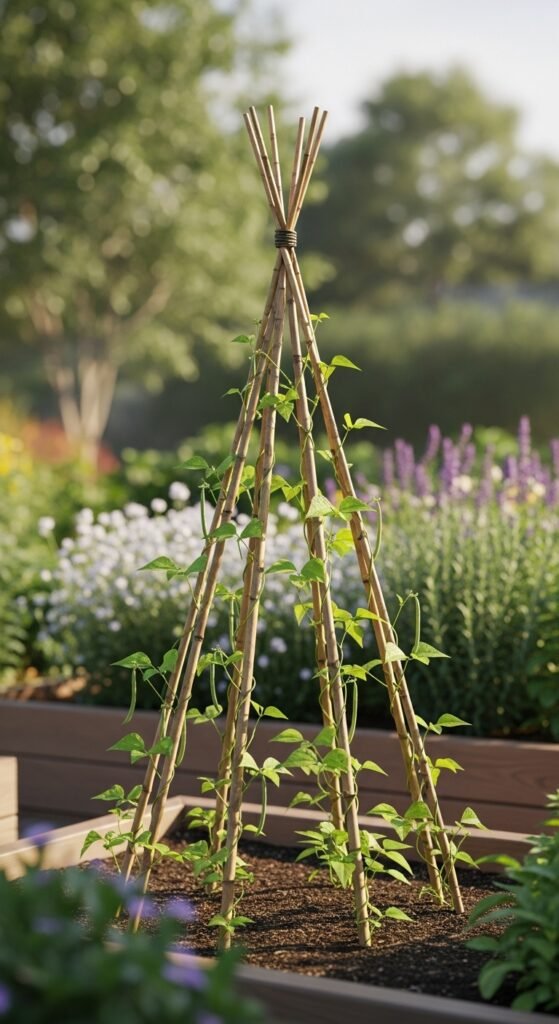
The structure offers excellent vertical growth and easy assembly, making it suitable for beginners. It encourages dense planting around the base, maximizing space for vining crops. To assemble, select five to seven poles of similar length, lash them together at one end with twine, and spread the bases evenly around the bed’s perimeter.
Plant climbing varieties at each pole’s base for balanced growth. If considering container alternatives, review spring container garden ideas for complementary setups.
4) String Grid Trellis
A string grid trellis consists of a frame with horizontal and vertical strings forming a net-like pattern, attached to the raised bed’s sides. This lightweight option is cost-effective and adjustable for different plant heights.
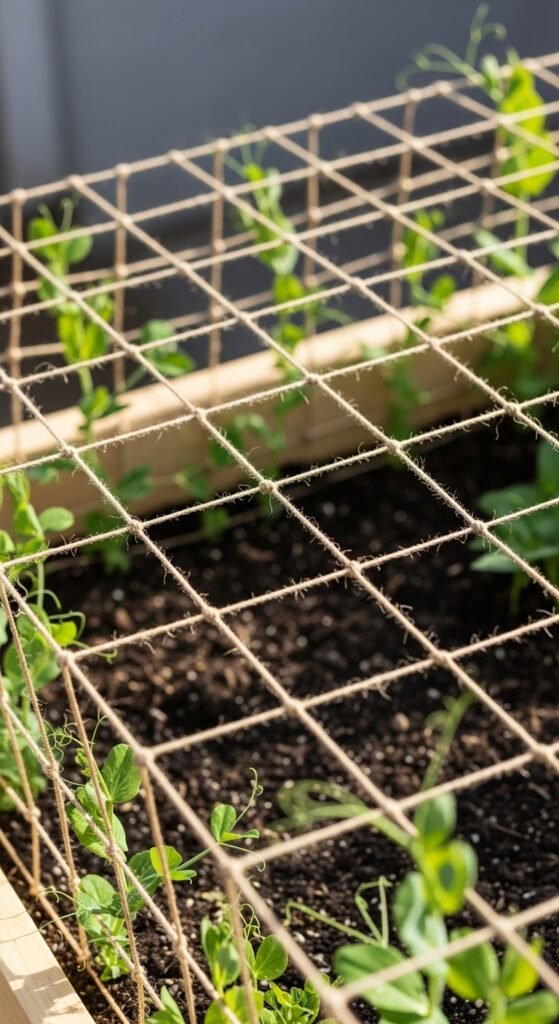
You benefit from customizable support and minimal material use, allowing easy reconfiguration each season. It provides gentle guidance for tendrils, reducing plant stress. Construct a wooden or PVC frame to match your bed’s dimensions, then weave garden twine in a grid pattern, spacing strings 6-8 inches apart.
Secure the frame upright with brackets. For spring plantings, this pairs well with selections from what to plant in spring.
5) Repurposed Ladder Trellis
You transform an old wooden ladder into a trellis by leaning it against the raised bed or securing it vertically, using the rungs as support levels for climbing plants. This upcycled approach adds rustic charm.
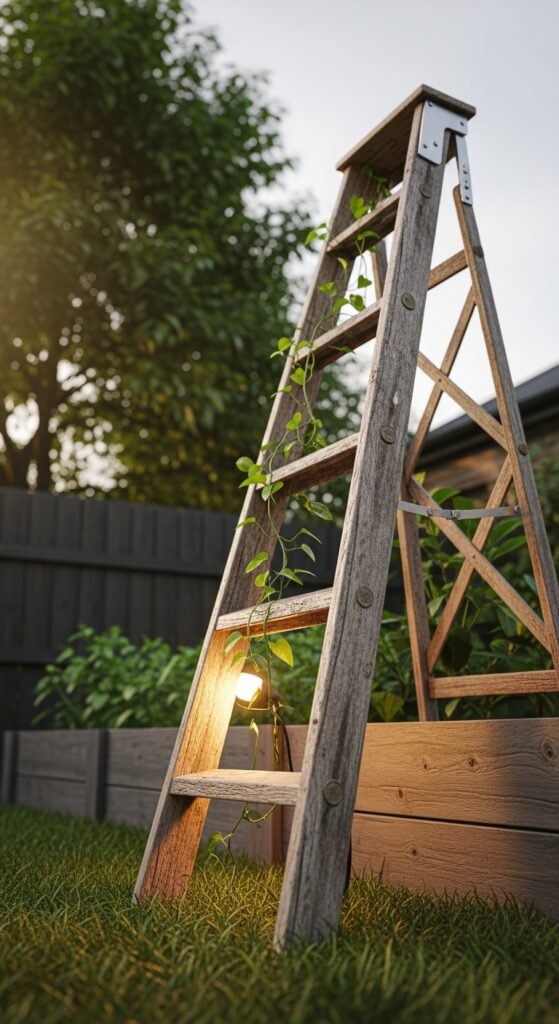
The design delivers sustainable reuse and multi-level support, accommodating various vine lengths. It enhances garden aesthetics while promoting eco-friendly practices. Clean and sand the ladder for safety, then position it stably, anchoring the base in soil if needed. Train plants to climb the rungs naturally.
For water conservation in your setup, consider integrating DIY rain barrel ideas.
6) PVC Pipe Grid Trellis
A PVC pipe grid trellis features interconnected pipes forming a sturdy framework over the raised bed, offering a modern, weather-resistant structure. This material is lightweight yet durable for long-term use.
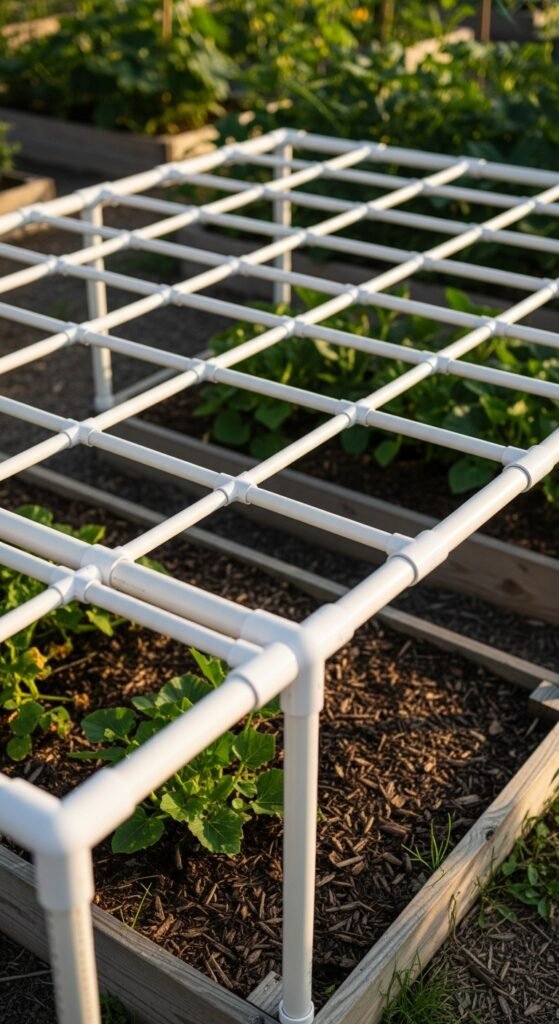
You gain affordable durability and easy customization, as PVC can be cut and assembled without advanced tools. It supports heavy loads and resists rot. Measure your bed, cut pipes to size, and connect with fittings to create a grid. Anchor to the bed frame with clamps.
This complements permaculture methods; explore keyhole garden designs for integrated layouts.
7) Wire Mesh Panel Trellis
You install wire mesh panels vertically along the raised bed’s side, creating a flat trellis for plants to climb. This industrial material provides strong, open support.
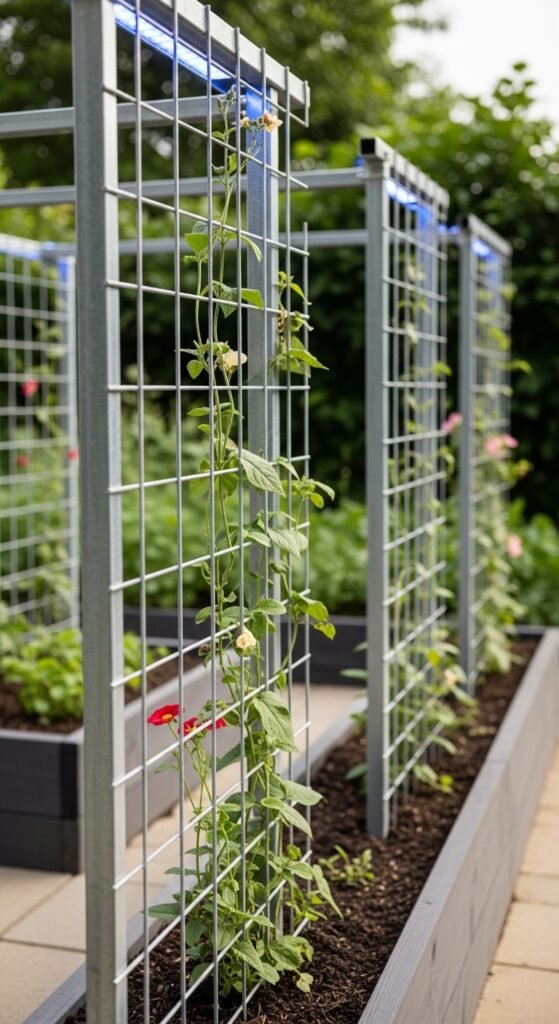
The panel offers robust stability and excellent ventilation, preventing fungal issues in humid climates. It’s quick to set up and reusable. Attach remesh or fencing panels to wooden posts driven into the bed’s corners, securing with zip ties or wire.
For herb integrations, draw from patio herb garden ideas.
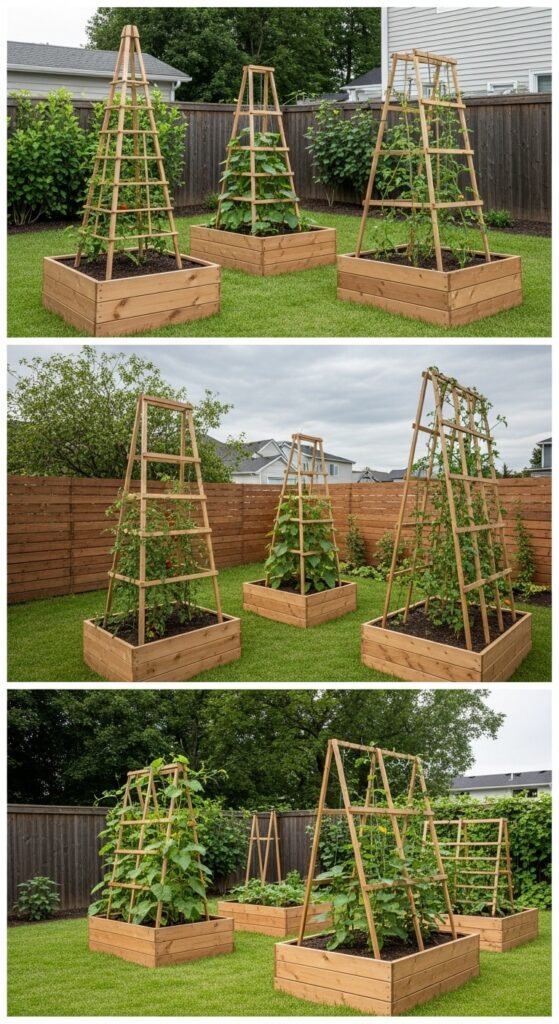
8) Wooden Obelisk Trellis
An obelisk trellis is a pyramidal wooden structure placed centrally in the raised bed, providing elegant vertical support. It adds height and sophistication to your garden.
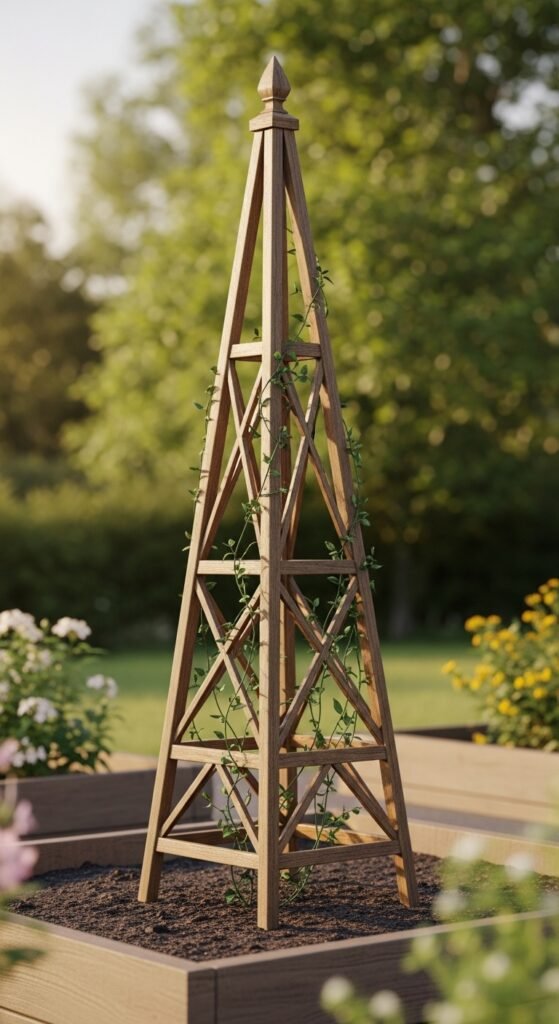
You enjoy ornamental appeal and concentrated growth, ideal for focal plants. Build by cutting four legs, attaching cross slats progressively narrower toward the top, and capping with a finial. Position securely in the bed.
9) Pallet Vertical Trellis
You repurpose a wooden pallet by standing it upright against the raised bed, using the slats as climbing aids. This budget-friendly option promotes sustainability.
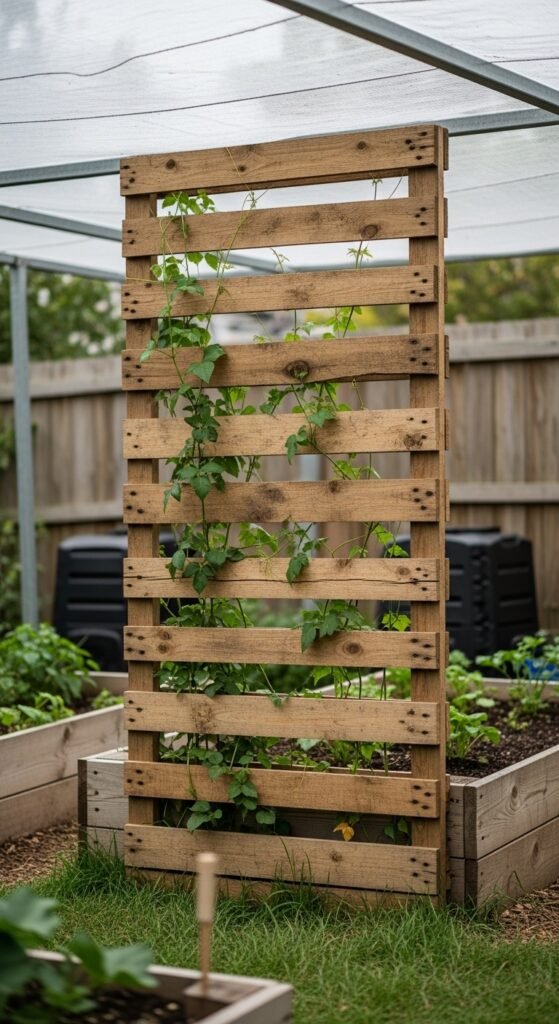
The pallet provides eco-conscious support and textured interest. Reinforce with stakes, then plant vines at the base to weave through the gaps.
Pair with self-watering systems like a wicking bed.
10) Netting Trellis System
A netting trellis involves stretching garden netting between posts over the raised bed, creating a flexible web for vines. It’s lightweight and storable.
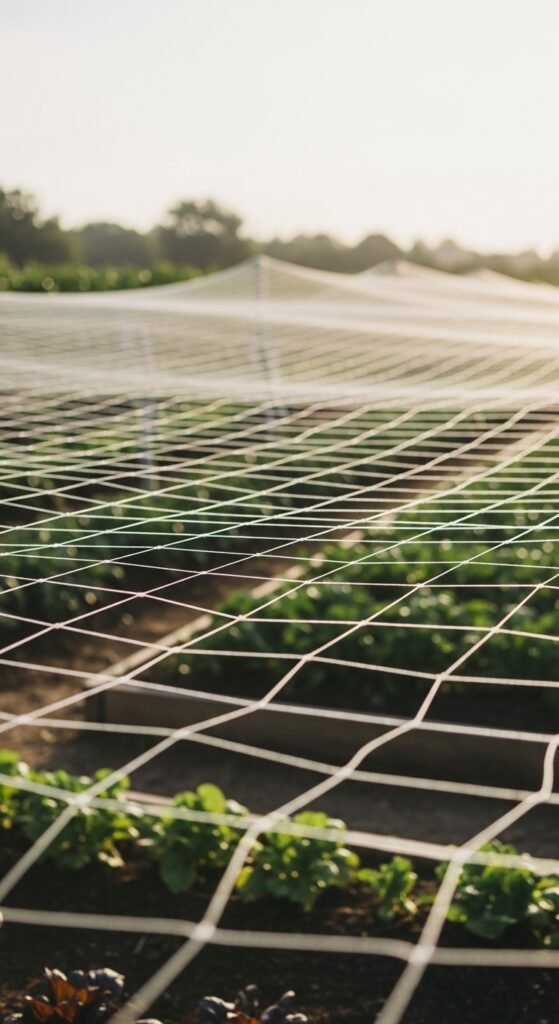
Benefits include adaptable coverage and ease of harvest. Install posts at bed ends, drape netting, and secure tautly.
11) Branch Woven Trellis
You weave flexible branches into a lattice panel for the raised bed, offering a natural, artisanal look. Source branches from prunings for zero cost.
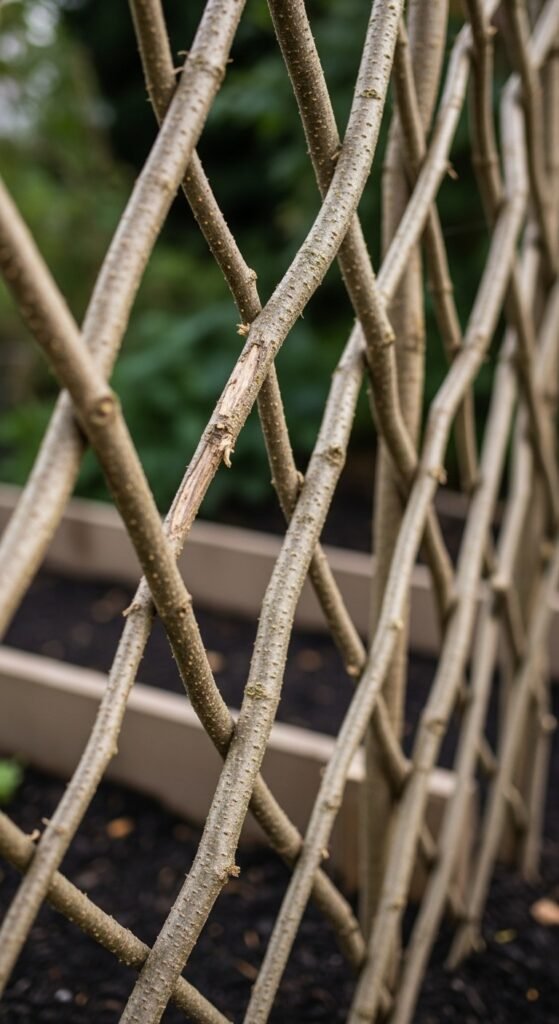
This yields organic integration and biodegradability. Form a frame, then interlace branches horizontally and vertically.
For layered beds, consider hugelkultur bed techniques.
12) Metal Conduit Grid Trellis
A metal conduit grid uses electrical conduit pipes connected into a framework, providing industrial strength for the raised bed.
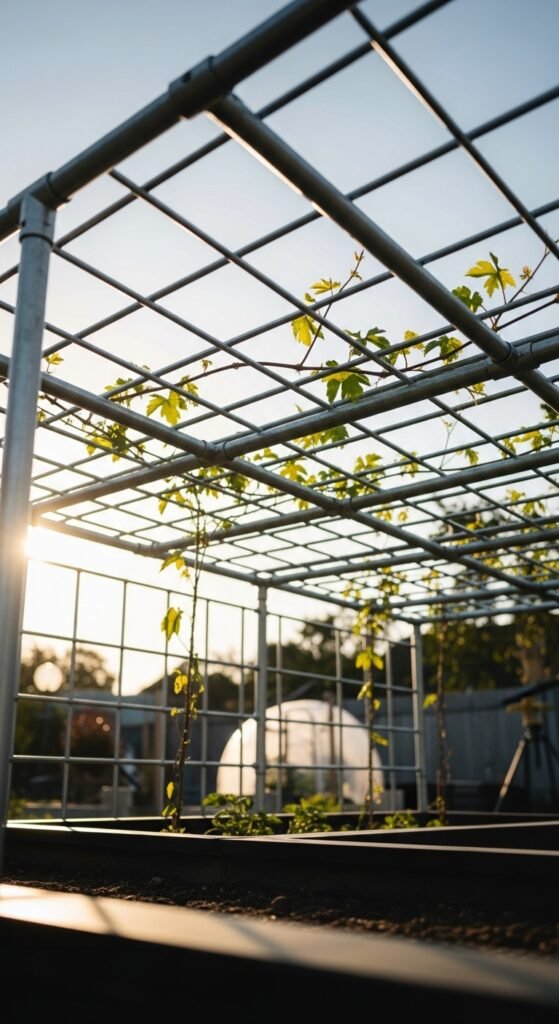
You achieve long-lasting resilience and modern aesthetics. Bend and join conduits with fittings, anchoring firmly.
13) Fan-Shaped Wall Trellis
You attach a fan-shaped trellis to the raised bed’s side, spreading outward for broad support. This saves space against structures.
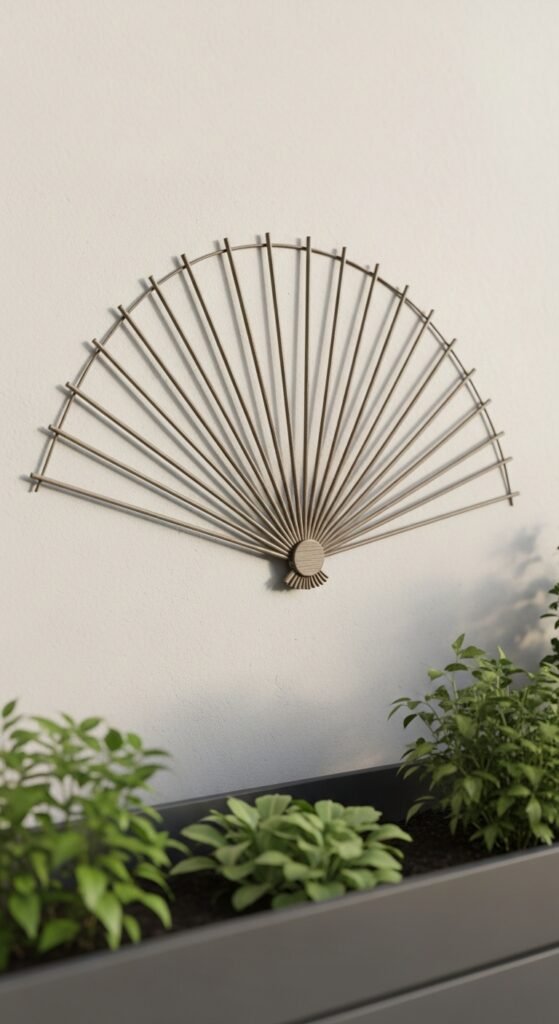
The fan offers decorative flair and efficient coverage. Cut wires or wood in radiating patterns, fastening to a base.
14) Integrated Bed Frame Trellis
An integrated trellis builds the structure directly into the raised bed’s frame, creating a unified unit. This seamless design enhances stability.
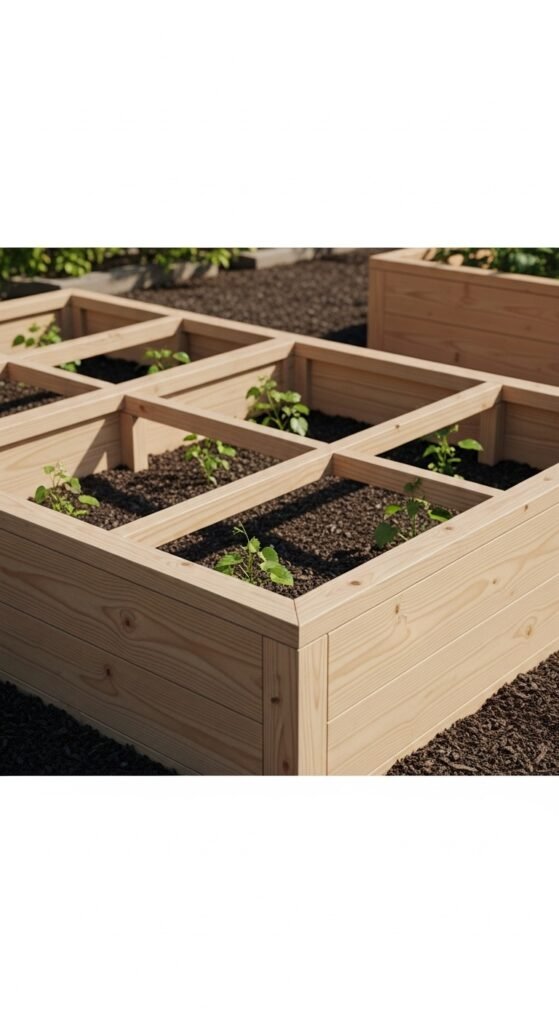
Benefits encompass streamlined construction and enhanced durability. Extend bed sides upward, adding cross supports.
15) Hanging Pocket Trellis
You create a hanging pocket trellis by suspending fabric pockets from a frame over the raised bed, ideal for trailing plants. This adds vertical layers.
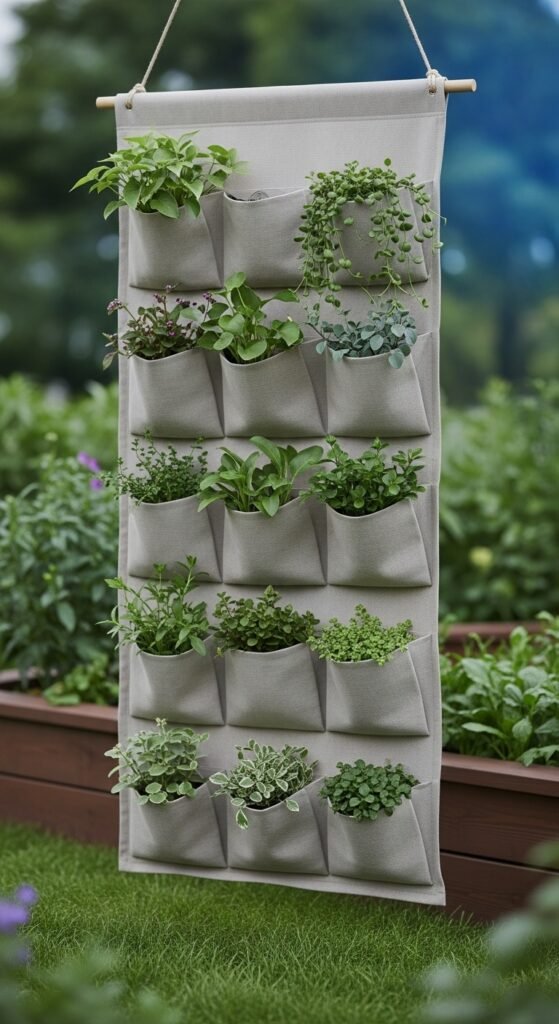
It provides multi-tiered planting and space optimization. Sew or purchase pockets, hang from a sturdy overhead bar.
Key Principles for Successful DIY Raised Bed Trellises
Material Selection
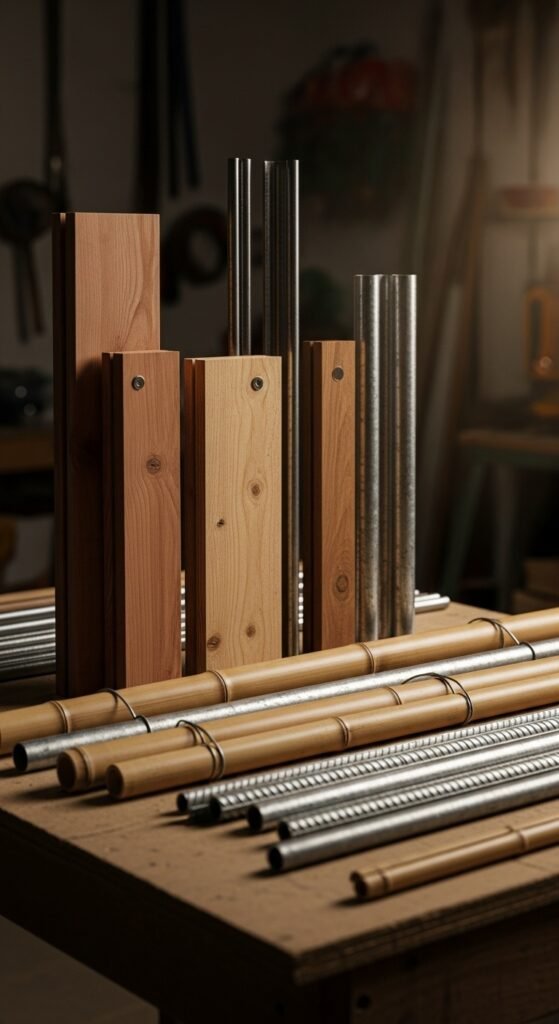
Choose weather-resistant materials like treated wood, metal, or bamboo to ensure longevity. Consider your local climate and plant weight when deciding.
Plant Compatibility
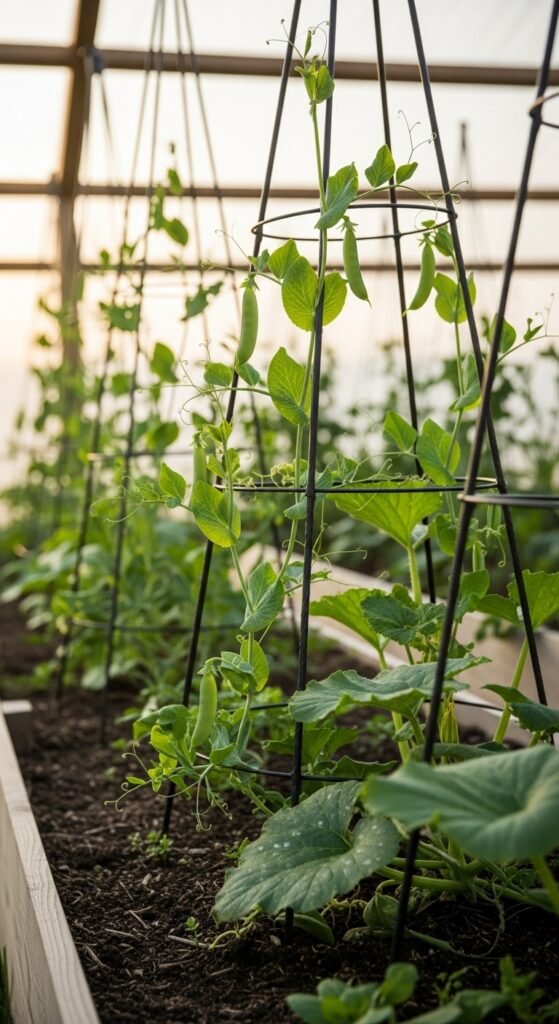
Select climbing plants that match the trellis strength, such as lightweight peas or heavier squash varieties. Proper matching prevents structural failures.
Maintenance Tips
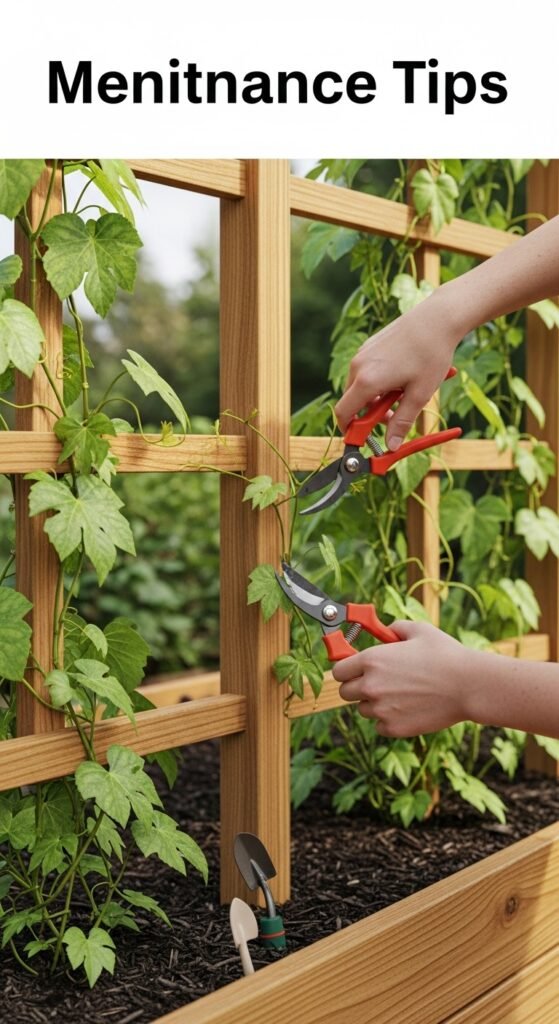
Regularly inspect for stability, prune excess growth, and train vines early. This promotes healthy development and extends the trellis lifespan.
Frequently Asked Questions
What materials are best for a beginner’s DIY raised bed trellis?
For beginners, start with affordable and easy-to-work materials like bamboo poles or PVC pipes, as they require minimal tools and offer flexibility in design.
Which plants thrive on a raised bed trellis?
Climbing vegetables such as cucumbers, tomatoes, beans, and peas perform exceptionally well, along with flowering vines like morning glories for added beauty.
How tall should my DIY raised bed trellis be?
Aim for 5-7 feet in height to accommodate most vining plants, but adjust based on specific crop requirements and your garden’s wind exposure.
Can I build a trellis on an existing raised bed?
Yes, most designs can be retrofitted by anchoring supports to the bed frame or soil, ensuring minimal disruption to established plants.
How do I ensure my trellis is stable?
Use deep anchors, cross-bracing, and quality fasteners; regularly check for wear, especially after storms, to maintain structural integrity.