
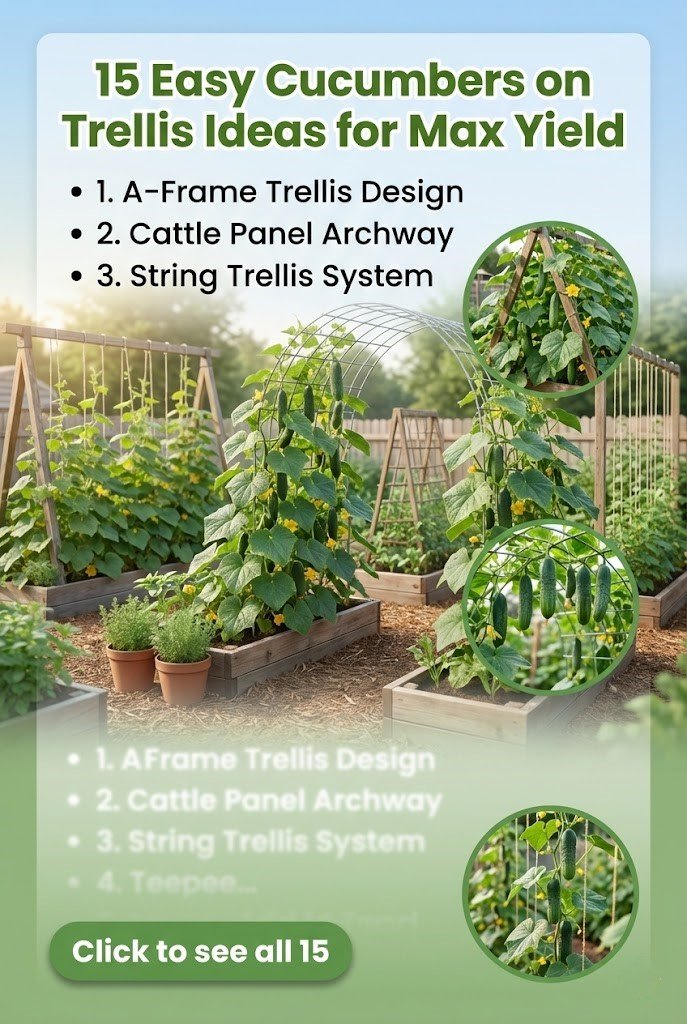
Growing cucumbers on trellis is a smart way to maximize your garden space while promoting healthier plants. By training these vining vegetables vertically, you encourage better air circulation, reduce disease risks, and make harvesting easier. This method is especially useful in small gardens or urban settings where horizontal space is limited.
The benefits extend beyond space-saving; cucumbers on trellis often yield straighter fruits with fewer blemishes from ground contact. You’ll also find pest management simpler since plants are elevated. Whether you’re a beginner or seasoned gardener, incorporating a trellis can transform your cucumber crop into a bountiful, low-maintenance harvest.
Explore these 15 ideas to find the perfect setup for your garden, each designed to enhance growth and productivity.
1) A-Frame Trellis Design
An A-frame trellis consists of two sloping panels hinged at the top, forming a stable triangle structure. You can build it using wooden stakes or metal poles, with netting or wire strung between for support. This design is ideal for cucumbers because it provides ample climbing space on both sides, allowing vines to spread out evenly.
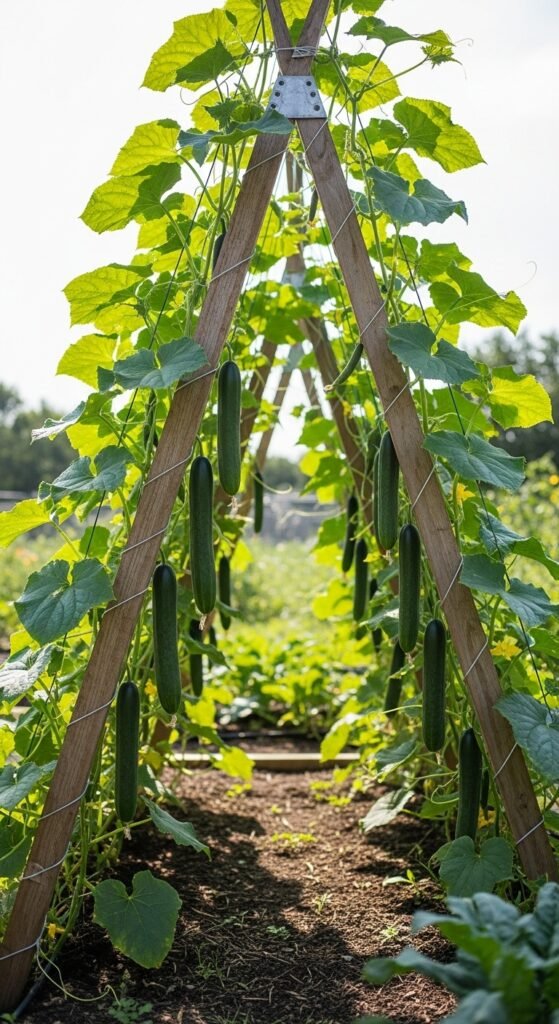
Why choose this? It maximizes sunlight exposure and air flow, reducing the risk of fungal issues like powdery mildew. The elevated growth keeps fruits clean and straight, leading to higher yields. In small spaces, it doubles as a garden focal point while saving ground area for other crops.
To set it up, position the frame over your planting bed and secure it firmly. Plant cucumber seeds or seedlings at the base, spacing them 12 inches apart. As vines grow, gently train them up the panels. For added efficiency, integrate drip irrigation for gardens to keep soil consistently moist without wetting leaves.
2) Cattle Panel Archway
A cattle panel arch uses sturdy metal fencing bent into a curved tunnel shape. Secure the ends into the ground with stakes for stability. This archway supports heavy cucumber vines and creates a walkthrough garden feature.
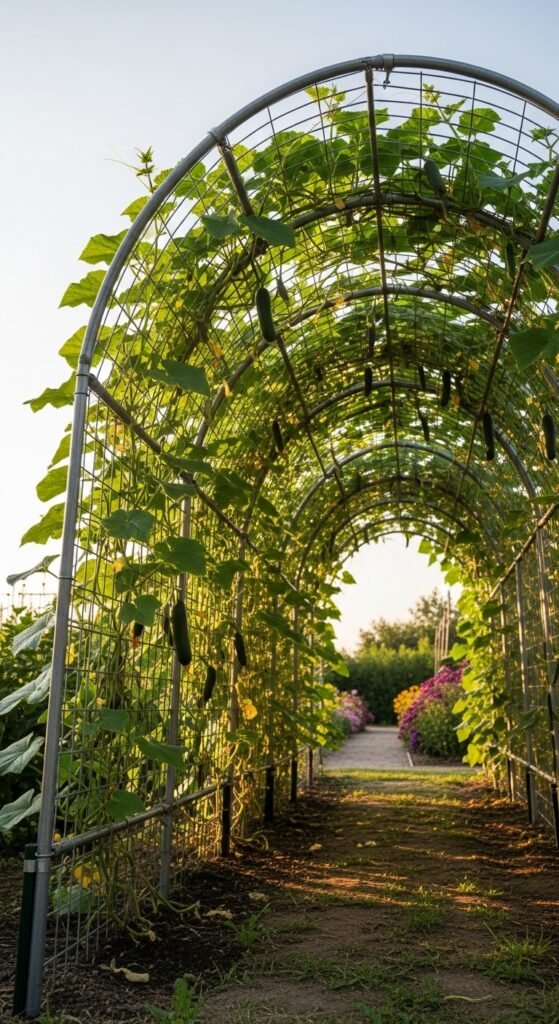
The benefits include excellent ventilation and easy access for harvesting from both sides. It prevents fruit rot by keeping cucumbers off the soil and exposes more leaves to sunlight for better photosynthesis. This setup is durable and can last multiple seasons, making it cost-effective for ongoing vegetable gardening.
Install by bending a 16-foot panel into an arch about 6 feet high. Plant cucumbers at each base, training vines to climb the mesh. Combine with companion planting vegetables like nasturtiums to deter pests naturally. Water deeply at the roots to promote strong growth.
3) String Trellis System
A string trellis involves vertical strings hung from a horizontal bar, creating a simple ladder-like structure. Use twine or fishing line tied to stakes or a frame overhead. Cucumbers cling easily to the strings with their tendrils.
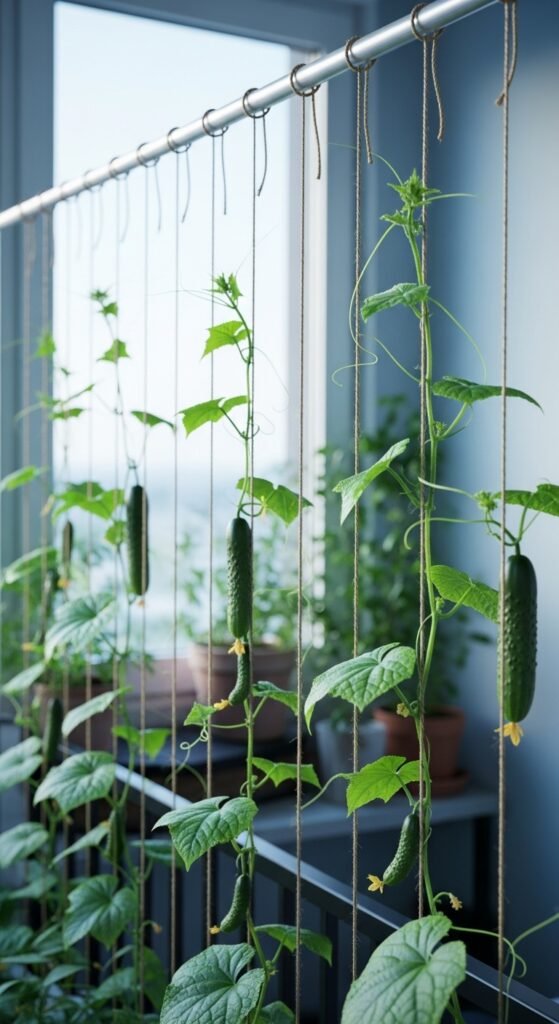
This method is lightweight and inexpensive, perfect for balconies or temporary setups. It improves air circulation, minimizing diseases, and allows fruits to hang freely for uniform ripening. The vertical orientation also makes spotting ripe cucumbers straightforward, boosting your harvest efficiency.
Set up by installing posts 6 feet apart and stringing lines every 6 inches. Sow seeds directly below each string. As plants grow, weave vines through the strings. For optimal results, pair with a raised bed vegetable garden to enhance soil drainage and nutrient access.
4) Teepee Bamboo Structure
A teepee trellis is made from bamboo poles lashed together at the top, forming a conical shape. Wrap with netting or leave open for vines to climb the poles directly.
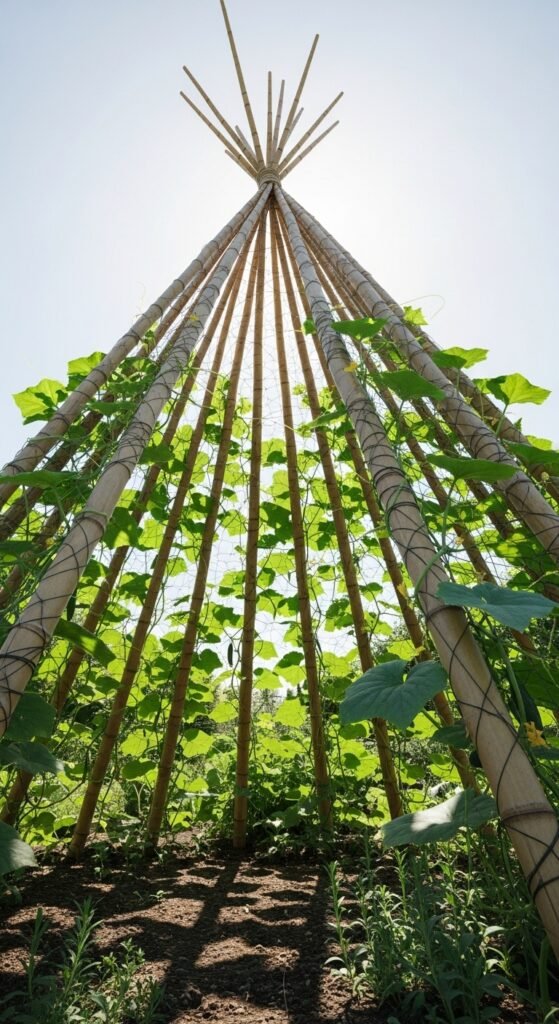
It’s eco-friendly and blends naturally into gardens, providing strong support for vigorous cucumber growth. The design promotes even sun exposure and reduces shading, leading to more productive plants. Plus, it’s easy to disassemble for storage.
Assemble three to five poles, tying them securely. Plant cucumbers around the base in a circle. Guide young vines upward. This works well in container vegetable gardening, where you can move the teepee as needed for sunlight optimization.
5) Wall-Mounted Wire Grid
Mount a wire grid or mesh on a sunny wall or fence for a space-saving trellis. Use hooks or brackets to secure it, ensuring it’s sturdy enough for laden vines.
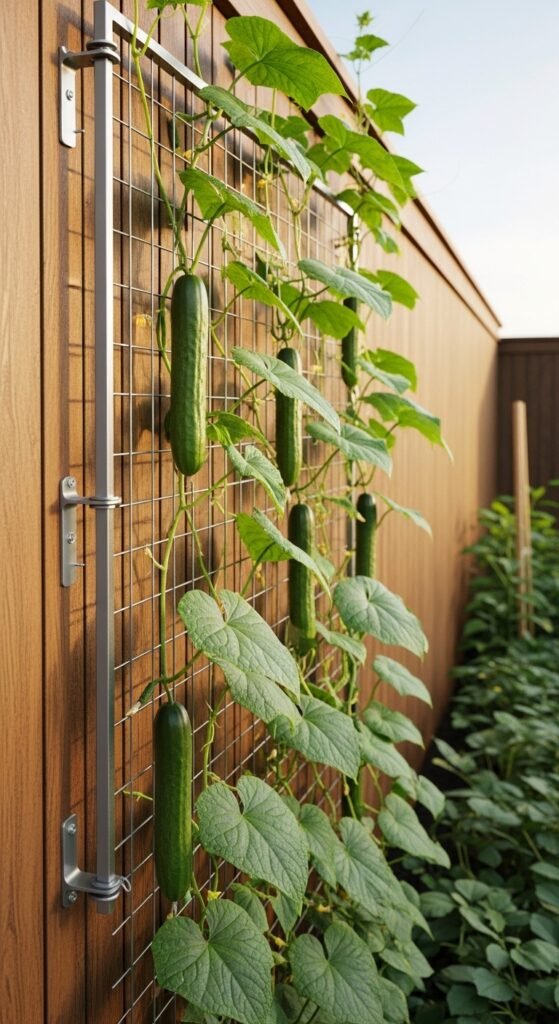
This utilizes vertical wall space, ideal for urban gardens. It warms the plants with reflected heat, speeding growth, and keeps fruits elevated to avoid pests. The setup encourages straighter cucumbers and simpler maintenance.
Install the grid at least 6 inches from the wall for air flow. Plant at the base, training vines across the wires. Monitor for issues like powdery mildew on cucumbers and apply organic treatments promptly.
6) Ladder Repurposed Trellis
Repurpose an old wooden ladder by leaning it against a support or standing it freestanding with added braces. Cucumbers climb the rungs naturally.
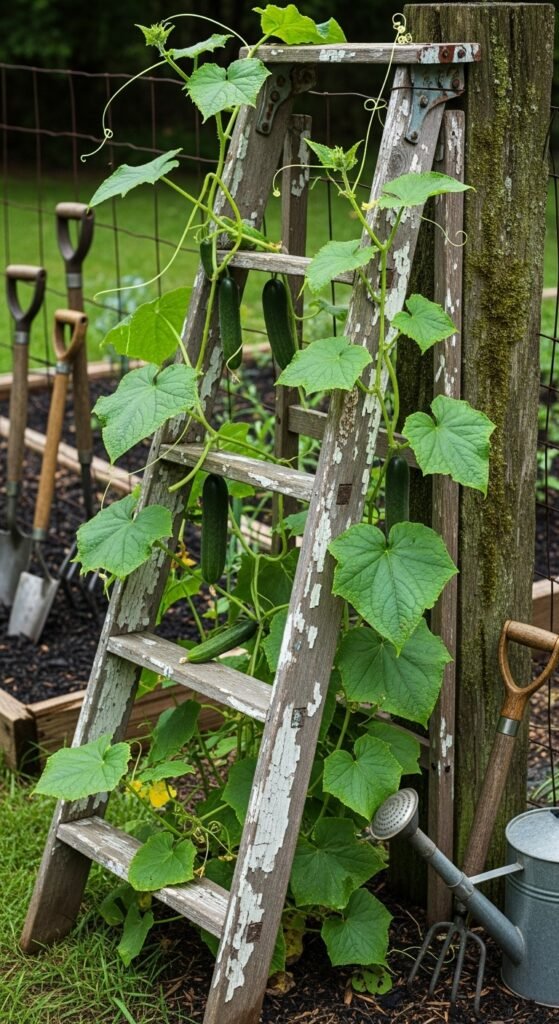
It’s a budget-friendly upcycle that adds rustic charm. The open structure allows excellent airflow, reducing humidity-related diseases, and makes harvesting at eye level effortless.
Position the ladder securely and plant seeds along both sides. Tie vines loosely if needed. This idea complements vertical vegetable garden designs for multi-crop efficiency.
7) PVC Pipe Framework
Construct a trellis from PVC pipes connected into a grid or arch. It’s lightweight, weather-resistant, and customizable to any size.
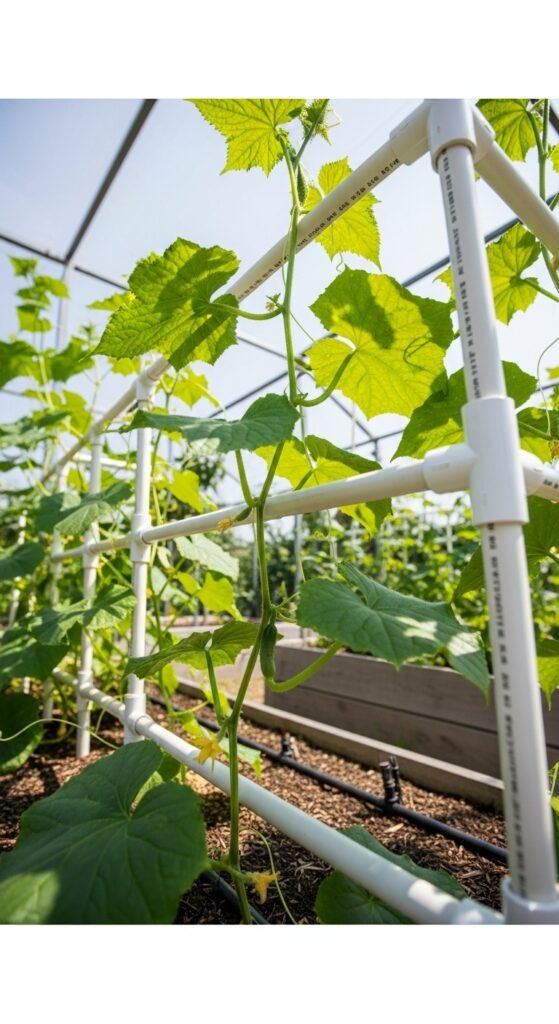
Why opt for this? It’s affordable and easy to assemble without tools. The smooth surface guides vines upward, improving light penetration and yield. Disassembly is simple for off-season storage.
Glue or connect pipes into your desired shape. Anchor into the ground and add netting. Plant cucumbers below, encouraging upward growth. Use alongside how often to water cucumbers guidelines for healthy development.
8) Wire Mesh Panel
Use rigid wire mesh panels staked vertically or in a zigzag pattern. Cucumbers’ tendrils grip the mesh securely.
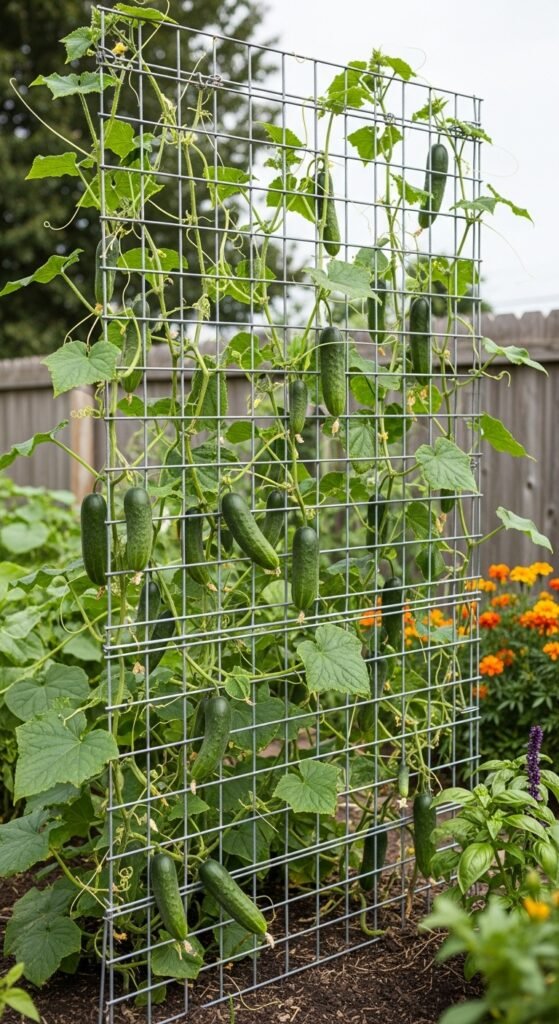
This provides robust support for heavy yields and enhances garden aesthetics. Better airflow minimizes fungal risks, and the elevation deters ground pests. Stake panels firmly and plant at intervals. Train vines as they emerge. For pest control, refer to our tips on cucumber beetle control.
9) Bamboo Lattice Panel
Bamboo lattice offers a natural, flexible trellis option. Attach to stakes or a frame for vertical support.
It’s sustainable and visually appealing, blending with organic gardens. The grid pattern supports even vine distribution, promoting healthier fruits.
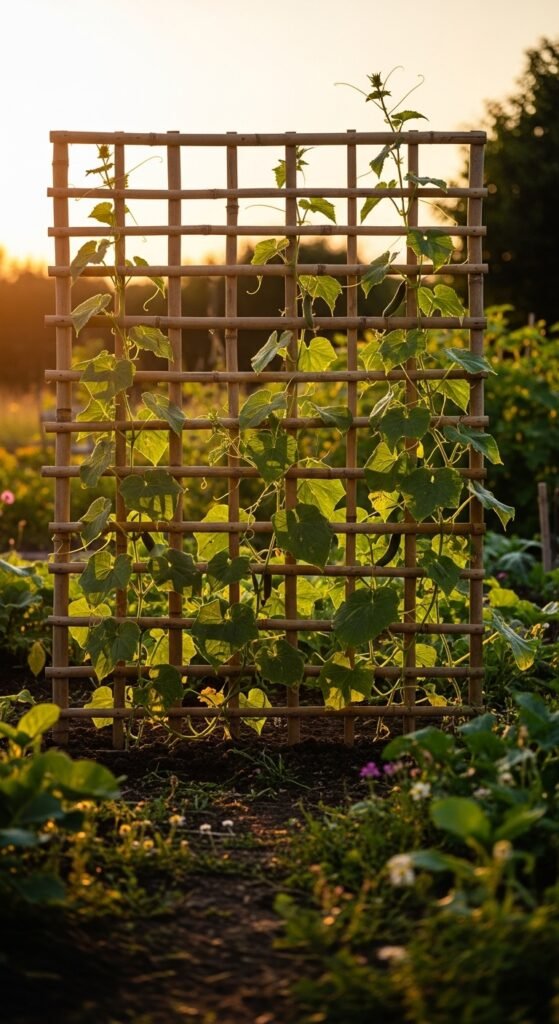
Secure the lattice and plant below. Guide tendrils through openings. This pairs well with garden trellis ideas for expanded vertical growing.
10) Obelisk Pyramid Trellis
An obelisk is a tall, pyramid-shaped structure, often metal or wood, placed over plants for climbing.
It adds elegance and focuses growth upward, saving space. Improved exposure boosts photosynthesis, leading to abundant harvests.
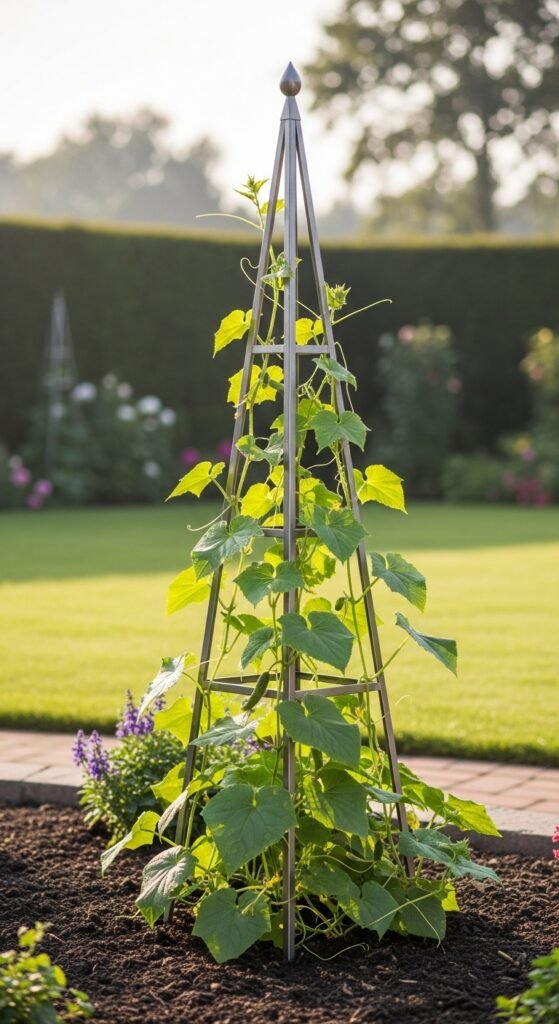
Place the obelisk in your bed and plant around the base. Train vines spirally. Ideal for integrating into trellis ideas for cucumbers.
11) Chain Link Fence Integration
Use an existing chain link fence as a trellis by training cucumbers along it.
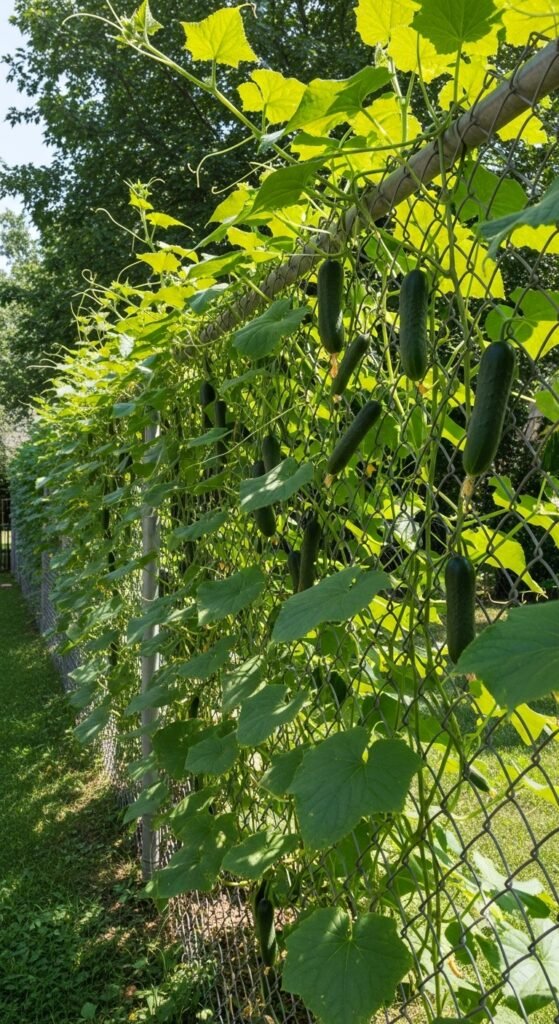
It’s zero-cost if you have one, providing extensive support. The open weave allows air and light, reducing disease. Plant along the fence line, weaving vines through links. Monitor moisture to prevent issues.
12) Pallet Wood Trellis
Upcycle a wooden pallet by standing it vertically and adding supports.
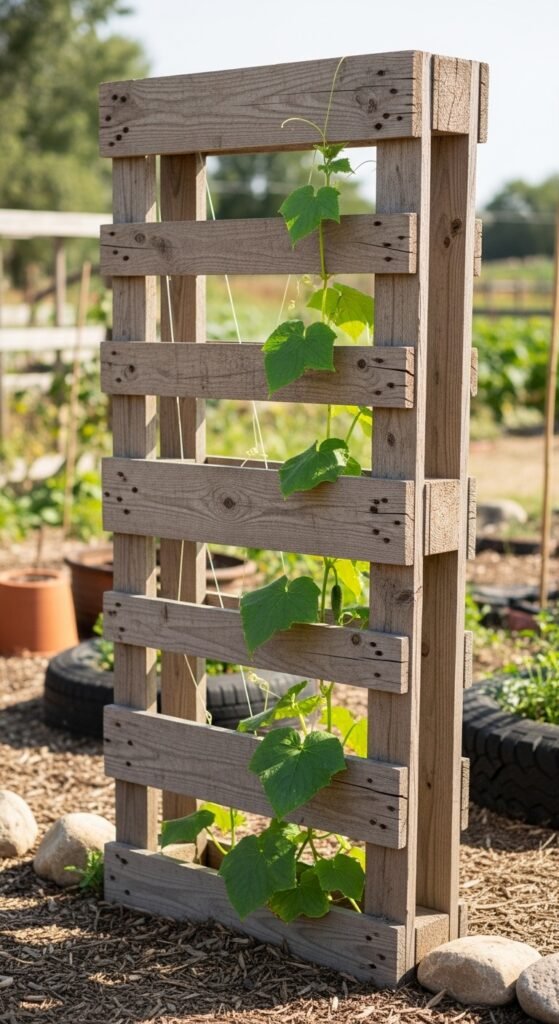
Eco-friendly and cheap, it offers rustic charm. The slats guide vines, improving circulation. Secure the pallet and plant at the base. Tie if necessary for stability.
13) Adapted Tomato Cage
Stack or modify tomato cages into taller structures for cucumber support.
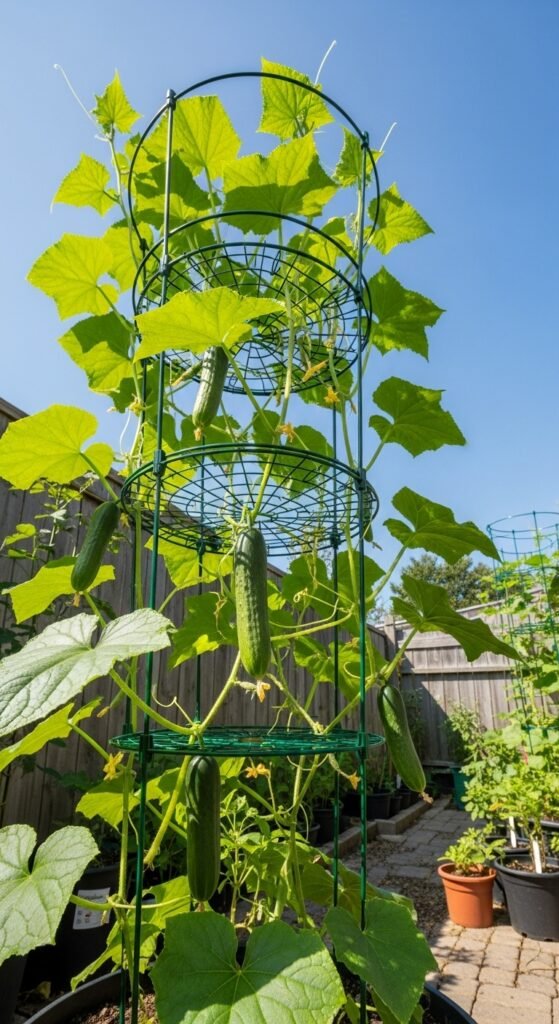
Readily available and sturdy, they contain growth vertically. Easier access for picking ripe fruits. Position cages over plants and guide vines. Great for small plots.
14) Netting Suspended Trellis
Hang nylon netting between posts for a flexible climbing surface.
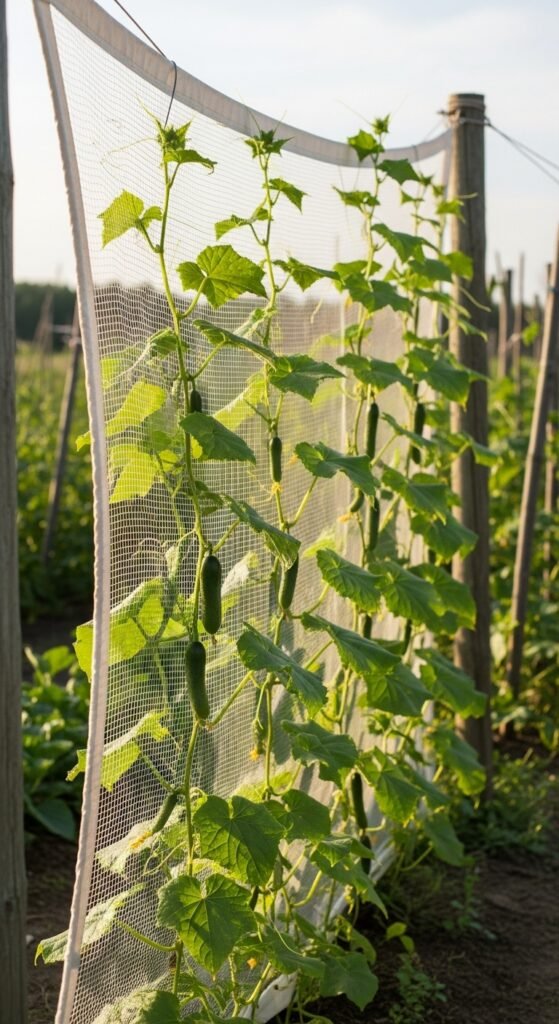
Lightweight and adjustable, it accommodates vine expansion. Enhances yield through better spacing. Stretch netting taut and plant below. Prune excess foliage for airflow.
15) Pergola Overhead Trellis
Use a pergola’s overhead beams to train cucumbers across, creating shade below.
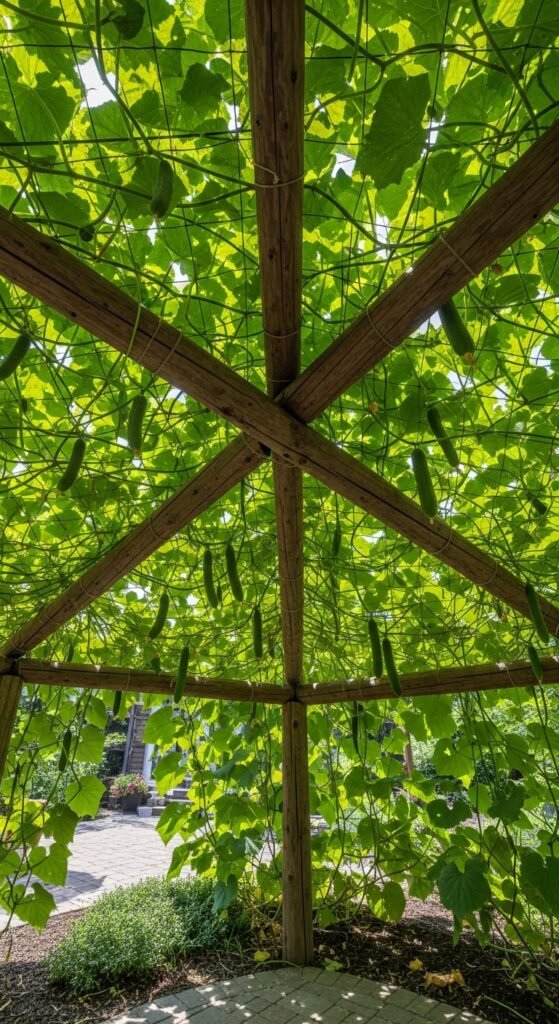
It combines function with aesthetics, providing a cool garden spot. Vines thrive with support, yielding plentifully. Plant at pergola bases and train upward. Harvest from below easily.
Key Principles for Growing Cucumbers on Trellis
Selecting the Best Cucumber Varieties
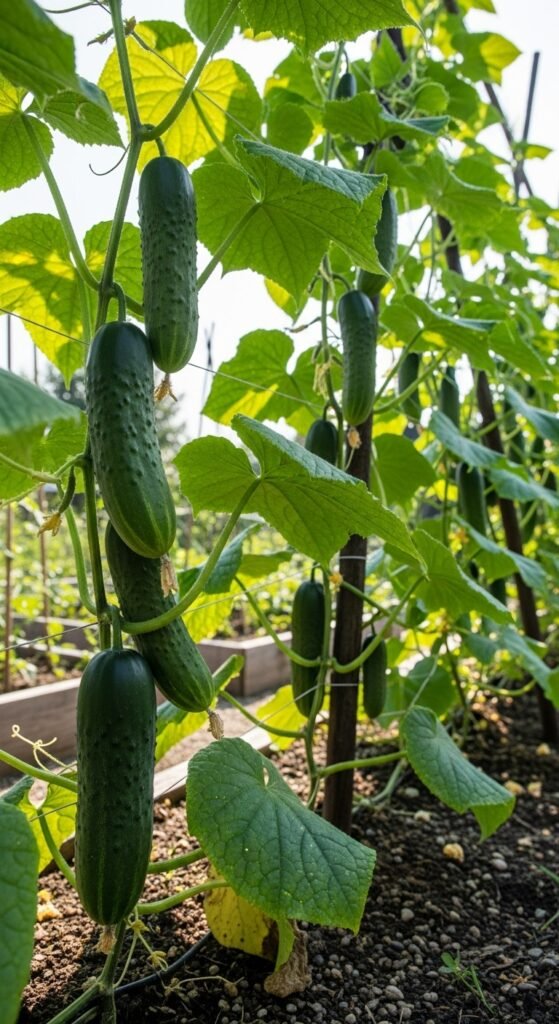
Choose vining types like ‘Marketmore’ or ‘Burpless’ for trellising. These produce long vines ideal for vertical growth, ensuring high yields.
Pruning and Training Techniques
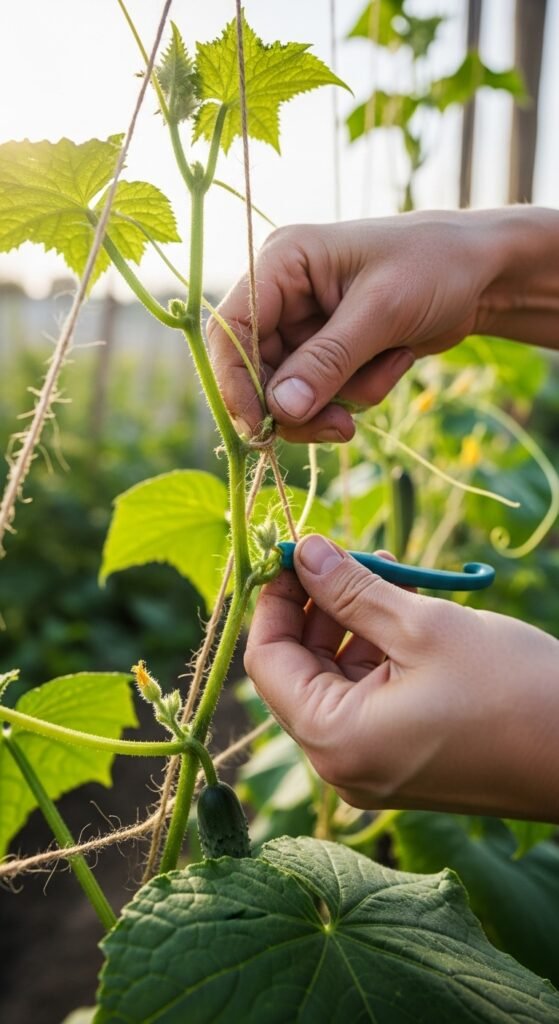
Pinch side shoots to focus energy on main vines. Gently tie tendrils to supports for optimal climbing and fruit development.
Common Mistakes to Avoid
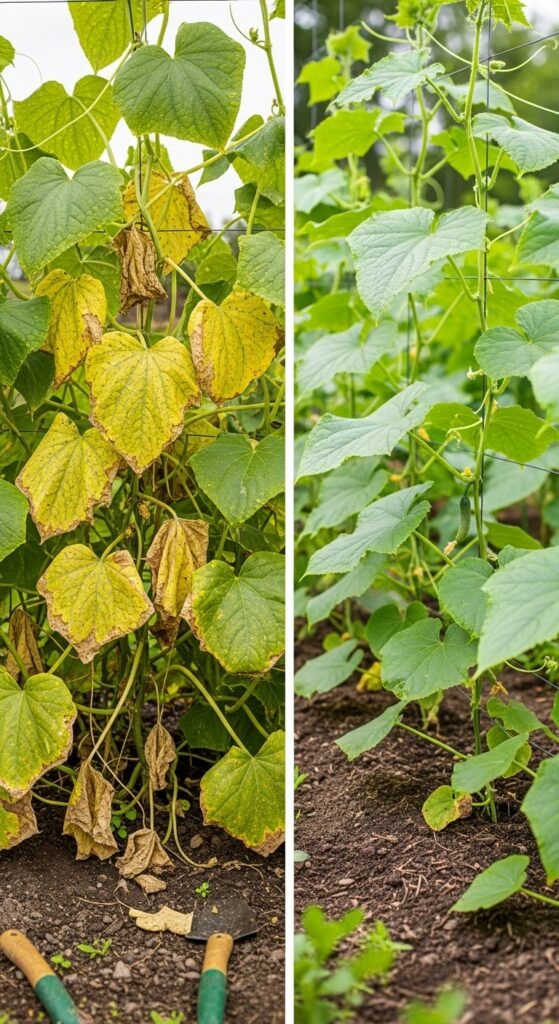
Don’t overcrowd plants; space 12-18 inches apart. Avoid overhead watering to prevent leaf diseases, opting for soil-level irrigation instead.
Frequently Asked Questions
Why should I grow cucumbers on a trellis?
Growing cucumbers vertically saves space, improves air circulation, reduces pest issues, and makes harvesting easier while producing cleaner fruits.
What is the best trellis height for cucumbers?
Aim for 5-7 feet tall to accommodate vine length, ensuring full support and easy access to fruits.
How far apart should I plant cucumbers on a trellis?
Space plants 12-18 inches apart at the base to allow for proper growth and airflow.
Do cucumbers need full sun when grown on a trellis?
Yes, they thrive in 6-8 hours of direct sunlight daily for optimal fruit production.
Can I grow bush cucumbers on a trellis?
Bush varieties don’t climb well, so stick to vining types for best results on trellises.