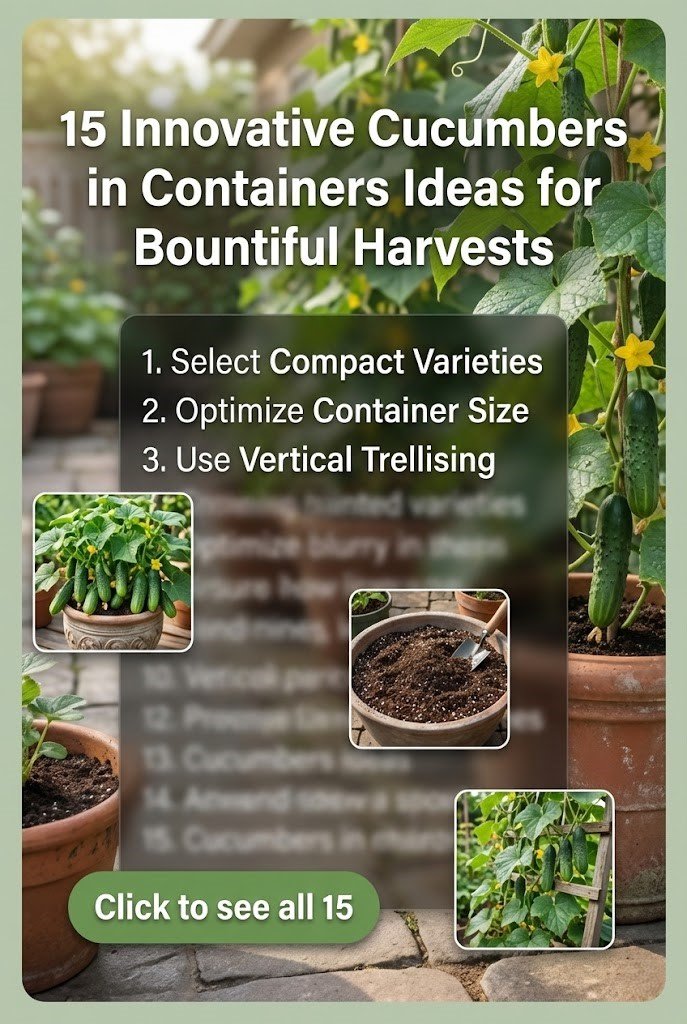
Growing cucumbers in containers is a fantastic way to enjoy fresh, homegrown produce even if you have limited space. Whether you’re dealing with a small balcony, patio, or urban apartment, container gardening allows you to cultivate these versatile veggies with ease. Cucumbers thrive in pots, providing crisp, juicy fruits perfect for salads, pickling, or snacking straight from the vine.
The beauty of cucumbers in containers lies in their adaptability and low maintenance. You’ll save on grocery bills while reducing your carbon footprint by growing your own food. Plus, it’s a rewarding hobby that connects you to nature. With the right setup, you can achieve impressive yields, turning your compact area into a productive mini-garden.
Ready to get started? These ideas will guide you through various techniques, from basic setups to creative enhancements, ensuring success in your container cucumber journey.
1) Select Compact Varieties
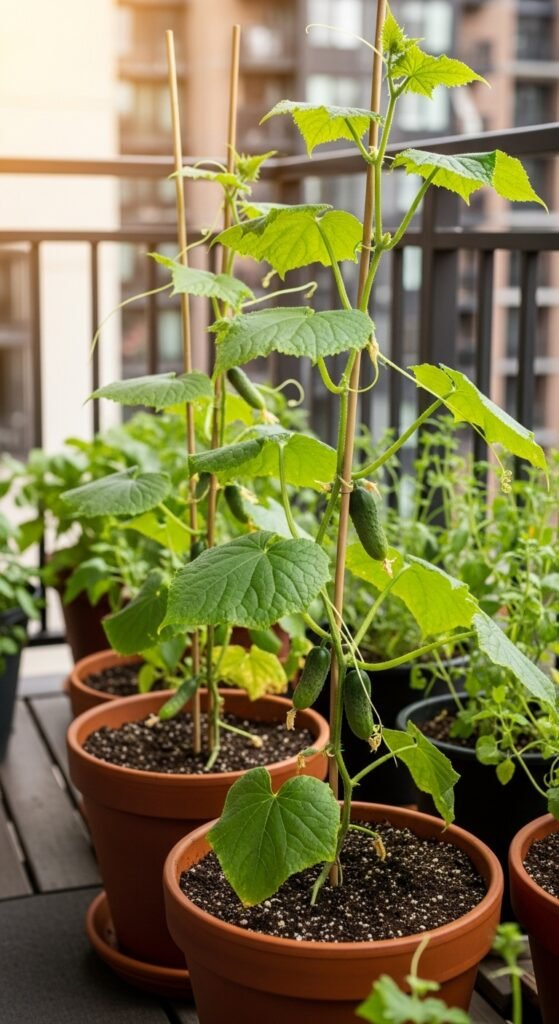
You’ll want to choose cucumber varieties specifically bred for container growing to maximize space and yield. Opt for bush or dwarf types like ‘Bush Pickle’ or ‘Patio Snacker,’ which don’t sprawl as much as vining ones. These compact plants produce abundant fruits in smaller pots, making them ideal for balconies or windowsills.
Why bother with variety selection? It ensures healthier plants and higher productivity in confined spaces, preventing overcrowding and disease. Key benefits include easier management and continuous harvesting throughout the season.
How to do it: Research seed catalogs or local nurseries for container-friendly seeds. Plant in a 5-gallon pot with well-draining soil, spacing seeds 6 inches apart. Provide full sun and consistent moisture for best results. This approach sets a strong foundation for your cucumbers in containers.
2) Optimize Container Size
Choosing the right container size is crucial for healthy root development and robust cucumber plants. Aim for pots at least 12-18 inches deep and wide to accommodate the extensive root system. Larger containers hold more soil, retaining moisture better and reducing the need for frequent watering.
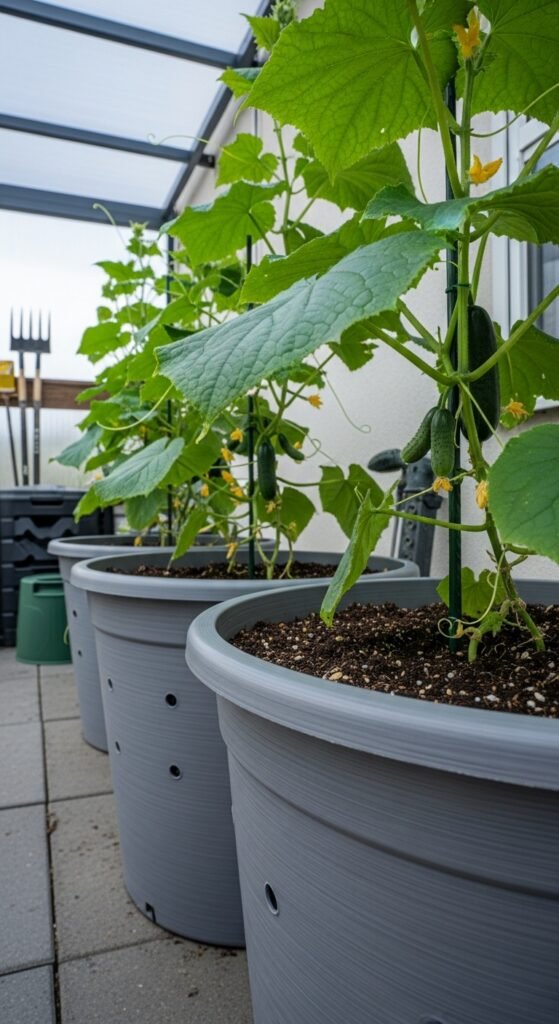
This idea works because cucumbers are thirsty plants, and adequate space prevents stress from drying out. Key benefits are stronger vines, more fruits, and fewer issues with root-bound plants.
Implement by selecting terracotta or plastic pots with drainage holes. Fill with a quality potting mix enriched with homemade compost for nutrients. Position in a sunny spot, and you’ll see thriving growth in no time.
3) Use Vertical Trellising
Incorporate a trellis to train your cucumber vines upward, saving precious floor space in container setups. This method encourages vertical growth, improving air circulation and sunlight exposure for all parts of the plant.
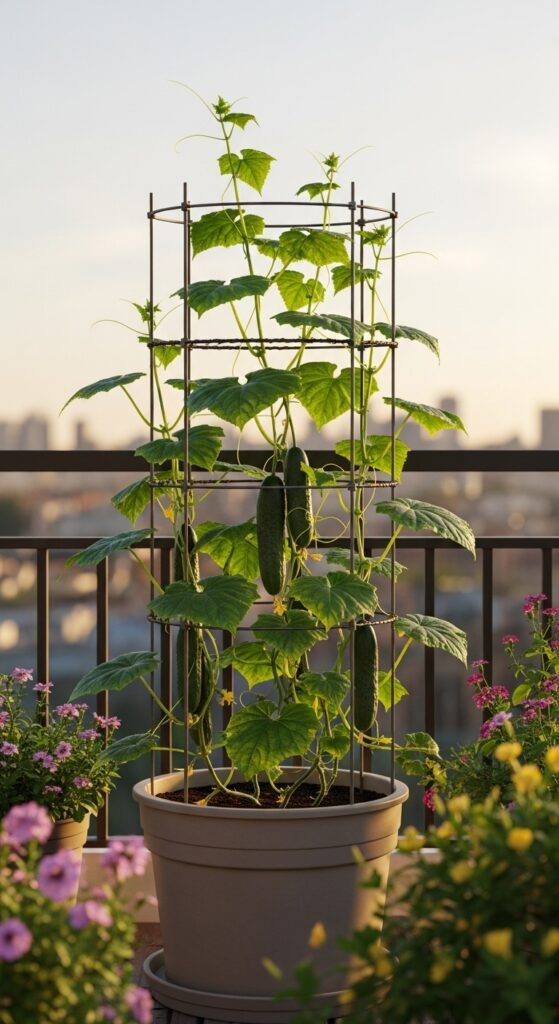
Vertical trellising is essential as it reduces disease risk from soil contact and makes harvesting easier. Key benefits include higher yields and a tidier appearance for your garden area.
To set it up, install a sturdy trellis or cage in your pot at planting time. Gently guide vines onto the support as they grow. For inspiration, explore cucumber trellis ideas that fit your space. This transforms your containers into efficient, space-saving wonders.
4) Craft Custom Soil Mix
Create a tailored soil blend to give your cucumbers the perfect growing medium in containers. Mix equal parts potting soil, compost, and perlite for excellent drainage and nutrient retention.
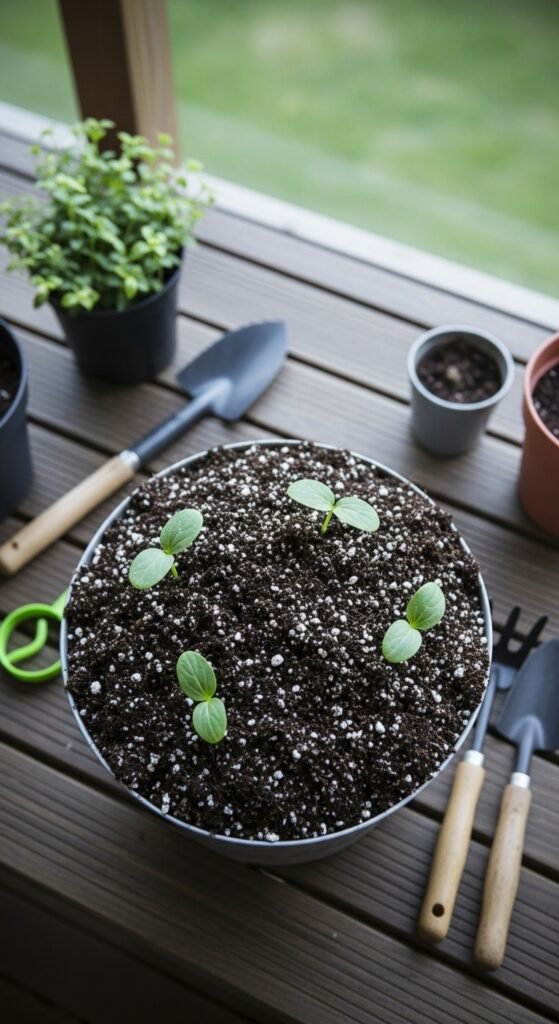
A custom mix outperforms generic soil by providing balanced fertility and preventing waterlogging. Key benefits are vigorous growth and resistance to common soil-borne issues.
Prepare by combining ingredients in a large bin, then fill your pots. Amend with slow-release fertilizer for ongoing nutrition. This foundation ensures your cucumbers in containers flourish from seed to harvest.
5) Implement Drip Irrigation
Set up a simple drip system to deliver water directly to the roots, conserving resources and maintaining consistent moisture for your container cucumbers.
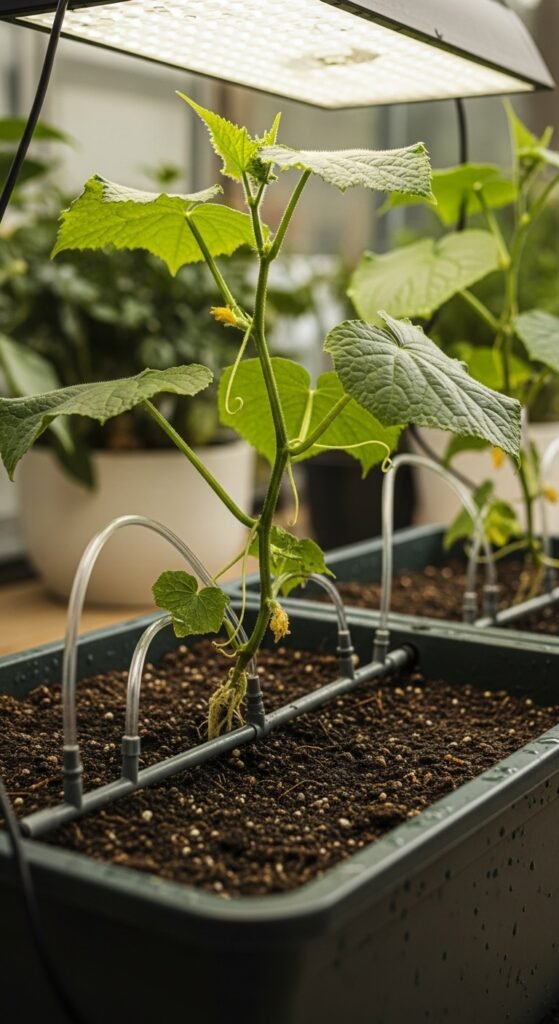
This technique is superior because it minimizes evaporation and leaf wetness, reducing fungal diseases. Key benefits include healthier plants and less manual watering effort.
Install by using a kit or DIY with tubing and emitters. Connect to a timer for automated scheduling. Learn more about efficient drip irrigation setup to optimize your system.
6) Companion Plant Strategically
Pair your cucumbers with compatible plants in the same or nearby containers to enhance growth and deter pests naturally.
Companion planting boosts biodiversity, attracting beneficial insects and improving soil health. Key benefits are natural pest control and increased overall yield.
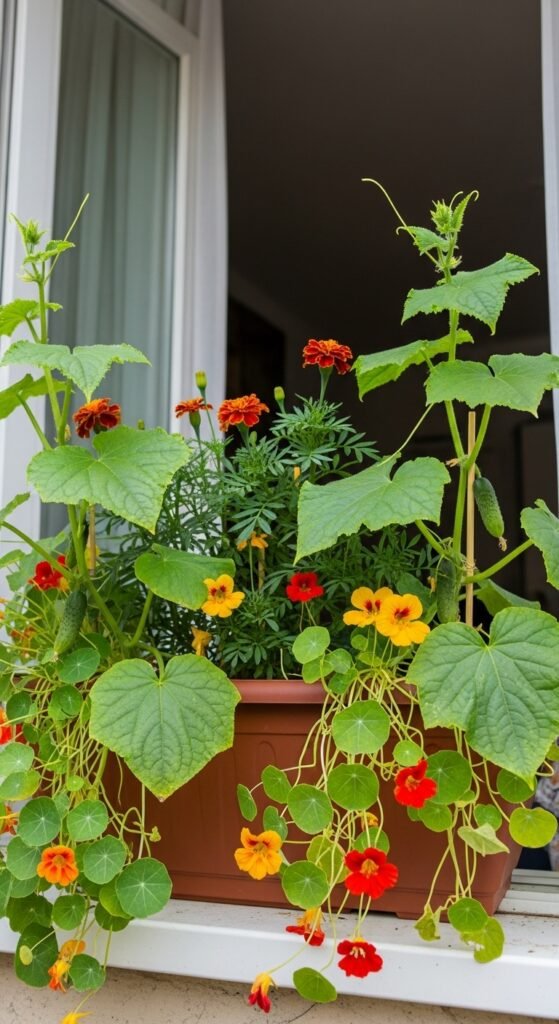
Try planting marigolds or nasturtiums alongside. Space appropriately in larger pots. This eco-friendly approach elevates your cucumbers in containers experience.
7) Monitor Sunlight Exposure
Position your containers to receive 6-8 hours of direct sunlight daily, crucial for cucumber photosynthesis and fruit production.
Proper sunlight prevents leggy growth and ensures sweet, crisp cucumbers. Key benefits include abundant harvests and vibrant plant health.
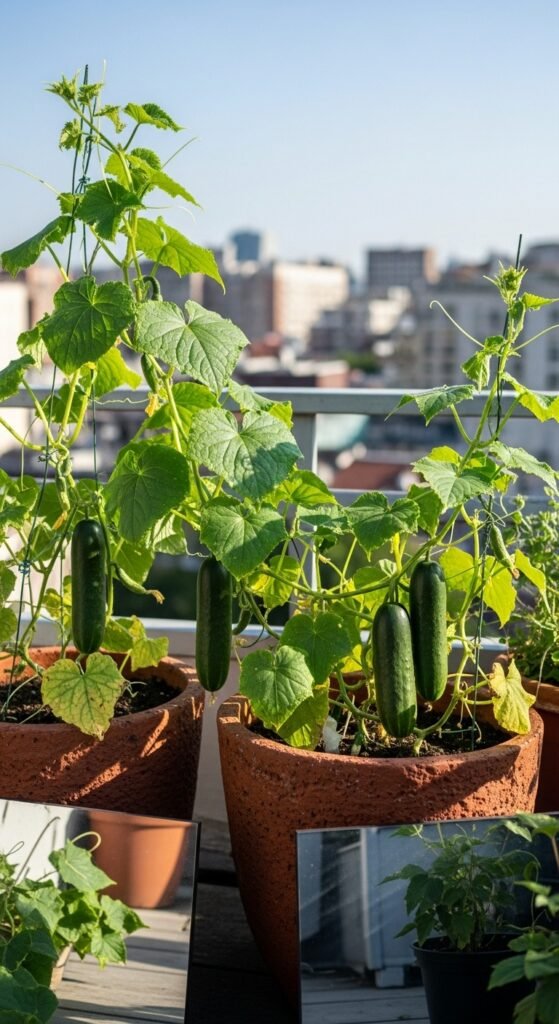
Track sun patterns in your space and move pots as needed. Use reflective surfaces to boost light in shaded areas for optimal results.
8) Apply Organic Pest Control
Use natural methods to manage pests on your container cucumbers, keeping your harvest chemical-free and safe.
Organic control maintains ecological balance and protects pollinators. Key benefits are sustainable gardening and tastier produce.
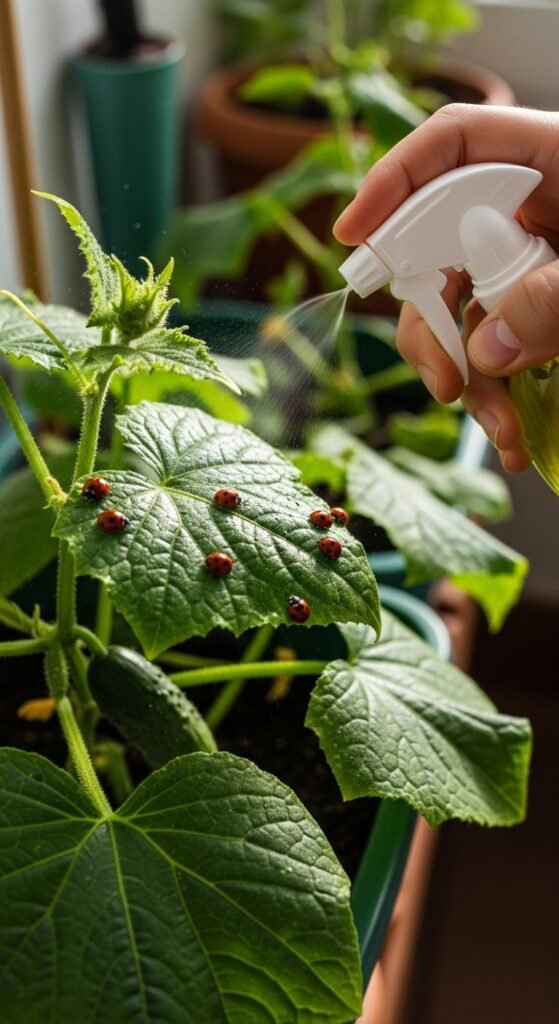
Employ neem oil sprays or introduce ladybugs. For comprehensive strategies, check spring pest control techniques adaptable to summer growing.
9) Fertilize Regularly
Feed your cucumbers with balanced, organic fertilizer every few weeks to support vigorous growth and fruiting in containers.
Regular feeding compensates for nutrient leaching in potted environments. Key benefits are larger fruits and prolonged productivity.
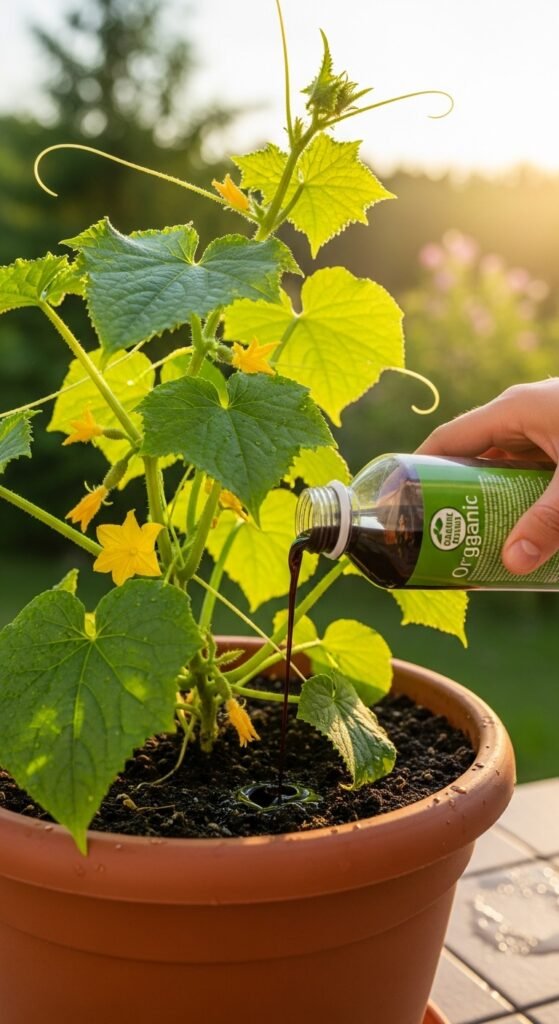
Mix liquid fertilizer into watering routines, focusing on potassium for fruit development. This keeps your plants thriving throughout the season.
10) Hand Pollinate Indoors
If growing indoors or in enclosed spaces, manually transfer pollen between flowers to ensure fruit set for your container cucumbers.
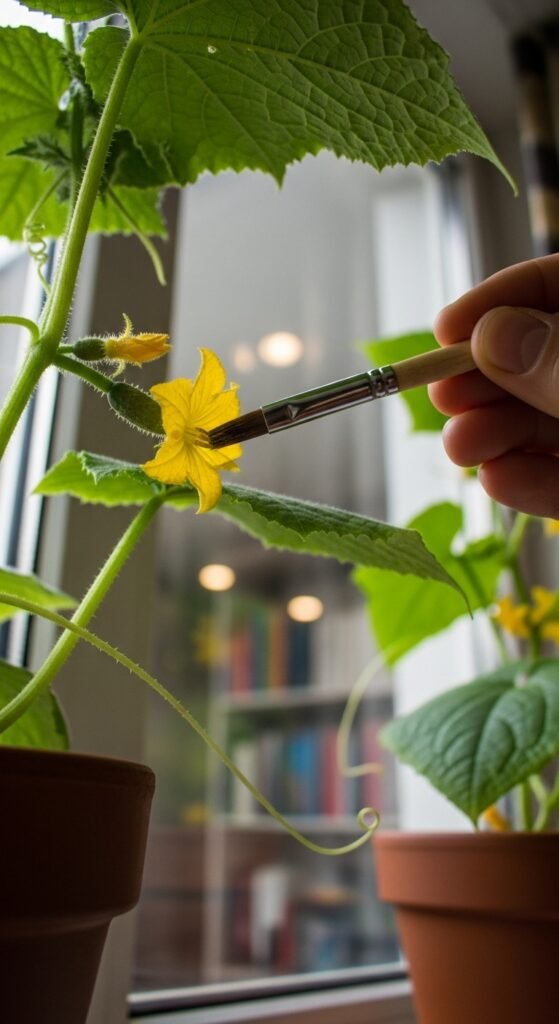
Hand pollination mimics natural processes when bees are absent. Key benefits include reliable yields in controlled environments.
Use a soft brush to gently move pollen from male to female flowers daily. This technique is simple yet effective for urban growers.
11) Harvest Frequently
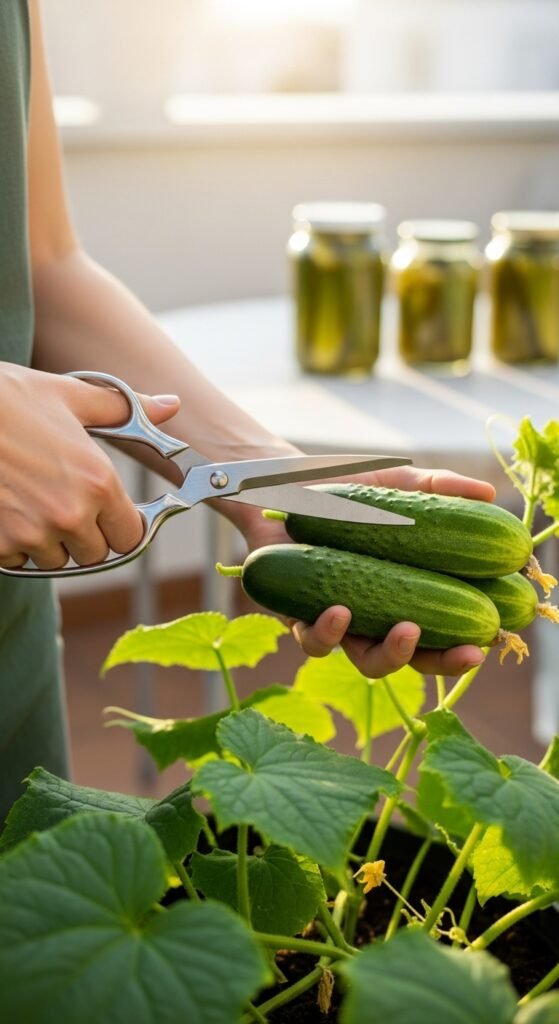
Pick cucumbers regularly when they reach desired size to encourage continuous production from your container plants.
Frequent harvesting prevents overripening and signals the plant to produce more. Key benefits are tender fruits and extended harvest periods.
Use clean shears to cut fruits, leaving a short stem. Then, preserve extras by trying pickled cucumbers for long-lasting enjoyment.
12) Extend the Season
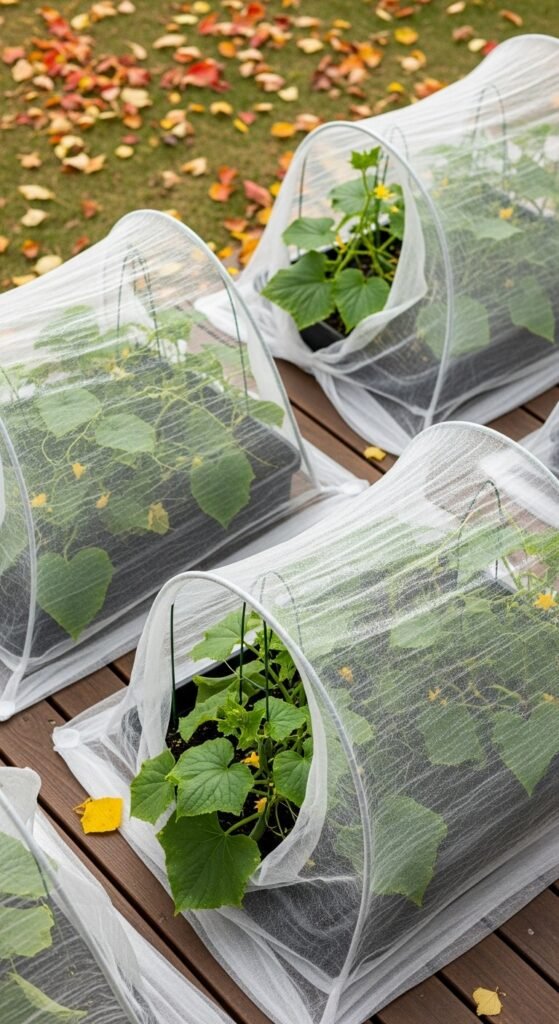
Use protective covers or move containers indoors to prolong your cucumber growing season beyond summer.
Season extension allows for fresh produce in cooler months. Key benefits are year-round gardening and cost savings. Employ row covers or cold frames. This idea maximizes your investment in cucumbers in containers.
13) Experiment with Hydroponics
Try soil-less hydroponic systems in containers for faster growth and higher yields of cucumbers.
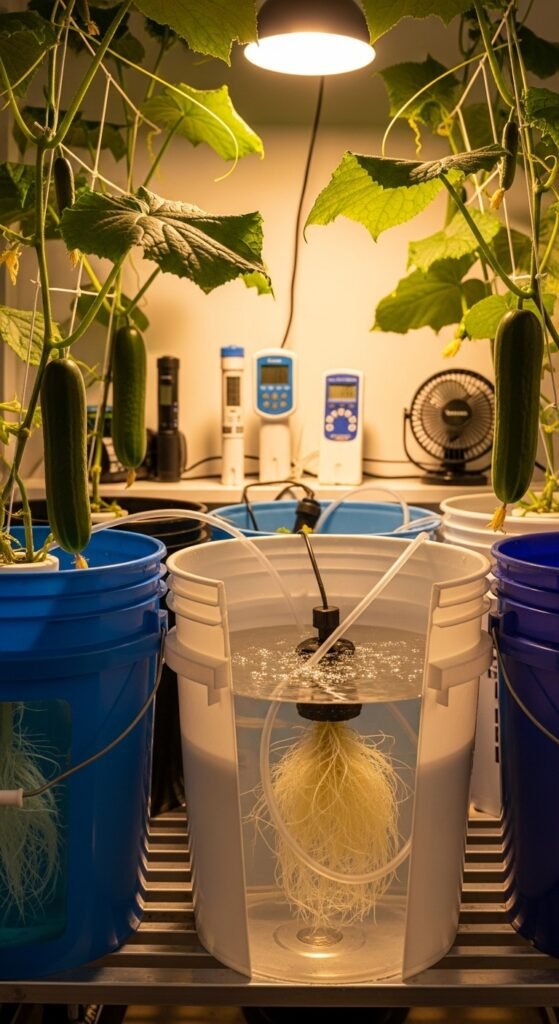
Hydroponics delivers nutrients directly, optimizing resource use. Key benefits include space efficiency and reduced pest issues.Set up a basic bucket system with nutrient solution. Monitor pH and EC levels for success.
14) Incorporate Mulching
Apply organic mulch to the soil surface in your containers to retain moisture and suppress weeds.
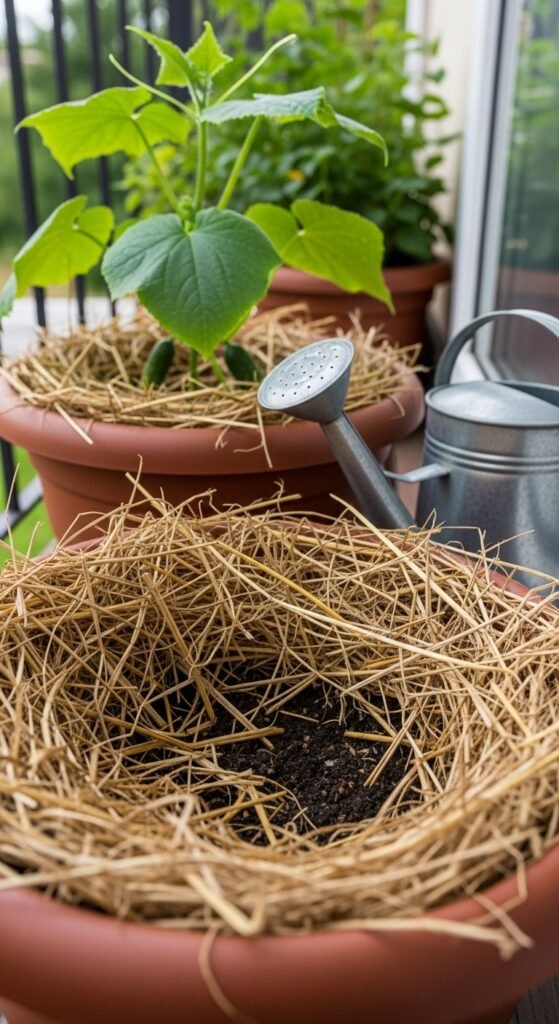
Mulching conserves water and regulates soil temperature. Key benefits are less watering and healthier roots. Use straw or bark chips, layering 2-3 inches thick. Refresh as needed for ongoing protection.
15) Troubleshoot Common Issues
Learn to identify and address problems like yellow leaves or poor fruiting in your container cucumbers promptly.
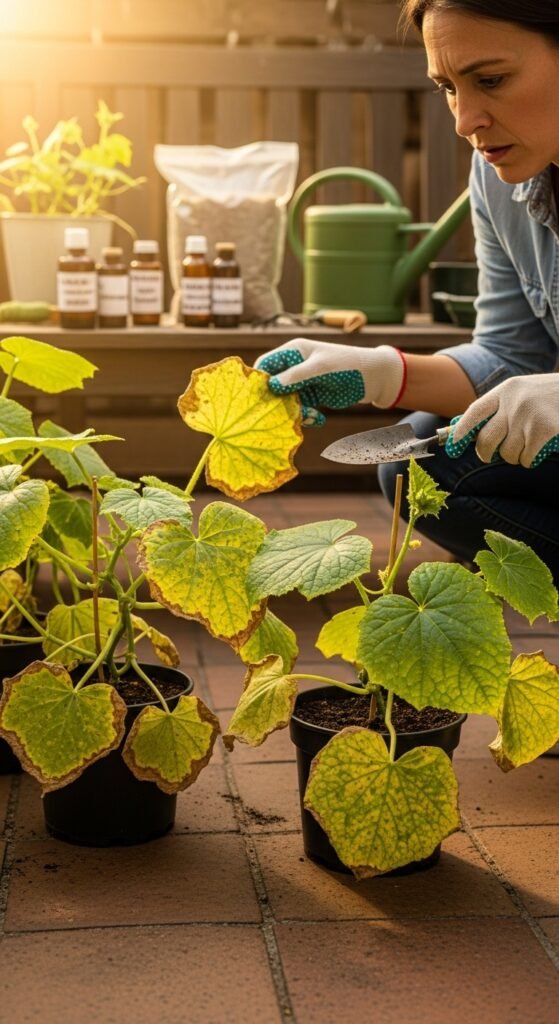
Quick troubleshooting prevents minor issues from escalating. Key benefits are resilient plants and consistent harvests. Check for overwatering, nutrient deficiencies, or pests. Adjust care routines based on observations for thriving growth.
Key Principles for Success
Soil and Nutrition Fundamentals
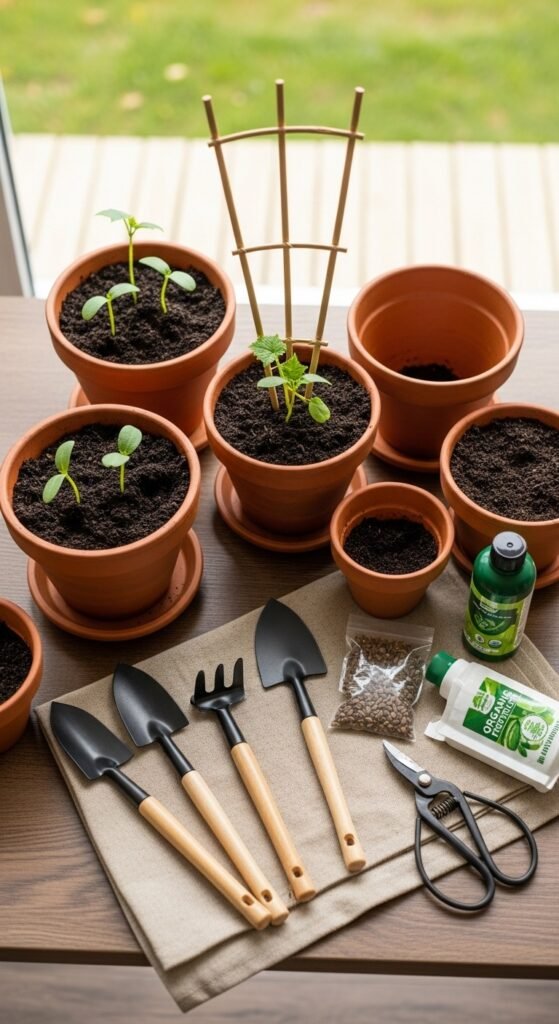
Always prioritize well-aerated, nutrient-rich soil for your cucumbers in containers. Incorporate organic matter to boost fertility and drainage.
Watering Best Practices
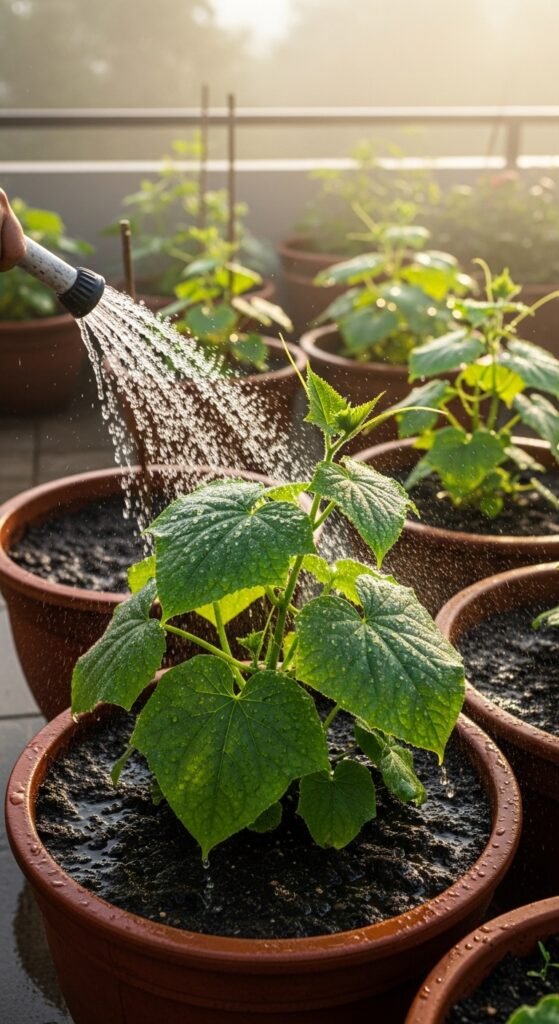
Maintain even moisture without sogginess. Water deeply in the morning to allow foliage to dry, reducing disease risk.
Pollination and Support Strategies
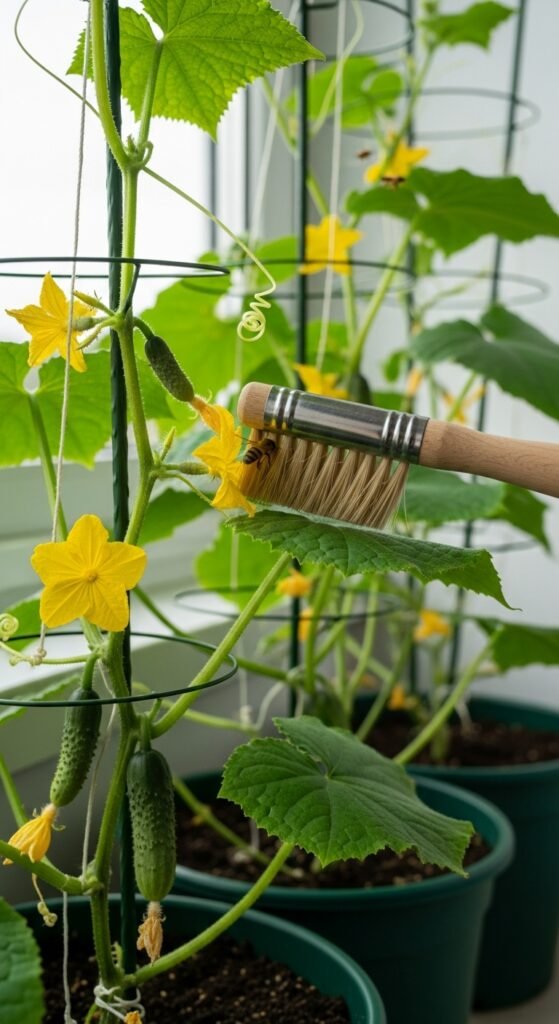
Encourage pollinators or hand-pollinate, and provide sturdy supports to handle the weight of growing vines and fruits.
Frequently Asked Questions
Can I grow cucumbers in small containers?
Yes, but choose compact varieties and ensure at least 5 gallons for adequate root space. Monitor watering closely to prevent stress.
How often should I water container cucumbers?
Water when the top inch of soil feels dry, typically every 1-2 days in hot weather. Adjust based on container size and conditions.
What pests commonly affect cucumbers in containers?
Aphids, spider mites, and cucumber beetles are common. Use organic sprays and inspect plants regularly for early detection.
Do container cucumbers need full sun?
They thrive in 6-8 hours of direct sunlight. Partial shade may work but could reduce yields.
How long until harvest for container-grown cucumbers?
Most varieties produce fruit in 50-70 days from seed. Harvest when fruits are firm and green for best flavor.