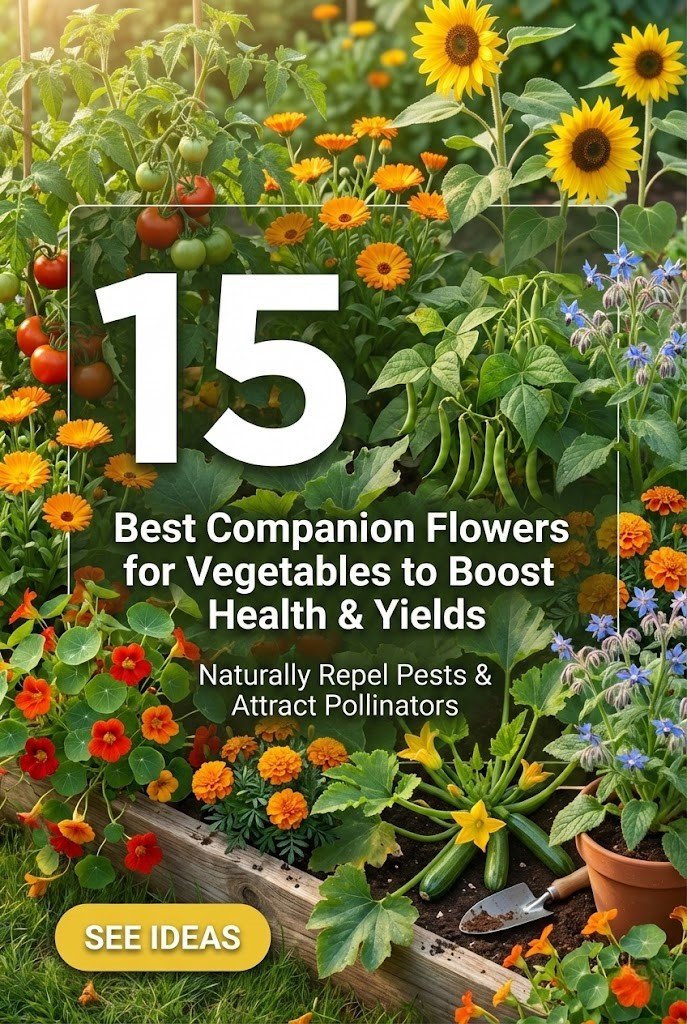
Companion planting is a time-tested gardening strategy where you pair certain plants together to enhance growth, deter pests, and improve overall yields. When it comes to companion flowers for vegetables, these vibrant blooms aren’t just for aesthetics—they play a crucial role in creating a balanced ecosystem in your garden. By attracting beneficial insects, repelling harmful pests, and even enriching the soil, the right flowers can transform your vegetable patch into a thriving, resilient space.
You’ll find that incorporating companion flowers for vegetables not only reduces the need for chemical interventions but also promotes biodiversity. For instance, flowers can lure pollinators like bees and butterflies, ensuring better fruit set on your veggies. Plus, many of these flowers are edible or have medicinal uses, adding extra value to your harvest. Whether you’re a beginner or seasoned gardener, starting with these companions can lead to healthier plants and bigger bounties.
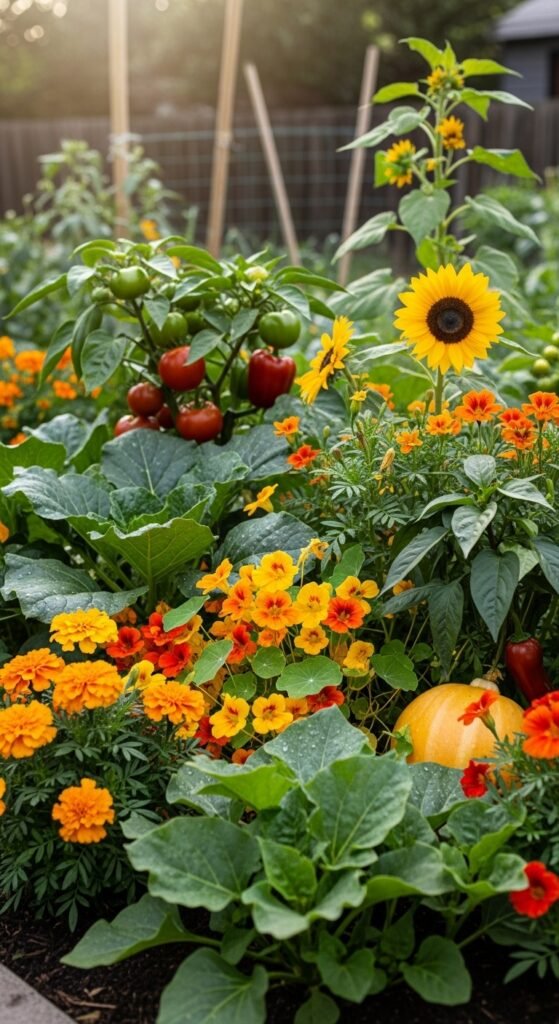
To get the most out of this approach, consider your garden’s layout and specific vegetable needs. With thoughtful placement, you can maximize space and minimize issues like disease or nutrient competition.
1) Marigolds for Pest Deterrence
You can plant marigolds alongside tomatoes, peppers, and potatoes to naturally ward off nematodes and other soil-borne pests. These bright orange and yellow flowers release compounds from their roots that repel harmful insects, creating a protective barrier for your vegetables. The key benefit is reduced pest damage without pesticides, leading to healthier plants and higher yields.
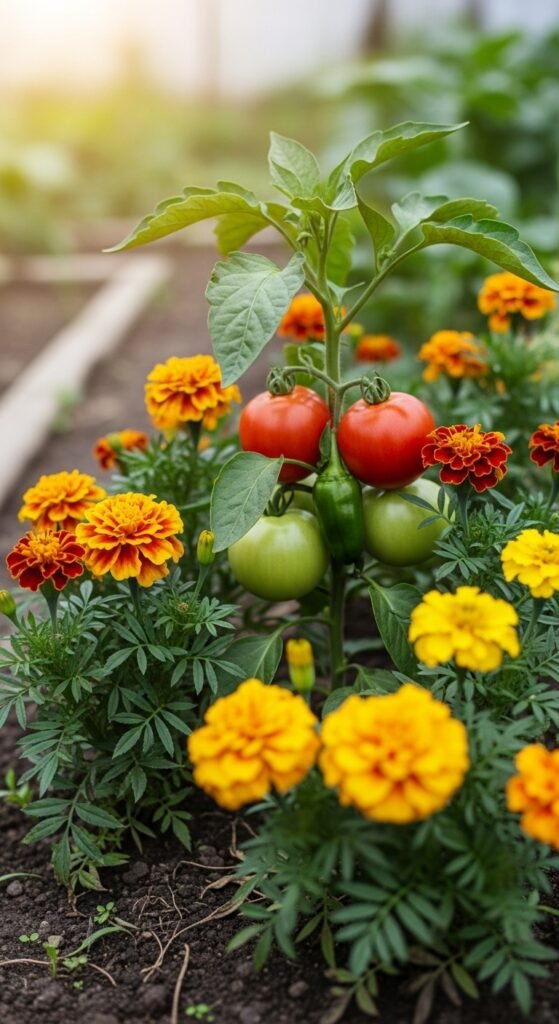
Why choose marigolds? They also attract hoverflies and ladybugs, which prey on aphids, adding another layer of natural pest control. In terms of how to integrate them, sow seeds directly in the garden after the last frost, spacing them about 8-10 inches apart around your veggie rows. For optimal results, opt for French marigolds, as they’re particularly effective. If you’re planning your setup, check out ideas for vegetable garden layouts to ensure proper spacing.
Marigolds thrive in full sun and well-drained soil, making them low-maintenance companions. You’ll notice fewer issues like root rot in potatoes when they’re nearby, and their cheerful blooms add visual appeal to your plot.
2) Nasturtiums as Trap Crops
Nasturtiums are excellent companions for cabbage, broccoli, and squash, acting as a sacrificial plant that draws aphids and cabbage worms away from your veggies. Their peppery flowers and leaves are edible, providing a dual purpose in your garden. This trap crop strategy minimizes damage to your main harvest, allowing vegetables to grow undisturbed.
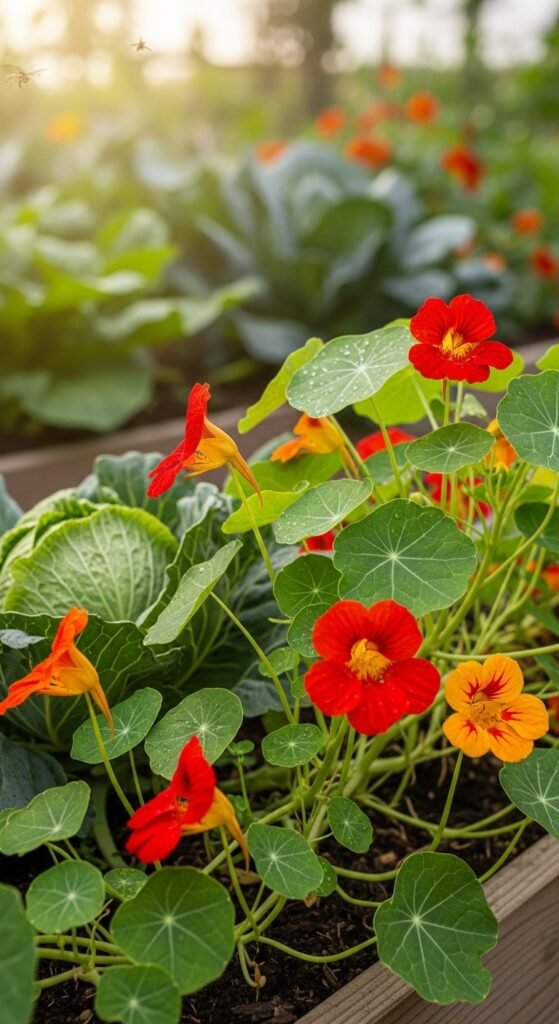
The reason nasturtiums work so well is their ability to lure pests with their bright, funnel-shaped blooms in shades of red, orange, and yellow. To implement this, plant them at the edges of your vegetable beds or intersperse them among rows. Start seeds indoors or direct-sow in spring, ensuring they get full sun for abundant flowering. They’re also great for attracting pollinators, boosting overall garden productivity.
You’ll appreciate how easy they are to grow, even in poor soil, and they can trail or climb for added versatility. For more on integrating herbs that flower similarly, explore companion planting with herbs.
3) Borage to Attract Pollinators
Pair borage with strawberries, tomatoes, and squash to draw in bees and other pollinators with its star-shaped blue flowers. This herb-like flower increases pollination rates, leading to better fruit development and larger harvests. The primary advantage is enhanced yield through natural pollination, making your vegetables more productive.
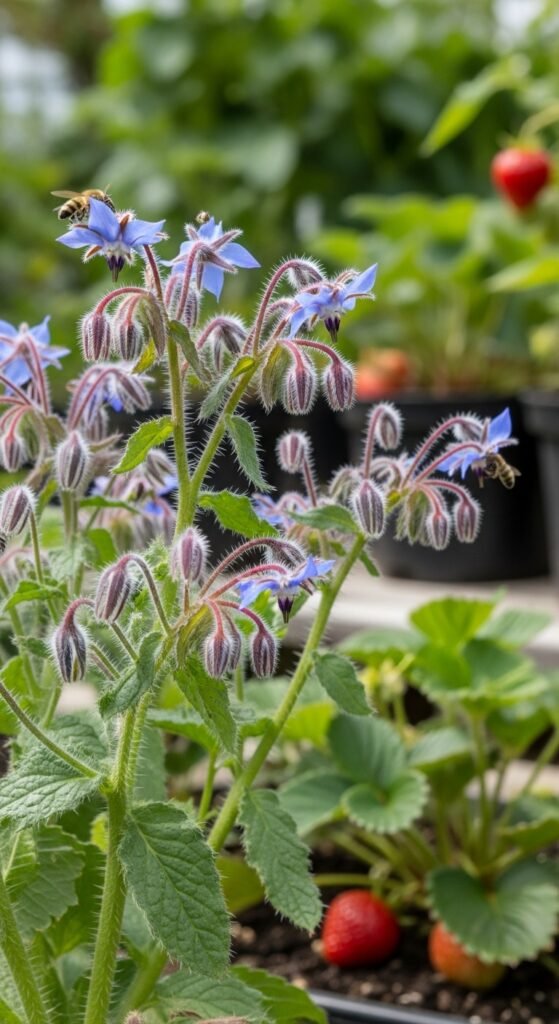
Borage’s appeal lies in its continuous blooming and ability to repel tomato hornworms while enriching the soil as it decomposes. Plant it by scattering seeds in early spring, thinning seedlings to 12 inches apart in sunny spots. It self-seeds easily, providing ongoing benefits year after year. The edible flowers add a cucumber-like flavor to salads, too.
You can use borage in both large plots and containers, making it adaptable for any setup. If you’re new to this, consider tips from how to start a vegetable garden to incorporate it seamlessly.
4) Calendula for Soil Health
Calendula, or pot marigold, complements carrots, beans, and lettuce by repelling aphids and improving soil structure with its deep roots. Its daisy-like orange flowers are medicinal and edible, offering extra utility. Key perks include pest repulsion and soil aeration, fostering robust vegetable growth.
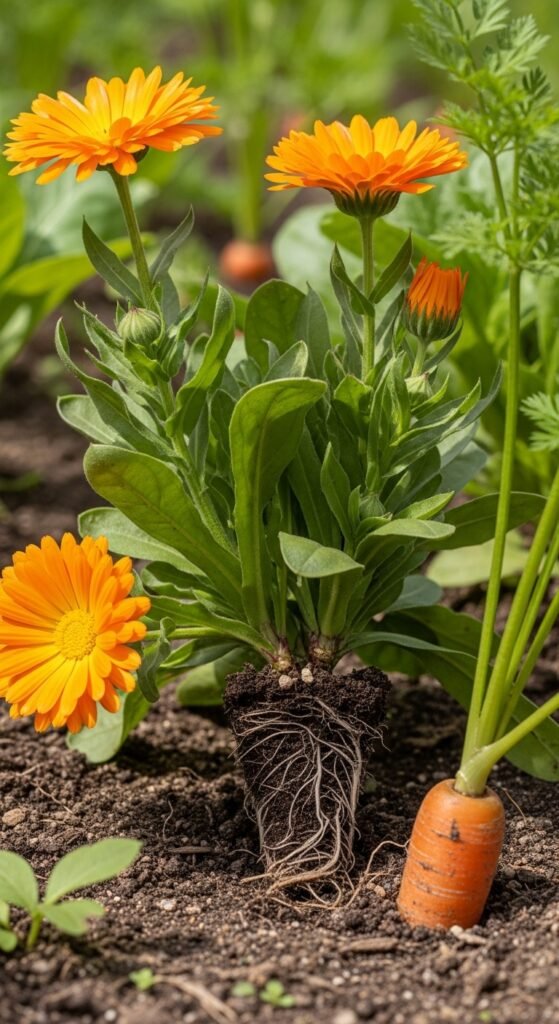
This flower’s sticky stems trap insects, acting as a natural barrier, while its petals attract beneficial predators. Sow seeds directly in the garden in cool weather, spacing them 6-12 inches apart in full sun. Harvest flowers regularly to encourage more blooms throughout the season.
You’ll find calendula thrives in average soil and requires minimal care, making it ideal for busy gardeners. For pollinator-friendly additions, look into a bee-friendly plants list to expand your companions.
5) Sunflowers as Natural Supports
Sunflowers work wonders with corn, cucumbers, and pole beans, providing shade and acting as trellises for climbing veggies. Their large heads attract birds that eat pests, and pollinators flock to the blooms. Major benefits are structural support and biodiversity boost, enhancing garden efficiency.
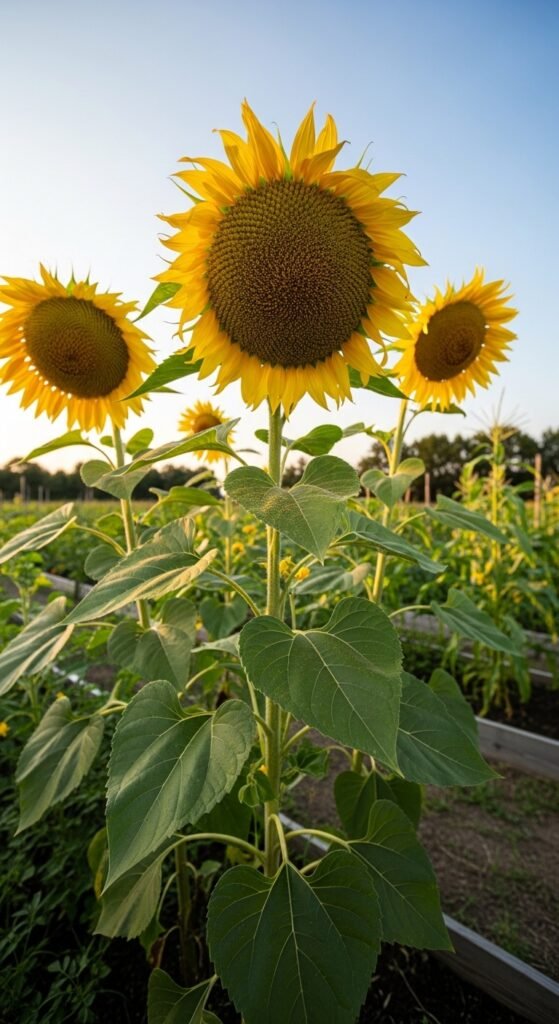
The tall stalks offer windbreaks and draw beneficial insects, while fallen petals enrich the soil. Plant seeds after frost in full sun, spacing larger varieties 2-3 feet apart. Choose branching types for more flowers and better coverage.
You can harvest seeds for snacks, adding value. In raised beds, they’re particularly effective—see raised bed vegetable garden strategies for integration.
6) Lavender for Moth Repulsion
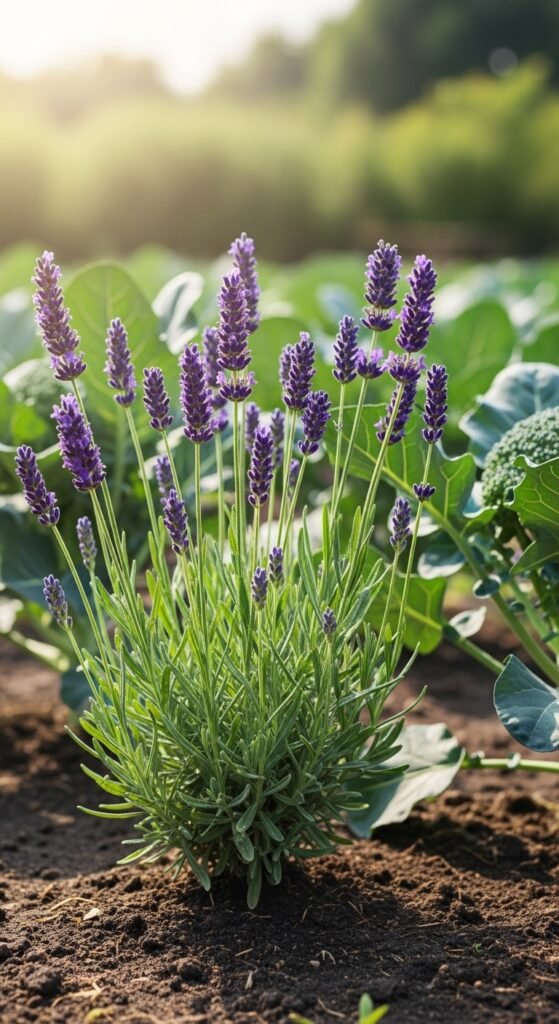
Lavender pairs beautifully with brassicas like broccoli and cauliflower, deterring moths and fleas with its fragrant purple spikes. It also attracts bees for pollination. Essential advantages include pest deterrence and aromatic appeal, creating a serene, productive space.
Its strong scent masks vegetable odors from pests, while the flowers support beneficial wildlife. Plant in well-drained soil with full sun, spacing 12-18 inches apart. Prune after flowering to maintain shape and vigor.
You’ll enjoy harvesting for teas or sachets. For more on pest-repelling options, consider mosquito-repelling plants that complement lavender.
7) Zinnias to Lure Butterflies
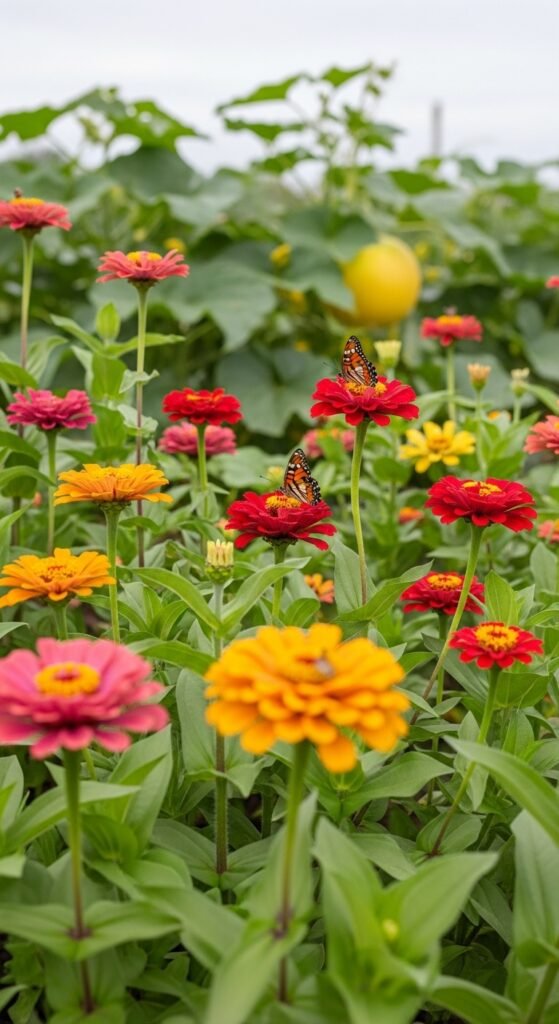
Zinnias enhance pumpkins, melons, and beans by attracting butterflies and bees for superior pollination. Their colorful, daisy-like flowers come in various heights. Top benefits are increased pollination and vibrant aesthetics, leading to bountiful fruits.
These annuals bloom prolifically, drawing hoverflies that control aphids. Sow seeds directly in warm soil, thinning to 8-12 inches. Deadhead to prolong flowering into fall.
You can cut them for bouquets, too. Align with pollinator garden ideas for a thriving ecosystem.
8) Cosmos for Beneficial Insects
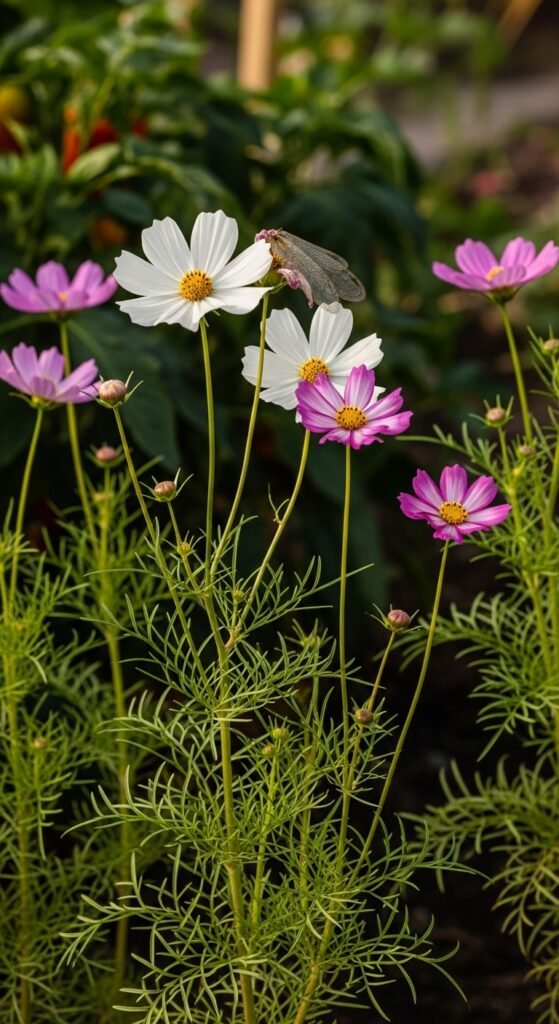
Cosmos companions well with tomatoes and peppers, luring lacewings and parasitic wasps that prey on pests. Their feathery foliage and daisy blooms add height. Core gains are natural pest management and extended bloom time.
Easy to grow, they self-seed and tolerate poor soil. Plant in full sun, spacing 12 inches apart after danger of frost.
You’ll see fewer aphids with their help. Pair with companion planting vegetables principles.
9) Sweet Alyssum as Ground Cover
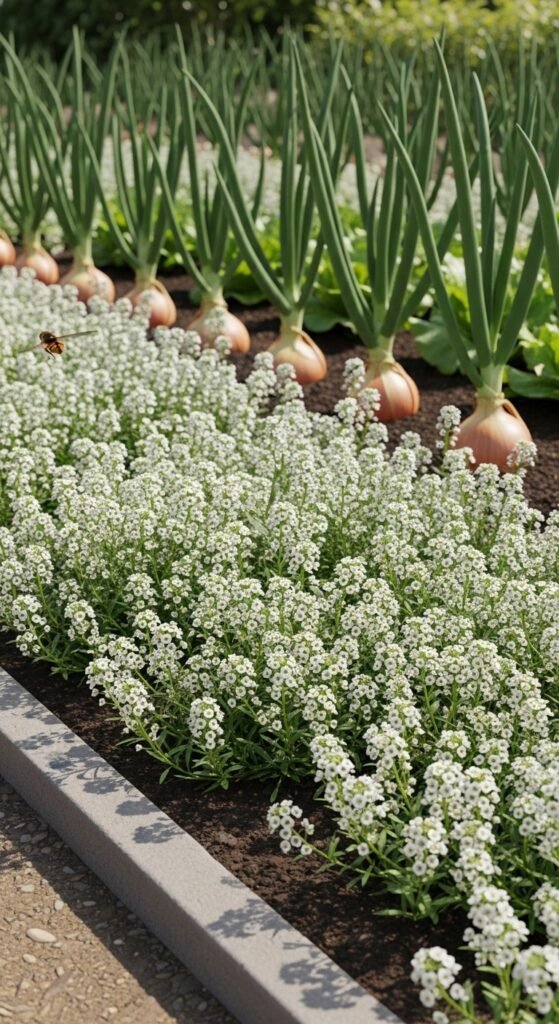
Sweet alyssum underplants lettuce, radishes, and onions, attracting hoverflies to eat aphids while suppressing weeds. Its tiny white flowers scent the air. Prime perks are weed control and pest predation.
This low-grower forms a living mulch, retaining moisture. Sow seeds early spring, broadcasting thinly in sun or part shade.
You can edge paths with it for charm. Explore herb companion charts for synergies.
10) Yarrow for Soil Improvement
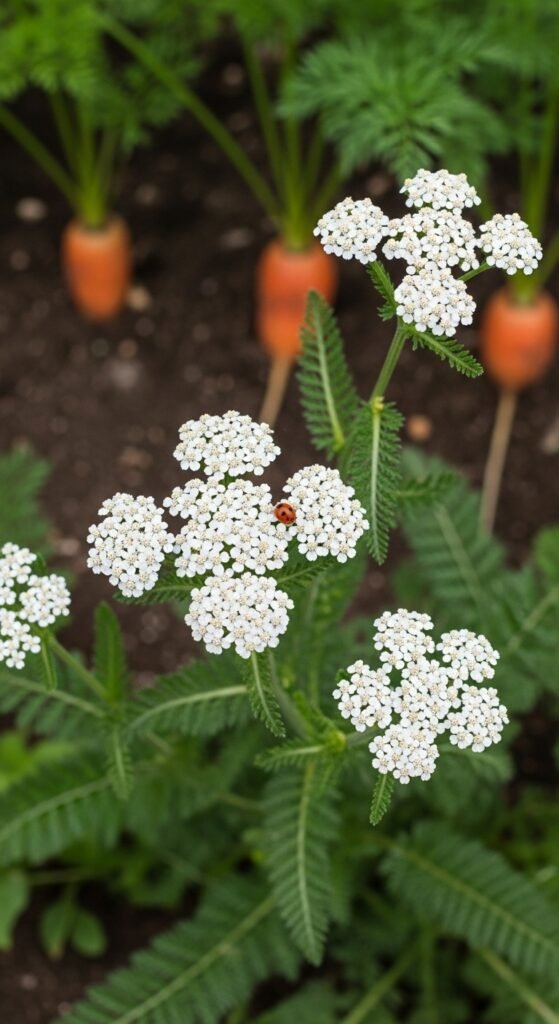
Yarrow benefits root veggies like carrots and beets by accumulating nutrients and attracting ladybugs. Its ferny leaves and flat flower clusters endure drought. Key upsides are soil fertility boost and insect balance.
As a perennial, it returns yearly. Plant divisions in spring, spacing 1-2 feet in sunny, dry spots.
You’ll harvest for teas. Integrate into edible flowers selections.
11) Bee Balm to Draw Bees
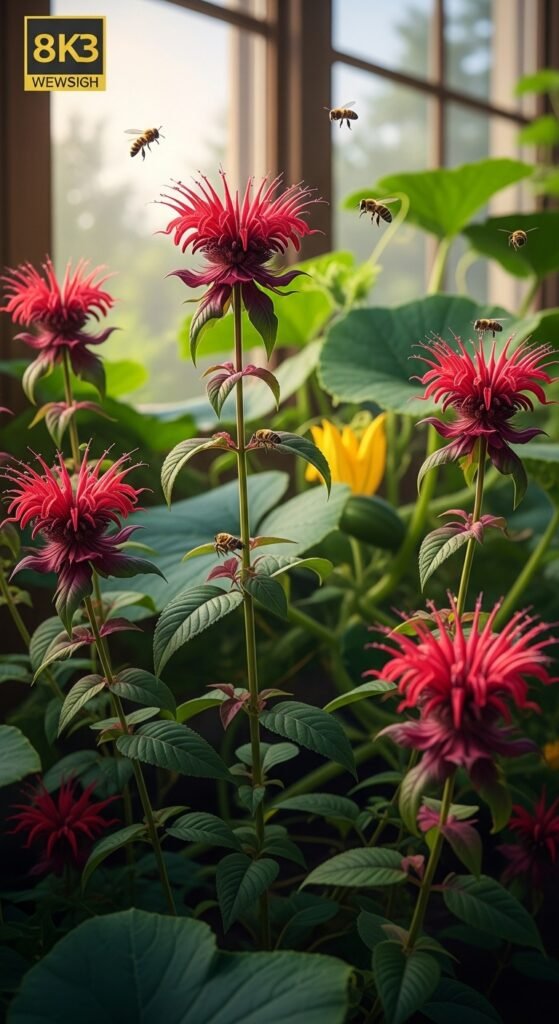
Bee balm companions squash and cucumbers, pulling in bees and hummingbirds for pollination. Its minty, spiky flowers resist deer. Main advantages are pollination surge and disease resistance.
It spreads via rhizomes, controlling mildew. Plant in moist, sunny soil, dividing every few years.
You can use leaves for tea. For layout tips, refer to vegetable garden layout ideas.
12) Echinacea for Wildlife Support
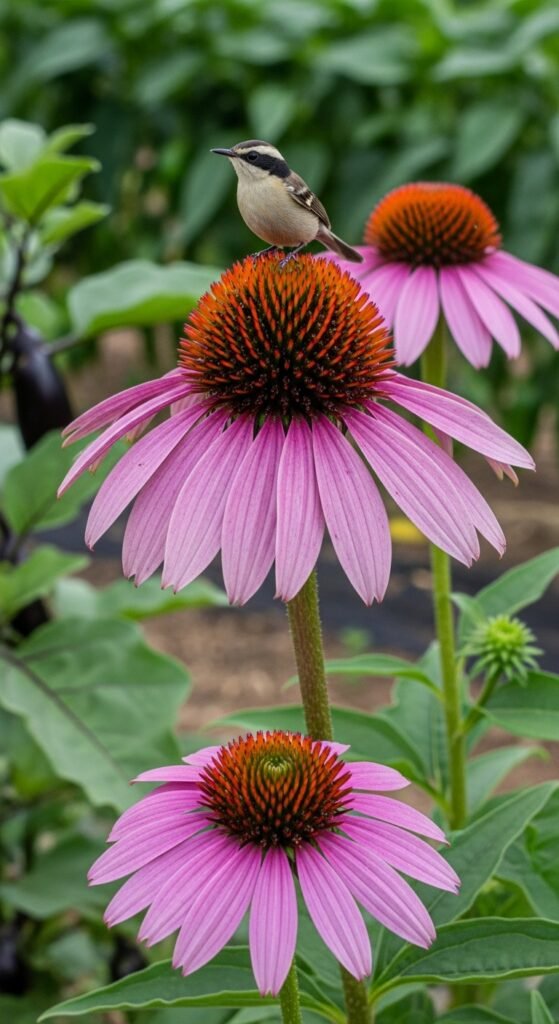
Echinacea pairs with eggplant and peppers, attracting birds and bees while repelling slugs. Its cone-shaped purple flowers are medicinal. Vital benefits include wildlife habitat and pest reduction.
Perennial and drought-tolerant, it thrives in full sun. Sow seeds or plant starts 18 inches apart.
You’ll enjoy cone teas. Align with pollinator garden design.
13) Chamomile as Companion Herb-Flower
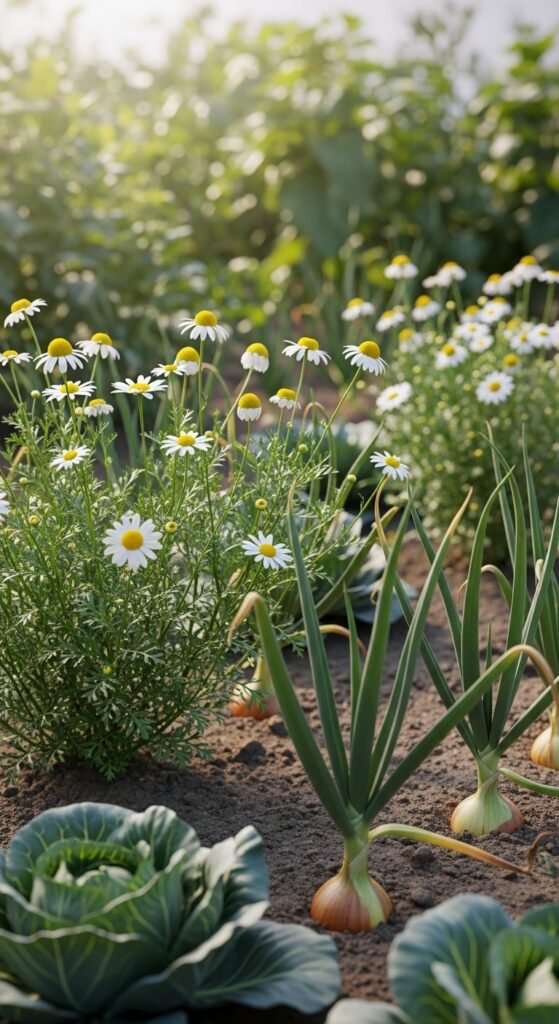
Chamomile aids onions and cabbage, improving flavor and repelling flies. Its apple-scented daisies calm the garden. Significant gains are flavor enhancement and gentle pest control.
Grow as annual or perennial, sowing in light soil with sun. Harvest flowers for tea.
You can use it medicinally. See companion planting herbs for more.
14) Tansy for Insect Repulsion
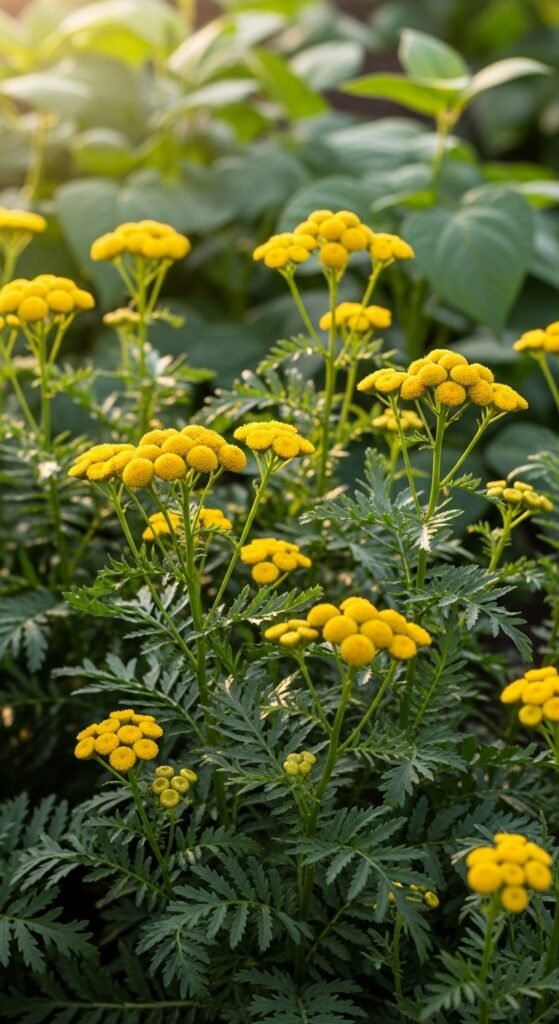
Tansy deters ants and flies around potatoes and beans with its ferny, yellow button flowers. Core strengths are broad pest repulsion and soil detoxification.
Plant in poor, sunny soil; it’s invasive, so contain it. Divide clumps periodically.
You’ll find it low-care. For beginners, check how to start a vegetable garden.
15) Petunias to Combat Aphids
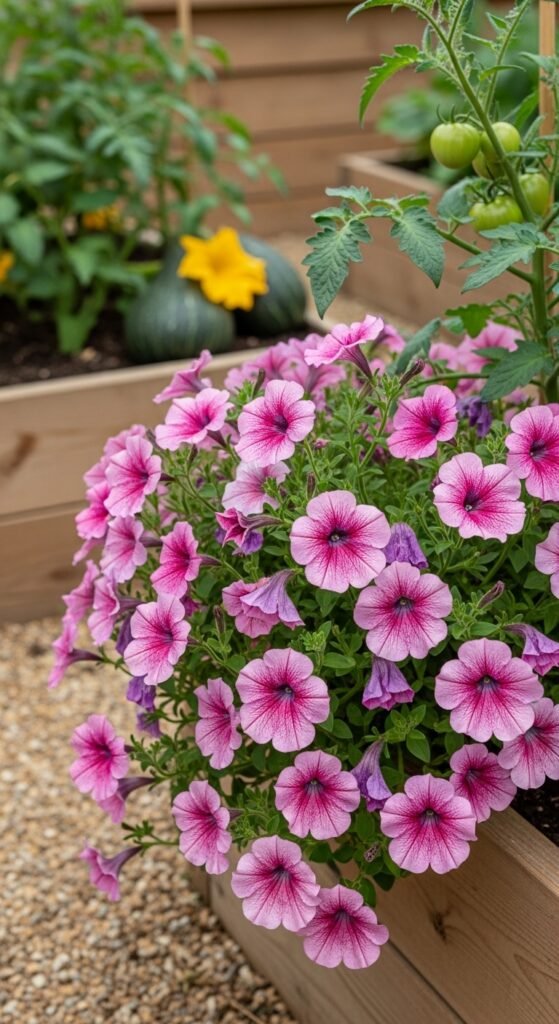
Petunias protect tomatoes and squash from aphids and hornworms with their trumpet blooms. Essential perks are aphid control and continuous color.
They cascade beautifully in beds or pots. Plant after frost in sun, fertilizing monthly.
You can enjoy their fragrance. In raised setups, use raised bed vegetable garden techniques.
Key Principles of Companion Planting
Pest Management Strategies
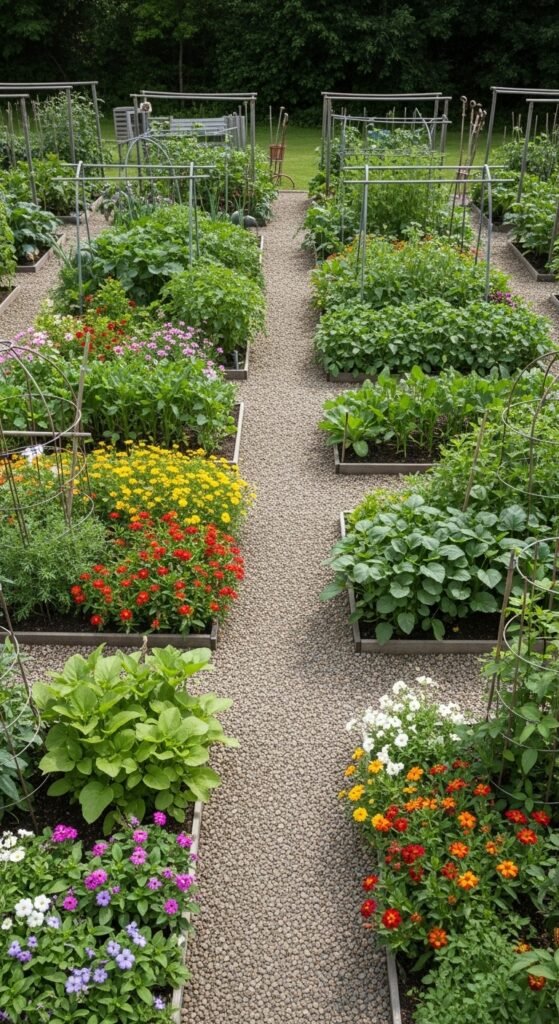
You can leverage flowers to naturally manage pests by choosing varieties that repel or trap unwanted insects. This reduces reliance on chemicals and promotes a healthier ecosystem.
Pollinator Attraction Techniques
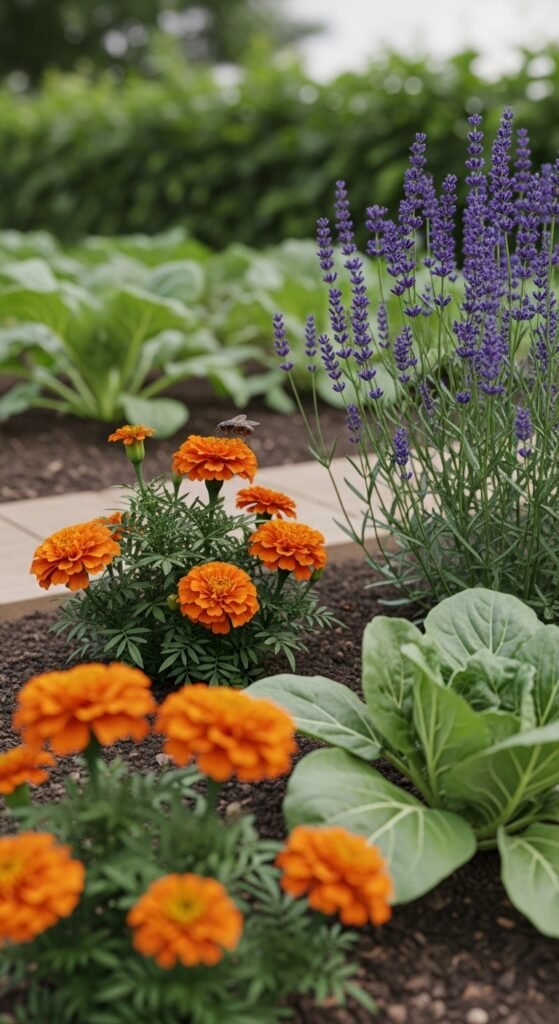
Focus on diverse flower shapes and colors to draw a range of pollinators, ensuring your vegetables get the attention they need for optimal fruiting.
Soil and Space Optimization
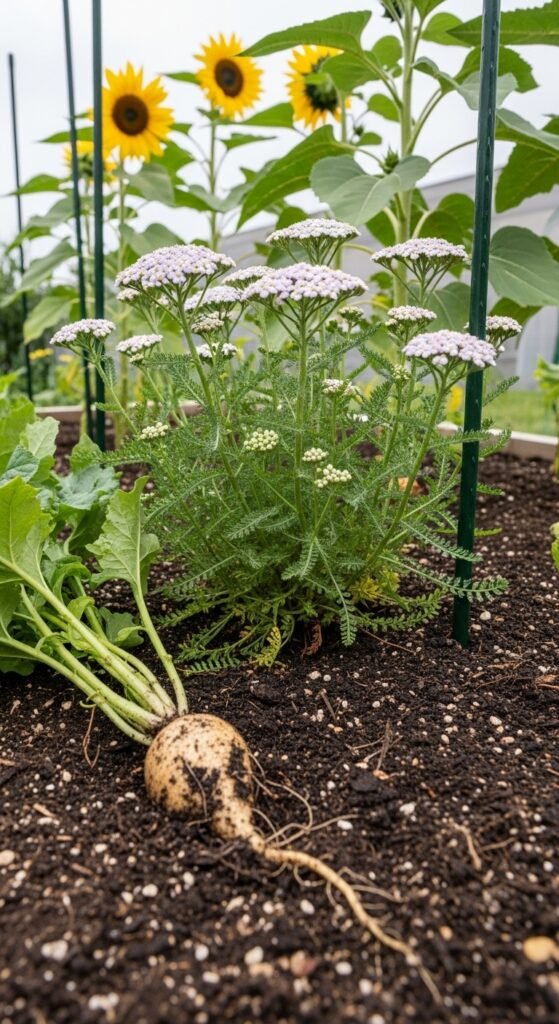
Select companions that improve soil nutrients or provide shade and support, maximizing your garden’s efficiency without overcrowding.
Frequently Asked Questions
What are the best companion flowers for tomatoes?
Marigolds, nasturtiums, and borage are top choices for tomatoes, as they repel pests like nematodes and hornworms while attracting pollinators for better yields.
Can companion flowers improve vegetable yields?
Yes, by enhancing pollination, deterring pests, and enriching soil, companion flowers can significantly boost the health and productivity of your vegetable plants.
How do I space companion flowers in my garden?
Space flowers 6-12 inches apart around vegetable rows or at bed edges, depending on the variety, to allow for growth without competition for resources.
Are companion flowers edible?
Many are, such as nasturtiums, calendula, and borage, adding flavorful petals and leaves to salads while serving their companion roles.
When should I plant companion flowers?
Plant most after the last frost in spring, direct-sowing seeds or starting indoors for earlier blooms to coincide with vegetable growth cycles.