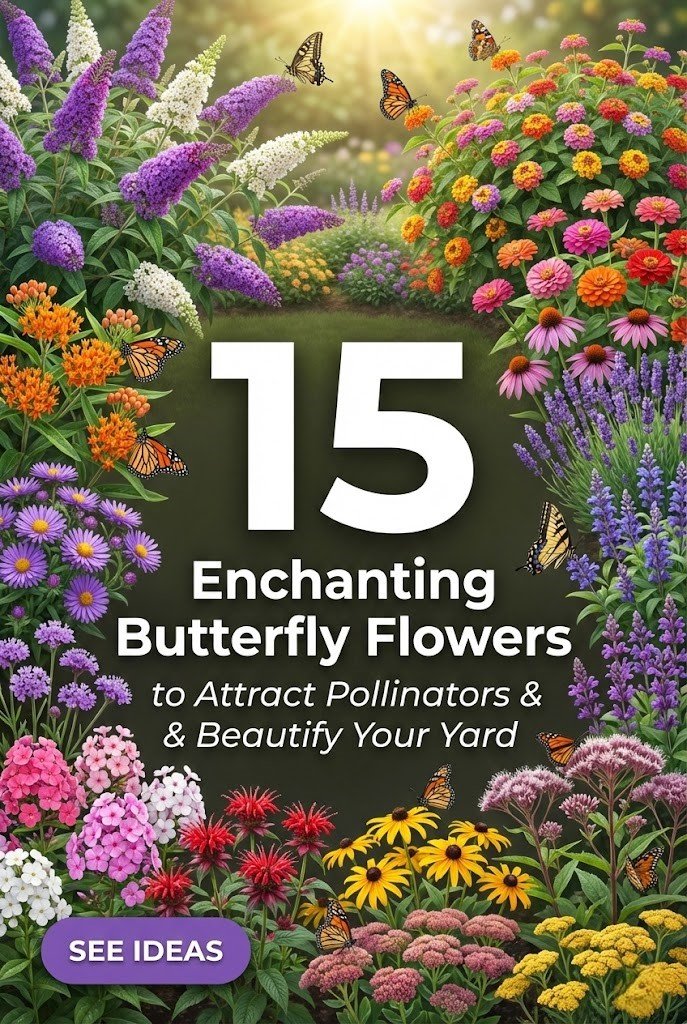
Butterfly flowers are a delightful addition to any garden, transforming your outdoor space into a vibrant haven for pollinators. These specially selected blooms not only provide nectar and habitat for butterflies but also enhance the aesthetic appeal of your yard with their colorful displays and fragrant scents. By incorporating butterfly flowers, you create a dynamic ecosystem that supports biodiversity while enjoying the mesmerizing sight of fluttering wings throughout the seasons.
Choosing the right butterfly flowers involves considering factors like sunlight, soil type, and regional climate to ensure they thrive. You’ll benefit from increased pollination in your vegetable and fruit gardens, leading to better yields, and a more sustainable environment. Whether you’re a novice gardener or an experienced enthusiast, these ideas will guide you in cultivating a pollinator-friendly paradise. For more on designing such spaces, explore our guide on pollinator garden design.
Start small by selecting a few varieties that suit your space, and watch as your garden comes alive. Remember, grouping flowers in clusters maximizes their attractiveness to butterflies, making your efforts even more rewarding.
1) Vibrant Butterfly Bush Clusters
You’ll love planting butterfly bush (Buddleja) in clusters to create a focal point in your garden. This shrub produces long, cone-shaped flower spikes in shades of purple, pink, and white, blooming from summer to fall. What makes it ideal for butterflies is its rich nectar supply, drawing species like monarchs and swallowtails. Position them in full sun with well-drained soil for optimal growth.
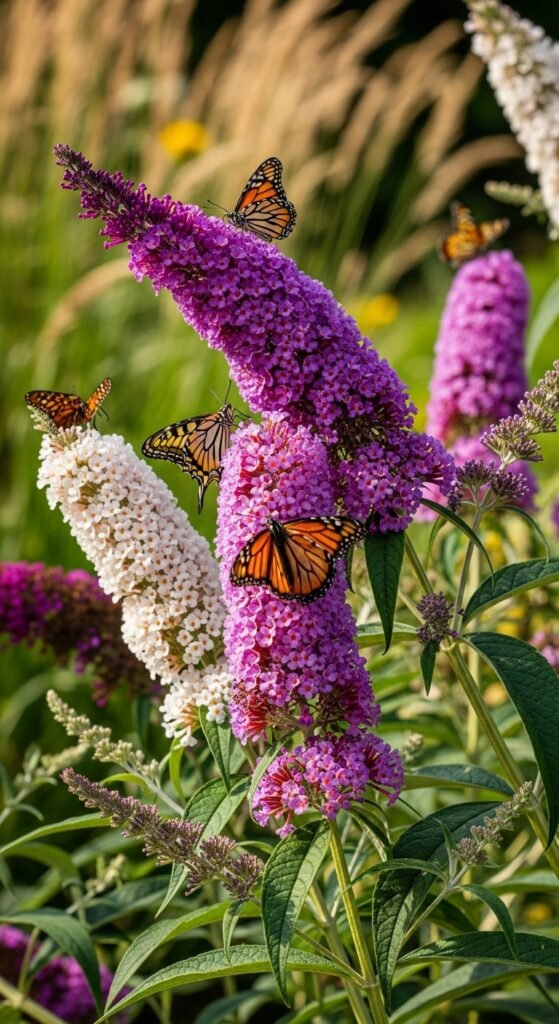
Why choose this? It offers continuous blooms and requires minimal maintenance once established, thriving in zones 5-9. However, prune it annually to prevent invasiveness in some areas. How to implement: Dig holes twice the root ball size, space plants 5-10 feet apart, and water deeply until roots take hold. Combine with other perennials for added texture. For similar fragrant options, check our article on lavender care.
Edge cases include cooler climates where you might need winter protection, but the reward is a bustling butterfly hotspot that also attracts hummingbirds, enriching your garden’s biodiversity.
2) Colorful Lantana Mounds
Imagine dotting your landscape with lantana, a heat-loving perennial that bursts into multicolored flower clusters resembling tiny bouquets. You can grow it as an annual in cooler zones or perennial in warmer ones (8-11). Its flowers shift colors as they age, providing a dynamic display that butterflies adore for the abundant nectar.
The why is clear: Lantana’s drought tolerance and long blooming period make it low-effort yet high-impact. It also repels deer, adding practical value. To plant, select a sunny spot with sandy soil, spacing 18-24 inches apart. Water sparingly after establishment to encourage deep roots. In containers, it’s perfect for patios.
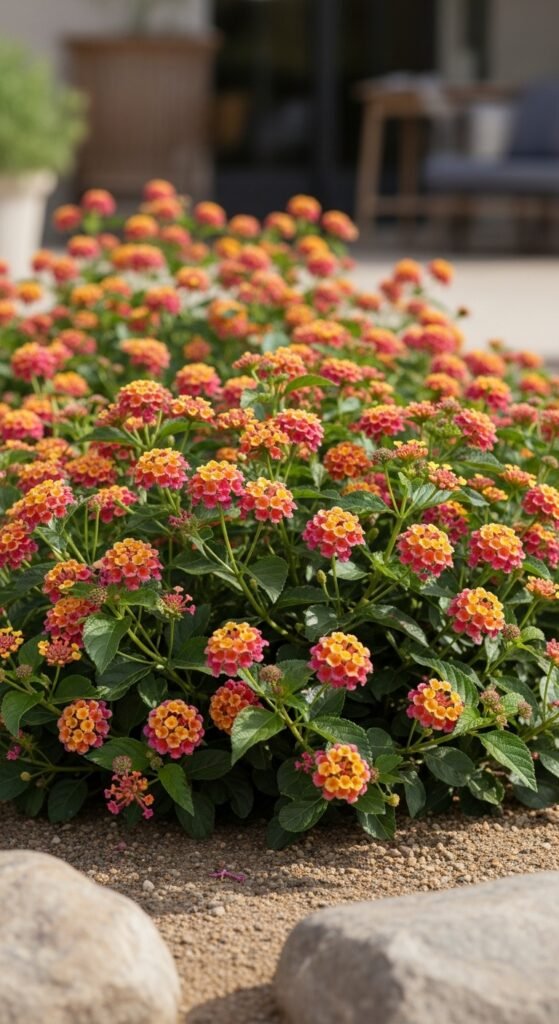
Nuances involve deadheading spent blooms to promote reblooming, and watch for whiteflies in humid areas. Pair it with grasses for contrast. If you’re interested in more sun-loving plants, our post on full sun flowers has great suggestions.
3) Cheerful Zinnia Borders
You can line your garden paths with zinnias, easy-to-grow annuals that offer a rainbow of colors from bright reds to soft pastels. Sow seeds directly in spring after frost in full sun and average soil. Butterflies flock to their flat-topped blooms, which provide easy landing pads and plentiful nectar.
Why zinnias? They deliver quick growth from seed to flower in just weeks, ideal for beginners, and they’re excellent cut flowers too. How: Thin seedlings to 6-18 inches apart, pinch tips for bushier plants, and keep soil moist but not soggy. They’re versatile in beds or pots.
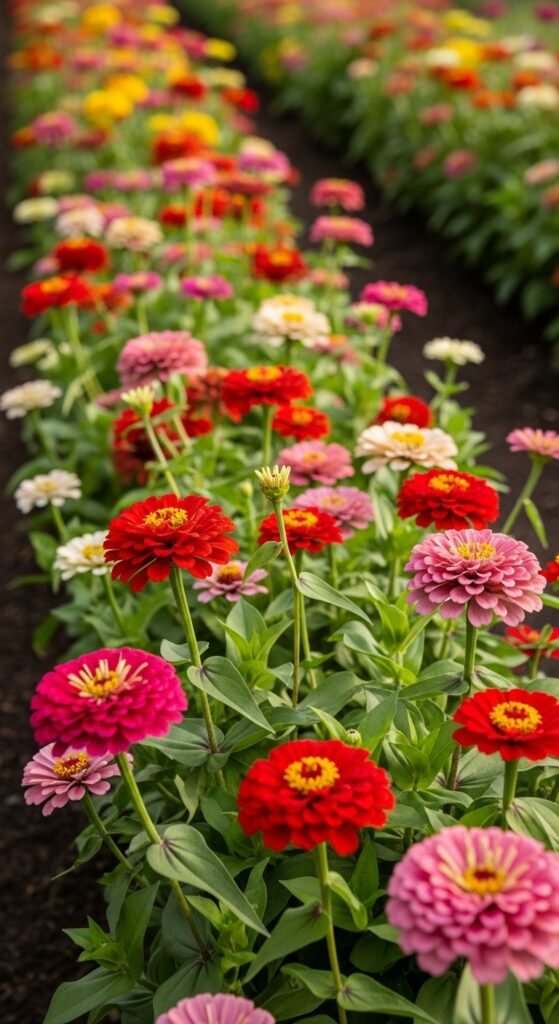
Consider powdery mildew in crowded plantings—space adequately and use resistant varieties. In hot summers, they might need afternoon shade. For deer-prone areas, explore our ideas on deer-resistant flowers to complement your setup.
4) Essential Milkweed Patches
Plant milkweed to support monarch butterflies, as it’s their host plant for laying eggs. Varieties like common or swamp milkweed thrive in full sun to part shade with moist soil, growing as perennials in zones 3-9. The umbel-shaped flowers in pink or orange hues provide nectar for various pollinators.
This choice shines because of its ecological importance, aiding endangered species while adding wild beauty. Start from seeds or transplants, spacing 1-2 feet apart, and avoid pesticides. It’s low-maintenance once established, self-seeding in favorable conditions.
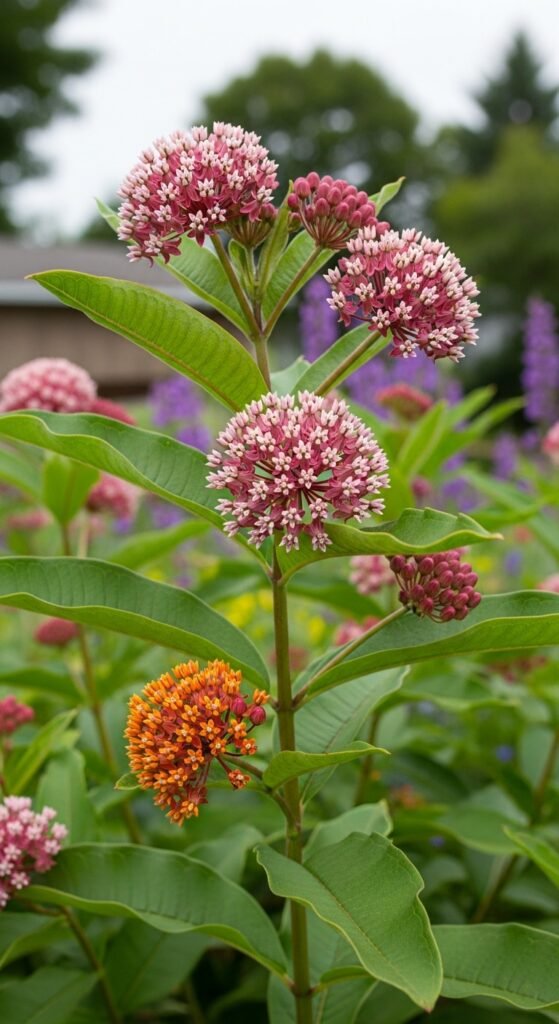
Be aware of its sap, which can irritate skin, and control spread if needed. In urban gardens, container growing works well. For more on attracting wildlife, see our guide to hummingbird flowers.
5) Sturdy Coneflower Stands
Echinacea, or coneflower, forms robust clumps with daisy-like petals in purple, pink, or white, centered by spiky cones. You plant them in full sun with well-drained soil, where they perennialize in zones 3-9, blooming midsummer to fall.
Why opt for coneflowers? Their medicinal roots and seed heads for birds add multifaceted benefits, plus they’re drought-resistant. How: Divide every 3-4 years for vigor, water during dry spells, and deadhead for prolonged blooms. They’re great for prairie-style gardens.
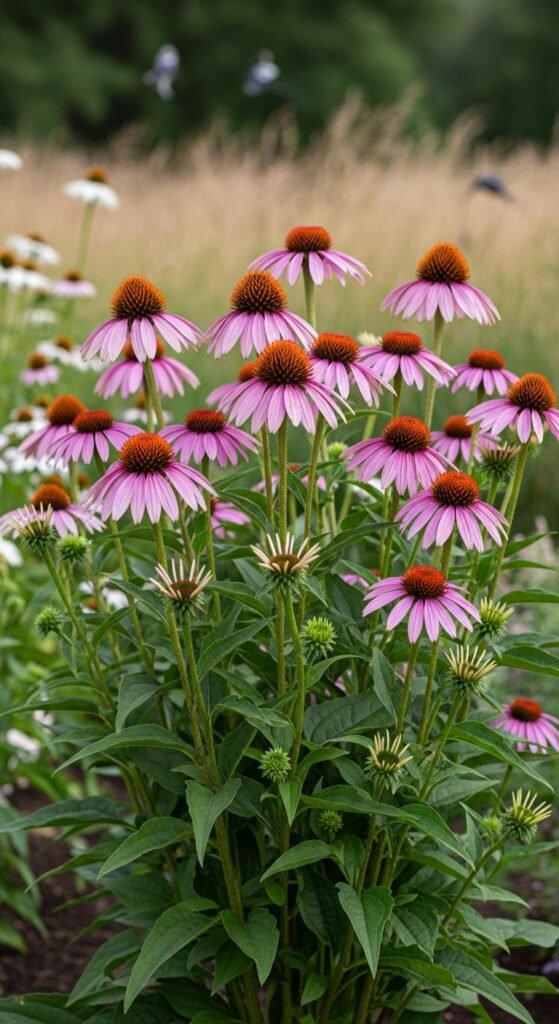
Watch for aster yellows disease in wet conditions. In shade, they may flop, so stake if necessary. Enhance your design with tips from our pollinator garden ideas.
6) Fragrant Lavender Hedges
Create aromatic borders with lavender, a perennial herb with purple spikes that butterflies and bees love. It prefers full sun, alkaline soil, and excellent drainage, hardy in zones 5-9. Prune after flowering to maintain shape.
The appeal lies in its versatile uses, from culinary to crafts, alongside pest-repelling properties. Plant 12-18 inches apart, mulch with gravel, and avoid overwatering to prevent rot. It’s ideal for Mediterranean-inspired landscapes.
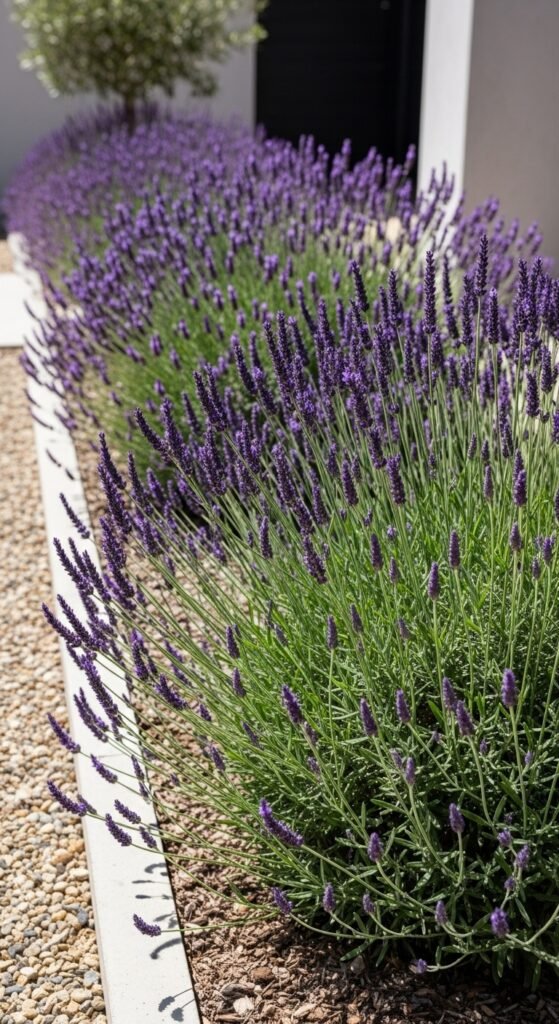
In humid climates, choose English varieties for better tolerance. Over time, replace woody plants. For drought-friendly companions, refer to our article on drought-tolerant flowers.
7) Bold Salvia Spikes
Salvia offers tubular flowers in reds, blues, and purples on upright stems, attracting butterflies with its nectar. Grow as perennials or annuals in full sun and well-drained soil, zones varying by species.
Why salvia? It provides extended blooming with little care, resisting deer and heat. Sow or transplant in spring, spacing 1-3 feet, and cut back for reblooms. Use in mixed borders or as accents.
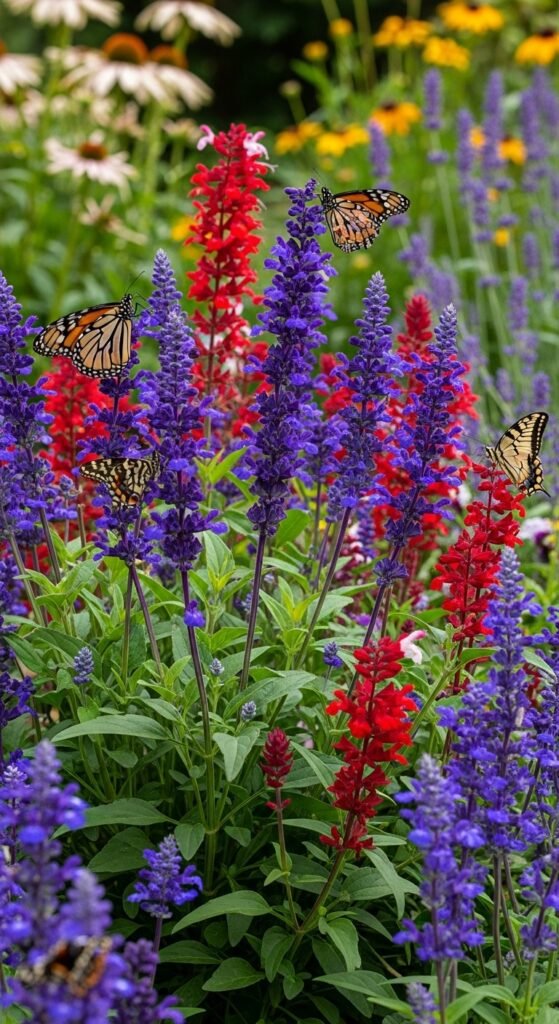
Some types self-seed prolifically—manage if undesired. In cold areas, mulch roots. Explore fragrant options in our fragrant flowers post.
8) Delicate Aster Clouds
Asters form bushy plants with star-shaped flowers in fall, in colors like purple and pink. Plant in full sun to part shade with moist soil, perennial in zones 3-8.
This fall bloomer extends your garden’s season with late nectar sources. Divide every few years, pinch for compactness, and support tall varieties. They’re perfect for naturalizing areas.
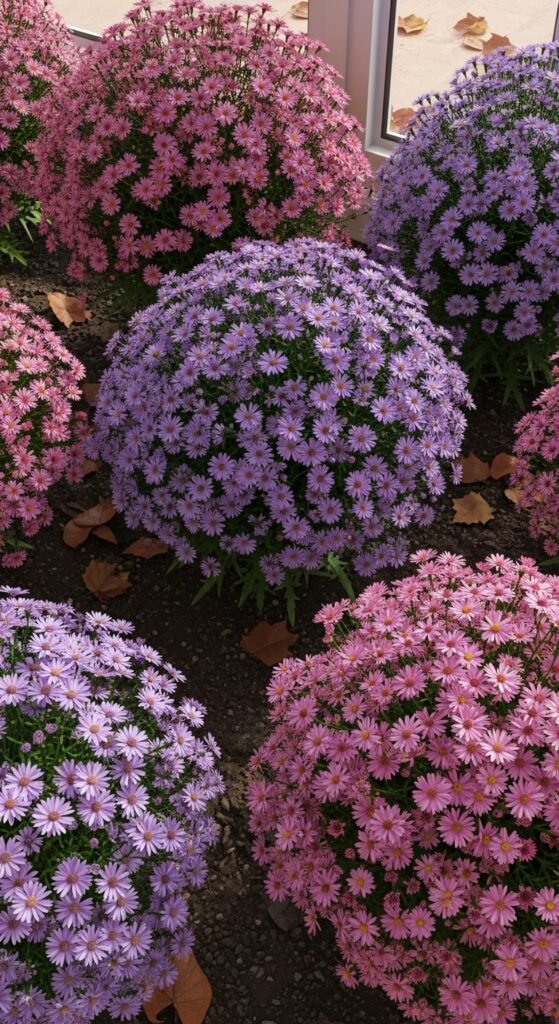
Prevent mildew with good air flow. In dry spells, supplemental water helps. For shade alternatives, check shade flowers.
9) Trailing Verbena Cascades
Verbena spills over edges with clustered blooms in vibrant hues, ideal for hanging baskets. Full sun and moderate water suit this annual or perennial (zones 8-11).
Its spreading habit covers ground effectively, deterring weeds. Trim regularly for bushiness, fertilize lightly. Great for containers or rockeries.
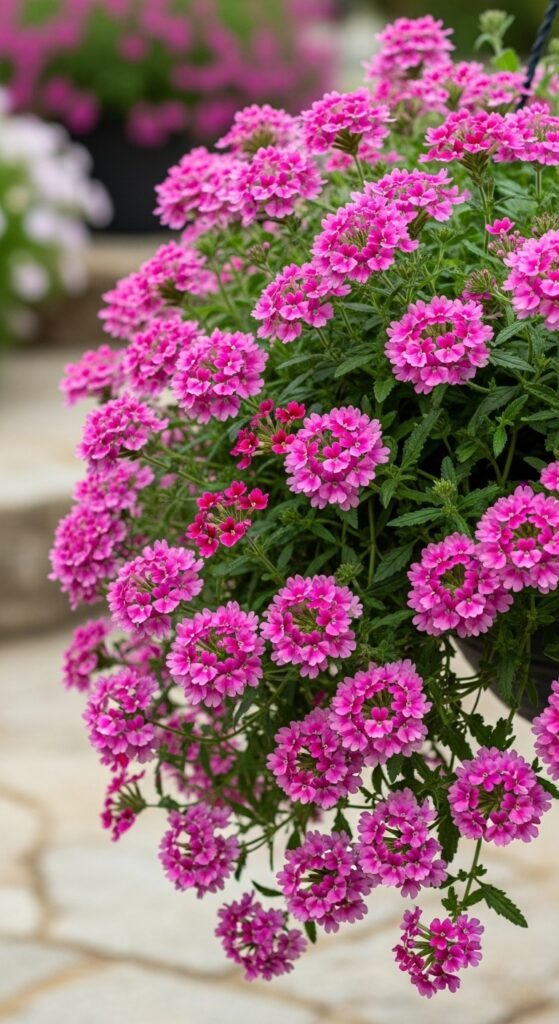
Avoid soggy soil to prevent rot. In hot climates, afternoon shade prevents scorch. Pair with our ideas on hanging basket flowers.
10) Tall Phlox Panicles
Phlox produces fragrant, dome-shaped flower heads in summer, in whites to deep purples. Full sun to part shade, rich soil, zones 4-8.
Why phlox? It brings height and scent, enhancing borders. Stake tall types, divide periodically, and mulch for moisture retention.
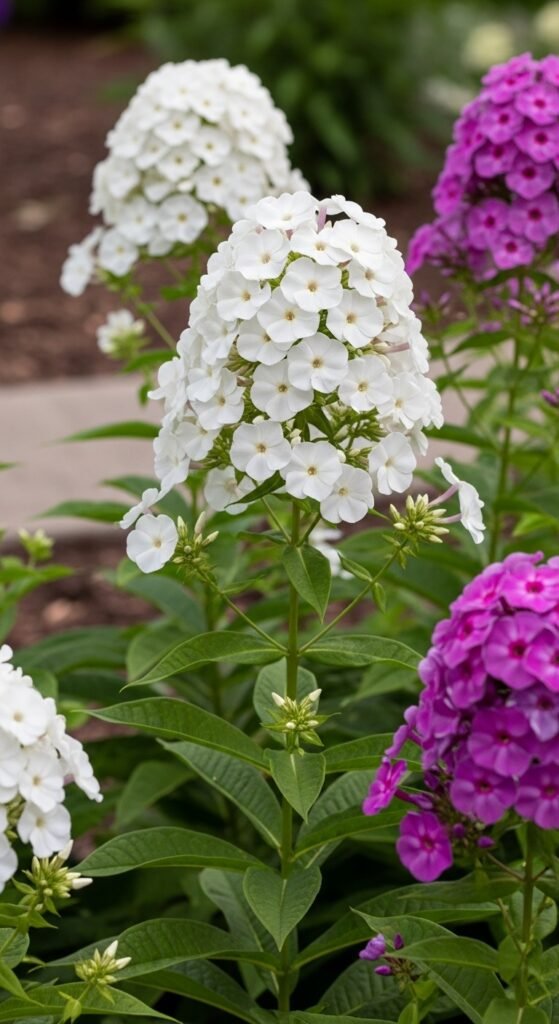
Mildew-resistant cultivars exist for humid areas. Deadhead for repeat blooms. For more perennials, see roses.
11) Spicy Bee Balm Tufts
Monarda, or bee balm, features shaggy flowers in reds and pinks, aromatic foliage. Full sun, moist soil, zones 4-9.
Its medicinal leaves for teas add utility. Space 18-24 inches, thin for air circulation to avoid mildew.
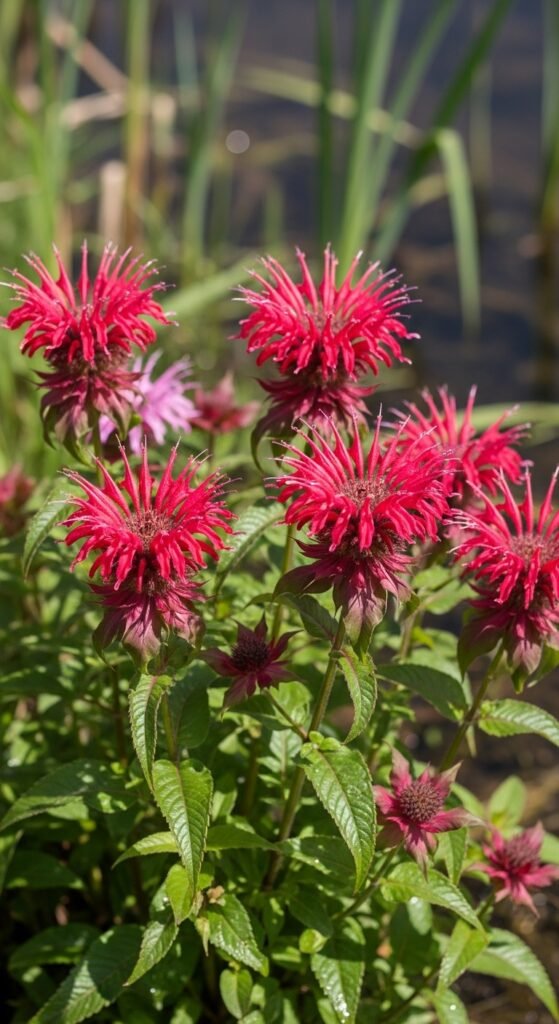
In dry regions, irrigate regularly. Attracts multiple pollinators. Related to our bee-friendly plants list.
12) Sunny Black-Eyed Susan Daisies
Rudbeckia offers golden petals around dark centers, blooming summer to fall. Full sun, average soil, zones 3-9.
Durable and self-seeding, it’s low-maintenance. Sow seeds or divide, water during establishment.
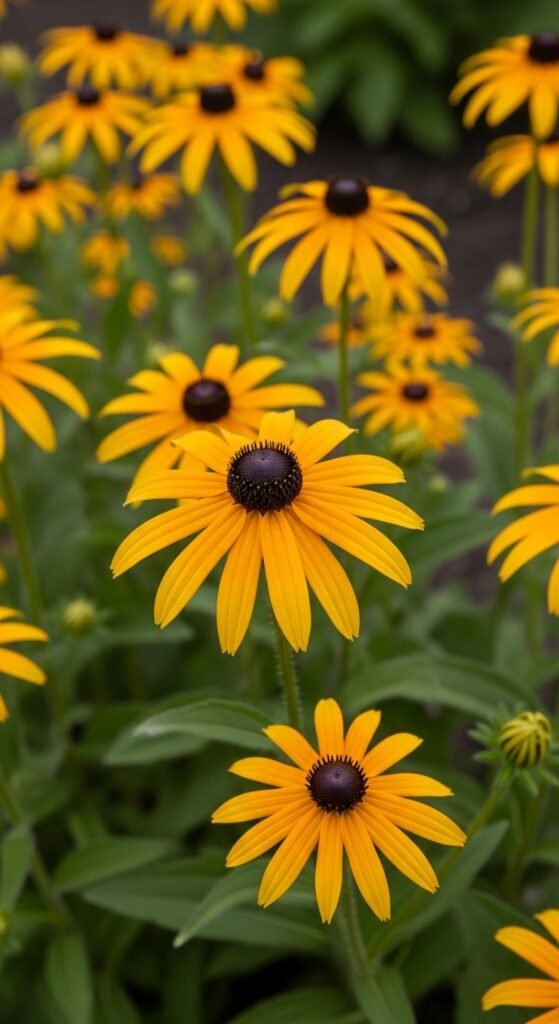
Tolerates poor soil but flowers best in fertile ground. For sun gardens, link to sunflowers.
13) Majestic Joe-Pye Weed Towers
This native perennial towers with pink-mauve flower domes, loving moist soil and full sun, zones 4-9.
It supports large butterfly populations in wetland-like areas. Plant in groups, cut back in spring.
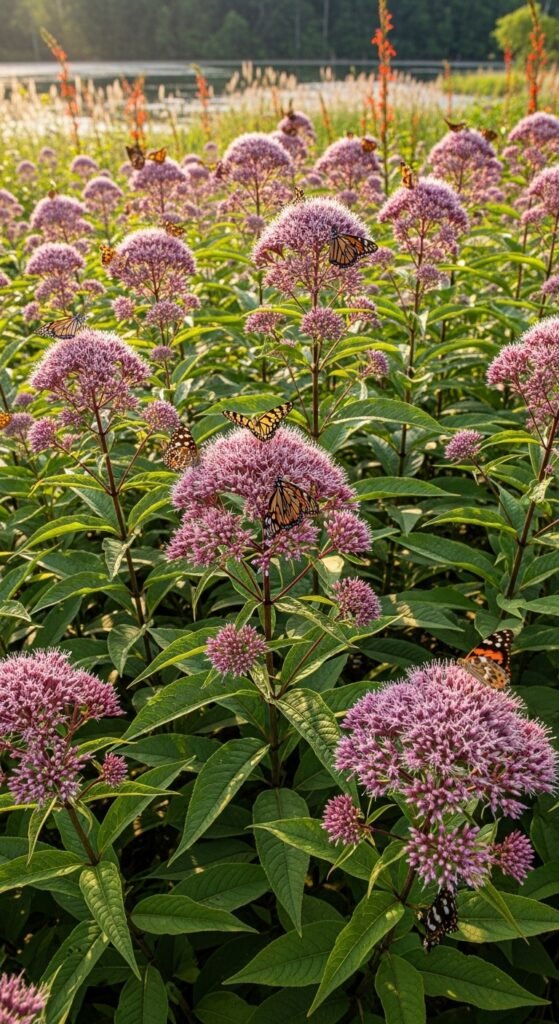
Can spread—contain if needed. Ideal for rain gardens.
14) Succulent Sedum Mats
Sedum forms low-growing mats with star flowers in fall, drought-tolerant in full sun, zones 3-9.
Its fleshy leaves store water, perfect for rock gardens. Propagate by division, minimal care required.
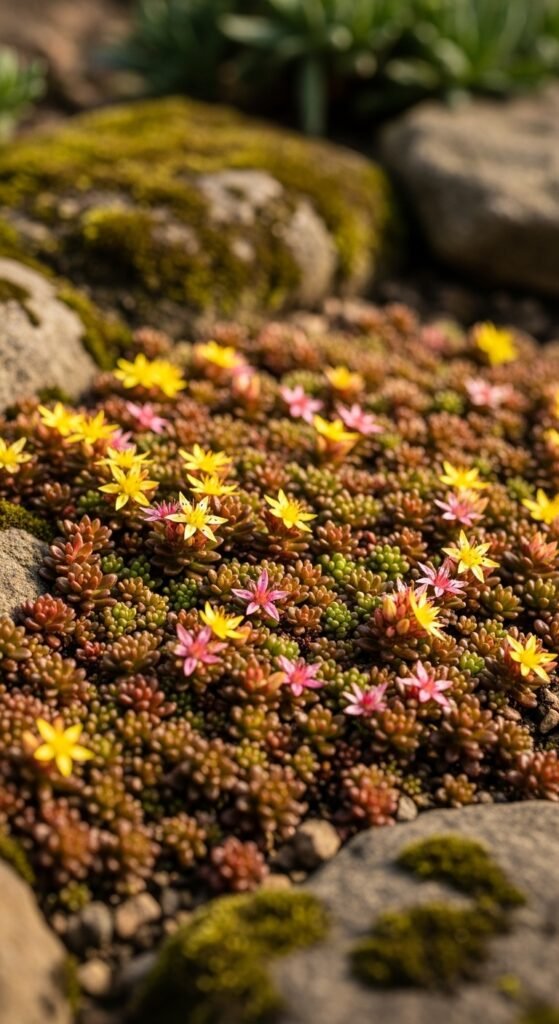
Excellent groundcover. For dry conditions, see drought-tolerant flowers.
15) Hardy Yarrow Flats
Yarrow’s flat-topped clusters in various colors attract butterflies, full sun, dry soil, zones 3-9.
Medicinal and ornamental, it’s versatile. Shear after first bloom for reblooming.
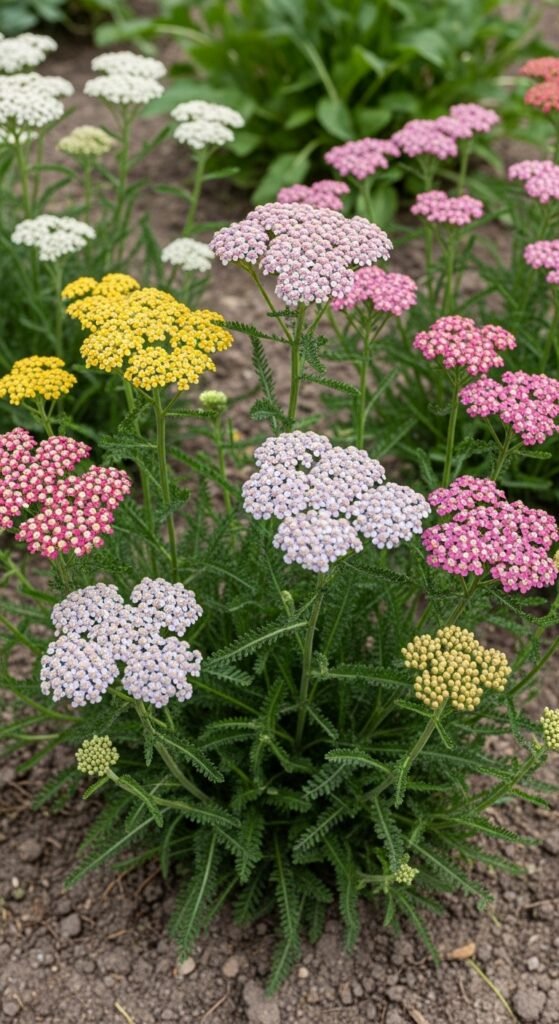
Tolerates poor soil, deer-resistant. Great for borders.
Key Principles for Successful Butterfly Gardening
Choosing the Right Location
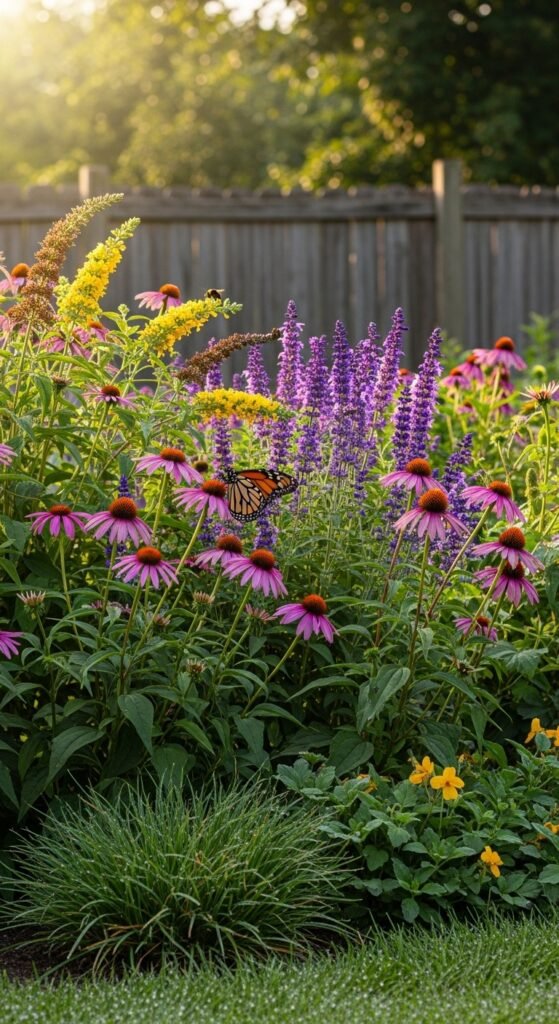
Select sunny spots protected from wind, as butterflies need warmth to fly. Aim for 6+ hours of sunlight daily.
Planting and Maintenance Tips
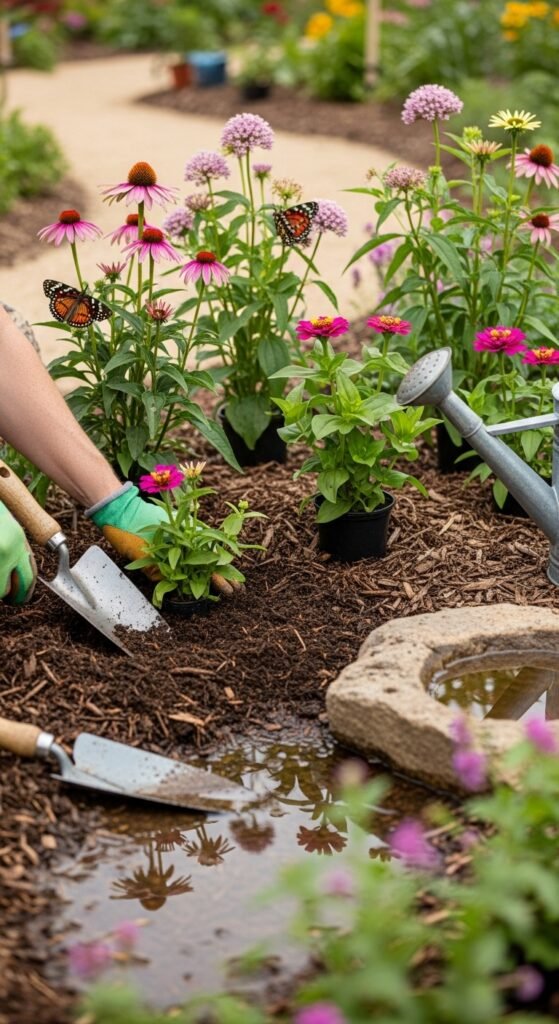
Group plants by color and height, avoid chemicals, and provide water sources like shallow puddles.
Enhancing Biodiversity
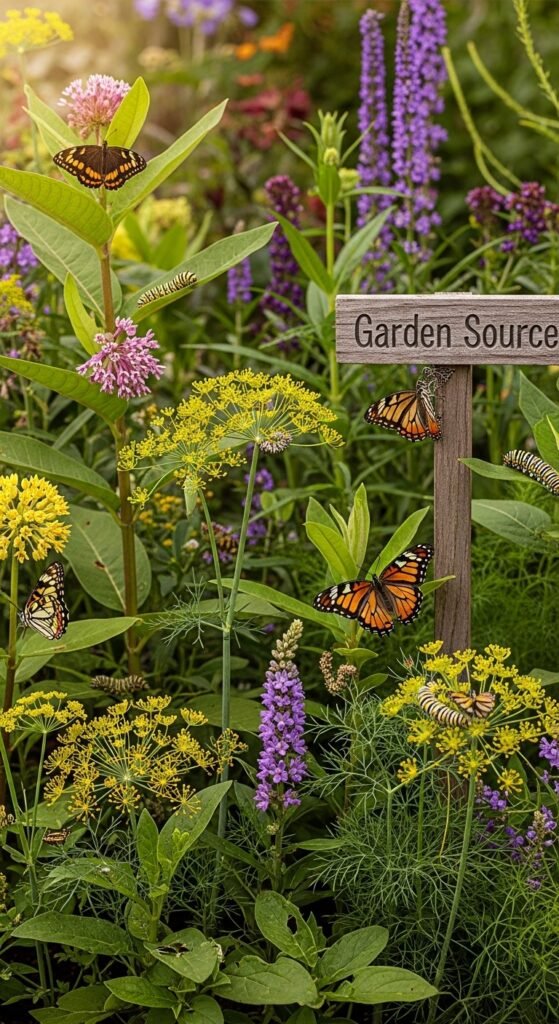
Incorporate host plants and natives to support full life cycles, fostering a balanced ecosystem.
Frequently Asked Questions
What are butterfly flowers?
Butterfly flowers are blooms rich in nectar and with landing platforms that attract and nourish butterflies, supporting their populations.
How do I start a butterfly garden?
Begin by researching local species, choosing sunny areas, and planting a mix of nectar and host plants for year-round appeal.
Are butterfly flowers easy to grow?
Many are low-maintenance, thriving with basic care like proper watering and soil preparation, suitable for various skill levels.
Can I grow butterfly flowers in pots?
Yes, container gardening works well for smaller spaces, using well-draining soil and selecting compact varieties.
What if my garden is shady?
Opt for shade-tolerant options like asters or bee balm, which still attract butterflies with partial sun exposure.