Blue flowers bring a sense of calm and serenity to any garden, creating a cool, tranquil oasis amid the greenery. Whether you’re aiming for a peaceful retreat or a pop of color that stands out, incorporating blue blooms can transform your outdoor space. These hues are rare in nature, making them a unique choice that draws the eye and complements other colors beautifully.
You’ll find that blue flowers not only enhance aesthetics but also attract pollinators like bees and butterflies, supporting your garden’s ecosystem. From perennials that return year after year to annuals that provide quick bursts of color, there’s a variety to suit every skill level and climate. Dive into these ideas to discover how you can infuse your landscape with captivating blue tones.
Starting with the basics, consider your garden’s conditions—sun exposure, soil type, and water needs—to ensure success. With the right selections, you’ll enjoy a flourishing display that evokes the sky and sea right in your backyard.
1) Hydrangea Blooms
Hydrangeas are versatile shrubs known for their large, showy flower heads that can turn a brilliant blue with the right soil conditions. These plants thrive in partial shade and moist, well-drained soil, making them ideal for borders or as focal points in your garden. Their ability to change color based on pH levels adds an element of fun—you can adjust the soil to achieve that perfect blue shade.
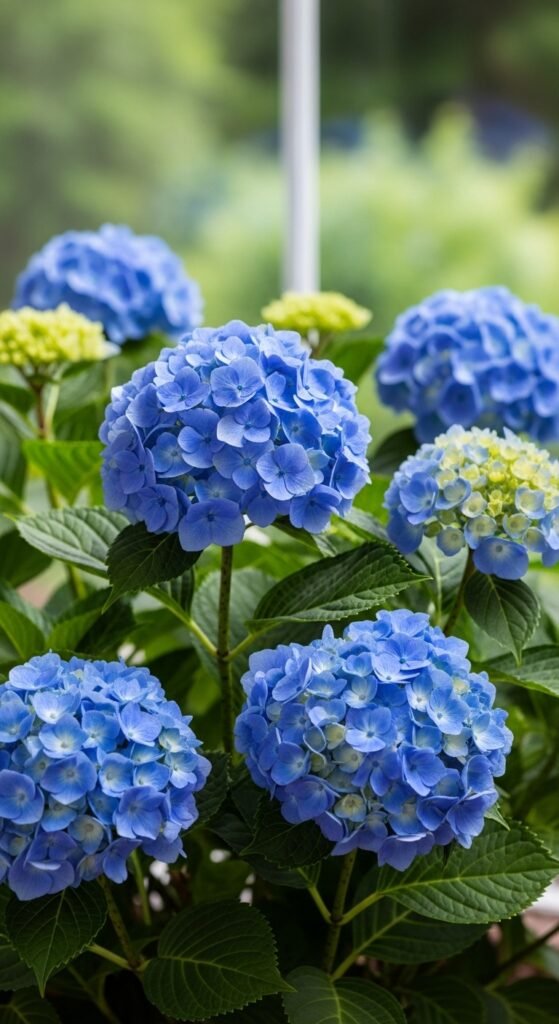
Why choose hydrangeas? They offer long-lasting blooms from summer to fall, providing continuous interest. Plus, they’re relatively low-maintenance once established, attracting pollinators and adding volume to your landscape. For more details on caring for these beauties, check out our guide on hydrangeas.
To grow them successfully, plant in spring or fall, spacing them 3-10 feet apart depending on the variety. Water deeply but infrequently, and apply mulch to retain moisture. Prune in late winter to encourage new growth, ensuring a spectacular display year after year.
2) Delphinium Spires
Delphiniums feature tall, elegant spires of densely packed blue flowers, perfect for adding height and drama to your borders. These perennials prefer full sun and rich, fertile soil, blooming in early summer and sometimes again in fall if deadheaded promptly.
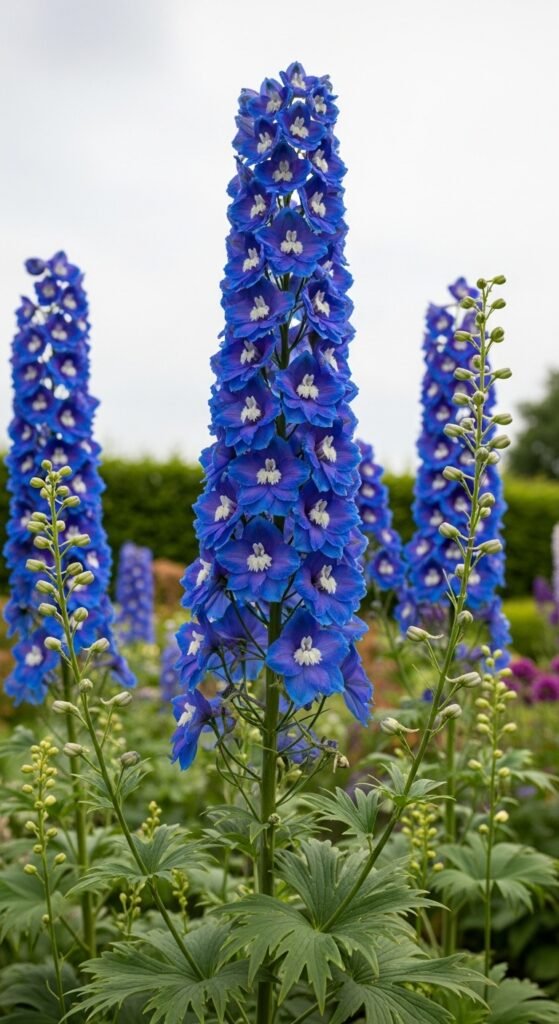
Their striking vertical form makes them a favorite for cottage gardens, where they create a sense of depth and movement. Bees adore them, boosting your garden’s biodiversity. If you’re interested in tall perennials, explore our article on delphiniums for expert tips.
Plant seeds or transplants in spring, staking taller varieties to prevent wind damage. Water consistently, especially during dry spells, and fertilize with a balanced formula in early growth stages. With proper care, you’ll enjoy their majestic blooms that tower gracefully over other plants.
3) Salvia Perennials
Salvias, or sage plants, offer spikes of vibrant blue flowers that attract hummingbirds and butterflies. These drought-tolerant perennials thrive in full sun and well-drained soil, making them suitable for xeriscape gardens or hot, dry areas.
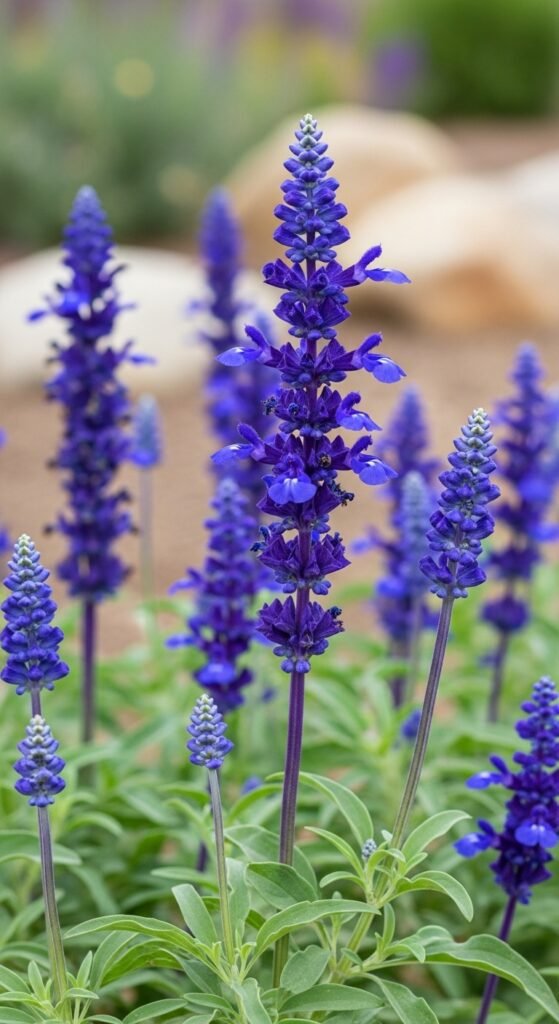
Choose salvia for its aromatic foliage and extended bloom time, often lasting from spring through frost. It’s a resilient choice that requires minimal water once established, saving you time and resources. Learn more about incorporating salvia in our dedicated post on salvia.
To cultivate, sow seeds indoors or plant divisions in spring. Trim back after flowering to encourage bushier growth and more blooms. Their spicy scent also deters deer, adding practical benefits to their visual appeal in your garden setup.
4) Lobelia Cascades
Lobelia produces masses of small, intense blue flowers that cascade beautifully from containers or edges. This annual loves partial shade and moist soil, ideal for hanging baskets or window boxes where it can trail elegantly.
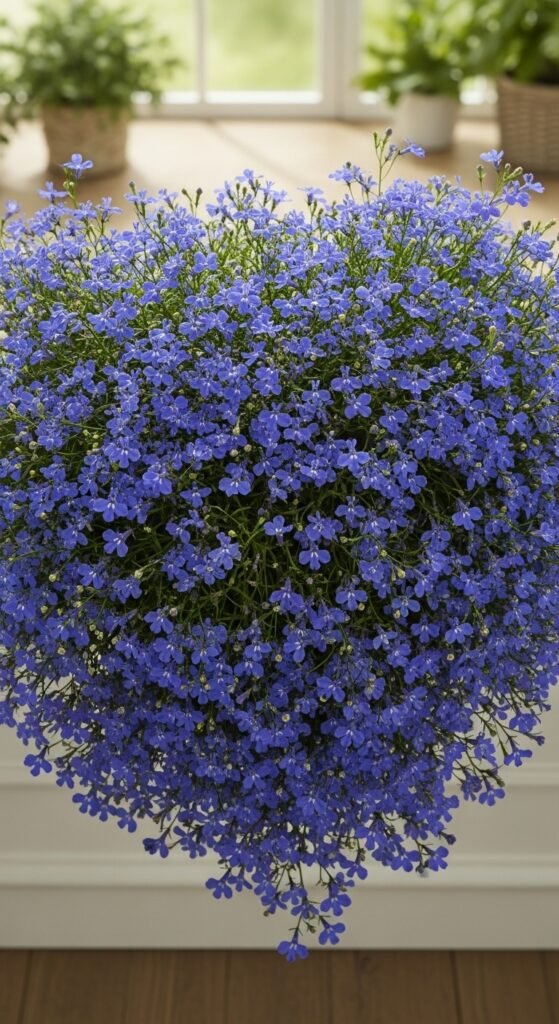
Its prolific blooming throughout summer makes it a go-to for instant color. Easy to grow from seed, it pairs well with other shade lovers, creating lush, layered displays. For shade-tolerant options, see our insights on shade flowers.
Start seeds indoors 8-10 weeks before the last frost, then transplant outdoors. Keep soil consistently damp and pinch tips for fuller plants. You’ll appreciate how it fills spaces with a sea of blue, enhancing patios or shaded corners effortlessly.
5) Cornflower Charm
Cornflowers, also known as bachelor’s buttons, boast ruffled blue petals on wiry stems, evoking wildflower meadows. These annuals prefer full sun and average soil, self-seeding for future seasons with minimal effort.
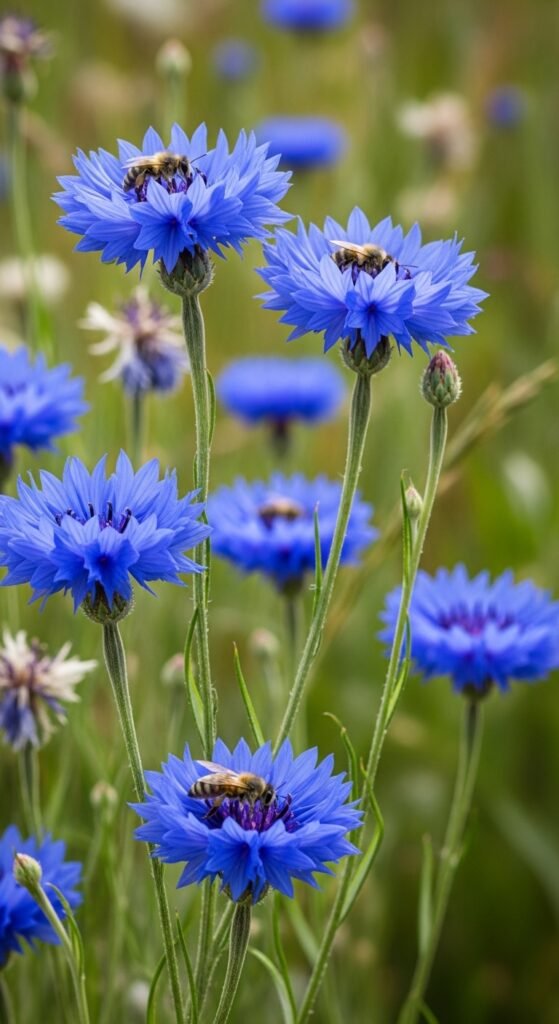
Opt for cornflowers due to their edible petals and pollinator appeal, adding both beauty and functionality. They’re drought-resistant once established, perfect for low-water gardens. Discover more annual ideas in our guide to annual flowers.
Sow seeds directly in the ground after frost danger passes, thinning seedlings to 6-12 inches apart. Deadhead to prolong blooming, and enjoy cutting them for fresh bouquets. Their nostalgic vibe brings a touch of countryside to urban plots.
6) Forget-Me-Not Delicacy
Forget-me-nots feature tiny, sky-blue flowers with yellow centers, forming dense clusters in spring. These biennials or short-lived perennials thrive in moist, shady spots, naturalizing easily under trees or along streams.
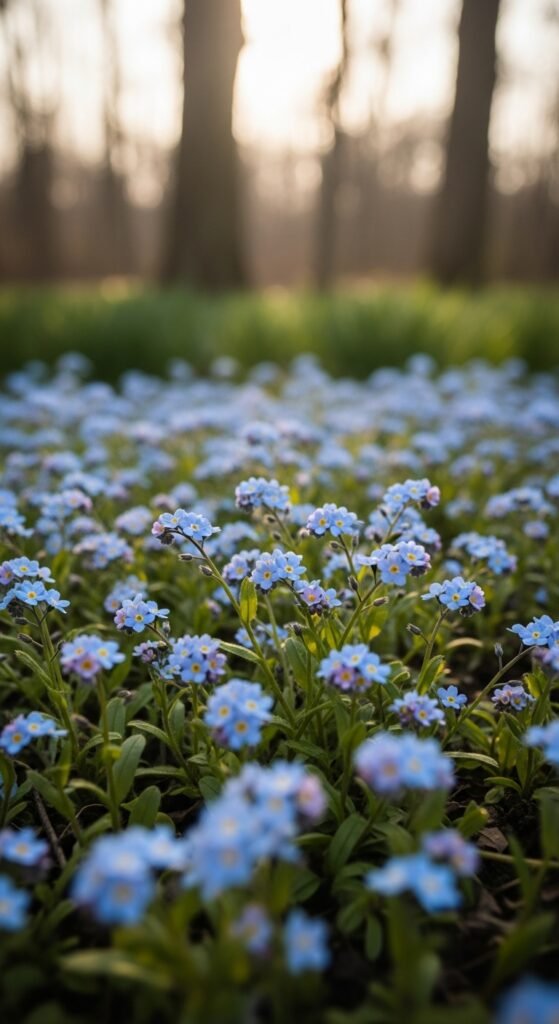
Their symbolic meaning of remembrance adds emotional depth, while they spread gently to cover ground. Ideal for woodland gardens, they attract beneficial insects. For perennial inspirations, check our overview of perennial flowers.
Scatter seeds in fall for spring blooms, keeping soil damp during germination. They require little maintenance, reseeding themselves for ongoing displays. You’ll love how they soften hardscapes with their soft, romantic allure.
7) Bluebell Woodlands
Bluebells create carpets of nodding, bell-shaped blue flowers in spring, perfect for woodland or shaded areas. These bulbs prefer rich, moist soil and partial shade, multiplying over time for stunning mass effects.
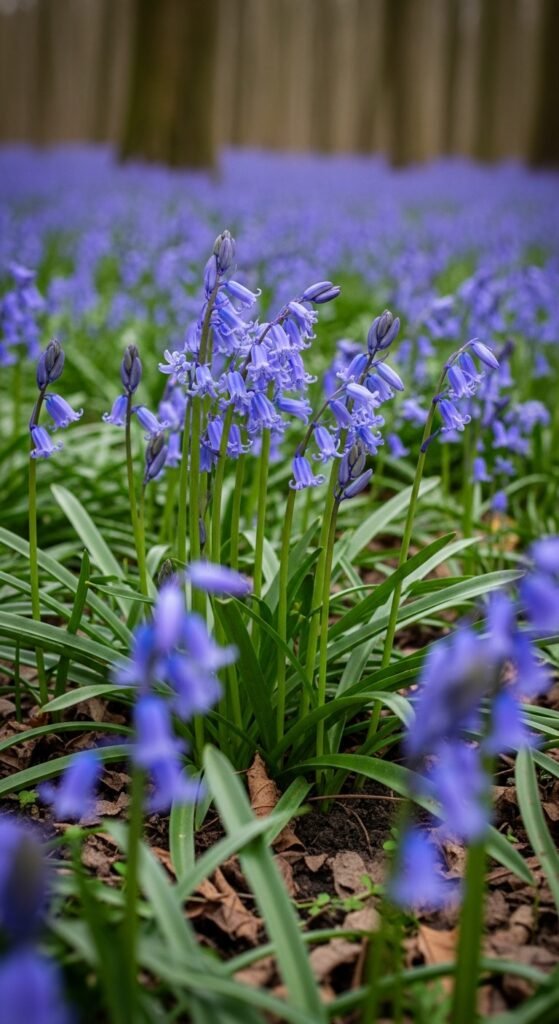
Select bluebells for their enchanting fragrance and naturalizing habit, transforming underused spaces into magical retreats. They’re deer-resistant and low-care. Explore spring bloomers in our article on spring flowers.
Plant bulbs in fall, 4 inches deep and 4-6 inches apart. Avoid disturbing once established, and let foliage die back naturally. Their ethereal presence evokes ancient forests right in your yard.
8) Iris Elegance
Irises display sword-like leaves and intricate blue flowers on tall stems, blooming in late spring. These perennials favor full sun and well-drained soil, suitable for borders or water features.
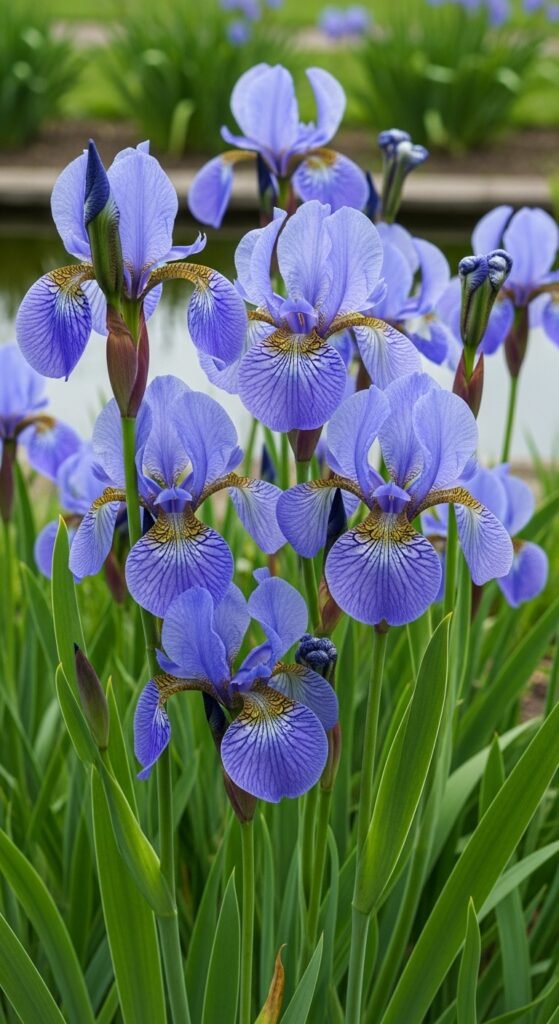
Their architectural form and variety of shades make them a design staple. Some are reblooming, extending the show. For sun-loving plants, refer to our tips on full sun flowers.
Divide rhizomes every 3-5 years in late summer, planting just below the surface. Water during dry periods and fertilize sparingly. You’ll admire their graceful blooms that add sophistication to any setting.
9) Agapanthus Clusters
Agapanthus, or lily of the Nile, produces globe-shaped clusters of blue trumpet flowers atop sturdy stems. These perennials thrive in full sun and fertile soil, excellent for pots or borders in warmer climates.
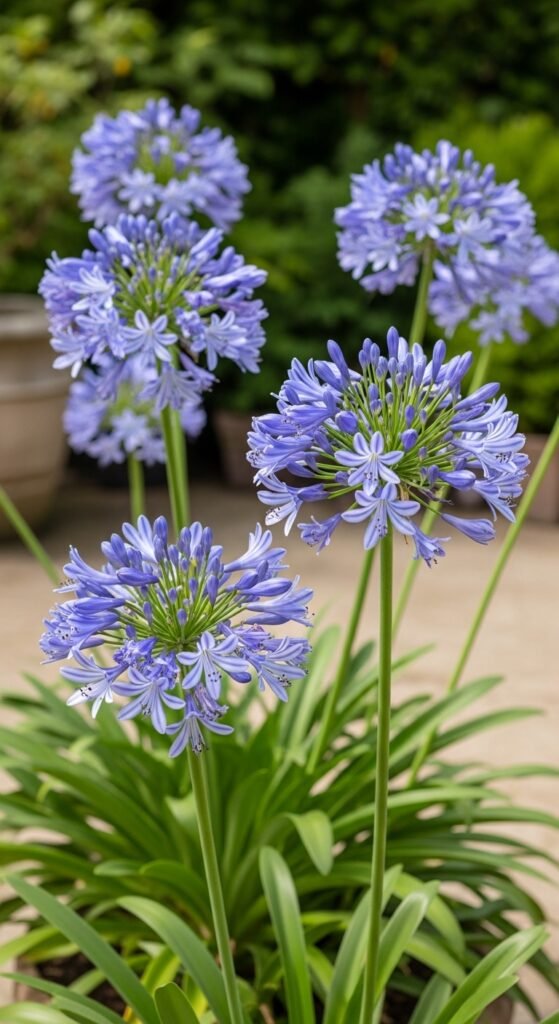
Choose them for their bold structure and summer-long interest, attracting pollinators. They’re heat-tolerant and make great cut flowers. Learn about pollinator-friendly choices in our post on pollinator flowers.
Plant tubers in spring, spacing 12-18 inches apart. Water regularly and deadhead spent blooms. In colder areas, overwinter indoors for reliable performance year after year.
10) Morning Glory Vines
Morning glories are vigorous vines with heart-shaped leaves and trumpet-shaped blue flowers that open at dawn. These annuals love full sun and moderate soil, quickly covering trellises or fences.
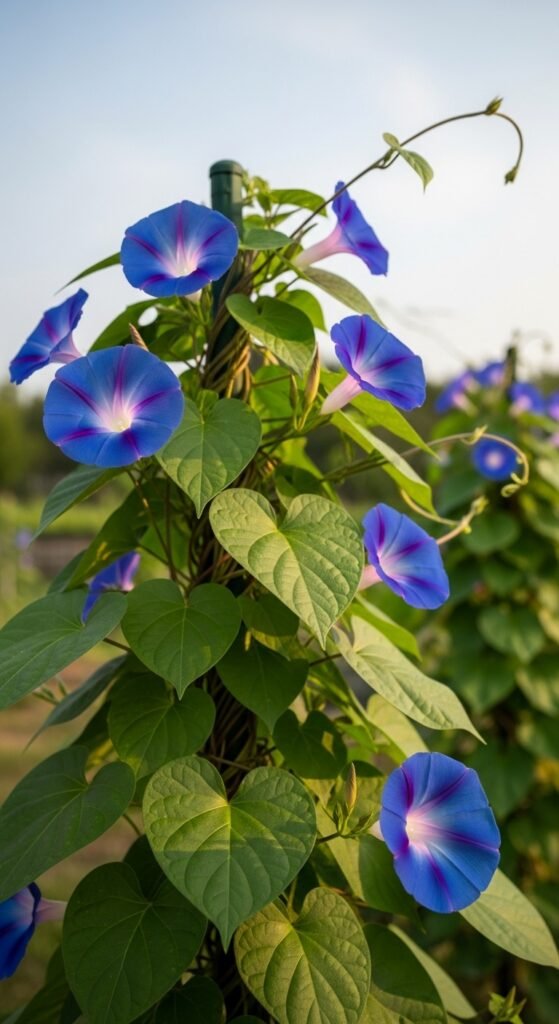
Their rapid growth and daily bloom cycle provide quick screening and color. Self-seeding, they return effortlessly. For climbing options, see our guide to clematis, which pairs well.
Sow seeds after soaking, directly where they’ll grow. Provide support and water evenly. You’ll enjoy their cheerful greetings each morning, adding vertical interest to your space.
11) Clematis Climbers
Clematis vines offer large, star-shaped blue flowers that adorn walls or arbors. These perennials prefer full sun on tops and shade on roots, with rich, moist soil for best results.
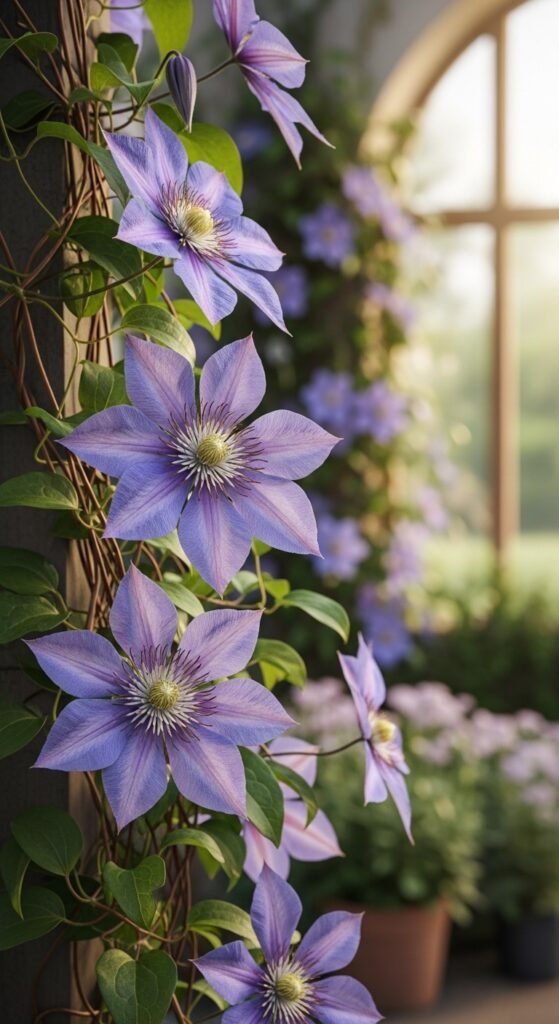
Opt for clematis due to its versatile varieties and extended blooming. It intertwines beautifully with roses or shrubs. Dive deeper into vines with our article on clematis.
Plant in spring, mulching roots to keep cool. Prune according to group type for optimal flowers. Their climbing habit maximizes space, creating living walls of blue.
12) Ageratum Fluff
Ageratum features fluffy, powder-blue flower clusters that resemble pom-poms. This annual excels in full sun to partial shade and average soil, edging paths or filling containers.
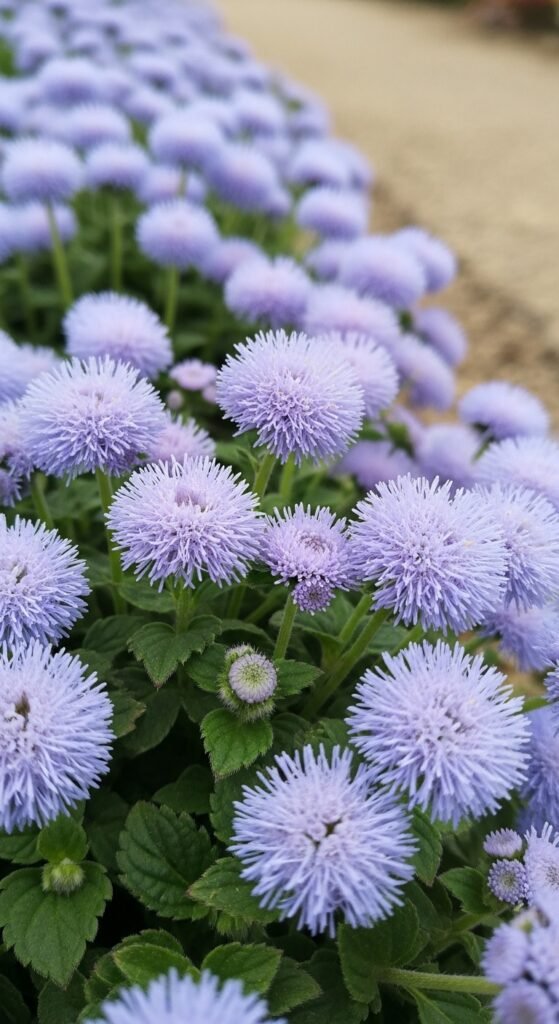
Its compact size and continuous blooms make it ideal for borders. Heat-tolerant, it thrives in summer. For more annuals, explore our selection of annual flowers.
Sow seeds indoors or buy transplants, spacing 6-12 inches. Pinch for bushiness and water moderately. You’ll value its soft texture that softens hard edges in your garden.
13) Veronica Spikes
Veronicas produce slender spikes of tiny blue flowers, adding vertical accents to beds. These perennials prefer full sun and well-drained soil, blooming repeatedly if sheared back.
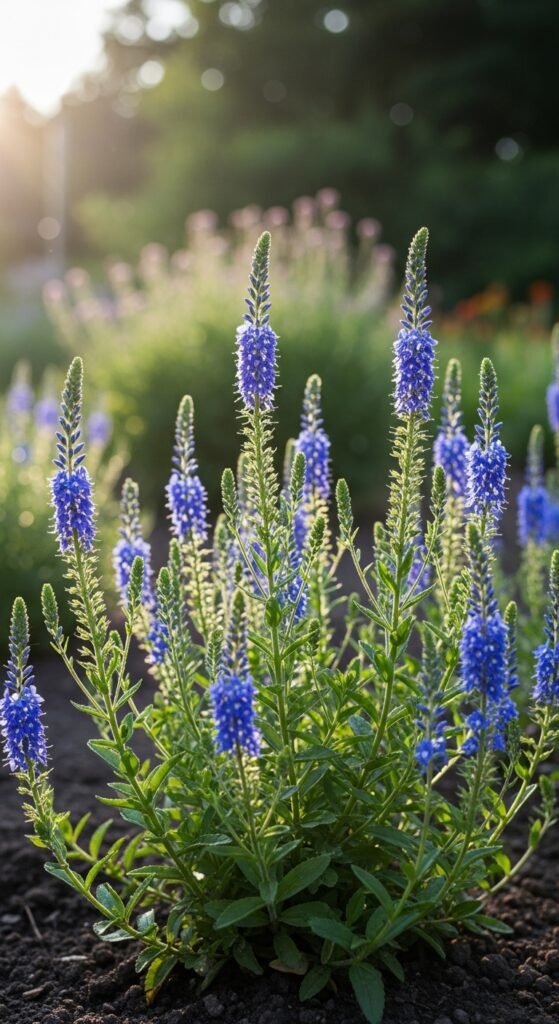
Select veronica for its long season and pollinator draw. It’s deer-resistant and low-maintenance. Check out perennial care in our comprehensive guide to perennial flowers.
Plant in spring, dividing every few years. Water during establishment and fertilize lightly. Their spiky form contrasts nicely with rounded blooms nearby.
14) Plumbago Shrubs
Plumbago bears clusters of sky-blue flowers on arching stems, suitable for groundcover or hedges. This perennial shrub loves full sun and sandy soil, tolerating heat and drought.
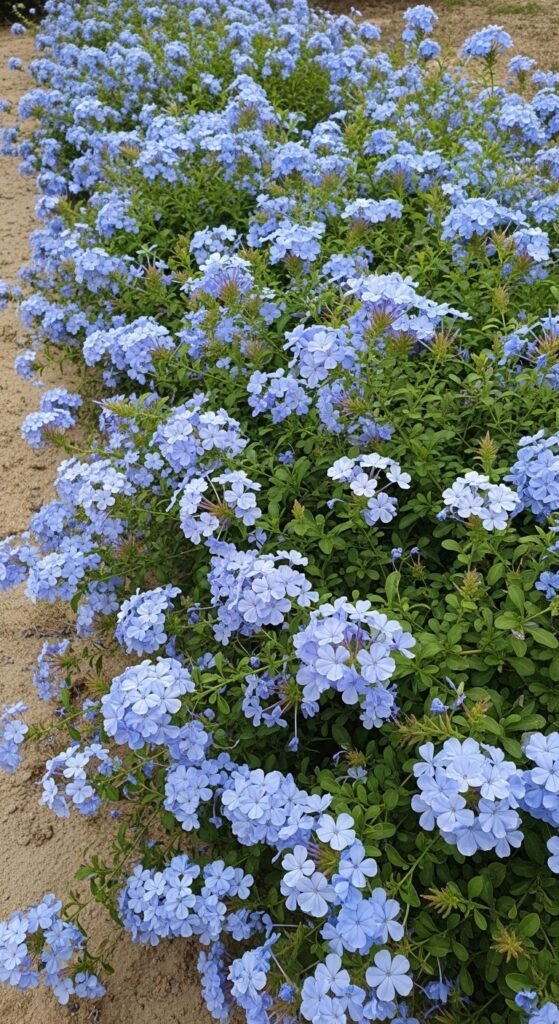
Its spreading habit and profuse flowering cover slopes effectively. Butterfly magnet, it enhances wildlife gardens. For sun enthusiasts, see our ideas on full sun flowers.
Propagate from cuttings or plant in spring. Prune to shape and promote blooms. You’ll appreciate its cascading blue waves that brighten sunny spots.
15) Scabiosa Pincushions
Scabiosas, or pincushion flowers, display domed blue blooms with protruding stamens. These perennials thrive in full sun and alkaline soil, attracting butterflies and making excellent cut flowers.
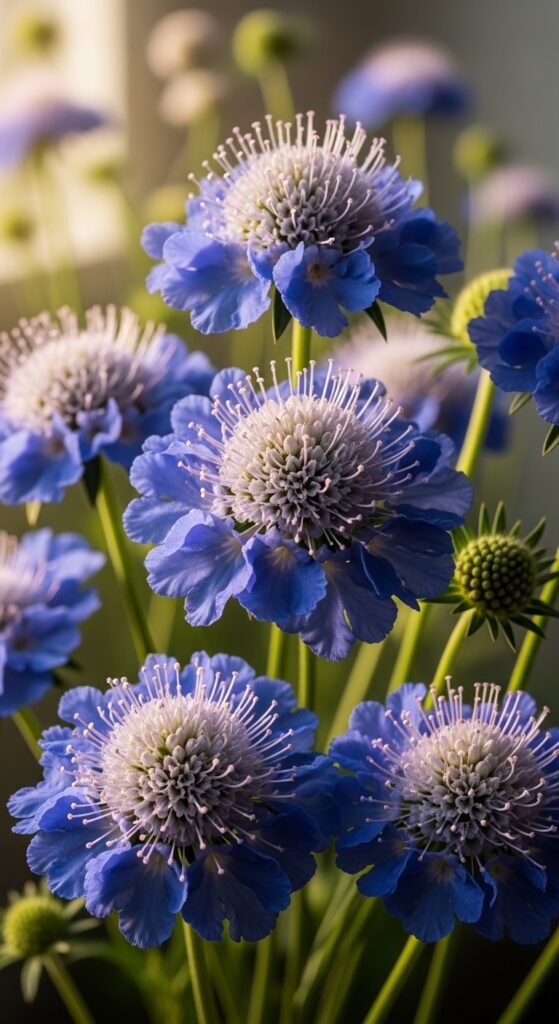
Choose scabiosa for its unique texture and extended vase life. It’s easy to grow and drought-tolerant. For cutting garden tips, refer to our layout suggestions in cut flower garden layout.
Sow seeds or transplant in spring, deadheading regularly. Space 12-18 inches and water sparingly. Their whimsical form adds playfulness to formal or wild gardens alike.
Key Principles for Growing Blue Flowers
Soil and pH Management
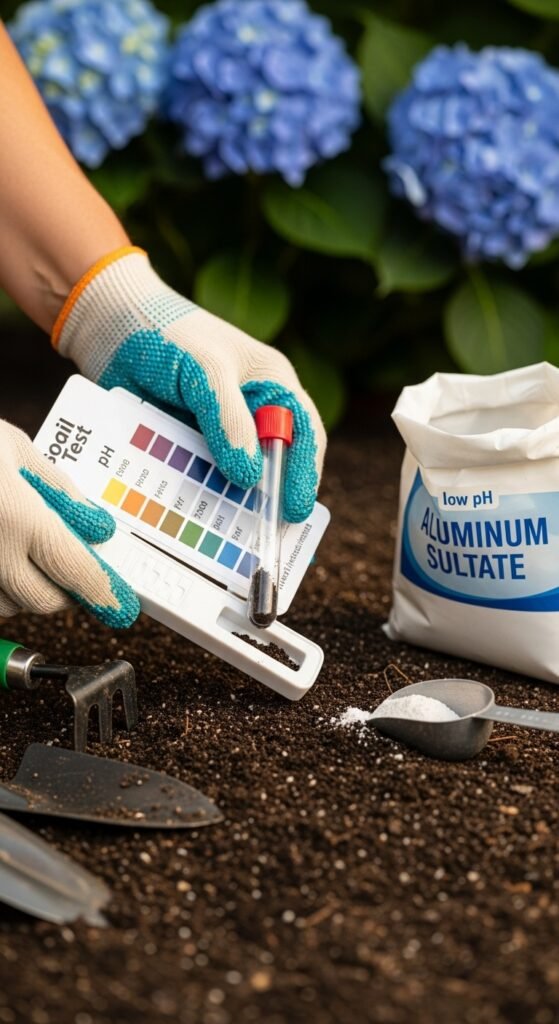
Many blue flowers, like hydrangeas, require acidic soil to maintain their color. Test your soil and amend with aluminum sulfate if needed. You can achieve vibrant hues by monitoring and adjusting pH levels annually.
Sunlight and Placement
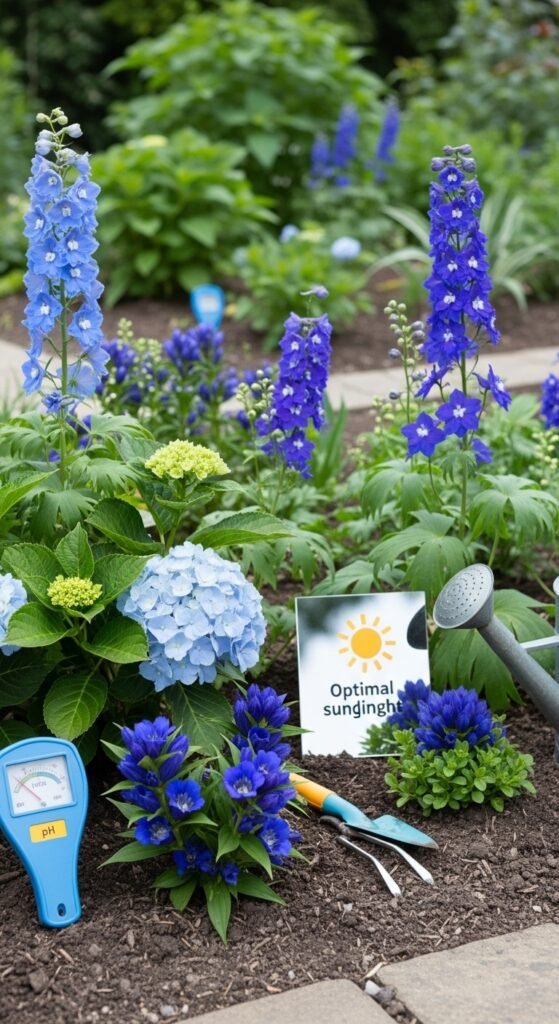
Position your blue blooms according to their needs—full sun for salvia, shade for forget-me-nots. Proper placement ensures healthy growth and maximizes flower production throughout the season.
Watering and Maintenance Tips
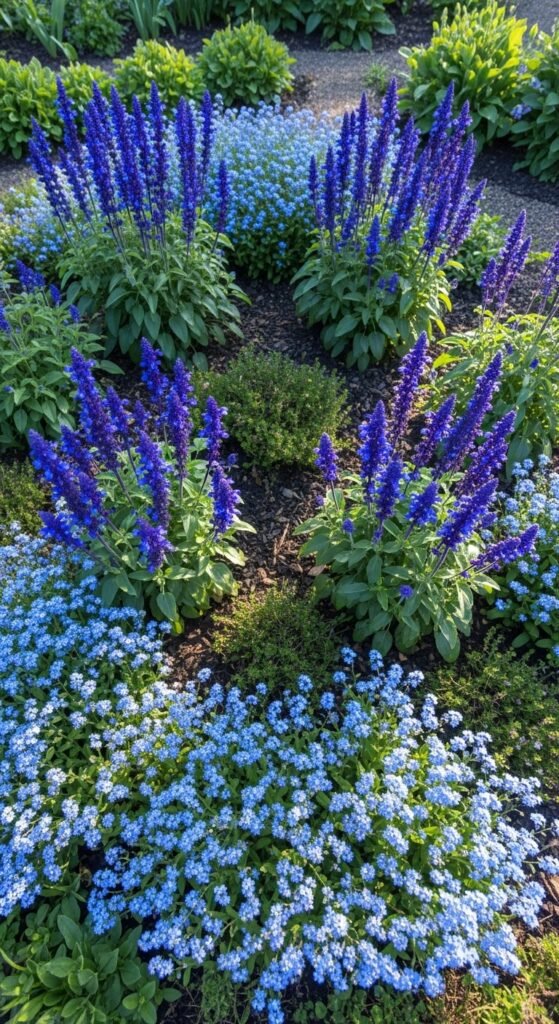
Consistent moisture is key, but avoid overwatering to prevent root rot. Mulch around plants to conserve water and suppress weeds, making your gardening routine more efficient.
Frequently Asked Questions
What makes flowers blue?
Blue pigmentation in flowers comes from anthocyanins, influenced by soil pH and genetics. Acidic conditions often enhance blue tones in certain varieties.
Can I grow blue flowers in pots?
Yes, many blue flowers like lobelia and agapanthus thrive in containers. Choose pots with good drainage and appropriate soil mix for success.
Are blue flowers rare?
True blue is less common in nature due to pigment challenges, but selective breeding has increased options for gardeners.
How do I attract pollinators with blue flowers?
Plant a mix of blue blooms with varying shapes and heights. They naturally draw bees and butterflies seeking nectar.
When should I plant blue flower bulbs?
Plant spring-blooming bulbs like bluebells in fall, allowing them to establish roots before winter for robust displays.