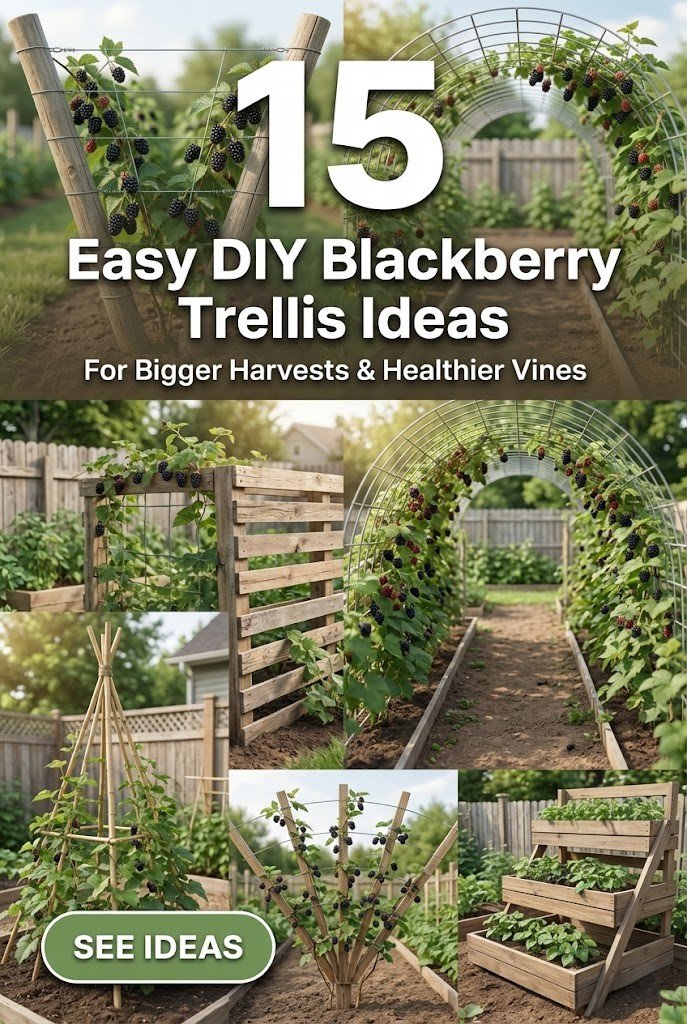
Growing blackberries in your garden can be a rewarding endeavor, offering juicy fruits perfect for jams, pies, or fresh eating. However, without proper support, these vigorous vines can become tangled messes, leading to reduced yields and disease issues. That’s where blackberry trellis ideas come into play, providing the structure your plants need to thrive vertically, maximizing space and sunlight exposure.
You’ll find that a well-designed trellis not only supports the heavy canes but also makes harvesting easier and improves air circulation, reducing the risk of fungal problems. Whether you’re working with a small backyard or a sprawling plot, these ideas cater to various setups, ensuring you get the most from your blackberry bushes. Let’s explore 15 creative options to elevate your gardening game.
1) Simple V-Shaped Wire Trellis
You can start with a basic V-shaped wire trellis, which involves two sturdy posts driven into the ground about 20 feet apart, with wires strung between them at multiple heights forming a V pattern. This design allows the canes to spread out, promoting even growth and easy access.
The key benefit here is improved airflow, which helps prevent diseases like powdery mildew, while the structure supports heavy fruit loads for higher yields. It’s cost-effective and straightforward for beginners.
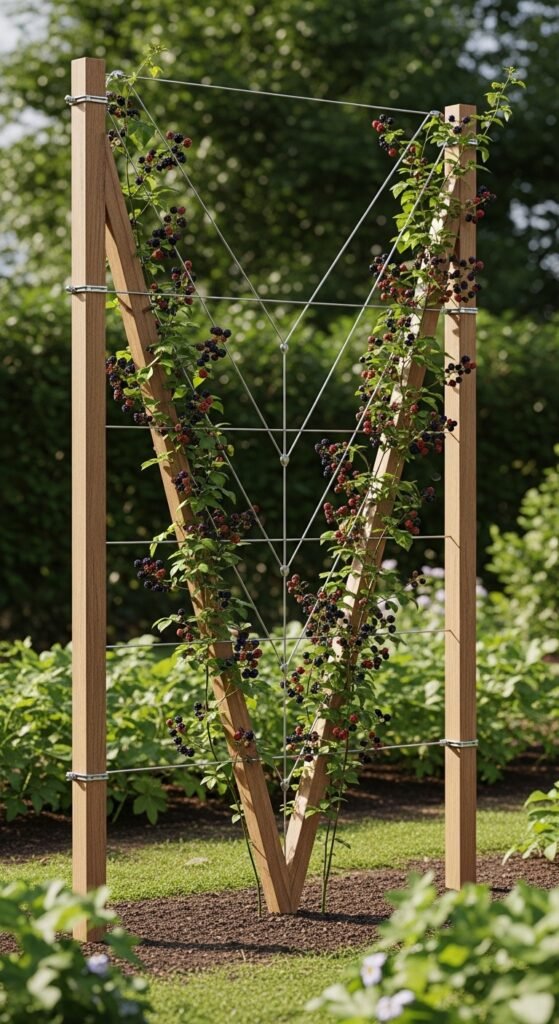
To build it, select treated wooden posts or metal stakes for durability. String galvanized wire at 2-foot intervals, starting from 18 inches off the ground up to 5 feet. Train your blackberry canes along the wires as they grow, tying them loosely with garden twine. For similar setups with vining crops, consider adapting ideas from cucumbers on trellis to enhance your berry patch. This trellis should last several seasons with minimal maintenance, giving you bountiful harvests year after year.
2) Fan System with Wooden Posts
Opt for a fan trellis system using wooden posts arranged in a radiating pattern, where canes are fanned out from a central point. This mimics natural growth while providing ample support for sprawling vines.
You’ll appreciate the enhanced sunlight penetration, leading to sweeter berries and fewer pest issues, as the open design discourages hiding spots for insects. It’s ideal for varieties that produce long canes.
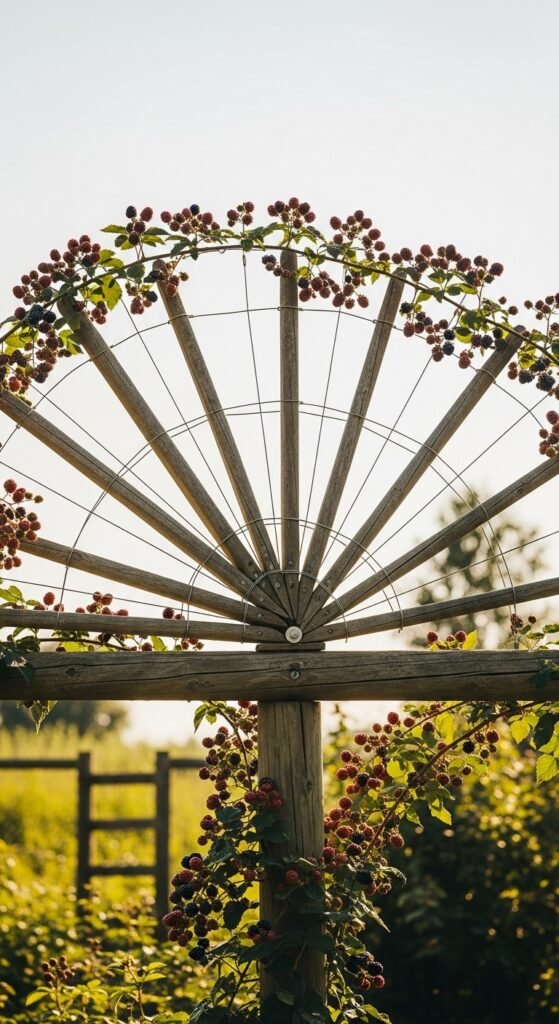
Construct it by installing a main post and attaching cross arms at varying angles, then weaving wires or strings between them. Plant your blackberries at the base and guide the primocanes upward, securing with soft ties. If you’re growing other berries nearby, draw inspiration from raspberry supports to create a cohesive fruit garden. Regular pruning of old canes post-harvest keeps the fan shape intact, ensuring robust production and a visually appealing structure in your landscape.
3) Rotating Arm Trellis Design
A rotating arm trellis features hinged arms that pivot, allowing you to alternate fruiting canes from one side to the other each season. This innovative approach separates new growth from bearing canes.
The major advantage is simplified management, making pruning and harvesting a breeze while minimizing disease transfer. It optimizes space in compact gardens, yielding more fruit per square foot.
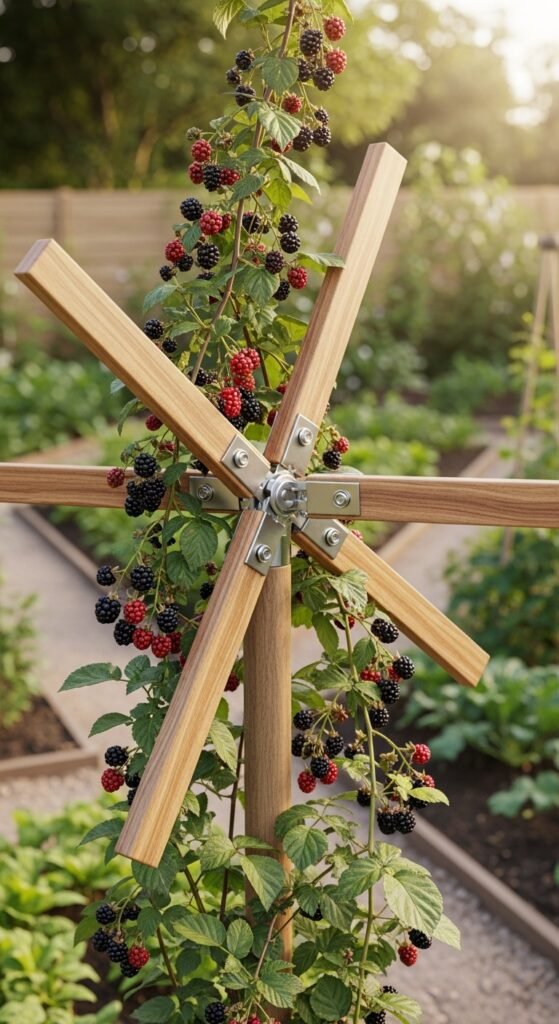
To set it up, build a central post with movable crossbars attached via hinges. In year one, train fruiting canes on one arm; in year two, shift to the other for new growth. This method works well alongside beans on trellis for companion planting benefits. Monitor for stability in windy areas and reinforce as needed. With this system, you’ll enjoy healthier plants and extended berry seasons, turning your garden into a productive haven.
4) Wire Fence Panel Trellis
Utilize wire fence panels as a trellis by securing them between posts, creating a flat, sturdy surface for your blackberries to climb. This repurposes common materials for an effective support system.
You gain excellent durability against weather and heavy loads, plus the grid pattern allows for easy tying and training of canes. It’s a low-maintenance option that promotes vertical growth for better exposure.
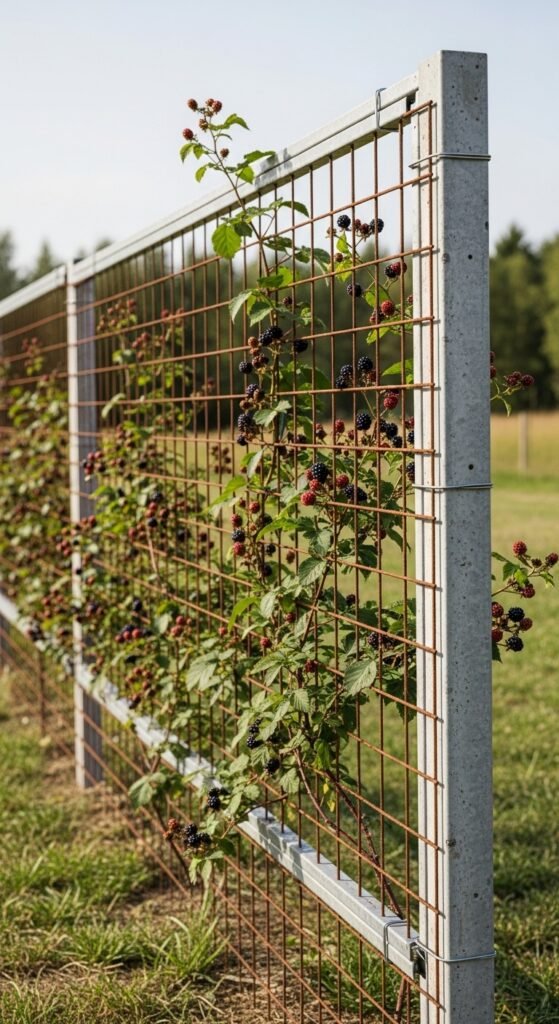
Install by digging post holes 8-10 feet apart, setting in concrete for stability, then attaching 4-6 foot high panels with zip ties or wire. Plant bushes along the base and weave canes through the mesh as they elongate. For vining fruits like melons, similar concepts from melon trellis ideas can be integrated. Annual inspections for rust ensure longevity, providing you with consistent, high-quality blackberry crops over time.
5) Arched Cattle Panel Trellis
Create an arched trellis using cattle panels bent into a tunnel shape, supported by metal stakes. This forms a charming walkway lined with blackberry vines overhead.
The visual appeal is unmatched, turning your garden into a picturesque spot, while the arch maximizes air flow and sun, resulting in plumper, tastier berries. It’s great for immersive harvesting experiences.
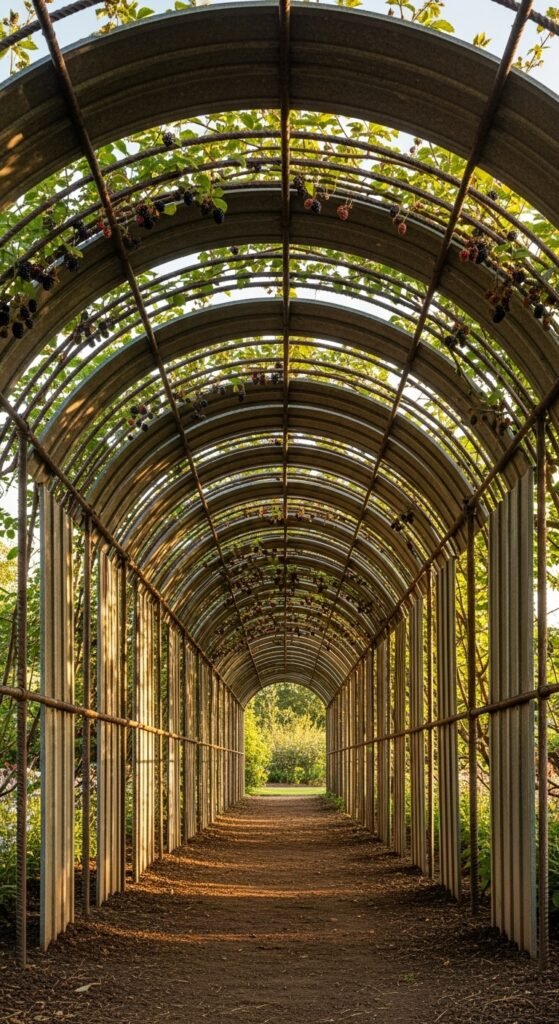
Bend 16-foot panels into arches, securing ends with rebar or T-posts every 4 feet. Plant blackberries on both sides and train vines up and over. This design pairs nicely with hardy kiwi trellis for diverse climbing fruits. Prune aggressively after fruiting to maintain the arch’s integrity. You’ll love walking beneath your berry-laden tunnel, collecting fresh produce in a delightful setting.
6) Pallet Wood Trellis Structure
Repurpose wooden pallets into a trellis by disassembling and reassembling them into a ladder-like frame. This eco-friendly idea adds rustic charm to your blackberry patch.
You benefit from cost savings and sustainability, as pallets are often free, and the structure provides solid support for vigorous growth, enhancing berry quality through better organization.
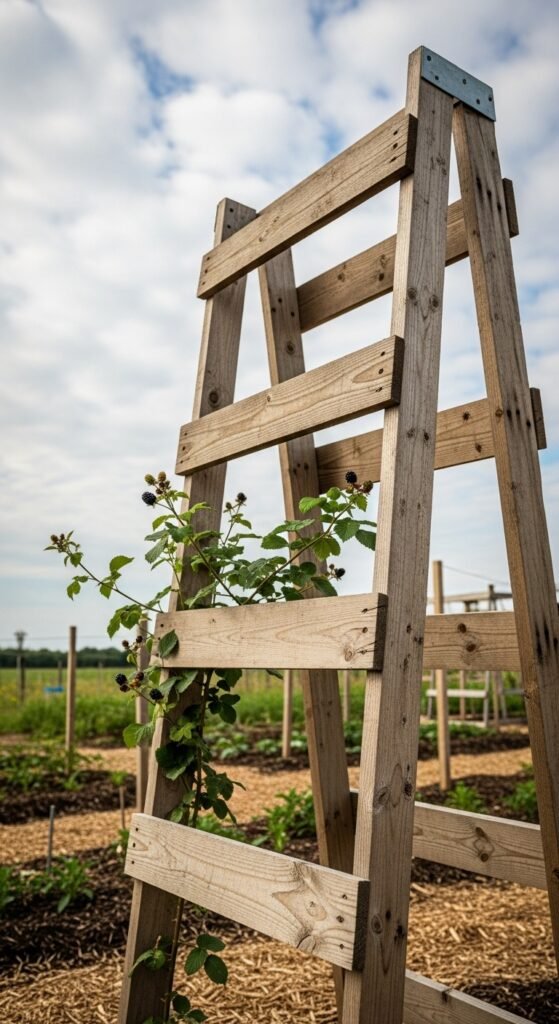
Break down pallets, sand rough edges, and nail slats to vertical posts spaced 5-6 feet apart. Add horizontal crosspieces for stability. Position near your plants and tie canes as they grow. Incorporate elements from trellis planter box for integrated planting. Weatherproof with sealant for longevity. This DIY project not only supports your blackberries but also adds character, yielding abundant fruits with minimal investment.
7) Bamboo Teepee Trellis Setup
Build a teepee trellis from bamboo poles lashed together at the top, forming a conical support ideal for clustering blackberry bushes.
The natural aesthetic blends seamlessly with gardens, offering sturdy, flexible support that withstands wind, while encouraging upward growth for easier picking and healthier plants.
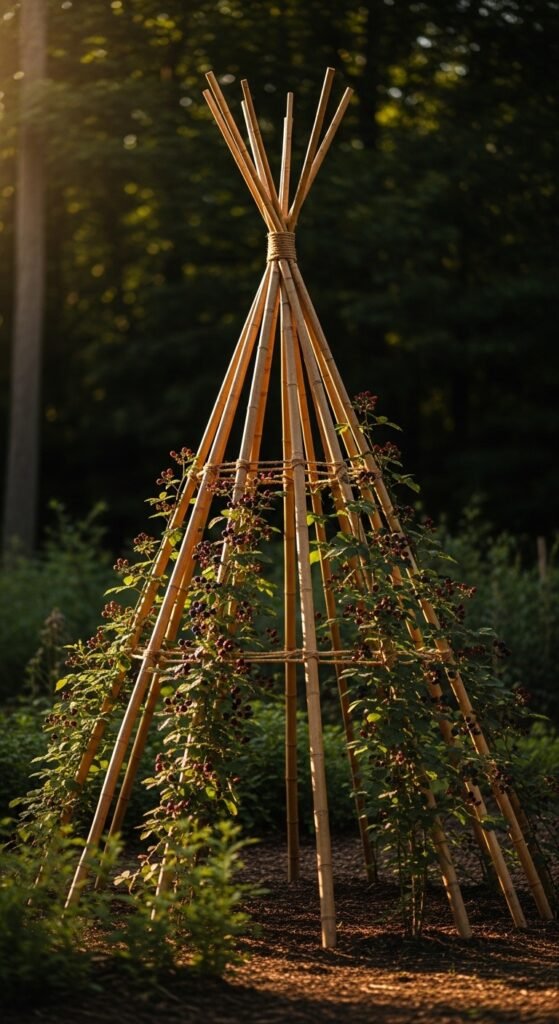
Gather 6-8 poles, 8 feet long, tie them at one end with twine, and spread the base to form a stable teepee. Plant 3-4 blackberries around the base and guide canes upward. This works well with garden trellis ideas for varied supports. Replace poles every few years as needed. You’ll enjoy a whimsical structure that boosts productivity and adds vertical interest to your space.
8) PVC Pipe Frame Trellis
Assemble a trellis using PVC pipes connected with fittings, creating a customizable grid or A-frame for your blackberries.
This offers affordability and versatility, as PVC is lightweight yet durable, resistant to rot, and easy to modify for different garden sizes, ensuring optimal cane support.
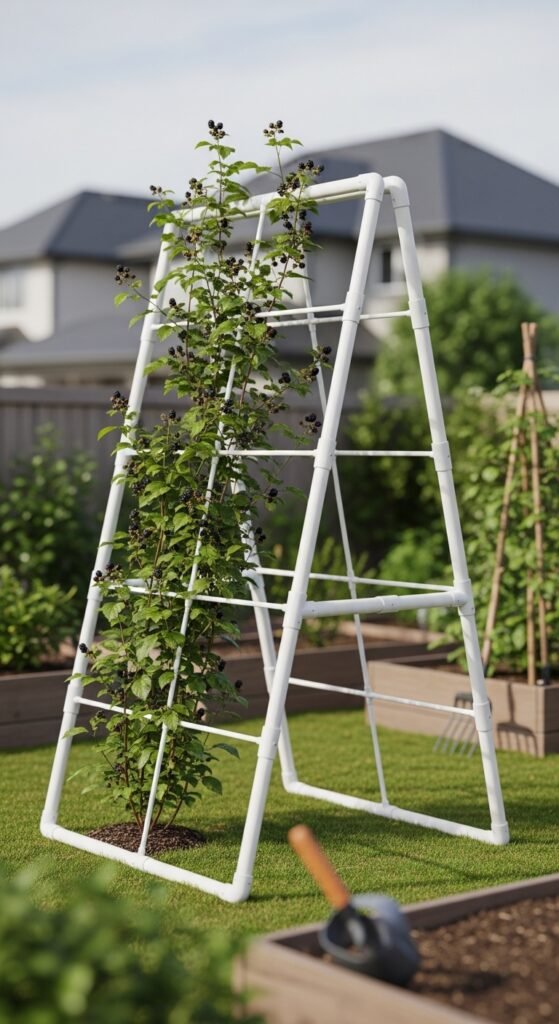
Cut pipes to desired lengths, connect with elbows and tees to form the frame, then add netting or wire for climbing. Anchor in ground with stakes. For creative twists, explore trellis ideas for cucumbers. Paint for aesthetics if desired. This modern approach provides reliable structure, leading to thriving vines and generous berry yields with little upkeep.
9) Espalier Style Wall Trellis
Train blackberries in an espalier pattern against a wall or fence using wires or lattice for a flat, artistic display.
You achieve space efficiency in urban gardens, with improved heat retention from the wall boosting ripening, and the formal look enhancing landscape design.
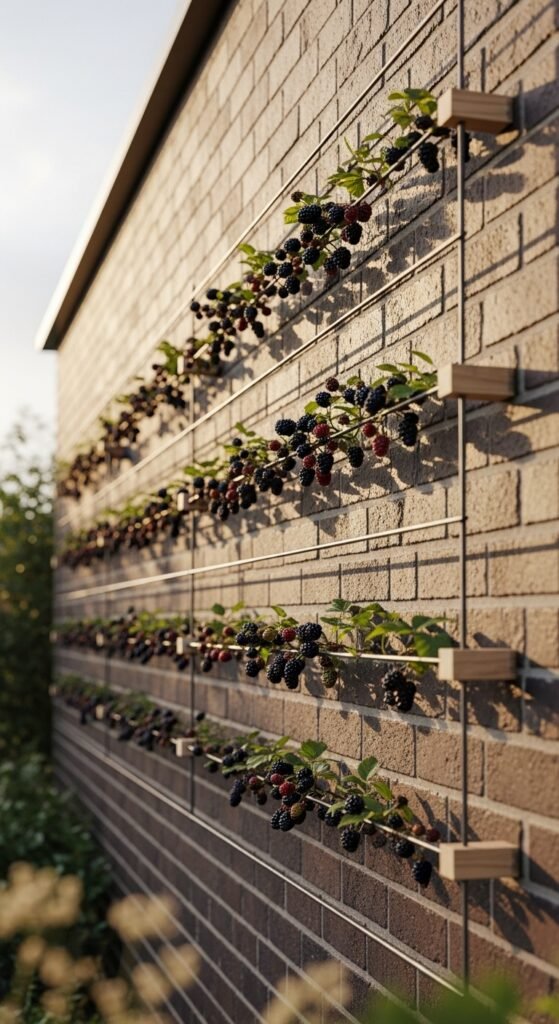
Attach horizontal wires to the surface at 12-inch intervals, plant bushes below, and prune to encourage lateral growth along the lines. This technique aligns with DIY raised bed trellis for combined setups. Regular tying and shaping maintain the form. Enjoy a sophisticated berry wall that maximizes output in limited areas, blending function with elegance.
10) Multi-Level Tiered Trellis
Design a multi-level trellis with stacked shelves or steps, allowing blackberries to cascade across different heights for a dynamic look.
The layered access simplifies maintenance and harvesting at various levels, while increasing planting density for greater overall production in sloped or terraced yards.
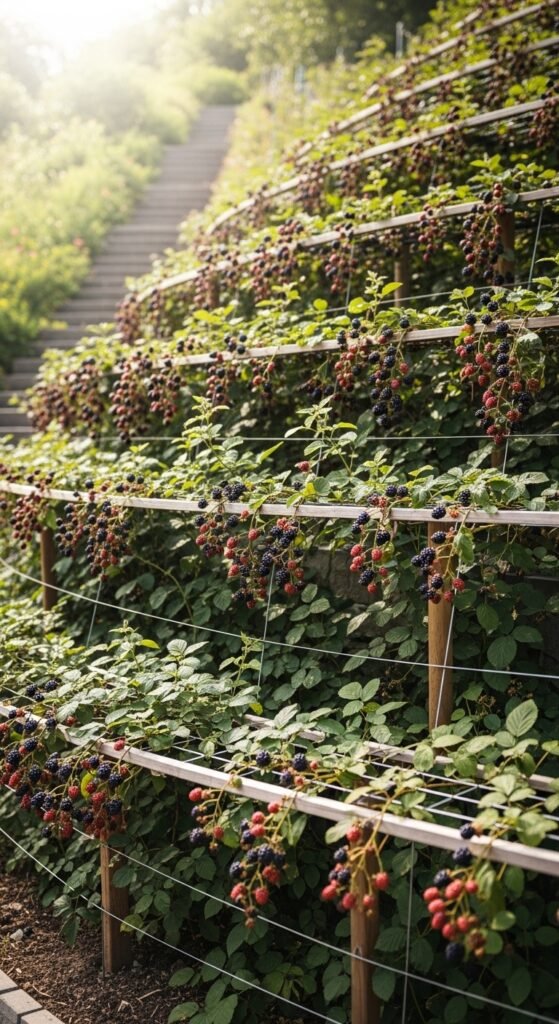
Build frames from wood or metal, stacking them progressively narrower upward, with wires connecting levels. Plant at each tier’s base. Incorporate decorative elements from trellis decor ideas. Ensure stability with deep anchors. This innovative setup transforms uneven terrain into a productive berry haven, offering bountiful harvests and visual depth.
11) Container-Based Portable Trellis
Use large containers with built-in trellises for blackberries, making them movable for optimal sun exposure or seasonal storage.
You get flexibility for renters or changing climates, with controlled soil conditions preventing weeds and diseases, ideal for patios or balconies.
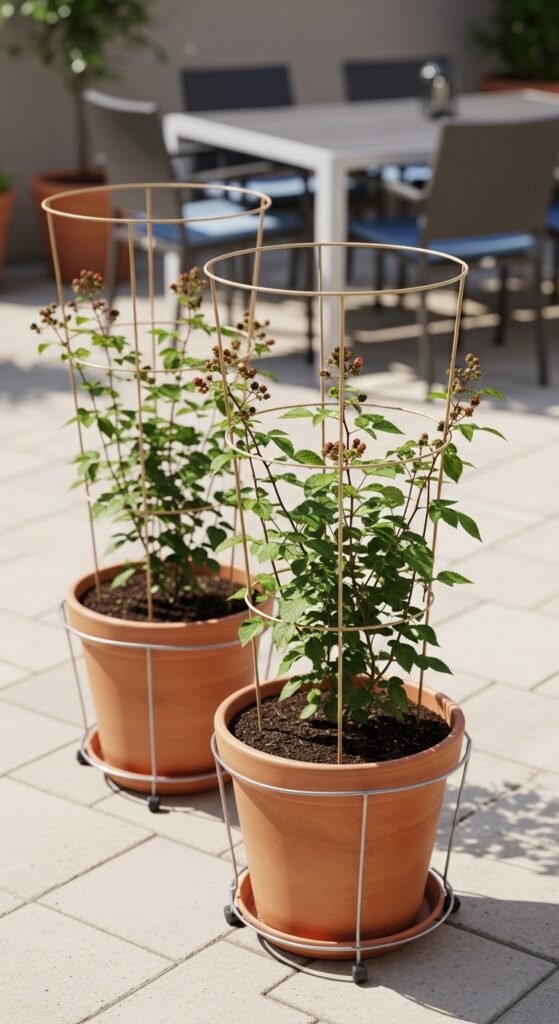
Select deep pots, attach a simple wire or bamboo frame, fill with rich soil, and plant thornless varieties. Move as needed for light. This pairs with mobile beans on trellis for mixed containers. Water consistently and fertilize monthly. Enjoy fresh berries anywhere, with the portability ensuring year-round success.
12) Wall-Mounted Lattice Trellis
Mount lattice panels directly to a wall or shed, creating a vertical trellis for blackberries to climb against structures.
This saves ground space with integrated support, utilizing unused vertical areas while the backing provides wind protection and heat for faster ripening.
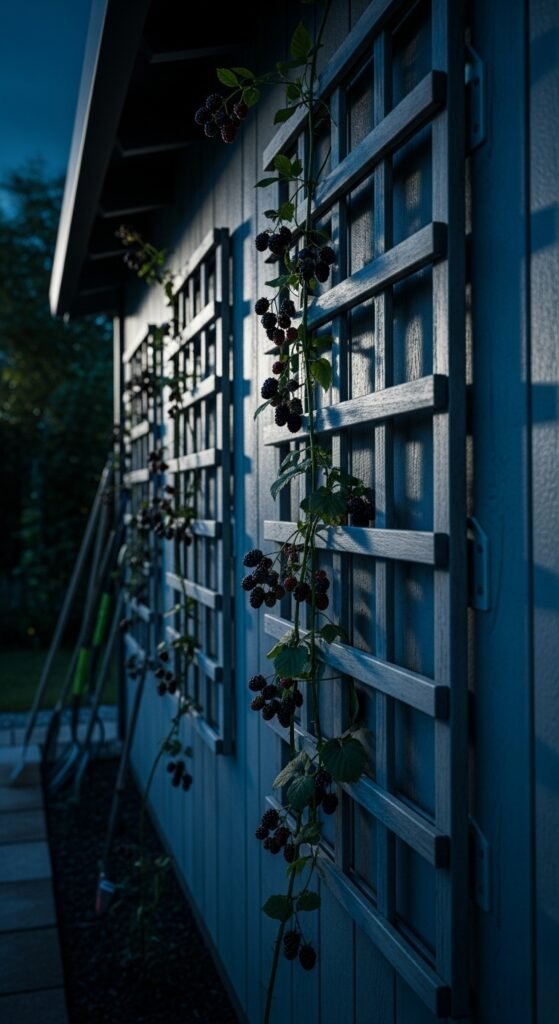
Secure lattice with brackets, ensuring it’s rated for weight, plant below, and train vines through openings. For added flair, adapt from trellis decor ideas. Prune to prevent overcrowding. Transform blank walls into productive berry screens, yielding ample fruits with architectural interest.
13) Recycled Material Eco-Trellis
Craft a trellis from recycled items like old ladders, bed frames, or bicycle wheels, assembled into unique supports for your blackberries.
The environmental perks include waste reduction, with creative designs adding personality, all while providing robust structure for healthy vine growth.
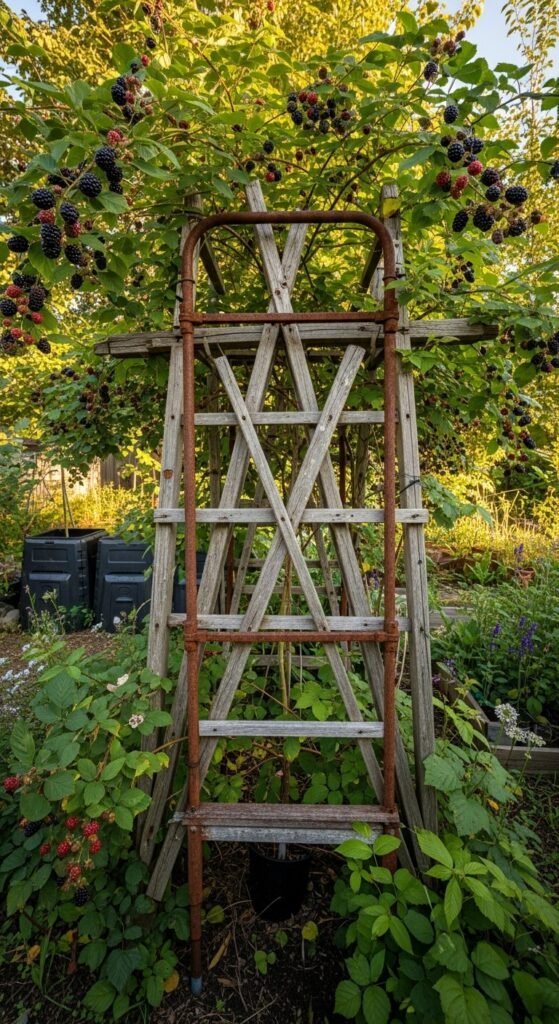
Scavenge materials, assemble securely with wire or screws, and position in your garden. Plant and guide canes accordingly. Draw eco-inspiration from garden trellis ideas. This sustainable approach delivers cost-free support, fostering abundant, eco-friendly berry production.
14) Wooden Post and Wire Row Trellis
Set up rows of wooden posts with multiple wire lines, creating a linear trellis system for extensive blackberry plantings.
You benefit from scalability for larger yields, with the rows facilitating mechanized care and efficient harvesting in commercial or big home gardens.
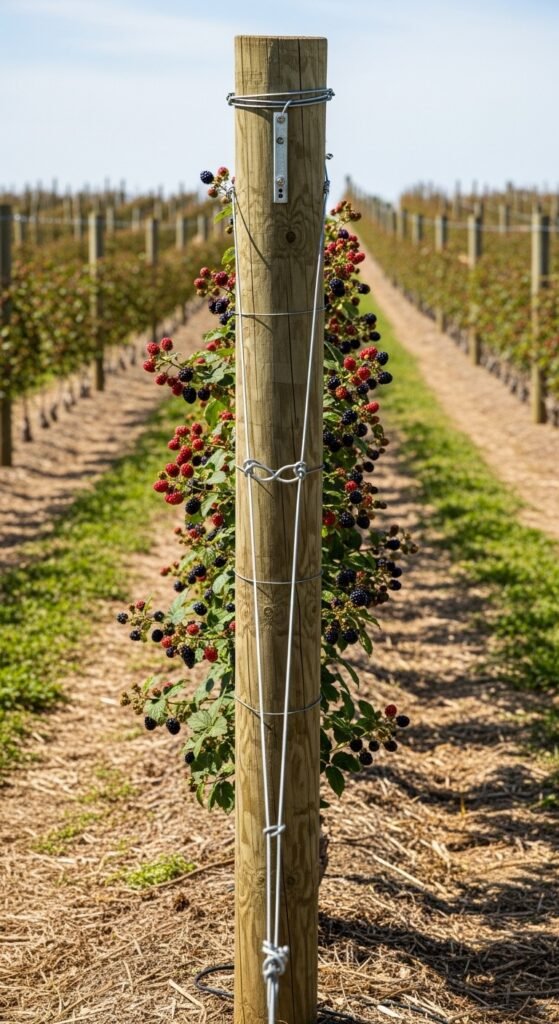
Space posts 15-20 feet apart in lines, string wires at heights from 2 to 6 feet. Plant between posts and tie canes. Similar to raspberry supports for berry rows. Mulch bases for weed control. This professional setup maximizes output, turning your plot into a berry powerhouse.
15) Combination Arch and Fan Trellis
Combine arches with fan elements for a hybrid trellis, where vines arch over pathways and fan out on sides for comprehensive support.
The multi-functional design creates shaded walkways while supporting extensive growth, leading to diverse harvesting zones and aesthetic appeal.
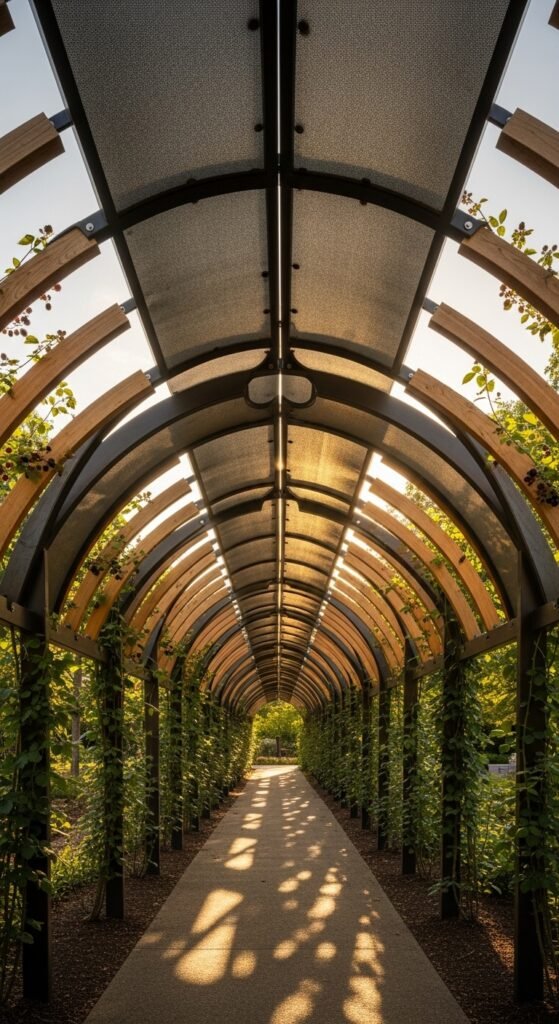
Build arches with panels, add fan arms on ends, secure firmly. Plant throughout and train accordingly. Enhance with melon trellis ideas for mixed vines. This elaborate structure offers immersive gardening, with plentiful berries in a beautiful, functional form.
Key Principles for Blackberry Trellis Success
Choosing the Right Materials
Select weather-resistant materials like treated wood, galvanized wire, or bamboo to ensure longevity. Consider your climate—metal for humid areas to avoid rot, or sturdy posts for windy spots.
Spacing and Height Considerations
Aim for trellises 5-7 feet tall and space plants 4-6 feet apart. This accommodates vigorous growth, prevents overcrowding, and allows ample sunlight penetration for optimal fruiting.
Maintenance and Pruning Tips
Prune annually after harvest, removing old canes and tying new ones. Inspect for damage regularly, and apply mulch to retain moisture, suppressing weeds around your trellis base.
Frequently Asked Questions
What is the best height for a blackberry trellis?
The ideal height is 5-7 feet, allowing canes to grow vertically without bending over, while keeping fruits accessible for harvesting.
How far apart should blackberry plants be on a trellis?
Space plants 4-6 feet apart to provide room for growth, airflow, and easy maintenance without overcrowding.
Can I use a trellis for thornless blackberry varieties?
Yes, thornless varieties thrive on trellises, as the support encourages upright growth and simplifies handling during pruning and picking.
When should I install a blackberry trellis?
Install before planting or in early spring, giving young plants immediate support as they establish and grow.
Do blackberries need full sun on a trellis?
They prefer at least 6-8 hours of direct sunlight daily for best fruit production, so position your trellis accordingly.