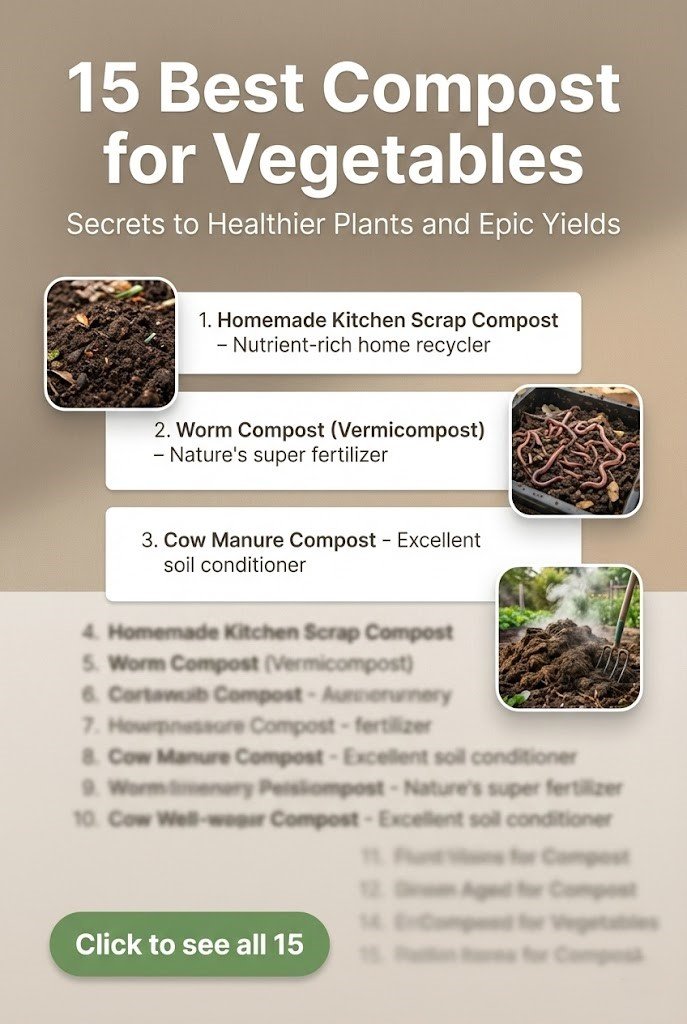
Selecting the best compost for vegetables is essential for nurturing healthy plants and achieving bountiful harvests. Compost enriches the soil with vital nutrients, improves structure, and enhances water retention, creating an optimal environment for vegetable growth. By incorporating high-quality compost, you can promote robust root development, reduce the need for chemical fertilizers, and foster beneficial microbial activity in your garden beds.
In vegetable gardening, the right compost addresses specific needs such as balanced nitrogen levels and pH neutrality, preventing common issues like nutrient deficiencies or soil compaction. Whether you are cultivating tomatoes, leafy greens, or root crops, using the best compost for vegetables ensures your plants thrive throughout the season. This guide presents 15 exceptional compost ideas, each tailored to support vigorous vegetable production while aligning with sustainable practices.
Explore these options to discover how they can transform your garden. Remember, consistent soil amendment with quality compost leads to improved yields and healthier produce year after year.
1) Homemade Kitchen Scrap Compost
Homemade kitchen scrap compost consists of decomposed organic waste from your daily meals, including vegetable peels, fruit rinds, and eggshells. This nutrient-rich material breaks down into a dark, crumbly substance ideal for vegetable gardens. You create it by layering scraps with brown materials like leaves or paper in a bin, turning it periodically to aerate and speed decomposition.
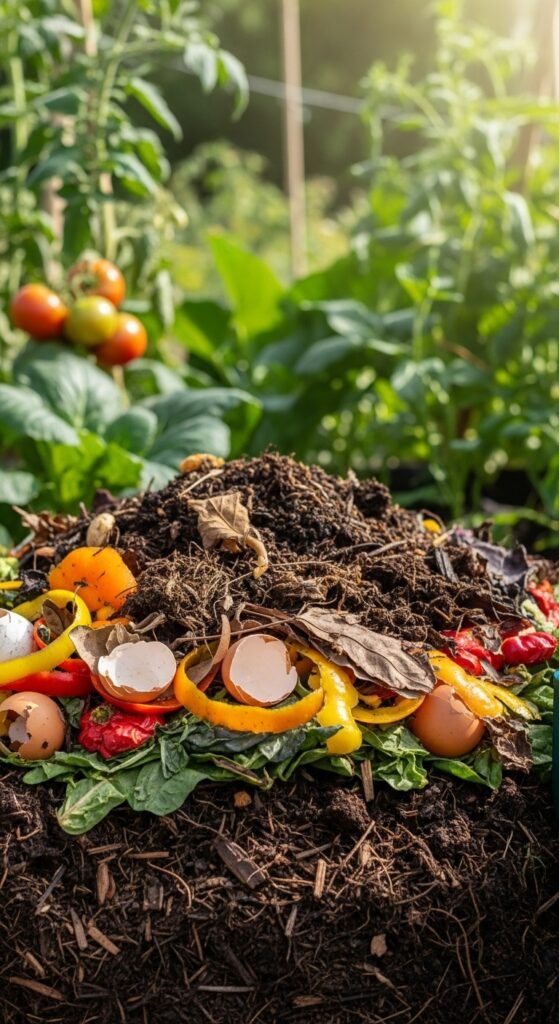
Why choose this for your vegetables? It provides a balanced mix of nitrogen, phosphorus, and potassium, essential for leafy growth, root development, and fruit production. Unlike commercial options, it recycles household waste, reducing environmental impact while customizing nutrient content to your soil’s needs. Your plants will exhibit stronger resistance to pests and diseases due to the enhanced soil biodiversity.
To use it effectively, apply a 2-3 inch layer around your vegetable plants in spring, working it gently into the topsoil. For beginners, start with simple methods outlined in our guide on composting kitchen scraps. Monitor moisture levels to maintain efficient breakdown, ensuring your compost remains odor-free and ready in 2-6 months. This approach yields about 50 pounds of compost annually from average household scraps, boosting your garden’s productivity sustainably.
2) Worm Compost (Vermicompost)
Worm compost, or vermicompost, is produced by red wiggler worms digesting organic matter, resulting in nutrient-dense castings. You set up a worm bin with bedding like shredded newspaper, add kitchen scraps, and let the worms process the material into fine, earthy compost.
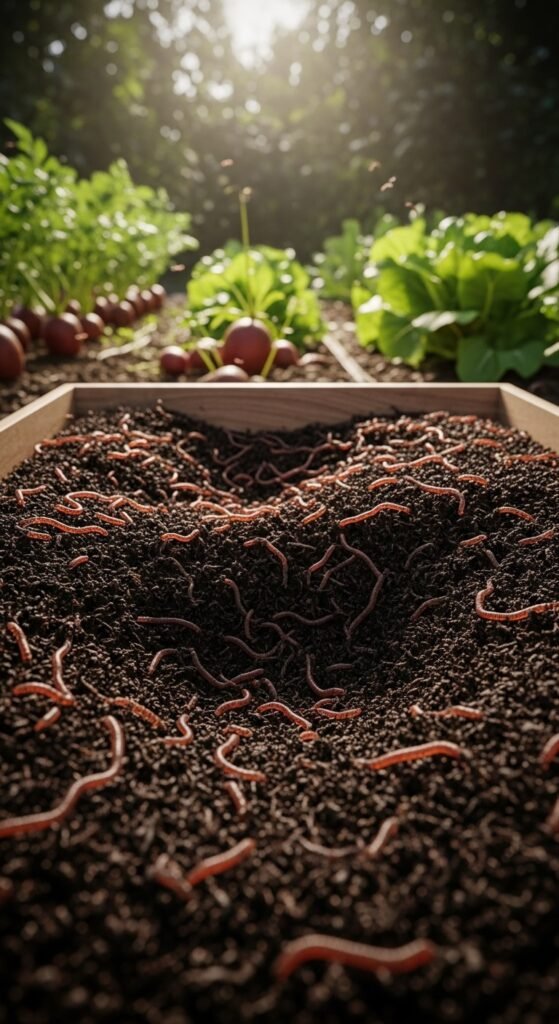
This compost excels for vegetables because its high microbial content improves soil aeration and nutrient availability, leading to faster plant growth and higher yields. The castings release nutrients slowly, preventing burn while supporting continuous feeding. Studies show vermicompost can increase vegetable production by up to 20%, making it a superior choice for intensive gardening.
Implement it by mixing one part vermicompost with three parts soil in your beds or using it as a top dressing. For optimal results, explore techniques with the best worms for composting. Maintain bin temperatures between 55-77°F and harvest every 3-4 months. You’ll obtain roughly one pound of compost per pound of scraps, providing an efficient, odorless solution for enriching your vegetable plots.
3) Cow Manure Compost
Cow manure compost derives from aged bovine waste mixed with bedding materials like straw, decomposed over months to eliminate pathogens. It forms a mellow, nutrient-balanced amendment suitable for various soil types.
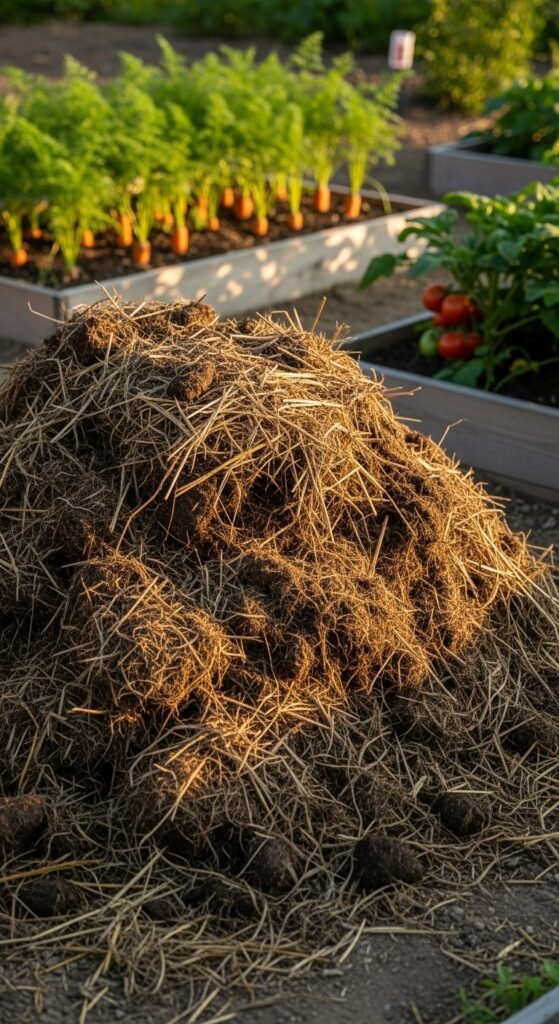
For vegetables, it supplies ample nitrogen for foliage, potassium for fruiting, and trace minerals that enhance flavor and nutritional value. Its stable nature prevents nitrogen volatility, ensuring consistent soil fertility. You benefit from improved water-holding capacity, crucial during dry spells, and reduced soil erosion in raised beds.
Apply by incorporating 1-2 inches into the soil before planting, or side-dress mid-season. To prepare your own, follow methods similar to those in our article on hot composting. Allow 6-9 months for full maturation, turning piles regularly. This yields approximately 40 cubic feet from a standard pile, delivering cost-effective nutrition for your carrots, tomatoes, and greens.
4) Leaf Mold Compost
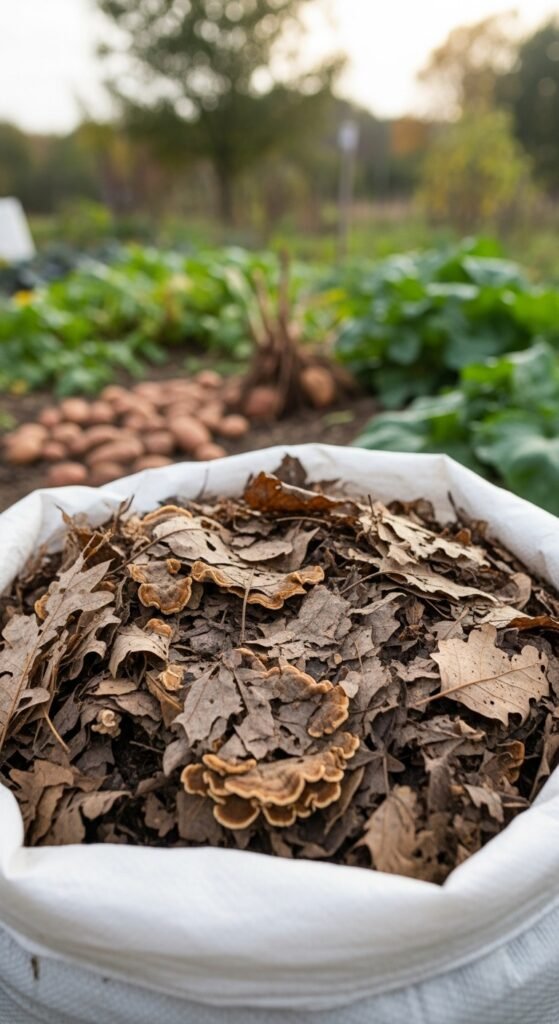
Leaf mold compost is created from fallen leaves that decompose slowly, forming a spongy, acidic material rich in humus. You gather autumn leaves, moisten them, and let fungi break them down in piles or bags over 1-2 years.
It benefits vegetables by enhancing soil structure, increasing moisture retention, and providing slow-release nutrients without overwhelming nitrogen levels. Ideal for acid-loving crops like potatoes or blueberries, it promotes healthy root systems and suppresses weeds when used as mulch.
Use it by blending into soil at a 20-30% ratio or applying as a 2-inch mulch layer. Enhance your process with insights from our leaf mold guide. Shred leaves for faster decomposition, achieving 10-15 cubic feet from a large pile. This natural amendment supports sustainable gardening, recycling yard waste into valuable resources for your vegetable harvest.
5) Grass Clippings Compost
Grass clippings compost comes from untreated lawn mower residues, layered with other organics to prevent matting and promote aerobic decomposition. It transforms into a nitrogen-rich additive in 2-4 months.
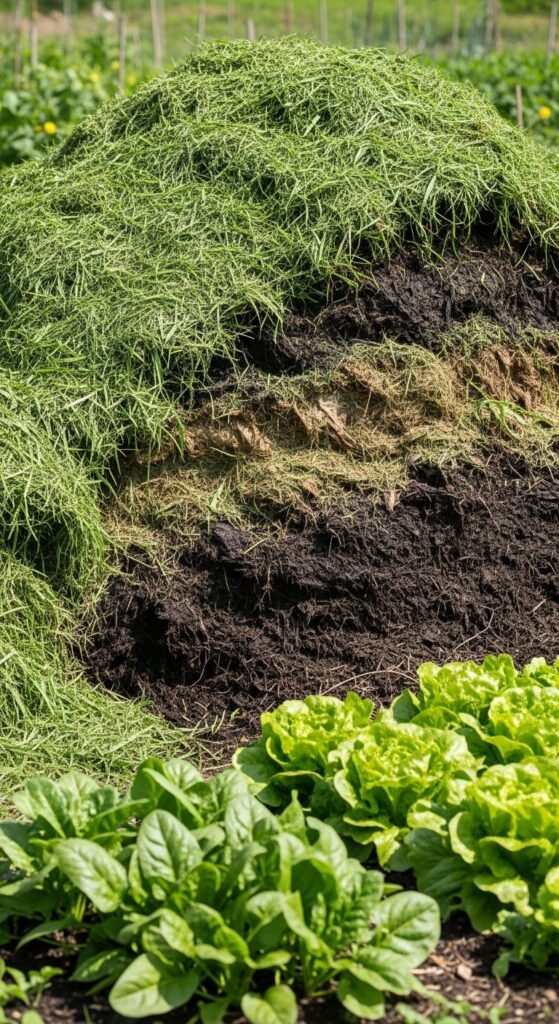
This option suits vegetables due to its high nitrogen content, fueling rapid growth in leafy crops like lettuce and spinach. It also adds potassium and improves soil tilth, reducing compaction for better root penetration.
Incorporate by mixing with soil or using as mulch, avoiding thick layers to prevent anaerobic conditions. Draw from our tips on grass clippings compost for best practices. Collect from chemical-free lawns, yielding about 5-10 pounds per mowing session. This method recycles yard waste efficiently, enhancing your garden’s nutrient cycle.
6) Mushroom Compost
Mushroom compost is a byproduct of commercial mushroom farming, consisting of pasteurized organic matter like straw, manure, and gypsum, aged to a neutral pH.
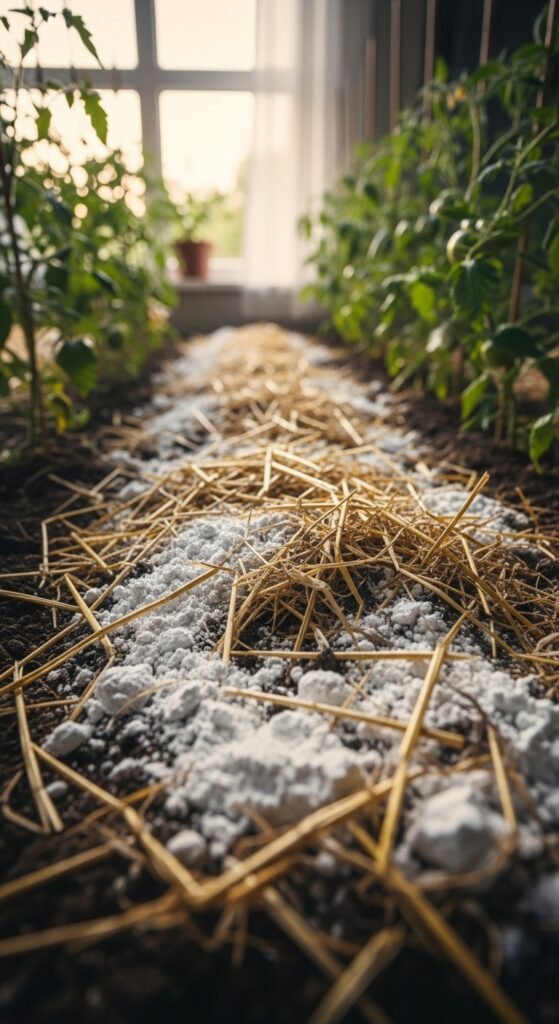
For vegetables, it offers excellent drainage and calcium content, supporting strong cell walls and preventing disorders like blossom end rot in tomatoes. Its balanced nutrients foster steady growth without excess salts.
Apply 1-3 inches worked into the top 6 inches of soil pre-planting. Complement with compost for raised beds strategies. Source from suppliers, using 20-30 cubic feet per 100 square feet. This ready-to-use amendment simplifies soil preparation for productive vegetable gardening.
7) Coffee Grounds Compost
Coffee grounds compost utilizes spent coffee filters and grounds, mixed with other materials to create an acidic, nitrogen-boosting blend. It decomposes quickly in standard bins.
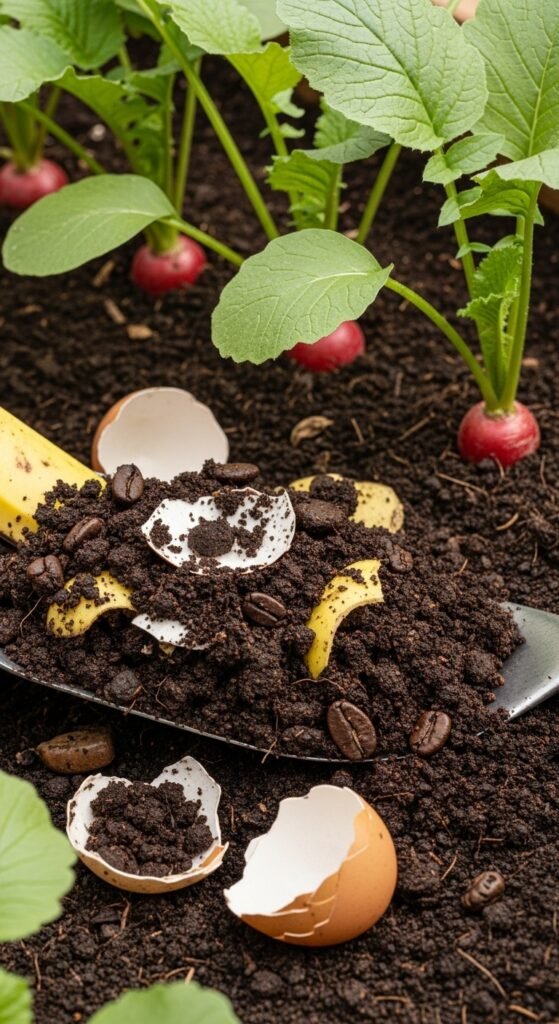
It advantages vegetables by acidifying soil for crops like radishes and carrots, while providing nitrogen for vigorous growth. The grounds deter slugs and improve soil structure.
Sprinkle directly or compost first, applying 1/4 inch layers. Learn more via our coffee grounds in garden resource. Collect from home or cafes, processing 10-20 pounds monthly. This upcycled compost enhances sustainability in your vegetable plots.
8) Seaweed Compost
Seaweed compost is made from rinsed ocean kelp or algae, chopped and layered in compost piles for 3-6 months decomposition.
Rich in trace minerals and growth hormones, it boosts vegetable immunity and yield, particularly for coastal gardens. It improves soil aeration and moisture balance.
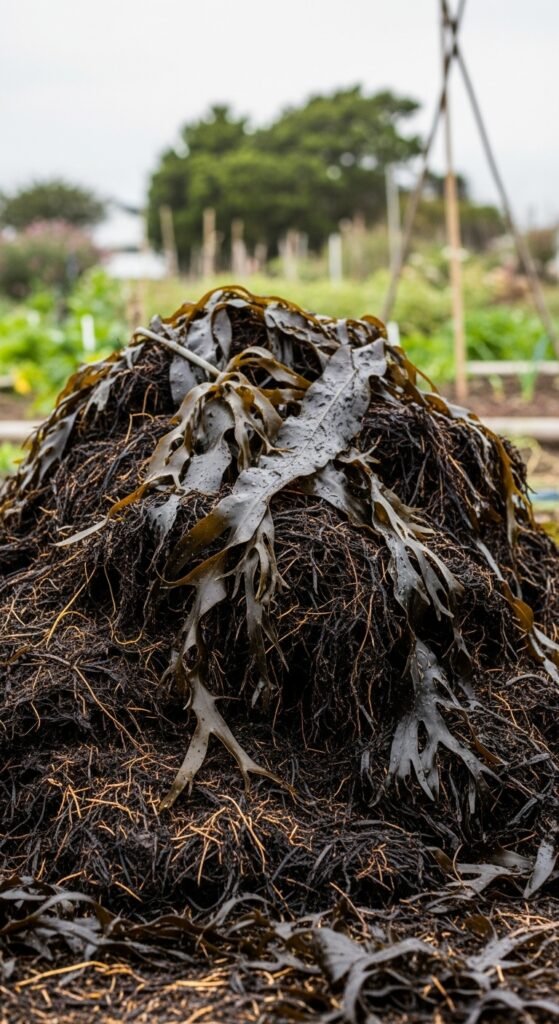
Mix into soil at planting or use as tea. Pair with compost tea applications. Harvest sustainably, yielding 5-10 cubic feet per batch. This marine-derived compost enriches your vegetables uniquely.
9) Green Manure Compost
Green manure compost involves growing cover crops like clover or rye, then tilling them into soil to decompose on-site.
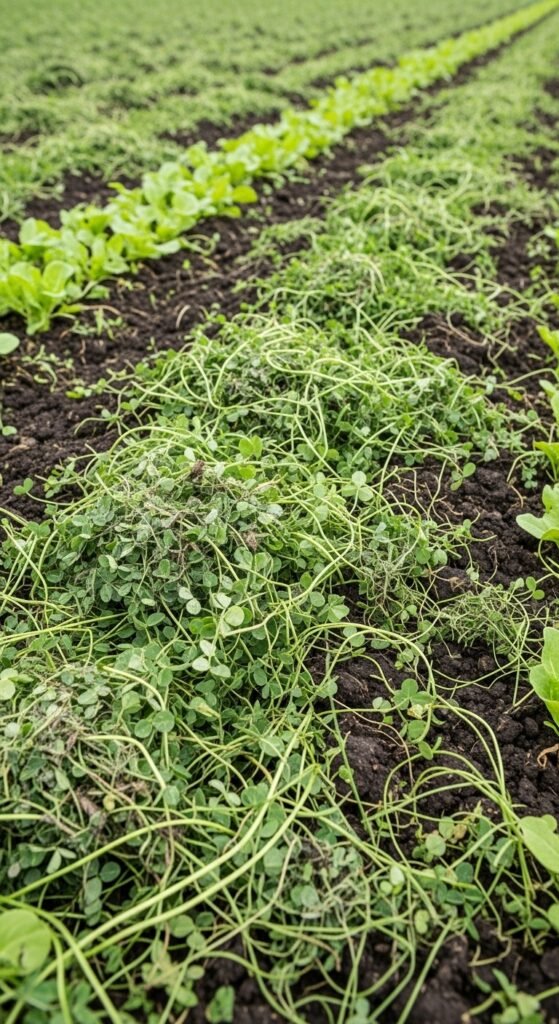
It replenishes nitrogen and organic matter for vegetables, preventing erosion and suppressing weeds. Ideal for crop rotation, it enhances long-term soil health.
Plant in off-seasons, incorporate before flowering. Integrate with compost at home routines. Cover 100 square feet with one packet of seeds. This living compost method sustains your garden ecologically.
10) Bokashi Fermented Compost
Bokashi fermented compost uses inoculated bran to anaerobically ferment kitchen waste, producing a pickled pre-compost in weeks.
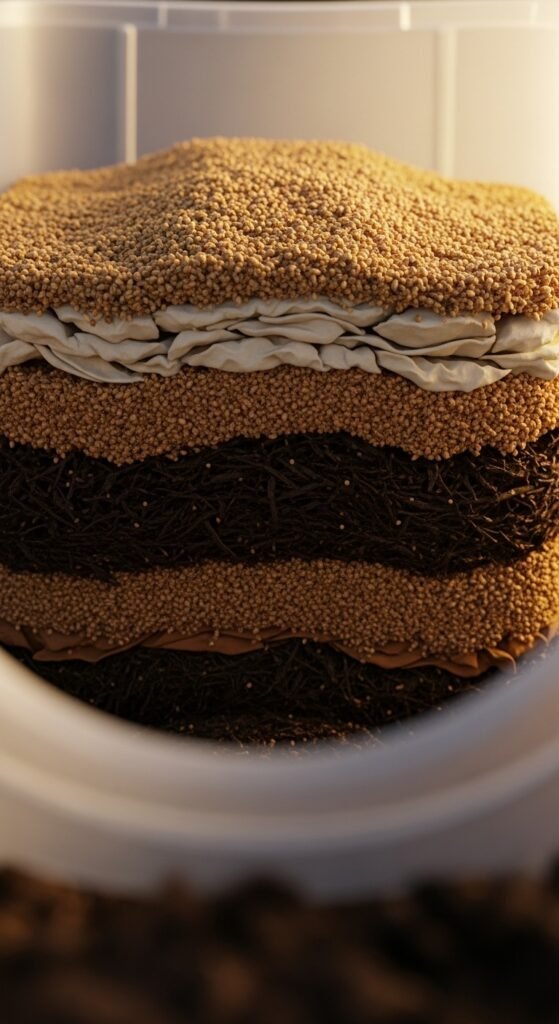
For vegetables, it retains more nutrients than traditional methods, acidifying soil beneficially and accelerating breakdown when buried.
Bury fermented matter in garden trenches. Refer to our Bokashi composting details. Process 5-10 gallons monthly. This efficient system minimizes waste in your vegetable gardening.
11) Chicken Manure Compost
Chicken manure compost is high-nitrogen poultry waste aged with carbon sources to reduce ammonia content over 4-6 months.
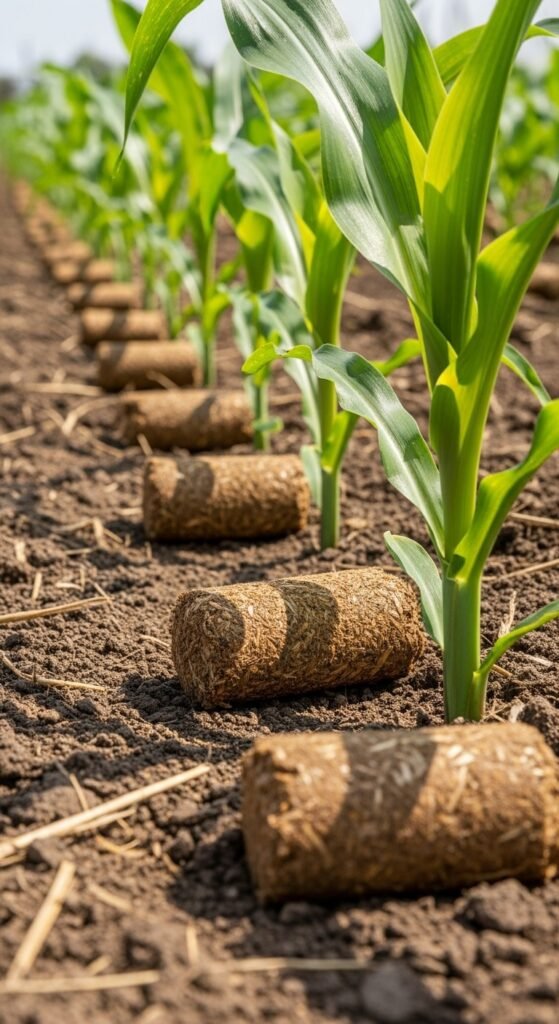
It accelerates vegetable growth, particularly for heavy feeders like corn, with phosphorus aiding root and flower development.
Apply sparingly, diluted in water or mixed into soil. Combine with composting for beginners advice. Yield 20-30 pounds from a small flock. This potent compost maximizes your plot’s potential.
12) Rabbit Manure Compost
Rabbit manure compost features cold-processable pellets, rich in nitrogen and low in odor, decomposing directly in gardens.
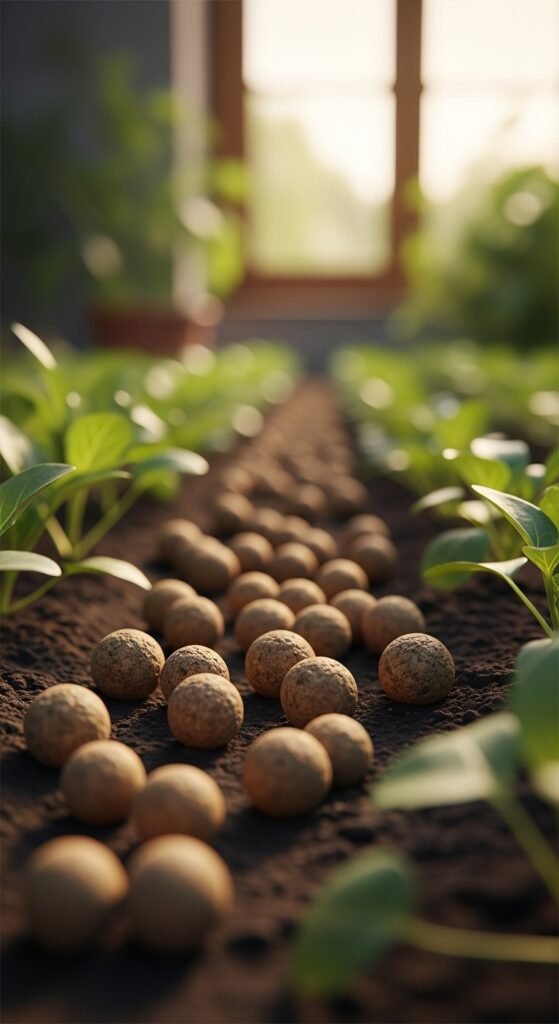
Safe for direct application to vegetables, it provides balanced nutrition without burning, improving soil fertility gradually.
Scatter and lightly till in. Enhance with organic fertilizers for vegetables. Collect 10-15 pounds per rabbit annually. This gentle compost supports delicate crops effectively.
13) Sheep Manure Compost
Sheep manure compost comprises pelletized waste mixed with straw, composted to a weed-free, nutrient-stable form.
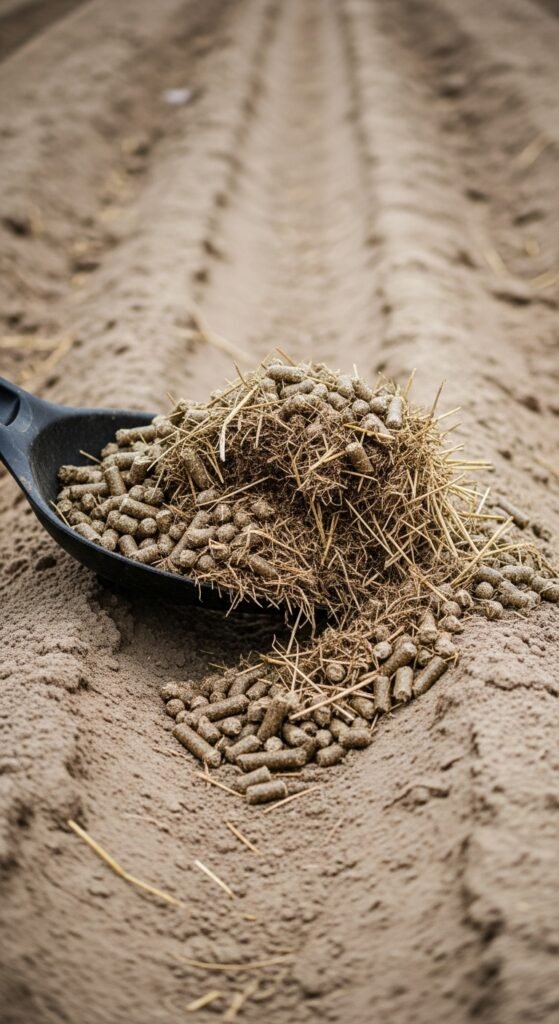
It offers potassium-rich nutrition for vegetables, enhancing fruit quality and drought resistance in sandy soils.
Incorporate into beds pre-season. This yields 15-25 cubic feet per pile, providing reliable enrichment for your garden.
14) Biochar-Enriched Compost
Biochar-enriched compost blends charred biomass with standard compost, increasing carbon sequestration and nutrient retention.
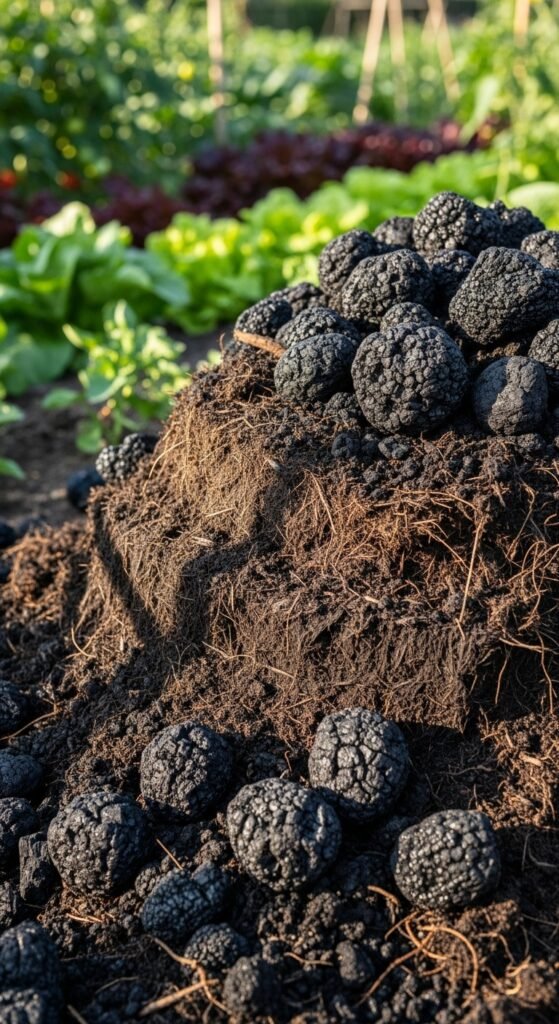
For vegetables, it stabilizes pH and holds moisture, reducing fertilizer needs and promoting microbial health.
Mix 10-20% biochar into piles. This advanced amendment, producing 20-30% more efficient compost, elevates your sustainable practices.
15) Commercial Organic Compost
Commercial organic compost is certified, bagged material from verified sources, ensuring pathogen-free, balanced nutrition.
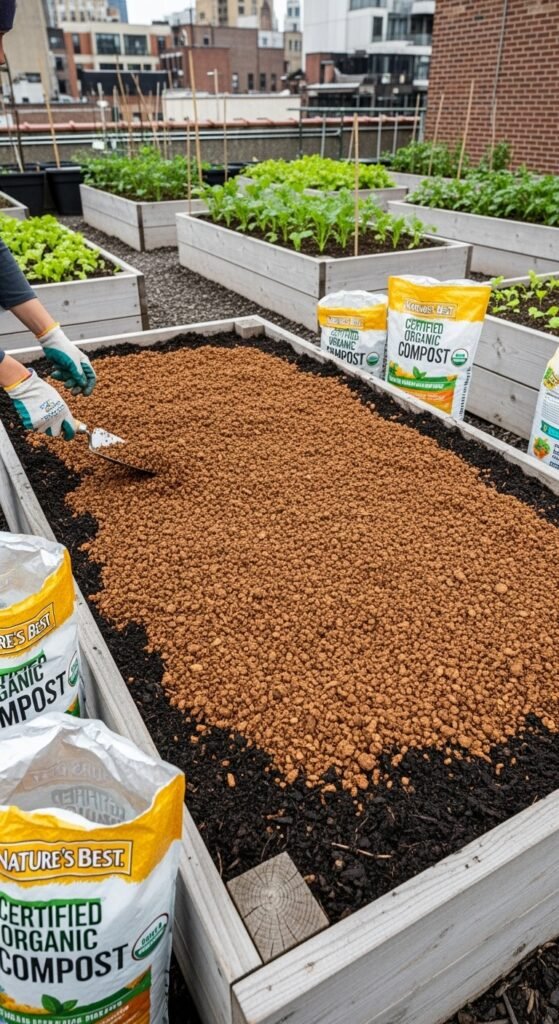
It provides convenience for vegetables, with consistent quality supporting uniform growth in urban or time-constrained gardens.
Apply as directed, typically 1-2 inches. Source reputable brands for 10-20 bags per season. This reliable option guarantees success in your vegetable endeavors.
Key Principles for Using Compost in Vegetable Gardens
Soil Testing and Amendment
Begin by testing your soil’s pH and nutrient levels annually. Adjust compost choices accordingly to maintain 6.0-7.0 pH for most vegetables, ensuring optimal uptake.
Application Rates and Timing
Apply compost in spring or fall at 1-3 inches depth, avoiding over-application to prevent nutrient imbalances. Incorporate gently to preserve soil structure.
Composting Safety and Best Practices
Ensure compost reaches 140°F to kill pathogens. Rotate materials and monitor moisture for efficient decomposition, promoting safe, effective use in your garden.
Frequently Asked Questions
What makes compost ideal for vegetable gardens?
Compost improves soil fertility, structure, and moisture retention, providing essential nutrients without chemicals. It supports healthy microbial activity, leading to stronger plants and better yields.
How often should you apply compost to vegetables?
Apply compost once or twice yearly, in spring before planting and fall after harvest. This maintains soil health without overwhelming the ecosystem.
Can you use too much compost in a vegetable garden?
Yes, excessive compost can lead to nutrient excesses or poor drainage. Stick to recommended rates and monitor plant health to avoid issues.
What is the difference between compost and fertilizer for vegetables?
Compost amends soil organically over time, improving overall quality, while fertilizers provide quick nutrient boosts but may not enhance structure or biology.
How do you know if compost is ready for vegetables?
Ready compost is dark, crumbly, and earthy-smelling, with no recognizable original materials. It should be cool and free of weeds or pathogens.