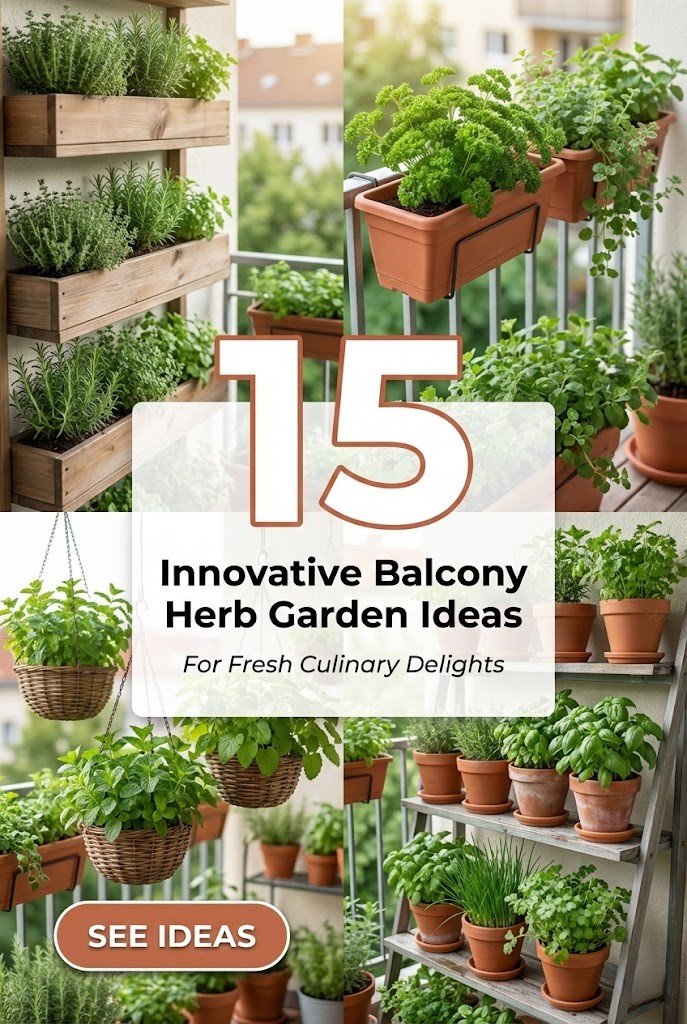
Creating a balcony herb garden allows you to cultivate fresh, aromatic herbs in a limited urban space, enhancing your cooking with homegrown flavors. This approach transforms your balcony into a productive green oasis, providing easy access to ingredients like basil, mint, and rosemary while promoting sustainability and well-being. By optimizing vertical and horizontal areas, you can maximize yield without requiring extensive ground space.
The benefits extend beyond convenience; tending to your balcony herb garden fosters a connection with nature, reduces grocery expenses, and improves air quality. Whether you are a novice or experienced gardener, these ideas incorporate practical techniques to ensure success in container-based cultivation. With proper planning, you can enjoy bountiful harvests year-round, even in compact settings.
Explore the following strategies to design an efficient balcony herb garden, tailored to various layouts and preferences. Each concept emphasizes ease of maintenance and optimal growth conditions, enabling you to integrate greenery seamlessly into your daily routine.
1) Vertical Wall-Mounted Planters
You can install vertical planters on your balcony walls to create a space-saving herb garden. This setup involves mounting shelves or pocket systems where herbs grow upwards, utilizing otherwise unused areas. Select herbs such as thyme or oregano that thrive in well-drained soil and receive ample sunlight.
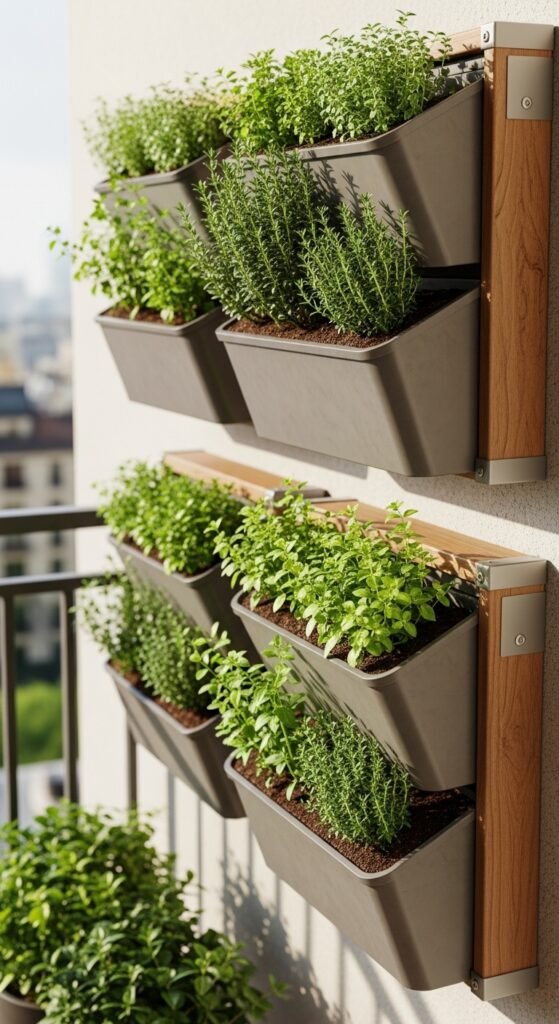
The primary advantage lies in its efficiency for small balconies, allowing you to cultivate multiple varieties without cluttering floor space. This method enhances visual appeal and promotes better air circulation, reducing pest issues. Additionally, it facilitates easy harvesting at eye level.
To implement, choose weather-resistant materials like treated wood or metal frames. Drill holes for drainage in containers, fill with potting mix, and position in a sunny spot. For inspiration on vertical setups, consider exploring vertical planter wall designs to customize your arrangement. Water regularly, ensuring soil remains moist but not waterlogged, and fertilize monthly for robust growth.
2) Railing-Hung Herb Boxes
Attach herb boxes directly to your balcony railings to form a linear garden along the edges. These elongated containers accommodate trailing herbs like parsley or cilantro, creating a cascading effect that softens the balcony’s architecture.
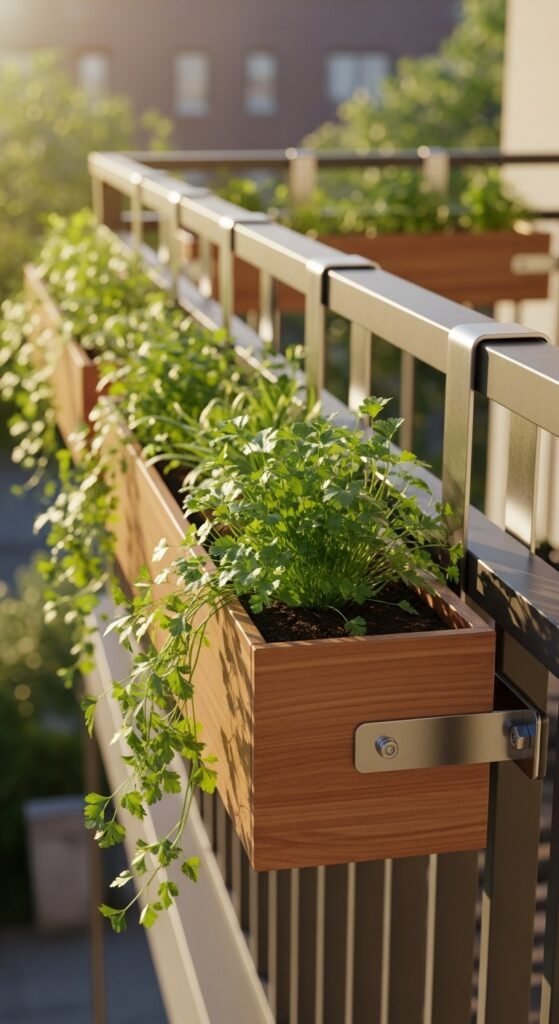
This idea excels in maximizing perimeter space, offering convenient access for pruning and picking. It also provides natural privacy screening while attracting pollinators, contributing to a vibrant ecosystem in your urban environment.
Begin by selecting sturdy, adjustable brackets that fit your railing dimensions. Fill boxes with lightweight soil amended for herbs, planting seedlings at appropriate depths. Secure in partial to full sun locations. For varied railing adaptations, review railing planter configurations to ensure stability. Monitor moisture levels closely, as elevated positions may dry out faster, and rotate plants periodically for even exposure.
3) Hanging Basket Arrangements
Suspend baskets from balcony ceilings or hooks to establish a floating herb garden. Ideal for compact herbs such as chives or mint, this arrangement adds dimension and allows light to filter through layers.
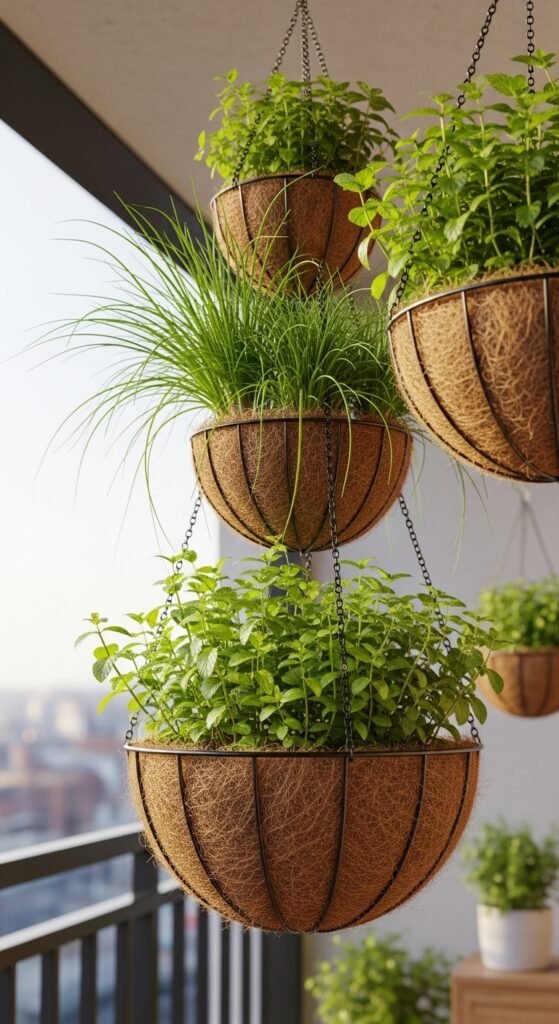
The design promotes excellent drainage and airflow, preventing root rot in humid conditions. It also elevates plants away from pests and optimizes vertical space, making it suitable for balconies with limited flooring.
Install strong hooks rated for weight, then line baskets with coco fiber for retention. Plant with a mix of upright and trailing varieties for balance. Hang in areas receiving 4-6 hours of sunlight daily. If incorporating pest-deterrent herbs, consult mosquito-repelling plant options like lemongrass. Use self-watering reservoirs to maintain consistency, and pinch tips regularly to encourage bushier growth.
4) Tiered Shelf Systems
Employ multi-level shelves to organize herbs in a stepped formation on your balcony. This structure accommodates diverse light needs, with sun-loving basil on top tiers and shade-tolerant dill below.
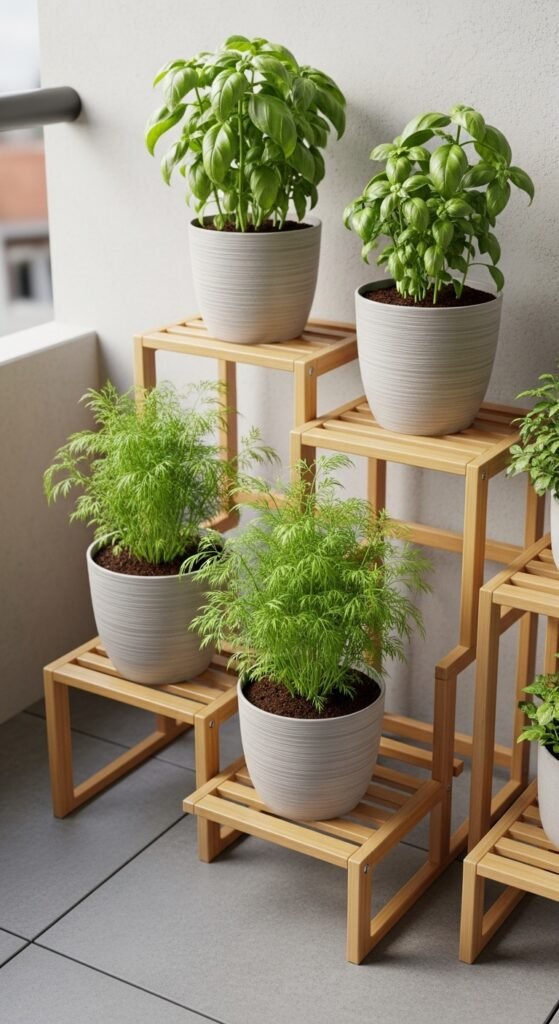
Such systems offer organized accessibility and scalability, allowing expansion as your collection grows. They enhance aesthetic appeal, turning functional storage into a decorative focal point.
Assemble freestanding or wall-mounted units from durable materials like bamboo. Layer pots with varying sizes, ensuring proper spacing for air flow. Position near a water source for convenience. For complementary container ideas, examine spring container garden approaches. Fertilize with organic solutions every few weeks, and inspect for diseases promptly to sustain health.
5) Window Box Herb Displays
Mount window boxes outside your balcony-access windows to blend indoor and outdoor spaces. Plant compact herbs like sage or tarragon that complement your culinary preferences.
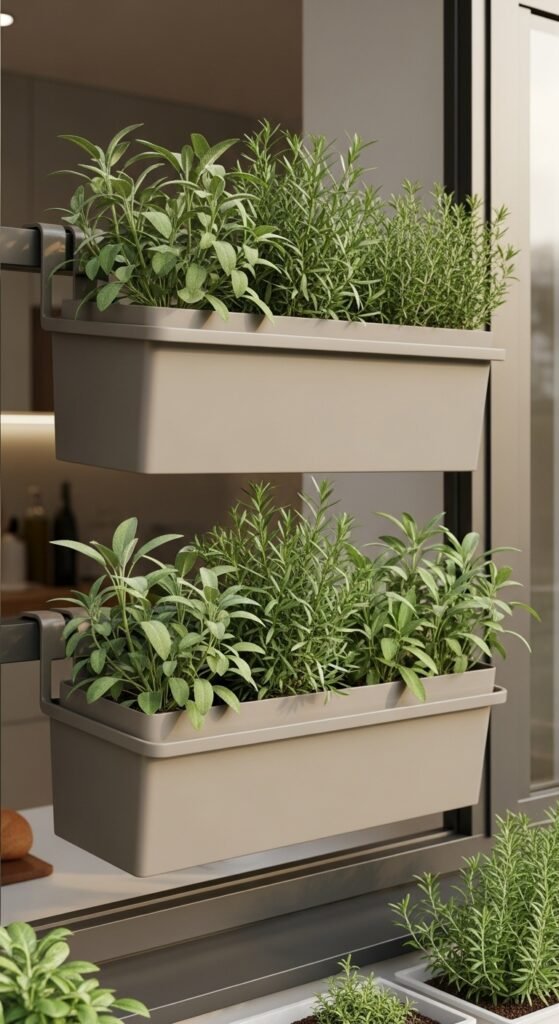
This placement ensures proximity to your kitchen for immediate use and utilizes natural light from multiple angles. It also adds curb appeal, enhancing the exterior view.
Secure boxes with brackets, filling with herb-specific soil blends. Space plants to avoid overcrowding, and incorporate slow-release fertilizers. For box design variations, explore herb planter box concepts. Water deeply but infrequently, allowing soil to dry slightly between sessions, and harvest leaves frequently to promote regrowth.
6) Repurposed Container Gardens
Transform everyday items like old tins or boots into unique herb containers. Group them on your balcony for an eclectic, sustainable garden featuring herbs such as lavender or lemon balm.
This eco-friendly method provides cost-effective creativity and waste reduction, personalizing your space while supporting environmental goals.
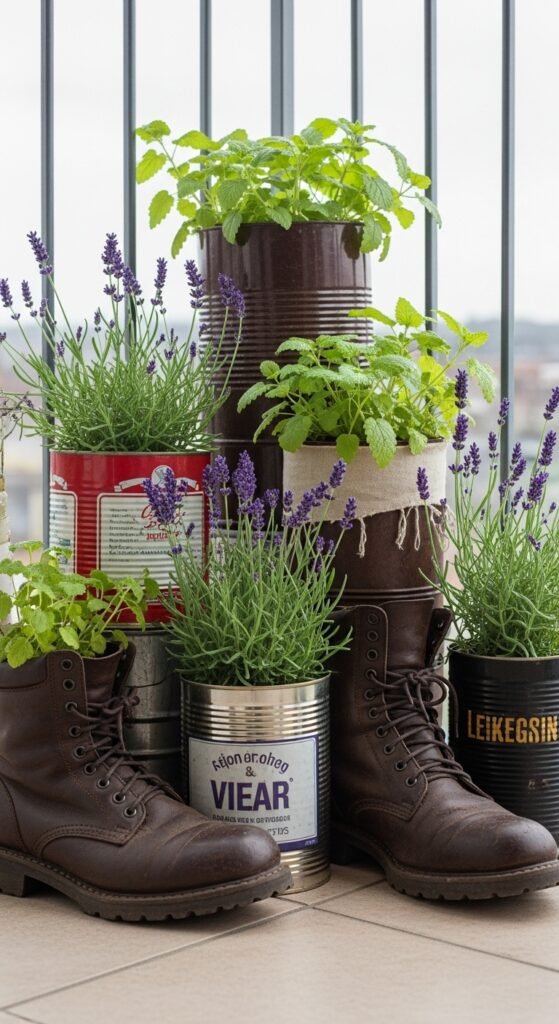
Drill drainage holes in chosen vessels, then fill with potting medium. Cluster in sunny corners for cohesion. For upcycling inspiration, consider plastic bottle planter adaptations, which can be scaled for herbs. Monitor for nutrient depletion and replenish as needed, ensuring consistent care for thriving plants.
7) Hydroponic Balcony Setups
Implement a soilless hydroponic system using nutrient-rich water for your balcony herbs. This technique suits fast-growers like basil or mint in vertical towers or troughs.
It delivers accelerated growth and water efficiency, ideal for urban settings with limited soil access. The clean setup minimizes mess and pest intrusions.
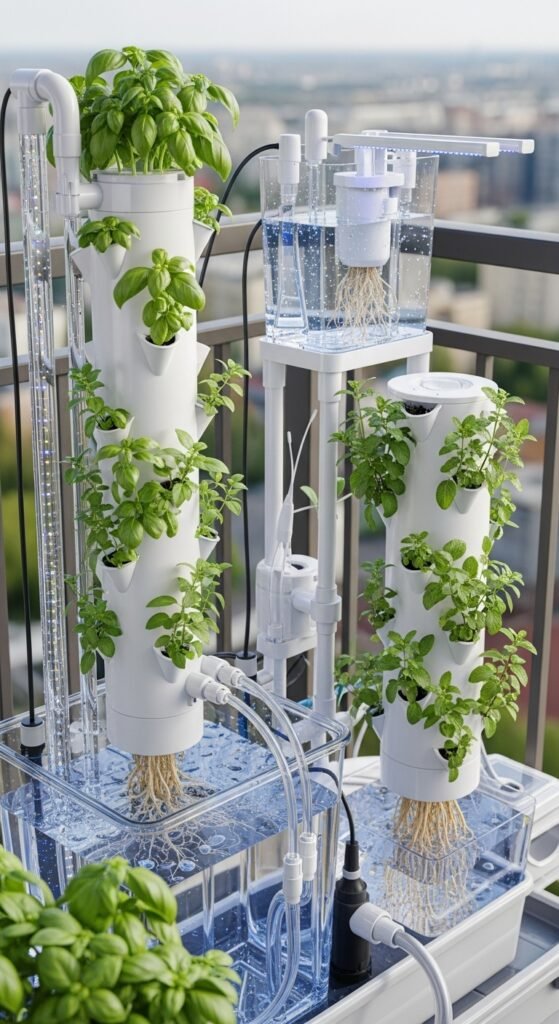
Set up a basic kit with reservoirs, pumps, and grow lights if needed. Circulate oxygenated solutions balanced for herbs. For tower configurations, reference strawberry tower DIY methods adaptable to herbs. Adjust pH levels regularly and harvest mature leaves to maintain productivity.
8) Companion Planting Strategies
Pair compatible herbs in shared containers on your balcony, such as basil with tomatoes or chamomile with cilantro. This fosters mutual benefits in growth and pest control.
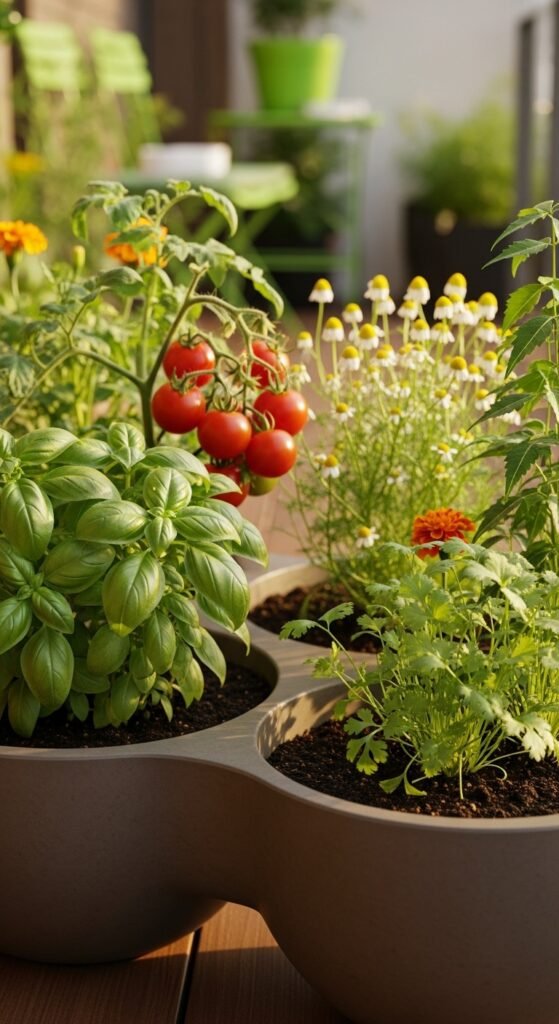
The approach yields enhanced flavor profiles and natural defense, optimizing space and resources effectively.
Select synergies based on needs, planting in large pots with divided sections. Ensure adequate sunlight and soil depth. For pest management, incorporate citronella plant care techniques alongside herbs. Rotate companions seasonally and thin as necessary for balanced development.
9) Self-Watering Pot Innovations
Utilize pots with built-in reservoirs that supply water gradually to your balcony herbs. This is perfect for busy schedules, supporting consistent moisture for rosemary or oregano.
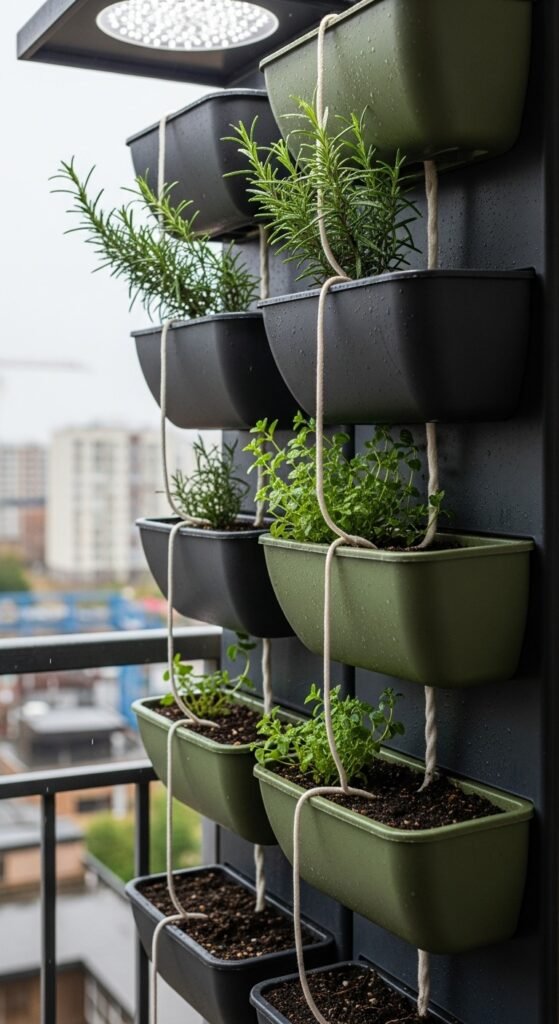
These systems provide reduced watering frequency and healthier roots, preventing over or under-hydration issues common in exposed balconies.
Fill reservoirs weekly, planting in wicking-friendly media. Group pots for microclimates. For similar efficient designs, view patio herb garden setups. Supplement with liquid nutrients and prune regularly to focus energy on foliage.
10) Herb Wheel Configurations
Arrange herbs in a circular wheel pattern using divided planters on your balcony floor. Segment for varieties like parsley in the center and trailing mint on edges.
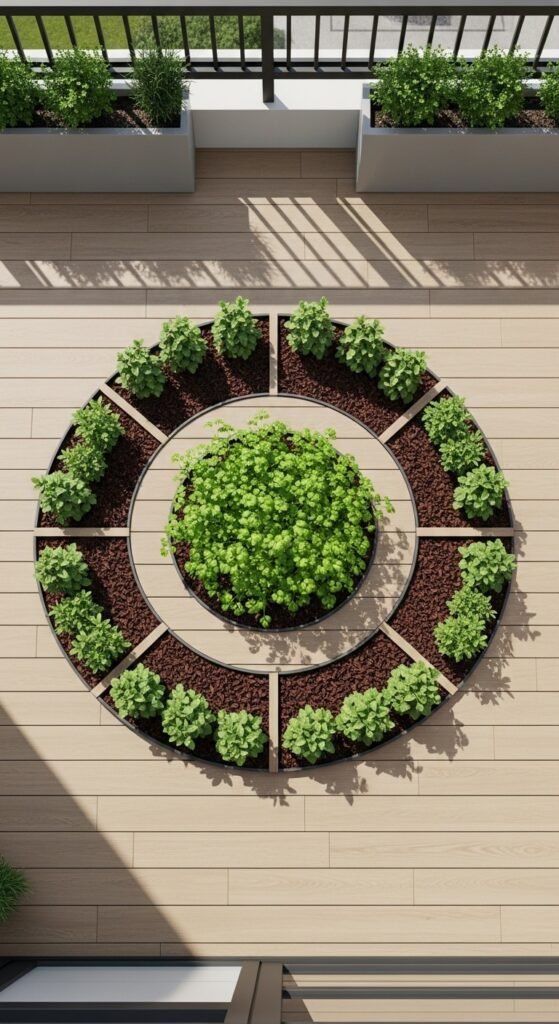
This layout ensures equitable sun distribution and easy rotation, facilitating maintenance and aesthetic symmetry.
Construct from wood or stone, filling sections individually. Position for full exposure. For general guidance, consult spring gardening tips applicable to herbs. Mulch surfaces to retain moisture and harvest outer leaves first for continuous supply.
11) Ladder-Style Herb Stands
Repurpose ladders as tiered stands for potted herbs, leaning against balcony walls. Place shade-preferring herbs lower and sun-seekers higher, like dill below basil.
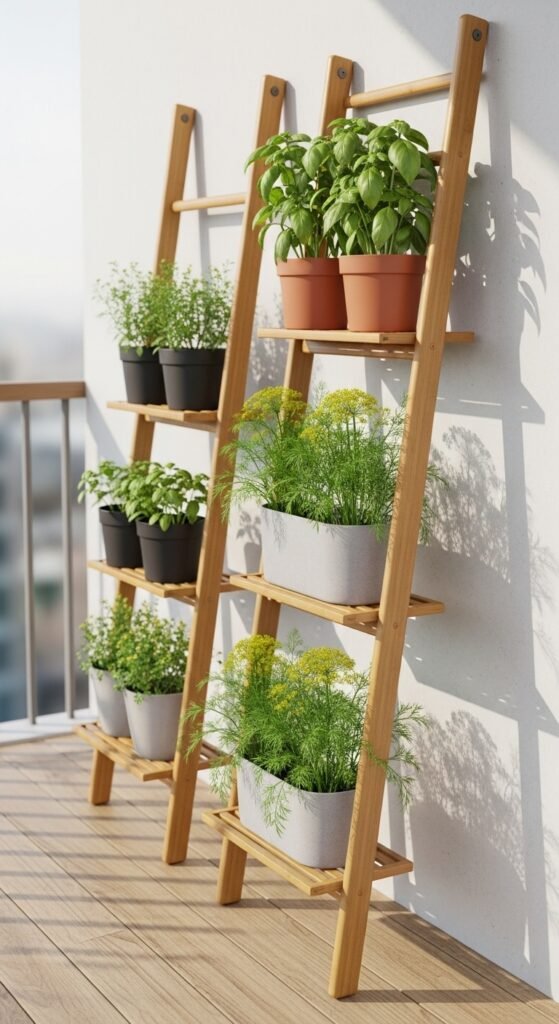
The vertical orientation offers space optimization and portability, allowing reconfiguration as seasons change.
Secure rungs with trays or hooks, ensuring stability. Use lightweight pots to avoid overload. For pallet-based alternatives, explore pallet planter innovations. Water from top down and inspect for stability routinely.
12) Fabric Pocket Planters
Hang fabric pockets on balcony walls for individual herb compartments. This flexible system accommodates small-rooted herbs like thyme, adapting to irregular surfaces.
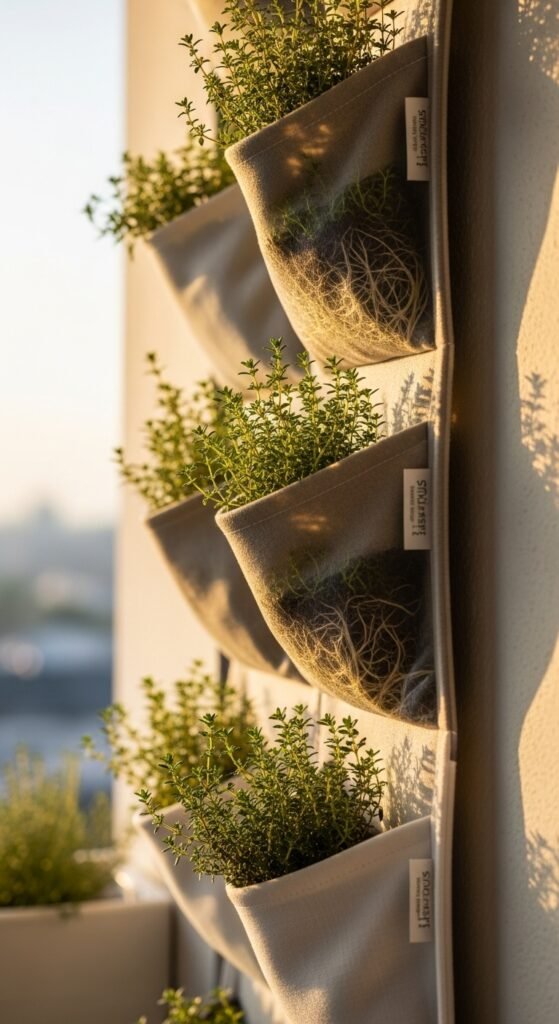
It delivers breathable fabric for root health and easy installation, ideal for renters seeking non-permanent solutions.
Attach with hooks or adhesive, filling pockets with soil. Choose south-facing walls for warmth. Maintain by watering evenly and fertilizing sparingly.
13) Stackable Pot Towers
Stack terracotta or plastic pots in towers for a compact herb garden. Alternate sizes for stability, planting cascading herbs like oregano on outer rims.
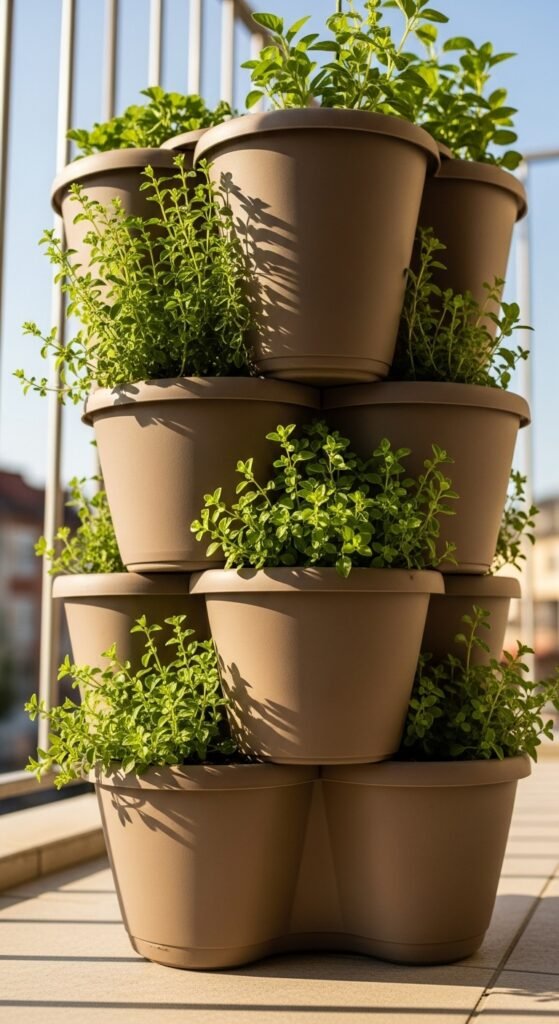
This modular design provides scalability and soil separation, preventing cross-contamination among varieties.
Assemble with central supports if needed, positioning in bright areas. Drain excess water to avoid sogginess. Rotate towers weekly for uniform light.
14) Mini Greenhouse Enclosures
Enclose sections of your balcony with portable greenhouses for protected herb growth. This shields sensitive plants like basil from wind and temperature fluctuations.
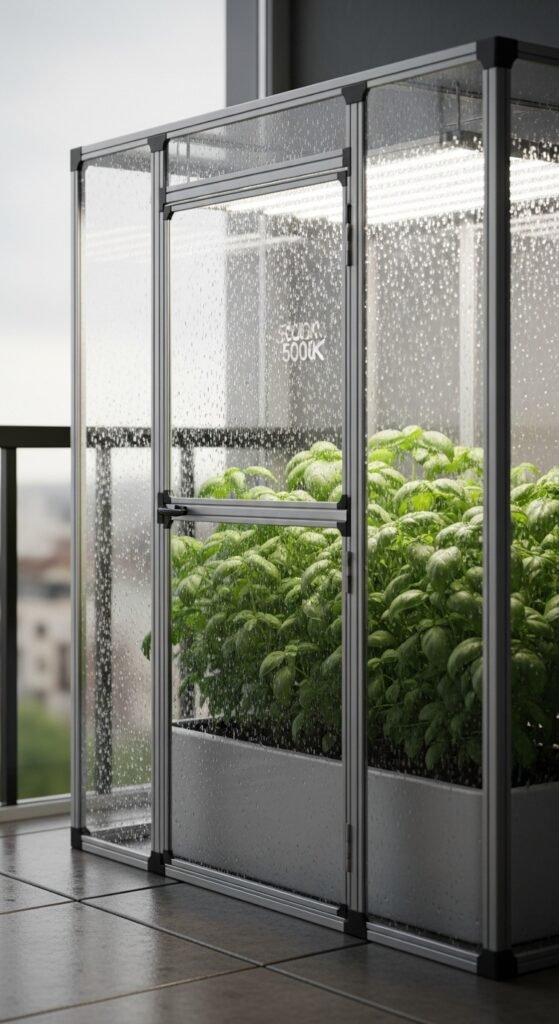
The controlled environment extends growing seasons and humidity regulation, boosting yields in variable climates.
Select clear plastic models, ventilating as required. Monitor internal conditions closely.
15) Mobile Cart Herb Gardens
Use wheeled carts to house potted herbs, enabling mobility across your balcony. This allows repositioning for optimal sun, featuring mixed herbs like rosemary and sage.
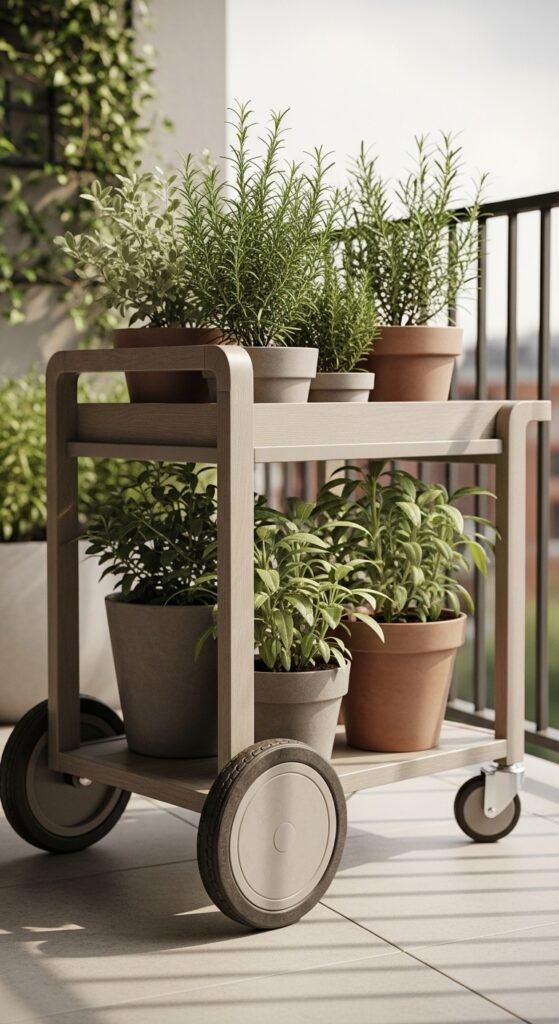
It ensures flexibility and protection from elements, adapting to daily weather changes.
Load carts with balanced weights, rolling to sheltered spots when needed. Clean wheels periodically for smooth operation.
Key Principles for Balcony Herb Gardening
Soil and Container Selection
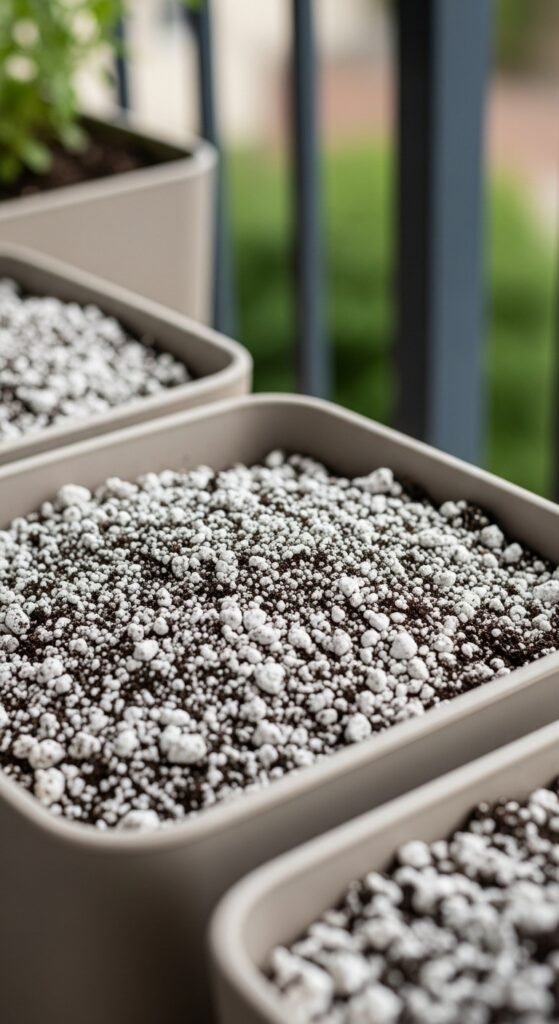
Opt for well-draining potting mixes tailored to herbs, avoiding heavy garden soil that compacts. Choose containers with holes to prevent waterlogging, selecting sizes based on root depth—larger for perennials like rosemary.
Sunlight and Positioning
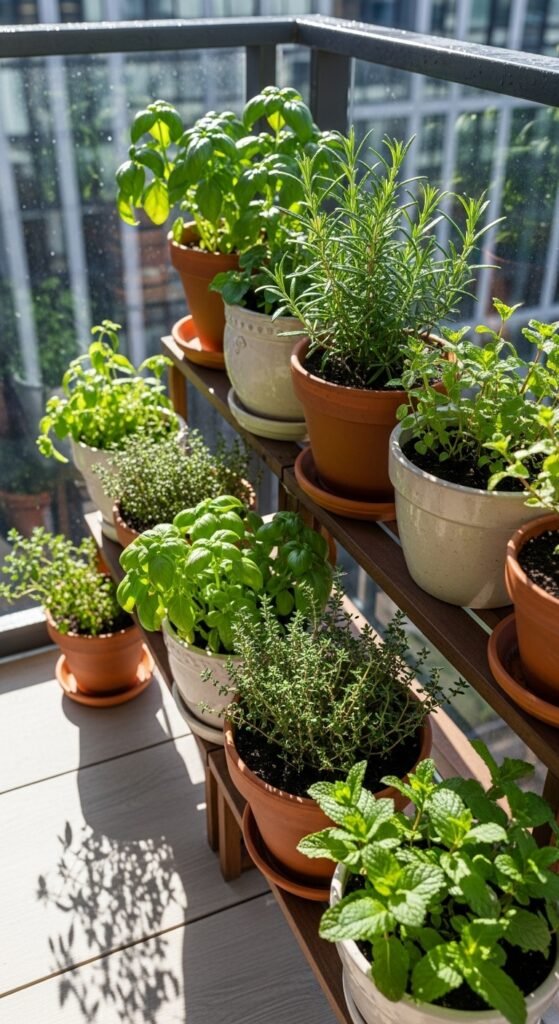
Position your garden to receive 6-8 hours of direct sunlight daily, rotating pots for even exposure. South-facing balconies are ideal; supplement with grow lights if shaded.
Maintenance and Harvesting Tips
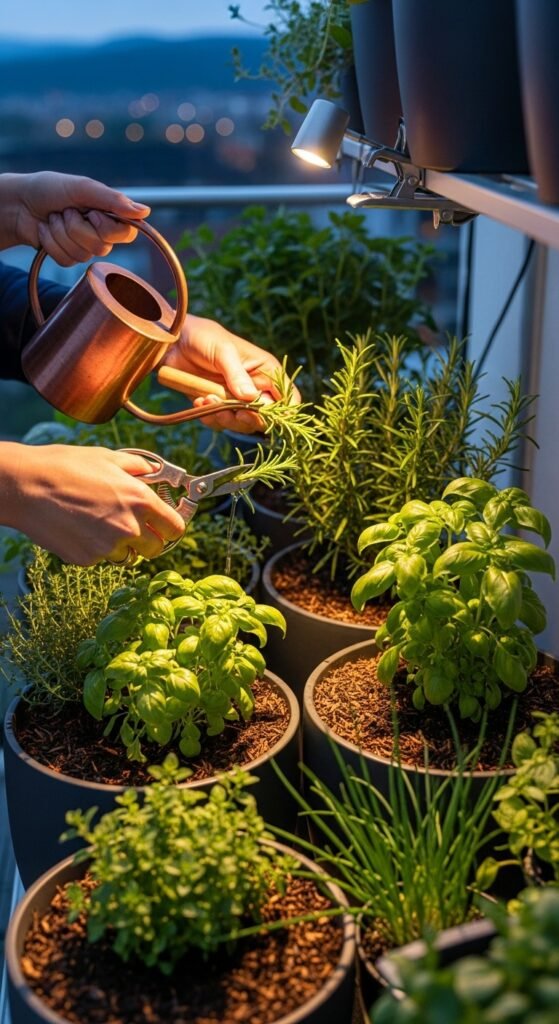
Water when the top inch of soil dries, using mulch to retain moisture. Harvest regularly to encourage new growth, pinching tips for bushiness. Apply balanced fertilizers sparingly to avoid legginess.
Frequently Asked Questions
What herbs grow best on a balcony?
Herbs such as basil, mint, rosemary, thyme, and parsley thrive on balconies due to their adaptability to containers and varying light conditions. Select based on your climate and usage preferences.
How much sunlight does a balcony herb garden need?
Most herbs require at least 6 hours of direct sunlight daily. Monitor your balcony’s exposure and adjust plant positions or use reflective surfaces to enhance light distribution.
Can I grow herbs on a shady balcony?
Yes, shade-tolerant herbs like mint, chives, and cilantro can succeed with 4 hours of indirect light. Avoid sun-loving varieties and consider supplemental lighting for better results.
How do I prevent pests in my balcony herb garden?
Inspect plants regularly, use neem oil sprays, and encourage beneficial insects. Ensure good airflow and avoid overwatering to minimize common issues like aphids or fungal growth.
What is the best soil for balcony herbs?
Use a lightweight, well-draining potting mix amended with perlite or vermiculite. This promotes root health and prevents compaction in confined containers.