
Pruning your apple trees is a fundamental aspect of orchard care that directly impacts their health, productivity, and longevity. In this comprehensive apple pruning guide, you’ll discover how strategic cuts can encourage vigorous growth, improve air circulation, and maximize fruit yield. Whether you’re a novice gardener or seasoned horticulturist, understanding the principles behind pruning helps prevent common issues like disease buildup and overcrowded branches, leading to stronger trees that produce larger, tastier apples.
Why invest time in pruning? Beyond aesthetics, it stimulates new growth, balances the tree’s energy between foliage and fruit, and makes harvesting easier. Consider the nuances: over-pruning can stress the tree, while under-pruning leads to weak structures prone to breakage. This guide explores 15 practical tips, each with what to do, why it matters, and how to execute it effectively, incorporating edge cases like young versus mature trees or different varieties.
By following these steps, you’ll not only enhance your apple trees’ resilience against pests and weather extremes but also enjoy the satisfaction of a thriving garden. Remember, consistency is key—annual pruning builds on previous efforts for optimal results.
1) Determine the Optimal Pruning Season
You should prune your apple trees during their dormant period, typically late winter to early spring before buds swell. This timing minimizes stress and allows wounds to heal quickly as growth resumes. Why is this crucial? Pruning in dormancy reduces the risk of disease transmission through open cuts and lets you clearly see the tree’s structure without leaves obstructing your view. For instance, in colder climates, wait until the harshest frosts pass to avoid freeze damage; in milder areas, you might start earlier.
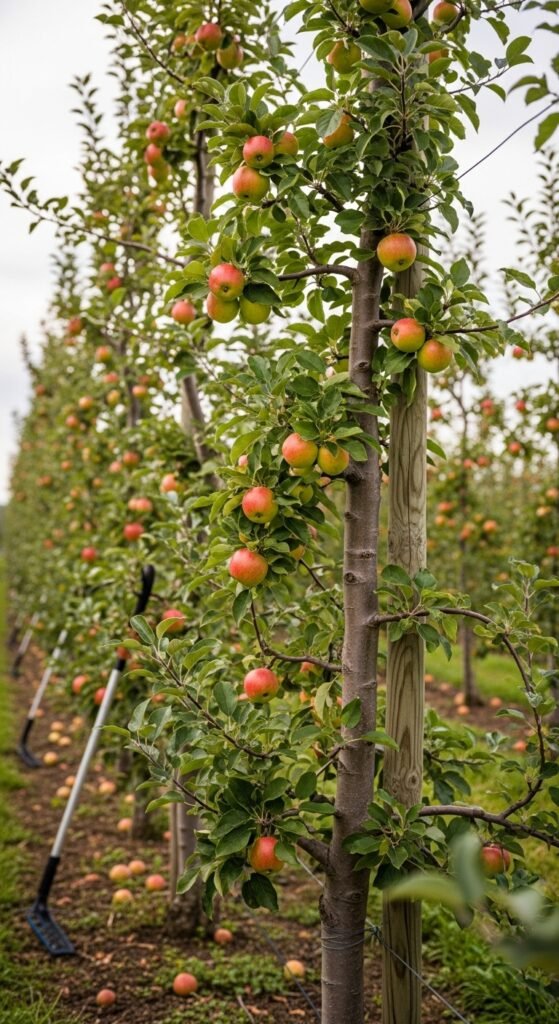
How to proceed: Assess your local climate—use tools like a frost date calculator. Begin by inspecting the tree for any immediate hazards. Edge cases include summer pruning for minor corrections, but limit it to removing water sprouts to avoid stimulating excessive vegetative growth. This approach ensures healthier regrowth and prevents energy waste on non-productive branches. If you’re expanding your orchard, consider our advice on when to plant fruit trees to align with pruning cycles.
Implications are significant: Proper timing can increase fruit set by up to 20%, according to horticultural studies, while improper cuts might lead to biennial bearing patterns.
2) Gather the Right Pruning Tools
Equip yourself with sharp, high-quality tools like bypass pruners for small branches, loppers for medium ones, and a pruning saw for larger limbs. Why invest in these? Dull tools cause ragged cuts that heal slowly and invite infections, whereas clean slices promote rapid callusing and reduce disease risk. Consider ergonomics for comfort during extended sessions, especially if you have multiple trees.
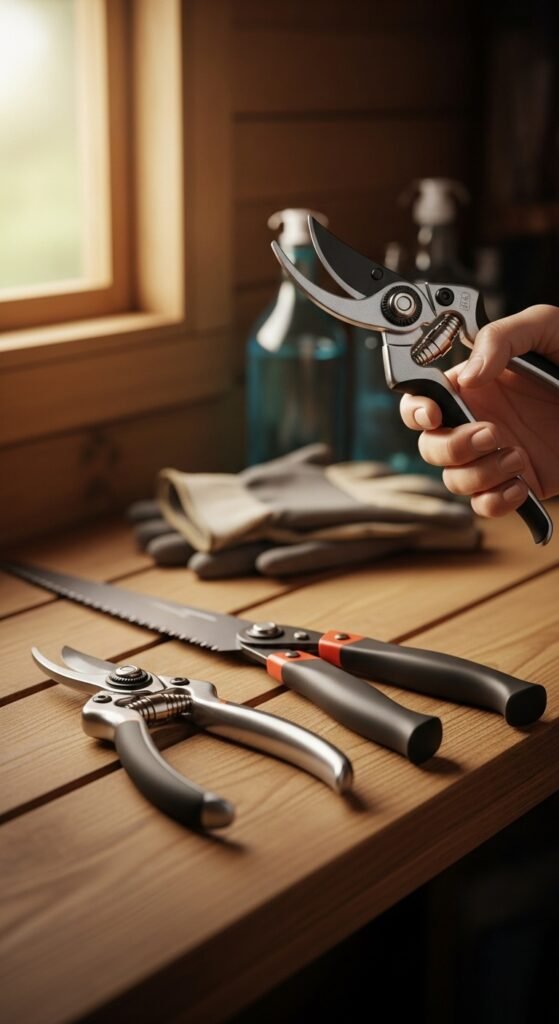
How to choose and use: Sterilize tools with alcohol between cuts to prevent spreading pathogens. For young trees, pruners suffice; mature ones may need saws for thick branches. An edge case is dealing with high branches—use a pole pruner to avoid ladder accidents. This preparation leads to precise, efficient pruning and minimizes tree trauma. Pair this with knowledge from our fruit tree pruning calendar for year-round planning.
Nuances include tool maintenance: Sharpen blades annually to maintain effectiveness. Implications extend to safety—proper tools reduce injury risks and enhance overall garden productivity.
3) Identify and Remove Dead or Diseased Wood
Start by scanning for branches that are dead, damaged, or showing signs of disease like cankers or discoloration. Remove them entirely to the branch collar. Why prioritize this? Dead wood harbors pests and fungi, which can spread to healthy parts, compromising the tree’s vitality and fruit quality. In neglected trees, this step alone can revitalize growth.
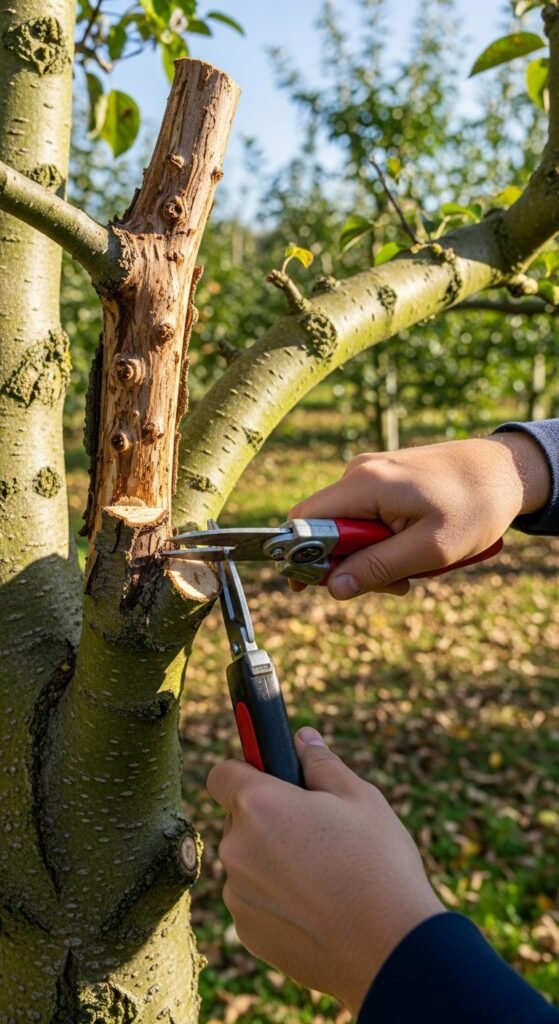
How to execute: Use pruners for small pieces and saws for larger ones, cutting just outside the collar to encourage healing. For fire blight-affected areas, cut 6-12 inches below symptoms. An edge case is winter identification—scratch bark to check for green underneath. This results in improved tree health and reduced pest pressures. If diseases persist, explore our tips on peach leaf curl prevention, adaptable to apples.
Consider implications: Early removal prevents major outbreaks, potentially saving the tree, while delaying could necessitate more aggressive pruning later.
4) Thin Out Crowded Branches
Focus on eliminating branches that cross, rub, or grow inward, aiming for an open center structure. Thin to allow light and air penetration. Why is thinning essential? Overcrowding leads to poor fruit development, increased humidity fostering diseases, and weak wood prone to breakage under fruit load.
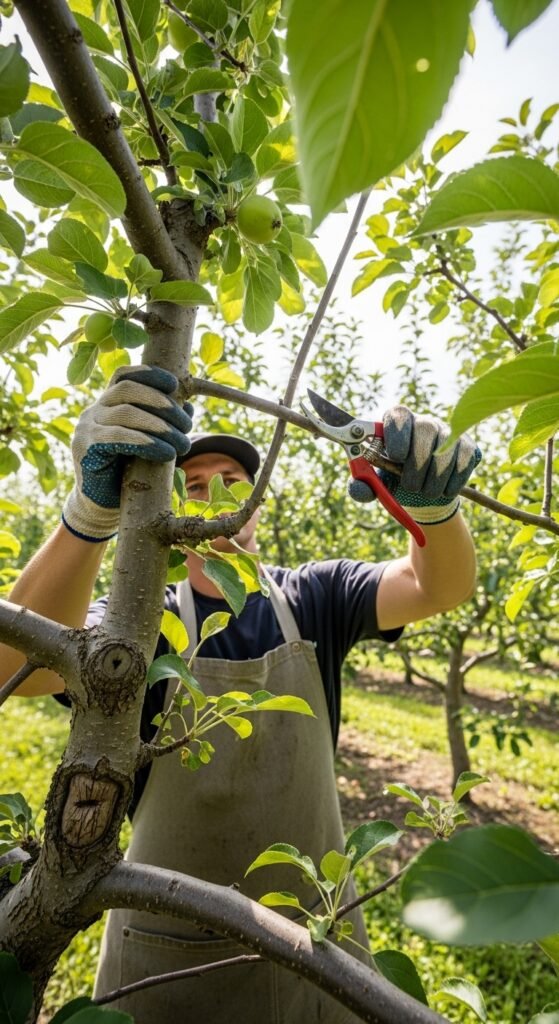
How to do it: Select branches spaced 4-6 inches apart vertically, removing the weaker ones. For dwarf varieties, thin more aggressively; standards allow slightly denser growth. Edge cases include windy areas—prioritize sturdy scaffolds. Achieve better airflow and sunlight exposure with targeted removals. Complement this by learning about thinning fruit trees for enhanced production.
Nuances involve variety differences: Espaliered trees require stricter thinning. Implications include higher-quality apples and easier maintenance long-term.
5) Shape the Tree’s Overall Structure
Aim for a modified central leader or open vase shape, depending on your tree’s age and type. Remove competing leaders and encourage wide-angled branches. Why shape strategically? A well-structured tree supports heavy fruit loads, improves harvest access, and promotes even ripening through balanced light distribution.
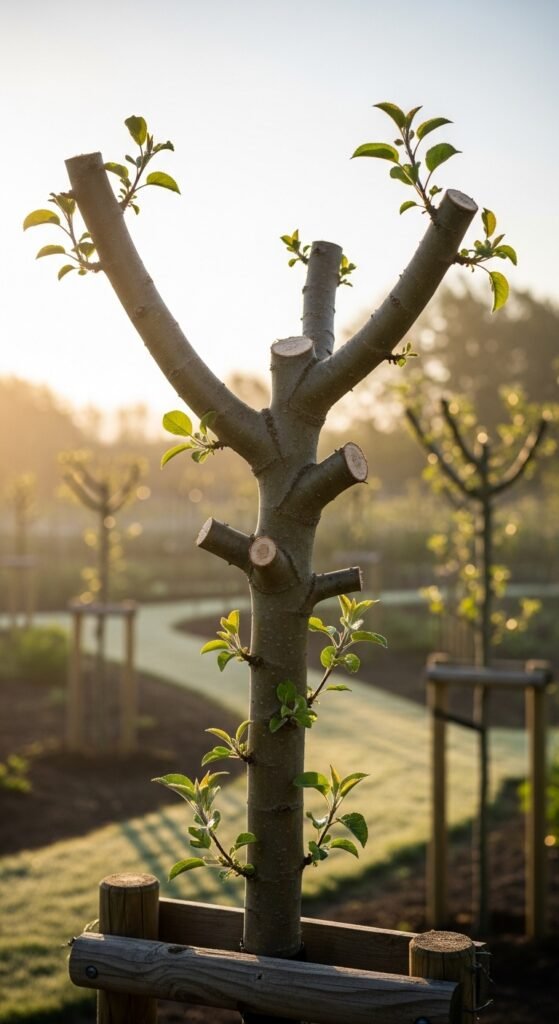
How to shape: For young trees, select 3-5 scaffold branches; mature ones may need rejuvenation cuts. In small spaces, consider columnar varieties. An edge case is grafted trees—prune below graft unions carefully. This fosters structural integrity and optimal growth patterns. For advanced techniques, see our guide on espalier fruit trees.
Explore implications: Proper shaping can extend tree lifespan by decades, while poor structure risks limb failure during storms.
6) Prune Young Apple Trees Aggressively
For trees under 3 years, prune back to 28-36 inches at planting, then select strong laterals. Remove 20-30% of new growth annually. Why aggressive? It establishes a robust framework, directing energy to roots and scaffolds rather than excessive foliage, setting the stage for future productivity.
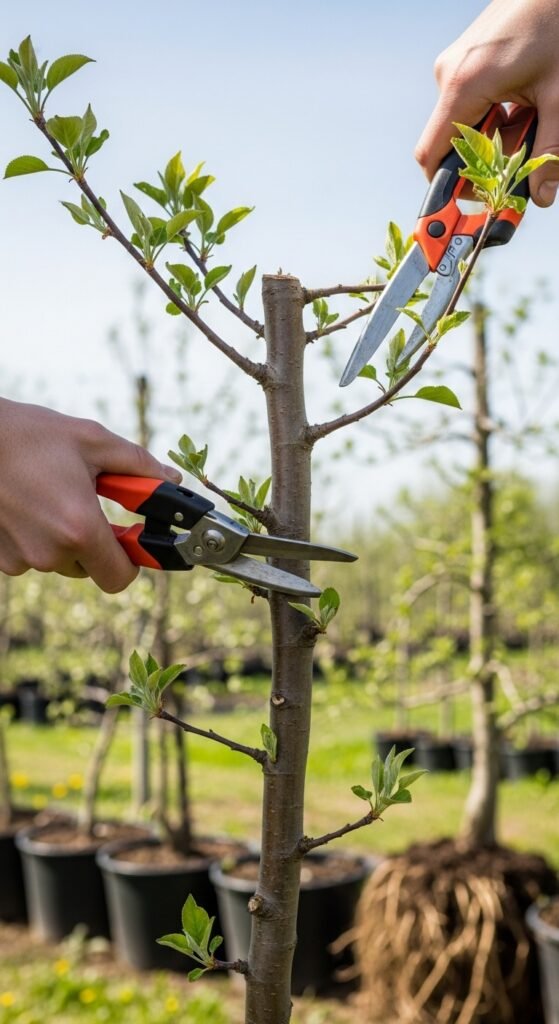
How: Head back the central leader by one-third, thinning side shoots. In poor soil, prune lighter to avoid shock. Edge cases include container-grown trees—prune roots too if pot-bound. Enjoy vigorous establishment and early fruiting potential. Integrate with fruit tree fertilizing for balanced nutrition.
Nuances: Semi-dwarf rootstocks respond best to this. Implications encompass faster maturity but require monitoring for over-vigor.
7) Approach Mature Trees with Caution
For older trees, prune conservatively, removing no more than 20% of canopy to avoid stress. Focus on rejuvenation over time. Why cautious? Mature trees have established systems; heavy pruning can induce water sprouts or reduce yields temporarily.
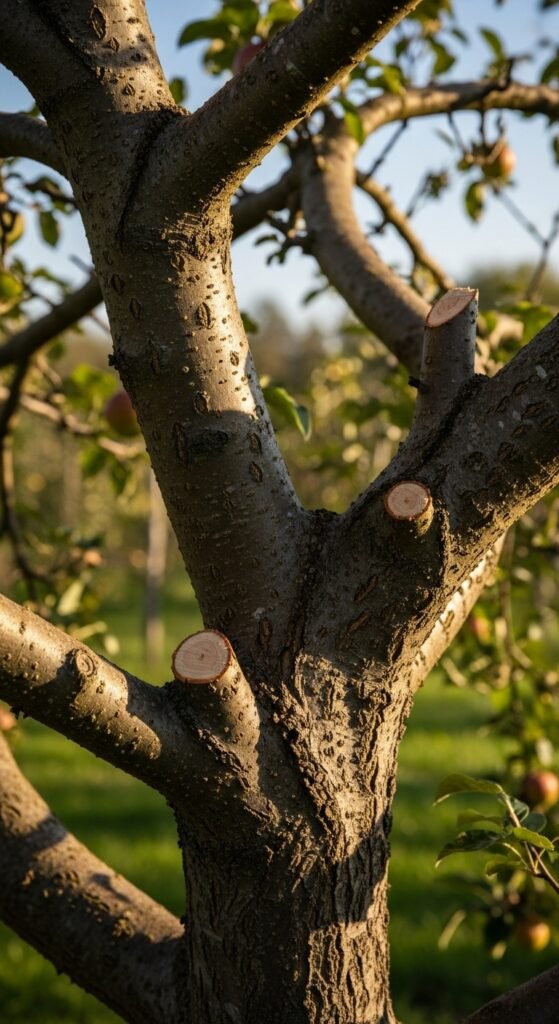
How: Spread major cuts over 2-3 years, prioritizing vertical growth removal. In overgrown cases, use drop-crotching. Edge case: Heritage varieties may need specialized care. This maintains productivity without shock and preserves tree health. If growing other fruits, compare with how to prune pear trees.
Consider implications: Gradual pruning prevents decline, ensuring consistent harvests.
8) Incorporate Heading Cuts Wisely
Use heading cuts to shorten branches, stimulating bushier growth below the cut. Apply to encourage fruiting spurs. Why selective? They invigorate lateral buds but can lead to dense canopies if overused, affecting light penetration.
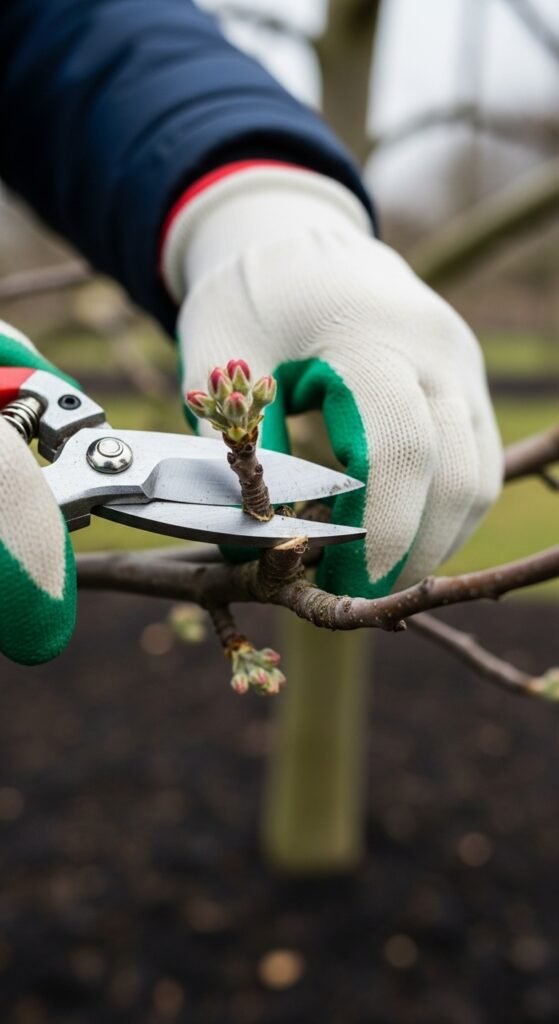
How: Cut to an outward-facing bud, angling at 45 degrees. Limit to young wood; avoid on old branches. Edge cases include spur-bearing varieties—head minimally. Achieve compact, fruitful branches with controlled vigor.
Nuances: Combine with thinning for balance. Implications: Enhances fruit size but requires follow-up pruning.
9) Master Thinning Cuts for Openness
Thinning cuts remove entire branches back to their origin, promoting an airy structure. Prioritize for central congestion. Why effective? They reduce density without stimulating regrowth in unwanted areas, improving overall tree hygiene.
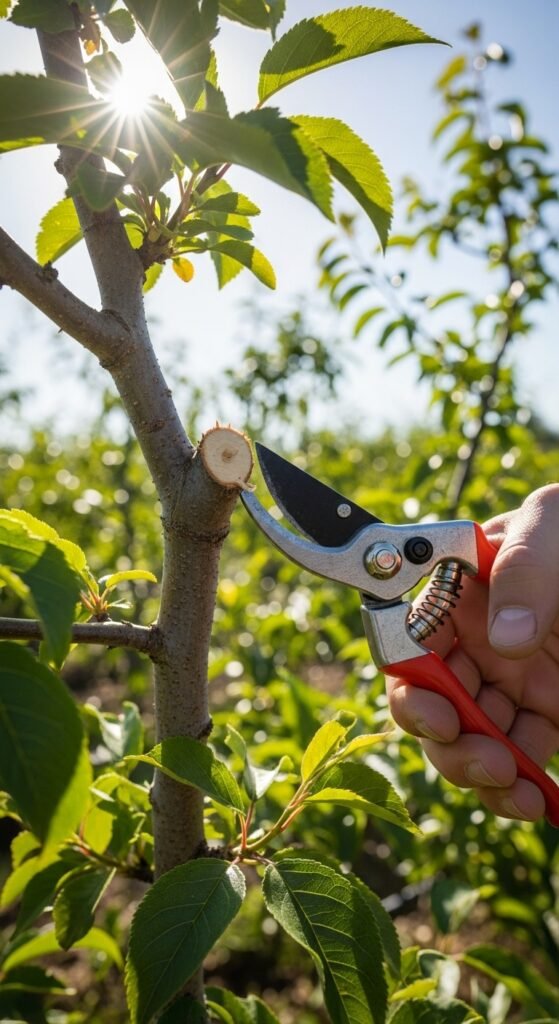
How: Identify and cut at the collar, avoiding stubs. For large limbs, use the three-cut method to prevent tearing. Edge case: Storm-damaged trees need more thinning. This yields enhanced disease resistance and better fruit quality. Link to pollination benefits via apple tree pollination.
Explore implications: Better airflow cuts fungal risks by 30%, per research.
10) Handle Water Sprouts and Suckers
Remove vertical water sprouts and root suckers promptly, as they sap energy from productive parts. Why remove? They don’t bear fruit and create clutter, diverting nutrients from apples.
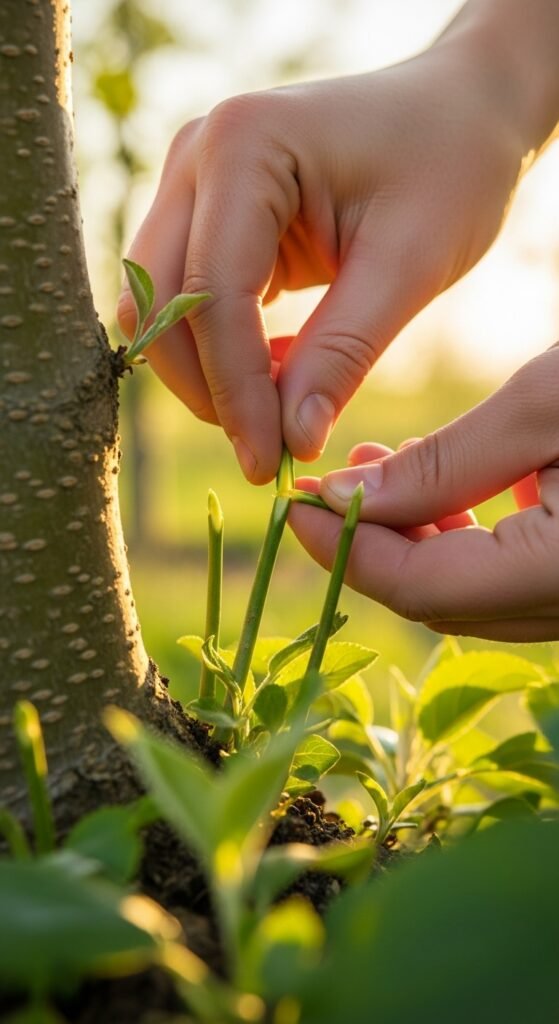
How: Pinch off young sprouts by hand; cut mature ones at base. In summer, rub them off early. Edge cases: Vigorous rootstocks produce more—monitor closely. Gain energy efficiency and cleaner tree form.
Nuances: Some varieties are prone; implications include sustained yields.
11) Balance Branch Angles for Strength
Encourage branches at 45-60 degree angles from the trunk; remove narrow or wide ones. Why balance? Ideal angles support fruit weight without splitting, optimizing structural stability.
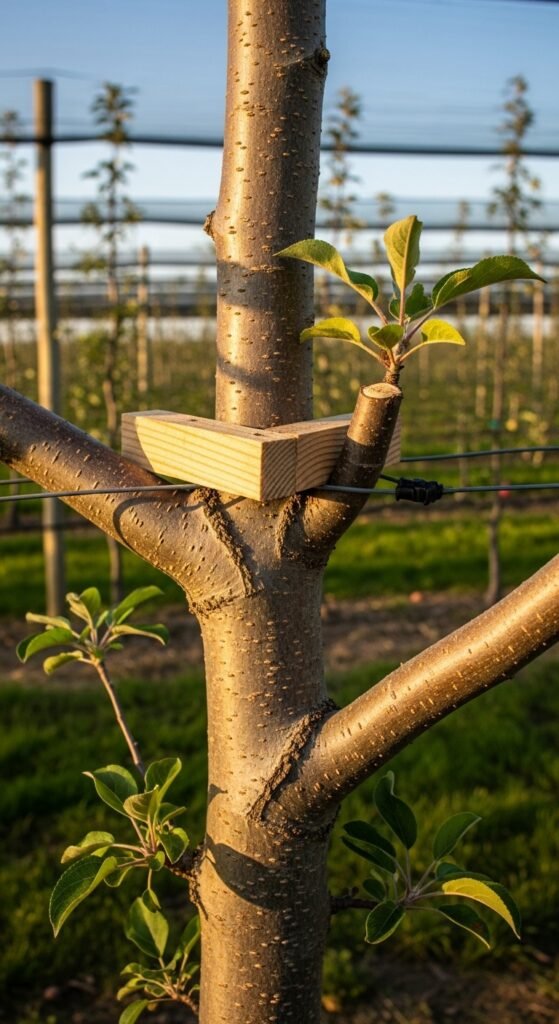
How: Use spacers or weights on young branches; prune to redirect. For mature fixes, gradual adjustments. Edge case: Windy sites favor wider angles. This ensures durable scaffolds and reduced breakage. For similar care, check pruning cherry trees.
Implications: Prevents costly damage, enhancing longevity.
12) Focus on Fruiting Wood Renewal
Prune to renew fruiting spurs every 3-5 years, removing old wood. Why renew? Aging spurs produce smaller fruit; fresh ones boost size and flavor.
How: Cut back one-third of spur clusters annually. Spur vs tip bearers differ—adjust accordingly. Edge case: Over-fertilized trees need more renewal. Enjoy larger, tastier apples with consistent production.
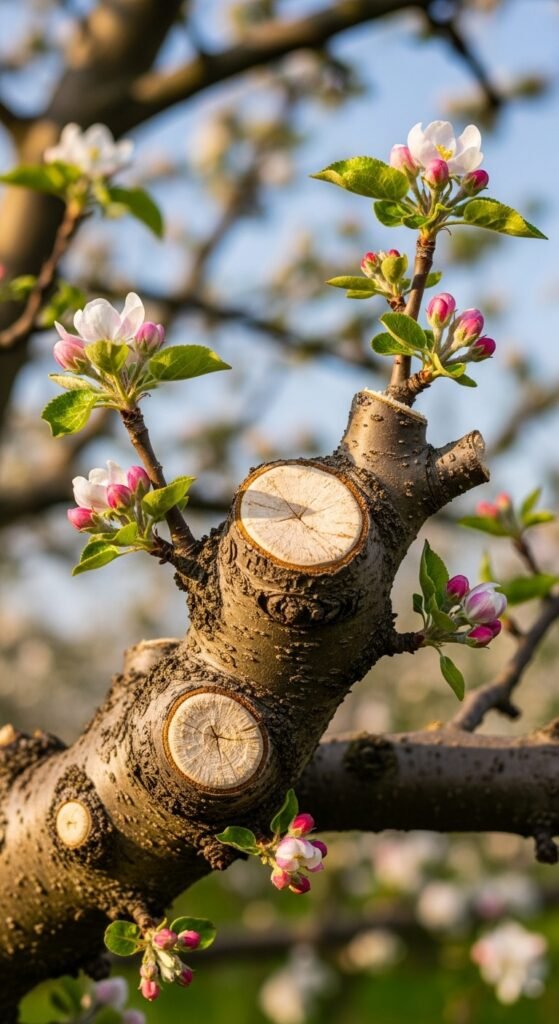
Nuances: Observe bearing habits; implications for commercial-like quality at home.
13) Avoid Common Pruning Pitfalls
Steer clear of topping, flush cuts, or pruning in wet weather to prevent issues. Why avoid? These cause decay, weak regrowth, or disease entry.
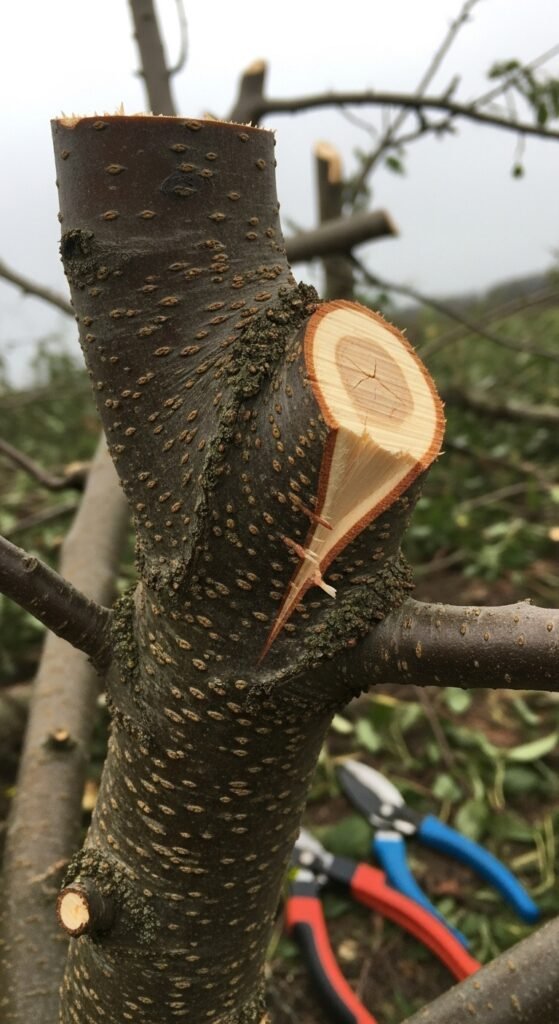
How: Educate on proper techniques; practice on small branches first. Edge cases: Emergency pruning after storms—seal if needed. This safeguards tree vitality and long-term success. After pruning, consider preserving harvest with canning applesauce.
Implications: Minimizes regrets, fostering confidence in your apple pruning guide application.
14) Provide Post-Pruning Care
After pruning, mulch, water, and monitor for stress signs. Why care? Cuts are vulnerabilities; support aids recovery and deters infections.
How: Apply organic mulch, fertilize lightly in spring. Edge case: Dry climates need extra watering. Achieve swift healing and robust rebound.
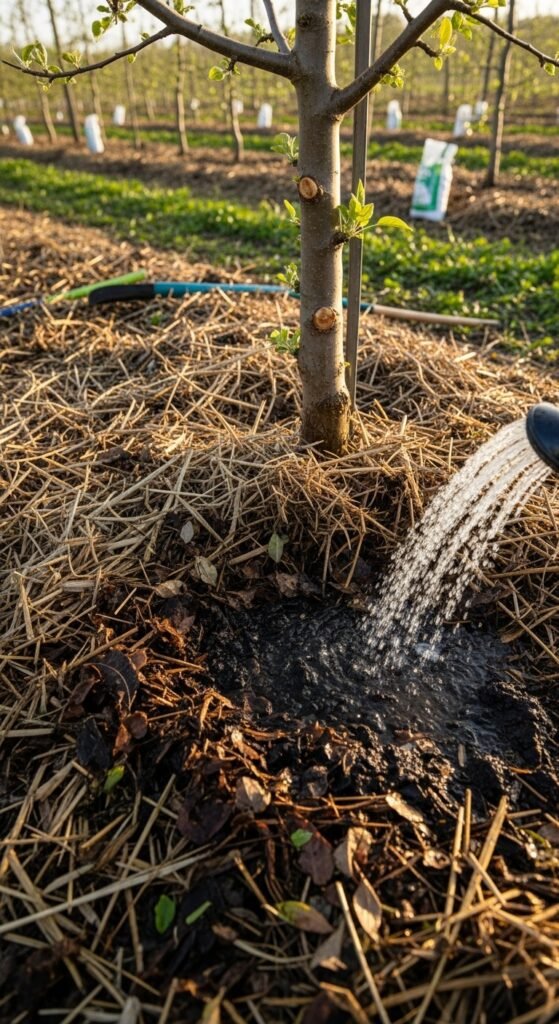
Nuances: Avoid over-fertilizing; implications include bumper crops following seasons.
15) Monitor and Adjust Annually
Inspect trees yearly, adjusting pruning based on growth and health. Why monitor? Trees evolve; adaptive pruning maintains balance and addresses emerging issues.
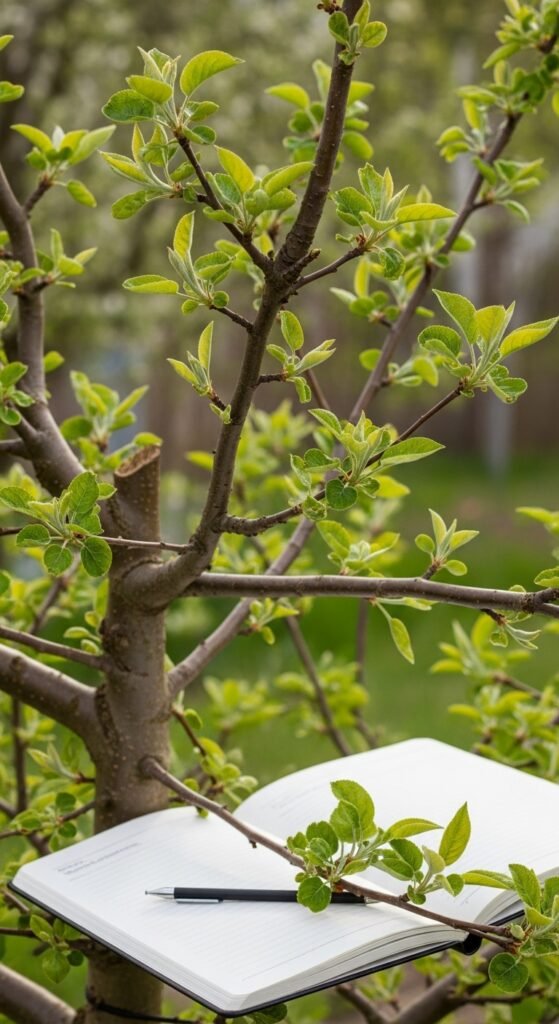
How: Keep records of cuts and responses; refine techniques. Edge cases: Changing climates may shift timings. This ensures ongoing optimization and peak performance.
Implications: Builds expertise, turning your orchard into a sustainable haven.
Key Principles of Apple Tree Pruning
The Three Main Types of Pruning Cuts
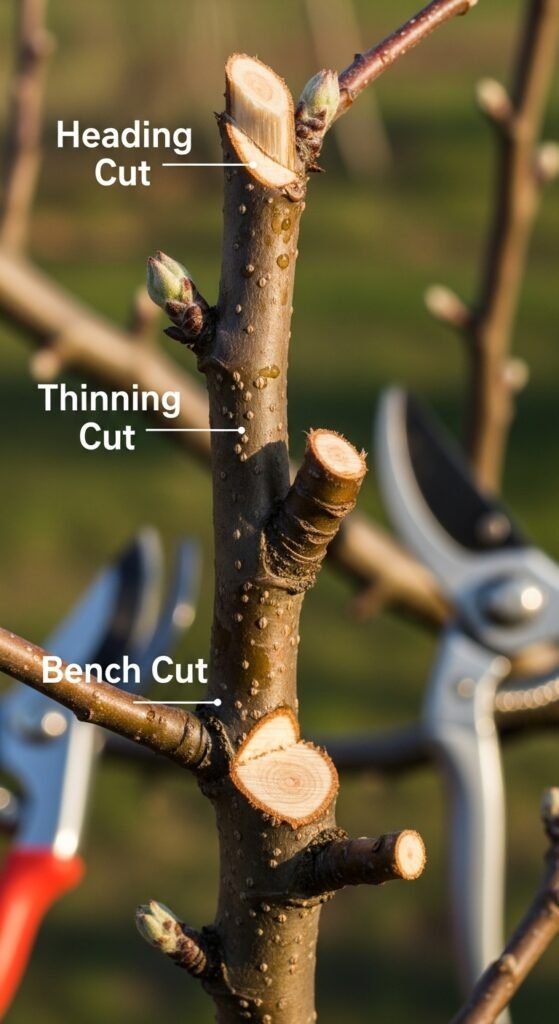
Heading cuts shorten branches to buds, thinning removes whole limbs, and bench cuts create renewal points. Each serves distinct purposes in shaping and invigorating your tree.
Considering Tree Variety and Rootstock
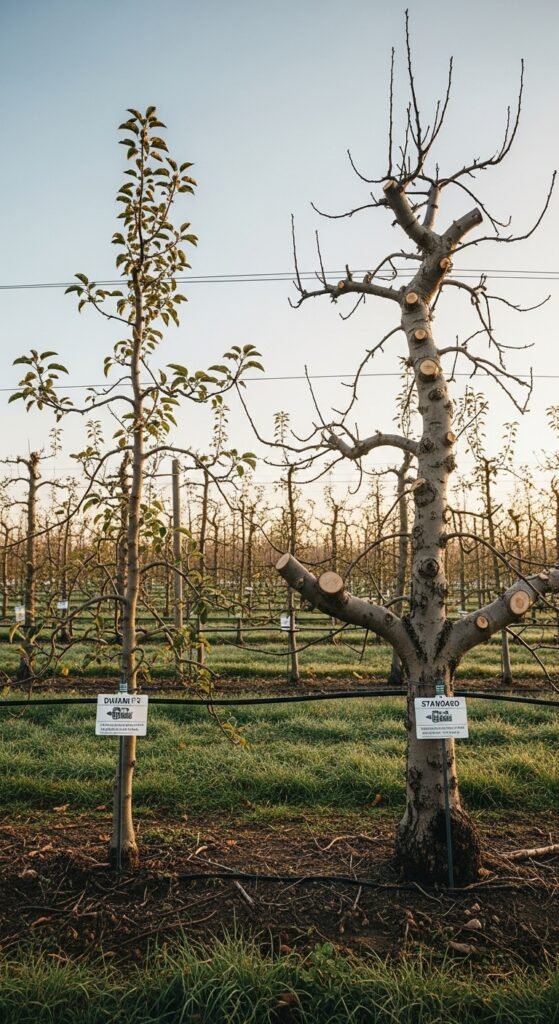
Different apple varieties like Fuji or Granny Smith respond uniquely; dwarf rootstocks require more frequent but lighter pruning than standards.
Environmental Factors and Adaptations
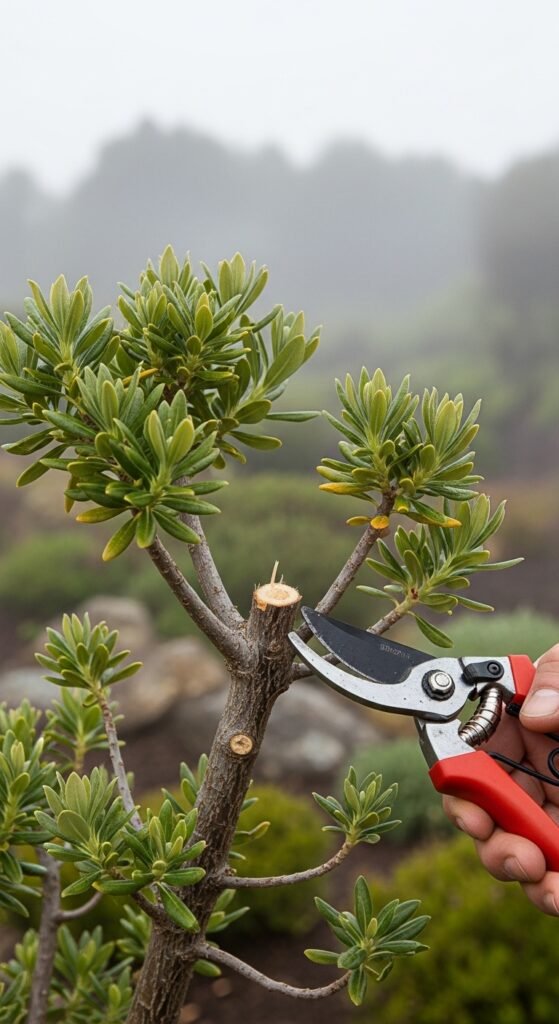
Adapt for your zone—high-altitude areas might delay pruning, while humid regions emphasize airflow to combat fungi.
Frequently Asked Questions
When should I prune my apple trees?
The best time is during dormancy in late winter, but light summer pruning can address specific issues like water sprouts.
How much should I prune off each year?
Aim for 10-20% removal to avoid stressing the tree, focusing on targeted cuts rather than blanket reductions.
What if I over-prune my apple tree?
Over-pruning can lead to excessive vegetative growth; provide extra water and nutrients to aid recovery over the next season.
Do all apple varieties prune the same way?
No, spur-bearing types need spur management, while tip-bearers require careful leader pruning to preserve fruiting sites.
Can pruning improve apple flavor?
Yes, by enhancing sunlight exposure and reducing overcrowding, pruning concentrates sugars for sweeter, more flavorful fruit.