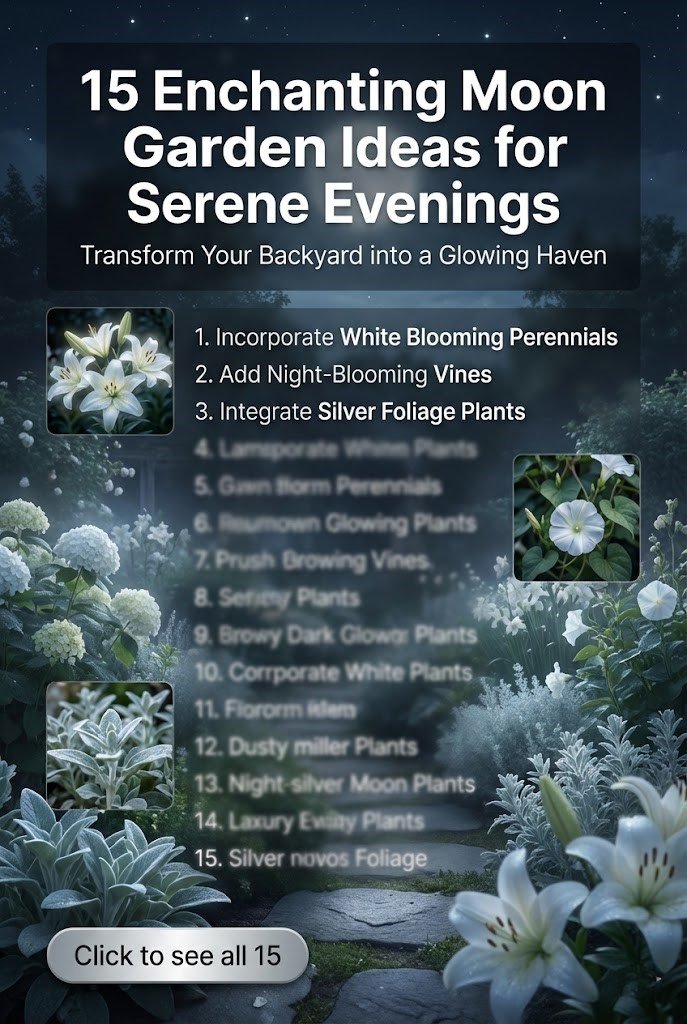
Imagine stepping into your backyard as dusk falls, where the moonlight casts a magical glow over a space designed just for nighttime enjoyment. A moon garden is a thoughtfully curated outdoor area featuring pale blooms, silvery foliage, and fragrant plants that come alive under the stars. By focusing on elements that reflect light and release scents in the evening, you create a tranquil retreat that invites relaxation and reflection after a long day.
The beauty of a moon garden lies in its ability to transform ordinary evenings into extraordinary experiences. You’ll benefit from reduced stress as the soothing ambiance promotes mindfulness, while also attracting nocturnal pollinators like moths to support your ecosystem. Whether you’re unwinding with a book or hosting intimate gatherings, these ideas will help you craft a space that’s both visually stunning and sensorially captivating, enhancing your connection to nature long after sunset.
Getting started is simpler than you might think. With careful plant selection and strategic design, even a small plot can become a luminous haven. Embrace the challenge and watch your garden evolve into a nighttime sanctuary that captivates all who visit.
1) Incorporate White Blooming Perennials
What makes white blooming perennials essential for your moon garden? These plants, such as white lilies and phlox, reflect moonlight beautifully, creating a luminous effect that brightens the space without artificial light. Their subtle glow enhances visibility, allowing you to navigate and enjoy the garden safely in low light conditions.
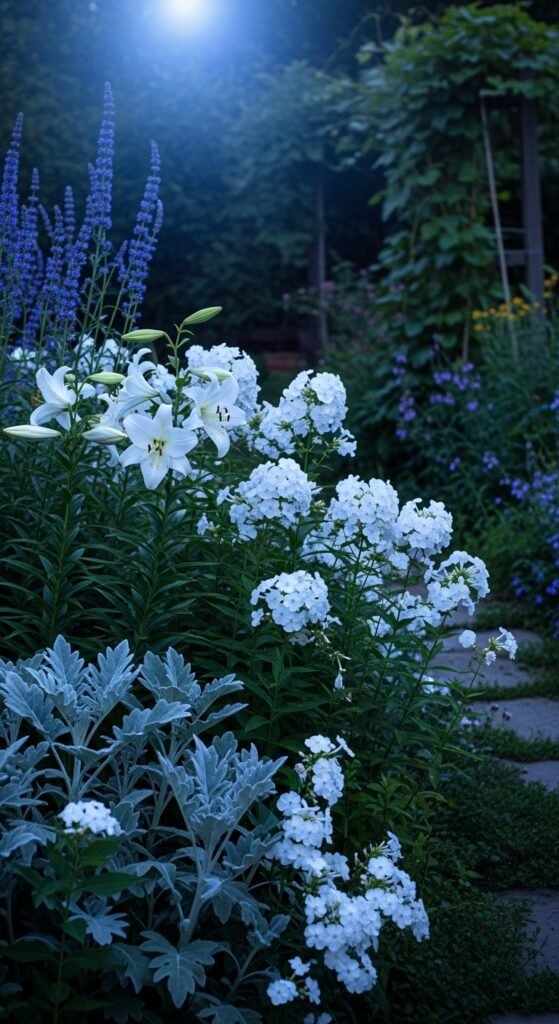
Why choose them? Beyond aesthetics, they provide a calming backdrop that promotes relaxation, while their longevity means less replanting effort over time. You’ll appreciate how they attract beneficial insects, supporting biodiversity in your yard. Imagine the serene atmosphere they foster during evening strolls.
How to implement this? Start by selecting varieties suited to your climate and soil. Plant in clusters for impact, spacing them 12-18 inches apart in well-drained soil with partial sun exposure during the day. Mulch around the base to retain moisture, and fertilize lightly in spring for robust growth. For inspiration on selecting the best white garden flowers, consider options that thrive in evening conditions. Over time, you’ll see your garden transform into a peaceful nocturnal oasis, drawing you outside more often.
2) Add Night-Blooming Vines
What are night-blooming vines, and how do they fit into your moon garden? Plants like moonflower and evening primrose open their petals as the sun sets, releasing captivating fragrances that fill the air. These climbers add vertical interest, draping over trellises or arbors to create enchanting archways.
Why integrate them? They extend your garden’s appeal into the night, offering visual and olfactory delights when other flowers fade. Their rapid growth provides quick coverage, while supporting pollinators like moths, contributing to a healthier ecosystem. You’ll find yourself lingering longer outdoors, immersed in their subtle magic.
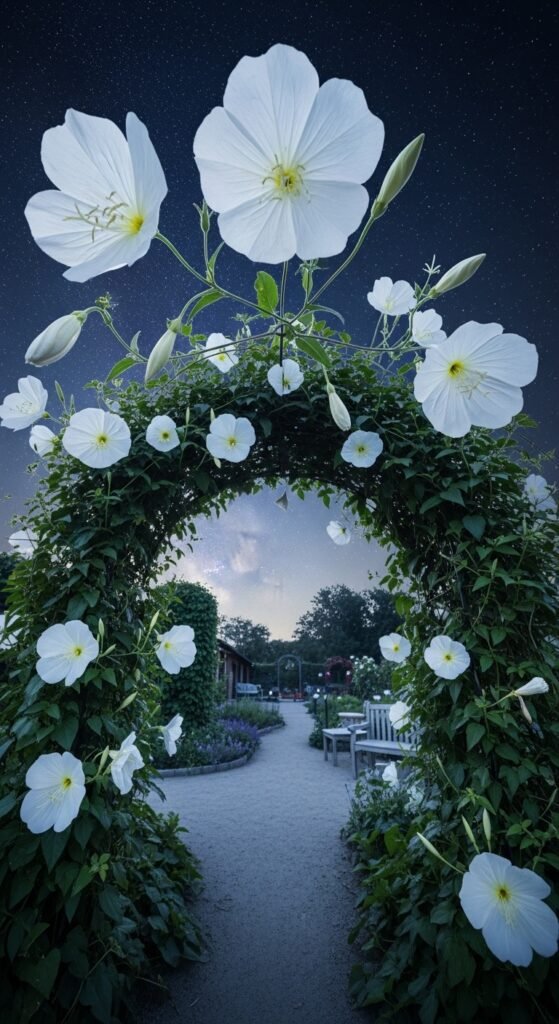
How to get started? Choose a sturdy support structure, planting seeds or seedlings in fertile, well-drained soil with full sun to partial shade. Water consistently but avoid sogginess, and train vines upward for optimal display. Prune lightly to encourage blooming. If you’re drawn to climbing varieties, explore jasmine trellis setups for similar fragrant effects. With minimal maintenance, these vines will become a highlight, turning ordinary evenings into memorable ones filled with natural wonder.
3) Integrate Silver Foliage Plants
What defines silver foliage plants in a moon garden context? Species like lamb’s ear and dusty miller feature reflective, grayish leaves that catch moonlight, adding texture and contrast without overwhelming the space.
Why are they valuable? Their metallic sheen creates depth and interest, enhancing the ethereal quality of your garden. Drought-tolerant and low-maintenance, they thrive in various conditions, saving you time and resources while providing year-round appeal.
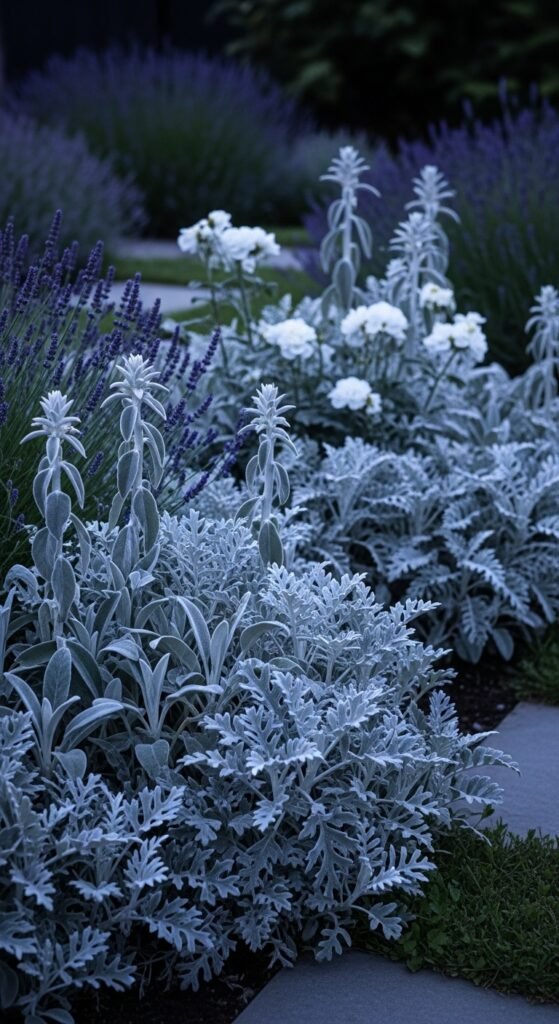
How to incorporate them effectively? Plant in borders or as ground cover, spacing 10-15 inches apart in sunny to partly shaded areas with good drainage. Mix with white flowers for balance, and trim occasionally to maintain shape. For those seeking resilient options, consider how they pair with lavender plants for added fragrance and visual harmony. This approach not only boosts nighttime visibility but also creates a cohesive design that feels both modern and timeless, inviting peaceful contemplation under the stars.
4) Feature Fragrant Evening Herbs
What role do fragrant evening herbs play in your moon garden? Herbs such as night-scented stock and heliotrope release intoxicating aromas as temperatures cool, drawing you deeper into the sensory experience.
Why include them? They stimulate multiple senses, promoting relaxation and even aiding sleep when enjoyed before bed. Easy to grow and versatile, they double as culinary additions, maximizing your garden’s utility.
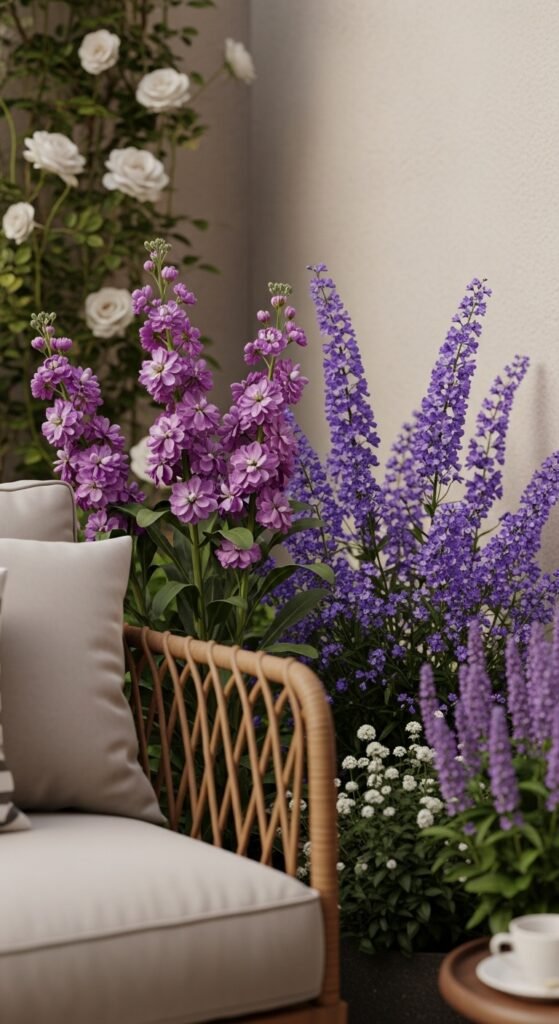
How to add them? Select a spot near seating areas, planting in pots or beds with rich, loamy soil and moderate sun. Water regularly but allow slight drying between sessions. Harvest leaves for teas or cooking to encourage bushier growth. To expand your choices, draw from a variety of fragrant flowers that complement these herbs. Over seasons, you’ll discover how their scents evolve, creating a dynamic space that evolves with the night, fostering a deeper appreciation for nature’s subtleties.
5) Install Soft Pathway Lighting
What constitutes soft pathway lighting for a moon garden? Subtle solar-powered stakes or LED strings that guide your steps without harsh glare, emphasizing natural moonlight.
Why opt for this? It ensures safety while preserving the garden’s mystical ambiance, allowing you to wander freely after dark. Energy-efficient options reduce costs and environmental impact, aligning with sustainable practices.
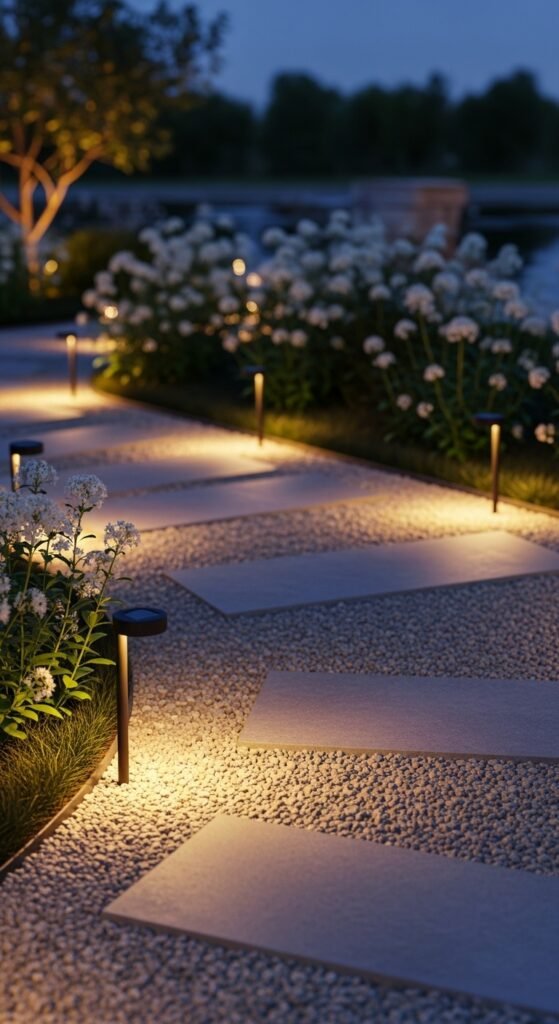
How to set it up? Map your paths, placing lights every 4-6 feet in weather-resistant fixtures. Choose warm-toned bulbs for a cozy feel, and incorporate timers for convenience. For creative arrangements, explore various path lighting ideas that blend seamlessly. This illumination not only highlights plant features but also creates intriguing shadows, adding layers of intrigue to your nocturnal landscape and encouraging more frequent evening visits.
6) Create Reflective Water Elements
What are reflective water elements in moon gardens? Shallow ponds, fountains, or birdbaths that mirror the moon and stars, adding a shimmering focal point.
Why add them? They amplify light and introduce soothing sounds, enhancing tranquility and attracting wildlife for a lively yet peaceful setting. Low-maintenance designs fit various budgets and spaces.
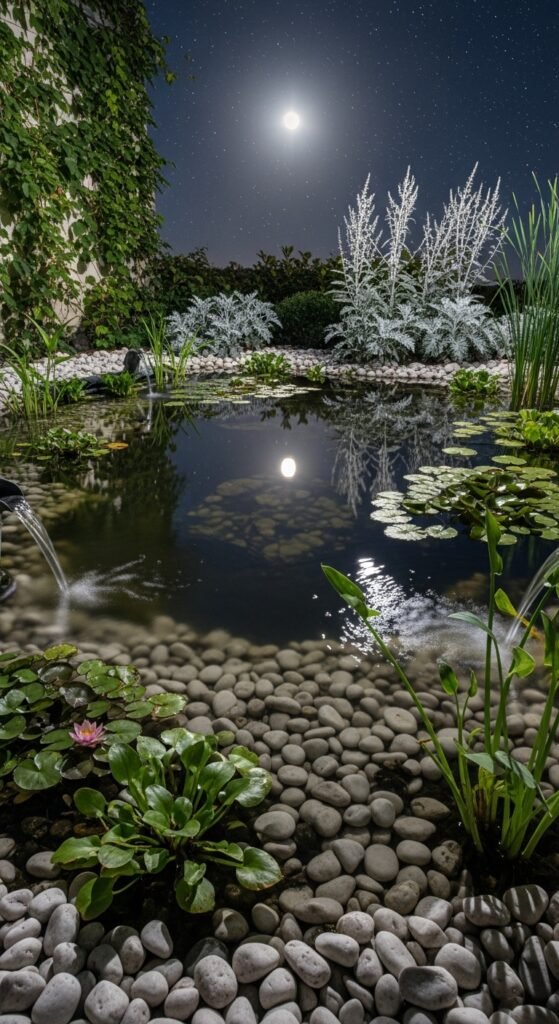
How to implement? Select a level site, installing a liner or preformed basin with a recirculating pump for movement. Surround with white stones for contrast. Maintain by cleaning debris and adding aquatic plants. If you’re considering ambient enhancements, think about integrating subtle lighting around the feature. Over time, this element becomes a centerpiece, reflecting not just light but your personal style, making every night feel like a special occasion in your own backyard.
7) Arrange Cozy Seating Areas
What makes seating areas cozy in a moon garden? Benches, hammocks, or Adirondack chairs positioned amid the plants, inviting lingering and observation.
Why include them? They transform the space into a functional retreat, perfect for stargazing or quiet conversations, extending your outdoor living time.
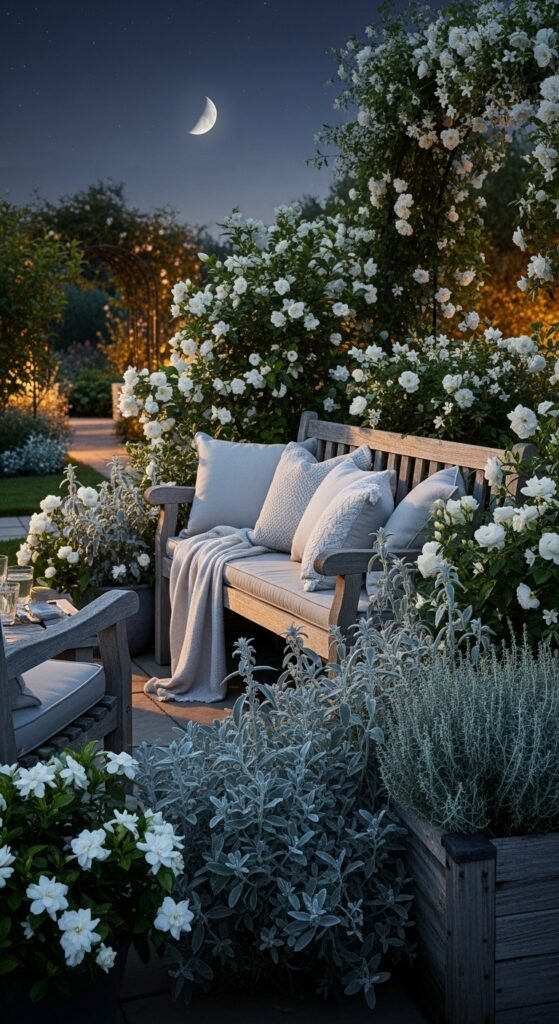
How to arrange? Choose weatherproof materials, placing near fragrant blooms for immersion. Add cushions for comfort and blankets for cooler nights. Group in clusters for social settings or solitarily for solitude. To enhance the atmosphere, consider soft textiles that complement the pale palette. This setup encourages mindfulness, turning your garden into a personal sanctuary where you can recharge under the moon’s gentle watch.
8) Design Pale-Colored Pathways
What are pale-colored pathways? Walkways made from light gravel, white stones, or pale pavers that reflect moonlight, guiding visitors through the garden.
Why use them? They improve navigation and add structure, creating a sense of flow while highlighting surrounding plants. Durable and versatile, they suit any garden size.
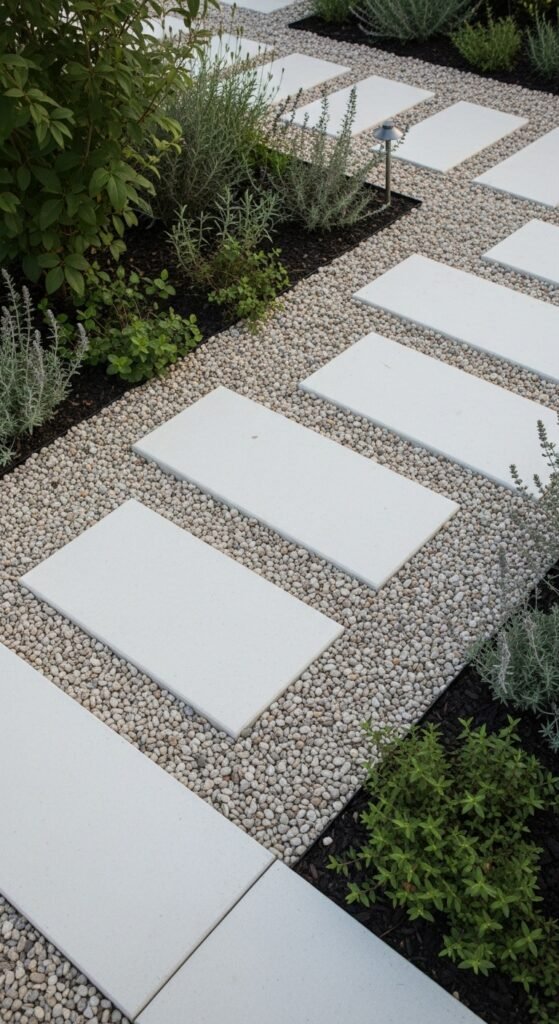
How to create? Outline the path, excavating 4-6 inches deep and filling with your chosen material over a weed barrier. Edge with low plants for definition. For added charm, incorporate curves rather than straight lines. If seeking illumination, pair with string lights in garden ideas along the edges. This design element not only enhances safety but also contributes to the overall ethereal aesthetic, making your moon garden feel expansive and inviting.
9) Plant Moonflower Vines on Arbors
What distinguishes moonflower vines on arbors? These fast-growing climbers produce large, white blooms that unfurl at night, draping structures with dramatic flair.
Why feature them? Their evening display captivates, providing a focal point that draws the eye upward and adds height to your design.
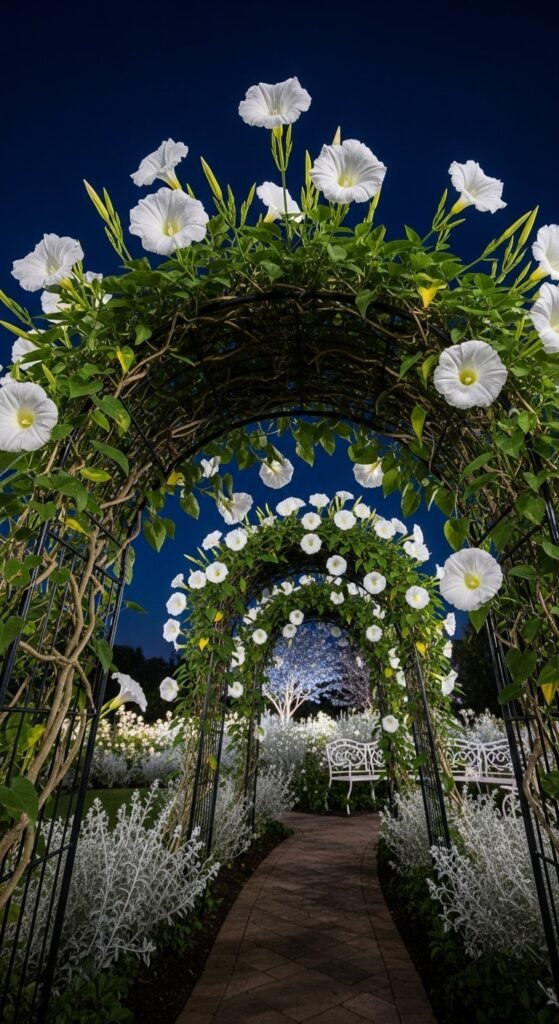
How to grow? Erect a sturdy arbor, sowing seeds in spring after frost in sunny spots with support. Water deeply but infrequently, fertilizing monthly. Train tendrils as they grow. For similar vertical elements, consider other night bloomers. You’ll marvel at how quickly they establish, creating a romantic gateway that frames your moonlit views and elevates the garden’s vertical dimension.
10) Include Clusters of White Roses
What makes white roses ideal for moon gardens? Varieties like iceberg or white knockouts offer classic elegance with blooms that glow softly in low light.
Why plant them? Their timeless beauty and subtle scent evoke romance, while disease resistance ensures longevity with minimal care.
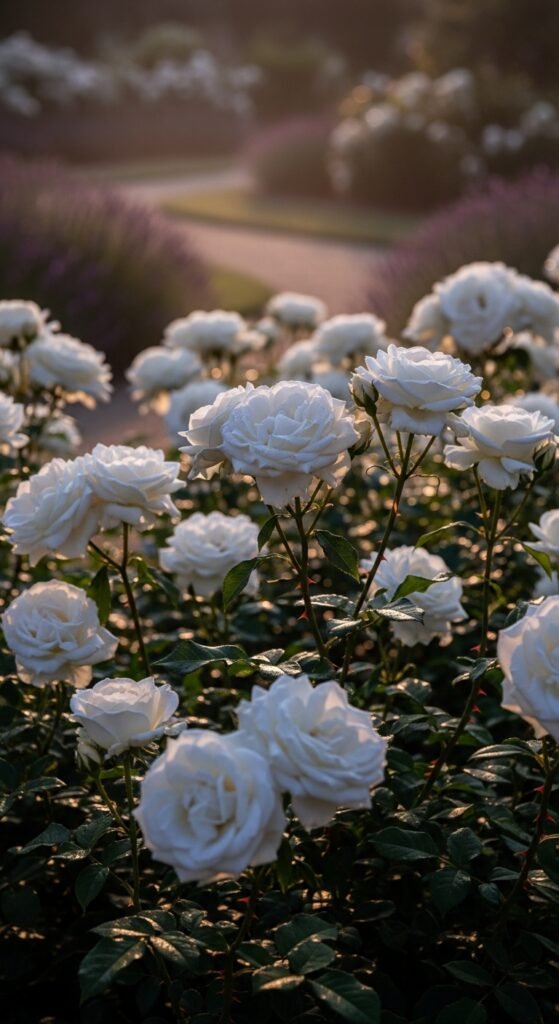
How to incorporate? Select a sunny location with rich soil, planting in groups of three or more for impact. Prune annually and mulch to conserve moisture. Deadhead spent flowers to encourage reblooming. For expert guidance on maintenance, refer to tips on growing roses effectively. These clusters create intimate pockets of interest, blending seamlessly with other elements to form a cohesive, enchanting nighttime landscape.
11) Border with Lavender Plants
What defines lavender borders in this setting? Low hedges of English or French lavender that release calming aromas, edging paths or beds.
Why choose lavender? Its silver-blue foliage and fragrance complement the moon garden theme, promoting relaxation and deterring pests naturally.
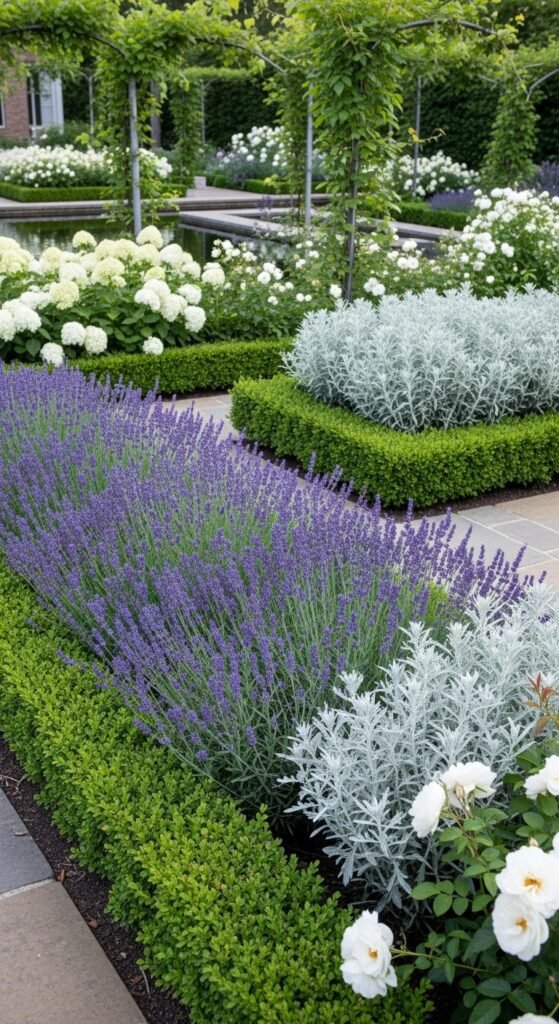
How to establish? Plant in full sun with sandy, well-drained soil, spacing 12 inches apart. Shear after blooming to maintain shape. Harvest stems for indoor use. This border adds definition and sensory depth, creating a fragrant pathway that enhances your evening experience without overwhelming the space.
12) Add Glow-in-the-Dark Accents
What are glow-in-the-dark accents? Decorative stones, paints, or ornaments that absorb daylight and emit a soft luminescence at night.
Why integrate them? They provide subtle illumination, adding whimsy and extending visibility without electricity, perfect for eco-conscious gardeners.
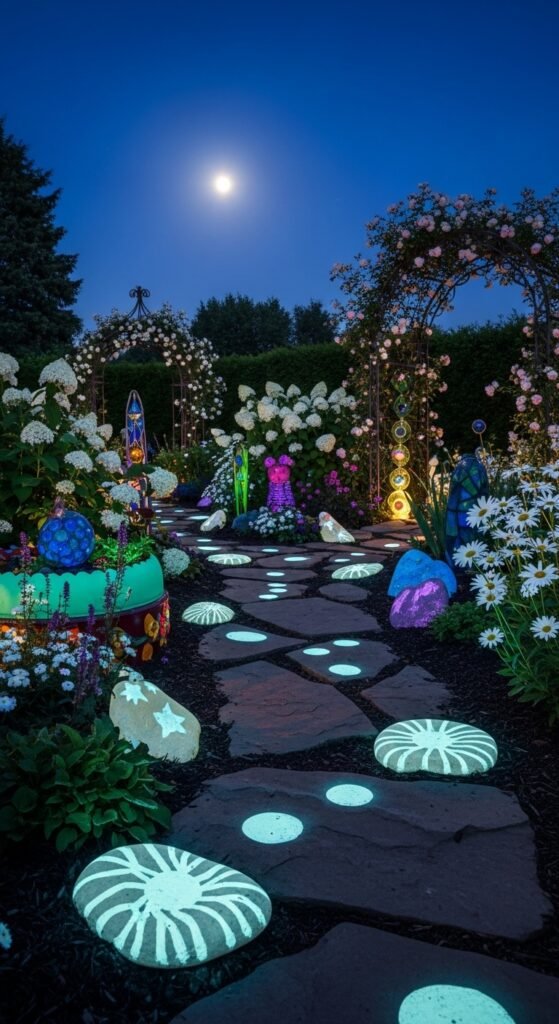
How to use? Scatter along paths or around plants, applying paint to pots or statues. Recharge daily with sunlight exposure. Combine with natural elements for balance. This playful touch sparks imagination, making your moon garden a delightful surprise for guests and a fun project for all ages.
13) Position Garden Statues Strategically
What role do statues play? Sculptures of angels, animals, or abstract forms that catch light, serving as intriguing focal points.
Why include them? They add personality and narrative, creating visual interest that evolves with changing light and shadows.

How to place? Select weather-resistant materials, positioning amid foliage for surprise elements. Vary heights for dimension. Clean periodically to maintain appearance. This artistic layer personalizes your space, turning it into a gallery under the stars where each piece tells a story.
14) Incorporate Gentle Wind Chimes
What makes wind chimes gentle for moon gardens? Bamboo or metal designs that produce soft, melodic tones in evening breezes.
Why add them? They introduce auditory serenity, masking urban noise and enhancing the peaceful atmosphere with natural music.
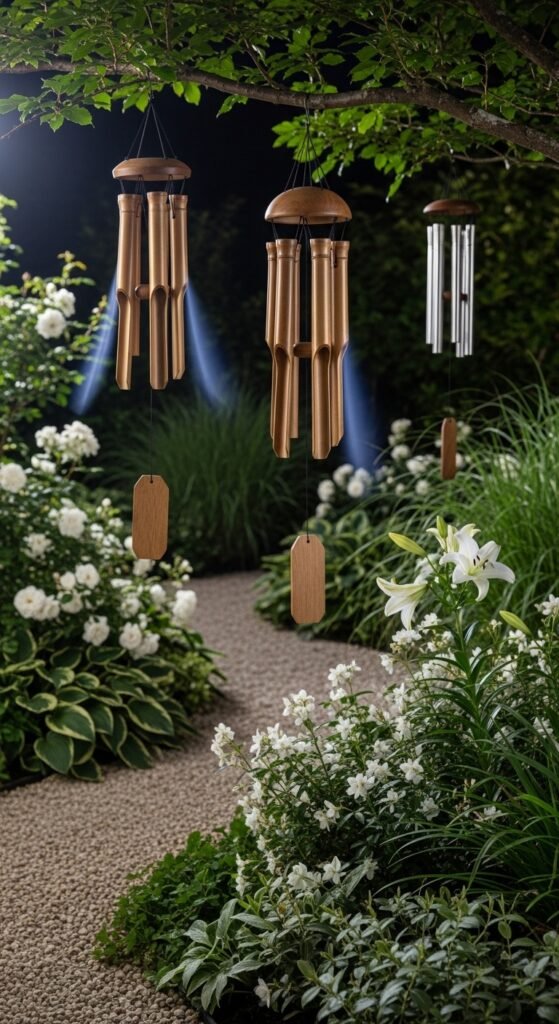
How to install? Hang from branches or arbors in breezy spots, choosing tones that resonate calmly. Adjust lengths for varied sounds. This sonic element complements visual and olfactory aspects, creating a multi-sensory haven that soothes the soul on quiet nights.
15) Establish a Central Arbor Focal Point
What is a central arbor focal point? A vine-covered structure at the garden’s heart, serving as an inviting centerpiece.
Why feature one? It provides structure and intimacy, framing views and offering shade by day while enchanting by night.
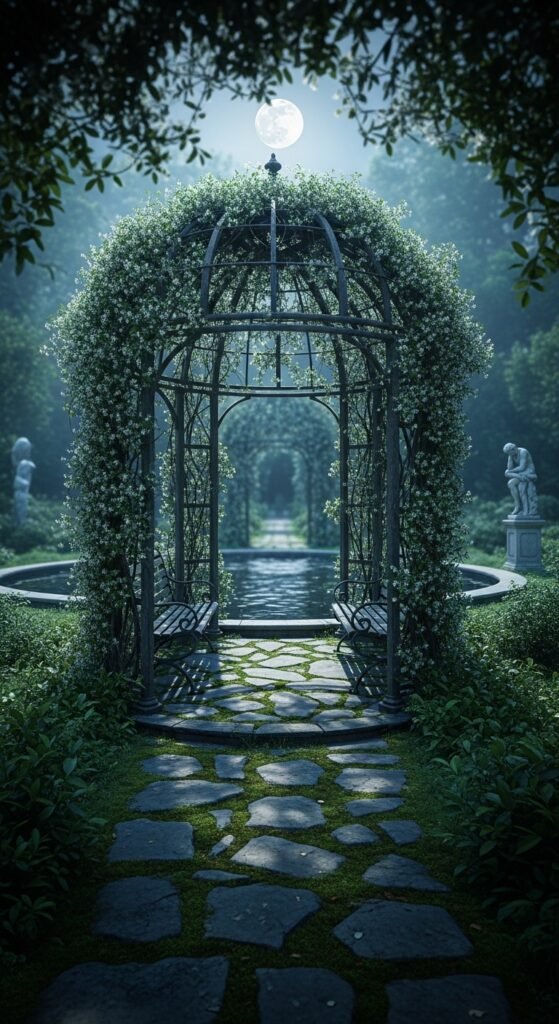
How to build? Construct from wood or metal, planting climbers at the base. Add seating beneath for functionality. Illuminate subtly if desired. For durability, opt for treated materials. This element anchors your design, creating a destination within the garden that beckons exploration and repose under moonlight.
Key Principles for Designing Your Moon Garden
Choosing the Right Color Palette
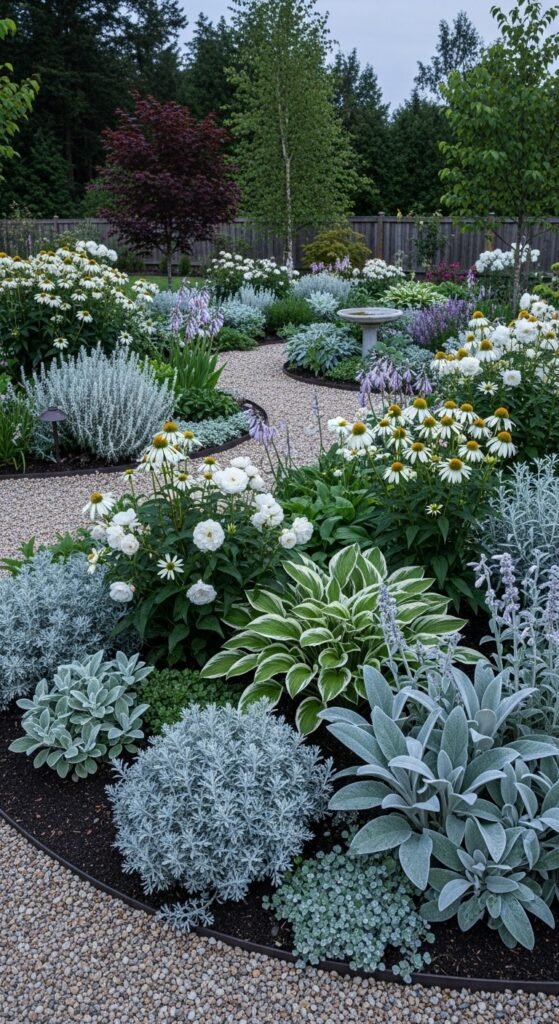
Focus on whites, silvers, and pastels to maximize light reflection. Avoid dark hues that absorb moonlight, opting instead for varieties that create a cohesive, glowing scheme. Consider seasonal changes to maintain year-round interest.
Selecting Plants for Nighttime Appeal
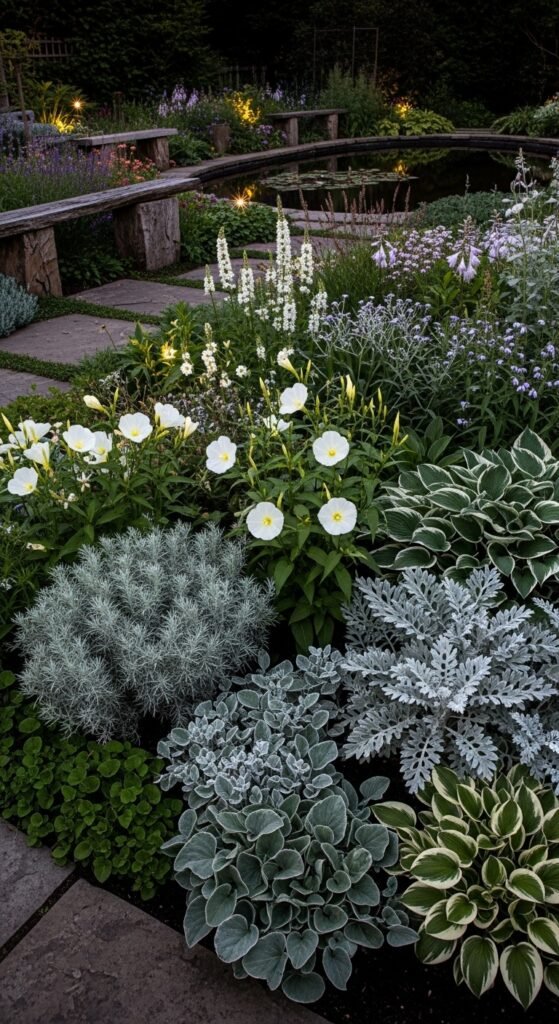
Prioritize blooms that open or scent strongly in evenings, paired with reflective foliage. Research hardiness zones and soil needs to ensure thriving growth. Mix heights and textures for visual depth and ecological balance.
Maintenance Tips for Longevity
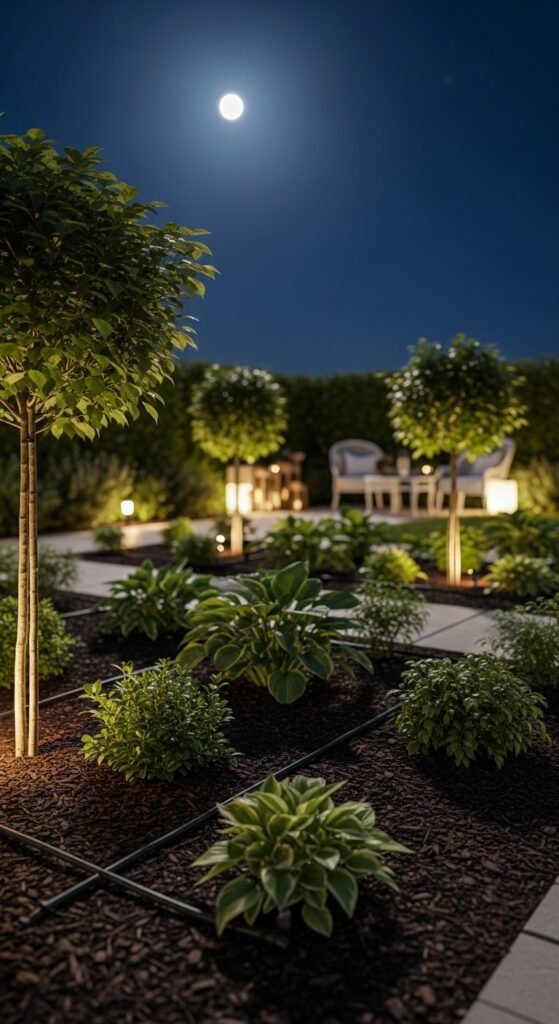
Water deeply but infrequently, mulch to retain moisture, and prune regularly. Monitor for pests naturally, and refresh elements seasonally. This approach keeps your moon garden vibrant and inviting with minimal ongoing effort.
Frequently Asked Questions
What is a moon garden?
A moon garden is a specially designed outdoor space featuring plants and elements that shine under moonlight, emphasizing white flowers, fragrant blooms, and reflective surfaces for nighttime enjoyment and serenity.
What are the best plants for a moon garden?
Opt for white-flowering perennials like lilies, night-blooming vines such as moonflower, silver foliage plants like dusty miller, and fragrant herbs including lavender to create a captivating evening display.
How do I light my moon garden without overpowering the natural glow?
Use soft, solar-powered pathway lights or glow-in-the-dark accents sparingly to guide paths while preserving the moonlight’s magic, ensuring safety without harsh artificial illumination.
Can I create a moon garden in a small space?
Yes, even balconies or patios can host a moon garden with containers of white blooms, vertical vines, and reflective elements, maximizing limited areas for enchanting results.
How much maintenance does a moon garden require?
With drought-tolerant plants and mulching, maintenance is moderate—regular watering, occasional pruning, and seasonal checks keep it thriving, allowing more time to enjoy the space.