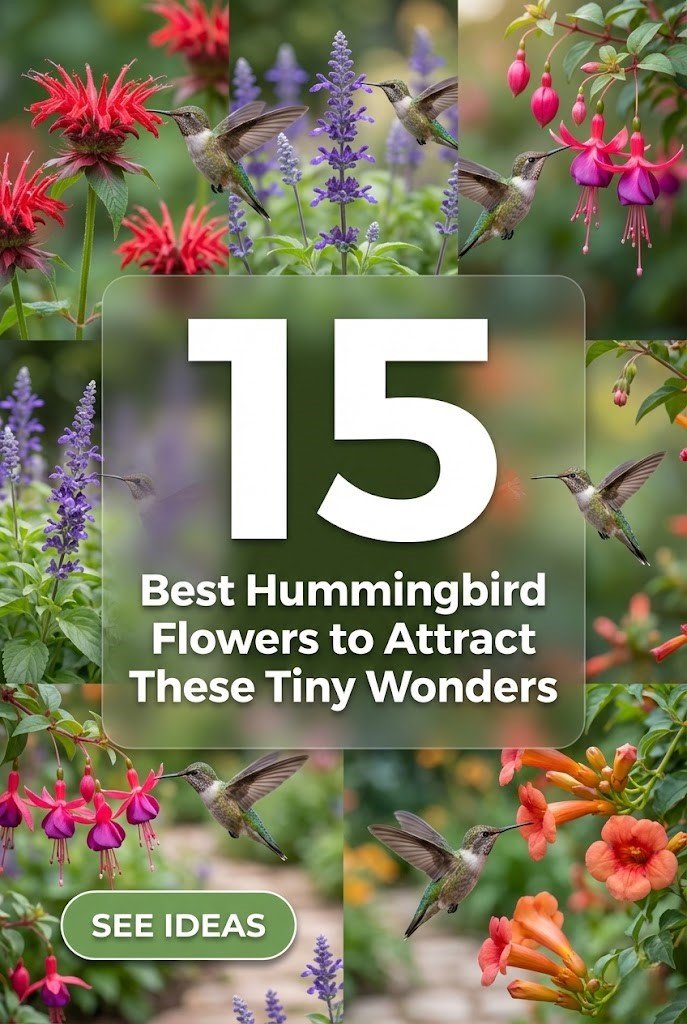
If you want to fill your garden with the dazzling sight of hummingbirds zipping from bloom to bloom, choosing the right plants is essential. Hummingbird flowers are nectar-rich, tubular blooms in vibrant colors—especially red, pink, purple, and orange—that these tiny aerial acrobats simply can’t resist. These flowers not only provide a vital energy source but also create a stunning, pollinator-friendly display that brings life and movement to your outdoor space.
Planting hummingbird flowers is one of the most rewarding ways to support local wildlife while enhancing your garden’s beauty. Whether you have a small patio or a large backyard, these plants are easy to incorporate and offer long-lasting color throughout the season. In this listicle, we share 15 of the best hummingbird flowers to grow, complete with why they work so well and how you can plant them for maximum impact.
Ready to create your own hummingbird haven? Let’s explore these irresistible options.
1) Bee Balm (Monarda)
You’ll love how bee balm brings bold color and buzzing energy to your garden. This native perennial produces vibrant red, pink, or purple tubular flowers that are packed with nectar, making them a top choice for hummingbirds. The blooms appear in mid to late summer, providing a crucial energy boost when hummingbirds are most active.
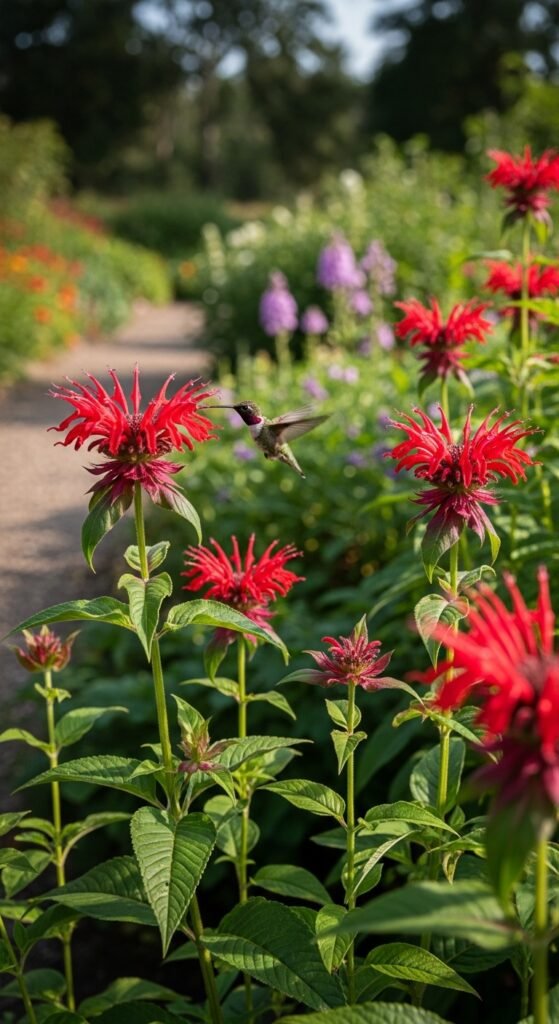
Why it works: The tubular shape allows easy access to deep nectar, and the bright colors act like a beacon. Bee balm also attracts bees and butterflies, creating a lively pollinator hub. Plant it in groups for the best effect, and consider pairing it with other perennials in your permaculture guilds for a thriving ecosystem.
How to grow: Choose full sun to partial shade and moist, well-drained soil. Divide clumps every 3 years to prevent overcrowding. Expect heights of 2–4 feet and a spread that fills borders beautifully.
2) Cardinal Flower (Lobelia cardinalis)
With its brilliant scarlet spikes, cardinal flower is one of the most striking hummingbird flowers you can grow. The tall, vivid red tubular blooms rise above foliage in late summer, drawing hummingbirds from afar. This native plant thrives in moist conditions, making it perfect for rain gardens or pond edges.
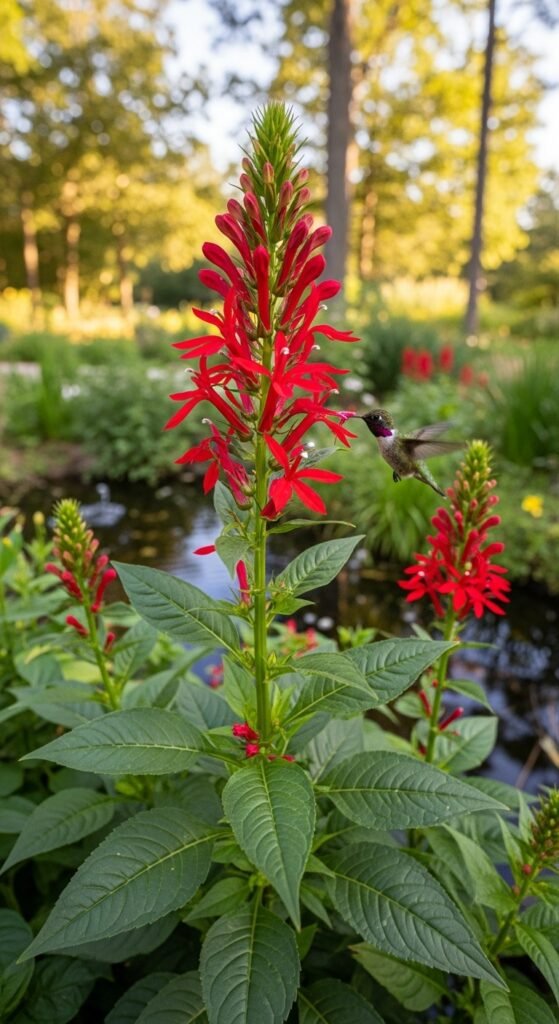
Why it works: The intense red color and abundant nectar make it irresistible. You’ll often see hummingbirds hovering and sipping for long periods. For a water-loving garden, combine it with ideas from our backyard water feature ideas.
How to grow: Plant in full sun to partial shade with consistently moist soil. It self-seeds gently and reaches 2–4 feet tall. Mulch to retain moisture during dry spells.
3) Salvia (Sage)
Salvia varieties offer a reliable parade of tubular blooms from spring through fall, making them a staple for any hummingbird garden. Colors range from deep purple to fiery red, and the plants are low-maintenance once established.
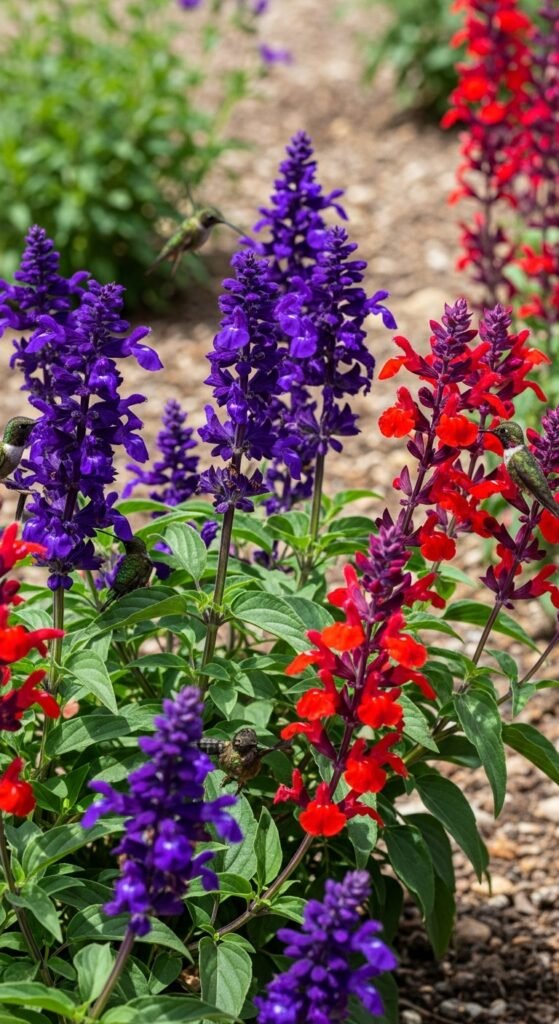
Why it works: Hummingbirds adore the extended bloom time and rich nectar supply. Deadhead regularly to encourage more flowers. Many salvias are drought-tolerant once rooted, perfect for sustainable gardens.
How to grow: Full sun and well-drained soil are ideal. Plant in clusters for impact, and pair with other heat-loving perennials for continuous color.
4) Penstemon (Beardtongue)
Penstemon produces elegant, tubular flowers in shades of pink, red, purple, and white on tall spikes. These drought-tolerant perennials bloom profusely in summer, providing a steady nectar source.
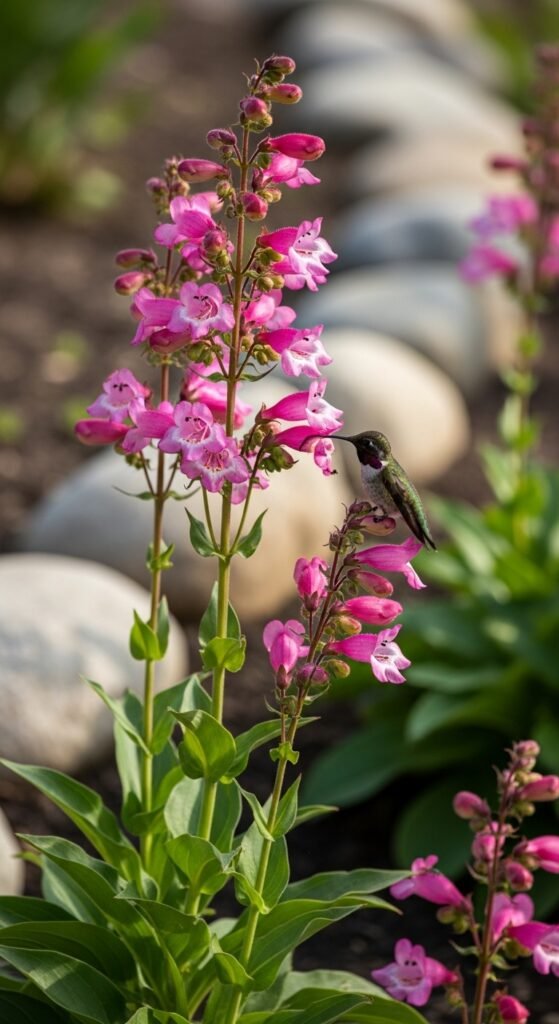
Why it works: The tubular shape and bright hues are hummingbird magnets. You’ll enjoy watching them dart between blooms. For spring planting inspiration, refer to our guide on what to plant in spring.
How to grow: Full sun and well-drained soil suit them best. They thrive in rock gardens or borders and require minimal watering once established.
5) Agastache (Hummingbird Mint)
Agastache, often called hummingbird mint, delivers fragrant, spiky flowers in lavender, orange, and pink. The blooms are packed with nectar and attract hummingbirds all season long.
Why it works: The minty scent and tubular flowers are highly appealing. It’s also deer-resistant and great for pollinators. Incorporate it into your spring garden design ideas for long-term success.
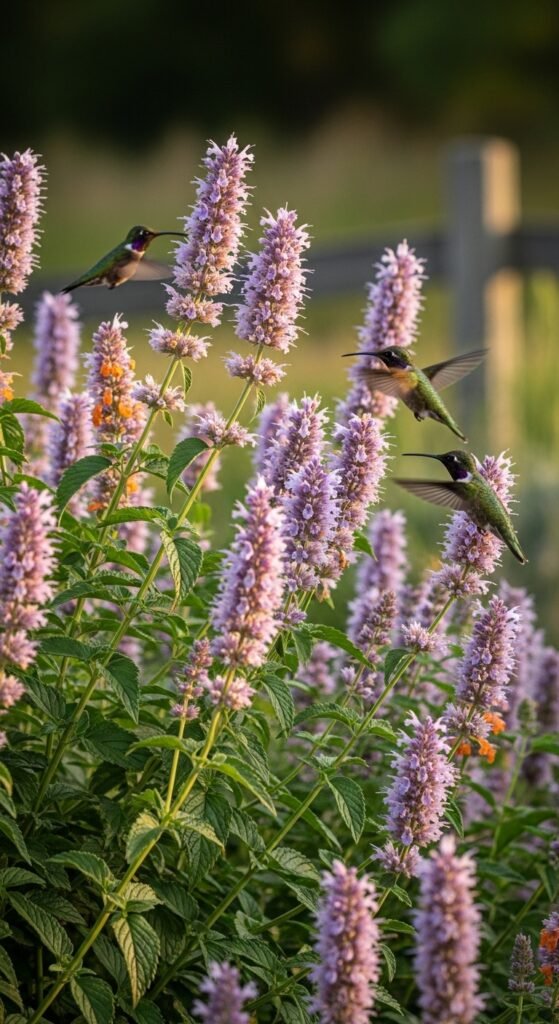
How to grow: Full sun and well-drained soil are essential. It grows 2–4 feet tall and adds vertical interest.
6) Columbine (Aquilegia)
Columbine offers delicate, spurred flowers in red, pink, yellow, and blue. These early bloomers provide one of the first nectar sources in spring.
Why it works: The unique shape and colors draw hummingbirds early in the season. Self-seeding varieties create natural drifts over time.
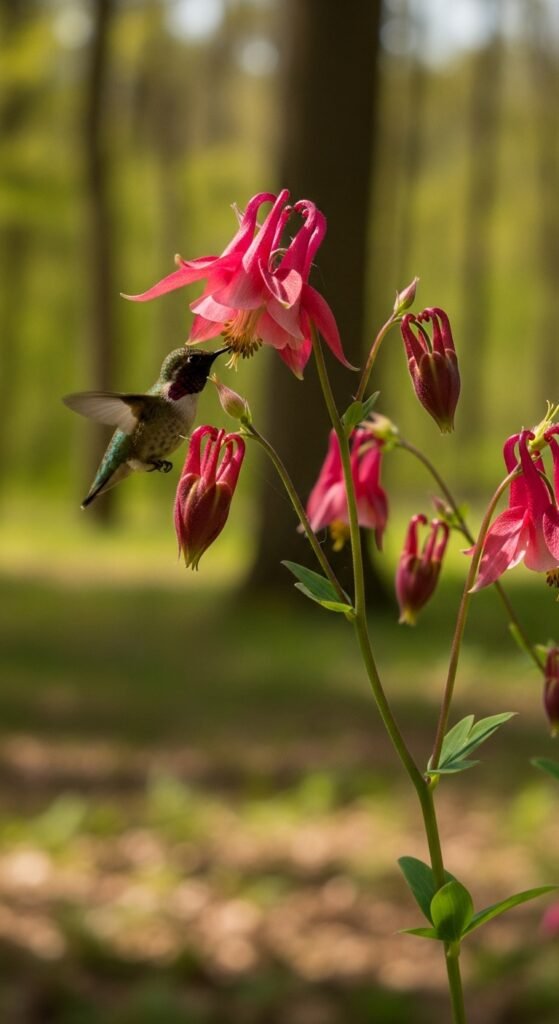
How to grow: Partial shade and moist soil work best. Plant in woodland gardens or shaded borders for charming results.
7) Fuchsia
Fuchsia produces dangling, tubular blooms in pink, purple, and red combinations. Perfect for hanging baskets or containers, it’s a hummingbird favorite.
Why it works: The pendulous flowers are easy for hummingbirds to access. You’ll see frequent visitors in shaded spots.
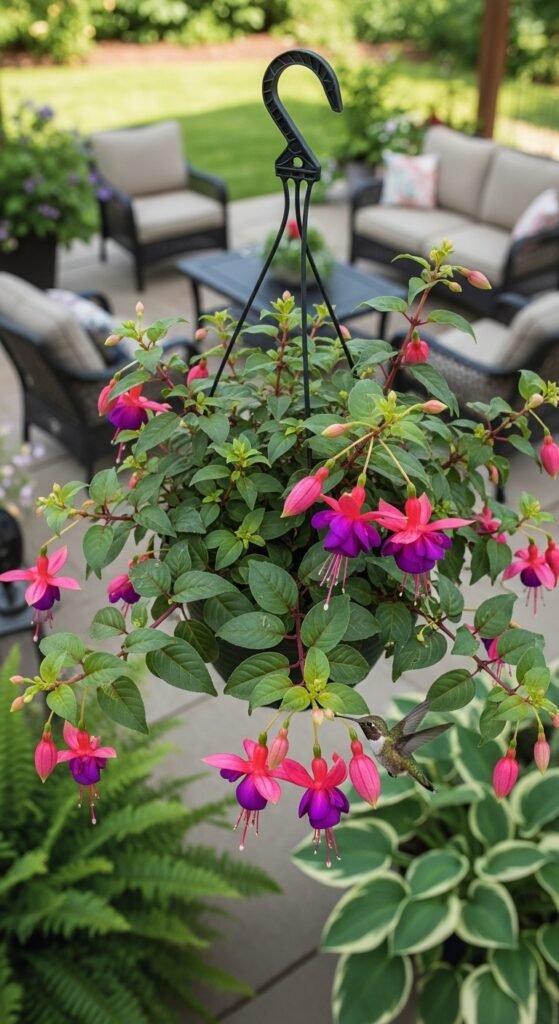
How to grow: Partial shade and consistent moisture. Pinch tips for bushier growth.
8) Trumpet Honeysuckle (Lonicera sempervirens)
This climbing vine features clusters of bright red tubular flowers that bloom repeatedly. It adds vertical drama while feeding hummingbirds.
Why it works: Long bloom period and abundant nectar make it a top choice. Train it on trellises for stunning displays.
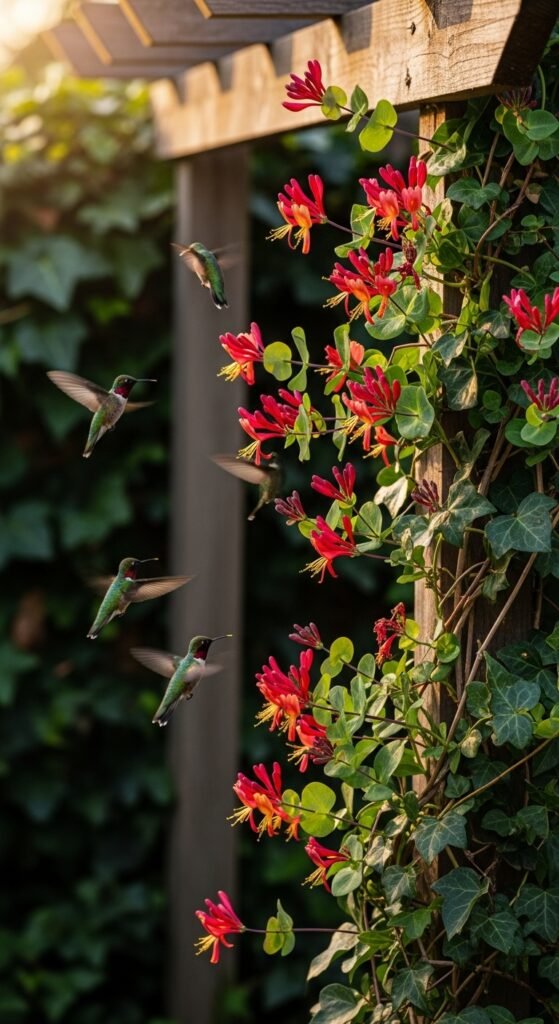
How to grow: Full sun to partial shade and moderate water. Prune after flowering.
9) Lantana
Lantana offers clusters of tiny tubular flowers in multicolored clusters. Heat-tolerant and long-blooming, it’s ideal for hot climates.
Why it works: Continuous nectar supply attracts hummingbirds all summer. Great for borders or containers.
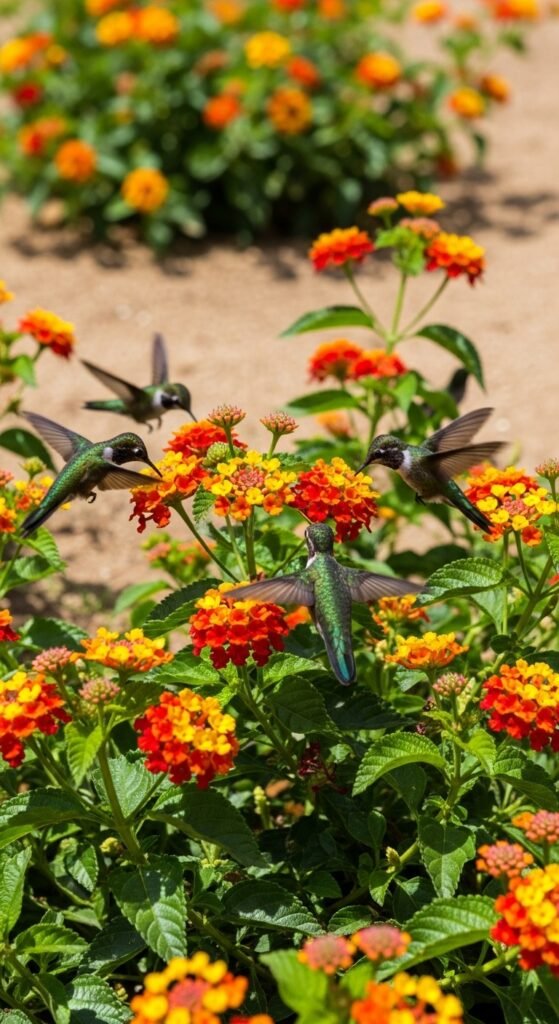
How to grow: Full sun and well-drained soil. Drought-tolerant once established.
10) Petunia
Classic petunias provide trumpet-shaped blooms in a rainbow of colors. Easy to grow from seed or transplants.
Why it works: Abundant nectar and bright colors draw hummingbirds to patios and window boxes.
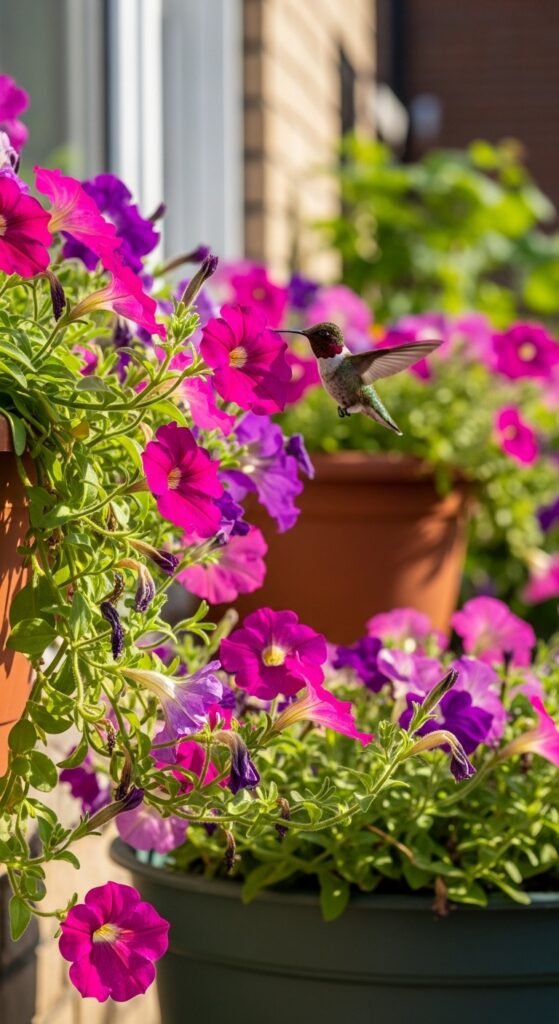
How to grow: Full sun and regular watering. Deadhead for nonstop blooms.
11) Pineapple Sage (Salvia elegans)
Pineapple sage features brilliant red tubular flowers and pineapple-scented foliage. Blooms late in the season.
Why it works: Late nectar source extends hummingbird season. Edible leaves add fun to your garden.
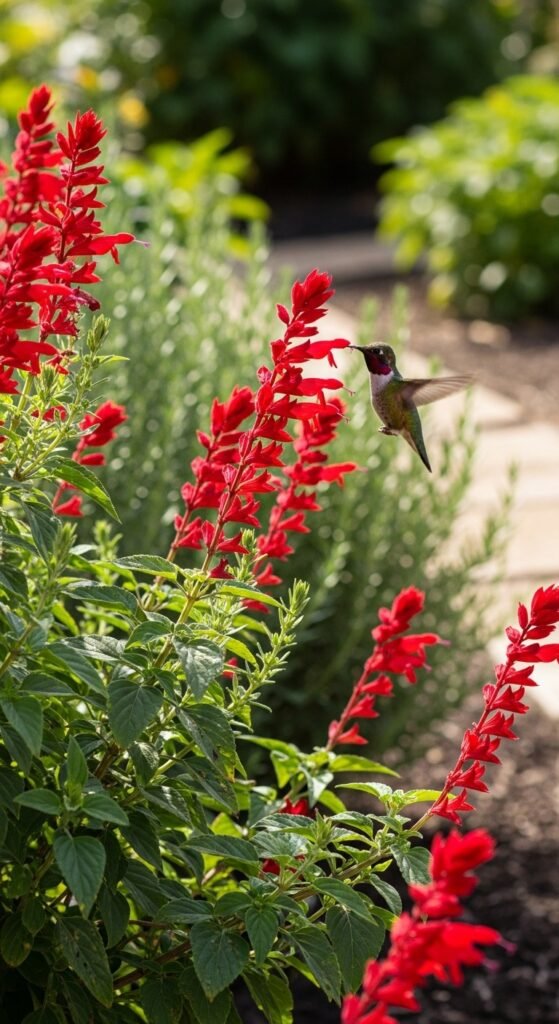
How to grow: Full sun and moist soil. Pinch for bushiness.
12) Red Hot Poker (Kniphofia)
Red hot poker produces torch-like spikes in red, orange, and yellow. Dramatic and long-lasting.
Why it works: Tubular florets offer rich nectar. Adds architectural interest.
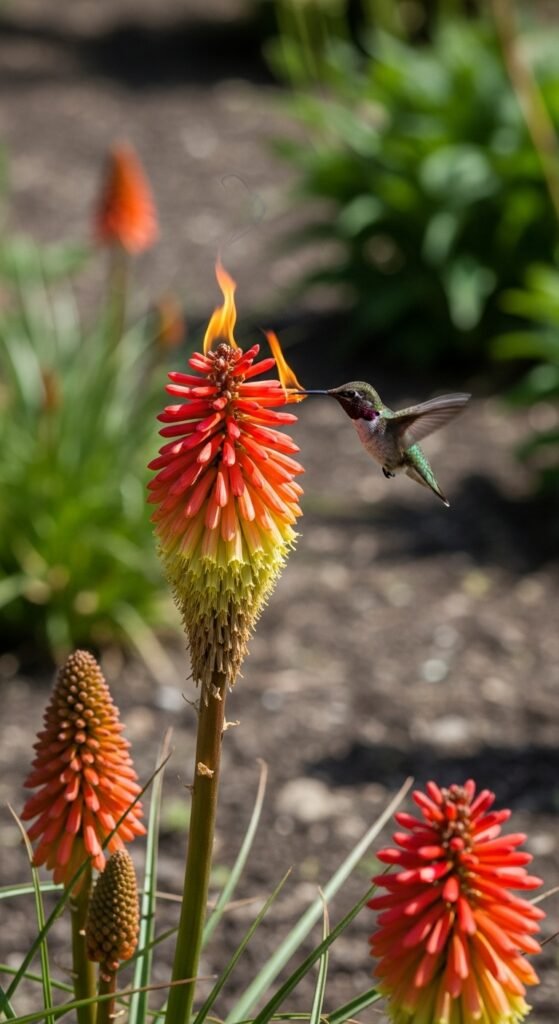
How to grow: Full sun and well-drained soil. Protect from winter wet.
13) Zinnia
Zinnias are cheerful annuals with single or double blooms in vivid colors. Easy and fast-growing.
Why it works: Flat-topped flowers provide easy access to nectar. Great for cutting gardens.
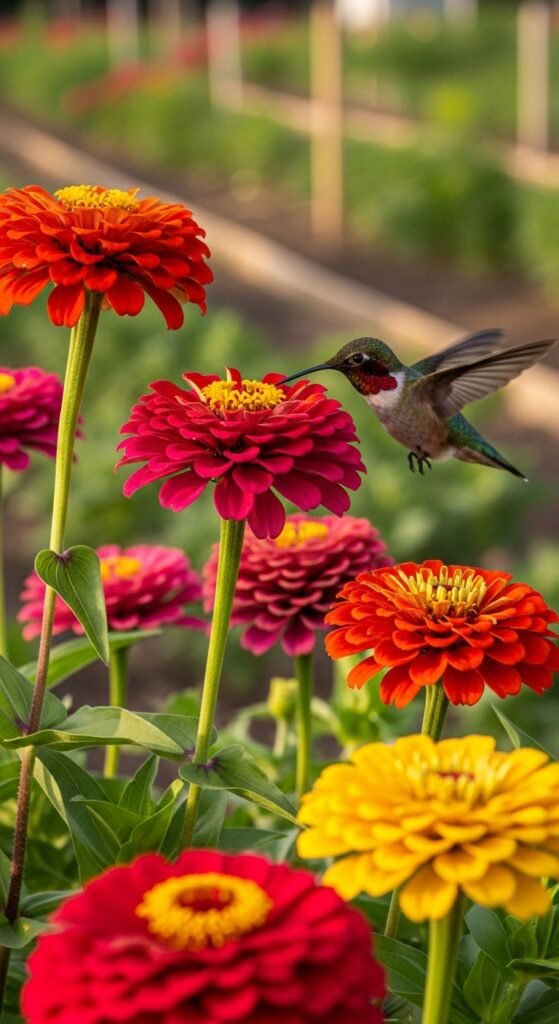
How to grow: Full sun and regular deadheading. Direct sow for simplicity.
14) Nicotiana (Flowering Tobacco)
Nicotiana offers fragrant, tubular flowers that open in the evening. Colors include white, pink, and red.
Why it works: Intense fragrance and nectar attract hummingbirds at dusk.
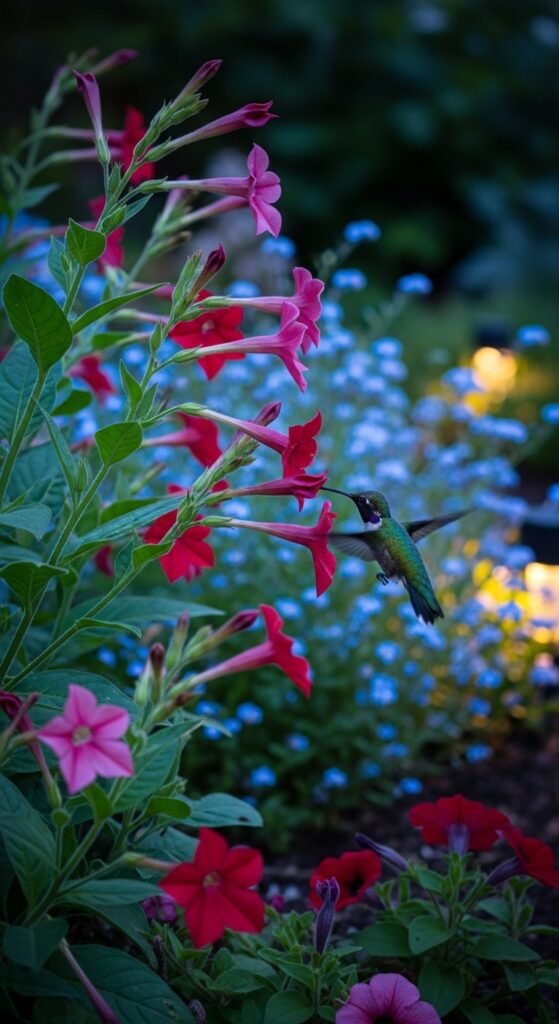
How to grow: Full sun to partial shade and moist soil. Self-seeds readily.
15) Phlox
Garden phlox produces clusters of star-shaped flowers in pink, purple, and white. Reliable summer performer.
Why it works: Abundant nectar and bright colors make it a hummingbird favorite. Adds cottage charm.
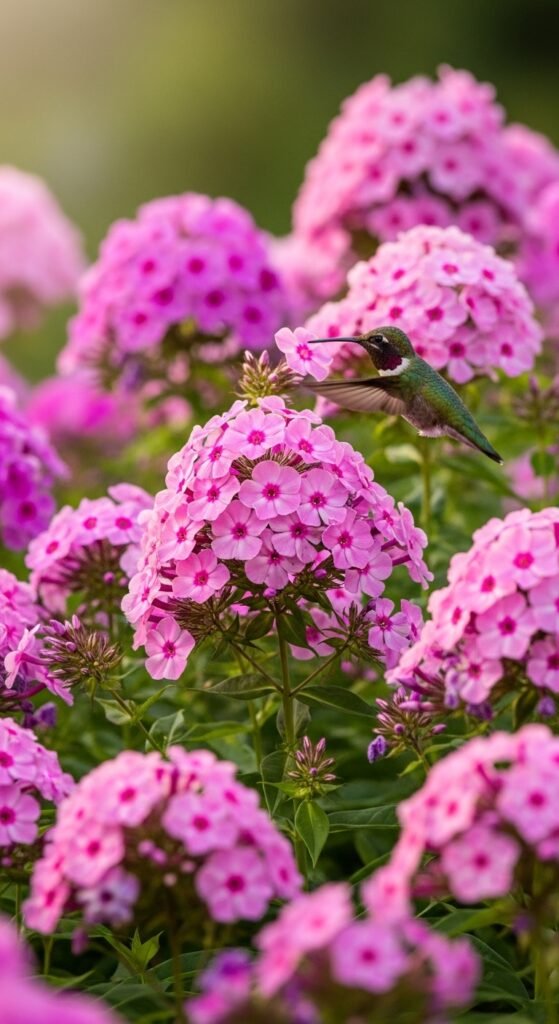
How to grow: Full sun and good air circulation to prevent mildew.
Tips for Creating a Hummingbird-Friendly Garden
Plant in Groups and Layers
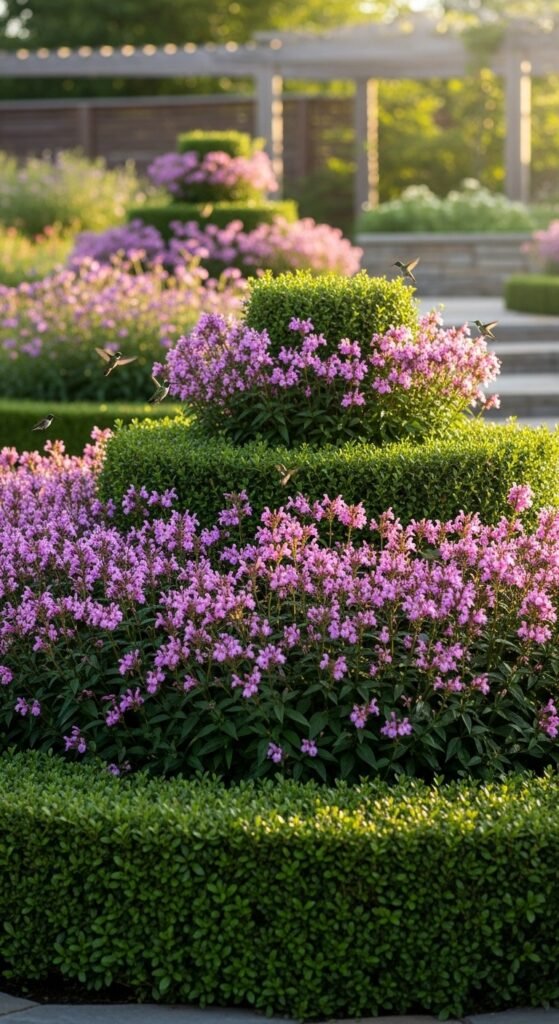
Plant your hummingbird flowers in clusters of 3–5 for better visibility. Layer heights—tall spikes in back, mid-level perennials in middle, and trailing plants in front—to give hummingbirds easy flight paths and continuous nectar.
Provide Water and Shelter
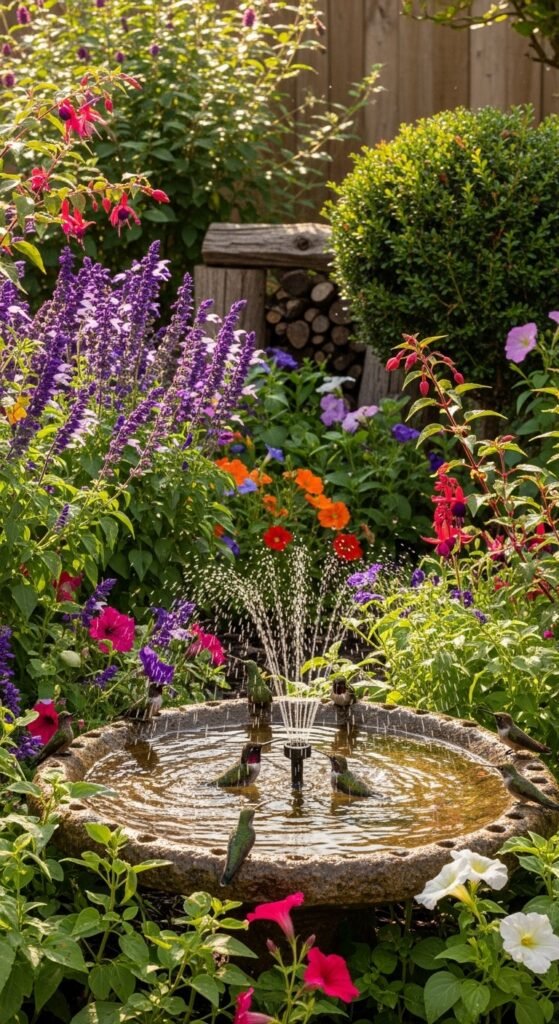
Hummingbirds love shallow water sources with dripping or misting features. Add a shallow birdbath or fountain. Avoid pesticides to protect these delicate birds and their food sources.
Plan for Continuous Bloom
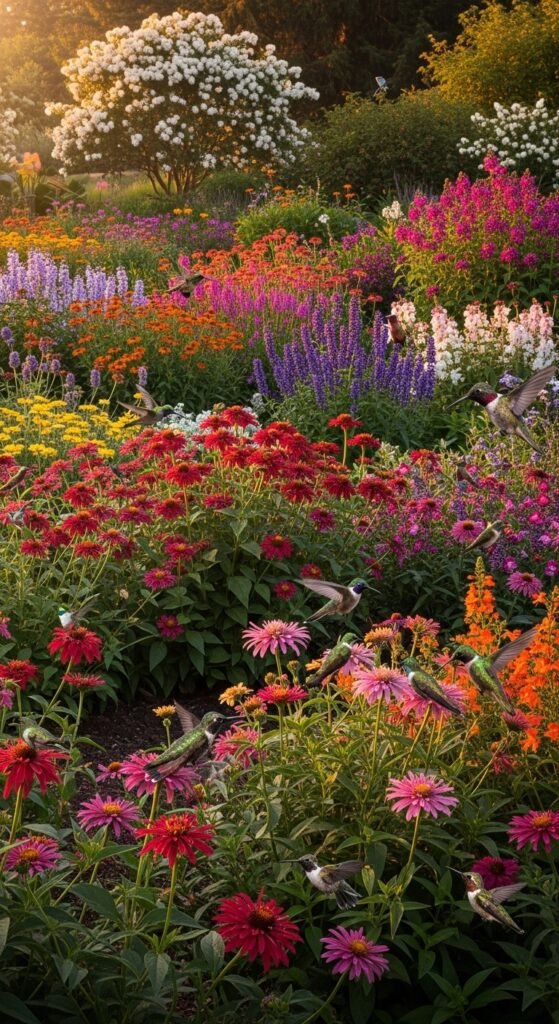
Choose a mix of early, mid, and late bloomers so nectar is available from spring through fall. This ensures hummingbirds return year after year.
Frequently Asked Questions
What colors attract hummingbirds the most?
Hummingbirds are especially drawn to bright red, pink, orange, and purple tubular flowers. These colors stand out and signal rich nectar sources.
Do I need special feeders if I plant hummingbird flowers?
While plants are the best natural food source, feeders can supplement during migration or dry spells. Always keep feeders clean to prevent mold.
Are hummingbird flowers easy for beginners to grow?
Yes! Many options like salvia, zinnia, and petunia are low-maintenance and forgiving. Start with a few and expand as you gain confidence.
Can hummingbird flowers attract other pollinators?
Absolutely. Most hummingbird flowers also draw bees, butterflies, and other beneficial insects, creating a thriving garden ecosystem.
When do hummingbirds visit these flowers?
Hummingbirds are most active during the day, especially early morning and late afternoon. You’ll see the most visitors during peak bloom times in summer.