Summer flowers bring a burst of color and life to your outdoor spaces, transforming ordinary gardens into vibrant havens. These blooms thrive in the warm weather, attracting pollinators like bees and butterflies while providing you with endless visual delight. Whether you’re a seasoned gardener or just starting out, incorporating summer flowers can enhance your landscape, boost your mood, and even improve air quality around your home.
Choosing the right summer flowers depends on your climate, soil type, and sunlight availability. You’ll want varieties that are heat-tolerant and drought-resistant to ensure they flourish throughout the season. From bold annuals to perennial favorites, these ideas will help you create a stunning display that lasts from early summer through fall.
Get ready to dig in and plant—these summer flowers will make your garden the envy of the neighborhood. Remember to water consistently and mulch to retain moisture, especially during hot spells.
1) Sunny Sunflowers
Sunflowers are the quintessential summer flowers, with their large, bright yellow petals and towering stems that can reach up to 10 feet tall. You plant them for their cheerful appearance and ability to attract birds and beneficial insects to your garden. These annuals are easy to grow from seed, making them perfect for beginners.
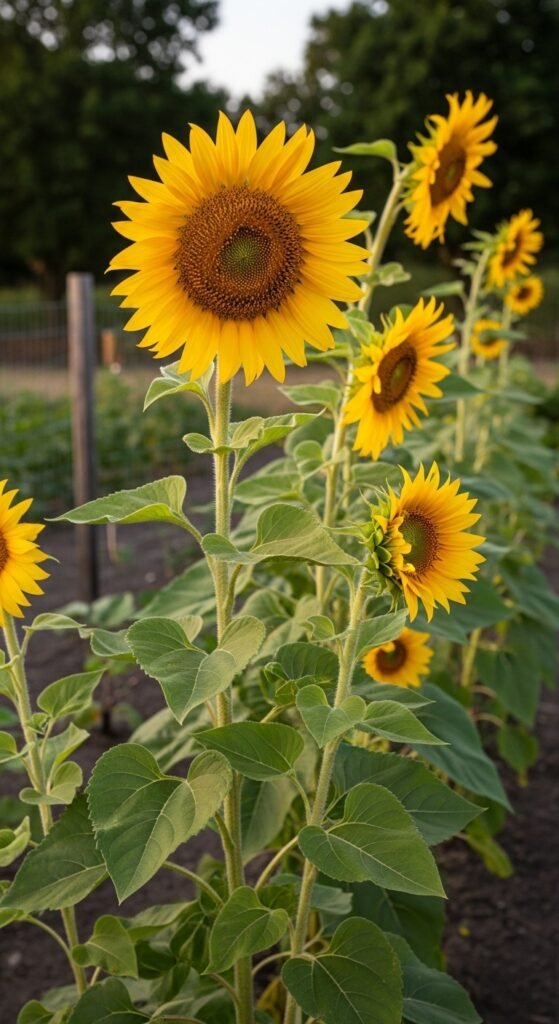
Why choose sunflowers? They provide quick growth and instant impact, blooming in just 8-10 weeks. Plus, their seeds are edible, offering a fun harvest at season’s end. To grow them successfully, sow seeds directly in full sun after the last frost, spacing them 6-12 inches apart in well-drained soil. Water deeply but infrequently to encourage deep roots, and stake taller varieties to prevent toppling in wind.
Consider mixing dwarf sunflowers in containers for patios. For added privacy, plant a row along fences—their height creates a natural screen. If you’re dealing with pests, companion planting with mosquito-repelling plants can help protect your blooms.
2) Marvelous Marigolds
Marigolds shine as versatile summer flowers, featuring ruffled blooms in shades of orange, yellow, and red. You love them for their pest-repelling properties, as they deter nematodes and aphids naturally. These hardy annuals are low-maintenance and bloom profusely from summer into fall.
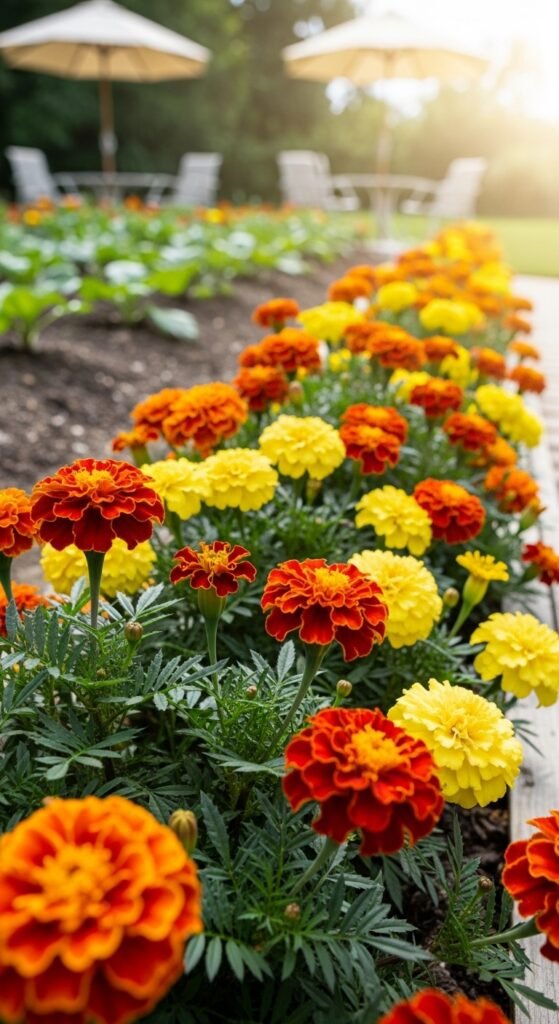
The benefits are plentiful: natural pest control and vibrant color without much effort. They thrive in poor soil, making them ideal for beginners. Plant seeds or transplants in full sun, spacing 8-12 inches apart. Keep soil moderately moist, and deadhead spent flowers to encourage more blooms.
For a mosquito-free zone, incorporate marigolds among your vegetables or near seating areas. Their strong scent masks other plants, protecting your garden. If you’re exploring more repellent options, our guide on mosquito-repelling plants offers additional ideas to keep bugs at bay while enjoying your summer oasis.
3) Zesty Zinnias
Zinnias are colorful summer flowers that come in a rainbow of hues, from pink to purple, with daisy-like petals. You select them for their long blooming period and ability to attract butterflies, adding movement and life to your garden. These annuals are heat-loving and drought-tolerant once established.
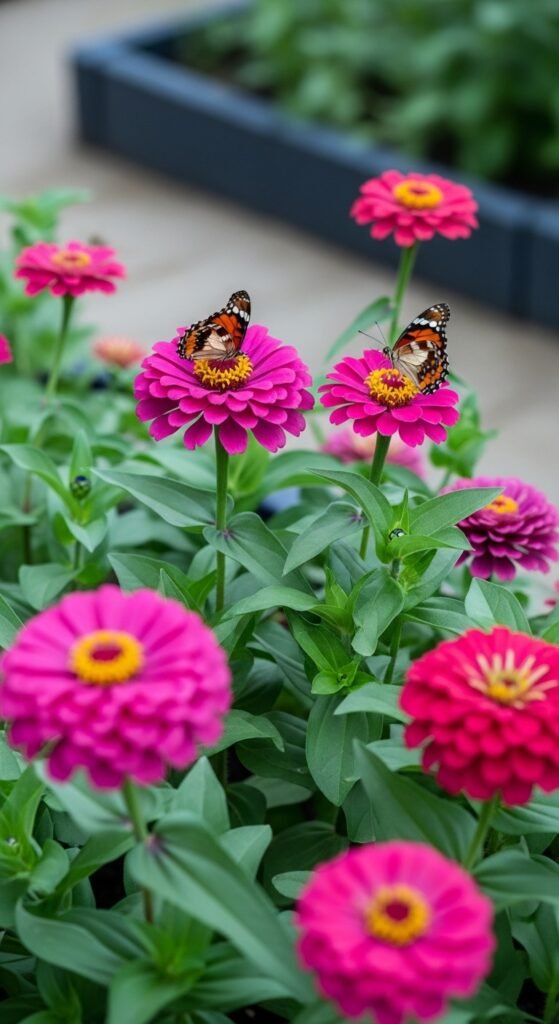
Why zinnias? They offer cut-flower potential and pollinator support, perfect for bouquets. Sow seeds directly in sunny spots with fertile soil, thinning seedlings to 9-12 inches apart. Water at the base to prevent powdery mildew, and pinch young plants for bushier growth.
Mix zinnias in borders or containers for pops of color. For summer care tips, especially watering, align with a consistent schedule to keep them thriving. If you’re into creative displays, pair them with hanging baskets for elevated interest.
4) Pretty Petunias
Petunias are cascading summer flowers known for their trumpet-shaped blooms in vibrant colors like purple, white, and pink. You plant them for their trailing habit, ideal for hanging baskets and window boxes. These annuals bloom continuously in warm weather with minimal care.
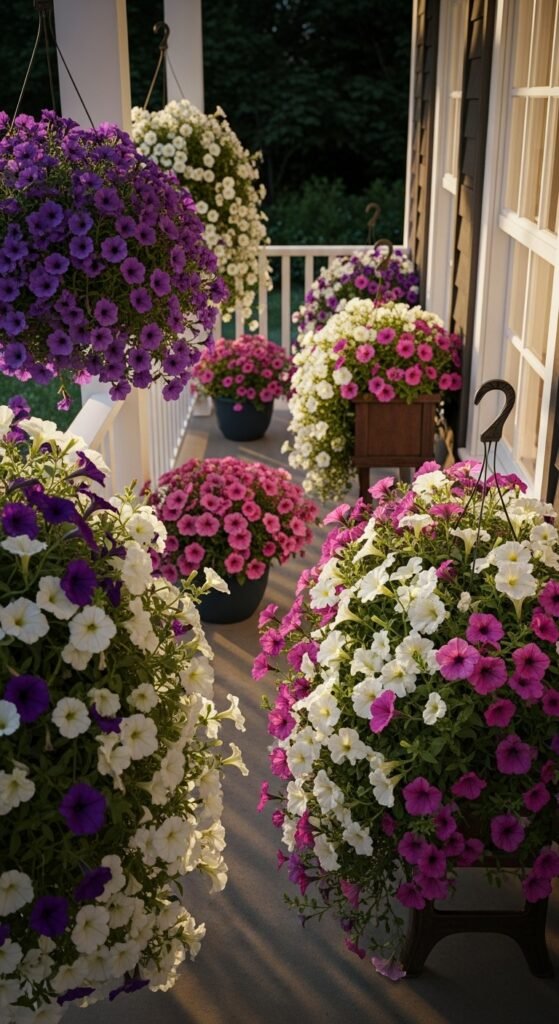
The appeal lies in their versatile use and fragrance, filling the air with a sweet scent. Start from seeds indoors or buy transplants, placing them in full sun to partial shade. Use well-draining soil and fertilize every two weeks for abundant flowers.
Deadhead regularly to promote new growth. For inspiration on summer arrangements, check out our summer hanging basket ideas to elevate your petunia displays and create stunning vertical gardens.
5) Lovely Lavender
Lavender is a fragrant perennial summer flower with spikes of purple blooms and silvery foliage. You choose it for its calming aroma and medicinal uses, like in teas or sachets. It’s drought-tolerant and attracts bees while repelling deer.
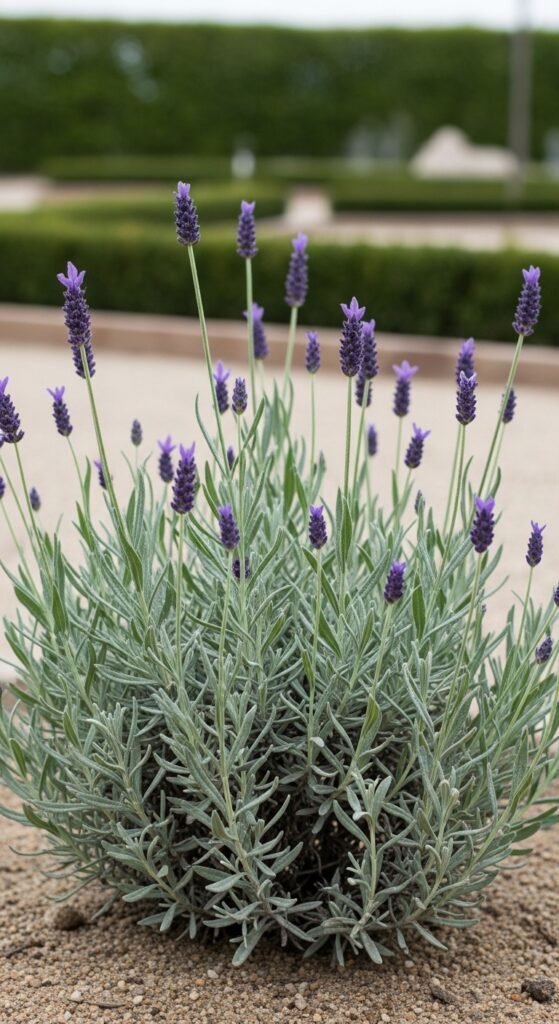
Benefits include aromatherapy and low water needs, saving you time and resources. Plant in full sun with sandy, alkaline soil, spacing 12-18 inches apart. Prune after flowering to maintain shape and encourage bushiness.
Use lavender in borders or as a hedge for a Mediterranean vibe. For pest issues, its natural repellents work wonders. If citronella appeals for similar benefits, explore care tips to complement your lavender beds.
6) Dazzling Dahlias
Dahlias are showy summer flowers with intricate, layered petals in sizes from small pom-poms to dinner-plate giants. You grow them for their dramatic impact and variety of colors, making any garden pop. These tuberous perennials bloom from midsummer to frost.
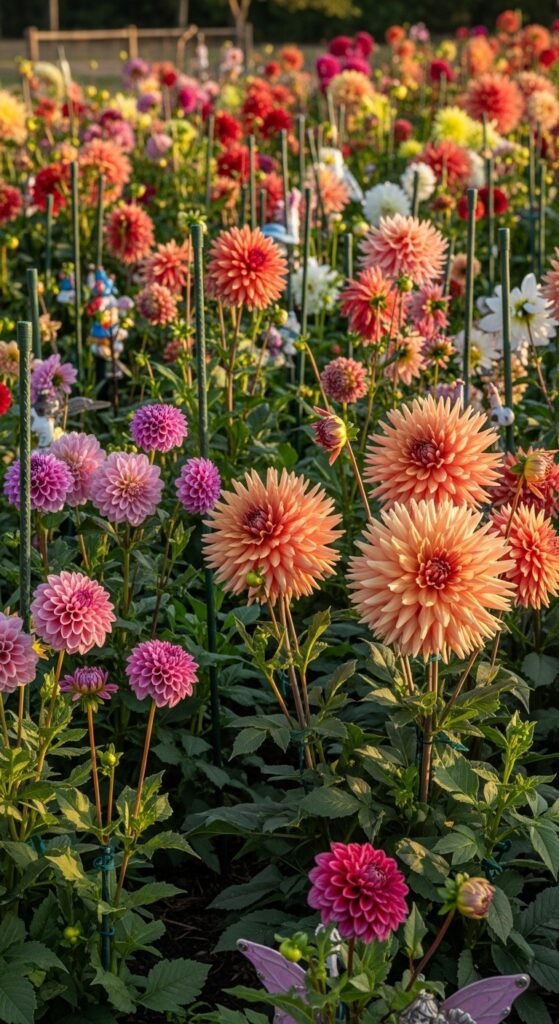
Why dahlias? They provide long-lasting cut flowers and bold statements. Dig and plant tubers in spring after frost, in full sun with rich soil. Stake tall varieties and water deeply weekly.
Pinch tips for more branches and blooms. At season’s end, learn how to save dahlia tubers for overwintering, ensuring they return next year. Pair with fairy garden elements for whimsical touches.
7) Radiant Roses
Roses are classic summer flowers, offering velvety petals in endless varieties from climbers to shrubs. You adore them for their romantic appeal and intoxicating fragrance. These perennials can bloom repeatedly with proper care.
The advantages are timeless beauty and versatility in landscapes. Plant in full sun with well-drained soil, spacing according to type. Mulch to retain moisture and fertilize in spring.
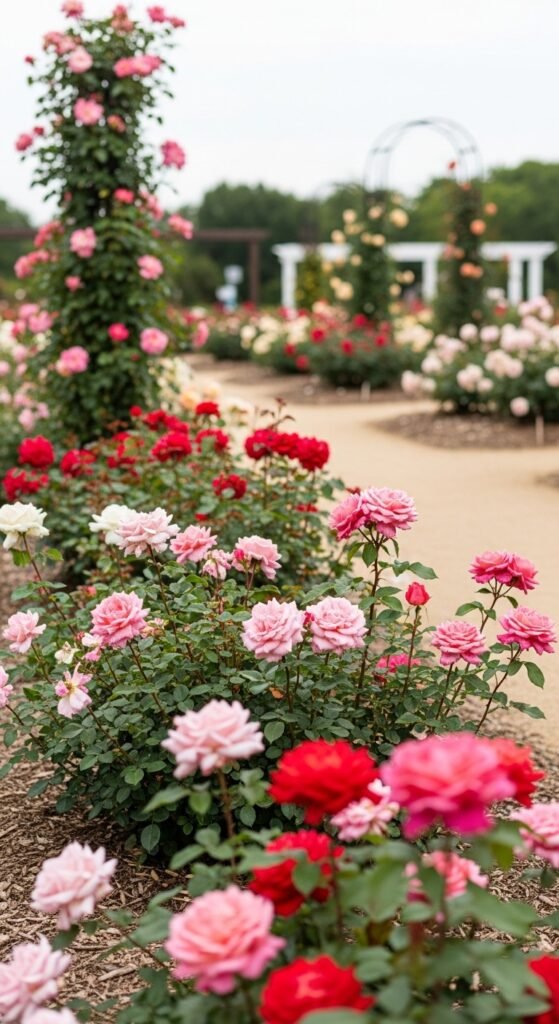
Prune for health and shape. For optimal summer performance, follow our rose care summer guide to keep your bushes thriving through heat waves.
8) Heavenly Hydrangeas
Hydrangeas are lush summer flowers with massive globe-like clusters in blue, pink, or white. You select them for their shade tolerance and ability to change color based on soil pH. These shrubs provide structure and color in gardens.
Benefits feature easy color customization and low maintenance. Plant in partial shade with moist, acidic soil for blues. Water consistently and mulch heavily.
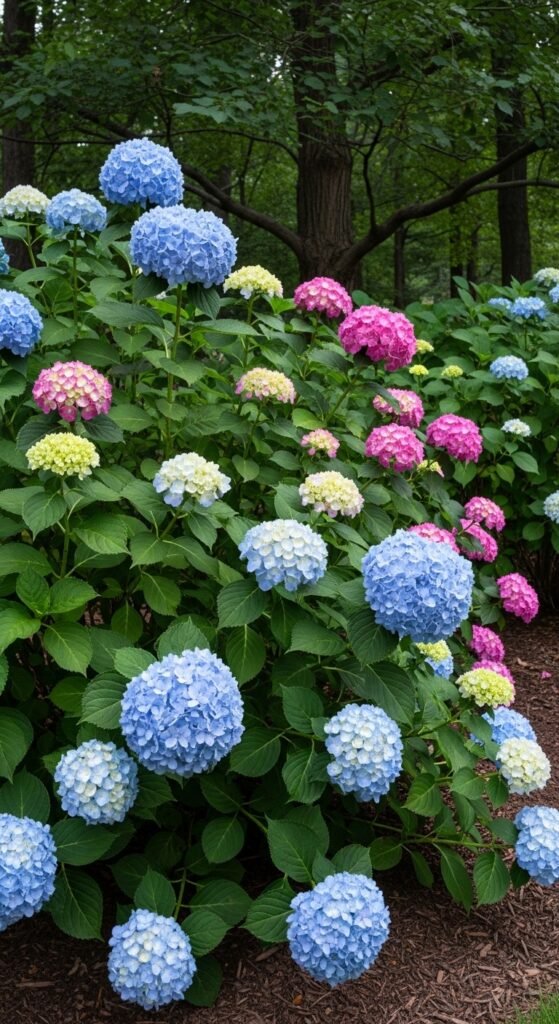
Prune depending on variety—old wood or new. For spring prep that boosts summer blooms, refer to spring hydrangea care tips to get a head start.
9) Charming Coneflowers
Coneflowers, or Echinacea, are daisy-like summer flowers with prominent cone centers in purple, pink, or white. You plant them for their medicinal roots and pollinator attraction. These perennials are tough and native-friendly.
Why coneflowers? They offer health benefits and wildlife support. Sow in full sun with average soil, spacing 18 inches apart. They’re drought-tolerant once established.
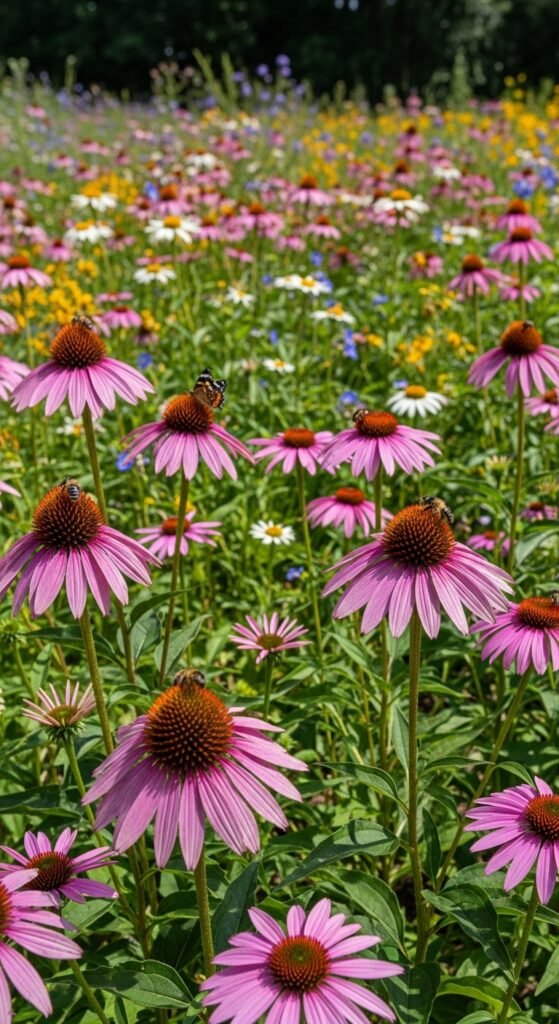
Divide every few years for vigor. Companion plant with edibles for a functional garden. Explore spring options like spring edible flowers to extend your harvest season.
10) Bold Black-Eyed Susans
Black-eyed Susans are cheerful summer flowers with golden petals and dark centers, resembling mini sunflowers. You love them for their long bloom time and native appeal. These perennials spread easily for naturalizing areas.
Advantages include easy propagation and deer resistance. Plant in full sun to partial shade with well-drained soil. Water moderately and deadhead for reblooming.
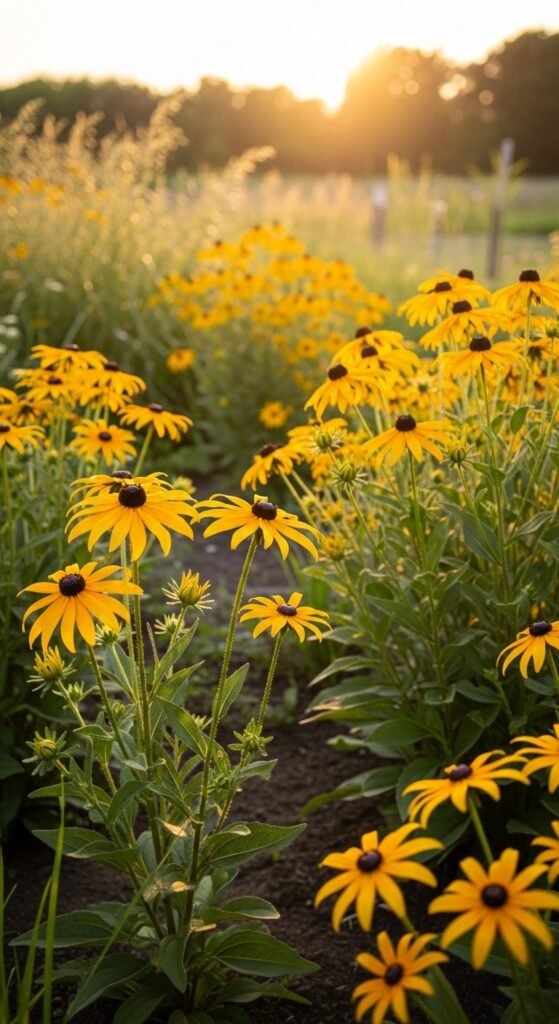
Use in meadows or borders. For privacy screens, combine with taller plants from our patio privacy plants suggestions.
11) Cosmic Cosmos
Cosmos are airy summer flowers with feathery foliage and daisy blooms in pink, white, and orange. You choose them for their effortless growth and cut-flower quality. These annuals self-seed for future seasons.
Benefits are low cost and high yield of blooms. Sow seeds directly in poor soil under full sun. Thin to 12 inches and pinch for bushiness.
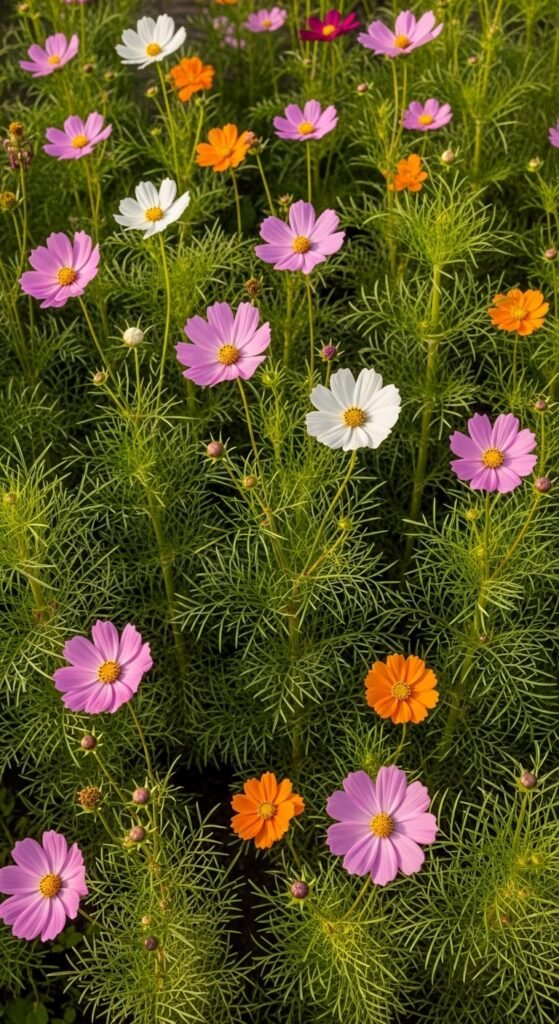
Ideal for wildflower gardens. Protect from intense heat with shade cloth techniques to maintain vibrancy.
12) Sizzling Salvia
Salvia are spiky summer flowers in reds, blues, and purples, attracting hummingbirds. You grow them for their aromatic leaves and vertical interest. Perennials or annuals, they’re heat-loving.
Why salvia? Hummingbird magnets and fragrance enhance sensory gardens. Plant in full sun with dry soil, spacing 12-24 inches.
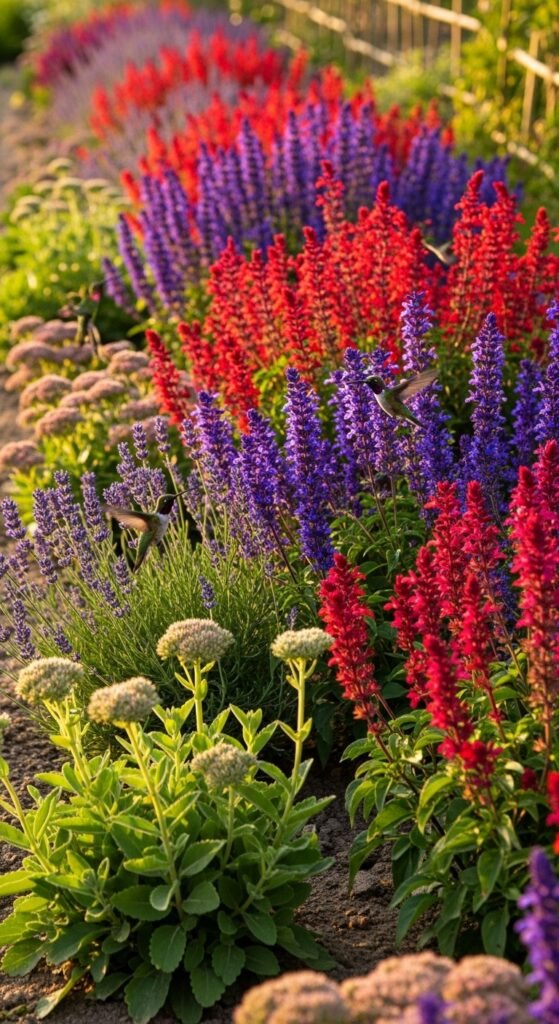
Cut back after blooming. For bug control, pair with citronella—discover citronella plant care for a pest-free space.
13) Lively Lantana
Lantana are cluster-blooming summer flowers that change color as they age, in multicolored bunches. You select them for their butterfly attraction and drought tolerance. These shrubs work well in hot climates.
Features include color-shifting blooms and toughness. Plant in full sun with sandy soil. Prune to shape and fertilize sparingly.
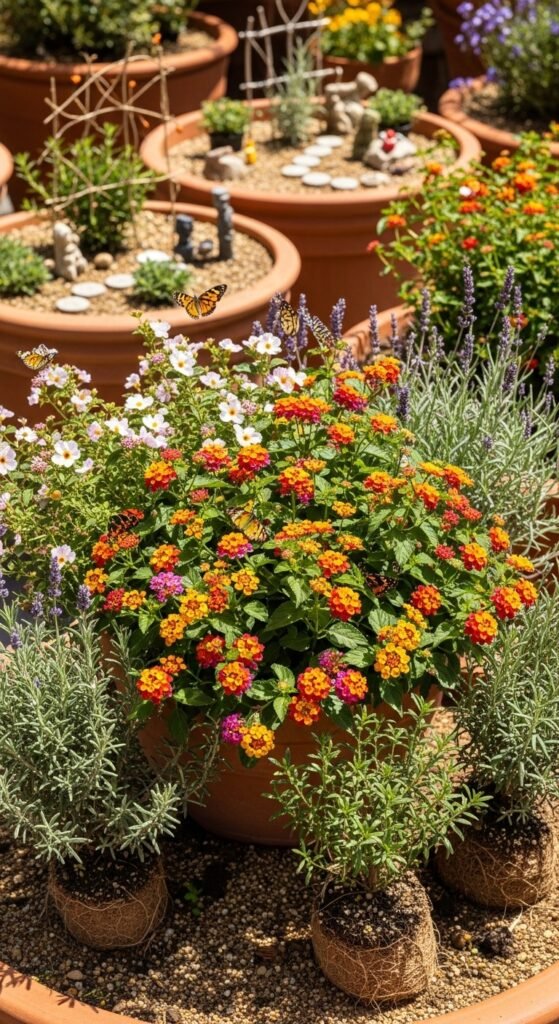
Great for containers. Draw inspiration from summer fairy setups in our summer fairy garden ideas.
14) Vivacious Verbena
Verbena are trailing summer flowers with small, clustered blooms in purples and reds. You plant them for ground cover or hanging pots. Annuals or perennials, they’re prolific bloomers.
Benefits: spreading habit and pollinator draw. Grow in full sun with moderate water. Pinch for fullness.
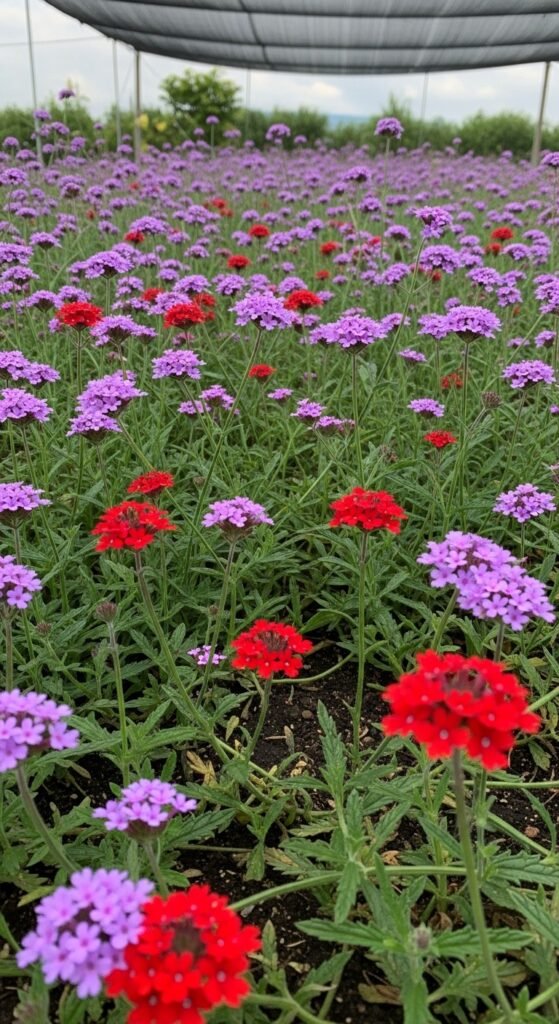
Resistant to heat. For protection, use shade cloth for gardens during peak sun.
15) Gorgeous Geraniums
Geraniums are reliable summer flowers with rounded leaves and bright blooms in red, pink, or white. You love them for their container versatility and scent. These annuals (or perennials in mild zones) are forgiving.
Why geraniums? Easy care and vibrant pots. Plant in part sun with well-draining mix. Water when dry and fertilize monthly.
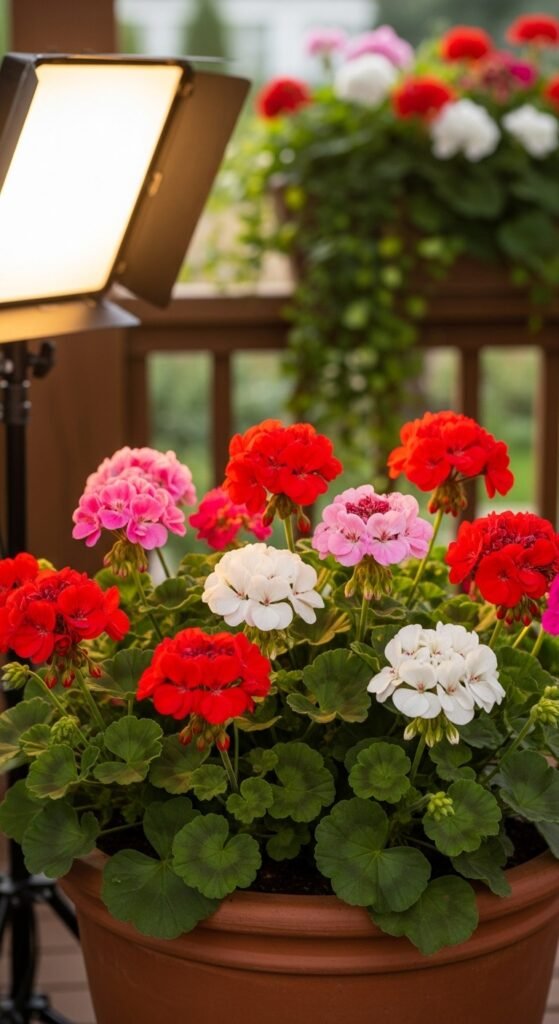
Overwinter indoors. Enhance porches with ideas from spring planters, adapting for summer flair.
Key Tips for Summer Flower Success
Soil Preparation
Prepare your soil with compost for nutrient-rich beds. Test pH to suit specific flowers, ensuring optimal growth.
Watering Wisdom
Water deeply in mornings to reduce evaporation. Use mulch to conserve moisture during hot days.
Pest Management
Monitor for aphids and use organic sprays. Encourage beneficial insects with diverse plantings.
Frequently Asked Questions
What are the easiest summer flowers for beginners?
Marigolds and zinnias are great starters due to their hardiness and quick growth from seed.
How often should I water summer flowers?
Most need 1 inch per week, but check soil moisture—adjust for heat and rainfall.
Can summer flowers grow in shade?
Some like hydrangeas tolerate shade, but most thrive in full sun for best blooms.
When do summer flowers typically bloom?
From late spring through fall, depending on variety and planting time.
Are summer flowers annuals or perennials?
Many are annuals, but perennials like lavender and coneflowers return yearly with proper care.